06 · Darius I · colour in an imperial capital
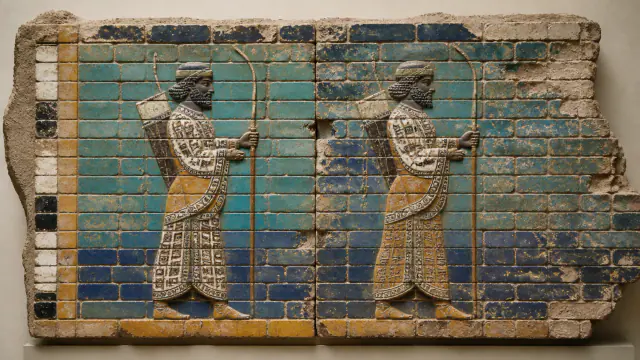
Glazed brick guards The Archer Frieze of the Susa Palace
Rosettes, spears and bows were repeated in moulded bricks that made an ideal guard visible.
ON THIS PAGE
History and context Evidence and facts Objects connected through time Further reading Location and territory Where it is held Sources and references Comments Museum documentation · free public access, no account required.
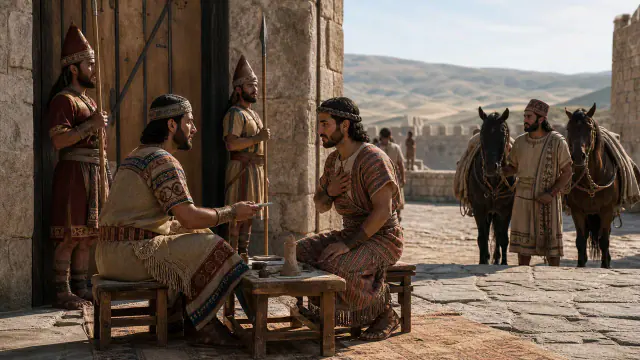
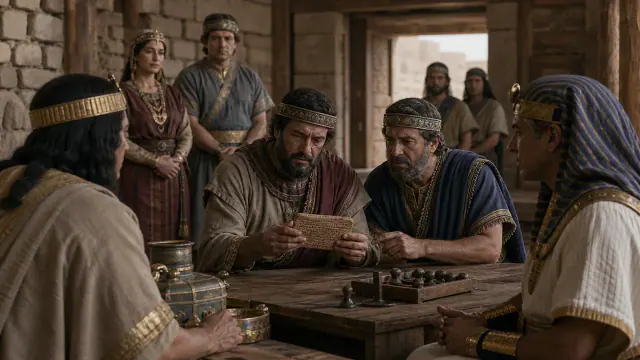
⛶ Enlarge imageDECLARED VISUAL RECONSTRUCTION · AI-GENERATED IMAGE · TRACEKEEPERS Generated reconstruction · Declared visual hypothesis
Declared visual reconstruction; not a photograph of the original nor documentary evidence.
History and context Panels of glazed siliceous bricks showed archers in profile with long spears, bows and ornate dress. The repetition created order and military presence in Darius’s palace, far from the modern image of colourless ruins.
We do not know whether they represent a specific ethnic unit, the Immortals or an ideal guard. The museum reconstruction assembles excavated bricks and some modern replacements; the object also tells the story of how a fragmentary façade is reassembled.
Each archer was built from moulded and glazed bricks that had to fit a repeated pattern. The shiny surface imitated a textile wall and returned colour to a palace whose current image, dominated by earth and stone, is misleading.
Excavations brought fragments to Paris and the museum display filled gaps to restore complete figures. The exhibited work is therefore double evidence: of Darius’s programme and of modern practice in reassembling dispersed architecture.
Evidence and interpretation Documented fact: the Louvre dates the panels to Darius I’s reign, places them in the Susa Apadana and documents moulded, polychrome siliceous ware. Interpretation and caution: automatically identifying them with the Immortals described by Herodotus is not secure.
Documented expansion: The Louvre label attributes the panels to Darius’s palace in Susa and describes their glazed siliceous technique.
Expanded interpretation and caution: Identification with Herodotus’s ten thousand «Immortals» is not demonstrated; some visible parts are restorations.
Catalogue facts
Narrative date 522–486 BCE
Location Palace of Darius in Susa, Khuzestan
Material Moulded siliceous bricks with polychrome glazing
Context Palatial architectural decoration
Curatorial reading The documented fact and its interpretation appear separately in the evidence block.
Technique Moulded siliceous ceramics with polychrome glazing, not paint on stone.
Motifs Profile archers alternate with rosettes and ornamental bands.
Conservation The museum installation combines ancient bricks with necessary reintegrations to make the frieze legible.
Documentary coverage 2 museum, heritage, primary corpus or research sources for this stop.
In this grouping Archer architectural relief: image of power and of the contingent, not original weaponry. Clay40 Ceramics56 Sculpture54 Architecture21 Human imagery73
The order uses the midpoint of each approximate date range; ranges can overlap. Spacing does not represent elapsed time. Swipe, scroll or use the arrows. With the sequence focused, use ← / →, Home or End.
Earlier Later
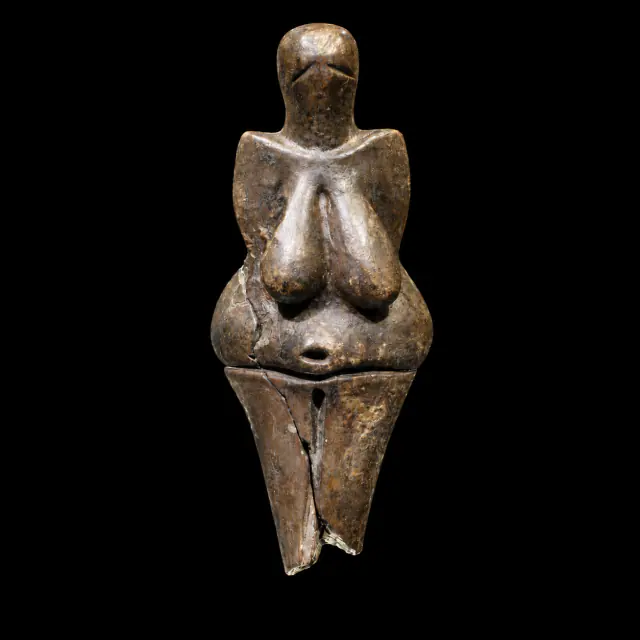
≈29,000–27,000 years
Dolní Věstonice I Prehistory
Approximate catalogue age; editorial reference 2026 for ordering only, not calibrated dating.
Read the record mid-6th–5th millennium BCE
Before Sumer Sumer
The full 6th–5th millennia BCE provide broad limits for chronological ordering; the record qualifies the date as ‘mid’; the item's date is used, not the broader preceding period.
Read the record Early Neolithic · VI–V millennia BCE
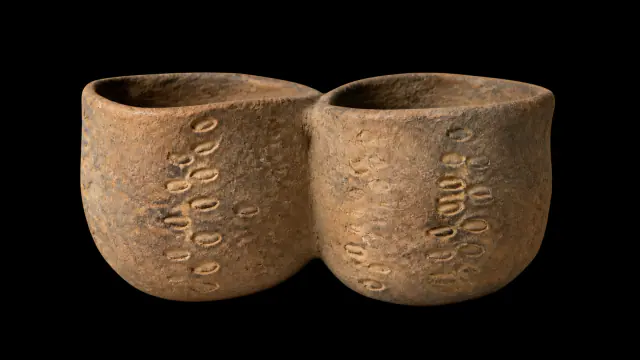
Twin-chambered vessel from Cova de l’Or Prehistory
Interval of the VI–V millennia BCE; no precise annual date.
Read the record ca. 4400–3800 BCE
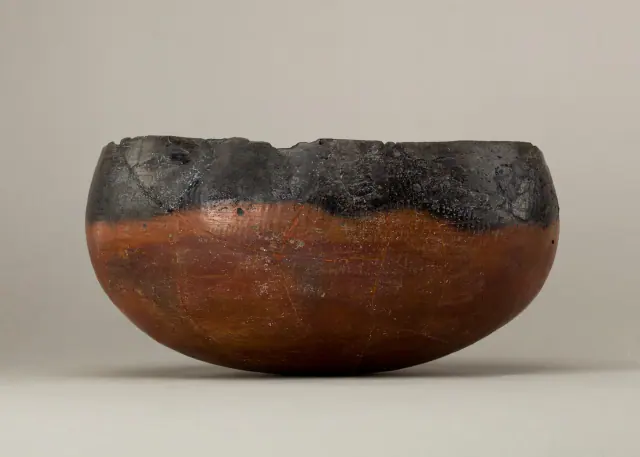
Before Egypt Ancient Egypt
Date of the representative vessel, not of the entire predynastic period.
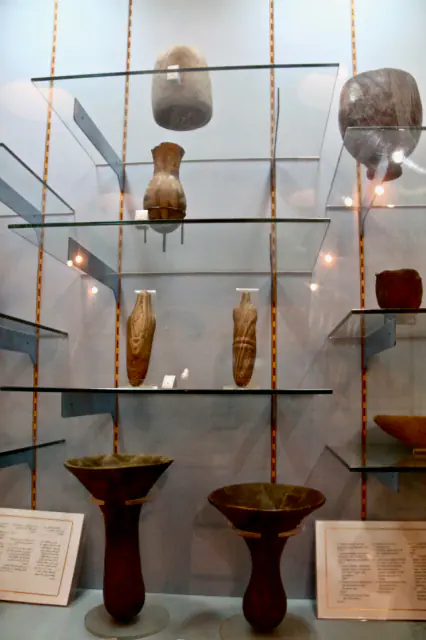
Read the record V–IV millennium BCE
Before Nubia Nubia, Kerma and Kush
Interval of the V–IV millennia BCE of the element, not of the entire preceding period.
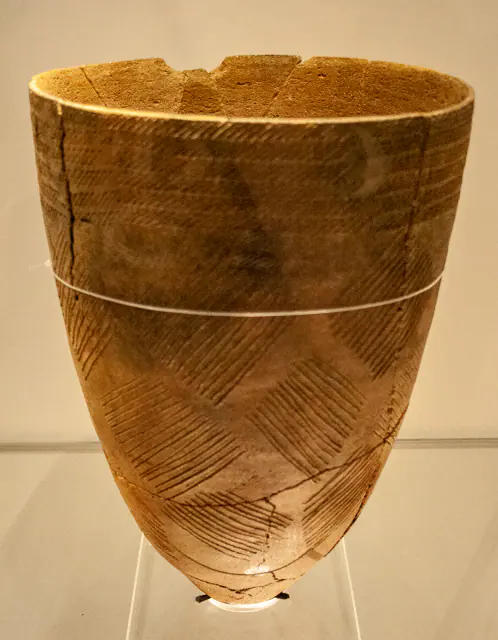
Read the record Middle Neolithic, c. 4000 BCE
Before Gojoseon Gojoseon and early Korea
Date of the ceramic element, not of the preceding period.
Read the record ca. 3500–3000 BCE
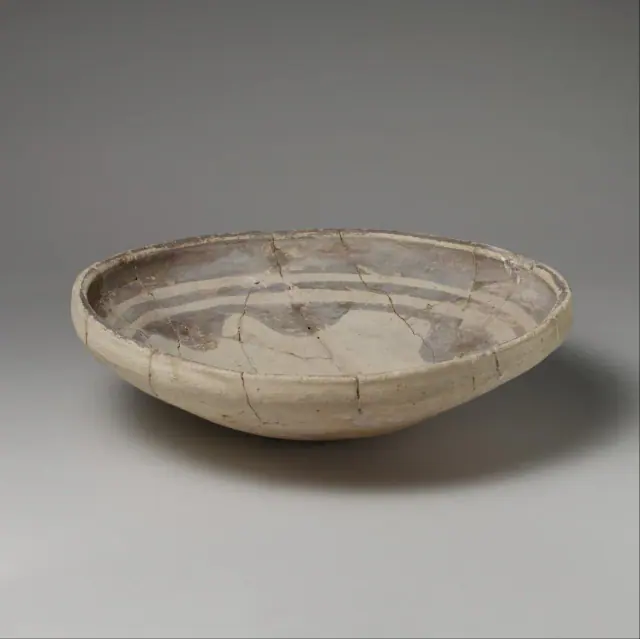
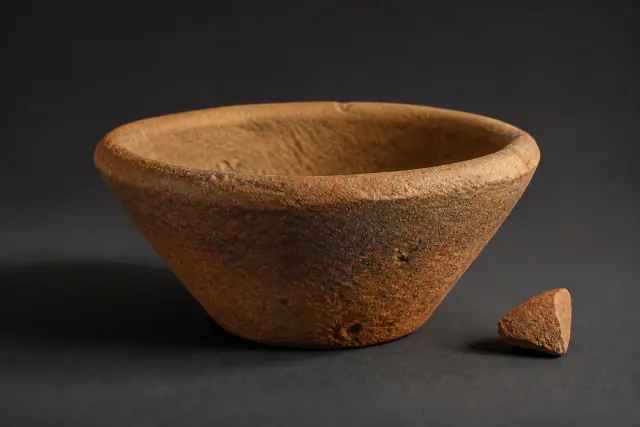
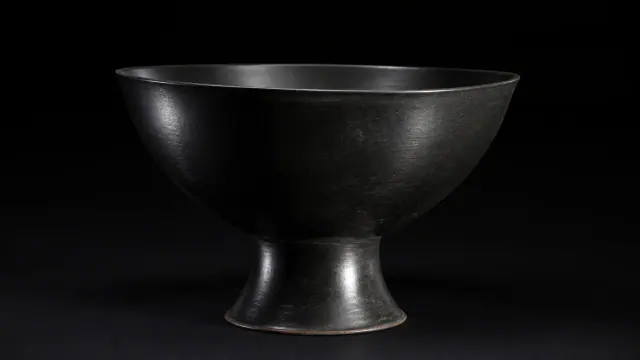
Bevel-rimmed bowl Sumer
The wage ration hypothesis is not used as a functional label.
Read the record 3500–2900 BCE · proto-urban period; towards 3300 BCE as a guide, not exact date
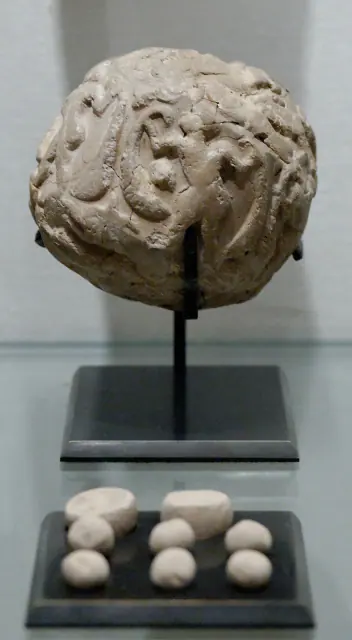
Susa accounting bulla Sumer
Posted range; "towards 3300" is just orientation within that range.
Read the record c. 3100–2900 BCE
Jemdet Nasr Sumer
Approximate dating according to the record.
Read the record c. 3100–2900 BCE
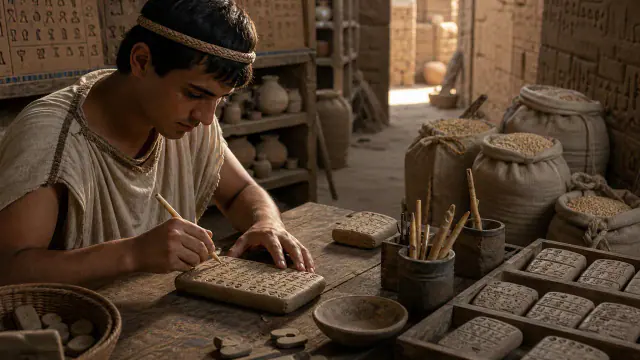
Account of malt and barley Sumer
Approximate dating according to the record.
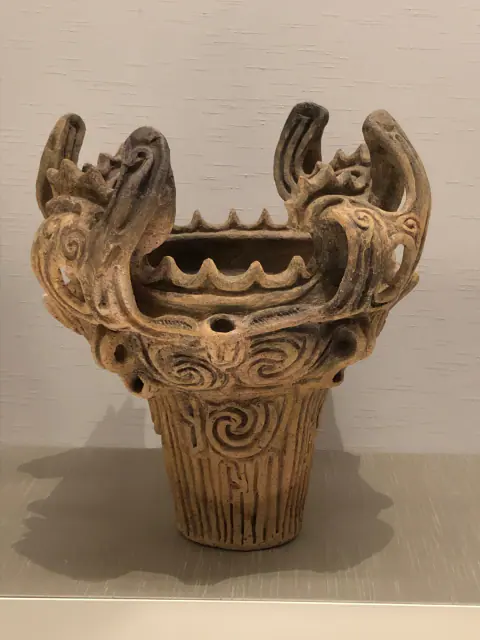
Read the record Middle Jōmon, ca. 3000 BCE
Before Yayoi Yayoi Japan
Date of the Jōmon element, not of the entire preceding period.
Read the record ca. 2500–2200 BCE
Vasiliki Greek worlds
Date range for the regional pottery assemblage.
Read the record c. 2500–2000 BCE
Before Ancient China Ancient China
Approximate dating according to the record.
Read the record c. 2500–2000 BCE
Longshan Ancient China
Date range for the Longshan pottery assemblage.
Read the record c. 19th century BCE
Before the Hittites Hittites
Date of the representative document, not of the entire preceding period.
Read the record Kotosh-Mito Tradition, c. 2200–1500 BCE; the enclosure is usually situated around 1800 BCE.
Before Pre-Inca Cultures Pre-Inca cultures
Element tradition interval; "around 1800" orients the enclosure.
Read the record 19th–18th centuries BCE
Queen of the Night Sumer
Approximate dating according to the record.
Read the record Paleo-Babylonian period · around 1800 BCE
Plimpton 322 Sumer
Approximate dating according to the record.
Read the record Towards 1800 BCE
Sumerian King List Sumer
Date of preserved copy, not of reigns listed.
Read the record Paleo-Babylonian copy, around 1900–1600 BCE according to CDLI
Love song to Shu-Sin Sumer
Date of the preserved Paleo-Babylonian copy, not of the origin of the song.
Read the record Towards 1900–1600 BCE · paleobabylonian; uncertain chronological attribution in CDLI
Si.427 tablet Sumer
Unclear chronological attribution in CDLI.
Read the record ≈1700–1650 BCE
Phaistos Disc Greek worlds
The signs have no accepted reading.
Read the record Towards 1650 BCE
Sumerian Flood of Nippur Sumer
Approximate dating according to the record.
Read the record Above all 17th–13th centuries BCE
Boğazköy Archive Hittites
Main date range for the archive, not a single date for all the tablets.
Read the record c. 1375 BCE
Linear B Greek worlds
Approximate dating according to the record.
Read the record c. 1300 BCE
Alaksandu of Wilusa Hittites
Approximate dating according to the record.
Read the record c. 1259 BCE, year 21 of Ramesses II
Treaty with Egypt Hittites
Date of the treaty and its copy; not of the origin of relations between the two kingdoms.
Read the record 7th century BCE
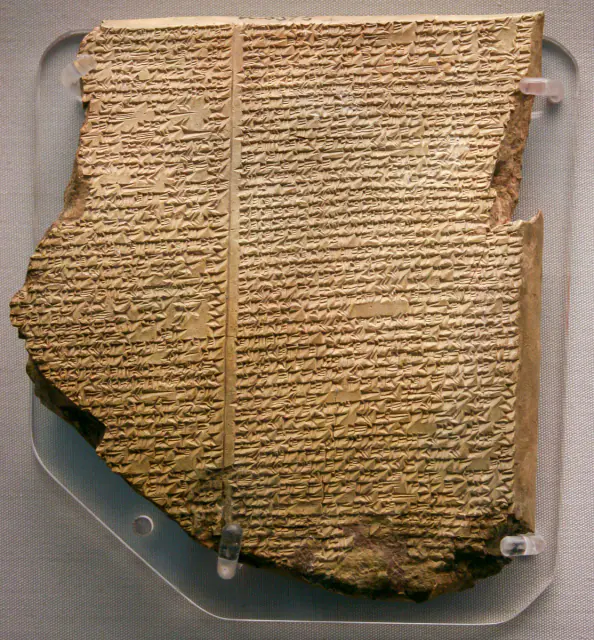
Flood Tablet Sumer
Approximate dating according to the record.
Read the record Towards 700–500 BCE
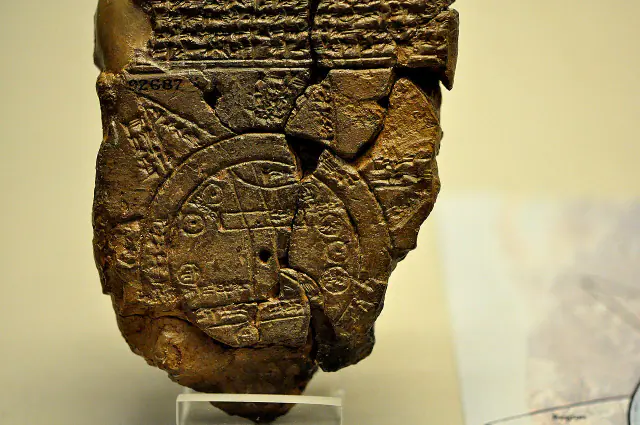
Overlapping dates Babylonian map of the world Sumer
Approximate dating according to the record.
Read the record You are viewing 522–486 BCE
Glazed brick guards Achaemenid Persia
Date range associated with the reign of the decoration.
Current record Towards 509–493 BCE
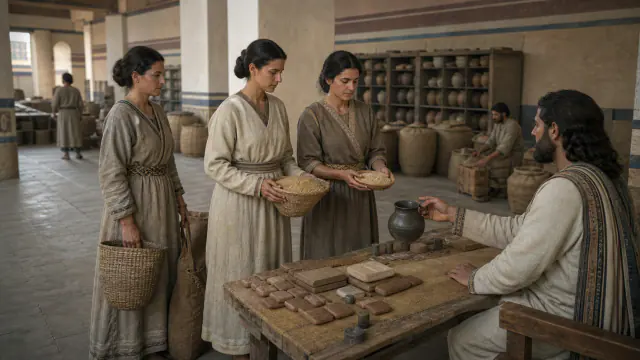
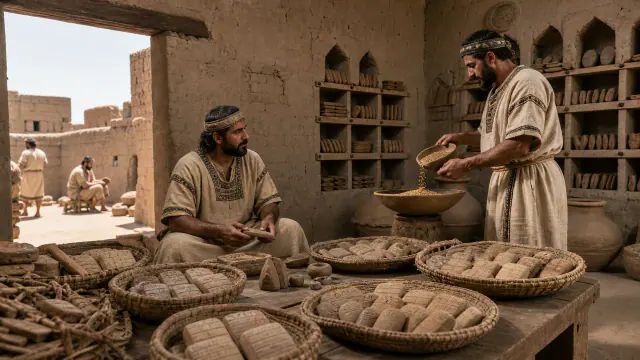
Overlapping dates Rations for women and children Achaemenid Persia
Date range of the archive and its documents.
Read the record regional range c. 800 BCE–650 CE
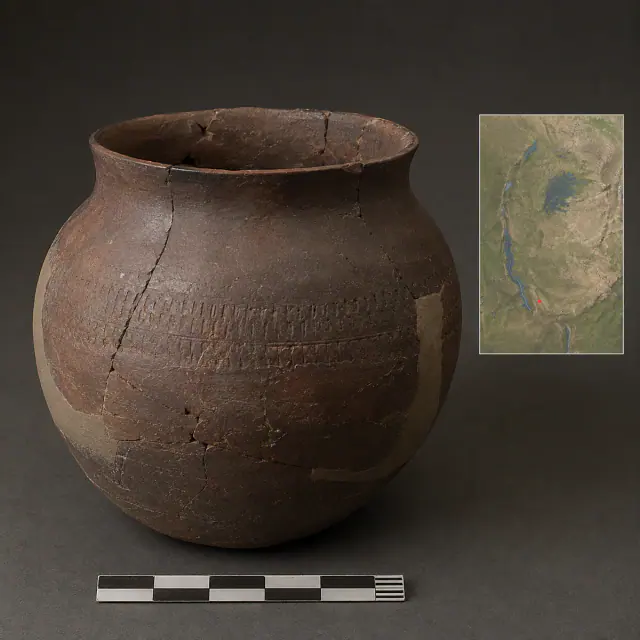
Overlapping dates Urewe vessel Bantu-speaking worlds
Regional date range for the Urewe type, not an individual date for each vessel.
Read the record 30 / 32 In the centre: Glazed brick guards
Also connected, without a comparable date (8) These objects are not placed after the others: an unknown date does not mean a more recent object.
You can scroll the first group without JavaScript. The other topics are also available below.
Ceramics Dolní Věstonice I · ≈29,000–27,000 years · PrehistoryBefore Sumer · mid-6th–5th millennium BCE · SumerTwin-chambered vessel from Cova de l’Or · Early Neolithic · VI–V millennia BCE · PrehistoryBefore Egypt · ca. 4400–3800 BCE · Ancient EgyptBefore Nubia · V–IV millennium BCE · Nubia, Kerma and KushBefore Gojoseon · Middle Neolithic, c. 4000 BCE · Gojoseon and early KoreaBevel-rimmed bowl · ca. 3500–3000 BCE · SumerBefore Yayoi · Middle Jōmon, ca. 3000 BCE · Yayoi JapanVasiliki · ca. 2500–2200 BCE · Greek worldsBefore the Greeks · c. 2400–2200 BCE · Greek worldsCemetery R-37 · ca. 2550–2030 BCE · Indus civilisationBefore Ancient China · c. 2500–2000 BCE · Ancient ChinaLongshan · c. 2500–2000 BCE · Ancient ChinaKerma vessel · c. 1802–1640 BCE · Nubia, Kerma and KushBurial at K IV · circa 1750–1550 BCE · Nubia, Kerma and KushBefore Vedic India · c. 1900–1300 BCE · Vedic and later Indian worldsOsmankayası and Ilıca · ca. 1700/1650–1200 BCE · HittitesGrey bowl from Hastinapura · c. 1100–800 BCE in the classical sequence of Hastinapura · Vedic and later Indian worldsBefore Etruscans and Rome · ca. 850–800 BCE · Etruscans and RomeThe urn under the helmet · 9th–8th centuries BCE · Etruscans and RomeCeramic stand 1010 · 8th–7th centuries BCE · orientalizing · IberiansIshtar Gate · 7th–6th centuries BCE · work of Nebuchadnezzar II · SumerGlazed brick guards · 522–486 BCE · Achaemenid Persia — You are viewingOrpheus among the Thracians · circa 440 BCE; attributed to the London Painter E 497. · ThraciansThe Attic krater that took on a new life in Cástulo · 4th century BCE · Greek worldsThoth in the form of a baboon · 664–30 BCE · Ancient EgyptLeipzig Fish Plate · Last third 4th–early 3rd century BCE · Greek worldsDove of the Amarejo · 3rd century BCE · IberiansVas dels Guerrers · 3rd–early 2nd century BCE · IberiansWarriors' Vase · 3rd–2nd centuries BCE · IberiansNorthern mound · 2nd–1st centuries BCE · Yayoi JapanKalathos of Alcorisa · 2nd–1st centuries BCE · IberiansUrewe vessel · regional range c. 800 BCE–650 CE · Bantu-speaking worldsTwo rows of coffins · Mainly Middle Yayoi, 2nd century BCE–1st century CE · Yayoi JapanCeramics that continued · Last third of the 2nd century BCE–1st century CE · IberiansEgyptian oil lamp with a fish, held in Laon · 3rd–4th centuries CE · Ancient EgyptLaon lamp with fish · 3rd–4th centuries CE · Etruscans and RomeKabusanza, ca. 400 · ca. 400 CE · Batwa / Twa historiesMissing grave goods · 13th–15th centuries according to the heritage overview · Bantu-speaking worldsWithout a comparable date (not part of the chronological order):
Sculpture Lion-man · ≈40,000 years · Aurignacian · PrehistoryLespugue · ≈28,000 years · PrehistoryZaraysk Bison · ≈23,000–21,000 years · PrehistoryShigir Idol · C. 10,000 BCE · approximation; debated dating · PrehistoryWarka Mask · End of the 4th millennium BCE · SumerGebel el-Arak knife · 3600–3200 BCE · Naqada II C–D · Ancient EgyptUruk Vase · ca. 3300–3000 BCE · SumerNarmer Palette · ca. 3100 BCE · Ancient EgyptBefore Yayoi · Middle Jōmon, ca. 3000 BCE · Yayoi JapanUr-Nanshe relief · Mid-3rd millennium BCE · reign of Ur-Nanshe · SumerThe goat from PG 1237 · ca. 2600–2400 BCE · SumerStele of the Vultures · Towards 2450–2425 BCE · SumerAkkadian sovereign head · Akkadian period · 23rd century BCE · SumerBassetki Statue · Akkadian period · 23rd century BCE · SumerNaram-Sin Stele · Reign of Naram-Sin, 2254–2218 BCE · SumerBefore Pre-Inca Cultures · Kotosh-Mito Tradition, c. 2200–1500 BCE; the enclosure is usually situated around 1800 BCE. · Pre-Inca culturesQueen of the Night · 19th–18th centuries BCE · SumerBull-leaping · c. 1600–1450 BCE · Greek worldsWooden faces · c. 1600–1000 BCE, in several phases · Maya worldsHead 2 · c. 1200–900 BCE · Maya worldsThe voice of Ahiram · c. 11th–10th century BCE · PhoeniciansBefore the Scythians and Sakas · Final Bronze–Initial Iron, ca. 1200–600 BCE · Scythians and SakaBlack Obelisk · 825 BCE · SumerIvory in Nimrud · 9th–8th centuries BCE · PhoeniciansLas Limas · c. 1000–600 BCE · Maya worldsAstarte from El Carambolo · 8th century BCE · PhoeniciansAstarte from El Carambolo · 8th century BCE · IberiansLamassu of Khorsabad · Reign of Sargon II · 721–705 BCE · SumerThe Lanzón · c. 900–500 BCE · Pre-Inca culturesStele of Esarhaddon · 7th century BC C. · 671 campaign BCE · SumerThe so-called ‘Priest of Cádiz’ · 7th century BCE · PhoeniciansThe so-called ‘Priest of Cádiz’ · 7th century BCE · IberiansThe Tello Obelisk · c. 800–500 BCE · Pre-Inca culturesAshurbanipal Hunt · 645–635 BCE · SumerHeads on the wall · c. 800–300 BCE · Pre-Inca culturesTwo voices in an urn · 530–520 BCE · Etruscans and RomeThe god on the roof · Towards 510–500 BCE · Etruscans and RomeGlazed brick guards · 522–486 BCE · Achaemenid Persia — You are viewingTwenty-three delegations · 6th–5th centuries BCE, mainly under Darius and Xerxes · Achaemenid PersiaSarcophagus of Eshmunazar · first quarter of the 5th century BCE · PhoeniciansThe statue was the urn · First half of the 4th century BCE · IberiansThe Raimondi Stele · c. 400–200 BCE according to MNAAHP · Pre-Inca culturesTorreáguila fountain spout · 101–125 CE · Etruscans and RomeThe date of 292 · 292 CE · Maya worldsArticulated doll from Tarragona · Late 3rd–4th century CE · Etruscans and RomeSeven heads · c. 500–700 CE · Bantu-speaking worldsSeated figure · 13th century, date attributed by the museum · Mande WorldsGold rhinoceros · ca. 1220–1290; found in 1933 · Bantu-speaking worldsZimbabwe birds · main period of Great Zimbabwe, c. 12th–15th centuries · Bantu-speaking worldsKongo crucifix · 16th–17th centuries · Bantu-speaking worldsKuba ndop · ca. 1760 · Bantu-speaking worldsWithout a comparable date (not part of the chronological order):
Before Persia · Central core c. seventeenth century BCE; Neo-Elamite additions between the ninth and sixth centuries BCE · Achaemenid PersiaLararium of Vilauba · Roman period · Etruscans and RomeThe Thracian Horseman · Roman era · diffusion especially in the 2nd–3rd centuries CE · ThraciansArchitecture Before Pre-Inca Cultures · Kotosh-Mito Tradition, c. 2200–1500 BCE; the enclosure is usually situated around 1800 BCE. · Pre-Inca culturesIshtar Gate · 7th–6th centuries BCE · work of Nebuchadnezzar II · SumerHeads on the wall · c. 800–300 BCE · Pre-Inca culturesThe god on the roof · Towards 510–500 BCE · Etruscans and RomeGlazed brick guards · 522–486 BCE · Achaemenid Persia — You are viewingTwenty-three delegations · 6th–5th centuries BCE, mainly under Darius and Xerxes · Achaemenid PersiaTorreáguila fountain spout · 101–125 CE · Etruscans and RomeZimbabwe birds · main period of Great Zimbabwe, c. 12th–15th centuries · Bantu-speaking worldsWithout a comparable date (not part of the chronological order):
Human imagery Lion-man · ≈40,000 years · Aurignacian · PrehistoryHohle Fels · ≈40,000 years · Aurignacian · PrehistoryWillendorf · ≈29,500 years · PrehistoryBrno II Articulated Figure · ≈28,000 years cal BP · by funerary association · PrehistoryDolní Věstonice I · ≈29,000–27,000 years · PrehistoryLespugue · ≈28,000 years · PrehistoryKostenki I · ≈23,000–21,000 years · PrehistoryShigir Idol · C. 10,000 BCE · approximation; debated dating · PrehistoryNahal Hemar mask · Eighth millennium BCE · context dating, not direct dating of the stone · PrehistoryEl Miradero spatula-idols · ≈4000–3800 cal BCE · PrehistoryWarka Mask · End of the 4th millennium BCE · SumerCueva de las Manos · Sequence ≈9300–1300 BP · PrehistoryUruk Vase · ca. 3300–3000 BCE · SumerWorshiper of Tell Asmar · Towards 2900–2600 BCE · SumerStandard of Ur · ca. 2600–2400 BCE · SumerStatue of Ebih-Il · Towards 2400 BCE · SumerAkkadian sovereign head · Akkadian period · 23rd century BCE · SumerBassetki Statue · Akkadian period · 23rd century BCE · SumerBefore Pre-Inca Cultures · Kotosh-Mito Tradition, c. 2200–1500 BCE; the enclosure is usually situated around 1800 BCE. · Pre-Inca culturesQueen of the Night · 19th–18th centuries BCE · SumerBull-leaping · c. 1600–1450 BCE · Greek worldsWooden faces · c. 1600–1000 BCE, in several phases · Maya worldsHead 2 · c. 1200–900 BCE · Maya worldsIvory in Nimrud · 9th–8th centuries BCE · PhoeniciansLas Limas · c. 1000–600 BCE · Maya worldsAstarte from El Carambolo · 8th century BCE · PhoeniciansAstarte from El Carambolo · 8th century BCE · IberiansLamassu of Khorsabad · Reign of Sargon II · 721–705 BCE · SumerThe Lanzón · c. 900–500 BCE · Pre-Inca culturesOffering 4 · c. 800–600 BCE · Maya worldsKushite king · c. 721–664 BCE · Nubia, Kerma and KushThe so-called ‘Priest of Cádiz’ · 7th century BCE · PhoeniciansThe so-called ‘Priest of Cádiz’ · 7th century BCE · IberiansHeads on the wall · c. 800–300 BCE · Pre-Inca culturesShabti of Psamtek · 570–526 BCE · Ancient EgyptTwo voices in an urn · 530–520 BCE · Etruscans and RomeThe god on the roof · Towards 510–500 BCE · Etruscans and RomeGlazed brick guards · 522–486 BCE · Achaemenid Persia — You are viewingTwenty-three delegations · 6th–5th centuries BCE, mainly under Darius and Xerxes · Achaemenid PersiaBanquet under leopards · Around 480–470 BCE · Etruscans and RomeThe statue was the urn · First half of the 4th century BCE · IberiansA battle on a comb · Early 4th century BCE · Scythians and SakaThe Kul-Oba vase · 4th century BCE · Greek worldsThe Solokha gold comb · 4th century BCE · Greek worldsFaces of the Steppe · Second half of the 4th century BCE · Scythians and SakaLady of Ibiza · 4th–3rd centuries BCE · PhoeniciansPunic head pendant · Mid 4th–3rd centuries BCE · PhoeniciansLady of Ibiza · 4th–3rd centuries BCE · IberiansThe Raimondi Stele · c. 400–200 BCE according to MNAAHP · Pre-Inca culturesChão de Lamas pectoral · 3rd–2nd centuries BCE · concealed in the early 1st century BCE · IberiansVas dels Guerrers · 3rd–early 2nd century BCE · IberiansWarriors' Vase · 3rd–2nd centuries BCE · IberiansThe dismantled cauldron · 2nd–1st centuries BCE · Celtic worldsThe walls of San Bartolo · c. 100 BCE · Maya worldsGladiators Cup of Chavagnes · 25–75 CE · Etruscans and RomeThracian Gladiator from Cádiz · 67–100 CE · Etruscans and RomeTorreáguila fountain spout · 101–125 CE · Etruscans and RomeArticulated doll from Tarragona · Late 3rd–4th century CE · Etruscans and RomeSeven heads · c. 500–700 CE · Bantu-speaking worldsSeated figure · 13th century, date attributed by the museum · Mande WorldsKongo crucifix · 16th–17th centuries · Bantu-speaking worldsKuba ndop · ca. 1760 · Bantu-speaking worldsWithout a comparable date (not part of the chronological order):
Before Persia · Central core c. seventeenth century BCE; Neo-Elamite additions between the ninth and sixth centuries BCE · Achaemenid PersiaBhimbetka · Mesolithic–historical and medieval period · PrehistoryEland Cave · Regional tradition of ≈4,000 years · up to historical period · PrehistoryFour offerers · Iberian period · individual dating according to catalogue · IberiansGame Pass Shelter · Regional rock art chronology · panel not dated in isolation · San historiesLararium of Vilauba · Roman period · Etruscans and RomeLeang Karampuang · Minimum 51,200 years · dating published in 2024 · PrehistoryQuinkan Country · Regional art up to ≈27,000 BP · modern continuity · PrehistorySierra de San Francisco · Broad tradition with direct dates ≈5290–295 BP · PrehistoryTassili n’Ajjer · Corpus ≈6000 BCE–first centuries CE · PrehistoryThe Thracian Horseman · Roman era · diffusion especially in the 2nd–3rd centuries CE · ThraciansA closer look About 1 min to read · 1 section. Further reading and sources · free access. Editorial review recorded: September 5, 2026 .
Identifying which panel we are looking at The reference SB 3319 does not correspond to the whole frieze: the Louvre identifies it as a right-facing archer whose tunic bears rosettes. The panel measures 183 centimetres in height and comes from the eastern gate of Darius’s palace; the record notes the 1908 and 1913 campaigns and the excavation of Roland de Mecquenem. These data allow locating a specific figure within a larger decoration. The distinction is important when comparing the conserved object with images of extensive reconstructions that gather several panels and fragments.
Location and territory Physical world map with routes of human evolution Present-day world coastline from Natural Earth in an equirectangular projection. The overlaid markers let you explore each milestone. Map base: Natural Earth 1:110m · public domain · present-day reference coastline LOCATED SITE
Sousse Iran Achaemenid city and palace marker. Where it is held Item or group in the record · Documented collection
The holding institution is documented; public display may change. Check its official record before visiting.
See Glazed brick guards in the museum Find this record in its gallery and save your route, favourites and places to explore later.
Open this exhibit in the museum → Museum access requires a free account. You can read this page's documentation without registering.
Did you enjoy this exhibit? Your opinion helps us improve the museum. You can change it whenever you like.
Loading your rating…

 English
 Español
 Français
 Italiano
 Deutsch
 Русский
 Português
 Polski
 Română
 Svenska
 Norsk bokmål
 Suomi
 Türkçe
 العربية
 简体中文
 한국어
 हिन्दी
 Ελληνικά
 You are viewing