
 English
 Español
 Français
 Italiano
 Deutsch
 Русский
 Português
 Polski
 Română
 Svenska
 Norsk bokmål
 Suomi
 Türkçe
 العربية
 简体中文
 한국어
 हिन्दी
 Ελληνικά
EARLY NEOLITHIC CARDIAL · VI–V MILLENNIA BCE
Twin-chambered vessel from Cova de l’Or
Two joined vessels
This object has two connected vessels. Its form survives, but its use remains an open question.
Museum documentation · free public access, no account required.
Generated reconstruction · Declared visual hypothesis
AI background editing of a previously generated reconstruction for the project. Its form, texture and overall appearance are interpretive; it is not a photograph of the archaeological original nor does it constitute documentary evidence. The black background does not alter this uncertainty.
Tracekeepers
Explore in 3D
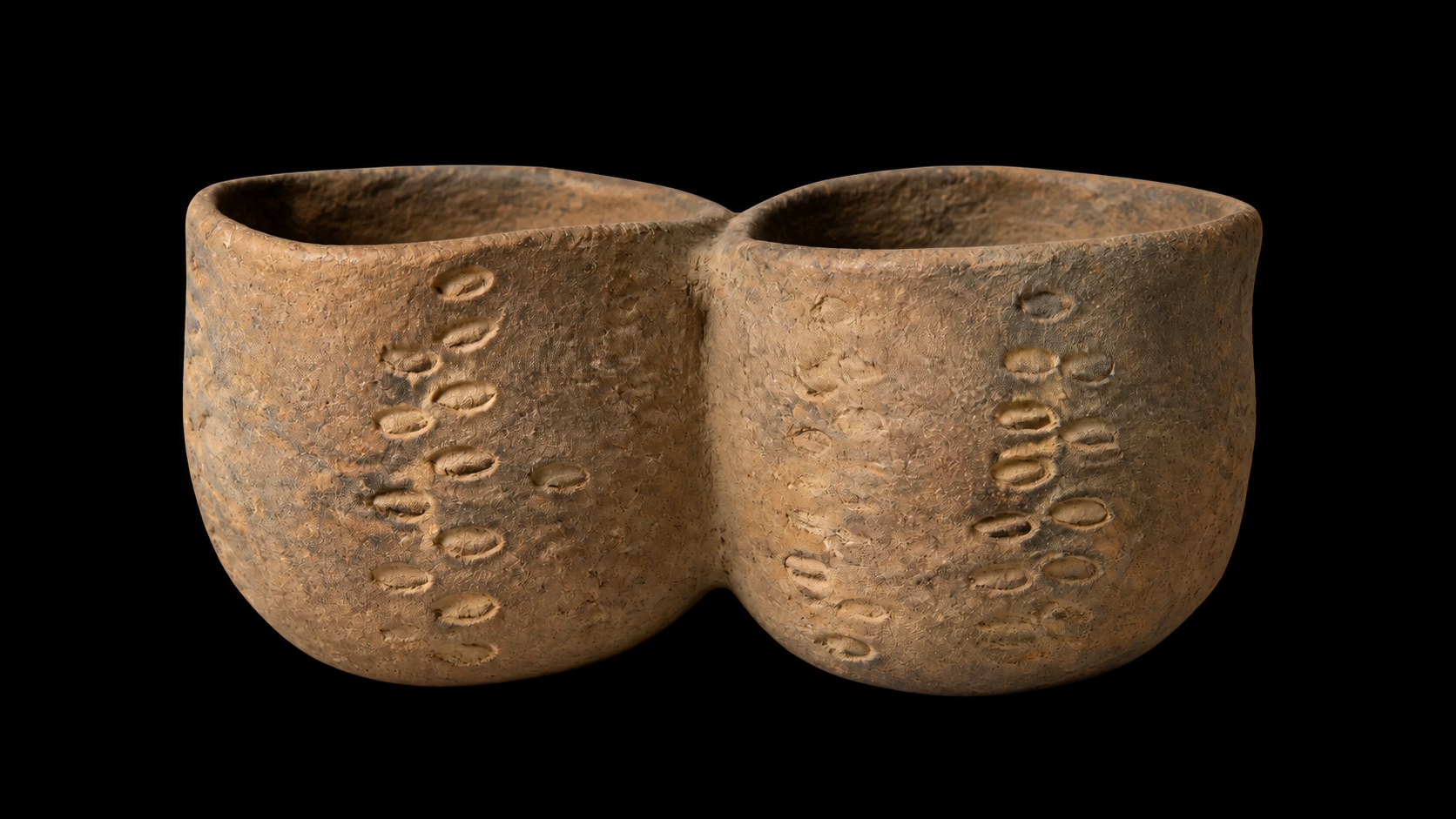
Load the model only when you want to explore it. Drag or use the arrow keys to turn it; + and − zoom. Closing it releases its memory.
User-supplied digital reconstruction; file metadata declares Tripo. It is not an archaeological scan nor a metric replica. The display scale is indicative, not a measurement of the original; the supplied geometry is preserved intact. The file received as "glass-gold-cave" has been visually reviewed: it represents two joined ceramic vessels. Its attribution to the twin-chambered vessel does not turn the interpreted form, decoration or finish into documentary evidence.
History and context
Two small fired-clay vessels were joined and decorated with Cardium shell impressions. Asymmetrical horizontal handles complete a piece whose form was conceived as a whole from manufacture.
It may have held liquids, served in a shared action, or taken part in a rite; no function is proven. Rarity does not automatically make an object sacred.
Evidence and interpretation
Twin-chambered form, Cardial technique, measurements and provenance from Cova de l’Or are secure. Contents, pouring method and ritual context are unknown.
Catalogue facts
- Date
- Early Neolithic · VI–V millennia BCE
- Location
- Cova de l’Or · Beniarrés, Alicante
- Material
- Fired clay · Cardial impression
- Measurements
- 8.8 cm high · 8.0 cm wide · rim 3.7 cm
A SHARED TOPIC, DIFFERENT MOMENTS
Objects connected through time
Follow a topic across the collections. A shared tag is a way to compare objects, not proof that one culture influenced another.
The order uses the midpoint of each approximate date range; ranges can overlap. Spacing does not represent elapsed time. Swipe, scroll or use the arrows. With the sequence focused, use ← / →, Home or End.
Clay32 dated objects
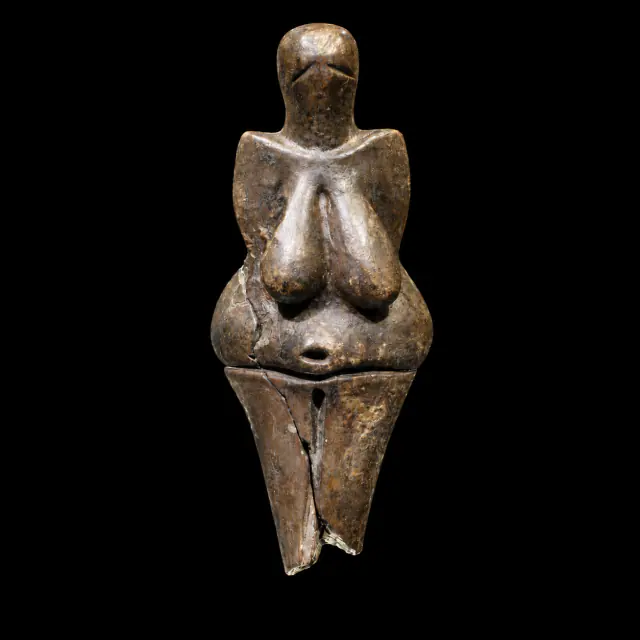
≈29,000–27,000 years
Dolní Věstonice I
Prehistory
Approximate catalogue age; editorial reference 2026 for ordering only, not calibrated dating.
Read the record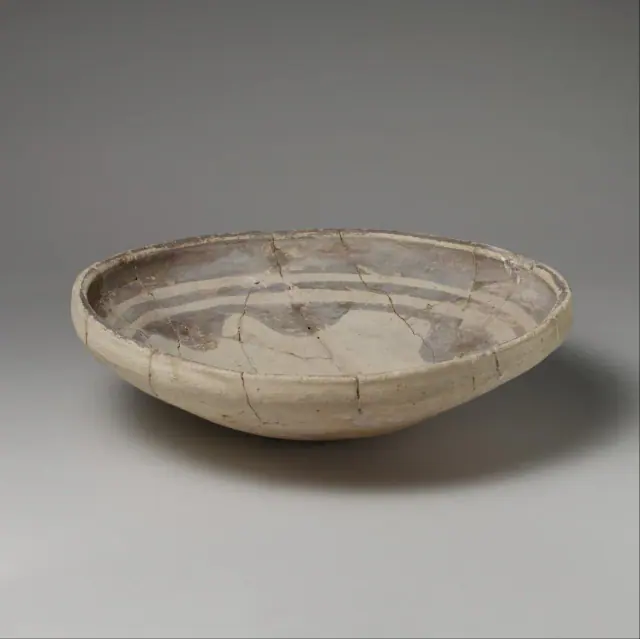
mid-6th–5th millennium BCE
Overlapping datesBefore Sumer
Sumer
The full 6th–5th millennia BCE provide broad limits for chronological ordering; the record qualifies the date as ‘mid’; the item's date is used, not the broader preceding period.
Read the record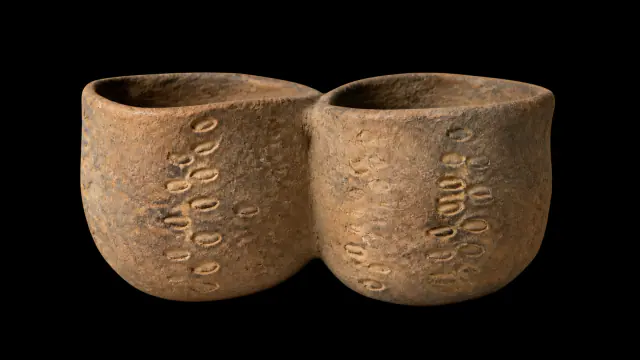 You are viewing
Early Neolithic · VI–V millennia BCE
Twin-chambered vessel from Cova de l’Or
Prehistory
Interval of the VI–V millennia BCE; no precise annual date.
Current record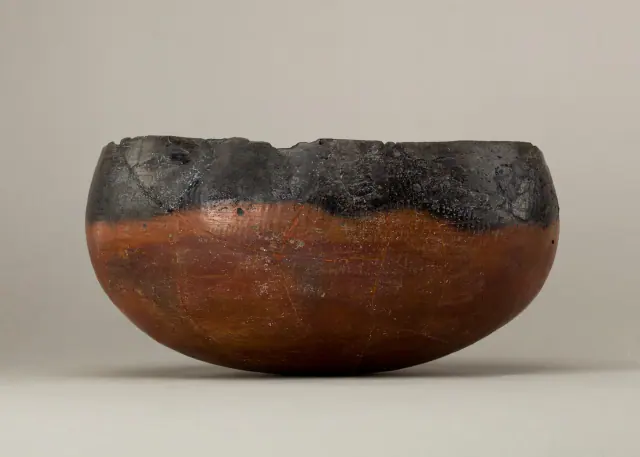
ca. 4400–3800 BCE
Overlapping datesBefore Egypt
Ancient Egypt
Date of the representative vessel, not of the entire predynastic period.
Read the record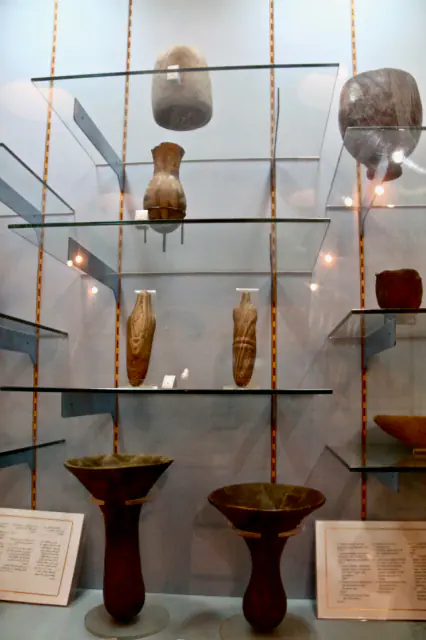
V–IV millennium BCE
Overlapping datesBefore Nubia
Nubia, Kerma and Kush
Interval of the V–IV millennia BCE of the element, not of the entire preceding period.
Read the record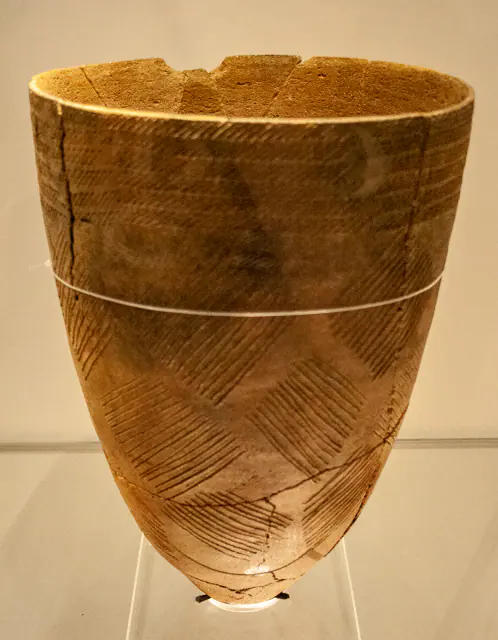
Middle Neolithic, c. 4000 BCE
Before Gojoseon
Gojoseon and early Korea
Date of the ceramic element, not of the preceding period.
Read the record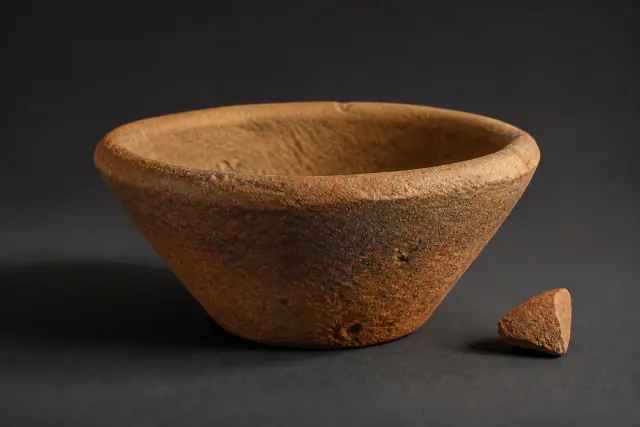
ca. 3500–3000 BCE
Bevel-rimmed bowl
Sumer
The wage ration hypothesis is not used as a functional label.
Read the record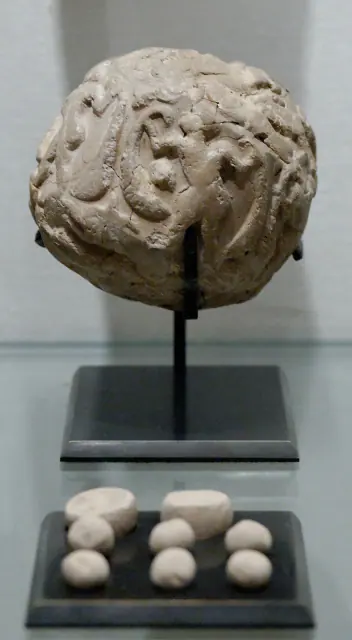
3500–2900 BCE · proto-urban period; towards 3300 BCE as a guide, not exact date
Susa accounting bulla
Sumer
Posted range; "towards 3300" is just orientation within that range.
Read the record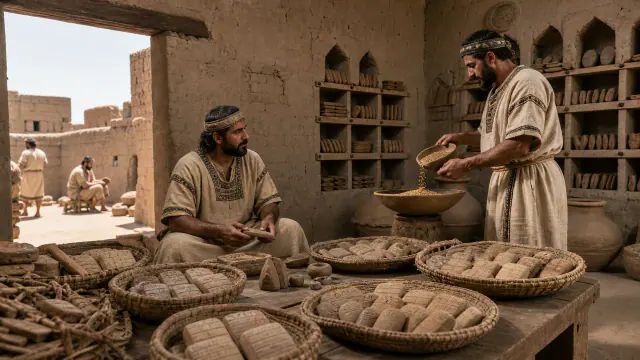
c. 3100–2900 BCE
Jemdet Nasr
Sumer
Approximate dating according to the record.
Read the record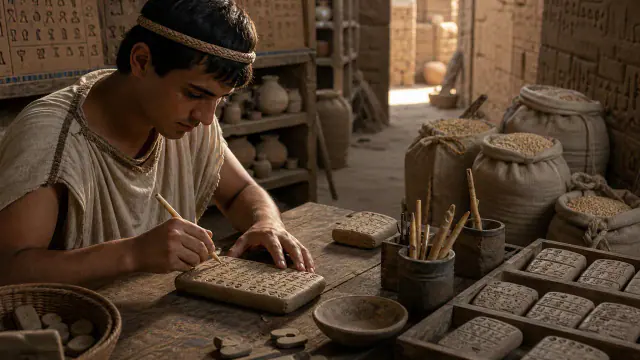
c. 3100–2900 BCE
Account of malt and barley
Sumer
Approximate dating according to the record.
Read the record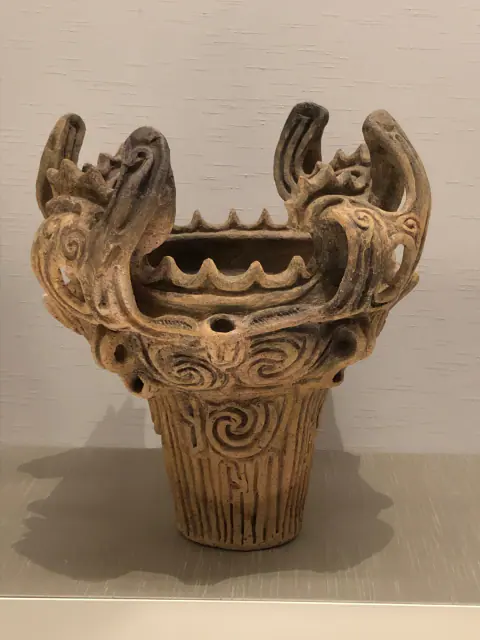
Middle Jōmon, ca. 3000 BCE
Before Yayoi
Yayoi Japan
Date of the Jōmon element, not of the entire preceding period.
Read the record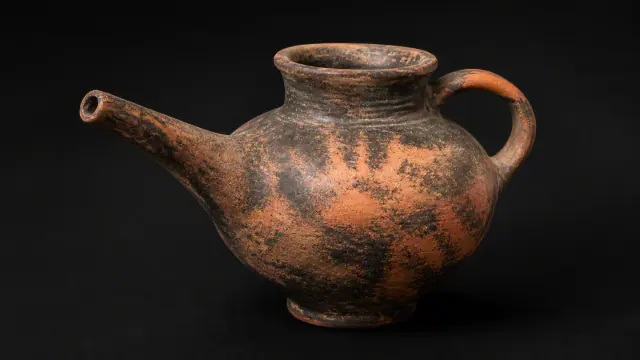
ca. 2500–2200 BCE
Vasiliki
Greek worlds
Date range for the regional pottery assemblage.
Read the record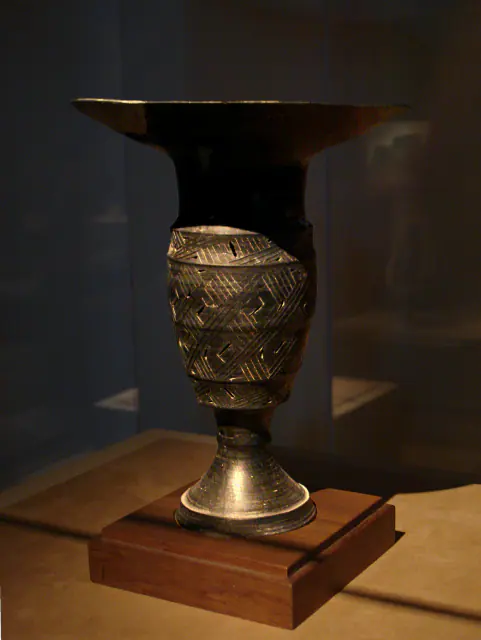
c. 2500–2000 BCE
Before Ancient China
Ancient China
Approximate dating according to the record.
Read the record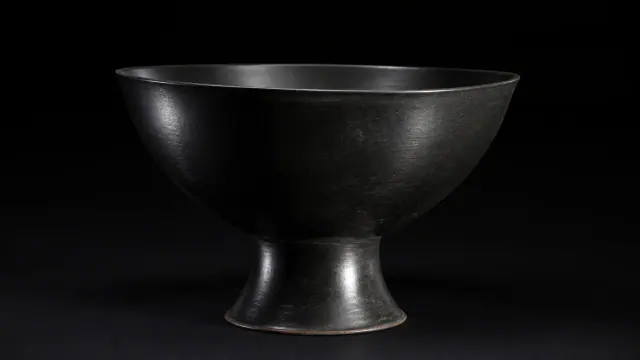
c. 2500–2000 BCE
Longshan
Ancient China
Date range for the Longshan pottery assemblage.
Read the record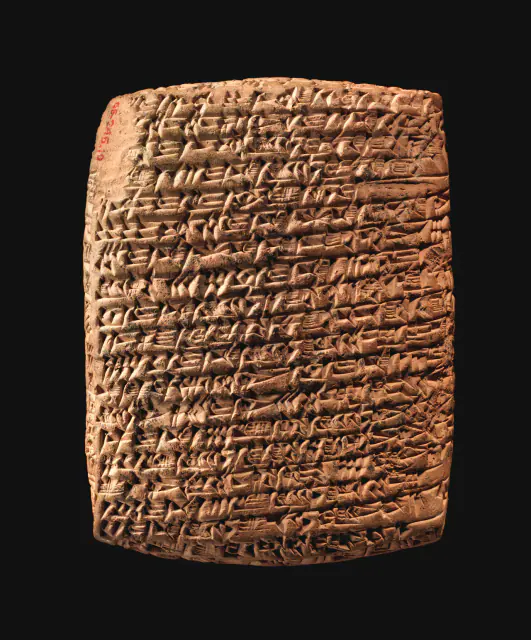
c. 19th century BCE
Before the Hittites
Hittites
Date of the representative document, not of the entire preceding period.
Read the record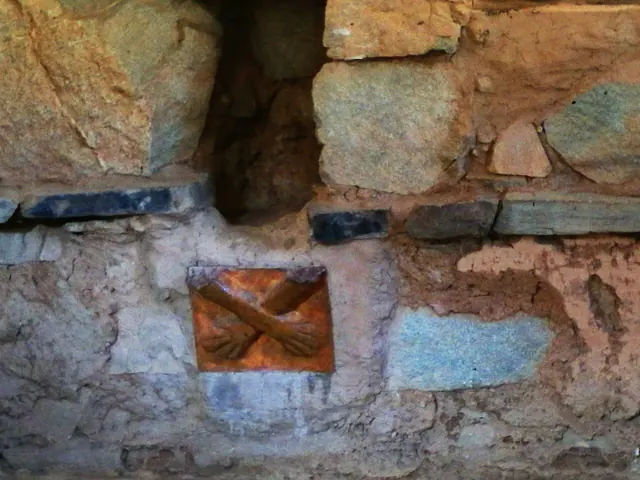
Kotosh-Mito Tradition, c. 2200–1500 BCE; the enclosure is usually situated around 1800 BCE.
Before Pre-Inca Cultures
Pre-Inca cultures
Element tradition interval; "around 1800" orients the enclosure.
Read the record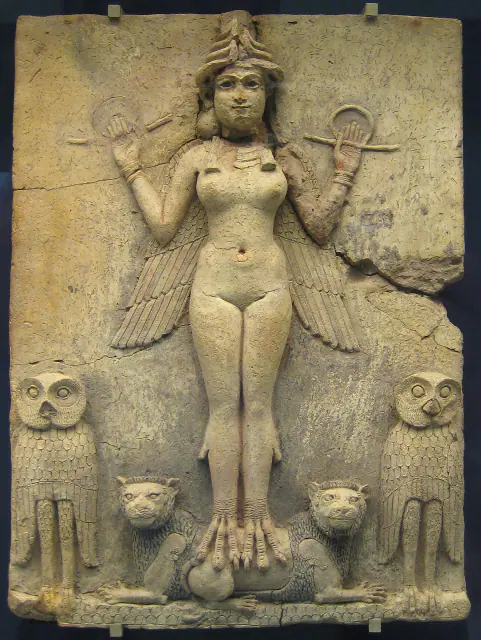
19th–18th centuries BCE
Queen of the Night
Sumer
Approximate dating according to the record.
Read the record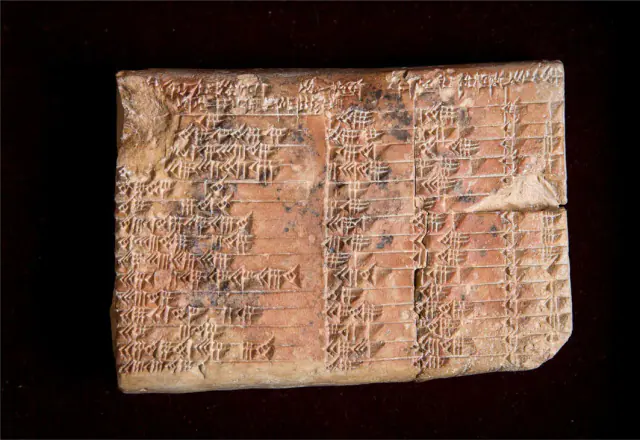
Paleo-Babylonian period · around 1800 BCE
Plimpton 322
Sumer
Approximate dating according to the record.
Read the record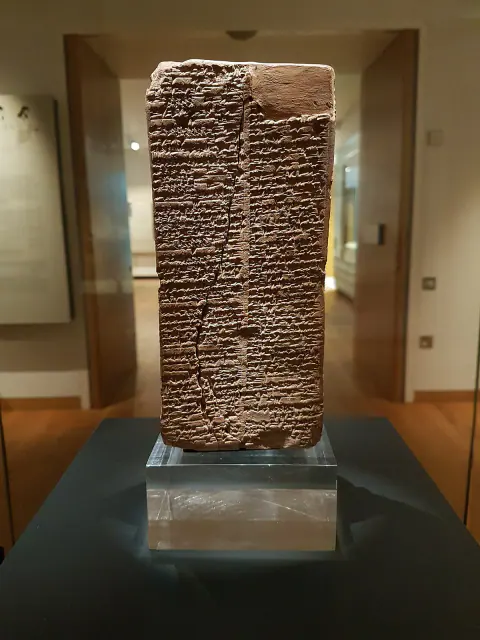
Towards 1800 BCE
Sumerian King List
Sumer
Date of preserved copy, not of reigns listed.
Read the record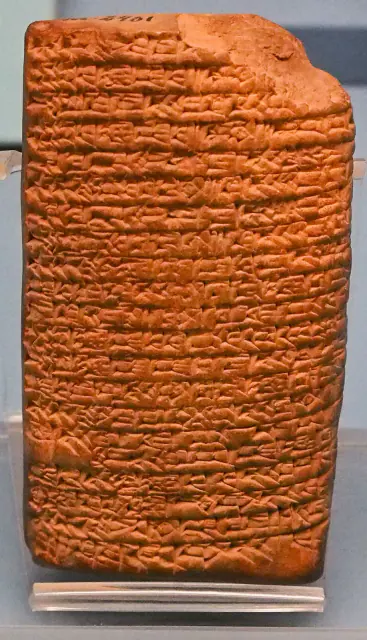
Paleo-Babylonian copy, around 1900–1600 BCE according to CDLI
Love song to Shu-Sin
Sumer
Date of the preserved Paleo-Babylonian copy, not of the origin of the song.
Read the record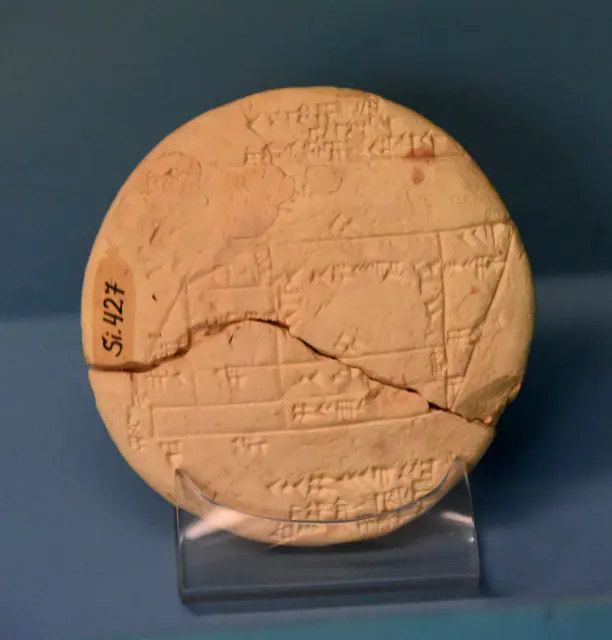
Towards 1900–1600 BCE · paleobabylonian; uncertain chronological attribution in CDLI
Si.427 tablet
Sumer
Unclear chronological attribution in CDLI.
Read the record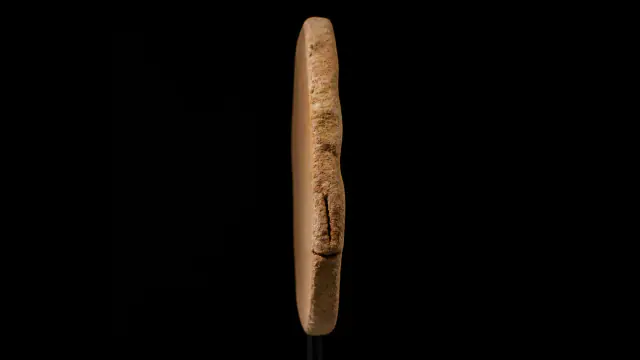
≈1700–1650 BCE
Phaistos Disc
Greek worlds
The signs have no accepted reading.
Read the record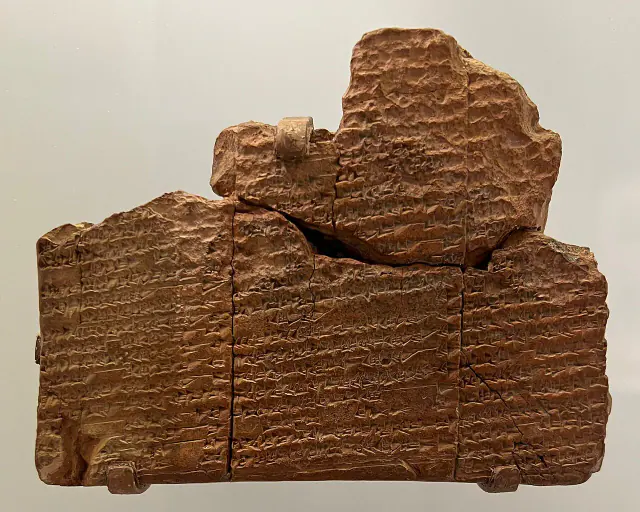
Towards 1650 BCE
Sumerian Flood of Nippur
Sumer
Approximate dating according to the record.
Read the record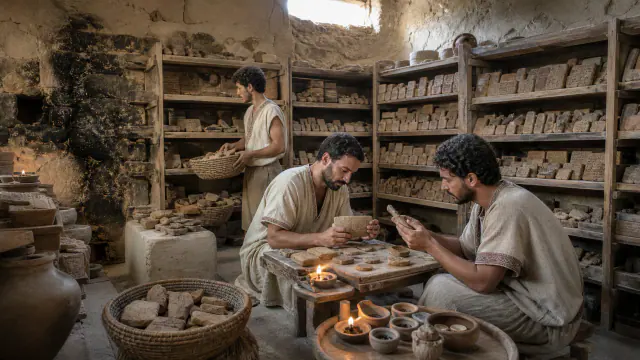
Above all 17th–13th centuries BCE
Boğazköy Archive
Hittites
Main date range for the archive, not a single date for all the tablets.
Read the record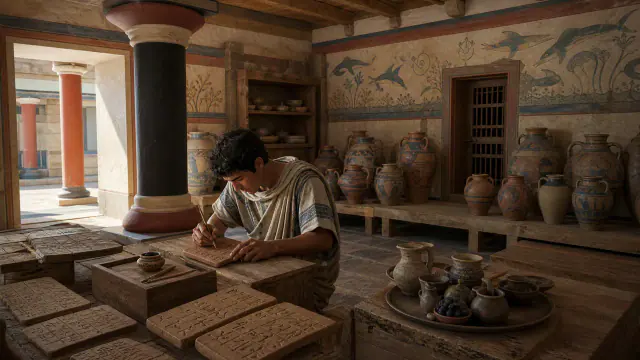
c. 1375 BCE
Linear B
Greek worlds
Approximate dating according to the record.
Read the record
c. 1300 BCE
Alaksandu of Wilusa
Hittites
Approximate dating according to the record.
Read the record
c. 1259 BCE, year 21 of Ramesses II
Treaty with Egypt
Hittites
Date of the treaty and its copy; not of the origin of relations between the two kingdoms.
Read the record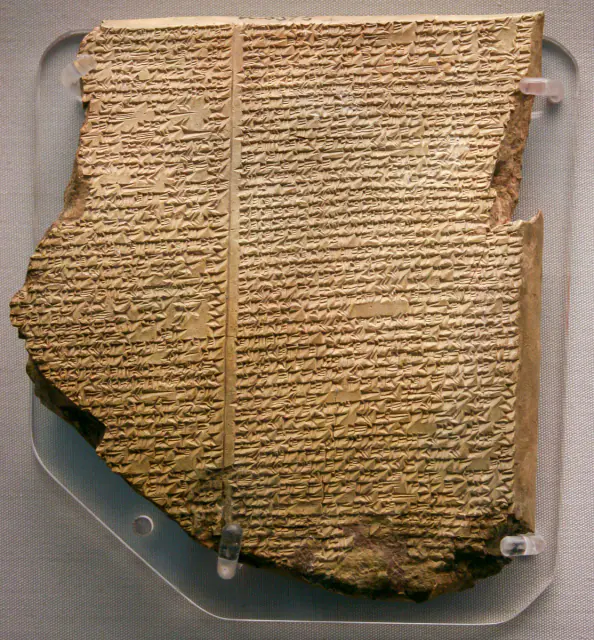
7th century BCE
Flood Tablet
Sumer
Approximate dating according to the record.
Read the record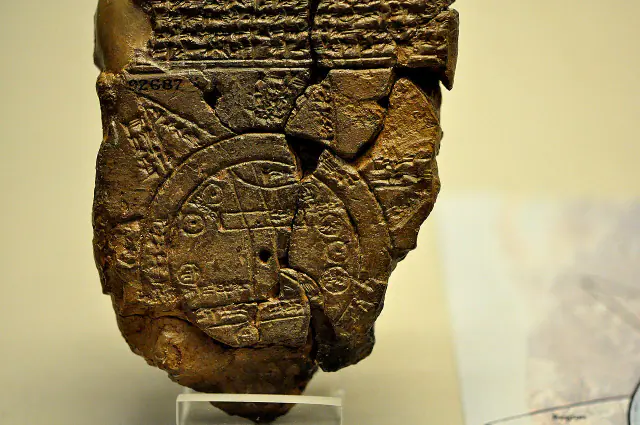
Towards 700–500 BCE
Babylonian map of the world
Sumer
Approximate dating according to the record.
Read the record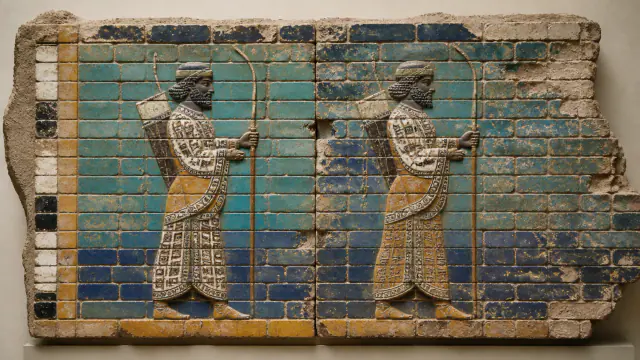
522–486 BCE
Glazed brick guards
Achaemenid Persia
Date range associated with the reign of the decoration.
Read the record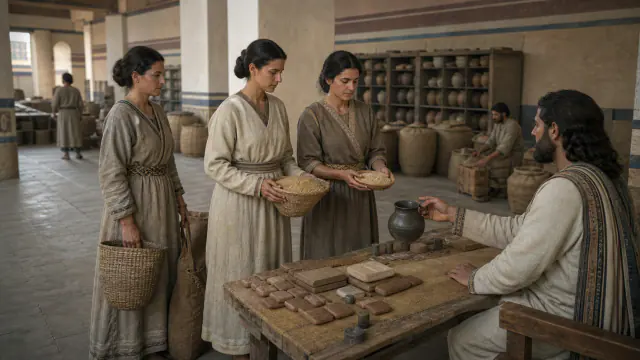
Towards 509–493 BCE
Rations for women and children
Achaemenid Persia
Date range of the archive and its documents.
Read the record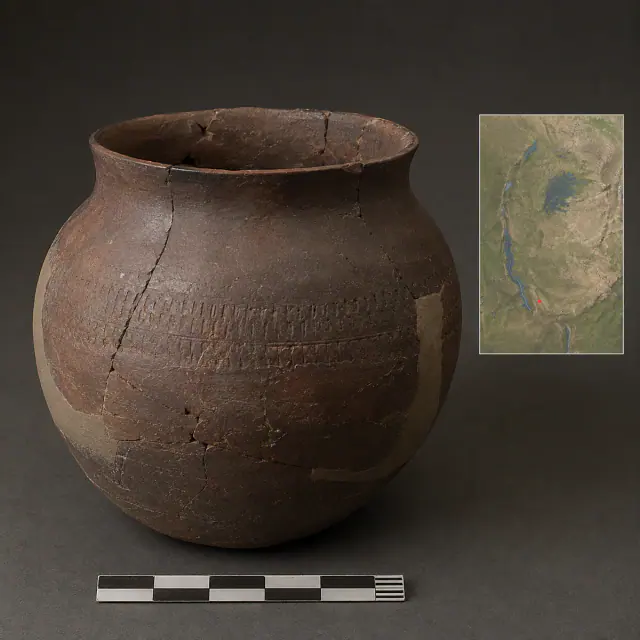
regional range c. 800 BCE–650 CE
Urewe vessel
Bantu-speaking worlds
Regional date range for the Urewe type, not an individual date for each vessel.
Read the record
Also connected, without a comparable date (8)
These objects are not placed after the others: an unknown date does not mean a more recent object.
- A White Wall on the DanubeCeltic worlds · 6th century BCE
- Blue that does not yieldMaya worlds · Documented use from the Classic, c. 300–1500 CE
- Cyrus speaks as king of BabylonAchaemenid Persia · After the conquest of Babylon in 539 BCE
- Early potteryMande Worlds · before ca. 9400 cal BCE
- Made in GaramaGaramantes · I millennium BCE–I millennium CE
- Piece-mold castingAncient China · c. 1600–1046 BCE
- The unfinished gestureBatwa / Twa histories · 1947
- Vessels without a languageBantu-speaking worlds · Urewe, broad regional range ca. 800 BCE–650 CE
A closer look
About 4 min to read · 7 sections. Further reading and sources · free access. Editorial review recorded: .
Joined vessels do not necessarily connect internally
The comparative study published in Bilyana distinguishes twin-chambered vessels by their construction, not only by their appearance. In a set of ninety-five Iberian Bronze Age examples, much later than Cova de l’Or, only two show interior communication between chambers. The comparison does not resolve the function of the Neolithic specimen: it demonstrates precisely that two joined bodies can organise contents in different ways. Before imagining a shared drink it is advisable to observe walls, joins, handles and openings; the outer form is not enough to reconstruct the gesture.
A small piece from an important site
Cova de l’Or lies in the Benicadell range, above the surroundings of Beniarrés, in Alicante. The MARQ places communities practising agriculture and livestock farming there from the mid-6th millennium BCE. That date describes the occupation of the site: it does not by itself date every vessel found there. The vessel is studied within the Neolithic of the region, without imagining that all its inhabitants used vessels in the same way.
The variety and quality of the finds have led to the proposal that the cave may have been a place of social reference. That proposal does not prove a specific ceremony with this vessel.
- Museum · MARQ · Cova de l’Or: landscape and first farming communitiesAccess recorded: .
A shell was used to decorate the clay
The word "cardial" describes a decoration technique using shell impressions. It is worth imagining the work before firing, when the clay could still receive the marks. Different parts of the shell could leave different impressions: the whole design did not have to be made with the same area or the same gesture.
The catalogue of the exhibition El poder del pasado identifies this vessel as a 1955 find. It presents it alongside other ceramics from Cova de l’Or that helped to study and recognise the Valencian Early Neolithic.
Look at the vessel alongside the other vessels
The Museu de Prehistòria de València includes it in a display case dedicated to Neolithic ceramics from Cova de l’Or and Cova de la Sarsa. The group brings together different forms and decorations: vessels with incisions, clay cords and impressions, as well as globular vessels and other variants.
The comparison gives meaning to the exceptional nature of the twin-chambered vessel. It does not represent the entire crockery of a community. It is a particular solution within a broader repertoire. When viewing the gallery, compare the number of rims, the shape of the handles and the distribution of decoration, without assuming that all those differences corresponded to the same use.
Two joined vessels do not always belong to the same period
The Museo de Teruel holds another twin-chambered vessel, from El Castillo de Frías de Albarracín, attributed to the Middle Bronze Age. It is much more recent than the one from Cova de l’Or. Its entry describes vessels modelled separately and joined afterwards, and recalls the presence of specimens of this type in domestic settings.
It is a useful comparison, not an automatic explanation of the Neolithic vessel. A similar form can reappear in different periods. The findspot, the other materials and the traces of use must accompany the form when a function is proposed for a piece.
Old excavations still yield materials
Investigating Cova de l’Or does not consist solely of opening new areas. The MARQ inventory includes materials recovered by reviewing and sieving the earth extracted during excavations in the fifties. Among those studied are ceramics, stone tools, bone objects and ornaments.
That work recovers information that had previously gone unnoticed. However, a piece collected from that disturbed earth does not retain the same stratigraphic position as another documented in its original level. The inventory explains where each group comes from; the context of those later recoveries must not be transferred to the vessel found in 1955.
Why different dates may appear
The official guide of the Museu de Prehistòria de València places the vessel between 5500 and 5000 BCE. The catalogue of the exhibition El poder del pasado, on the other hand, presents it under V–IV millennium BCE. They are different published attributions, not two dates that we must add or average. To guide the visit, the guide of the institution that conserves the piece offers the most direct reference. The discrepancy is indicated so that a search in another catalogue does not appear to describe a necessarily different object.
Location and territory
LOCATED SITE
Cova de l’Or · BeniarrésApproximate marker of the Neolithic cavity.Where it is held
Museu de Prehistòria de València
Item or group in the record · On display
Display case 39 according to the catalogue entry.
The holding institution is documented; public display may change. Check its official record before visiting.
Sources and references
- Museu de Prehistòria de València · catalogue 5271
- Museum of Villena · Bilyana 5, Los vasos geminados de Villena. ¿Un signo para una élite?
- MARQ · Cova de l’Or: landscape and first farming communities
- Museo Arqueológico Nacional and Acción Cultural Española · El poder del pasado, catalogue 48, p. 172
- Museu de Prehistòria de València · Cerámicas de Cova de l’Or y Cova de la Sarsa, display case 39
- Museum of Teruel · Twin-chambered vessel from El Castillo, Frías de Albarracín (Bronze Age comparison)
- MARQ · Cova de l’Or: inventory of materials from recent interventions
- Museu de Prehistòria de València · official guide, p. 44: twin-chambered vessel
Did you enjoy this exhibit?
Your opinion helps us improve the museum. You can change it whenever you like.
Loading your rating…