
 English
 Español
 Français
 Italiano
 Deutsch
 Русский
 Português
 Polski
 Română
 Svenska
 Norsk bokmål
 Suomi
 Türkçe
 العربية
 简体中文
 한국어
 हिन्दी
 Ελληνικά
BEFORE URUK · ca. 6500–3500 BCE
Before Sumer
The city began learning to take care of water
Before big cities, delta communities already had to organize water use.
Museum documentation · free public access, no account required.
Generated reconstruction · Declared visual hypothesis
Declared visual reconstruction for museographic context; it is not a photograph of the original nor documentary evidence.
History and context
Long before a tablet counted barley, southern Mesopotamia was a laboratory of water, mud and cooperation. In the communities of the Ubaid period, farming, ranching, and fishing families occupied marsh edges, opened and maintained canals, built adobe buildings, and shared ceramic styles over enormous distances. Eridu grew by rebuilding itself: each new plant preserved previous decisions and erased others.
"Sumeria" did not yet exist as a State nor do we know what language each community spoke. What was decisive was something else: for centuries they learned to sustain settlements where almost all the stone and wood had to come from afar. Uruk would inherit that social infrastructure.
Evidence and interpretation
Documented fact: Shallow painted ceramic bowl, found in a tomb in the Ubaida cemetery of Eridu. A dark band runs along the edge and three hatched rhombuses seem to rotate around the container. It is not urban luxury or writing: it is the trace of a community that mastered clay, shared styles and buried selected objects many centuries before the rise of Uruk. Interpretation and Caution: Geometric motifs are documented, but their meaning has not been deciphered and they should not be read as writing. Historical transition: The hydraulic cooperation, communal buildings and networks of the Ubaid period gave Uruk a social infrastructure on which to expand population, workshops and administration. Transition boundary: Ubaid is an extensive archaeological category, not a ready-made Sumerian town; The language and identity of those communities cannot be deduced from a vessel.
Catalogue facts
- Previous period
- ca. 6500–3500 BCE
- Sphere of influence
- Lower Mesopotamia and marshes of the Tigris and Euphrates delta, present-day Iraq
- Threshold element
- Ubaida bowl from Eridu
- Element date
- mid-6th–5th millennium BCE
- Location
- Eridu, present-day Iraq
- Material or support
- painted pottery
- Time frame
- ca. 6500–3500 BCE
- Documented fact 01
- Ubaid is an archaeological label, not a proven ethnicity.
- Documented fact 02
- Eridu accumulated successive monumental reconstructions.
- Documented fact 03
- Local clay coexisted with imported raw materials.
- Visual credit
- The Metropolitan Museum of Art · CC0
A SHARED TOPIC, DIFFERENT MOMENTS
Objects connected through time
Follow a topic across the collections. A shared tag is a way to compare objects, not proof that one culture influenced another.
The order uses the midpoint of each approximate date range; ranges can overlap. Spacing does not represent elapsed time. Swipe, scroll or use the arrows. With the sequence focused, use ← / →, Home or End.
Ceramics39 dated objects
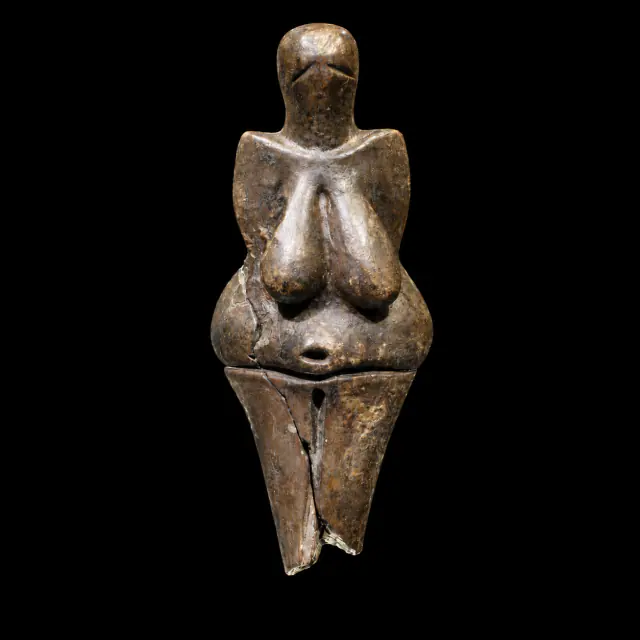
≈29,000–27,000 years
Dolní Věstonice I
Prehistory
Approximate catalogue age; editorial reference 2026 for ordering only, not calibrated dating.
Read the record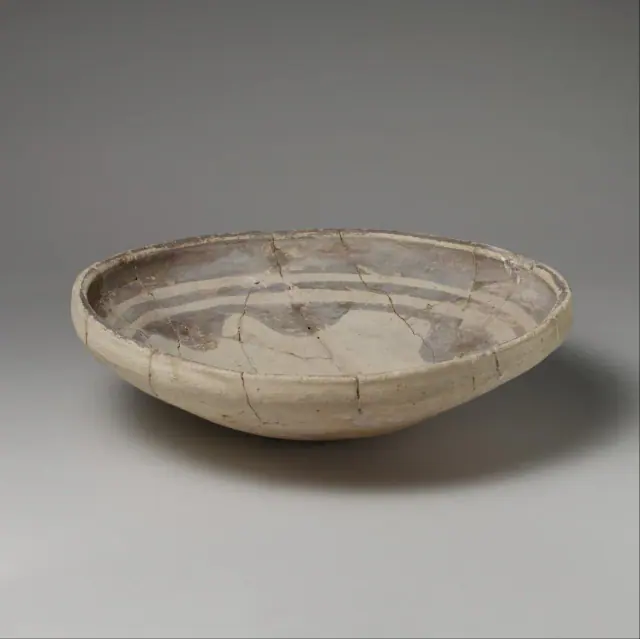 You are viewing
mid-6th–5th millennium BCE
Before Sumer
Sumer
The full 6th–5th millennia BCE provide broad limits for chronological ordering; the record qualifies the date as ‘mid’; the item's date is used, not the broader preceding period.
Current record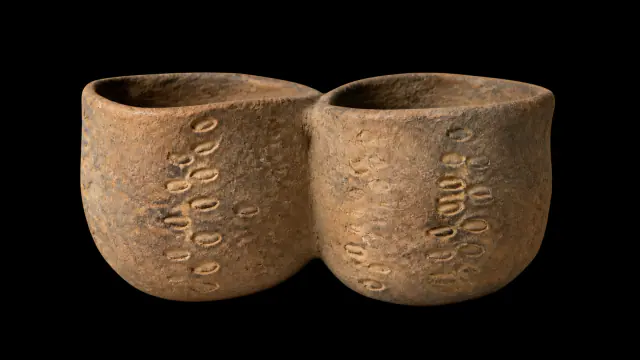
Early Neolithic · VI–V millennia BCE
Overlapping datesTwin-chambered vessel from Cova de l’Or
Prehistory
Interval of the VI–V millennia BCE; no precise annual date.
Read the record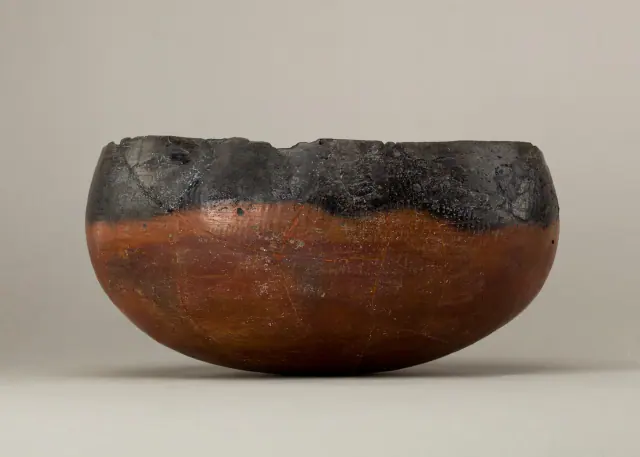
ca. 4400–3800 BCE
Overlapping datesBefore Egypt
Ancient Egypt
Date of the representative vessel, not of the entire predynastic period.
Read the record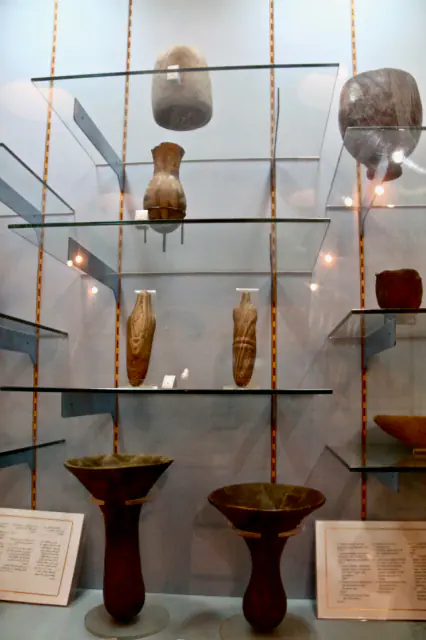
V–IV millennium BCE
Overlapping datesBefore Nubia
Nubia, Kerma and Kush
Interval of the V–IV millennia BCE of the element, not of the entire preceding period.
Read the record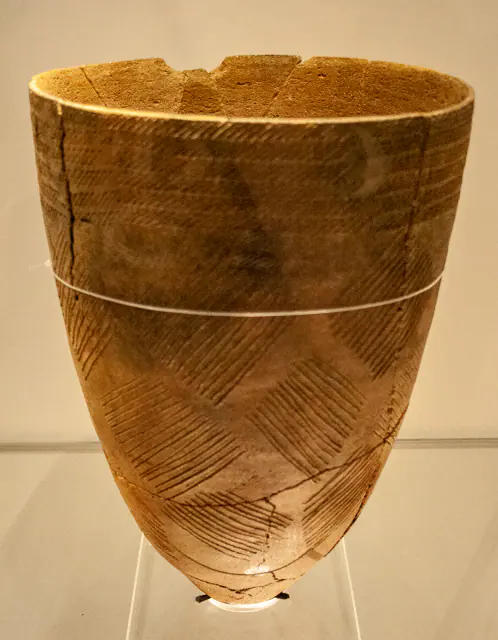
Middle Neolithic, c. 4000 BCE
Before Gojoseon
Gojoseon and early Korea
Date of the ceramic element, not of the preceding period.
Read the record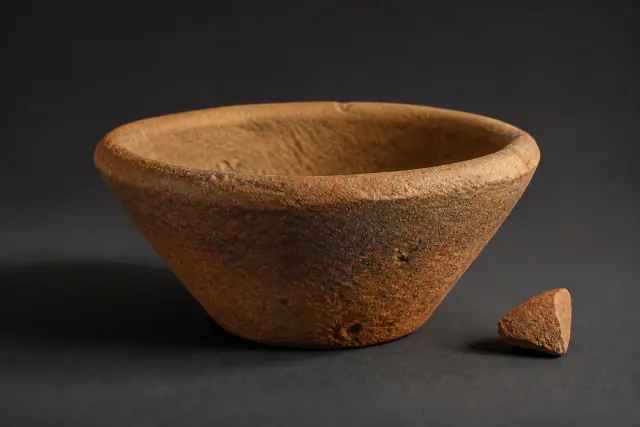
ca. 3500–3000 BCE
Bevel-rimmed bowl
Sumer
The wage ration hypothesis is not used as a functional label.
Read the record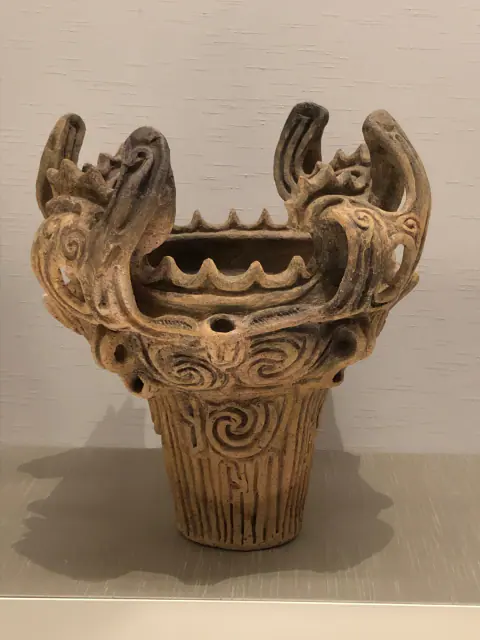
Middle Jōmon, ca. 3000 BCE
Before Yayoi
Yayoi Japan
Date of the Jōmon element, not of the entire preceding period.
Read the record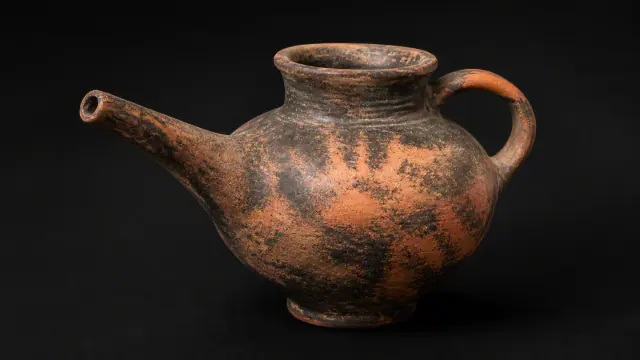
ca. 2500–2200 BCE
Vasiliki
Greek worlds
Date range for the regional pottery assemblage.
Read the record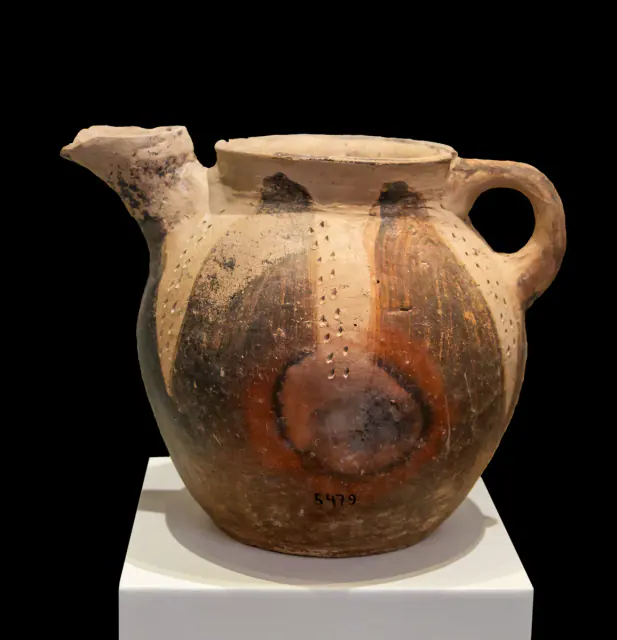
c. 2400–2200 BCE
Before the Greeks
Greek worlds
Approximate dating according to the record.
Read the record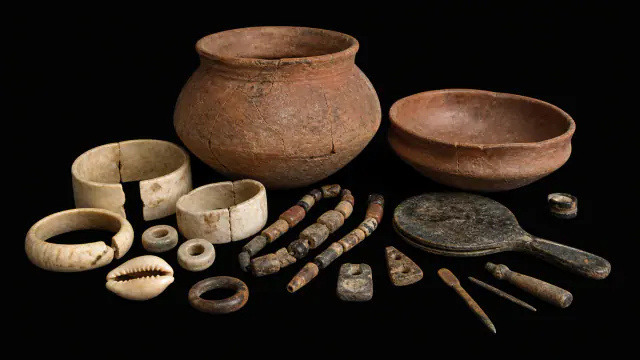
ca. 2550–2030 BCE
Cemetery R-37
Indus civilisation
Interval of the cemetery and its funerary group.
Read the record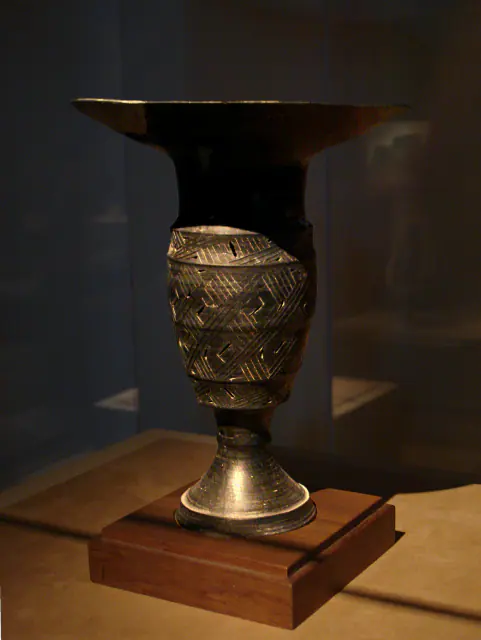
c. 2500–2000 BCE
Before Ancient China
Ancient China
Approximate dating according to the record.
Read the record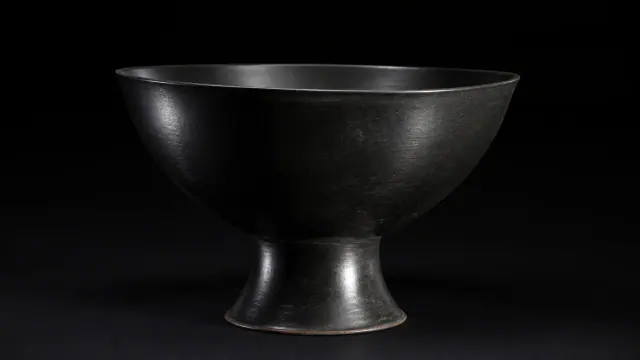
c. 2500–2000 BCE
Longshan
Ancient China
Date range for the Longshan pottery assemblage.
Read the record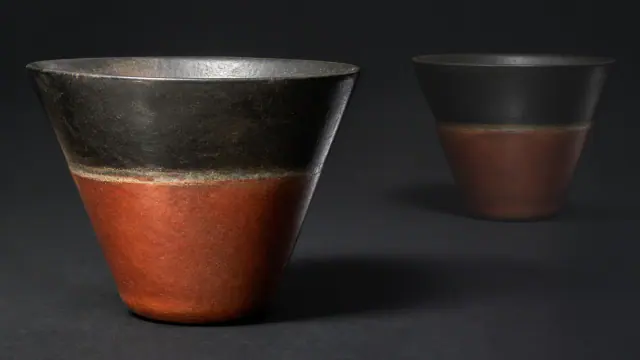
c. 1802–1640 BCE
Kerma vessel
Nubia, Kerma and Kush
Approximate dating according to the record.
Read the record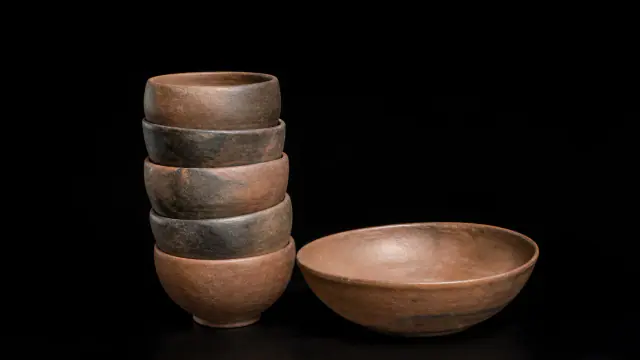
circa 1750–1550 BCE
Burial at K IV
Nubia, Kerma and Kush
Chronology of the funerary assemblage.
Read the record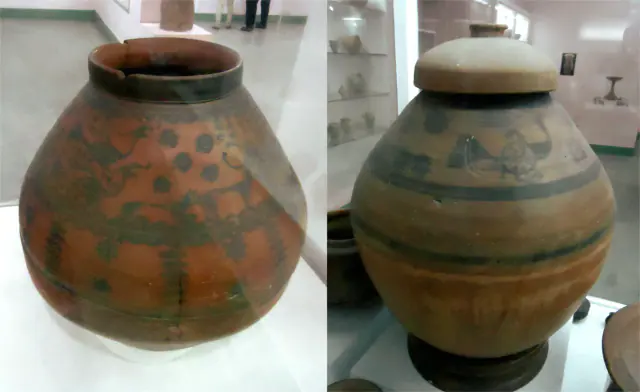
c. 1900–1300 BCE
Before Vedic India
Vedic and later Indian worlds
Approximate dating according to the record.
Read the record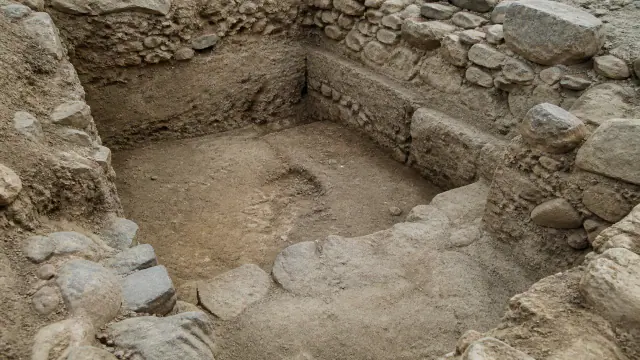
ca. 1700/1650–1200 BCE
Osmankayası and Ilıca
Hittites
The envelope of the explicit numerical alternatives is used as an orientative ordering framework: start towards 1700 or 1650 BCE and end towards 1200 BCE; framework of funerary assemblages, not a single manufacturing date.
Read the record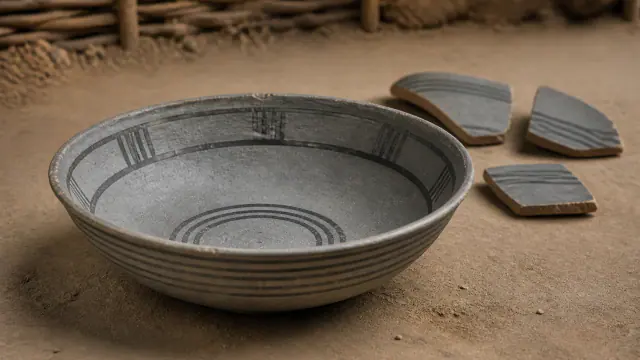
c. 1100–800 BCE in the classical sequence of Hastinapura
Grey bowl from Hastinapura
Vedic and later Indian worlds
Range of the Hastinapura pottery sequence, not the date of each vessel.
Read the record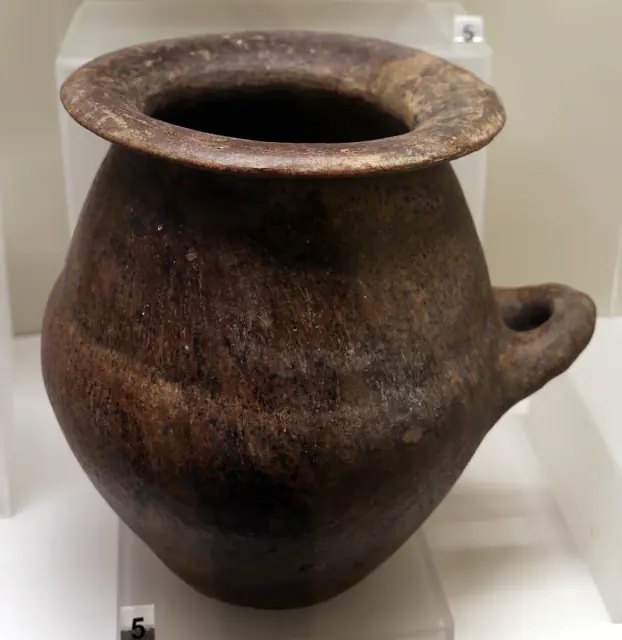
ca. 850–800 BCE
Before Etruscans and Rome
Etruscans and Rome
Approximate dating according to the record.
Read the record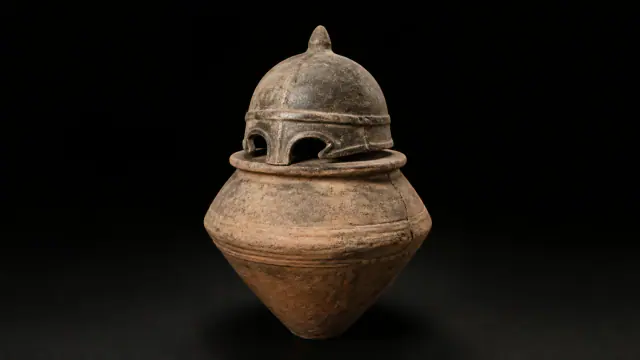
9th–8th centuries BCE
The urn under the helmet
Etruscans and Rome
Approximate dating according to the record.
Read the record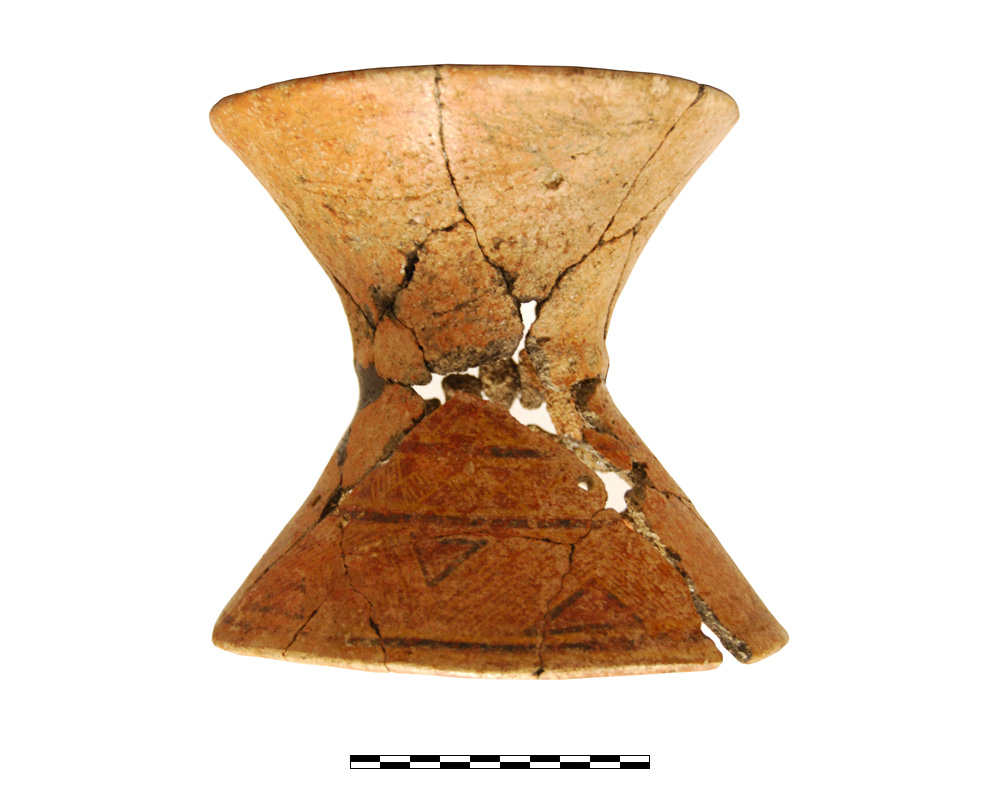
8th–7th centuries BCE · orientalizing
Ceramic stand 1010
Iberians
Chronology of the funerary context of Tomb 5, Orientalising horizon.
Read the record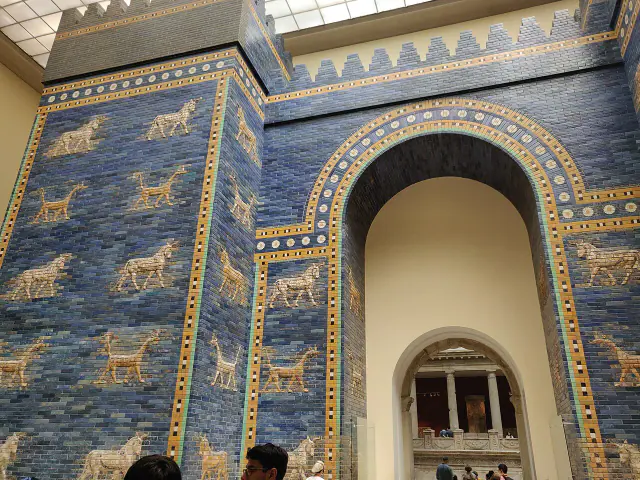
7th–6th centuries BCE · work of Nebuchadnezzar II
Ishtar Gate
Sumer
Wide interval of the piece and its phases; The museum setup is modern.
Read the record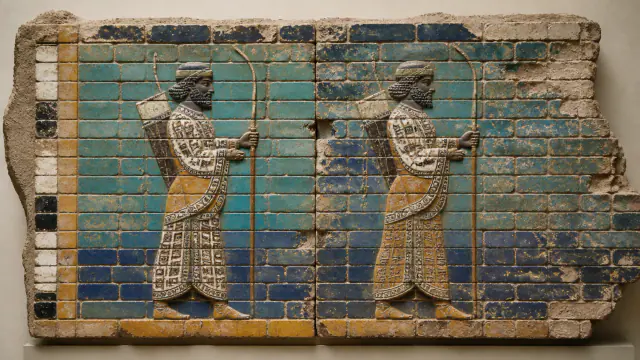
522–486 BCE
Glazed brick guards
Achaemenid Persia
Date range associated with the reign of the decoration.
Read the record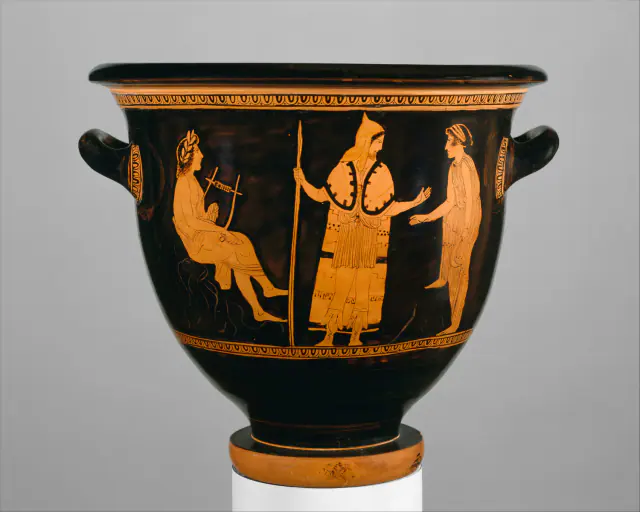
circa 440 BCE; attributed to the London Painter E 497.
Orpheus among the Thracians
Thracians
Approximate dating according to the record.
Read the record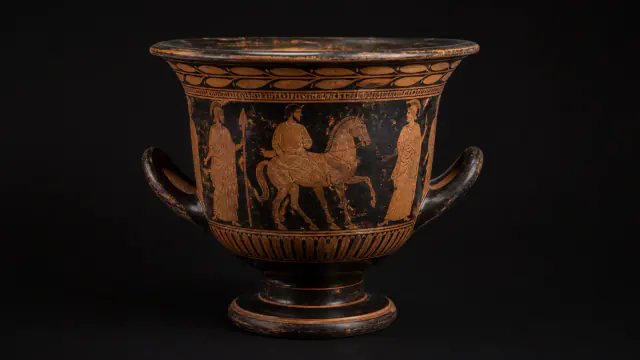
4th century BCE
The Attic krater that took on a new life in Cástulo
Greek worlds
Approximate dating according to the record.
Read the record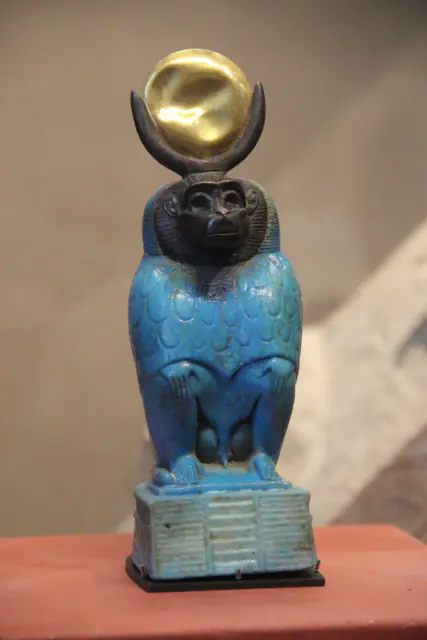
664–30 BCE
Thoth in the form of a baboon
Ancient Egypt
Approximate dating according to the record.
Read the record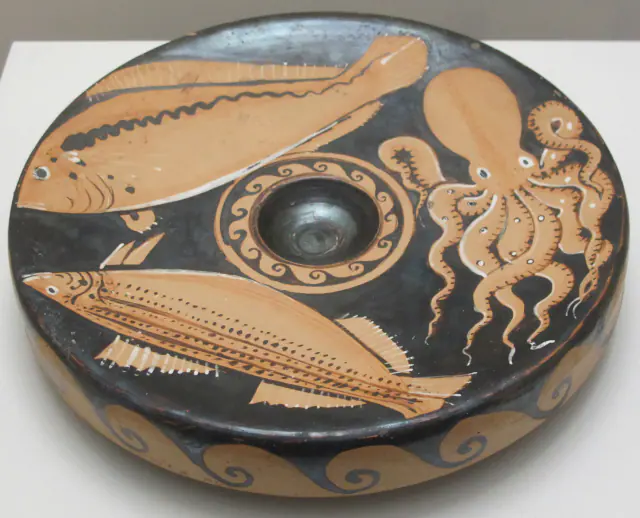
Last third 4th–early 3rd century BCE
Leipzig Fish Plate
Greek worlds
The full 4th–3rd centuries BCE provide broad limits for chronological ordering; the record specifies the last third of the 4th century and the early 3rd.
Read the record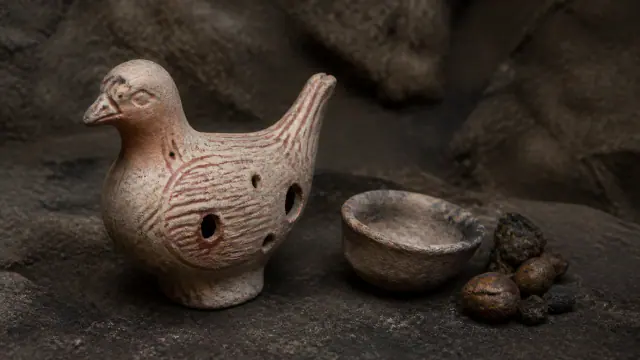
3rd century BCE
Dove of the Amarejo
Iberians
Approximate dating according to the record.
Read the record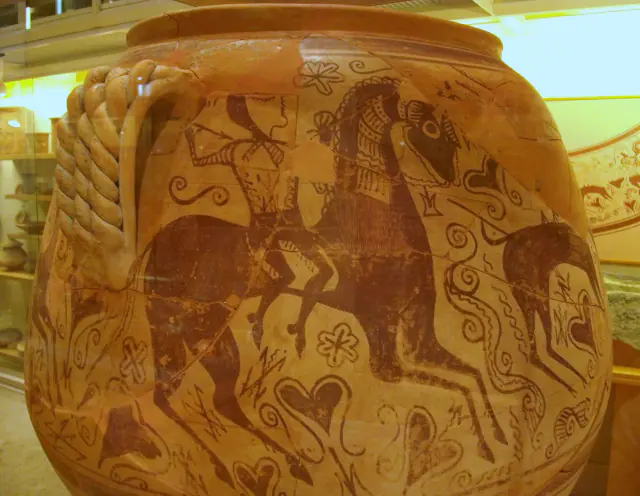
3rd–early 2nd century BCE
Vas dels Guerrers
Iberians
The full 3rd–2nd centuries BCE provide broad limits for chronological ordering; the record specifies the 3rd century and the early 2nd.
Read the record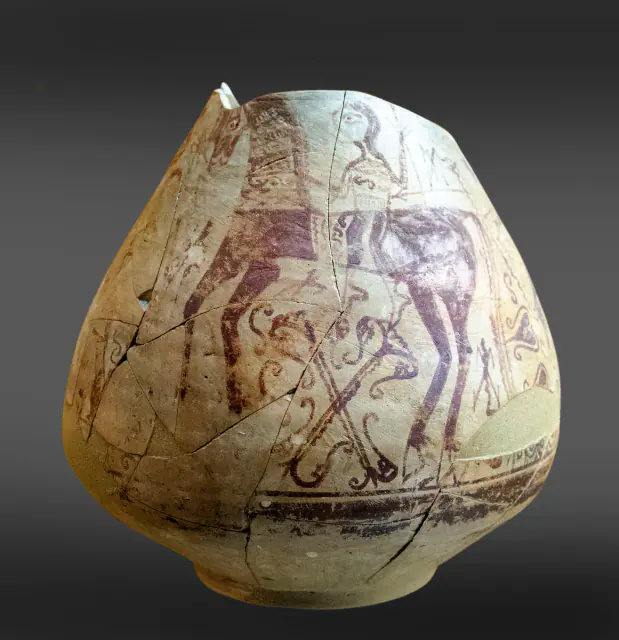
3rd–2nd centuries BCE
Warriors' Vase
Iberians
Approximate dating according to the record.
Read the record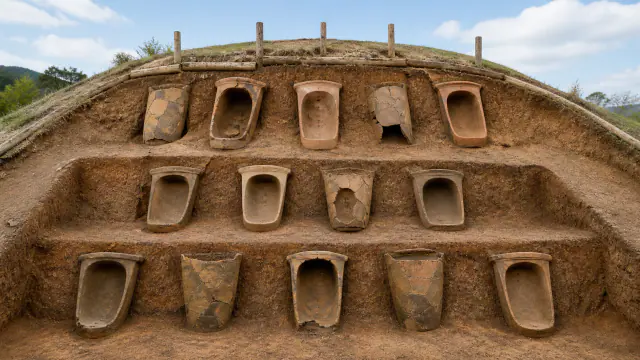
2nd–1st centuries BCE
Northern mound
Yayoi Japan
Date of the funerary assemblage.
Read the record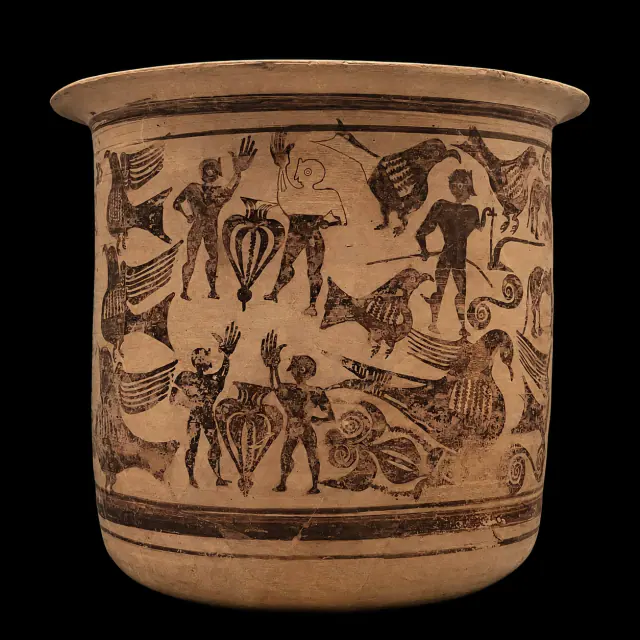
2nd–1st centuries BCE
Kalathos of Alcorisa
Iberians
Approximate dating according to the record.
Read the record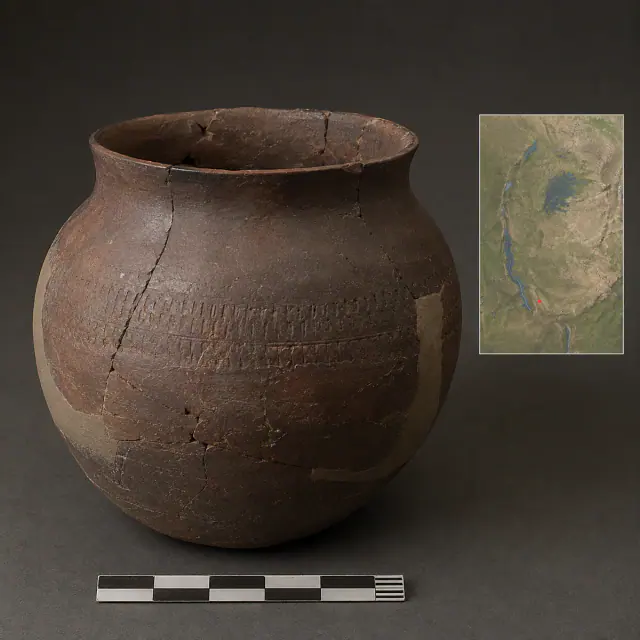
regional range c. 800 BCE–650 CE
Urewe vessel
Bantu-speaking worlds
Regional date range for the Urewe type, not an individual date for each vessel.
Read the record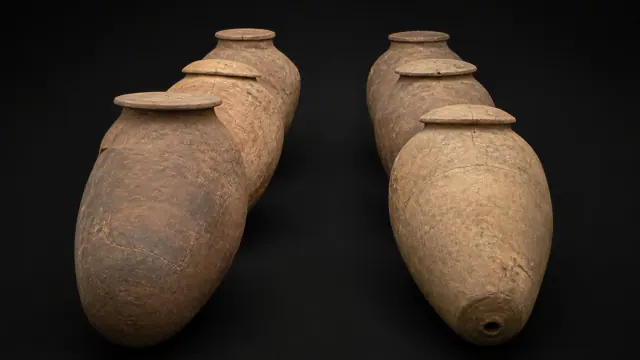
Mainly Middle Yayoi, 2nd century BCE–1st century CE
Two rows of coffins
Yayoi Japan
Framework of the cemetery and its ceramic coffins.
Read the record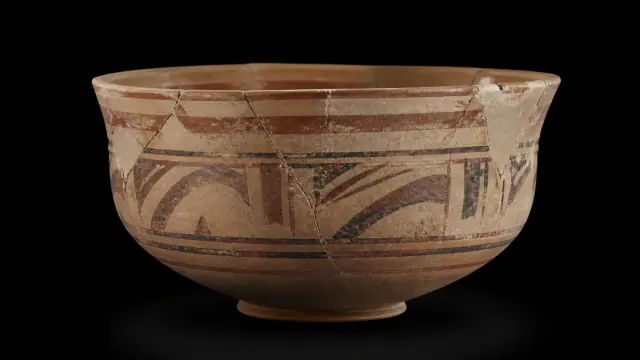
Last third of the 2nd century BCE–1st century CE
Ceramics that continued
Iberians
The full 2nd century BCE–1st century CE provide broad limits for chronological ordering; the record specifies the last third of the 2nd century BCE and the 1st century CE; this is a production date range, not the date of an individual object.
Read the record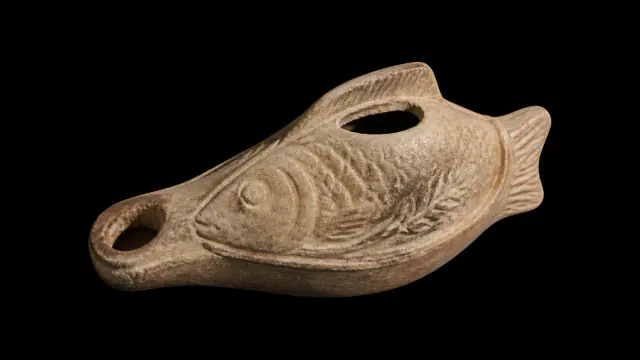
3rd–4th centuries CE
Egyptian oil lamp with a fish, held in Laon
Ancient Egypt
3rd–4th centuries CE
Read the record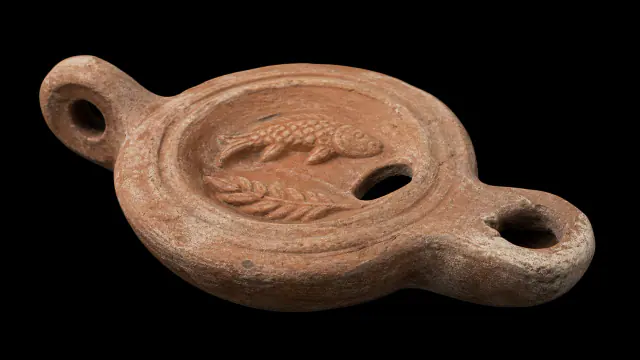
3rd–4th centuries CE
Laon lamp with fish
Etruscans and Rome
Approximate dating according to the record.
Read the record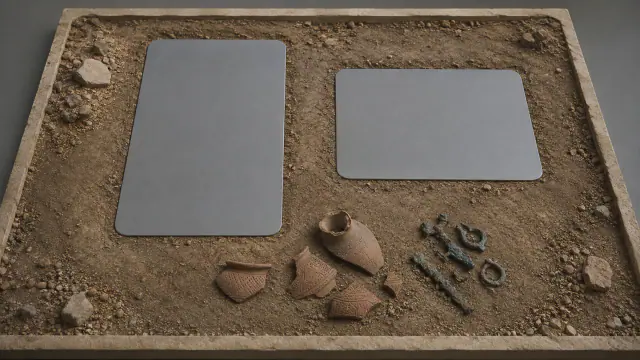
ca. 400 CE
Kabusanza, ca. 400
Batwa / Twa histories
Approximate date of the Kabusanza context; no automatic ethnic attribution.
Read the record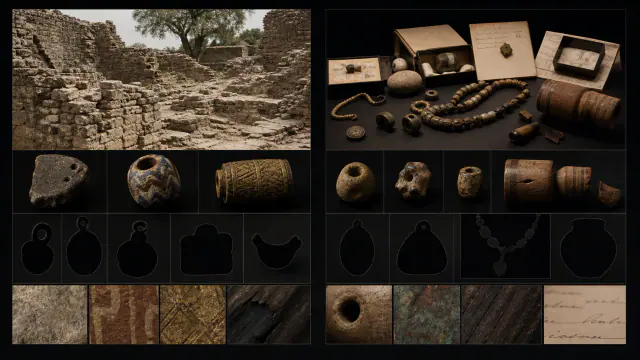
13th–15th centuries according to the heritage overview
Missing grave goods
Bantu-speaking worlds
Date range of the burial assemblage; incomplete individual inventories.
Read the record
Also connected, without a comparable date (17)
These objects are not placed after the others: an unknown date does not mean a more recent object.
- A Kerma vessel deposited at AbydosAncient Egypt · Second Intermediate Period
- A tradition that inventsBatwa / Twa histories · collected in 1993 or 1995
- A vase travels; the rite changesIberians · No individual dating published on this record
- AkrotiriGreek worlds · c. 1700–1500 BCE
- Dia’s strataMande Worlds · 9th century BCE–2nd millennium CE
- Early potteryMande Worlds · before ca. 9400 cal BCE
- Jenne-jeno contextsMande Worlds · ca. 250 BCE–1400 CE
- Liédena FlaskEtruscans and Rome · Roman period · individual chronology not published in the entry
- LothalIndus civilisation · ca. 2400–1600 BCE
- Made in GaramaGaramantes · I millennium BCE–I millennium CE
- Nile towards NubiaAncient Egypt · ca. 3300–2800 BCE
- The unfinished gestureBatwa / Twa histories · 1947
- Three hundred lives in the sandYayoi Japan · Mainly 4th century BCE–3rd century CE
- Travelling objectsGaramantes · Mainly Roman period
- Trumpet from NumantiaIberians · No individual dating published on this record
- Urns from AdichanallurVedic and later Indian worlds · Iron Age · samples towards 665 and 467 BCE
- Vessels without a languageBantu-speaking worlds · Urewe, broad regional range ca. 800 BCE–650 CE
A closer look
About 1 min to read · 1 section. Further reading and sources · free access. Editorial review recorded: .
A specific grave within a shared custom
The Met catalogue record allows this vessel to be returned to tomb 134 at Eridu. Shallow bowls were the most common ceramic form in Late Ubaid burials from that cemetery; The piece was not, therefore, an isolated idea of its potter. Its unpainted center concentrates the decoration on the perimeter. Comparing that arrangement to other bowls helps recognize a shared compositional choice, even when we cannot recover the meaning of the motifs.
- Museum · The Met · Ubaida bowl from tomb 134 of EriduAccess recorded: .
The region before this culture
ca. 6500–3500 BCE · Lower Mesopotamia and marshes of the Tigris and Euphrates delta, present-day Iraq
ca. 6500–5300 BCE · Documented
Delta communities
Agriculture, livestock, fishing and common water management made a landscape of marshes and canals habitable.
ca. 5300–4000 BCE · Documented
The Ubaid and Eridu horizon
Painted ceramics, tripartite adobe buildings and extensive contacts articulated the south without yet forming a State.
c. 4000–3500 BCE · Debated
The threshold of Uruk
The concentration of population, the canals and the workshops prepared the urban scale that preceded writing.
What changes and what we should not assume
The hydraulic cooperation, communal buildings and networks of the Ubaid period gave Uruk a social infrastructure on which to expand population, workshops and administration.
Ubaid is an extensive archaeological category, not a ready-made Sumerian people; The language and identity of those communities cannot be deduced from a vessel.
Ubaida bowl from Eridu
mid-6th–5th millennium BCE · Eridu, present-day Iraq
Shallow painted ceramic bowl, found in a tomb in the Ubaida cemetery of Eridu. A dark band runs along the edge and three hatched rhombuses seem to rotate around the container. It is not urban luxury or writing: it is the trace of a community that mastered clay, shared styles and buried selected objects many centuries before the rise of Uruk. It forces Sumeria to begin with a humble vessel and a social network, not with a finished ziggurat.
Shallow painted ceramic bowl, found in a tomb in the Ubaida cemetery of Eridu. A dark band runs along the edge and three hatched rhombuses seem to rotate around the container. It is not urban luxury or writing: it is the trace of a community that mastered clay, shared styles and buried selected objects many centuries before the rise of Uruk.
The geometric motifs are documented, but their meaning has not been deciphered and they should not be read as writing.
painted pottery
Wikimedia Commons · Bowl_MET_DP104227.jpg · The Metropolitan Museum of Art · CC0
- Time frame
- ca. 6500–3500 BCE
- Documented fact 01
- Ubaid is an archaeological label, not a proven ethnicity.
- Documented fact 02
- Eridu accumulated successive monumental reconstructions.
- Documented fact 03
- Local clay coexisted with imported raw materials.
Where it is held
The Metropolitan Museum of Art
Reference material evidence · Documented collection
Ubaida bowl from Eridu 49.133.3 used as threshold material anchor; the Met file indicates that he is not exposed.
The holding institution is documented; public display may change. Check its official record before visiting.
Sources and references

Did you enjoy this exhibit?
Your opinion helps us improve the museum. You can change it whenever you like.
Loading your rating…