 English
 Español
 Français
 Italiano
 Deutsch
 Русский
 Português
 Polski
 Română
 Svenska
 Norsk bokmål
 Suomi
 Türkçe
 العربية
 简体中文
 한국어
 हिन्दी
 Ελληνικά
01 · INITIAL ATLAS · NODES AND ROUTES
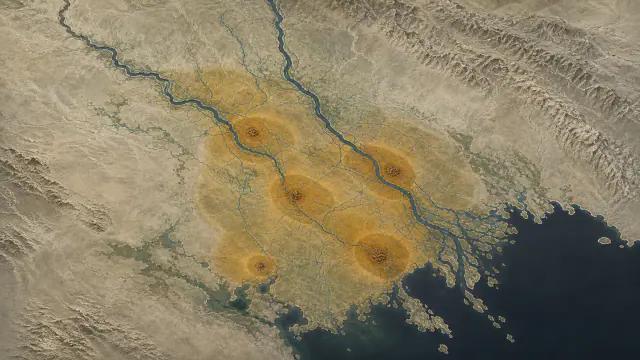
Map of Sumer
It locates the Sumerian cities and their exchange routes through the Persian Gulf.
Read the complete record → TRACEKEEPERS
HISTORY · OPEN COLLECTION
Water management, communal buildings and the exchange networks of the Ubaid period preceded the growth of Uruk. Cities brought workshops, administration and early writing together; later Mesopotamian societies adapted that inheritance.
59 complete records · free to read, no account needed
Read freely here. A free account saves your visits inside the museum.
Before you begin · Sumer
The story of Uruk begins in villages that learned to live among rivers, marshes and farmlands.
From ca. 6200 BCE
Irrigated agriculture, fishing and painted pottery accompany the occupation of the southern plain.
IV millennium BCE
The concentration of inhabitants, workshops and monumental adobe buildings increase.
Ca. 3200–2900 BCE
The first written records precede the world of city-states of the 3rd millennium.
On the southern plain of Mesopotamia, farmers and fishermen combined different resources: grains from the fields, fish from the waterways, and animals from the wetlands. During the Ubaid period, from the 7th millennium BCE, adobe houses and painted ceramics allow us to recognize communities settled long before the first written tablets.
Eridu and other towns grew around buildings that were rebuilt over and over again. Maintaining irrigated crops, storing products, and sourcing materials from other regions required long-lasting agreements. The diffusion of ceramics and seals reveals extensive contacts; It does not prove that all that territory obeyed the same government or that its inhabitants spoke a single language.
During the 4th millennium BCE, Uruk brought together a population, workshops and large buildings on a new scale. Towards 3200 BCE its administrators recorded goods and rations using signs on clay. Later, cities like Ur and Uruk supported kingdoms of their own: the Sumeria of the museum was a network of cities that shared practices and also competed for resources and power.
The containers, seals and tablets along the route show how everyday activities ended up supporting urban institutions.
Interpreting these traces. Ubaid designates an archaeological tradition: it does not automatically identify its inhabitants as Sumerians.
Fourth–first millennia BCE · WESTERN ASIA
From the first cities to the kingdoms of Akkad, Babylon and Assyria. Explore its objects, stories, buildings and ways of understanding the world. Each piece preserves its culture, date, provenance and museum: sharing a region and a legacy does not mean being a single civilization.
The room combines a specific visual catalog with an audited thematic dossier. Separates facts, interpretations and cautions; the 3D volumes continue to be replaceable markers until models with provenance and license are incorporated.
The hydraulic cooperation, communal buildings and networks of the Ubaid period gave Uruk a social infrastructure on which to expand population, workshops and administration.
Ubaid is an extensive archaeological category, not a ready-made Sumerian people; The language and identity of those communities cannot be deduced from a vessel.
Read the background and its sources →EXPLORE THE COLLECTION
Follow the museum’s curated order or go straight to a section. Every record includes its full public documentation and sources.
01 · COLLECTION
Consult the maps and initial context sheets to situate this museum in time and territory; then choose the areas that interest you most.
01 · INITIAL ATLAS · NODES AND ROUTES
It locates the Sumerian cities and their exchange routes through the Persian Gulf.
Read the complete record →02 · BEFORE URUK · ca. 6500–3500 BCE
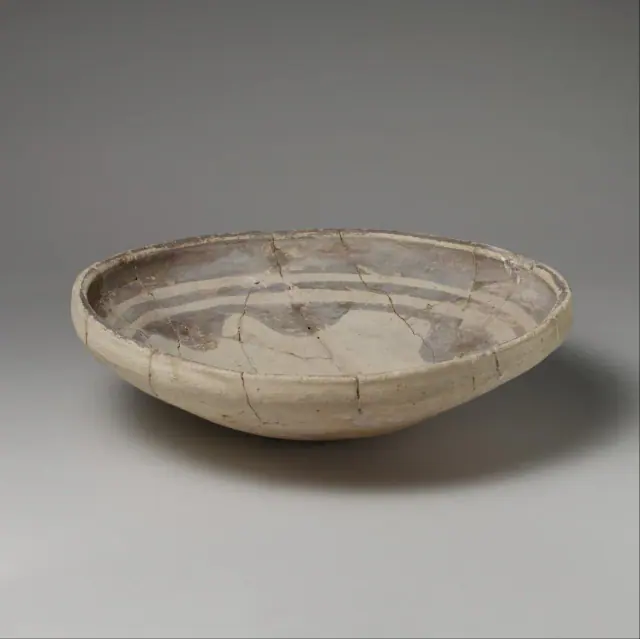
Before big cities, delta communities already had to organize water use.
Read the complete record →02 · COLLECTION
The first stop reconstructs the area before Sumeria; Later, places and processes allow us to enter into its history without reducing it to a start date or an inevitable destination.
01 · 01 · SITE · LATE URUK
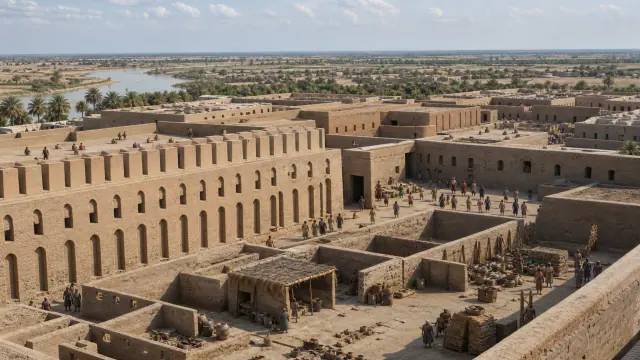
The temple precinct of Eanna was one of the great centers of activity in Uruk.
Read the complete record →02 · 08 · SITE · ROYAL CEMETERY
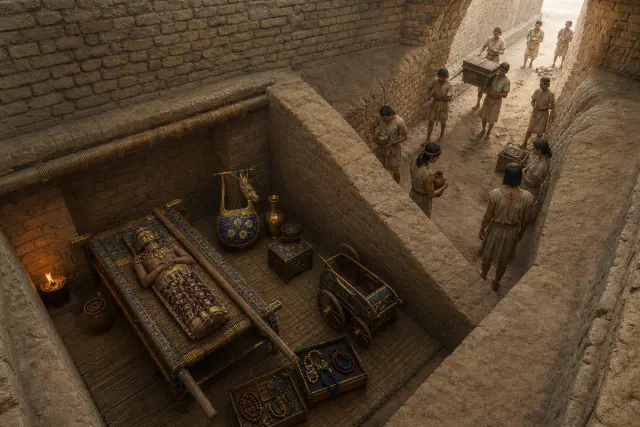
The royal tombs of Ur preserved jewels and instruments, along with evidence of deep inequalities.
Read the complete record →03 · 11 · LEGACY · III DYNASTY OF UR
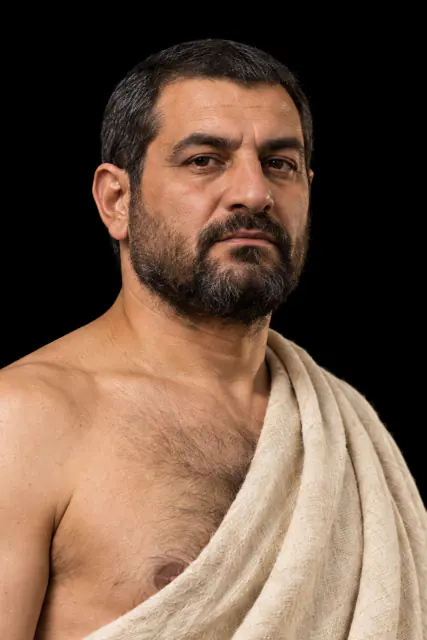
These written laws established sanctions and compensation in an unequal society.
Read the complete record →03 · COLLECTION
These stops distinguish instruments, ritual actions, orality or writing and visual culture. Where there is no theatre, score or certain meaning, the museum preserves the limit.
01 · LIVING AND DOCUMENTED CULTURE · 01
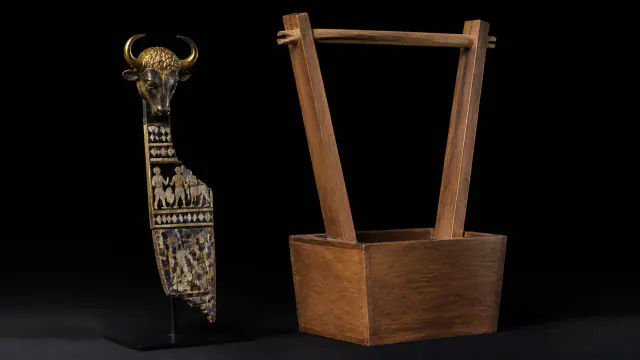
Lyres, harps, drums and song appear in tombs, images and texts.
Read the complete record →02 · LIVING AND DOCUMENTED CULTURE · 02
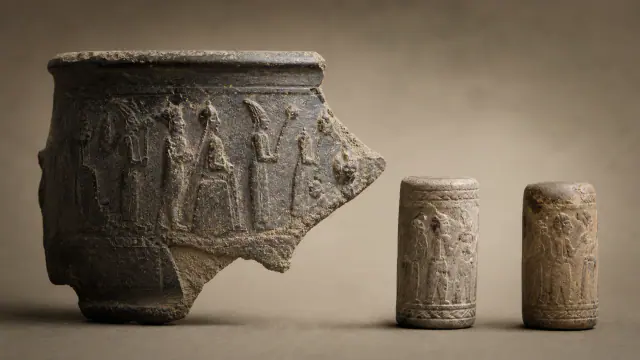
The Uruk Vase and seals show processions, offerings and banquets.
Read the complete record →03 · LIVING AND DOCUMENTED CULTURE · 03
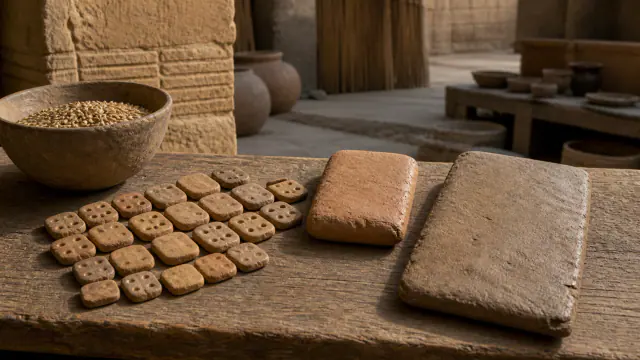
Writing was first used for keeping accounts and later also for letters, myths and hymns.
Read the complete record →04 · LIVING AND DOCUMENTED CULTURE · 04
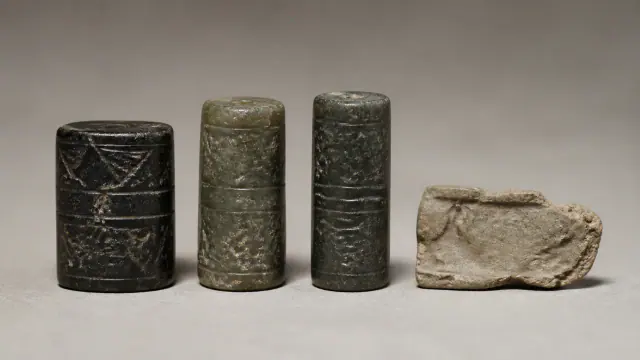
Seals, reliefs and statues depicted rulers, gods and people at work.
Read the complete record →05 · Sumerian tradition Paleo-Babylonian copy
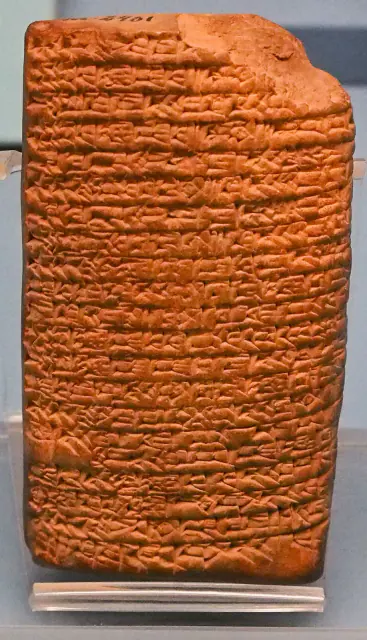
The writing also preserved the affection, desire and words of a song.
Read the complete record →06 · Paleo-Babylonian text in Sumerian language
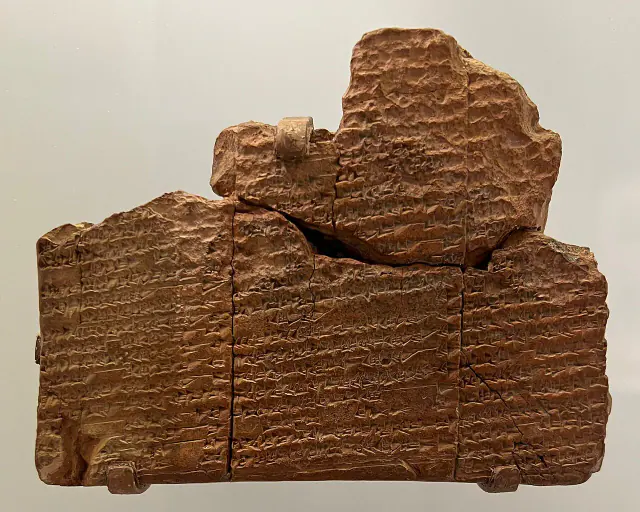
This Sumerian account of the flood features Ziusudra, not the survivor of the epic of Gilgamesh.
Read the complete record →07 · Neo-Assyria · literature of the Babylonian tradition
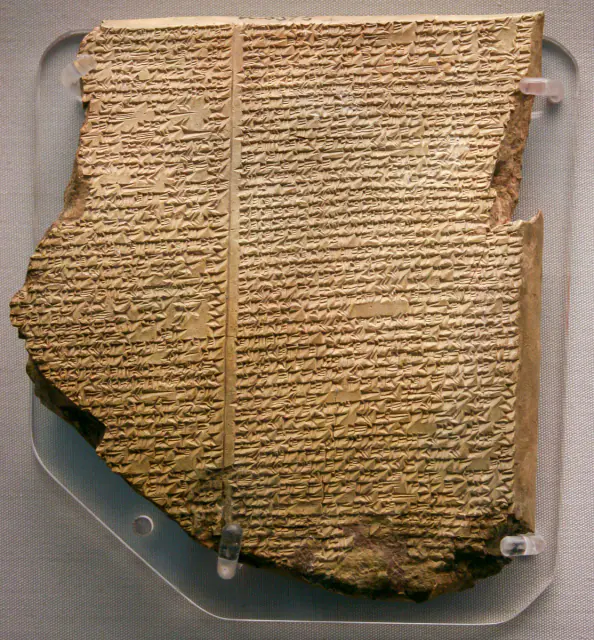
An Assyrian copy preserved a much older account.
Read the complete record →04 · COLLECTION
These architectures explain how materials, water, work and memory organized the territory without converting an elevation reconstruction into certainty.
01 · ARCHITECTURE AND LANDSCAPE · 01
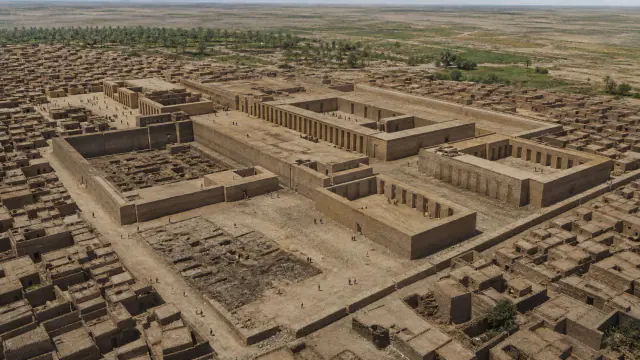
The large buildings in the Eanna compound show how the city of Uruk grew.
Read the complete record →02 · ARCHITECTURE AND LANDSCAPE · 02
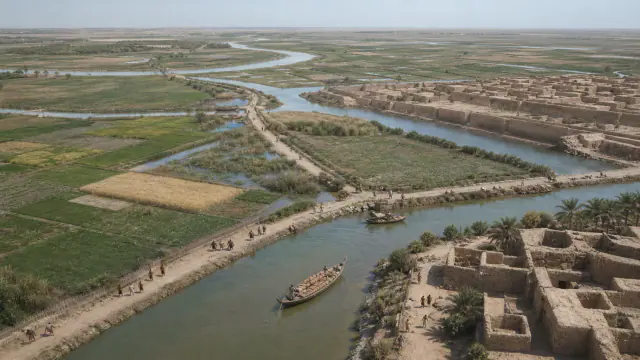
The canals were used to irrigate, transport products and evacuate water.
Read the complete record →03 · ARCHITECTURE AND LANDSCAPE · 03
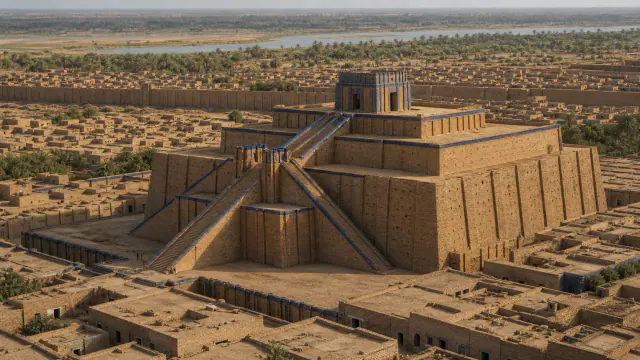
The ziggurat of Ur was built at a later stage than the famous tombs of the Royal Cemetery.
Read the complete record →04 · Neo-Assyria
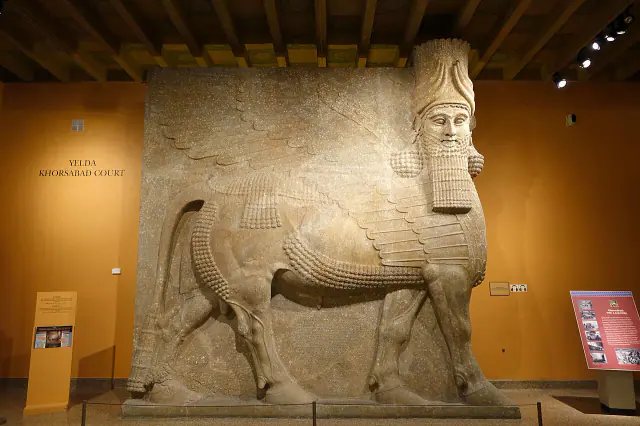
With five legs, the guardian appears still from the front and walking when you look at it from the side.
Read the complete record →05 · Neo-Babylonian
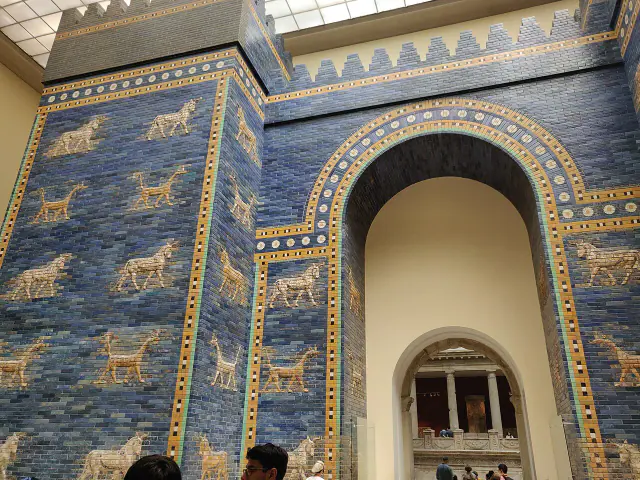
Colored bricks and animals decorated one of the great entrances to Babylon.
Read the complete record →05 · COLLECTION
Known people, reconstructed voices and collective footprints. From oldest to most recent according to life, reign or scene. The periods may overlap; The voices without a determinable date close the journey.
01 · TEXTUAL TRADITION · URUK · OPEN HISTORICAL IDENTITY
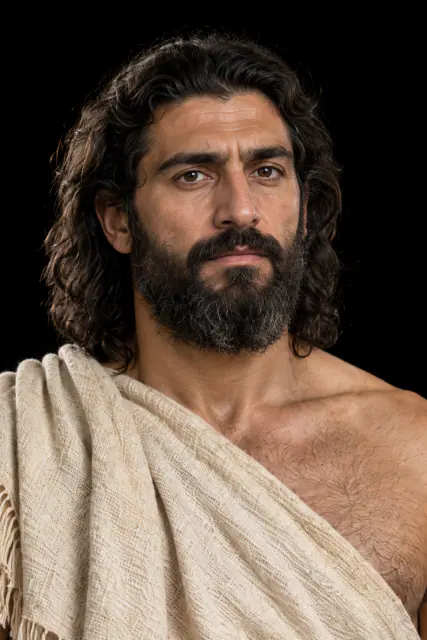
We know Gilgamesh through written accounts, but we do not have a tomb or portrait identified with certainty.
Read the complete record →02 · HISTORICAL PERSON · UR · PG 800/800B
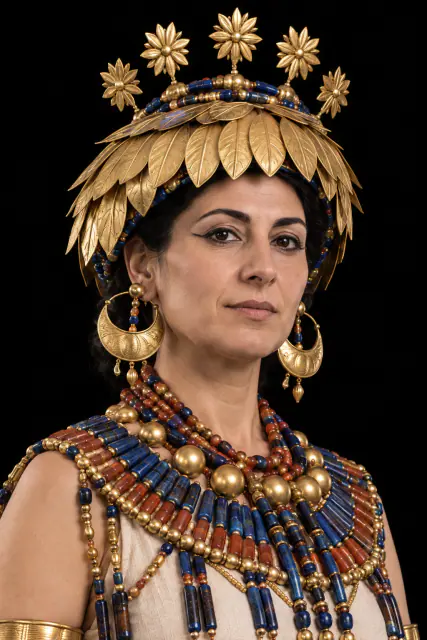
Her seal names her Puabi and grants her the title ereš; does not mention a husband.
Read the complete record →03 · CANONICAL CHARACTER · INSCRIPTION · HISTORICALLY ATTESTED FIGURE
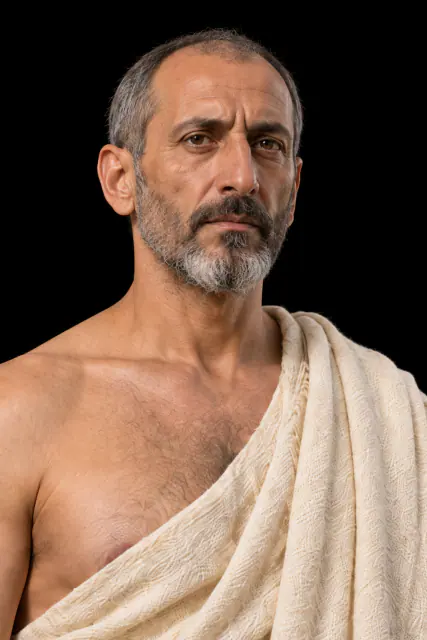
Urukagina claimed to have reduced abuses and burdens; his inscriptions also defended his own rule.
Read the complete record →04 · 10 · PERSON · ACADIAN PERIOD
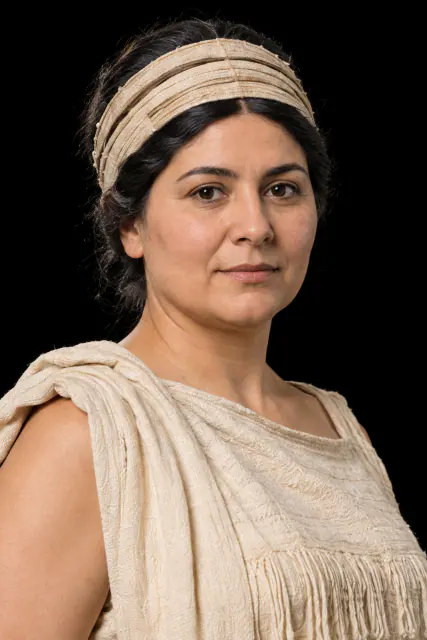
A high priestess is remembered through hymns copied long after her life.
Read the complete record →05 · CANONICAL CHARACTER · INSCRIPTION · HISTORICALLY ATTESTED FIGURE
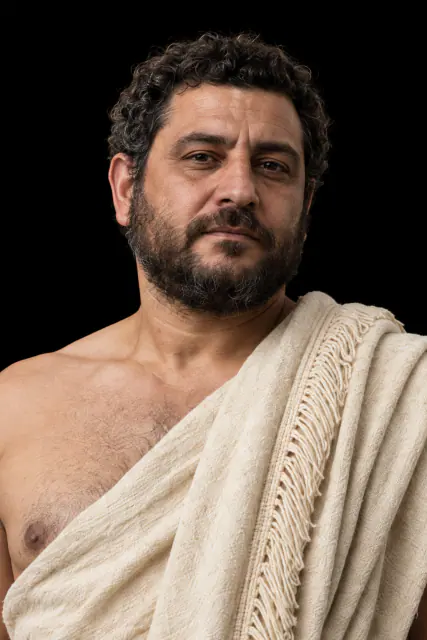
Beads, inscriptions and hymns provide insight into Shulgi's long reign and how he wanted to be remembered.
Read the complete record →06 · 12 · OBJECT · LAGASH
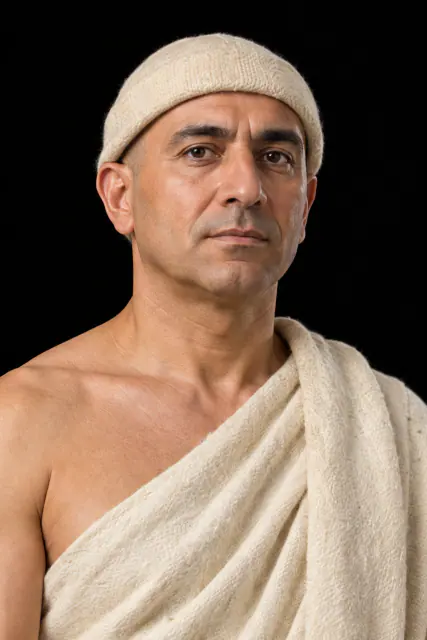
Gudea commissioned statues of durable stone to represent him before the gods.
Read the complete record →06 · COLLECTION
Concrete pieces to understand materials, decisions and knowledge systems, with separate evidence and interpretation.
01 · 02 · OBJECT · LATE URUK
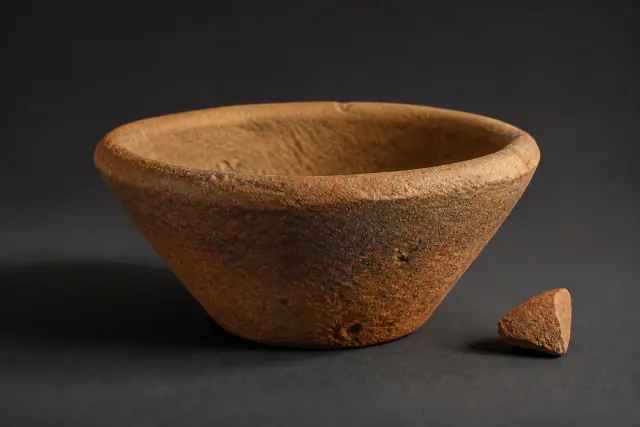
These bowls were manufactured in large quantities, although their exact use remains in debate.
Read the complete record →02 · 03 · OBJECT · JEMDET NASR PHASE
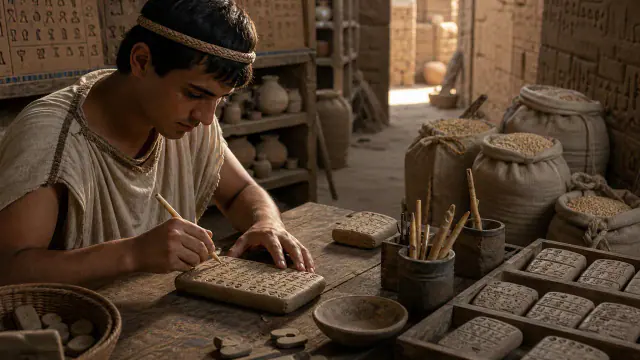
Writing began by solving accounts before narrating heroes.
Read the complete record →03 · 04 · OBJECT · CULT AND PRODUCTION
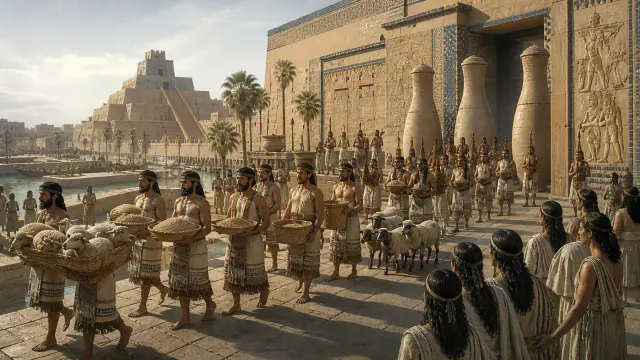
The vase shows plants, animals and people carrying offerings in a procession.
Read the complete record →04 · 05 · OBJECT · PORTABLE AUTHORITY
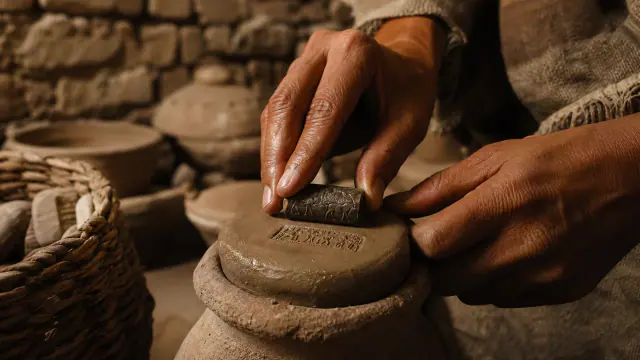
When rolled on wet clay, the seal left an image that identified or protected a document.
Read the complete record →05 · 06 · OBJECT · URUK-JEMDET NASR TRANSITION
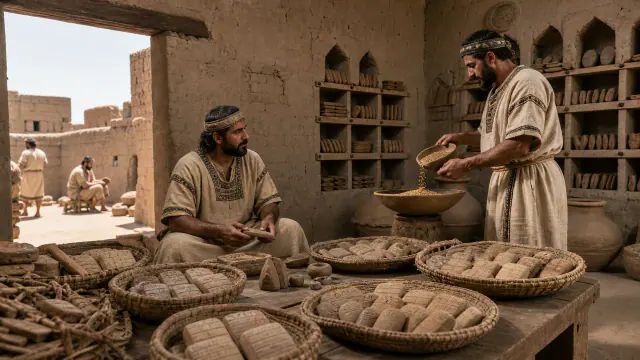
The tablets show that several settlements in southern Iraq shared ways of keeping accounts.
Read the complete record →06 · 07 · PRACTICE · FLOODPLAIN
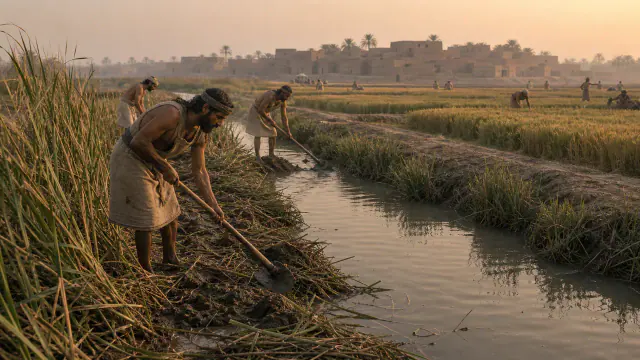
To maintain the canals, sediment had to be removed and their banks continually repaired.
Read the complete record →07 · PUABI SETTINGS · PG 800 · ON-SITE ORNAMENTS
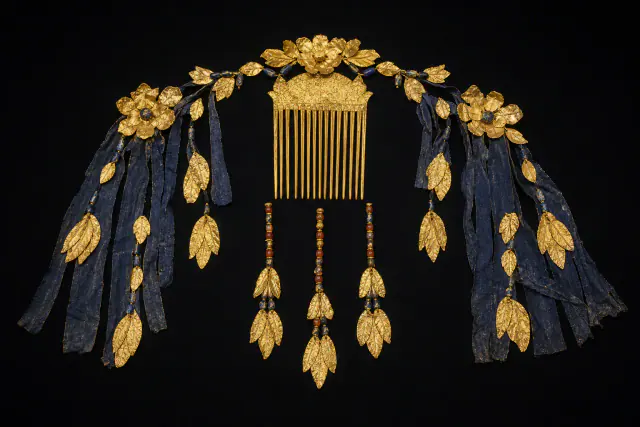
Puabi's headdress was made up of several pieces of gold and stones, not a single crown.
Read the complete record →08 · PUABI SETTINGS · INSTRUMENT · PG 800
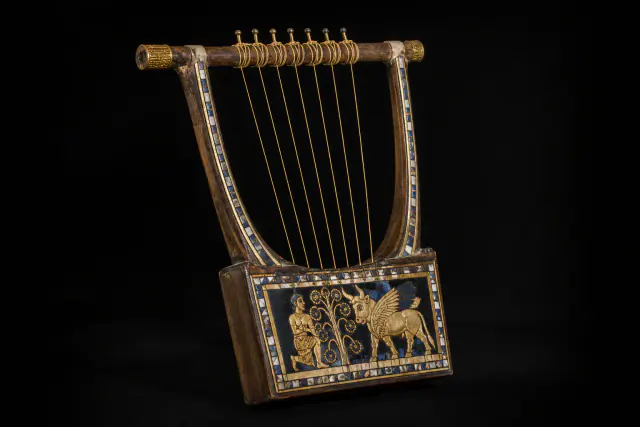
The bull's head and the inlays allowed the lyre to be reconstructed, but not its music.
Read the complete record →09 · CAUTION OF ORIGIN · PG 1237 · GREAT PIT OF DEATH
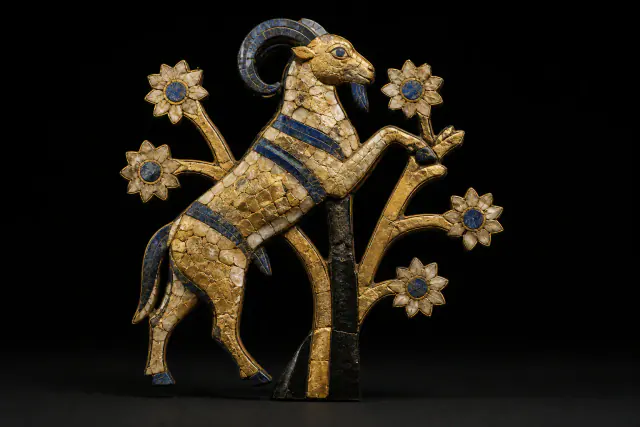
This goat figure comes from another tomb in Ur, not from Puabi, and its exact function is unknown.
Read the complete record →10 · SUSIANA · IV MILLENNIUM BC · ACCOUNTING
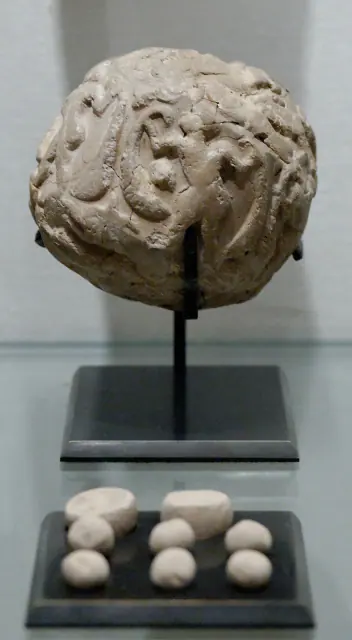
A clay envelope held small tokens used to keep accounts.
Read the complete record →11 · SUMER · NIPPUR · LENGTH PATTERN

The markings on a rod of approximately 110 centimetres allow for the identification of a cubit measure of approximately 51.8 centimetres.
Read the complete record →12 · SIPPAR · PALEOBABYLONIAN PERIOD · SURVEYING
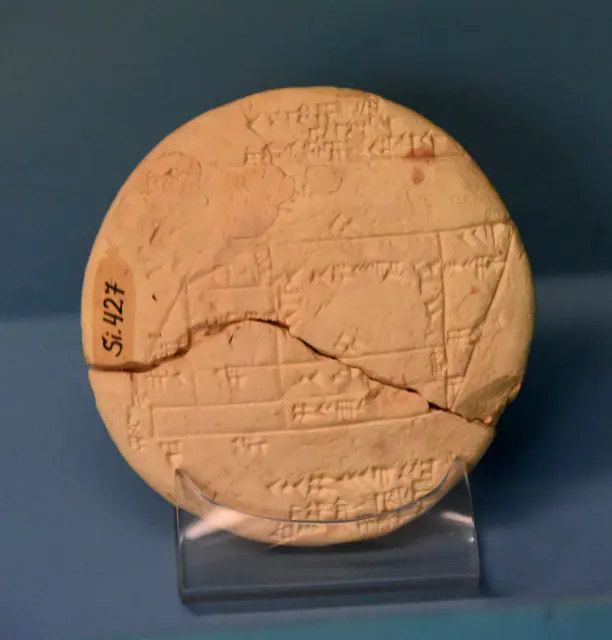
Before it was a classroom exercise, a right angle could help set a property boundary.
Read the complete record →13 · Paleo-Babylonian
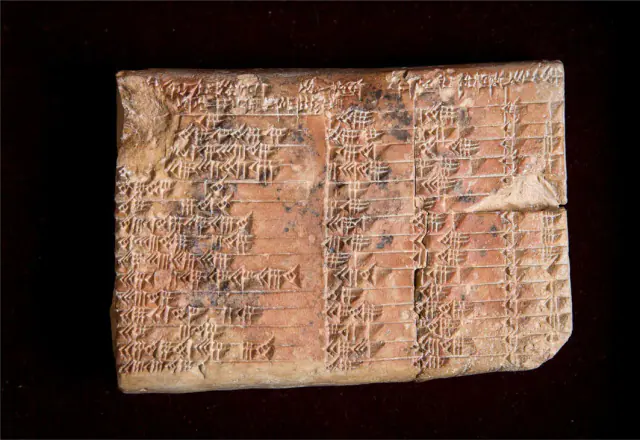
Fifteen rows of numbers open a discussion of how the scribes worked.
Read the complete record →14 · Uruk skyline Southern Mesopotamia
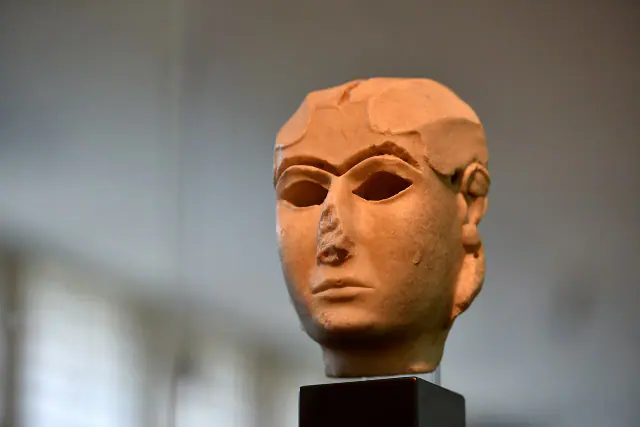
The marble is only the remaining part of a figure made of various materials.
Read the complete record →15 · Sumeria · Archaic Dynastic I–II
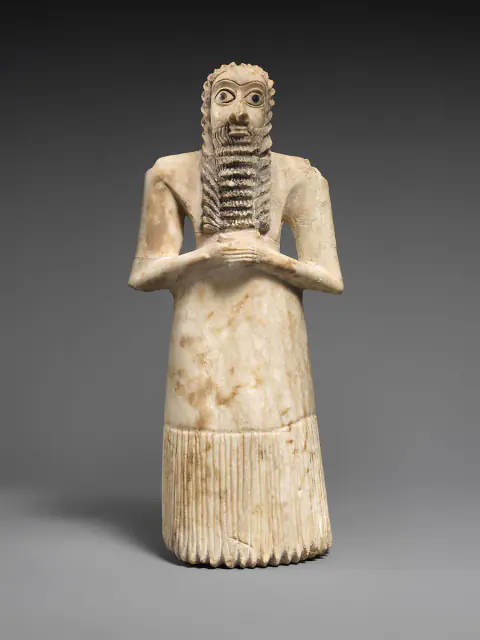
Hands together and eyes wide open on a figure less than thirty centimeters tall.
Read the complete record →16 · Acadia
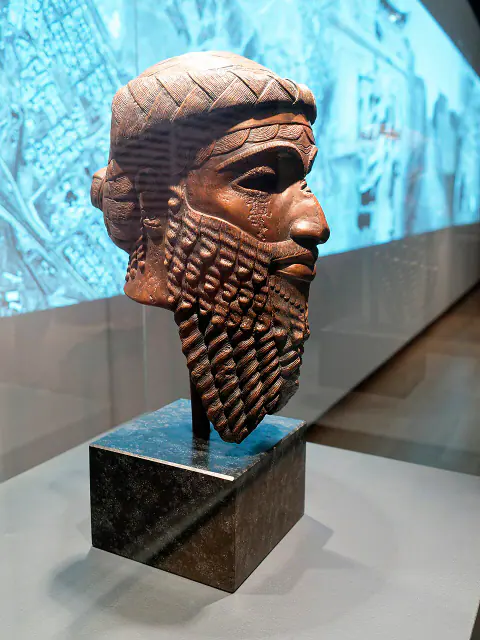
The precision of the hairstyle contrasts with the deliberate damage to the face.
Read the complete record →17 · Acadia
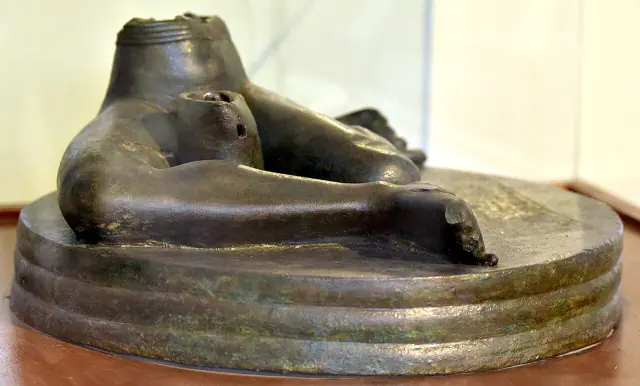
A heavy fragment preserves an inscription from Naram-Sin.
Read the complete record →18 · Sumer · Lagash · Archaic Dynastic IIIb
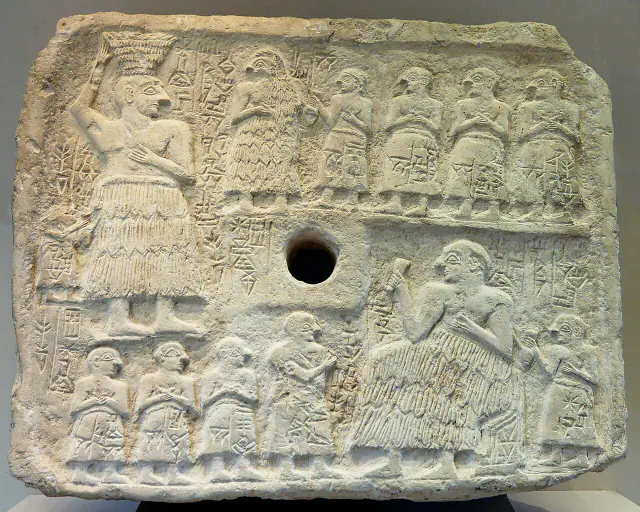
The ruler appears with a basket and then seated at a banquet.
Read the complete record →19 · Mari Archaic Dynastic IIIb
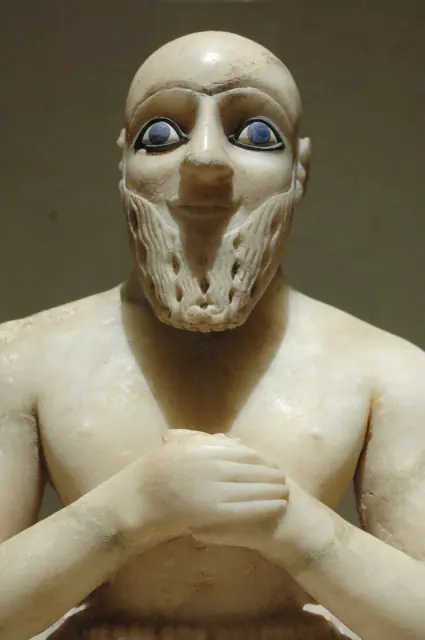
The embedded eyes make a seated figure appear to be looking back at us.
Read the complete record →20 · Paleo-Babylonian · first dynasty of Babylon
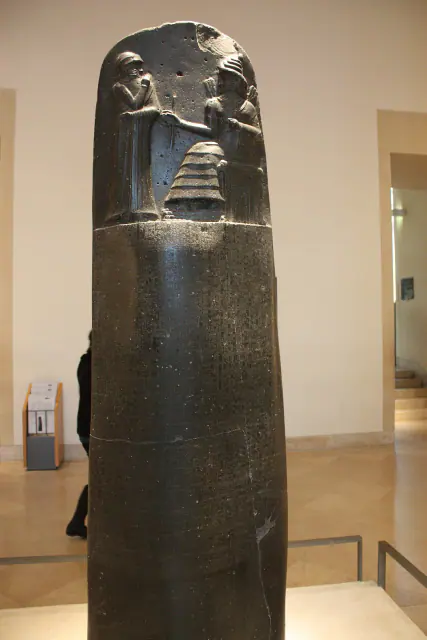
Specific cases of justice accompany the image of the king before Shamash.
Read the complete record →21 · Sumeria · Archaic Dynastic III
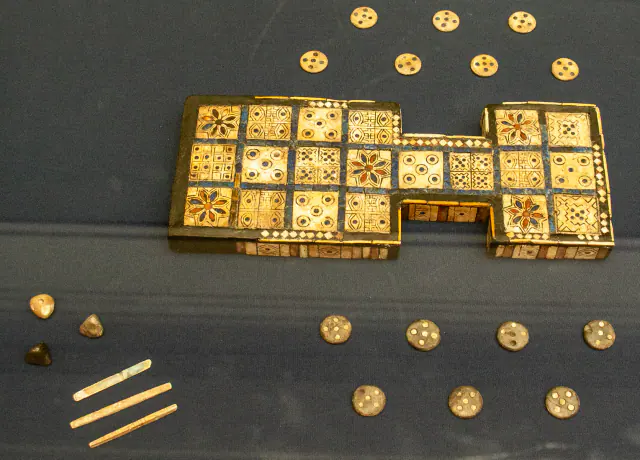
The board of twenty squares allows you to discover a form of game from ancient Mesopotamia.
Read the complete record →22 · Late Babylonian
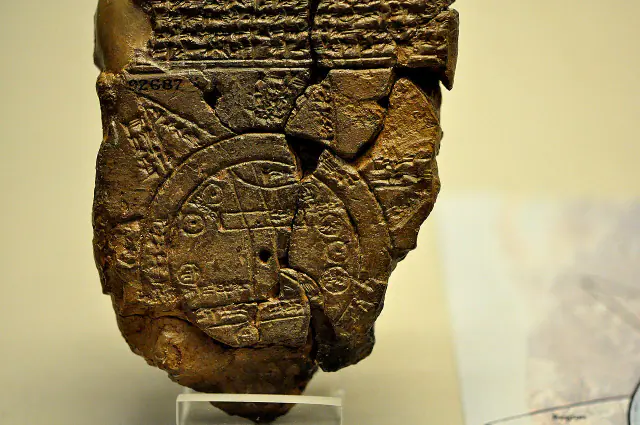
The map represents the world from the perspective of those who lived in Babylon.
Read the complete record →23 · Isin-Larsa · Paleo-Babylonian environment
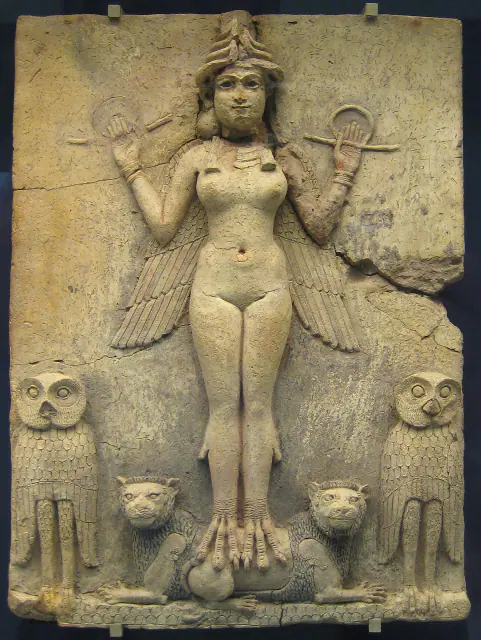
The wings and horns are visible; the name of the figure is not certain.
Read the complete record →24 · Neo-Assyria
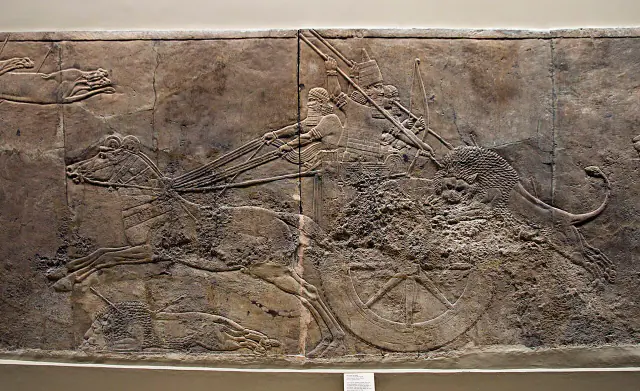
The palace showed the king defeating a dangerous animal.
Read the complete record →25 · Paleo-Babylonian · Sumerian scribal tradition
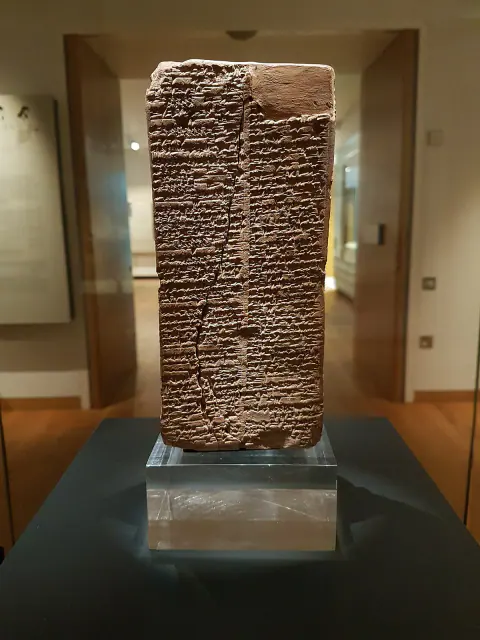
A prism brings together historical rulers and reigns that are impossible to take literally.
Read the complete record →26 · WEAPONS AND EQUIPMENT
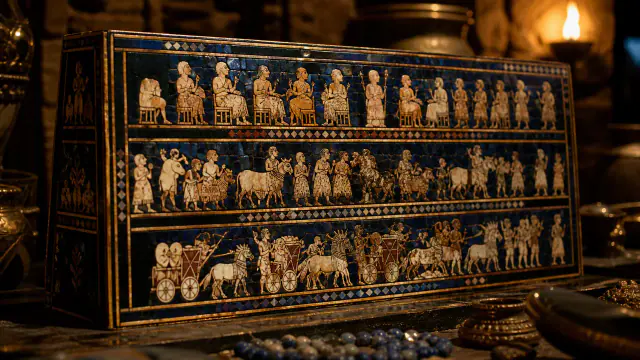
Its two sides show scenes of war and banquets with soldiers, captives and musicians.
Read the complete record →27 · WEAPONS AND EQUIPMENT
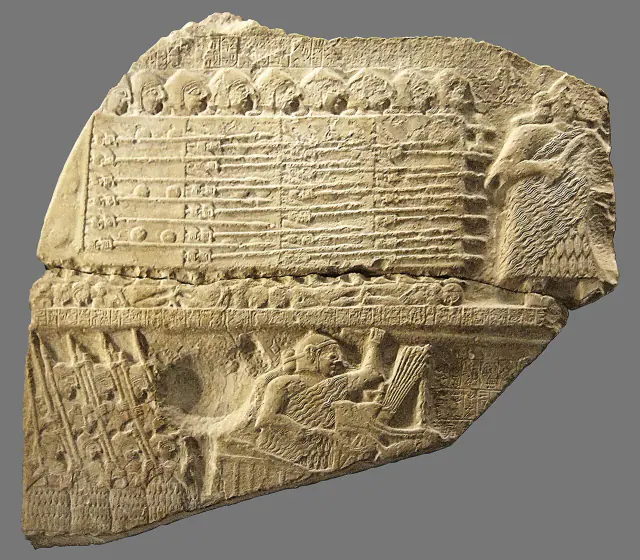
The war appears told by the person who commissioned the monument.
Read the complete record →28 · WEAPONS AND EQUIPMENT
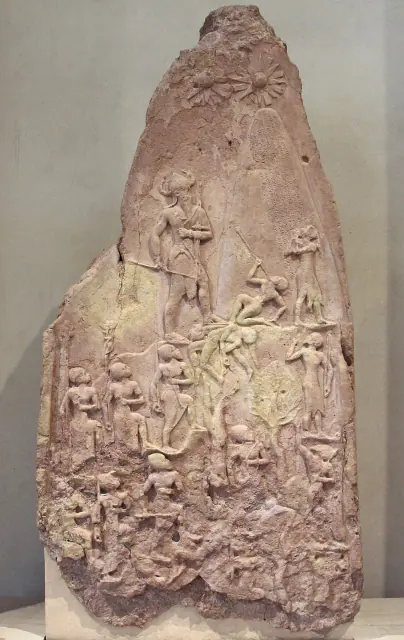
A monument can tell of a victory and end up celebrating another conquest.
Read the complete record →29 · WEAPONS AND EQUIPMENT
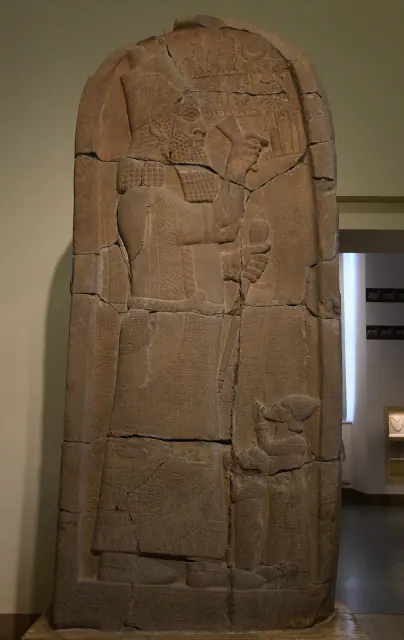
The size of the figures makes it clear who controls the story.
Read the complete record →30 · WEAPONS AND EQUIPMENT
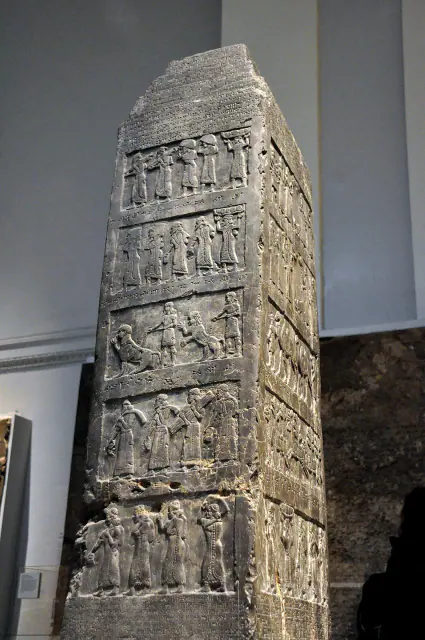
The tributes show the empire as its king wished to present it.
Read the complete record →07 · COLLECTION
These cards separate what is documented from what is interpreted and recover practices, questions and details capable of changing our image of this culture.
01 · BELIEFS AND CURIOSITIES · 01
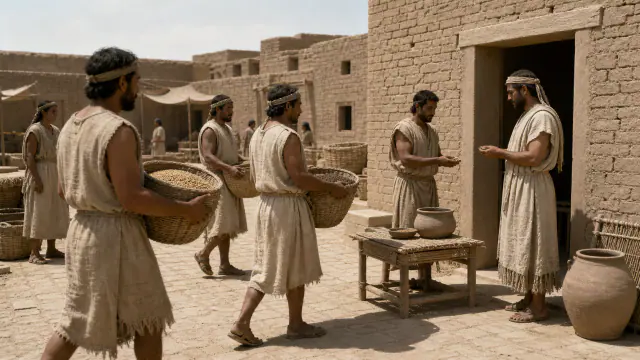
Temples were places of worship and also organized work, goods and food.
Read the complete record →02 · BELIEFS AND CURIOSITIES · 02
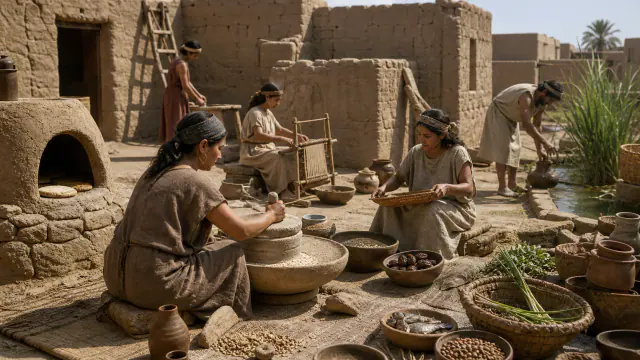
Courtyards, ovens, canals and basic foods help to understand daily life in Mesopotamia.
Read the complete record →03 · BELIEFS AND CURIOSITIES · 03
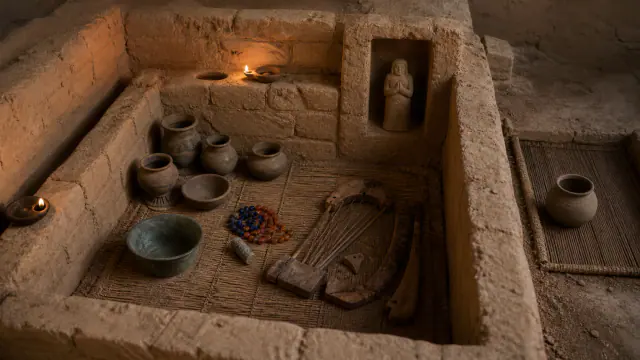
The differences between the tombs show that not all people received the same funeral.
Read the complete record →08 · COLLECTION
Each door explains why the link exists, when it occurred, and what limits prevent contact from being converted into shared identity.
01 · DOOR 01 · ASIA · EXCHANGE
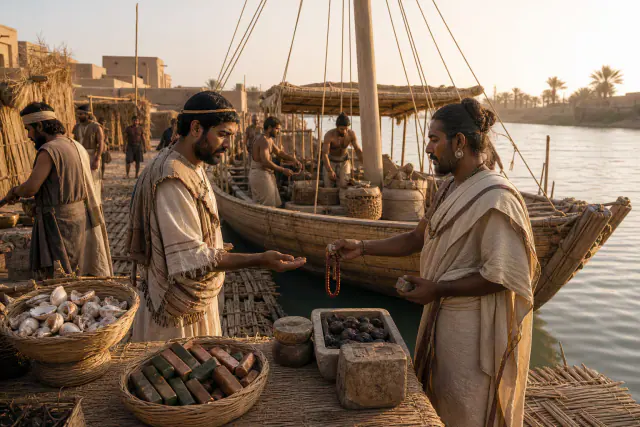
Continued at the Indus Museum
Read the complete record →02 · DOOR 02 · ASIA · INFLUENCE
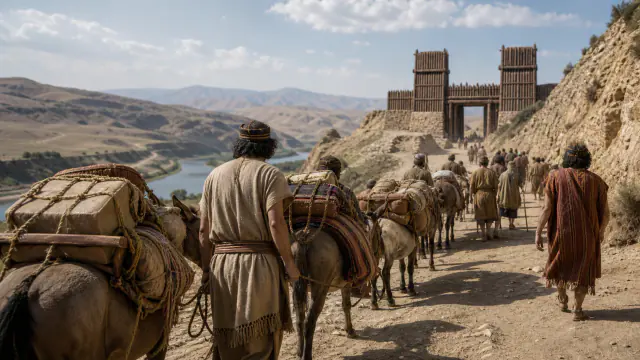
Continued at the Hittite Museum
Read the complete record →03 · DOOR 03 · ASIA · INFLUENCE
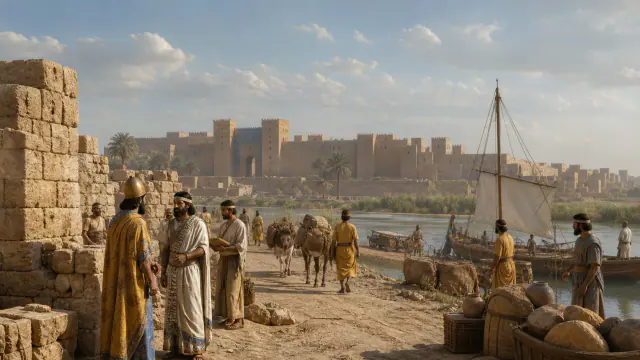
Continued at the Persia Museum
Read the complete record →Barro, grano y palabras
Discover the connected fiction project. The available Prehistory reader is in Spanish; other volumes are not presented as finished products for sale.
Explore the books →Try the available Prehistory browser alpha. Campaigns for the other cultures are still in development.
Open the game (Spanish) →Use each record’s institution and heritage links to continue your research. Country-by-country historical travel guides are planned, not yet published.
Historical travel →Discover artistic designs inspired by the collections and check each product’s availability. Museum access remains free.
Explore the collection →