09 · Clava heads · Debated transformation
Heads on the wall Stone faces emerging above the pilgrims
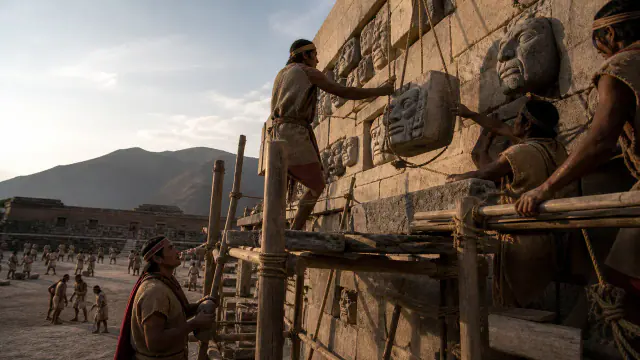
The heads set into the walls mix human features with fangs, snakes and other details.
ON THIS PAGE
History and context Evidence and facts Objects connected through time Further reading Location and territory Where it is held Sources and references Comments Museum documentation · free public access, no account required.
⛶ Enlarge imageDECLARED VISUAL RECONSTRUCTION · EXISTING EDITORIAL RESOURCE · TRACEKEEPERS Generated reconstruction · Declared visual hypothesis
Declared visual reconstruction for museographic context; it is not a photograph of the original nor documentary evidence.
History and context Stone heads with spikes were inserted into the exterior walls of the temple, forming an elevated sequence. Some appear human; others add fangs, bulging eyes, serpentine hair or nasal flows, features that turn the face into a process.
An influential reading orders them as stages of shamanic transformation induced by substances. It may explain differences and symptoms, but the original order of many pieces was lost and only one remained in place; they could also have marked protection, ancestors or categories of beings.
The spikes anchored stone faces in an elevated sequence on façades, where some human features were mixed with fangs and snakes. Most lost their position and only one remains installed.
Ordering them as stages of psychoactive transformation is an influential reading, not a clinical diagnosis. Protection, ancestors and categories of beings remain alternatives when the original order is missing.
Evidence and interpretation Documented fact: the clava heads decorated façades and were fixed by means of spikes; most were displaced and the museum preserves numerous specimens. Interpretation and caution: the transformation sequence by psychoactives is a hypothesis, not a clinical certainty nor the only iconographic explanation.
Catalogue facts
Narrative date c. 800–300 BCE
Location Façades of the Chavín de Huántar temple, Peru
Material Carved stone with anchoring spike
Context Architecture, transformed body and incomplete reconstruction
Curatorial reading The documented fact and its interpretation appear separately in the evidence block.
Date c. 800–300 BCE
Location Façades of the Chavín de Huántar temple, Peru
Support Carved stone with anchoring spike
Documentary coverage 4 museum, heritage, primary corpus or research sources for this stop. Stone29 Sculpture54 Human imagery73 Architecture21
The order uses the midpoint of each approximate date range; ranges can overlap. Spacing does not represent elapsed time. Swipe, scroll or use the arrows. With the sequence focused, use ← / →, Home or End.
Earlier Later
≈425,000–375,000 years
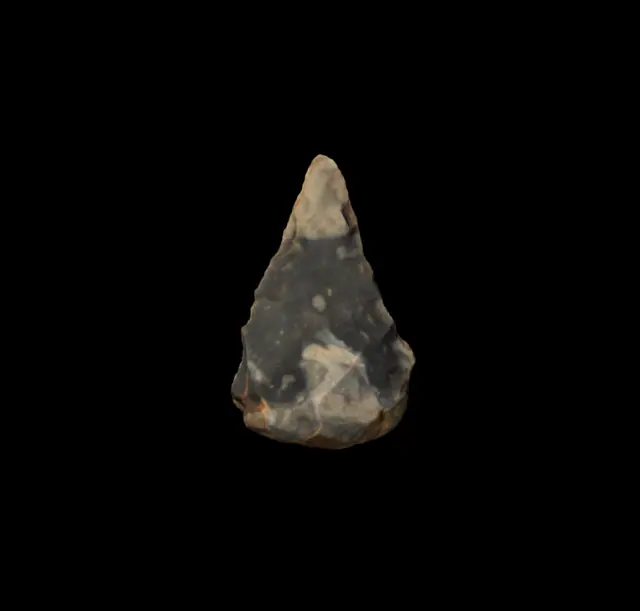
Swanscombe handaxe Prehistory
Approximate catalogue age for the Hoxnian interglacial (MIS 11); editorial reference 2026 for ordering only, not calibrated dating.
Read the record ≈77,000–75,000 years
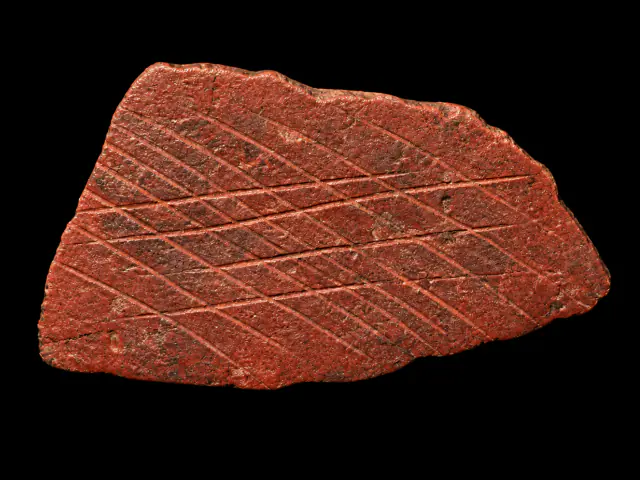
Engraved ochre from Blombos Prehistory
Approximate catalogue age; editorial reference 2026 for ordering only, not calibrated dating.
Read the record ≈25.500–23.500 BCE
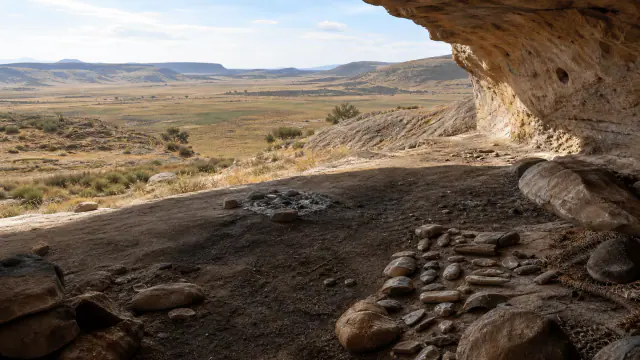
Before the San San histories
Date of the representative element, not ethnic attribution of its authors.
Read the record ≈25.500–23.500 BCE
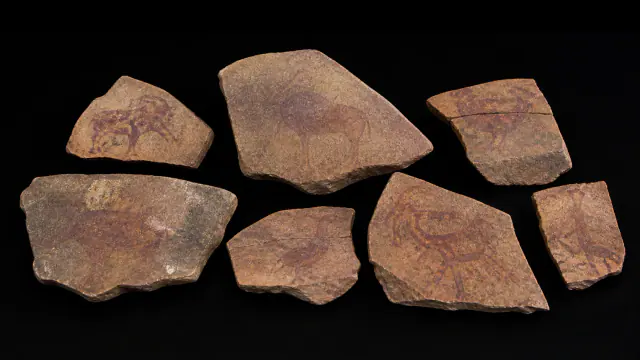
Before the name San San histories
Dating of the context of the slabs; anonymous authors.
Read the record PPNA · site proposal: ≈9600–8800 BCE, provisional
Engraved stone from Çakmaktepe Prehistory
Provisional date range for the site; not direct dating of this stone.
Read the record PPNA · ≈9600–8800 BCE, provisional proposal for the site
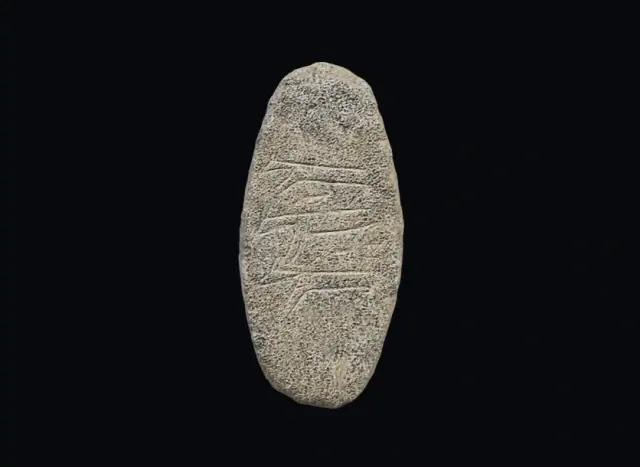
Grinding stone from Çakmaktepe Prehistory
Provisional date range for the site and the published tools; the identification of the image is unverified.
Read the record End of the 4th millennium BCE
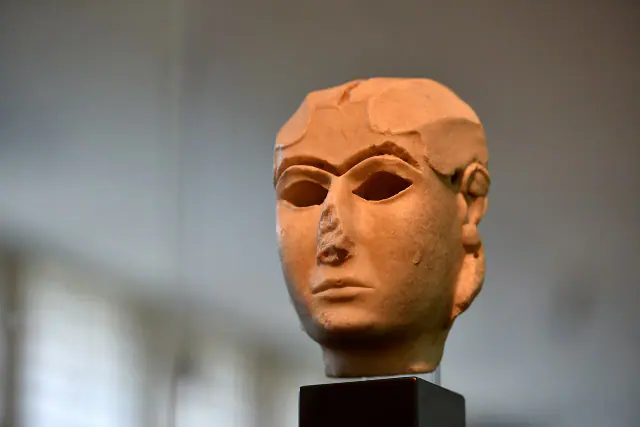
Warka Mask Sumer
The full 4th millennium BCE provides broad limits for chronological ordering; the record specifies the end of the millennium.
Read the record c. 3500–3100 BCE
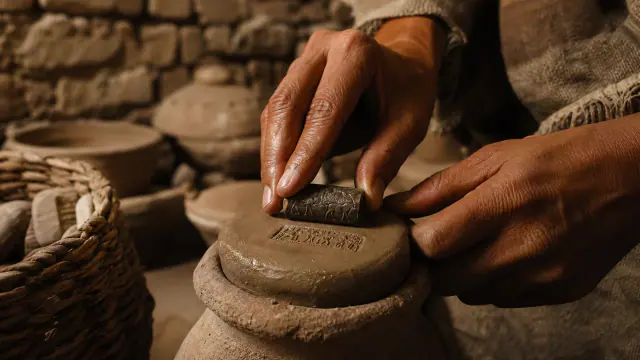
Cylinder seal Sumer
Approximate dating according to the record.
Read the record ca. 3300–3000 BCE
Uruk Vase Sumer
Approximate dating according to the record.
Read the record ca. 3100 BCE
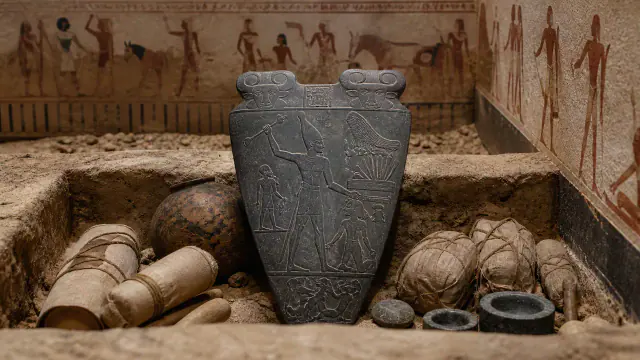
Narmer Palette Ancient Egypt
Approximate dating according to the record.
Read the record Towards 2900–2600 BCE
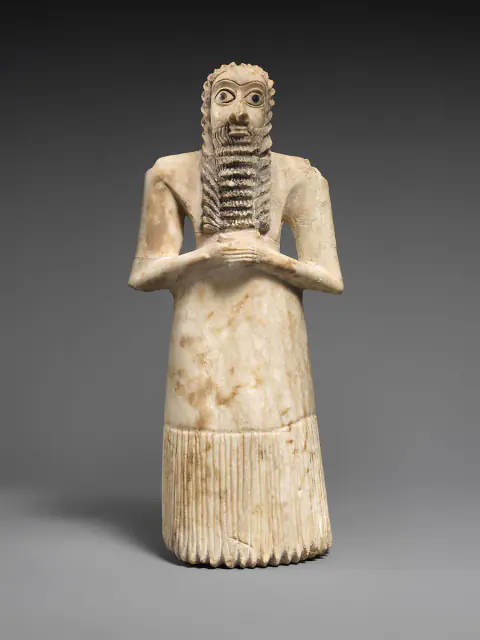
Worshiper of Tell Asmar Sumer
Approximate dating according to the record.
Read the record Towards 2400 BCE
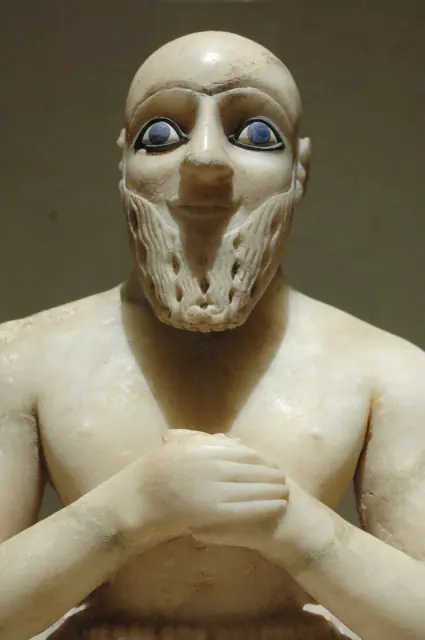
Statue of Ebih-Il Sumer
Approximate dating according to the record.
Read the record ca. 2600–1900 BCE
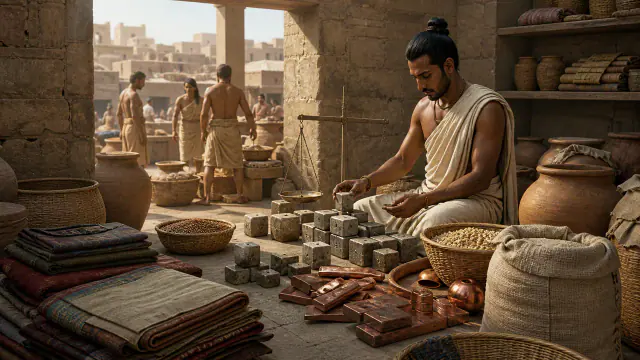
Weights Indus civilisation
Date range for the system of weights, not a year-specific date for each example.
Read the record Reign of Sargon II · 721–705 BCE
Overlapping dates Lamassu of Khorsabad Sumer
Reign interval associated with the piece.
Read the record 645–635 BCE
Overlapping dates Ashurbanipal Hunt Sumer
Approximate dating according to the record.
Read the record You are viewing c. 800–300 BCE
Heads on the wall Pre-Inca cultures
Framework of the set of architectural heads.
Current record first quarter of the 5th century BCE
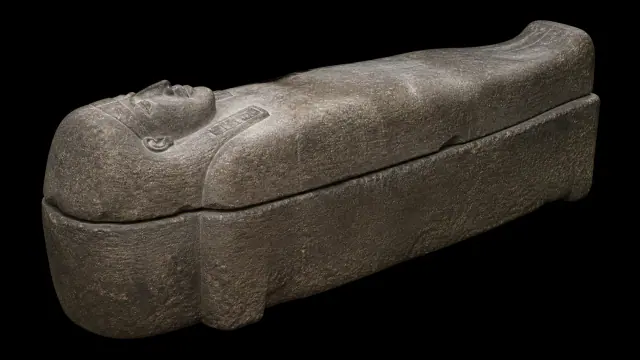
Overlapping dates Sarcophagus of Eshmunazar Phoenicians
First quarter of the 5th century BCE
Read the record First half of the 4th century BCE
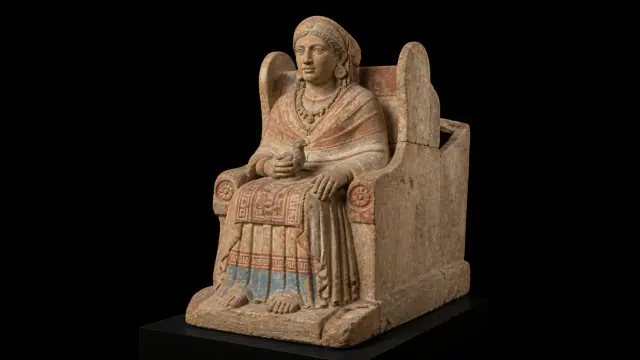
Overlapping dates The statue was the urn Iberians
First half of the 4th century BCE; date of the funerary context.
Read the record 4th century BCE
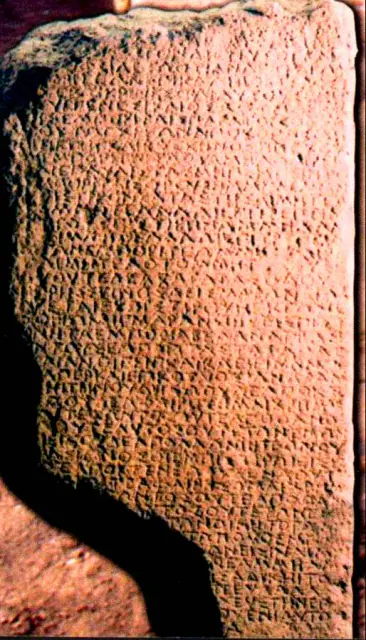
Overlapping dates The inscription of Pistiros Thracians
Approximate dating according to the record.
Read the record 16 / 19 In the centre: Heads on the wall
Also connected, without a comparable date (10) These objects are not placed after the others: an unknown date does not mean a more recent object.
You can scroll the first group without JavaScript. The other topics are also available below.
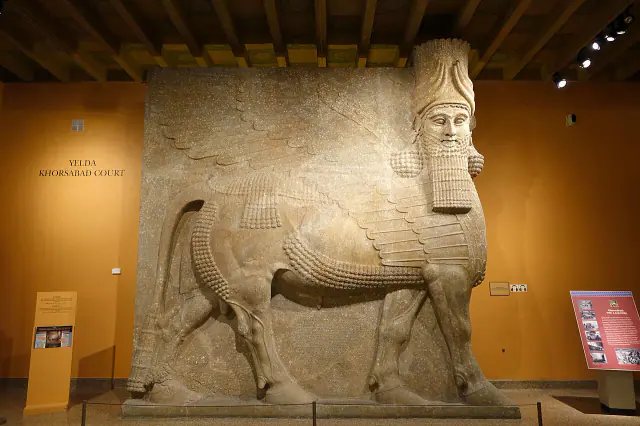
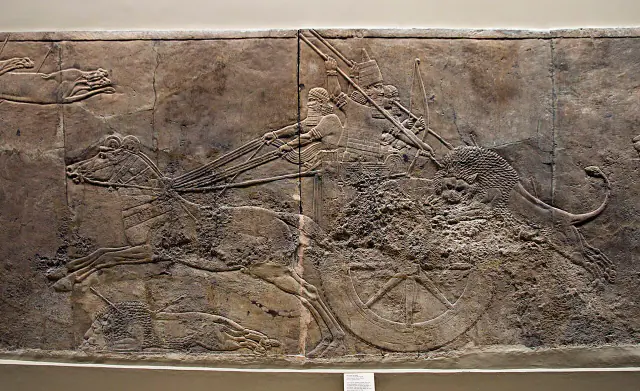
Sculpture Lion-man · ≈40,000 years · Aurignacian · PrehistoryLespugue · ≈28,000 years · PrehistoryZaraysk Bison · ≈23,000–21,000 years · PrehistoryShigir Idol · C. 10,000 BCE · approximation; debated dating · PrehistoryWarka Mask · End of the 4th millennium BCE · SumerGebel el-Arak knife · 3600–3200 BCE · Naqada II C–D · Ancient EgyptUruk Vase · ca. 3300–3000 BCE · SumerNarmer Palette · ca. 3100 BCE · Ancient EgyptBefore Yayoi · Middle Jōmon, ca. 3000 BCE · Yayoi JapanUr-Nanshe relief · Mid-3rd millennium BCE · reign of Ur-Nanshe · SumerThe goat from PG 1237 · ca. 2600–2400 BCE · SumerStele of the Vultures · Towards 2450–2425 BCE · SumerAkkadian sovereign head · Akkadian period · 23rd century BCE · SumerBassetki Statue · Akkadian period · 23rd century BCE · SumerNaram-Sin Stele · Reign of Naram-Sin, 2254–2218 BCE · SumerBefore Pre-Inca Cultures · Kotosh-Mito Tradition, c. 2200–1500 BCE; the enclosure is usually situated around 1800 BCE. · Pre-Inca culturesQueen of the Night · 19th–18th centuries BCE · SumerBull-leaping · c. 1600–1450 BCE · Greek worldsWooden faces · c. 1600–1000 BCE, in several phases · Maya worldsHead 2 · c. 1200–900 BCE · Maya worldsThe voice of Ahiram · c. 11th–10th century BCE · PhoeniciansBefore the Scythians and Sakas · Final Bronze–Initial Iron, ca. 1200–600 BCE · Scythians and SakaBlack Obelisk · 825 BCE · SumerIvory in Nimrud · 9th–8th centuries BCE · PhoeniciansLas Limas · c. 1000–600 BCE · Maya worldsAstarte from El Carambolo · 8th century BCE · PhoeniciansAstarte from El Carambolo · 8th century BCE · IberiansLamassu of Khorsabad · Reign of Sargon II · 721–705 BCE · SumerThe Lanzón · c. 900–500 BCE · Pre-Inca culturesStele of Esarhaddon · 7th century BC C. · 671 campaign BCE · SumerThe so-called ‘Priest of Cádiz’ · 7th century BCE · PhoeniciansThe so-called ‘Priest of Cádiz’ · 7th century BCE · IberiansThe Tello Obelisk · c. 800–500 BCE · Pre-Inca culturesAshurbanipal Hunt · 645–635 BCE · SumerHeads on the wall · c. 800–300 BCE · Pre-Inca cultures — You are viewingTwo voices in an urn · 530–520 BCE · Etruscans and RomeThe god on the roof · Towards 510–500 BCE · Etruscans and RomeGlazed brick guards · 522–486 BCE · Achaemenid PersiaTwenty-three delegations · 6th–5th centuries BCE, mainly under Darius and Xerxes · Achaemenid PersiaSarcophagus of Eshmunazar · first quarter of the 5th century BCE · PhoeniciansThe statue was the urn · First half of the 4th century BCE · IberiansThe Raimondi Stele · c. 400–200 BCE according to MNAAHP · Pre-Inca culturesTorreáguila fountain spout · 101–125 CE · Etruscans and RomeThe date of 292 · 292 CE · Maya worldsArticulated doll from Tarragona · Late 3rd–4th century CE · Etruscans and RomeSeven heads · c. 500–700 CE · Bantu-speaking worldsSeated figure · 13th century, date attributed by the museum · Mande WorldsGold rhinoceros · ca. 1220–1290; found in 1933 · Bantu-speaking worldsZimbabwe birds · main period of Great Zimbabwe, c. 12th–15th centuries · Bantu-speaking worldsKongo crucifix · 16th–17th centuries · Bantu-speaking worldsKuba ndop · ca. 1760 · Bantu-speaking worldsWithout a comparable date (not part of the chronological order):
Before Persia · Central core c. seventeenth century BCE; Neo-Elamite additions between the ninth and sixth centuries BCE · Achaemenid PersiaLararium of Vilauba · Roman period · Etruscans and RomeThe Thracian Horseman · Roman era · diffusion especially in the 2nd–3rd centuries CE · ThraciansHuman imagery Lion-man · ≈40,000 years · Aurignacian · PrehistoryHohle Fels · ≈40,000 years · Aurignacian · PrehistoryWillendorf · ≈29,500 years · PrehistoryBrno II Articulated Figure · ≈28,000 years cal BP · by funerary association · PrehistoryDolní Věstonice I · ≈29,000–27,000 years · PrehistoryLespugue · ≈28,000 years · PrehistoryKostenki I · ≈23,000–21,000 years · PrehistoryShigir Idol · C. 10,000 BCE · approximation; debated dating · PrehistoryNahal Hemar mask · Eighth millennium BCE · context dating, not direct dating of the stone · PrehistoryEl Miradero spatula-idols · ≈4000–3800 cal BCE · PrehistoryWarka Mask · End of the 4th millennium BCE · SumerCueva de las Manos · Sequence ≈9300–1300 BP · PrehistoryUruk Vase · ca. 3300–3000 BCE · SumerWorshiper of Tell Asmar · Towards 2900–2600 BCE · SumerStandard of Ur · ca. 2600–2400 BCE · SumerStatue of Ebih-Il · Towards 2400 BCE · SumerAkkadian sovereign head · Akkadian period · 23rd century BCE · SumerBassetki Statue · Akkadian period · 23rd century BCE · SumerBefore Pre-Inca Cultures · Kotosh-Mito Tradition, c. 2200–1500 BCE; the enclosure is usually situated around 1800 BCE. · Pre-Inca culturesQueen of the Night · 19th–18th centuries BCE · SumerBull-leaping · c. 1600–1450 BCE · Greek worldsWooden faces · c. 1600–1000 BCE, in several phases · Maya worldsHead 2 · c. 1200–900 BCE · Maya worldsIvory in Nimrud · 9th–8th centuries BCE · PhoeniciansLas Limas · c. 1000–600 BCE · Maya worldsAstarte from El Carambolo · 8th century BCE · PhoeniciansAstarte from El Carambolo · 8th century BCE · IberiansLamassu of Khorsabad · Reign of Sargon II · 721–705 BCE · SumerThe Lanzón · c. 900–500 BCE · Pre-Inca culturesOffering 4 · c. 800–600 BCE · Maya worldsKushite king · c. 721–664 BCE · Nubia, Kerma and KushThe so-called ‘Priest of Cádiz’ · 7th century BCE · PhoeniciansThe so-called ‘Priest of Cádiz’ · 7th century BCE · IberiansHeads on the wall · c. 800–300 BCE · Pre-Inca cultures — You are viewingShabti of Psamtek · 570–526 BCE · Ancient EgyptTwo voices in an urn · 530–520 BCE · Etruscans and RomeThe god on the roof · Towards 510–500 BCE · Etruscans and RomeGlazed brick guards · 522–486 BCE · Achaemenid PersiaTwenty-three delegations · 6th–5th centuries BCE, mainly under Darius and Xerxes · Achaemenid PersiaBanquet under leopards · Around 480–470 BCE · Etruscans and RomeThe statue was the urn · First half of the 4th century BCE · IberiansA battle on a comb · Early 4th century BCE · Scythians and SakaThe Kul-Oba vase · 4th century BCE · Greek worldsThe Solokha gold comb · 4th century BCE · Greek worldsFaces of the Steppe · Second half of the 4th century BCE · Scythians and SakaLady of Ibiza · 4th–3rd centuries BCE · PhoeniciansPunic head pendant · Mid 4th–3rd centuries BCE · PhoeniciansLady of Ibiza · 4th–3rd centuries BCE · IberiansThe Raimondi Stele · c. 400–200 BCE according to MNAAHP · Pre-Inca culturesChão de Lamas pectoral · 3rd–2nd centuries BCE · concealed in the early 1st century BCE · IberiansVas dels Guerrers · 3rd–early 2nd century BCE · IberiansWarriors' Vase · 3rd–2nd centuries BCE · IberiansThe dismantled cauldron · 2nd–1st centuries BCE · Celtic worldsThe walls of San Bartolo · c. 100 BCE · Maya worldsGladiators Cup of Chavagnes · 25–75 CE · Etruscans and RomeThracian Gladiator from Cádiz · 67–100 CE · Etruscans and RomeTorreáguila fountain spout · 101–125 CE · Etruscans and RomeArticulated doll from Tarragona · Late 3rd–4th century CE · Etruscans and RomeSeven heads · c. 500–700 CE · Bantu-speaking worldsSeated figure · 13th century, date attributed by the museum · Mande WorldsKongo crucifix · 16th–17th centuries · Bantu-speaking worldsKuba ndop · ca. 1760 · Bantu-speaking worldsWithout a comparable date (not part of the chronological order):
Before Persia · Central core c. seventeenth century BCE; Neo-Elamite additions between the ninth and sixth centuries BCE · Achaemenid PersiaBhimbetka · Mesolithic–historical and medieval period · PrehistoryEland Cave · Regional tradition of ≈4,000 years · up to historical period · PrehistoryFour offerers · Iberian period · individual dating according to catalogue · IberiansGame Pass Shelter · Regional rock art chronology · panel not dated in isolation · San historiesLararium of Vilauba · Roman period · Etruscans and RomeLeang Karampuang · Minimum 51,200 years · dating published in 2024 · PrehistoryQuinkan Country · Regional art up to ≈27,000 BP · modern continuity · PrehistorySierra de San Francisco · Broad tradition with direct dates ≈5290–295 BP · PrehistoryTassili n’Ajjer · Corpus ≈6000 BCE–first centuries CE · PrehistoryThe Thracian Horseman · Roman era · diffusion especially in the 2nd–3rd centuries CE · ThraciansArchitecture Before Pre-Inca Cultures · Kotosh-Mito Tradition, c. 2200–1500 BCE; the enclosure is usually situated around 1800 BCE. · Pre-Inca culturesIshtar Gate · 7th–6th centuries BCE · work of Nebuchadnezzar II · SumerHeads on the wall · c. 800–300 BCE · Pre-Inca cultures — You are viewingThe god on the roof · Towards 510–500 BCE · Etruscans and RomeGlazed brick guards · 522–486 BCE · Achaemenid PersiaTwenty-three delegations · 6th–5th centuries BCE, mainly under Darius and Xerxes · Achaemenid PersiaTorreáguila fountain spout · 101–125 CE · Etruscans and RomeZimbabwe birds · main period of Great Zimbabwe, c. 12th–15th centuries · Bantu-speaking worldsWithout a comparable date (not part of the chronological order):
A closer look About 1 min to read · 1 section. Further reading and sources · free access. Editorial review recorded: September 5, 2026 .
How to test an interpretation of transformation The interpretation of transformed faces can be contrasted with findings that are not images. The bone tubes excavated in a Chavín gallery in 2017 and 2018 provided residues analysed by chemical and microbotanical methods; the study disseminated in 2025 identified ritual practices with psychoactive plants. This evidence contextualises the heads, but does not automatically identify the substance, physical state or experience represented in each one. The concrete contribution is having two independent records —analysed utensils and iconography— whose relationship must be argued, not taken as demonstrated.
Location and territory Physical world map with routes of human evolution Present-day world coastline from Natural Earth in an equirectangular projection. The overlaid markers let you explore each milestone. Map base: Natural Earth 1:110m · public domain · present-day reference coastline LOCATED SITE
Chavín de Huántar · Peru Marker of the ceremonial centre. Where it is held Component of the group · Documented collection
Collection of clava heads; others remain or are documented at the site.
The holding institution is documented; public display may change. Check its official record before visiting.
See Heads on the wall in the museum Find this record in its gallery and save your route, favourites and places to explore later.
Open this exhibit in the museum → Museum access requires a free account. You can read this page's documentation without registering.
Did you enjoy this exhibit? Your opinion helps us improve the museum. You can change it whenever you like.
Loading your rating…

 English
 Español
 Français
 Italiano
 Deutsch
 Русский
 Português
 Polski
 Română
 Svenska
 Norsk bokmål
 Suomi
 Türkçe
 العربية
 简体中文
 한국어
 हिन्दी
 Ελληνικά
 You are viewing