
 English
 Español
 Français
 Italiano
 Deutsch
 Русский
 Português
 Polski
 Română
 Svenska
 Norsk bokmål
 Suomi
 Türkçe
 العربية
 简体中文
 한국어
 हिन्दी
 Ελληνικά
16 · TREASURE · 2nd–1st millennia BCE
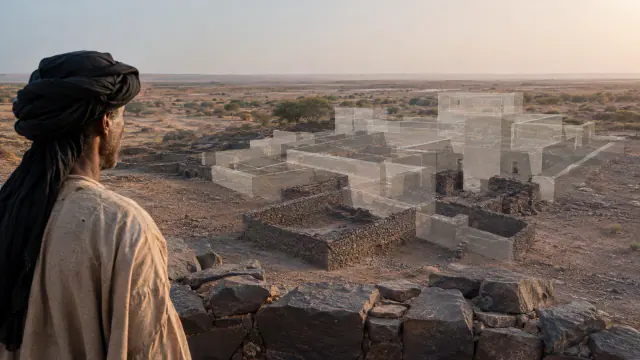
Tichitt walls
Domestic architecture and enclosures at Dhar Tichitt
These stone-built villages practised farming and herding before the medieval kingdom of Ghana.
Museum documentation · free public access, no account required.
Generated reconstruction · Declared visual hypothesis
Declared visual reconstruction for museographic context; it is not a photograph of the original nor documentary evidence.
History and context
Stone walls and the distribution of settlements document large-scale, settled farming and herding communities.
These populations participated in networks and developed responses to increasing aridity before medieval Ghana. Limitation: the evidence does not identify the Soninke language, a lineage or the state of Ghana.
Evidence and interpretation
ARQ. Stone walls and the distribution of settlements document large-scale, settled farming and herding communities. What this does not establish: the Soninke language, a lineage or the state of Ghana.
Catalogue facts
- Narrative date
- II–I millennia BCE
- Location
- Dhar Tichitt–Walata and the Gorbi Valley, Mauritania
- Material
- archaeological landscape in situ
- Context
- In situ; this is not a portable object. Custody: the state and relevant heritage authority of Mauritania; local communities connected to the landscape.
- Curatorial reading
- The documented fact and its interpretation appear separately in the evidence block.
- Dossier axis
- settlement
- Research record
- MANDE · EVI-02
- Documentary coverage
- 1 museum source, heritage, primary corpus or research for this stop.
A SHARED TOPIC, DIFFERENT MOMENTS
Objects connected through time
Follow a topic across the collections. A shared tag is a way to compare objects, not proof that one culture influenced another.
The order uses the midpoint of each approximate date range; ranges can overlap. Spacing does not represent elapsed time. Swipe, scroll or use the arrows. With the sequence focused, use ← / →, Home or End.
THE CURRENT OBJECT
Its date is not sufficiently established to place it on the timeline. We keep it here, separate from the dated objects.
 You are viewing
II–I millennia BCE
Tichitt walls
Mande Worlds
An archaeological landscape with a long history, not an individual object.
Current recordStone19 dated objects
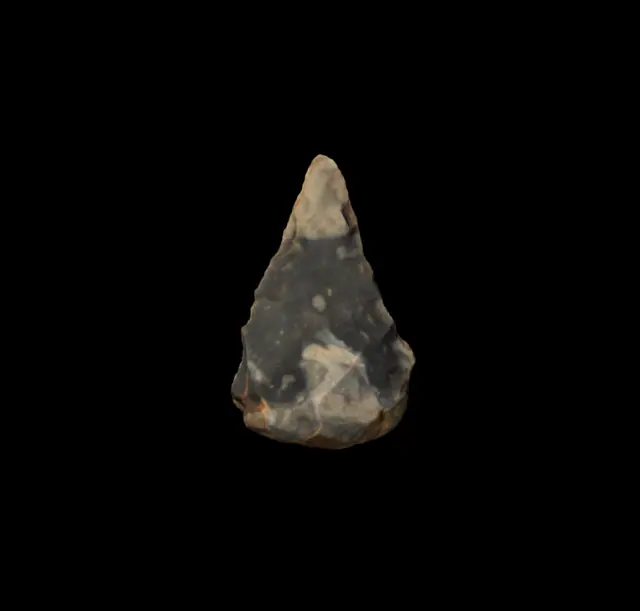
≈425,000–375,000 years
Swanscombe handaxe
Prehistory
Approximate catalogue age for the Hoxnian interglacial (MIS 11); editorial reference 2026 for ordering only, not calibrated dating.
Read the record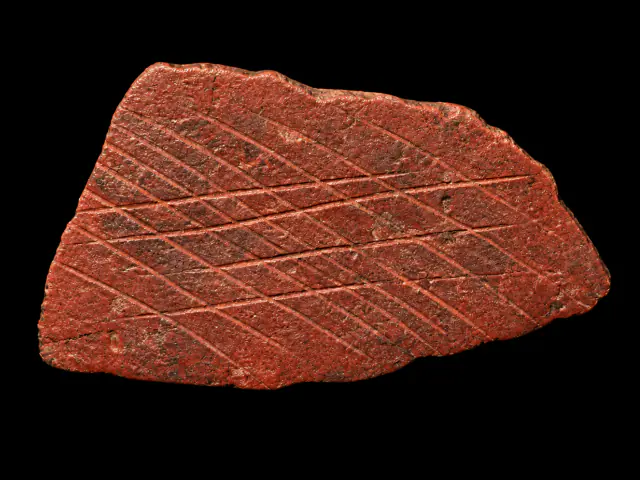
≈77,000–75,000 years
Engraved ochre from Blombos
Prehistory
Approximate catalogue age; editorial reference 2026 for ordering only, not calibrated dating.
Read the record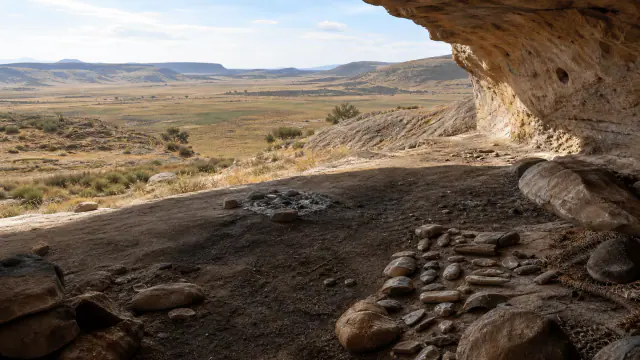
≈25.500–23.500 BCE
Before the San
San histories
Date of the representative element, not ethnic attribution of its authors.
Read the record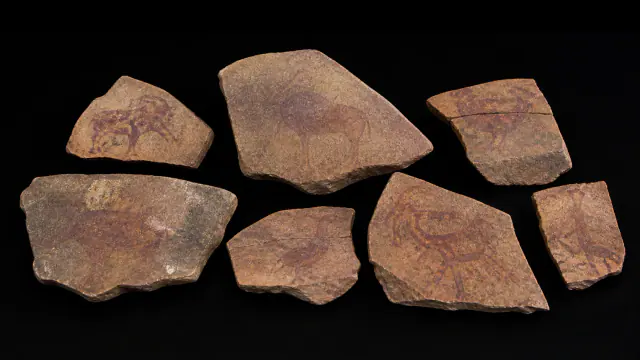
≈25.500–23.500 BCE
Before the name San
San histories
Dating of the context of the slabs; anonymous authors.
Read the record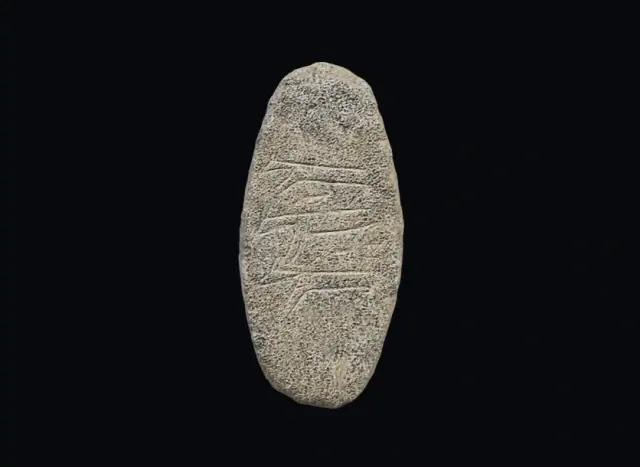
PPNA · site proposal: ≈9600–8800 BCE, provisional
Engraved stone from Çakmaktepe
Prehistory
Provisional date range for the site; not direct dating of this stone.
Read the record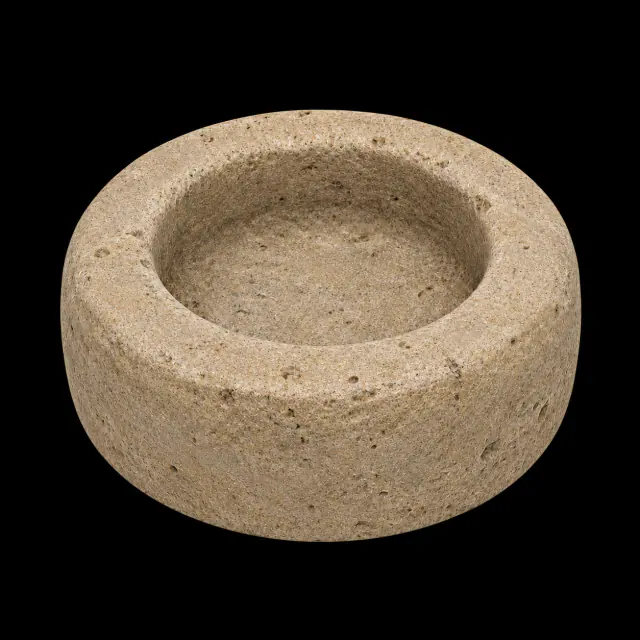
PPNA · ≈9600–8800 BCE, provisional proposal for the site
Grinding stone from Çakmaktepe
Prehistory
Provisional date range for the site and the published tools; the identification of the image is unverified.
Read the record
End of the 4th millennium BCE
Warka Mask
Sumer
The full 4th millennium BCE provides broad limits for chronological ordering; the record specifies the end of the millennium.
Read the record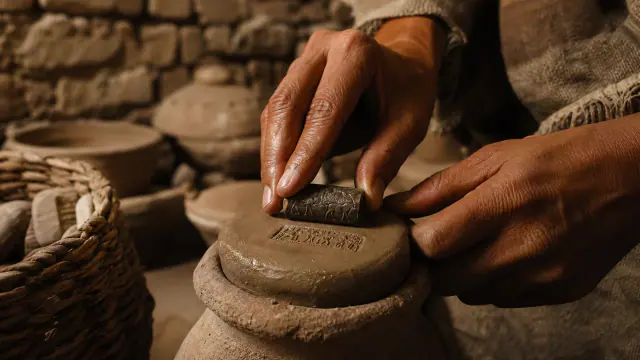
c. 3500–3100 BCE
Cylinder seal
Sumer
Approximate dating according to the record.
Read the record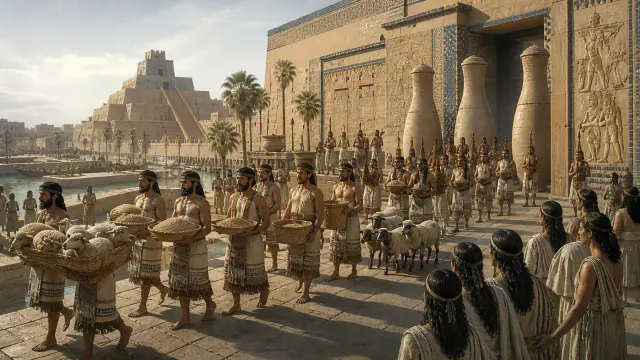
ca. 3300–3000 BCE
Uruk Vase
Sumer
Approximate dating according to the record.
Read the record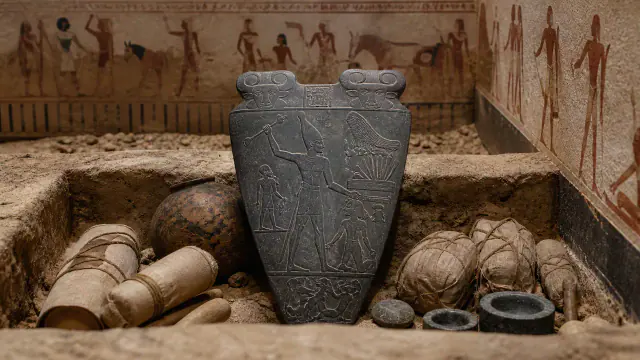
ca. 3100 BCE
Narmer Palette
Ancient Egypt
Approximate dating according to the record.
Read the record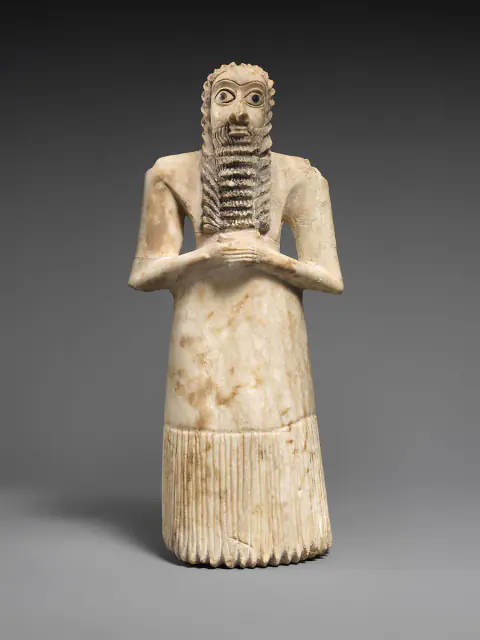
Towards 2900–2600 BCE
Worshiper of Tell Asmar
Sumer
Approximate dating according to the record.
Read the record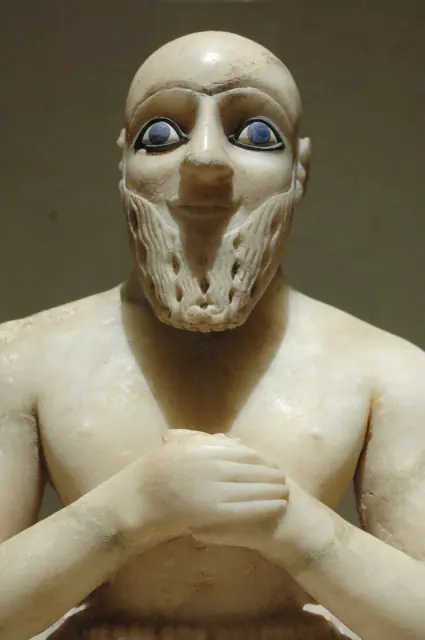
Towards 2400 BCE
Statue of Ebih-Il
Sumer
Approximate dating according to the record.
Read the record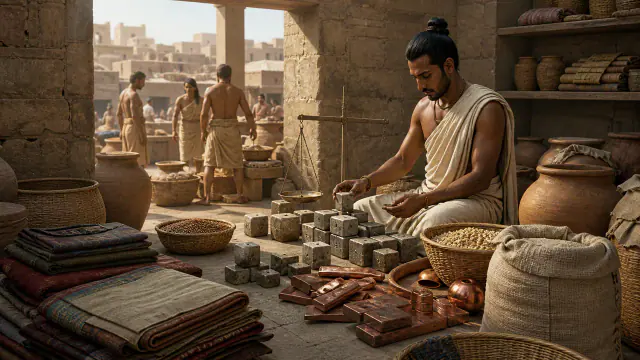
ca. 2600–1900 BCE
Weights
Indus civilisation
Date range for the system of weights, not a year-specific date for each example.
Read the record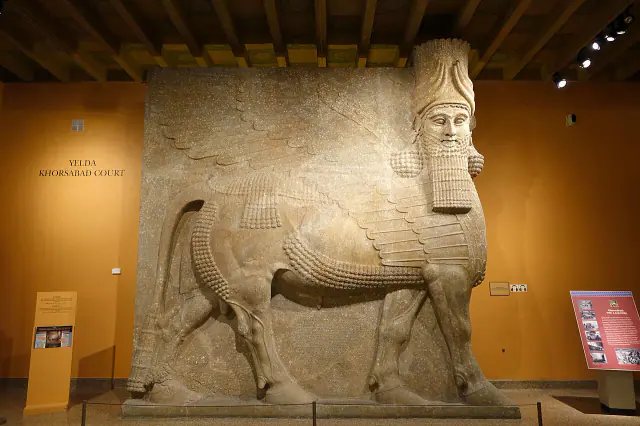
Reign of Sargon II · 721–705 BCE
Lamassu of Khorsabad
Sumer
Reign interval associated with the piece.
Read the record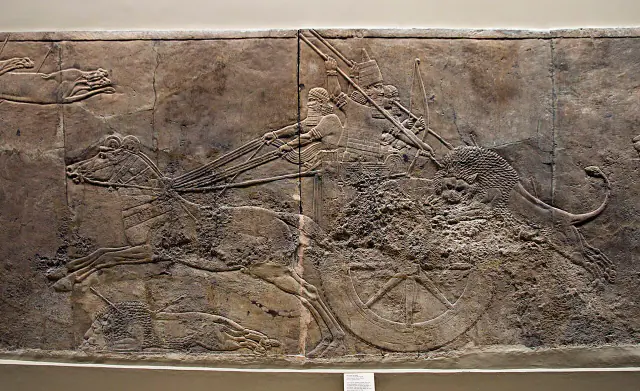
645–635 BCE
Ashurbanipal Hunt
Sumer
Approximate dating according to the record.
Read the record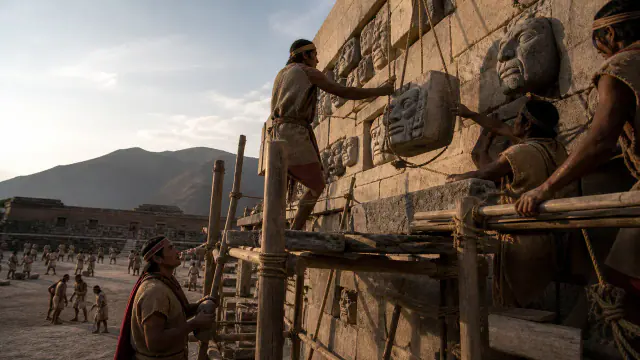
c. 800–300 BCE
Heads on the wall
Pre-Inca cultures
Framework of the set of architectural heads.
Read the record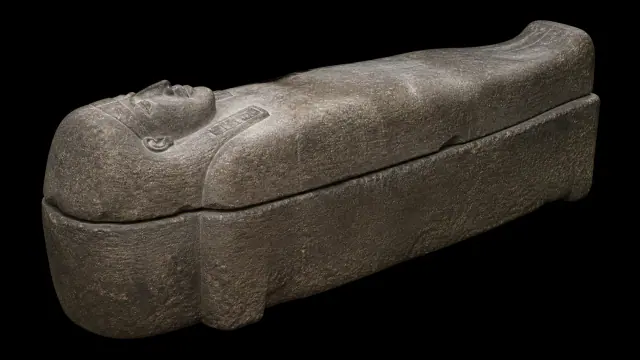
first quarter of the 5th century BCE
Sarcophagus of Eshmunazar
Phoenicians
First quarter of the 5th century BCE
Read the record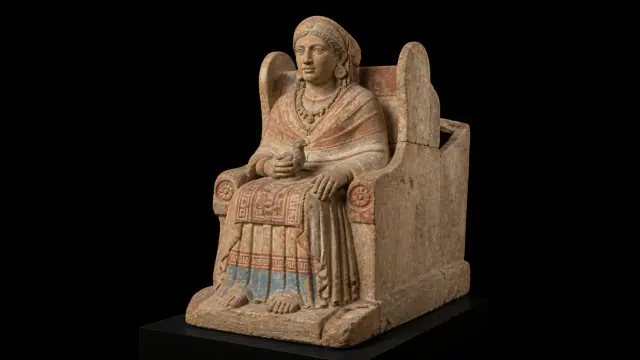
First half of the 4th century BCE
The statue was the urn
Iberians
First half of the 4th century BCE; date of the funerary context.
Read the record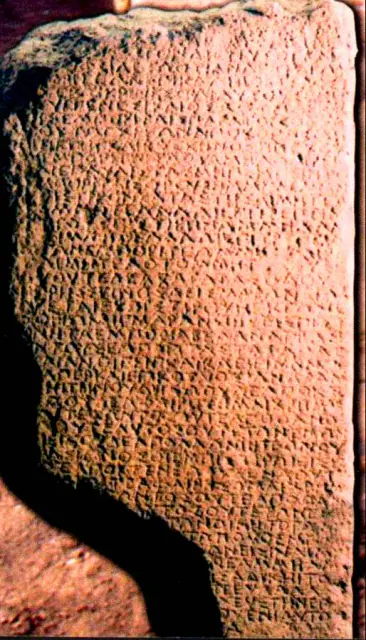
4th century BCE
The inscription of Pistiros
Thracians
Approximate dating according to the record.
Read the record
Also connected, without a comparable date (9)
These objects are not placed after the others: an unknown date does not mean a more recent object.
- A White Wall on the DanubeCeltic worlds · 6th century BCE
- CemeteryIndus civilisation · ca. 2600–1900 BCE
- Engraved stonePrehistory · Before ≈39,000 cal BP
- Four gardens and waterAchaemenid Persia · 6th century BCE
- Kumbi SalehMande Worlds · medieval occupation; prominent phases between the 11th and 13th centuries
- Soma stonesVedic and later Indian worlds · Rigvedic strata; later ritual tradition
- The quarry remained visibleGojoseon and early Korea · Mainly 6th–5th centuries BCE
- The Thracian HorsemanThracians · Roman era · diffusion especially in the 2nd–3rd centuries CE
- Writing with gapsGaramantes · Diverse chronologies
A closer look
About 1 min to read · 1 section. Further reading and sources · free access. Editorial review recorded: .
Living and storing within the enclosure
The enclosures studied at Akhreijit contained between two and nine dwelling units. Dry-stone walls delimited sets with hearths and storage areas; some shared walls and formed groupings traversed by narrow streets and plazas. Augustin Holl interprets this distribution as indicative of compound households, capable of coordinating agricultural, pastoral and artisanal tasks that coincided in the calendar. The architecture documents proximity and work organisation; identifying each group exactly as an extended family or polygamous remains a social hypothesis, not an automatic reading of the plan.
Location and territory
REGIONAL AREA
Dhar Tichitt–Walata and the Gorbi Valley, MauritaniaLinguistic, commercial and political spheres of West Africa; does not equate to a continuous imperial border. The marker indicates the indicative centre of the sphere, not a border or an exact point.Sources and references
Did you enjoy this exhibit?
Your opinion helps us improve the museum. You can change it whenever you like.
Loading your rating…