 English
 Español
 Français
 Italiano
 Deutsch
 Русский
 Português
 Polski
 Română
 Svenska
 Norsk bokmål
 Suomi
 Türkçe
 العربية
 简体中文
 한국어
 हिन्दी
 Ελληνικά
01 · INITIAL ATLAS · NODES AND ROUTES
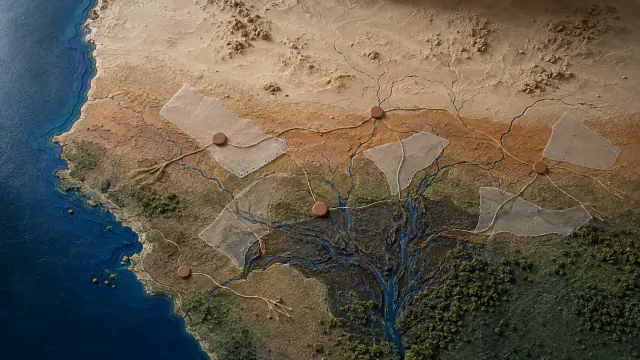
Map of Mandé Worlds
Explore the cities and routes of the Upper Niger and the Sahel, with Mandé societies and languages that have distinct histories.
Read the complete record → TRACEKEEPERS
HISTORY · OPEN COLLECTION
Mali emerged from alliances and conflicts in Manden within older regional networks. The Sunjata epic preserves historical memory through living versions, not a literal chronicle of the thirteenth century.
34 complete records · free to read, no account needed
Read freely here. A free account saves your visits inside the museum.
Before you begin · Mande Worlds
Mandé histories developed in a West Africa with a long experience of innovation and urban life before the Mali Empire.
Before 9400 BCE
Vessels and tools reveal innovations by prehistoric West African communities whose language we do not know.
From ca. 250 BCE
A settlement in the Inland Niger Delta develops its own urban history, many centuries before the Mali Empire.
13th century
A southern kingdom expands within older networks; written sources and oral traditions preserve different perspectives.
At Ounjougou, in present-day Mali, excavations have found pottery earlier than 9400 BCE alongside stone tools. Those communities took advantage of landscapes transformed by changes in moisture and vegetation. This testimony helps situate the depth of the regional past; we do not know what languages their inhabitants spoke and we cannot attribute a Mande identity to them.
Many millennia later, from approximately 250 BCE, Jenne-jeno grew in the inland Niger delta. Its earthen dwellings, pottery, metalworking remains and burials document an urban trajectory prior to Islam and to Mali. River life and nearby settlements provided a setting for production and exchange with its own history.
The Mali Empire emerged in the 13th century in the south of the present-day country, within older political and trading networks. Its history is reconstructed by bringing together archaeology, texts and oral traditions, including those of Sunjata. Mandé societies and languages encompass far more than that empire: their memories have been transmitted and transformed within diverse communities up to the present.
The museum’s objects, cities and stories connect that regional depth with trade, crafts, power and memory.
Interpreting these traces. Ounjougou and Jenne-jeno do not establish Mandé ethnic continuity; nor did all Mandé-speaking peoples belong to the Mali Empire.
1st millennium BCE–present · cities, empires and oral memory · AFRICA
The museum entrance brings together the atlas and the background to Mandé Worlds. Seven sections then organise the historical context, culture, architecture, people and society, treasures and grave goods, beliefs and curiosities, and a historical gateway to other museums. Each record retains distinct narrative layers, cautions and sources.
The room combines a specific visual catalog with an audited thematic dossier. Separates facts, interpretations and cautions; the 3D volumes continue to be replaceable markers until models with provenance and license are incorporated.
Mali emerges from coalitions and conflicts in Manden within older networks; the epic of Sunjata preserves historical memory in living versions, rather than a literal chronicle of the 13th century.
Do not confuse medieval Ghana with the modern state of Ghana, Jenne-jeno with a Mandé imperial capital, or one version of the epic with exclusive authority.
Read the background and its sources →EXPLORE THE COLLECTION
Follow the museum’s curated order or go straight to a section. Every record includes its full public documentation and sources.
01 · COLLECTION
Consult the maps and initial context sheets to situate this museum in time and territory; then choose the areas that interest you most.
01 · INITIAL ATLAS · NODES AND ROUTES
Explore the cities and routes of the Upper Niger and the Sahel, with Mandé societies and languages that have distinct histories.
Read the complete record →02 · BEFORE MALI · UPPER NIGER, IRON AND CITIES WITHOUT PALACES
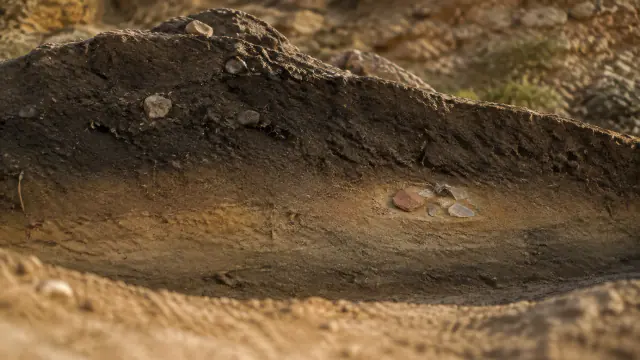
Jenne-jeno grew with neighbourhoods, workshops and other nearby settlements; no palace directing the entire city has been identified.
Read the complete record →02 · COLLECTION
The first stop reconstructs the area before Mandé Worlds; places and processes then provide a way into its history without reducing it to a starting date or an inevitable destination.
01 · 01 · CONTEXT · Long-term perspective; focus on the 8th–14th centuries
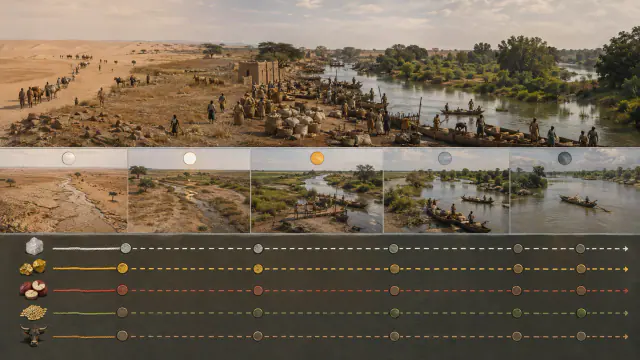
Rivers and routes connected areas of fishing, farming, herding, salt and gold.
Read the complete record →02 · 02 · CONTEXT · ca. 250 BCE–1400 CE
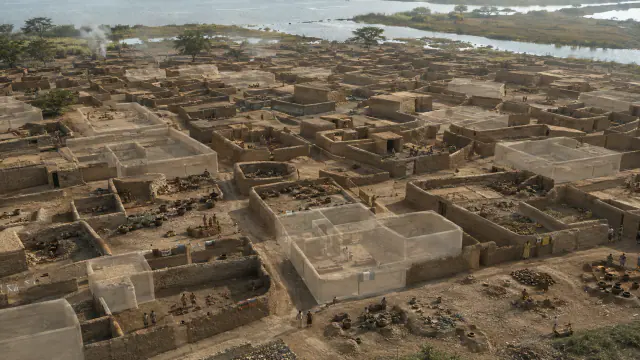
The specialised neighbourhoods and settlements of Jenne-jeno reveal an urban organisation that did not necessarily depend on a single palace.
Read the complete record →03 · 03 · CONTEXT · 9th–13th centuries and later memory
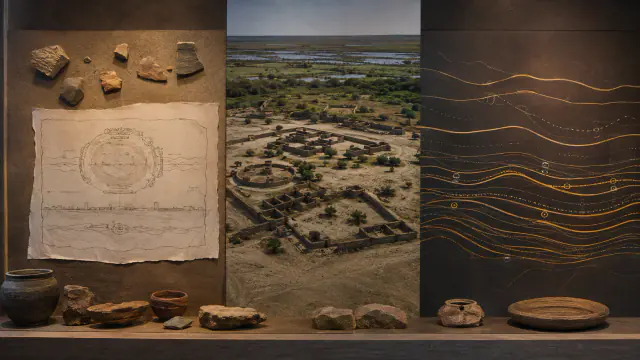
The sources document this kingdom, but the location of its capital, its boundaries and its end remain under discussion.
Read the complete record →04 · 04 · CONTEXT · 13th–15th centuries
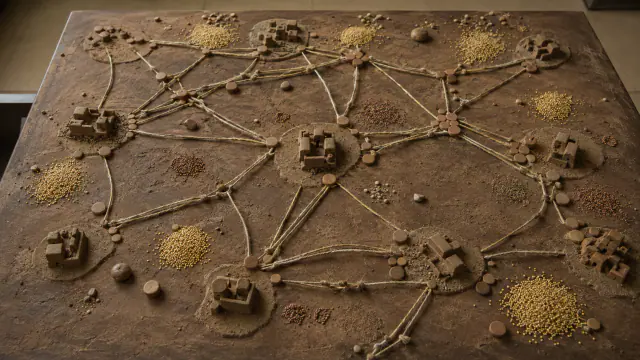
Rulers sustained their power through alliances, tribute, administrators and negotiations with local powers.
Read the complete record →05 · 05 · CONTEXT · Medieval period
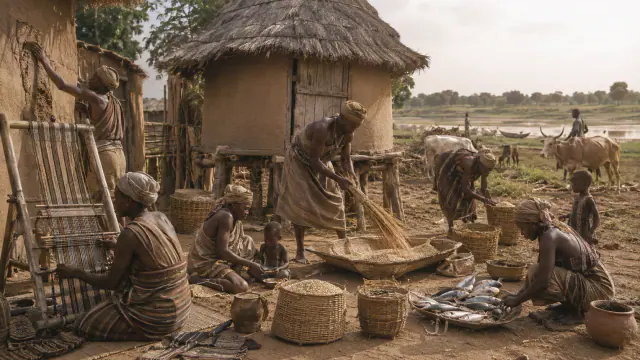
Farmers, herders, fishers and craftspeople sustained cities and armies, alongside the gold trade.
Read the complete record →06 · 06 · CONTEXT · 8th century–present
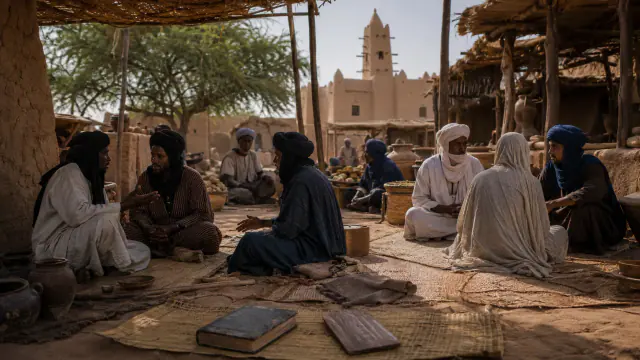
Islam spread at different rates and coexisted with local authorities, rituals and knowledge.
Read the complete record →03 · COLLECTION
These stops distinguish instruments, ritual actions, orality or writing and visual culture. Where there is no theatre, score or certain meaning, the museum preserves the limit.
01 · LIVING AND DOCUMENTED CULTURE · 01
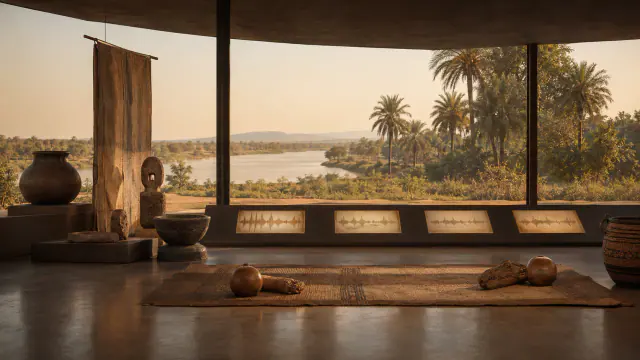
The jeli transmit genealogies, sing, advise and mediate; each performance changes according to its audience and occasion.
Read the complete record →02 · LIVING AND DOCUMENTED CULTURE · 02
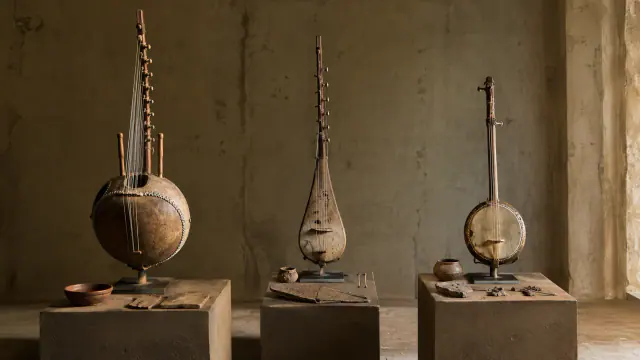
Each instrument has its own history and is used in different repertoires and on different occasions.
Read the complete record →03 · LIVING AND DOCUMENTED CULTURE · 03
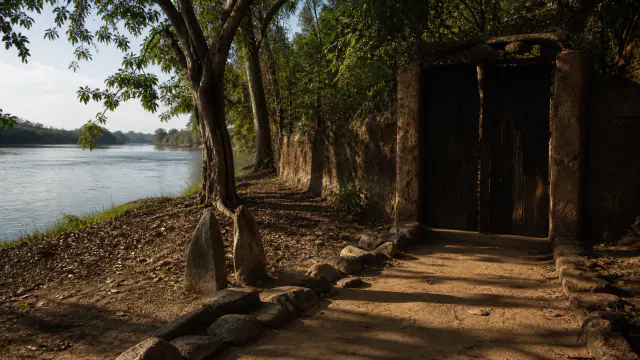
Ceremonies combine music and movement; some parts are public and others are reserved for the community.
Read the complete record →04 · LIVING AND DOCUMENTED CULTURE · 04
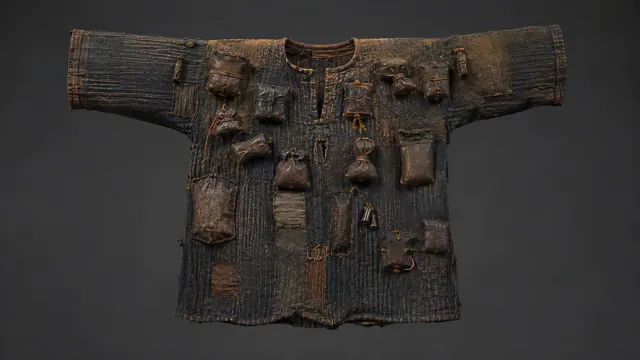
The tunics and their ornaments allow discussion of the hunter’s occupation, the protection attributed to certain objects and the history of the person who wore them.
Read the complete record →04 · COLLECTION
These architectures explain how materials, water, work and memory organized the territory without converting an elevation reconstruction into certainty.
01 · ARCHITECTURE AND LANDSCAPE · 01
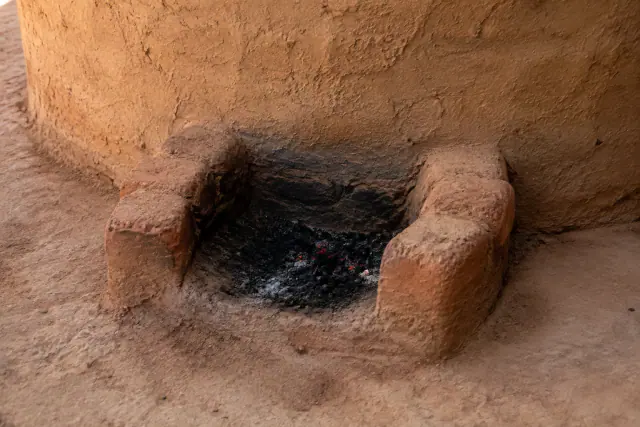
Their earthen buildings required repairs and techniques adapted to flooding.
Read the complete record →02 · ARCHITECTURE AND LANDSCAPE · 02
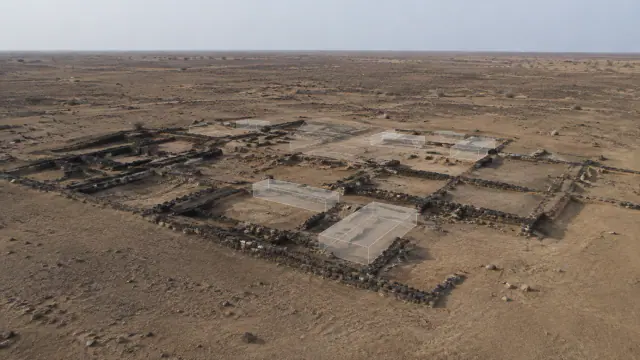
The houses and mosque reveal an important city; its identification as Ghana’s capital is unconfirmed.
Read the complete record →03 · ARCHITECTURE AND LANDSCAPE · 03
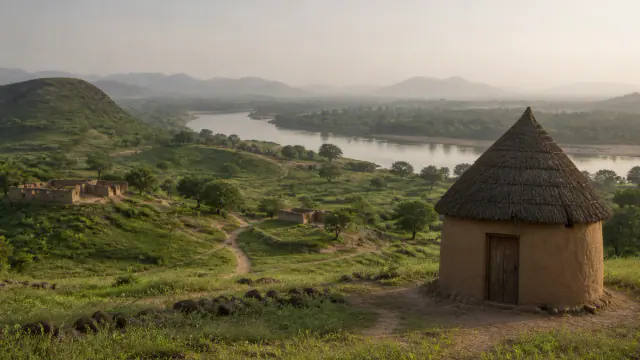
The court may have moved between different places; we know of no single permanent capital throughout imperial history.
Read the complete record →05 · COLLECTION
Known people, reconstructed voices and collective footprints. From oldest to most recent according to life, reign or scene. The periods may overlap; The voices without a determinable date close the journey.
01 · ARCHAEOLOGICAL RECONSTRUCTION · UNNAMED PERSON
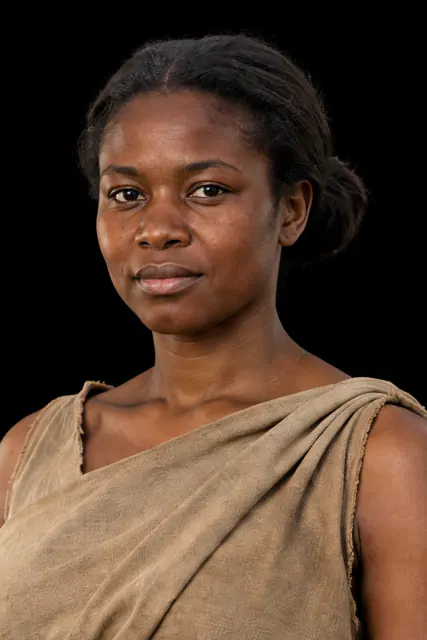
A life in the Middle Niger, many centuries before the Mali Empire.
Read the complete record →06 · COLLECTION
Concrete pieces to understand materials, decisions and knowledge systems, with separate evidence and interpretation.
01 · 15 · TREASURE · before ca. 9400 cal BCE
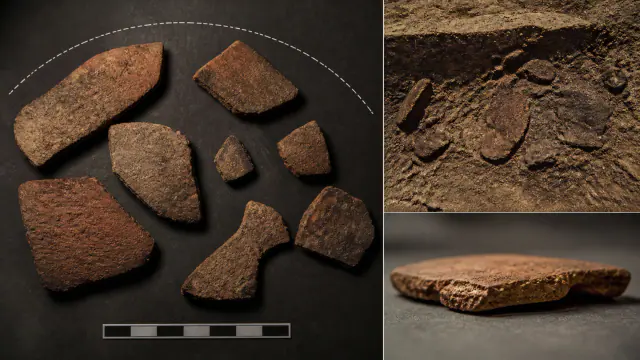
These fragments are one of the early pieces of evidence for pottery making in Africa.
Read the complete record →02 · 16 · TREASURE · 2nd–1st millennia BCE
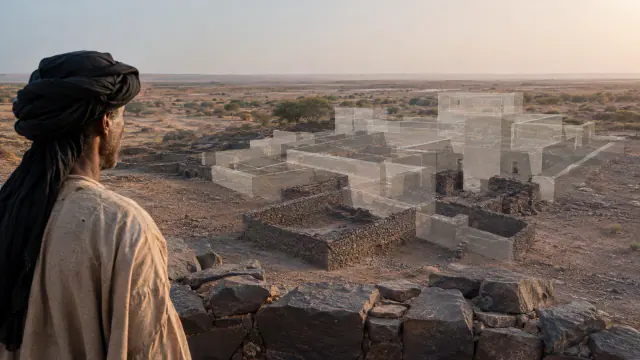
These stone-built villages practised farming and herding before the medieval kingdom of Ghana.
Read the complete record →03 · 17 · TREASURE · 9th century BCE–2nd millennium CE
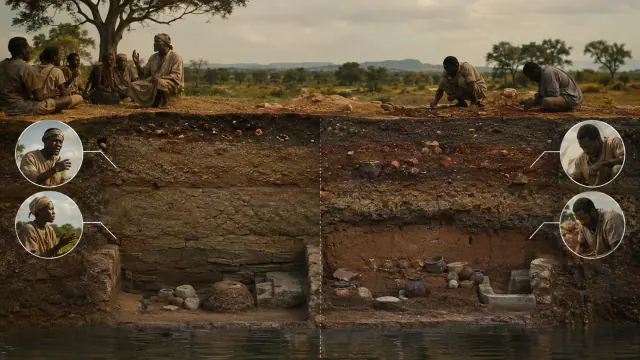
These neighbouring places began and grew at different times; their histories cannot be reduced to a single foundation.
Read the complete record →04 · 18 · TREASURE · ca. 250 BCE–1400 CE
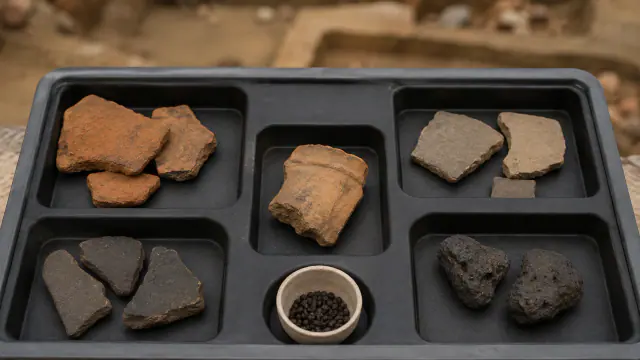
Pottery, iron and domestic remains offer insights into the city’s crafts and everyday life.
Read the complete record →05 · 19 · TREASURE · medieval occupation; prominent phases between the 11th and 13th centuries
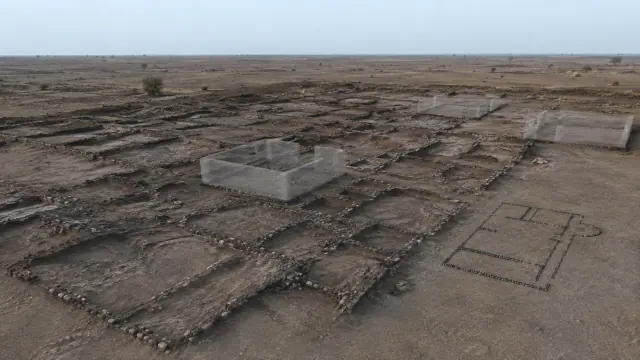
The city was important in the western Sahel and is a possible capital of Ghana, although that identification remains open.
Read the complete record →06 · 20 · TREASURE · 9th–11th centuries CE
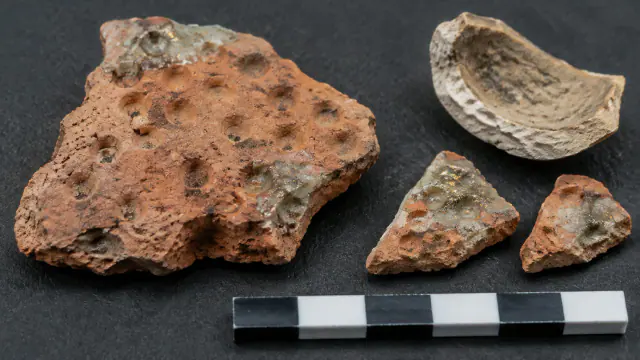
Traces of gold in the moulds help reconstruct how this metal was processed at Tadmekka.
Read the complete record →07 · 21 · TREASURE · after 1375 and before November 1380
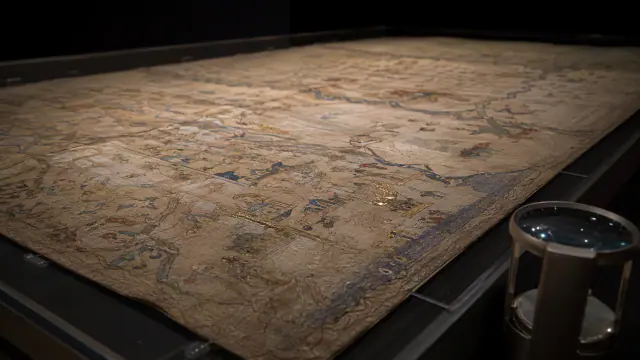
A European atlas depicts the ruler of Mali with gold, showing how his wealth was imagined from the Mediterranean.
Read the complete record →08 · 22 · TREASURE · 13th century, date attributed by the museum
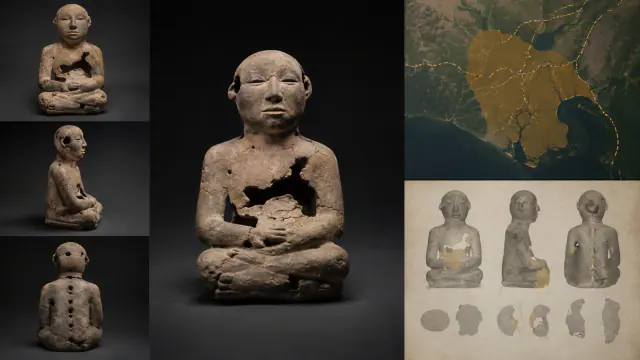
The figure’s posture admits different interpretations; we do not know with certainty who it represents or what it intended to express.
Read the complete record →09 · 23 · TREASURE · 19th century
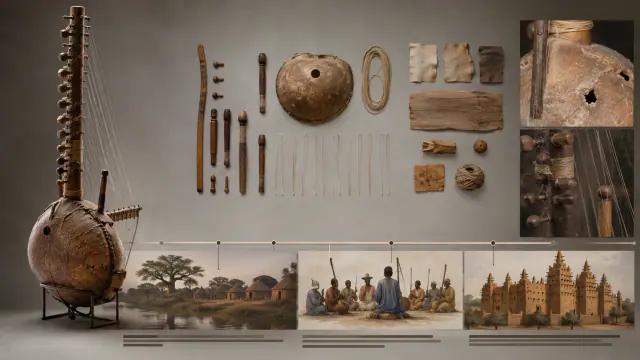
Gourd, skin, wood and strings form an instrument linked to the jali repertoires of Senegambia.
Read the complete record →10 · 24 · TREASURE · early 20th century
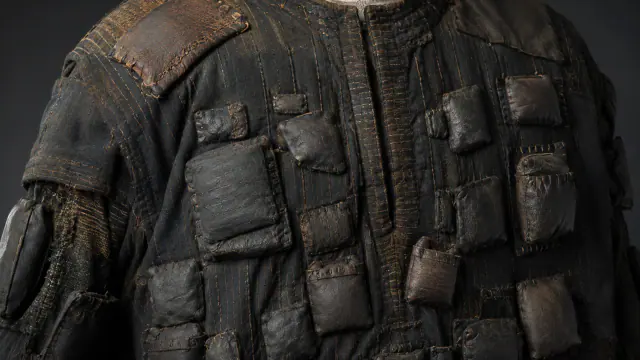
The garment combines textiles, leather and elements believed to offer protection, associated with the hunter’s occupation.
Read the complete record →11 · 25 · TREASURE · tradition linked through narrative to the 13th century; the present instrument and its custodianship have their own chronology
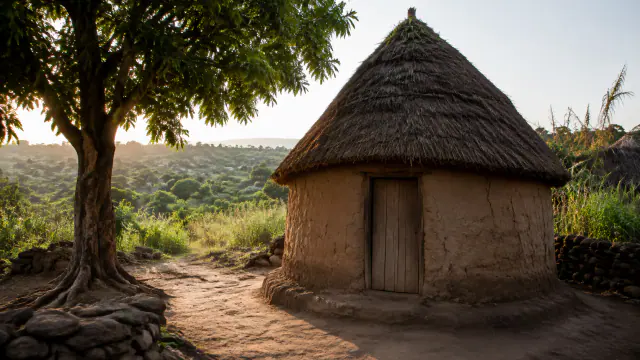
The balafon and its custodians are part of a living tradition of music, memory and teaching.
Read the complete record →12 · 26 · TREASURE · The present with historical memory
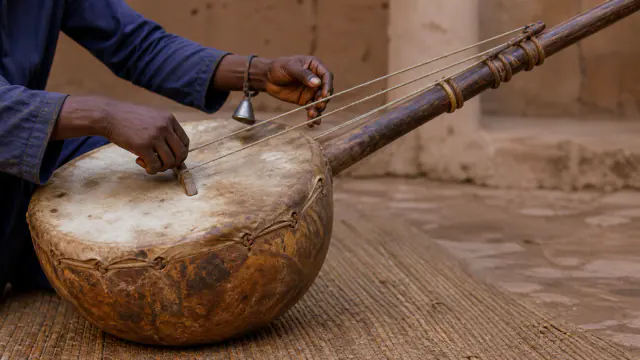
This instrument accompanies praise, heroic tales, agricultural work and other occasions, with uses that vary by place.
Read the complete record →07 · COLLECTION
These cards separate what is documented from what is interpreted and recover practices, questions and details capable of changing our image of this culture.
01 · 27 · BELIEF · Oral memory recorded in a later period
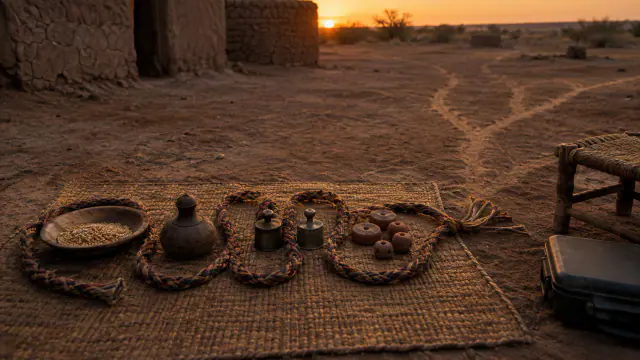
Soninke traditions recount that breaking a pact with a serpent brought about the loss of Wagadu’s prosperity.
Read the complete record →02 · 28 · BELIEF · Memory of the 13th century; contemporary formulations
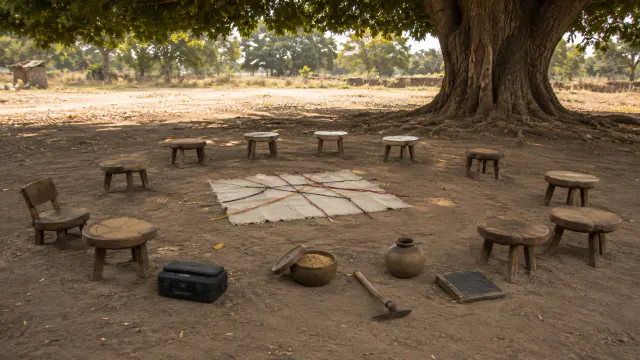
UNESCO recognises a living oral tradition, not the authenticity of a surviving medieval manuscript.
Read the complete record →03 · 29 · BELIEF · 8th century–present
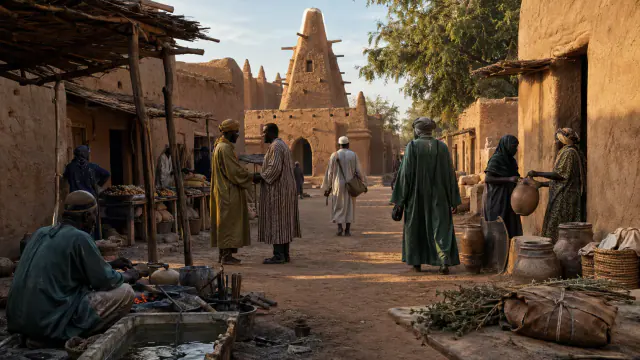
Muslim authorities, rituals and local knowledge coexisted within the same societies.
Read the complete record →04 · 30 · BELIEF · Pilgrimage of 1324; later fame
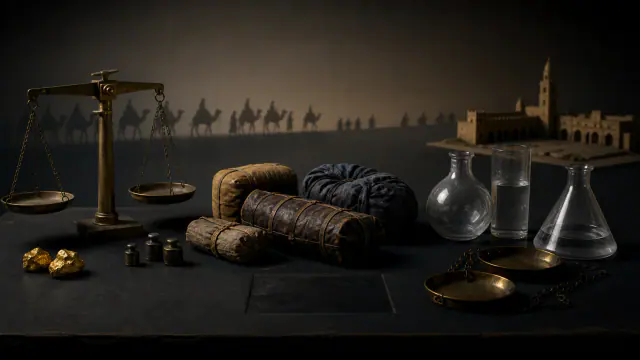
The gold of his pilgrimage made him famous, but we lack figures that would allow us to compare his wealth with fortunes from every era.
Read the complete record →05 · 31 · BELIEF · 13th–14th centuries and current debates
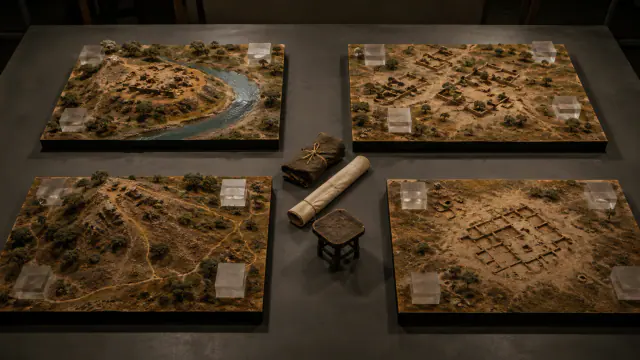
Niani is one of several proposals; archaeology does not confirm that it was the city visited by Ibn Battuta.
Read the complete record →08 · COLLECTION
Each door explains why the link exists, when it occurred, and what limits prevent contact from being converted into shared identity.
01 · DOOR 01 · ASIA · EXCHANGE
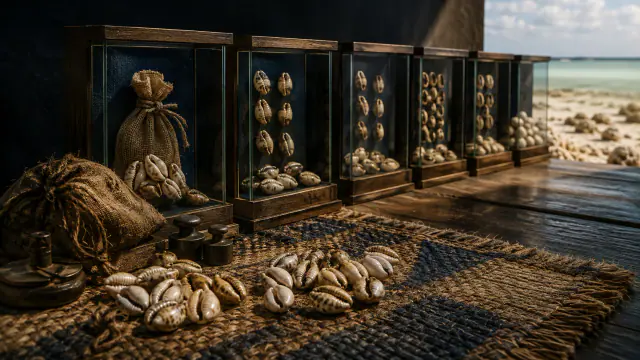
Continues in the Vedic India museum
Read the complete record →La voz que no firma
Discover the connected fiction project. The available Prehistory reader is in Spanish; other volumes are not presented as finished products for sale.
Explore the books →Try the available Prehistory browser alpha. Campaigns for the other cultures are still in development.
Open the game (Spanish) →Use each record’s institution and heritage links to continue your research. Country-by-country historical travel guides are planned, not yet published.
Historical travel →Discover artistic designs inspired by the collections and check each product’s availability. Museum access remains free.
Explore the collection →