
 English
 Español
 Français
 Italiano
 Deutsch
 Русский
 Português
 Polski
 Română
 Svenska
 Norsk bokmål
 Suomi
 Türkçe
 العربية
 简体中文
 한국어
 हिन्दी
 Ελληνικά
03 · PRACTICE · SOMA
Soma stones
The central drink of the ritual lost its botanical identity
The texts explain how soma was prepared, but do not allow its plant to be identified with certainty.
Museum documentation · free public access, no account required.
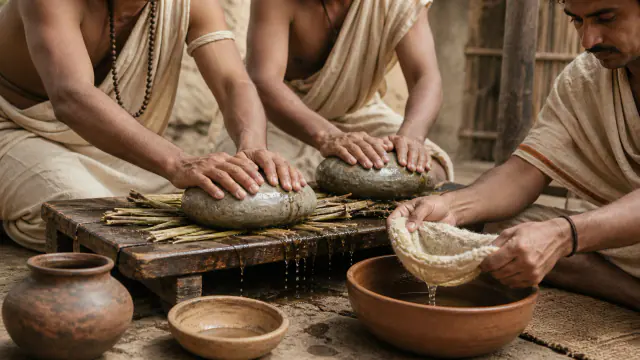
Generated reconstruction · Declared visual hypothesis
Declared visual reconstruction; not a photograph of the original nor documentary evidence.
History and context
The ninth book of the Rigveda celebrates soma while stalks are pressed between stones, the juice is filtered and offered. Specialised priests coordinated actions, metres and melodies to turn a substance into a ritual relationship.
Ephedra, amanita, Himalayan plants and later substitutes have been proposed. No botanical identification possesses sufficient consensus to present it as fact, and the effects must not be reconstructed as an automatic psychedelic vision.
The ninth maṇḍala accompanies the pressing, filtering and flow of soma with an extraordinary sensory vocabulary. Stones, wool filter and vessels belong to a chain of actions, not to a single 'sacred cup'.
No modern botanical proposal has resolved the problem for all places and epochs. Showing a recognisable species as a secure identification would turn a hypothesis into a fact; it is preferable to suggest stems without closed taxonomy.
Evidence and interpretation
Documented fact: Vedic texts describe the pressing, filtering, mixing and offering of soma; later rituals preserved structures and substitutions. Interpretation and caution: the original species, its chemistry and the subjective experience of participants are uncertain.
Catalogue facts
- Narrative date
- Rigvedic strata; later ritual tradition
- Location
- North-west of the subcontinent; later regional transmissions
- Material
- Pressing stones · filter fibre · wood · ceramic or wooden vessels
- Context
- Preparation of a liquid offering and associated recitation
- Curatorial reading
- The documented fact and its interpretation appear separately in the evidence block.
- Date
- Rigvedic strata; later ritual tradition
- Location
- North-west of the subcontinent; later regional transmissions
- Support
- Pressing stones · filter fibre · wood · ceramic or wooden vessels
- Documentary coverage
- 3 museum, heritage, primary corpus or research sources for this stop.
A SHARED TOPIC, DIFFERENT MOMENTS
Objects connected through time
Follow a topic across the collections. A shared tag is a way to compare objects, not proof that one culture influenced another.
The order uses the midpoint of each approximate date range; ranges can overlap. Spacing does not represent elapsed time. Swipe, scroll or use the arrows. With the sequence focused, use ← / →, Home or End.
THE CURRENT OBJECT
Its date is not sufficiently established to place it on the timeline. We keep it here, separate from the dated objects.
 You are viewing
Rigvedic strata; later ritual tradition
Soma stones
Vedic and later Indian worlds
Textual and ritual tradition, without individually dated stones.
Current recordStone19 dated objects
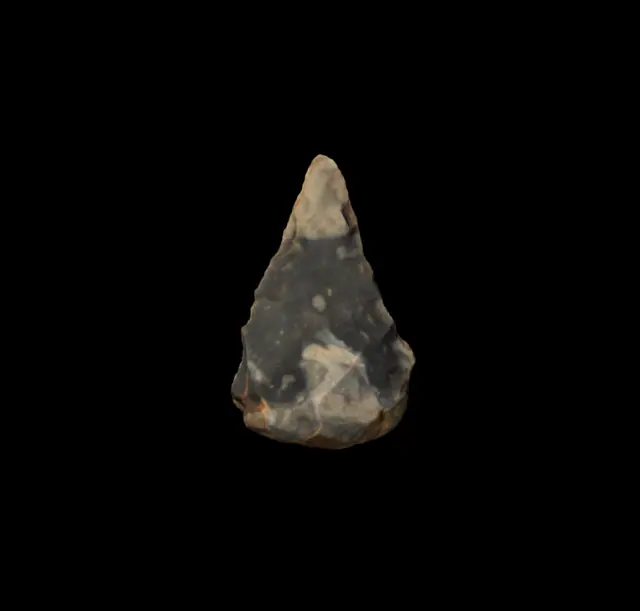
≈425,000–375,000 years
Swanscombe handaxe
Prehistory
Approximate catalogue age for the Hoxnian interglacial (MIS 11); editorial reference 2026 for ordering only, not calibrated dating.
Read the record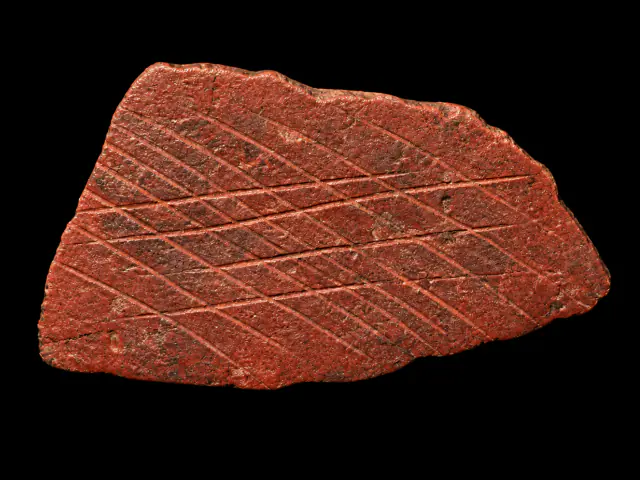
≈77,000–75,000 years
Engraved ochre from Blombos
Prehistory
Approximate catalogue age; editorial reference 2026 for ordering only, not calibrated dating.
Read the record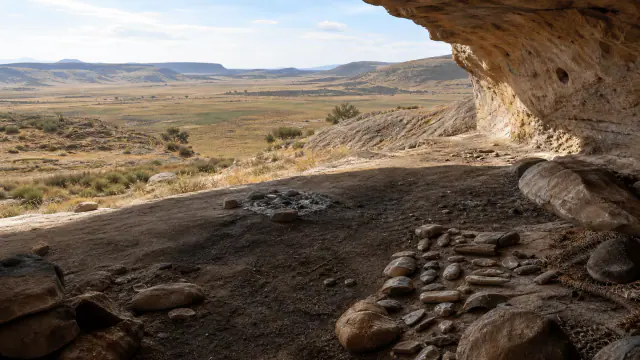
≈25.500–23.500 BCE
Before the San
San histories
Date of the representative element, not ethnic attribution of its authors.
Read the record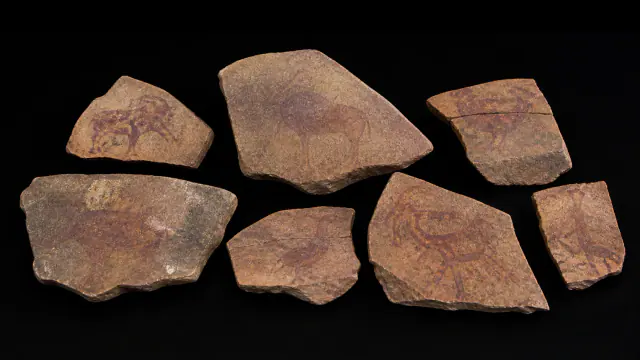
≈25.500–23.500 BCE
Before the name San
San histories
Dating of the context of the slabs; anonymous authors.
Read the record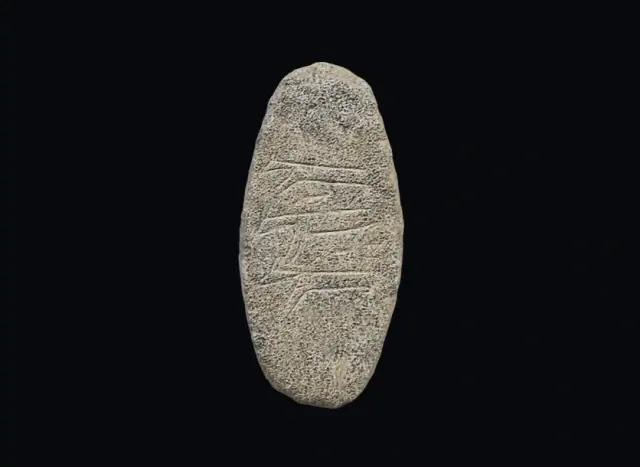
PPNA · site proposal: ≈9600–8800 BCE, provisional
Engraved stone from Çakmaktepe
Prehistory
Provisional date range for the site; not direct dating of this stone.
Read the record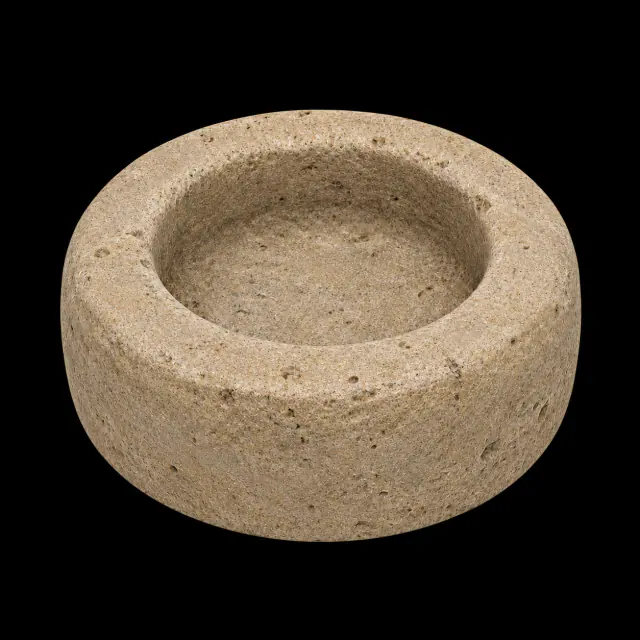
PPNA · ≈9600–8800 BCE, provisional proposal for the site
Grinding stone from Çakmaktepe
Prehistory
Provisional date range for the site and the published tools; the identification of the image is unverified.
Read the record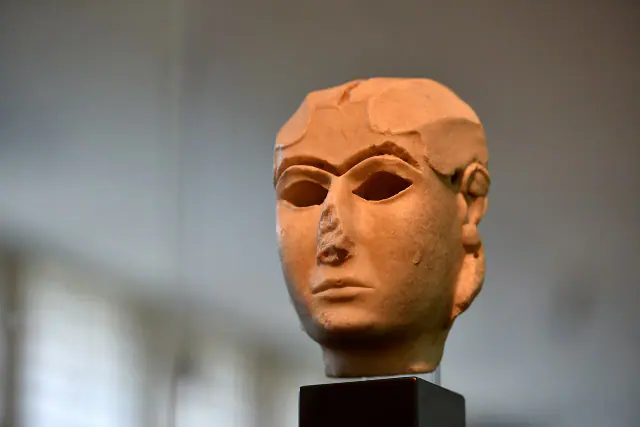
End of the 4th millennium BCE
Warka Mask
Sumer
The full 4th millennium BCE provides broad limits for chronological ordering; the record specifies the end of the millennium.
Read the record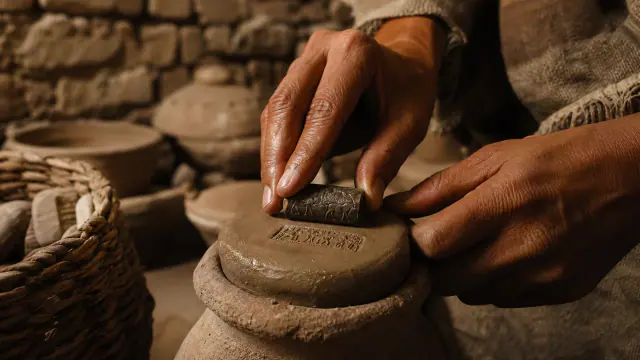
c. 3500–3100 BCE
Cylinder seal
Sumer
Approximate dating according to the record.
Read the record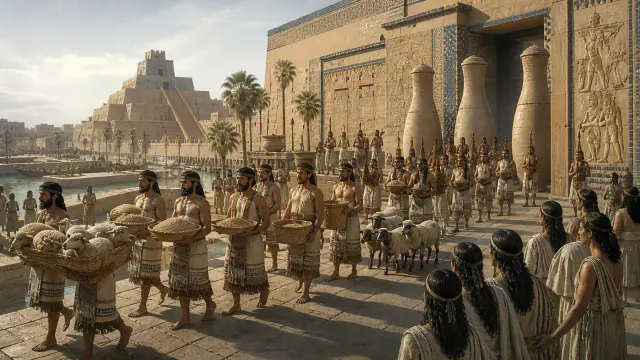
ca. 3300–3000 BCE
Uruk Vase
Sumer
Approximate dating according to the record.
Read the record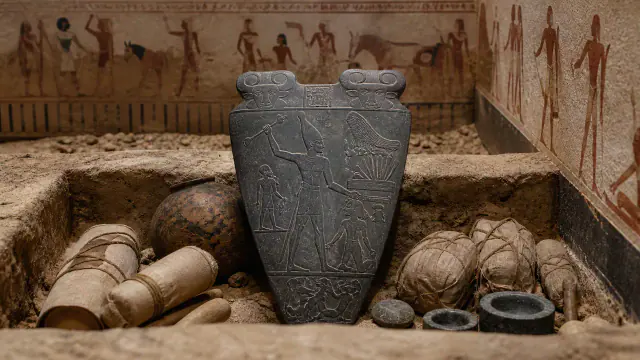
ca. 3100 BCE
Narmer Palette
Ancient Egypt
Approximate dating according to the record.
Read the record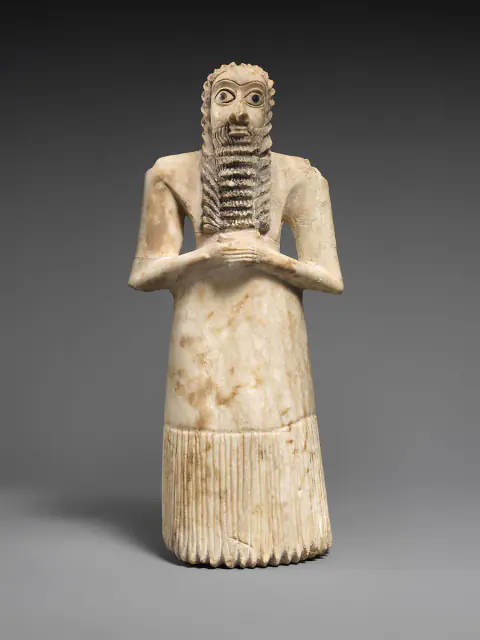
Towards 2900–2600 BCE
Worshiper of Tell Asmar
Sumer
Approximate dating according to the record.
Read the record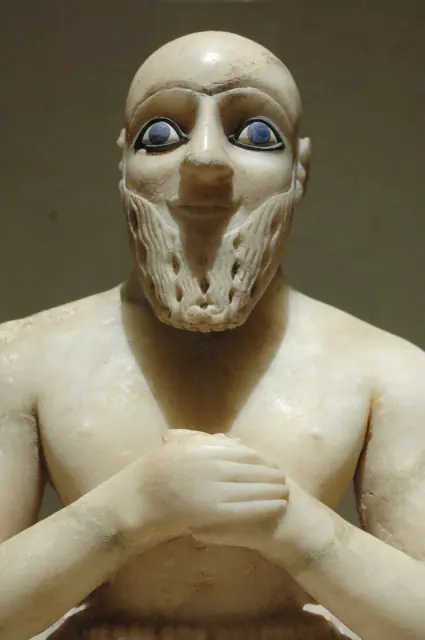
Towards 2400 BCE
Statue of Ebih-Il
Sumer
Approximate dating according to the record.
Read the record
ca. 2600–1900 BCE
Weights
Indus civilisation
Date range for the system of weights, not a year-specific date for each example.
Read the record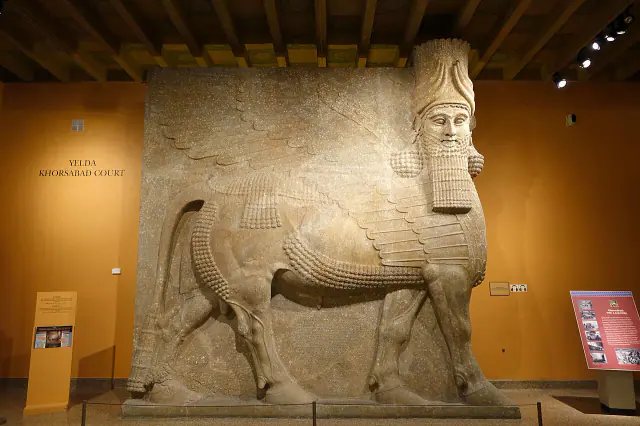
Reign of Sargon II · 721–705 BCE
Lamassu of Khorsabad
Sumer
Reign interval associated with the piece.
Read the record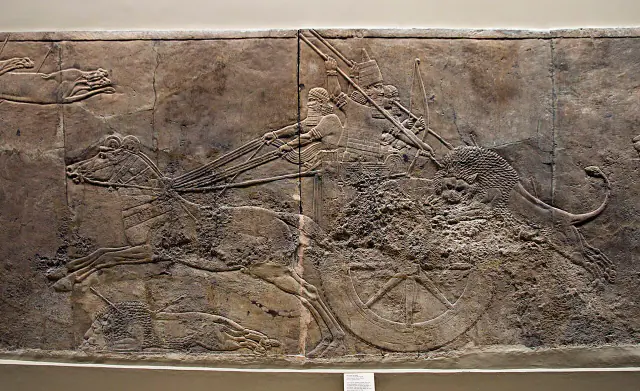
645–635 BCE
Ashurbanipal Hunt
Sumer
Approximate dating according to the record.
Read the record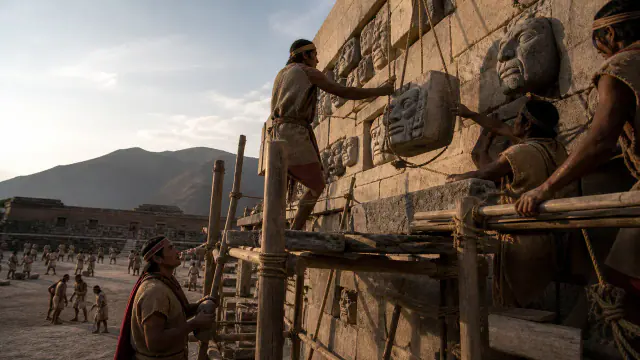
c. 800–300 BCE
Heads on the wall
Pre-Inca cultures
Framework of the set of architectural heads.
Read the record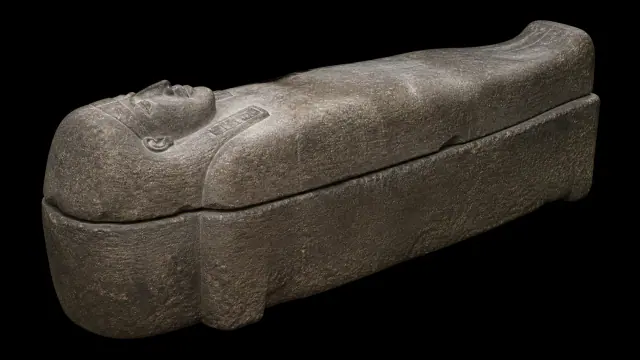
first quarter of the 5th century BCE
Sarcophagus of Eshmunazar
Phoenicians
First quarter of the 5th century BCE
Read the record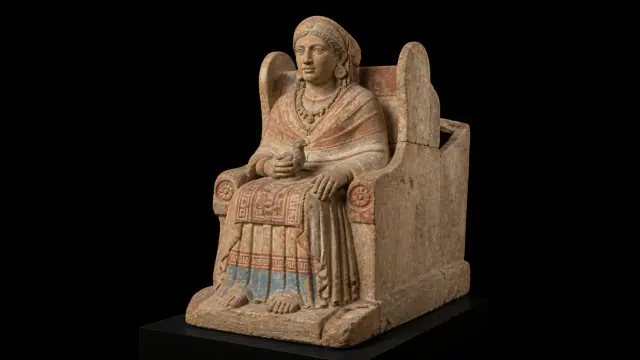
First half of the 4th century BCE
The statue was the urn
Iberians
First half of the 4th century BCE; date of the funerary context.
Read the record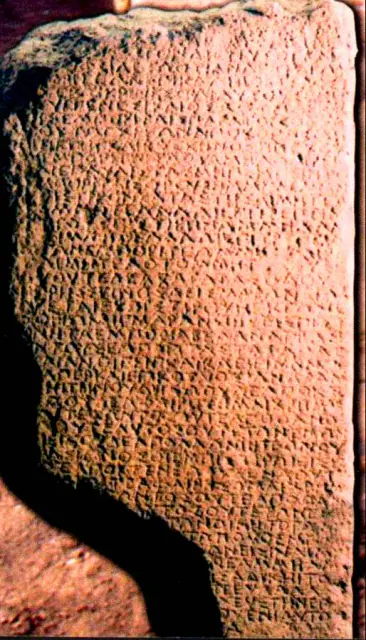
4th century BCE
The inscription of Pistiros
Thracians
Approximate dating according to the record.
Read the record
Also connected, without a comparable date (9)
These objects are not placed after the others: an unknown date does not mean a more recent object.
- A White Wall on the DanubeCeltic worlds · 6th century BCE
- CemeteryIndus civilisation · ca. 2600–1900 BCE
- Engraved stonePrehistory · Before ≈39,000 cal BP
- Four gardens and waterAchaemenid Persia · 6th century BCE
- Kumbi SalehMande Worlds · medieval occupation; prominent phases between the 11th and 13th centuries
- The quarry remained visibleGojoseon and early Korea · Mainly 6th–5th centuries BCE
- The Thracian HorsemanThracians · Roman era · diffusion especially in the 2nd–3rd centuries CE
- Tichitt wallsMande Worlds · II–I millennia BCE
- Writing with gapsGaramantes · Diverse chronologies
A closer look
About 1 min to read · 1 section. Further reading and sources · free access. Editorial review recorded: .
A manual distributes the preparation in several rounds
The Baudhāyana Śrauta-Sūtra distinguishes three pressings and concerns itself with maintaining their ritual continuity. In a passage it prescribes incorporating a stalk into the residue conserved for the third pressing; it also distinguishes a wooden trough and vessels with their own names and formulae. The detail shows that the liquid did not circulate indifferently between interchangeable vessels. It is a prescription of a concrete textual tradition later than the early hymns, useful for studying the systematisation of the process, but insufficient by itself to identify the plant species employed.
Location and territory
REGIONAL AREA
North-west of the subcontinent; later regional transmissionsFrom Punjab and the north-west towards the Ganges plain, with regional rhythms. The footprint indicates the indicative centre of the sphere, not a border or an exact point.Sources and references
Did you enjoy this exhibit?
Your opinion helps us improve the museum. You can change it whenever you like.
Loading your rating…