 English
 Español
 Français
 Italiano
 Deutsch
 Русский
 Português
 Polski
 Română
 Svenska
 Norsk bokmål
 Suomi
 Türkçe
 العربية
 简体中文
 한국어
 हिन्दी
 Ελληνικά
01 · INITIAL ATLAS · ORIGIN AND EXPANSION
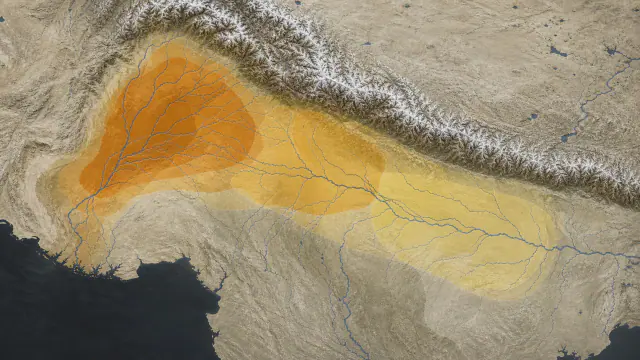
Map of Vedic India
Locates the northwestern and Gangetic regions related to Vedic traditions.
Read the complete record → TRACEKEEPERS
HISTORY · OPEN COLLECTION
After the transformation of Indus urban life, regional communities, new movements of people and changing burial practices shaped the landscape in which early Vedic traditions were composed.
30 complete records · free to read, no account needed
Read freely here. A free account saves your visits inside the museum.
Before you begin · Vedic India
Vedic history developed in a subcontinent that already brought together ancient agricultural communities and diverse urban heritages.
Seventh–third millennia BCE
From Mehrgarh to the urban networks of the Indus succeed numerous regional experiences.
From c. 1900 BCE
Settlements and funerary practices change without all the communities or their knowledge disappearing.
II millennium BCE
Hymns and rituals begin a long oral transmission whose chronology is reconstructed approximately.
Food production in the northwest of the subcontinent has roots much earlier than the Vedic texts. At Mehrgarh, from the seventh millennium BCE, adobe constructions, cereals and livestock are documented. Over millennia, settlements and crafts were transformed until, in the third millennium, cities such as Harappa participated in the great networks of the Indus.
After approximately 1900 BCE, the Harappan urban world changed in scale and organisation. Harappa remained inhabited, although its extent diminished. The urns of Cemetery H show new funerary practices alongside material continuities. The period was not an empty space between two civilisations: communities of different trajectories continued cultivating, manufacturing objects and reorganising their relations.
The composition of the earliest Vedic hymns is usually placed in the second millennium BCE; their dates are reconstructed, because they were transmitted orally during generations. Vedic Sanskrit, the rituals and the techniques of recitation open a distinct source for knowing that world. Relating the texts to sites requires caution: a pot does not indicate what language its owner spoke, and a religious tradition does not represent all the communities of the subcontinent.
The museum relates objects and traditions of thought to show a history formed by encounters, continuities and changes.
Interpreting these traces. The culture of Cemetery H cannot automatically be identified with a Vedic people nor its images read as illustrations of the hymns.
c. 1500–1000 BCE · SOUTH ASIA
Access to the museum brings together the atlas and the antecedents of Vedic India. Then, seven areas order the historical context, culture, architecture, the characters and society, the treasures and equipment, the beliefs and curiosities, and five historical doors towards other museums. Each card preserves narrative layers, cautions and differentiated sources.
The room combines a specific visual catalog with an audited thematic dossier. Separates facts, interpretations and cautions; the 3D volumes continue to be replaceable markers until models with provenance and license are incorporated.
Post-urban Indus regionalisation, new mobilities and distinct funerary practices formed the human landscape in which the earliest Vedic traditions were composed.
Cemetery H does not by itself identify an Aryan or Vedic people, and its images cannot be translated using later hymns as if they were photo captions.
Read the background and its sources →EXPLORE THE COLLECTION
Follow the museum’s curated order or go straight to a section. Every record includes its full public documentation and sources.
01 · COLLECTION
Consult the maps and initial context sheets to situate this museum in time and territory; then choose the areas that interest you most.
01 · INITIAL ATLAS · ORIGIN AND EXPANSION
Locates the northwestern and Gangetic regions related to Vedic traditions.
Read the complete record →02 · BEFORE THE VEDIC WORLD · ca. 2600–1500 BCE
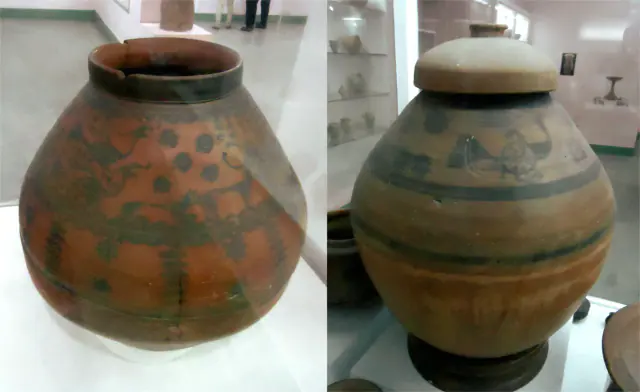
Following changes in the cities of the Indus, new funerary practices appeared, such as the use of painted urns.
Read the complete record →02 · COLLECTION
The first stop reconstructs the area before Vedic India; afterwards, places and processes allow entry into its history without reducing it to a start date nor to an inevitable destiny.
01 · 01 · TEXTUAL LANDSCAPE · SAPTA SINDHU
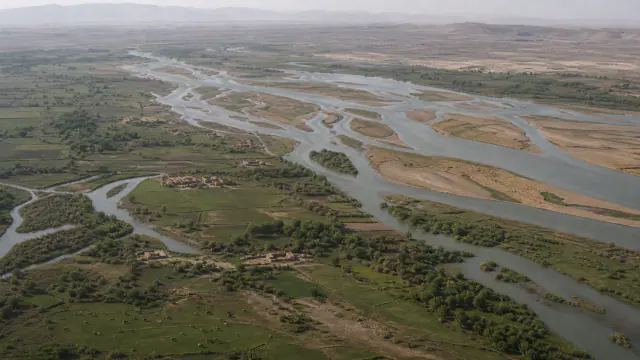
The hymns of the Rigveda name rivers by which communities travelled and obtained water and pasture.
Read the complete record →02 · 02 · CONFLICT · HYMN 7.18
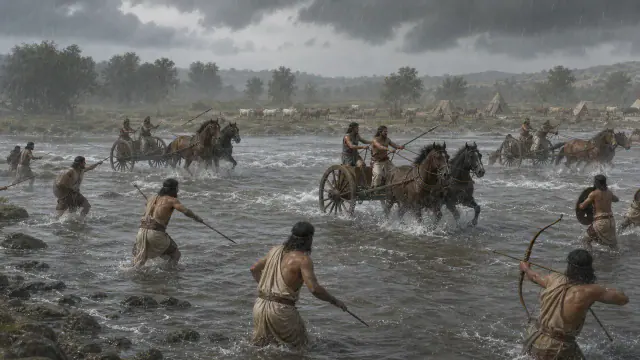
The hymns celebrate a victory of Sudās beside the river Paruṣṇī; they are not a neutral account of the battle.
Read the complete record →03 · 08 · TECHNOLOGY · GANGETIC PLAIN
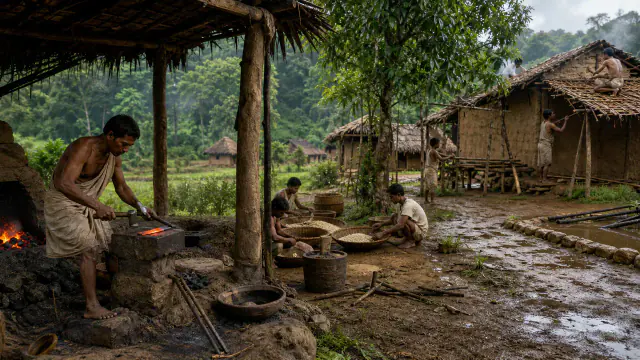
The use of iron accompanied gradual changes in agriculture and settlements in the Ganges.
Read the complete record →04 · 09 · POLITICS · LATE VEDIC
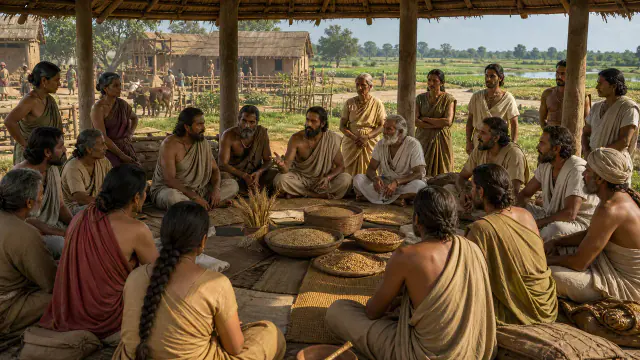
In Kuru-Pañcāla, rituals helped reinforce the authority of kings and their alliances.
Read the complete record →03 · COLLECTION
These stops distinguish instruments, ritual actions, orality or writing and visual culture. Where there is no theatre, score or certain meaning, the museum preserves the limit.
01 · LIVING AND DOCUMENTED CULTURE · 01
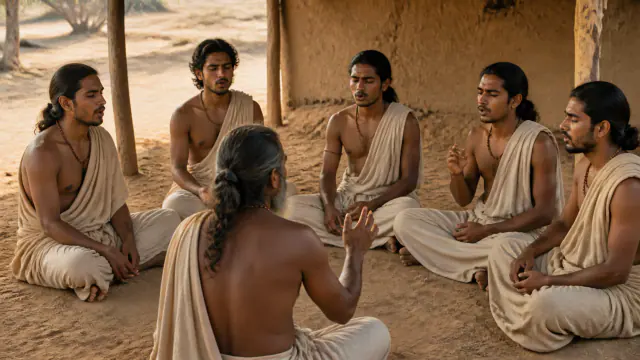
Vedic chant preserves text, pitch, duration and accent through extremely precise oral techniques.
Read the complete record →02 · LIVING AND DOCUMENTED CULTURE · 02
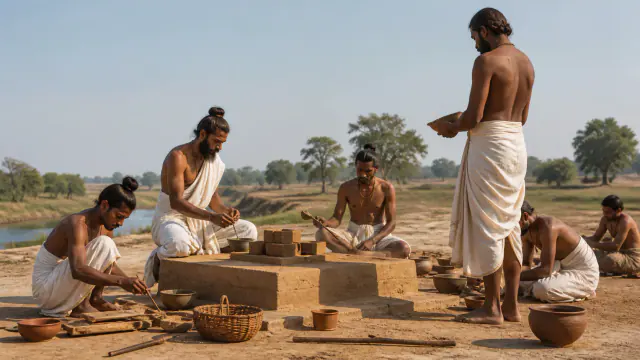
In the rituals, each officiant had distinct tasks: reciting, measuring, preparing and performing the offerings.
Read the complete record →03 · LIVING AND DOCUMENTED CULTURE · 03
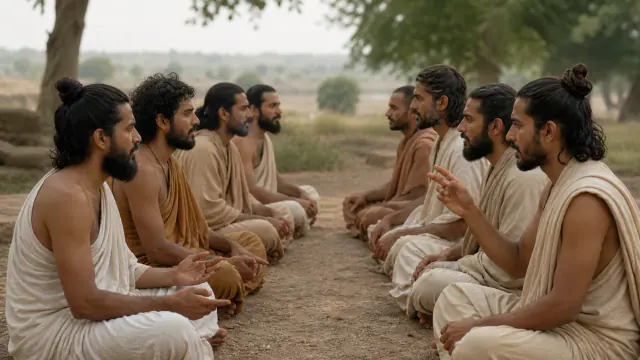
The Vedas were transmitted from memory, with forms of recitation that helped detect errors.
Read the complete record →04 · LIVING AND DOCUMENTED CULTURE · 04
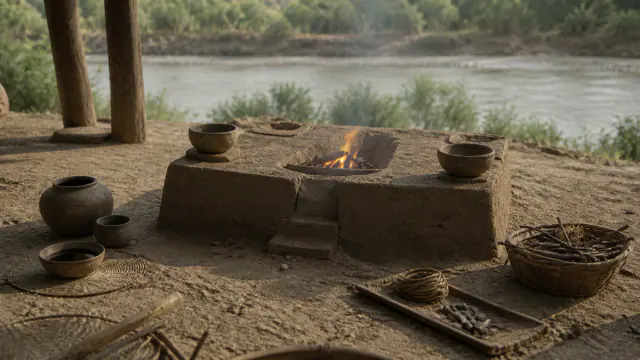
Altars and vessels allow the study of ritual practices whose materials often did not survive.
Read the complete record →04 · COLLECTION
These architectures explain how materials, water, work and memory organized the territory without converting an elevation reconstruction into certainty.
01 · ARCHITECTURE AND LANDSCAPE · 01
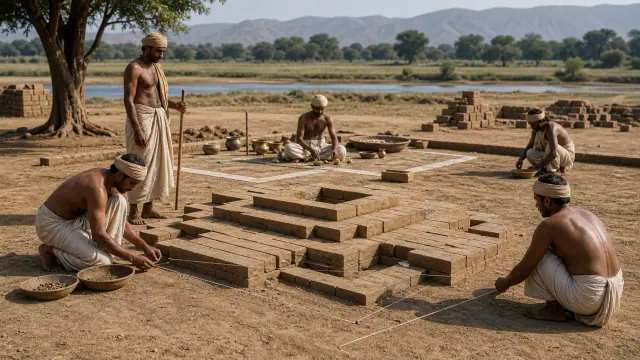
The Śulbasūtras explain how to construct altars with precise shapes and surfaces.
Read the complete record →02 · ARCHITECTURE AND LANDSCAPE · 02
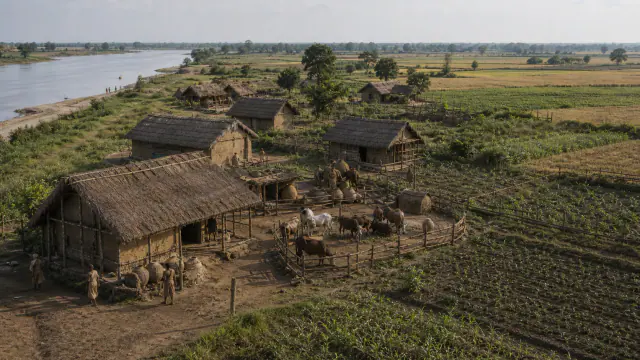
Settlements of the Ganges plain preserve houses, ceramics and fortification remains.
Read the complete record →03 · ARCHITECTURE AND LANDSCAPE · 03
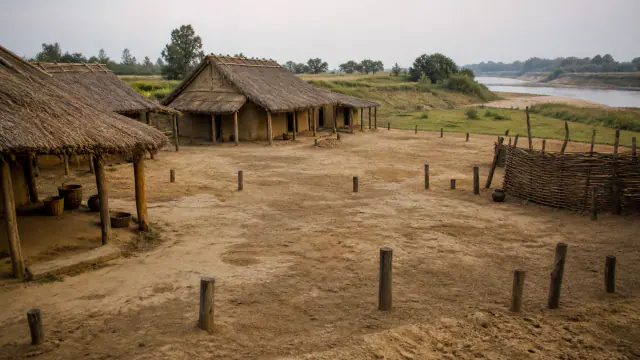
In the early Vedic period, earth, wood and open spaces were used, not the later classical stone temples.
Read the complete record →05 · COLLECTION
Known people, reconstructed voices and collective footprints. From oldest to most recent according to life, reign or scene. The periods may overlap; The voices without a determinable date close the journey.
01 · 06 · POETRY · RIGVEDA 10.125
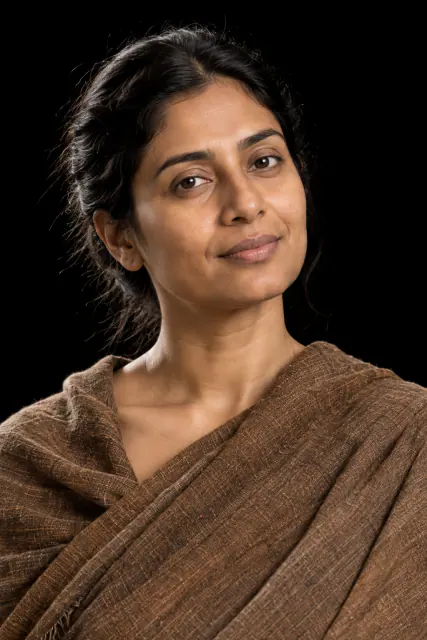
The tradition attributes to Vāc Ambhṛṇī a hymn whose voice is identified with the power of the word.
Read the complete record →02 · 05 · RITUAL · DIVISION OF TASKS
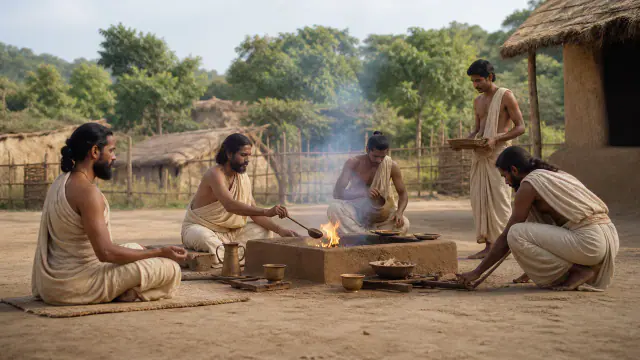
While one officiant recited, others prepared the fire, measured or performed the actions of the rite.
Read the complete record →03 · 11 · UPANIṢAD · DIALOGUE
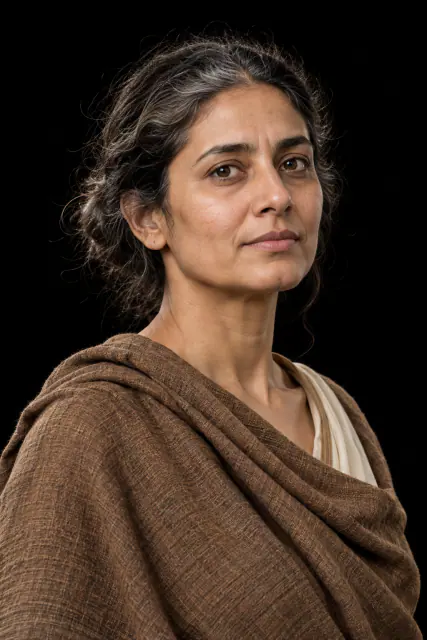
A philosophical text presents Gārgī asking Yājñavalkya what sustains the world.
Read the complete record →04 · DOCUMENTED RECREATION · 700–600 BCE
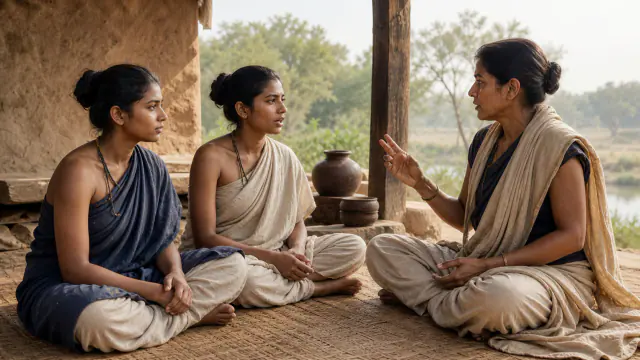
A specific ancient scene to explain a transmission tradition that remains alive.
Read the complete record →05 · 12 · LEGACY · GRAMMAR
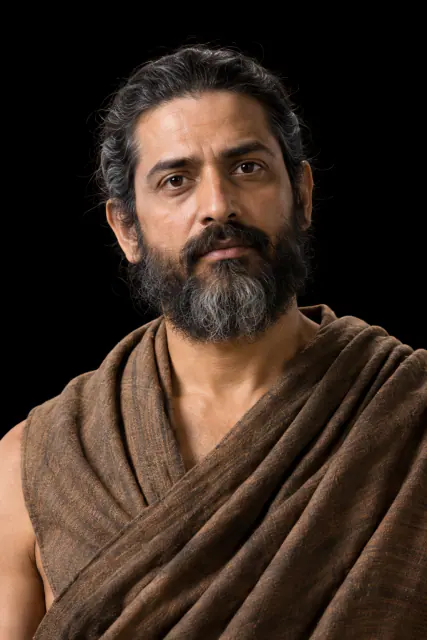
Pāṇini organised in concise rules how the sounds and words of Sanskrit are formed.
Read the complete record →06 · COLLECTION
Concrete pieces to understand materials, decisions and knowledge systems, with separate evidence and interpretation.
01 · 03 · PRACTICE · SOMA
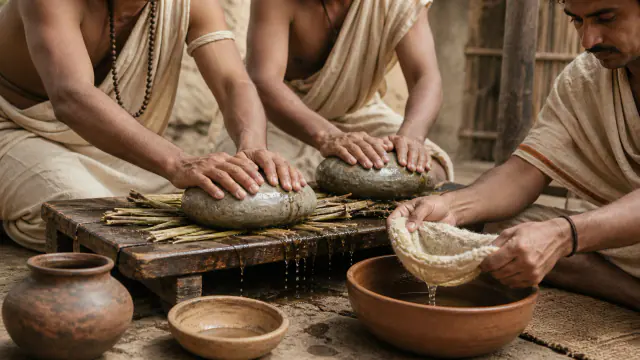
The texts explain how soma was prepared, but do not allow its plant to be identified with certainty.
Read the complete record →02 · 07 · ARCHAEOLOGY · PAINTED GREY WARE
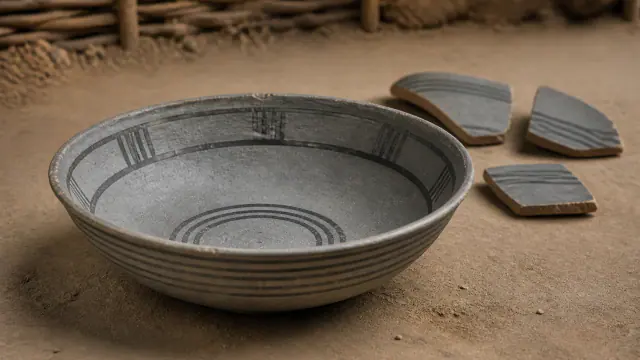
These grey vessels with geometric drawings are not sufficient to identify their users with a people from the texts.
Read the complete record →03 · 10 · ŚULBASŪTRA · GEOMETRY
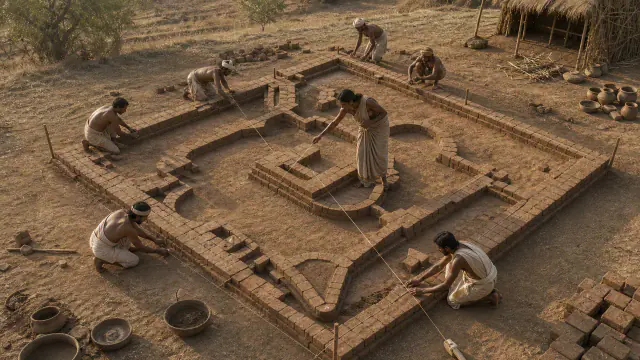
Cords and stakes made it possible to lay out altars and transform geometric shapes while preserving their area.
Read the complete record →04 · DOCUMENTED OUTFIT · CLOSED CONTEXT OR CONTROLLED COMPARISON
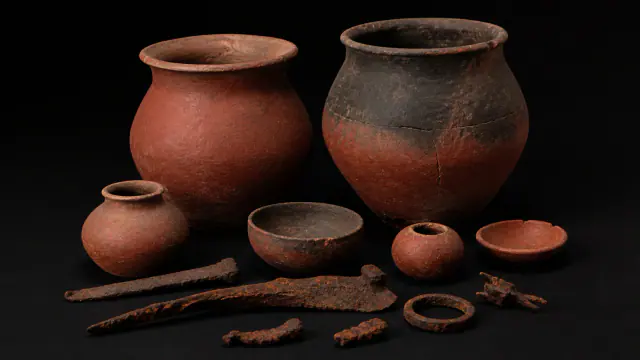
The burials of Adichanallur are shown as a regional comparison, not as identified Vedic tombs.
Read the complete record →07 · COLLECTION
These cards separate what is documented from what is interpreted and recover practices, questions and details capable of changing our image of this culture.
01 · BELIEFS AND CURIOSITIES · 01
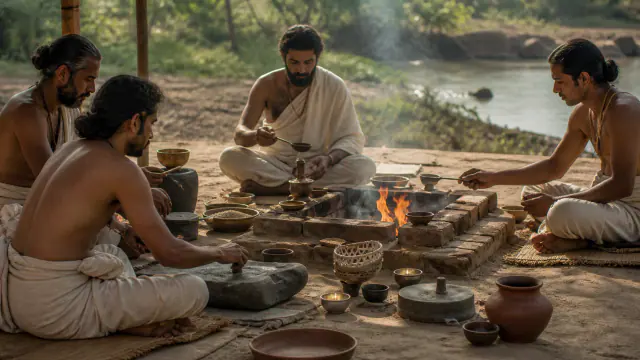
The Vedic sacrifice required coordinating specialists, recitations, fire and offerings.
Read the complete record →02 · BELIEFS AND CURIOSITIES · 02
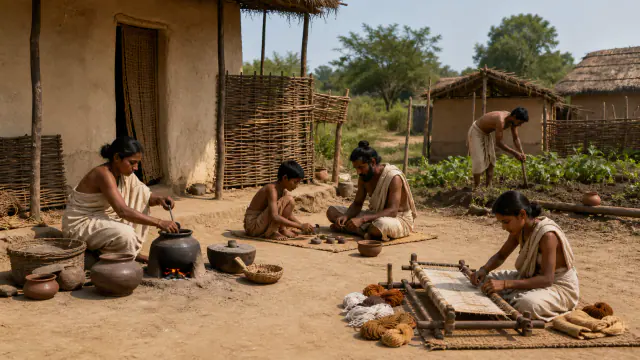
Specialists devoted years to learning the recitations; that training was not the everyday life of the whole population.
Read the complete record →03 · BELIEFS AND CURIOSITIES · 03
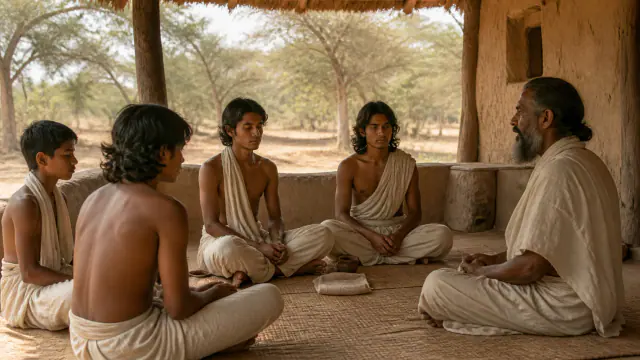
The Upaniṣads collect various questions about life, knowledge and what remains after death.
Read the complete record →08 · COLLECTION
Each door explains why the link exists, when it occurred, and what limits prevent contact from being converted into shared identity.
01 · GATE 01 · AFRICA · EXCHANGE
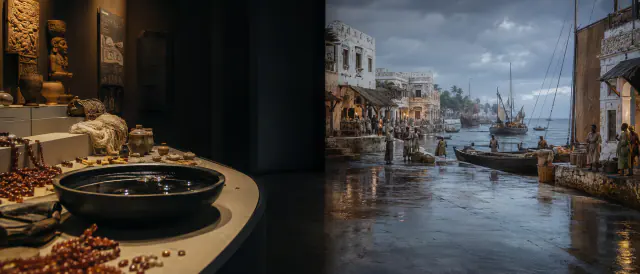
Continues in the Bantu Worlds museum
Read the complete record →02 · DOOR 02 · AFRICA · EXCHANGE
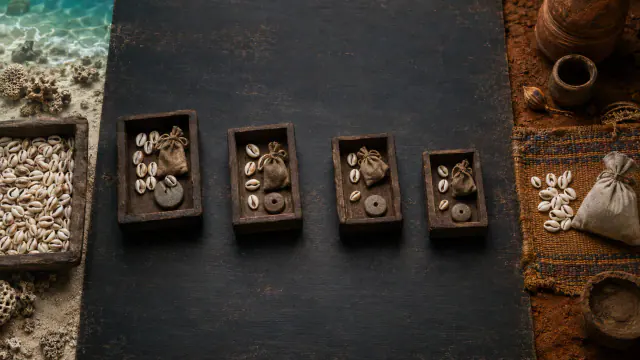
Continues in the Mande Worlds museum
Read the complete record →03 · DOOR 03 · ASIA · INFLUENCE
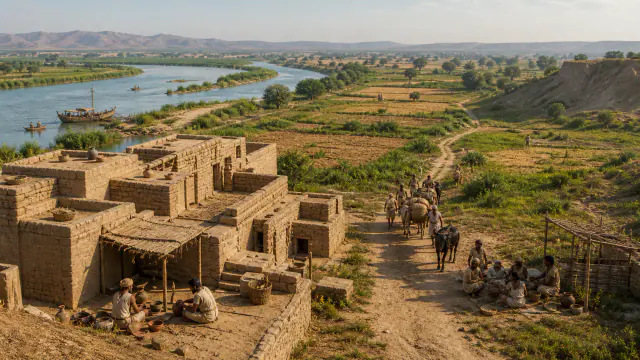
Continued at the Indus Museum
Read the complete record →04 · DOORWAY 04 · ASIA · CONTACT
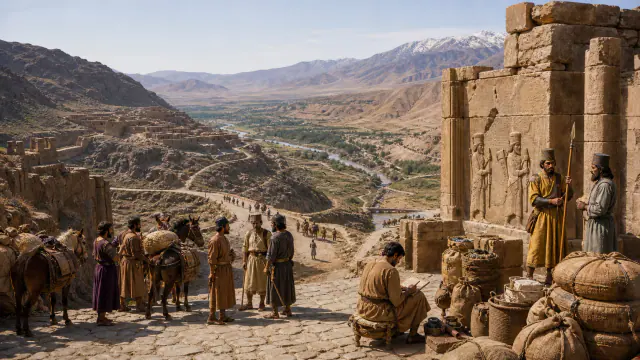
Continued at the Persia Museum
Read the complete record →05 · DOORWAY 05 · EURASIA · CONTACT
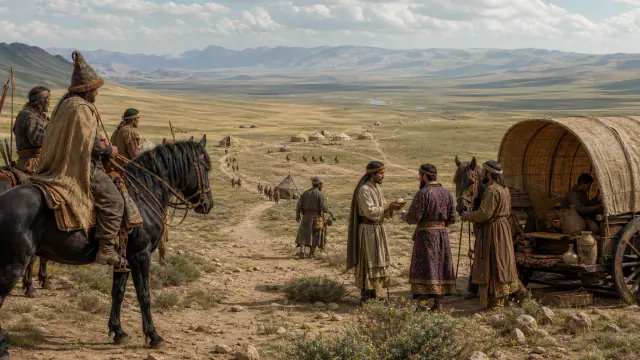
Continues at the Scythians and Saka Museum
Read the complete record →La memoria que no necesitaba tinta
Discover the connected fiction project. The available Prehistory reader is in Spanish; other volumes are not presented as finished products for sale.
Explore the books →Try the available Prehistory browser alpha. Campaigns for the other cultures are still in development.
Open the game (Spanish) →Use each record’s institution and heritage links to continue your research. Country-by-country historical travel guides are planned, not yet published.
Historical travel →Discover artistic designs inspired by the collections and check each product’s availability. Museum access remains free.
Explore the collection →