
 English
 Español
 Français
 Italiano
 Deutsch
 Русский
 Português
 Polski
 Română
 Svenska
 Norsk bokmål
 Suomi
 Türkçe
 العربية
 简体中文
 한국어
 हिन्दी
 Ελληνικά
01 · ANONYMOUS ARCHAEOLOGY · ≈25,500–23,500 BCE
Before the name San
The painted stones from Apollo 11
These stones preserve figures painted by people whose collective identity we do not know.
Museum documentation · free public access, no account required.
Generated reconstruction · Declared visual hypothesis
Declared visual reconstruction; not a photograph of the original nor documentary evidence.
History and context
Fragments of painted stone found in Apollo 11 cave preserve animal figures and possible composite beings of immense antiquity.
They belong to people whose collective name we do not know. Presenting them as ‘San art’ would assert an identity continuity that archaeology cannot demonstrate.
The seven painted slabs from Apollo 11 form an exceptional but fragmentary archaeological set: they do not preserve a complete narrative nor the names of their authors.
Their date allows us to speak of the historical depth of art in southern Africa. Linking it directly to a contemporary San community would turn a regional comparison into a demonstrated genealogy.
Evidence and interpretation
Pigment, support, context and dating are archaeological; cultural authorship and meaning are not preserved. Documented expansion: Pigment, support, context and dating are archaeological. Expanded interpretation and caution: Cultural authorship and meaning are not preserved.
Catalogue facts
- Narrative date
- ≈25.500–23.500 BCE
- Location
- Apollo 11 Cave · Namibia
- Material
- Stone slabs and pigment
- Context
- Portable art · anonymous authors
- Curatorial reading
- The documented fact and its interpretation appear separately in the evidence block.
- Complex
- Seven painted slabs
- Limit
- Cultural authorship not identified
- Documentary coverage
- 2 museum, heritage, primary corpus or research sources for this stop.
A SHARED TOPIC, DIFFERENT MOMENTS
Objects connected through time
Follow a topic across the collections. A shared tag is a way to compare objects, not proof that one culture influenced another.
The order uses the midpoint of each approximate date range; ranges can overlap. Spacing does not represent elapsed time. Swipe, scroll or use the arrows. With the sequence focused, use ← / →, Home or End.
Stone19 dated objects
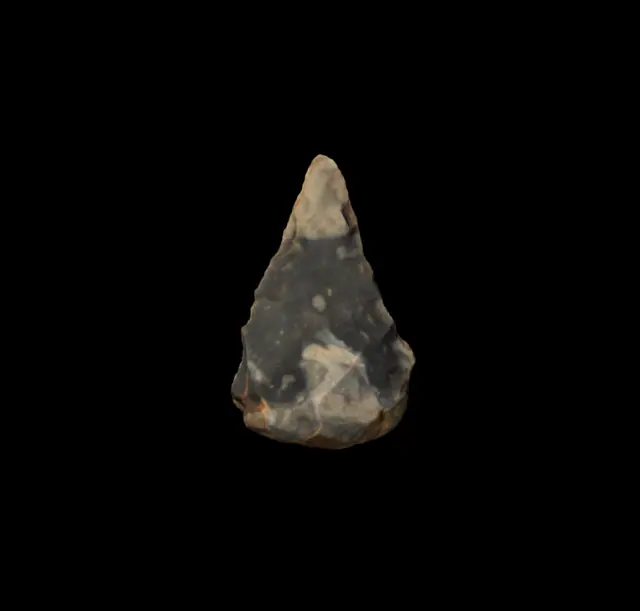
≈425,000–375,000 years
Swanscombe handaxe
Prehistory
Approximate catalogue age for the Hoxnian interglacial (MIS 11); editorial reference 2026 for ordering only, not calibrated dating.
Read the record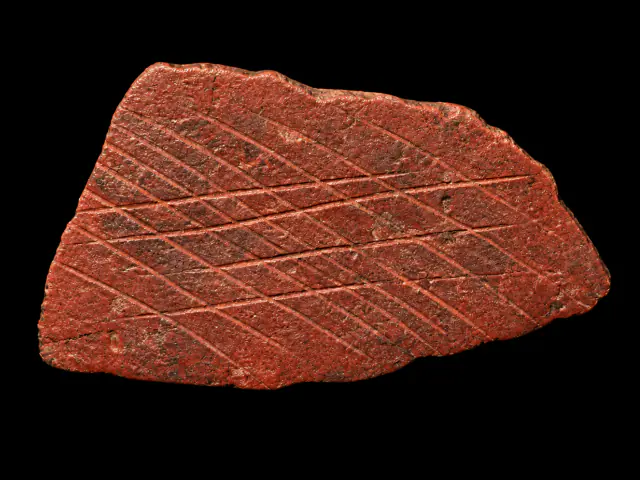
≈77,000–75,000 years
Engraved ochre from Blombos
Prehistory
Approximate catalogue age; editorial reference 2026 for ordering only, not calibrated dating.
Read the record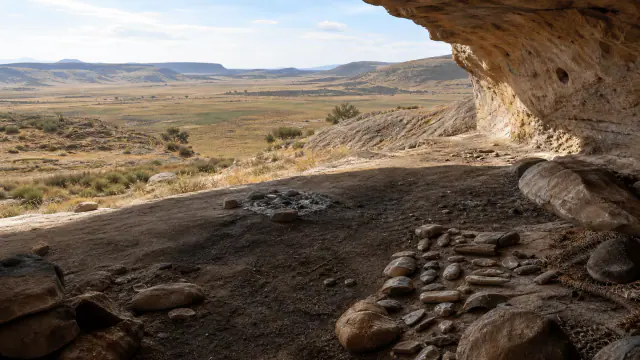
≈25.500–23.500 BCE
Overlapping datesBefore the San
San histories
Date of the representative element, not ethnic attribution of its authors.
Read the record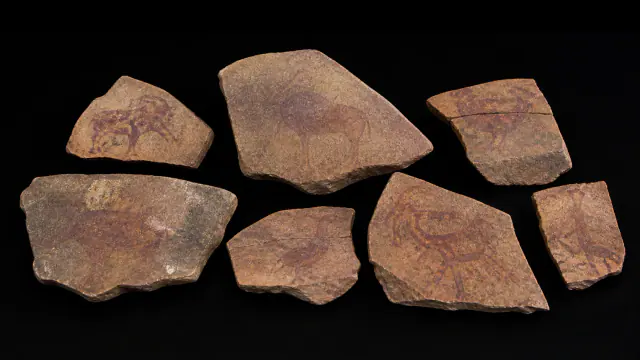 You are viewing
≈25.500–23.500 BCE
Before the name San
San histories
Dating of the context of the slabs; anonymous authors.
Current record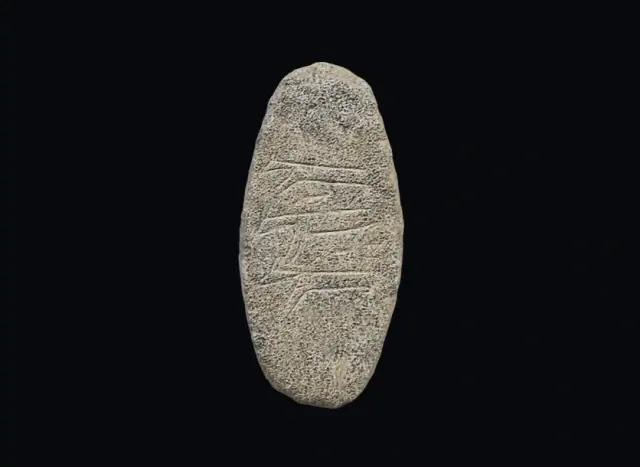
PPNA · site proposal: ≈9600–8800 BCE, provisional
Engraved stone from Çakmaktepe
Prehistory
Provisional date range for the site; not direct dating of this stone.
Read the record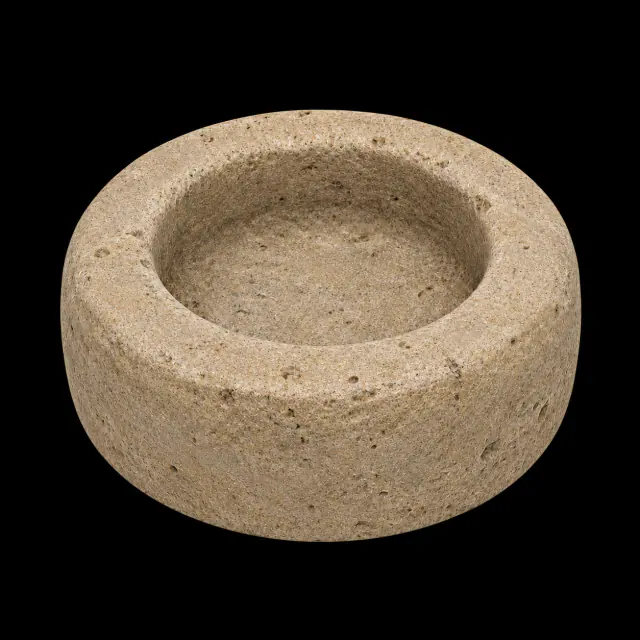
PPNA · ≈9600–8800 BCE, provisional proposal for the site
Grinding stone from Çakmaktepe
Prehistory
Provisional date range for the site and the published tools; the identification of the image is unverified.
Read the record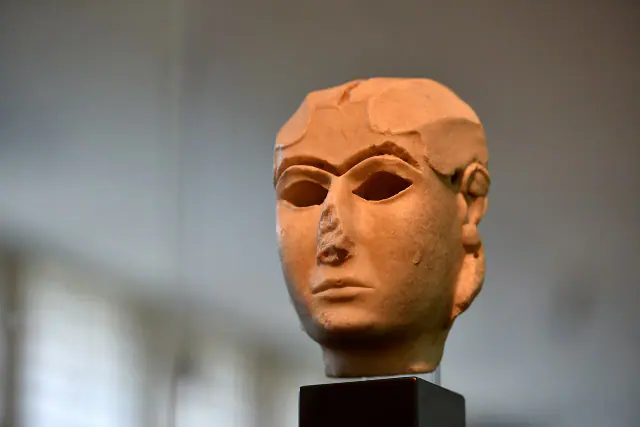
End of the 4th millennium BCE
Warka Mask
Sumer
The full 4th millennium BCE provides broad limits for chronological ordering; the record specifies the end of the millennium.
Read the record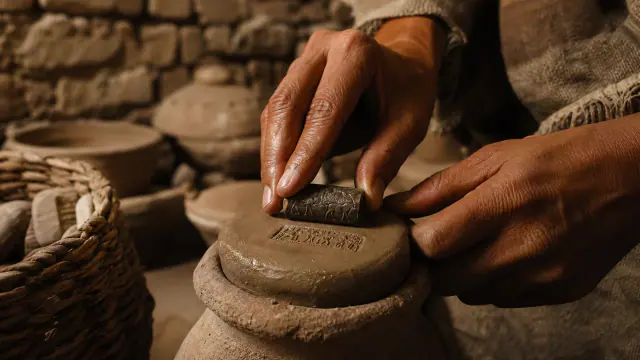
c. 3500–3100 BCE
Cylinder seal
Sumer
Approximate dating according to the record.
Read the record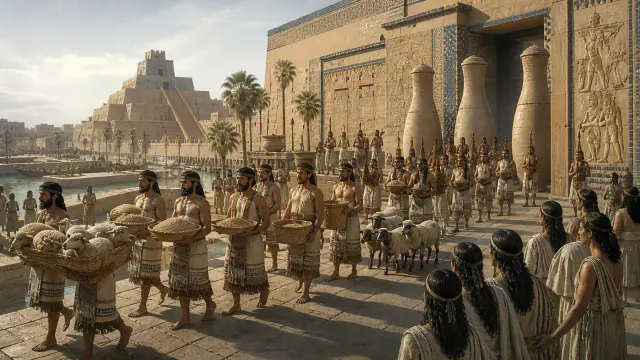
ca. 3300–3000 BCE
Uruk Vase
Sumer
Approximate dating according to the record.
Read the record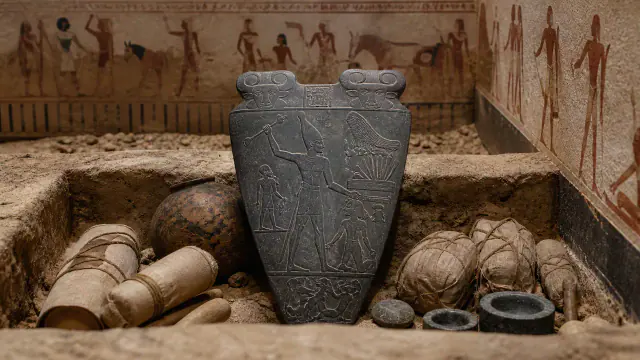
ca. 3100 BCE
Narmer Palette
Ancient Egypt
Approximate dating according to the record.
Read the record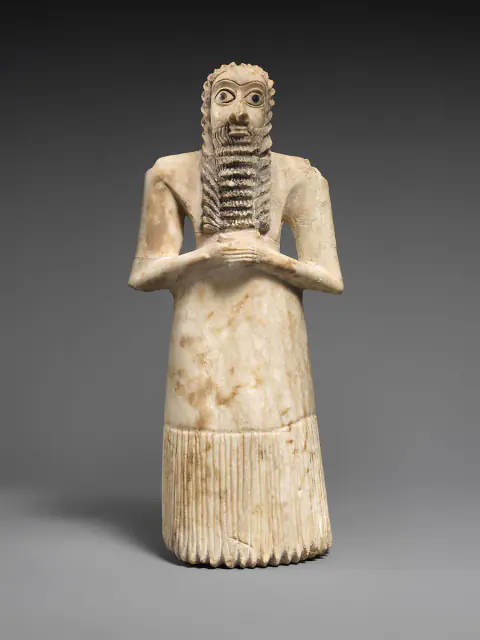
Towards 2900–2600 BCE
Worshiper of Tell Asmar
Sumer
Approximate dating according to the record.
Read the record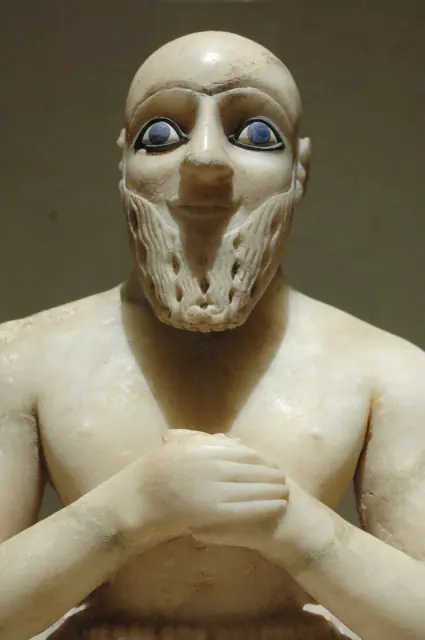
Towards 2400 BCE
Statue of Ebih-Il
Sumer
Approximate dating according to the record.
Read the record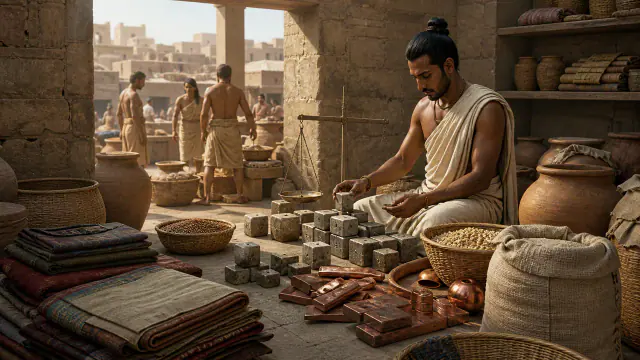
ca. 2600–1900 BCE
Weights
Indus civilisation
Date range for the system of weights, not a year-specific date for each example.
Read the record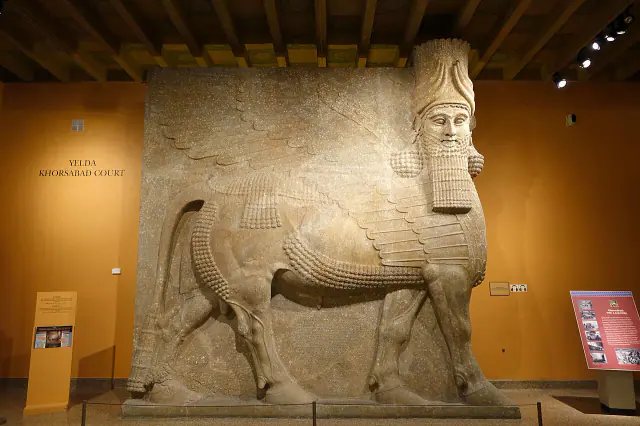
Reign of Sargon II · 721–705 BCE
Lamassu of Khorsabad
Sumer
Reign interval associated with the piece.
Read the record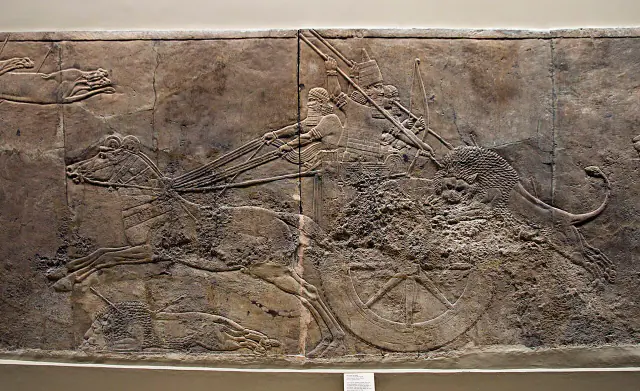
645–635 BCE
Ashurbanipal Hunt
Sumer
Approximate dating according to the record.
Read the record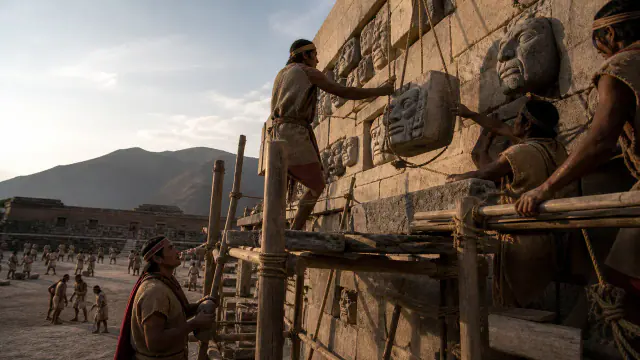
c. 800–300 BCE
Heads on the wall
Pre-Inca cultures
Framework of the set of architectural heads.
Read the record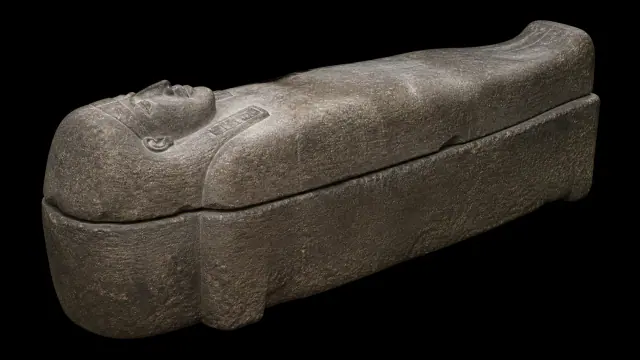
first quarter of the 5th century BCE
Sarcophagus of Eshmunazar
Phoenicians
First quarter of the 5th century BCE
Read the record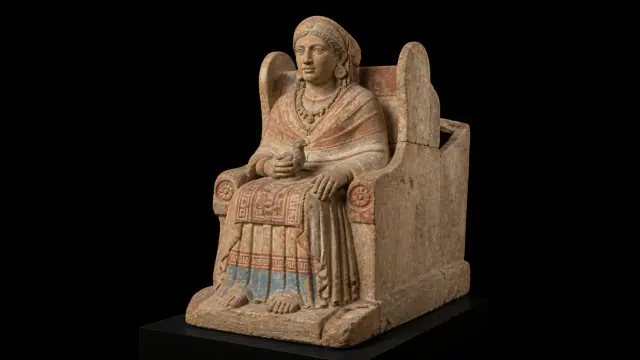
First half of the 4th century BCE
The statue was the urn
Iberians
First half of the 4th century BCE; date of the funerary context.
Read the record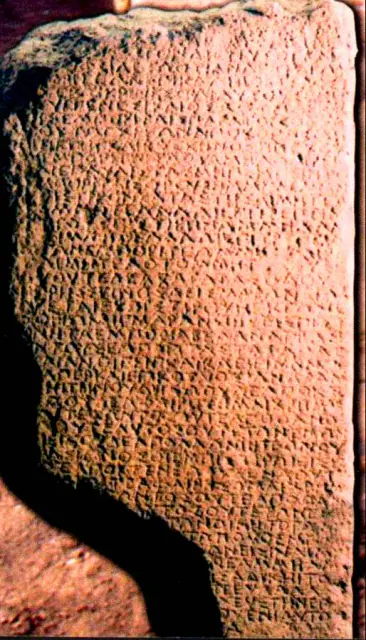
4th century BCE
The inscription of Pistiros
Thracians
Approximate dating according to the record.
Read the record
Also connected, without a comparable date (10)
These objects are not placed after the others: an unknown date does not mean a more recent object.
- A White Wall on the DanubeCeltic worlds · 6th century BCE
- CemeteryIndus civilisation · ca. 2600–1900 BCE
- Engraved stonePrehistory · Before ≈39,000 cal BP
- Four gardens and waterAchaemenid Persia · 6th century BCE
- Kumbi SalehMande Worlds · medieval occupation; prominent phases between the 11th and 13th centuries
- Soma stonesVedic and later Indian worlds · Rigvedic strata; later ritual tradition
- The quarry remained visibleGojoseon and early Korea · Mainly 6th–5th centuries BCE
- The Thracian HorsemanThracians · Roman era · diffusion especially in the 2nd–3rd centuries CE
- Tichitt wallsMande Worlds · II–I millennia BCE
- Writing with gapsGaramantes · Diverse chronologies
A closer look
About 1 min to read · 1 section. Further reading and sources · free access. Editorial review recorded: .
Transported stones and combined pigments
The Apollo 11 slabs had been brought to the cave from elsewhere before becoming part of the archaeological deposit. The Metropolitan Museum’s outreach study distinguishes the use of charcoal, ochre and white pigment in their animal depictions. This transport makes them portable objects as well as images, unlike a painting made directly on the wall. Tracking support, movement and colour application helps reconstruct observable human actions without needing the name of the painter or a closed explanation of the depicted animal.
Location and territory
APPROXIMATE LOCATION
Apollo 11 Cave · NamibiaPrudent regional marker; avoids publishing a more precise sensitive location.Where it is held
National Museum of Namibia
Item or group in the record · Documented collection
Documented custody for the seven painted slabs; no claim of current exhibition.
The holding institution is documented; public display may change. Check its official record before visiting.
Sources and references
Did you enjoy this exhibit?
Your opinion helps us improve the museum. You can change it whenever you like.
Loading your rating…