
 English
 Español
 Français
 Italiano
 Deutsch
 Русский
 Português
 Polski
 Română
 Svenska
 Norsk bokmål
 Suomi
 Türkçe
 العربية
 简体中文
 한국어
 हिन्दी
 Ελληνικά
EUROPE · CANTABRIA
Altamira
The bison of Altamira
Look at the backs and bellies of the bison: their painters used the rock's shapes to give them volume.
Museum documentation · free public access, no account required.
Documentary original · Exact correspondence
Photograph of the original cave taken on 7 October 1962. Slide scanned and restored by the author; the file published in 2012 is used, converted to lossless WebP, without cropping or further retouching. It is not the Neocave nor a tracing.
Daniel VILLAFRUELA · Cave of Altamira · Inventory: Cueva de Altamira-19621007-002 · versión publicada en 2012 · CC BY-SA 3.0
History and context
Whoever painted the bison of Altamira read the stone first. The backs, bellies and hindquarters exploit natural reliefs of the ceiling; charcoal, ochre and engraving finish turning the cave into a herd suspended above those who entered.
In 1879, the gaze of a girl, María Sanz de Sautuola, helped draw attention to the animals on the ceiling. The scientific community took decades to accept that such a sophisticated image could be Palaeolithic. Altamira not only changed art history: it forced a revision of a prejudice about the intelligence of those who lived before cities.
Evidence and interpretation
The cave preserves distinct artistic phases. A red sign reaches around 35,600 years, but that date cannot be transferred to all the bison; several polychromes have approximate direct dates of 18,400–15,300 cal BP. The image shown is a photograph of the original cave taken in 1962: a scanned and restored slide by its author, not a photograph of the Neocave nor a tracing.
Catalogue facts
- Date
- Assemblage ≈36,000–13,000 BP · bison ≈18,400–15,300 cal BP
- Location
- Cave of Altamira · Santillana del Mar, Spain
- Technique
- Charcoal, ochres, engraving and natural rock modelling
- Subject
- Bison, horses, deer and signs
- Image
- 1962 photograph · digitised and restored slide
- Reading
- Several phases; there is no single "date of Altamira"
A SHARED TOPIC, DIFFERENT MOMENTS
Objects connected through time
Follow a topic across the collections. A shared tag is a way to compare objects, not proof that one culture influenced another.
The order uses the midpoint of each approximate date range; ranges can overlap. Spacing does not represent elapsed time. Swipe, scroll or use the arrows. With the sequence focused, use ← / →, Home or End.
Pigments14 dated objects
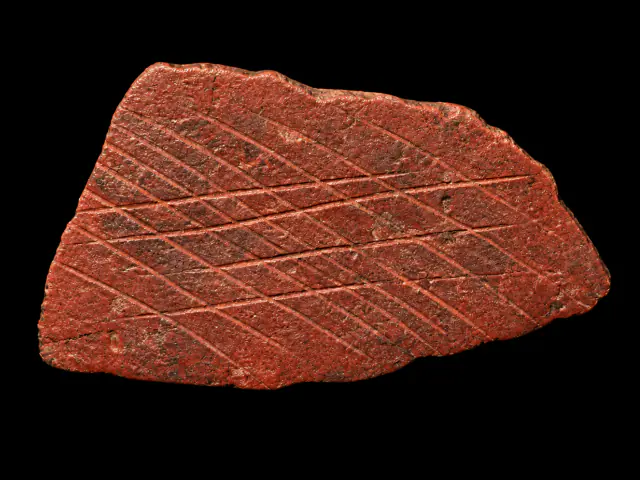
≈77,000–75,000 years
Engraved ochre from Blombos
Prehistory
Approximate catalogue age; editorial reference 2026 for ordering only, not calibrated dating.
Read the record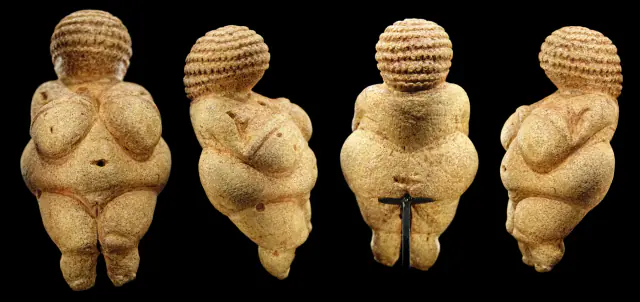
≈29,500 years
Overlapping datesWillendorf
Prehistory
Approximate catalogue age; editorial reference 2026 for ordering only, not calibrated dating.
Read the record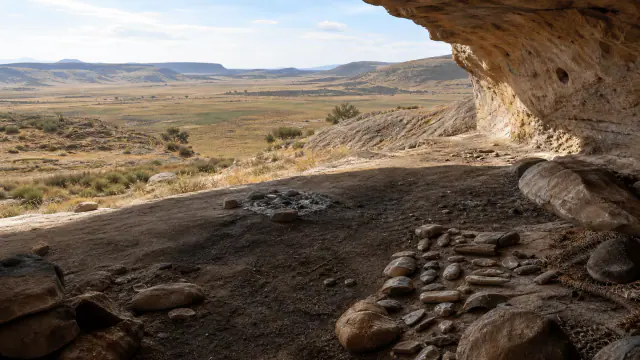
≈25.500–23.500 BCE
Overlapping datesBefore the San
San histories
Date of the representative element, not ethnic attribution of its authors.
Read the record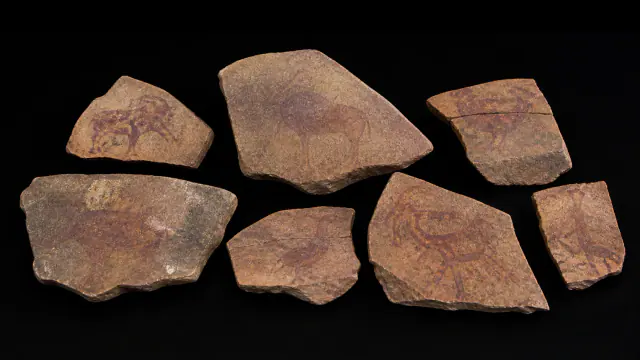
≈25.500–23.500 BCE
Overlapping datesBefore the name San
San histories
Dating of the context of the slabs; anonymous authors.
Read the record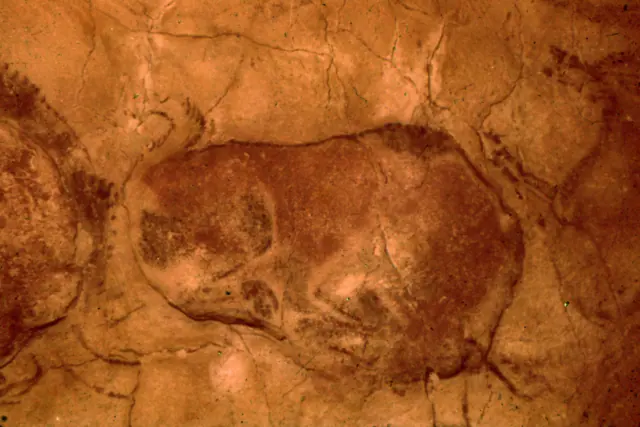 You are viewing
Assemblage ≈36,000–13,000 BP · bison ≈18,400–15,300 cal BP
Altamira
Prehistory
Assemblage range ≈36,000–13,000 BP, converted with 1950 origin; not a single date for the bison. It is an approximate scale conversion for ordering; not a new radiocarbon calibration.
Current record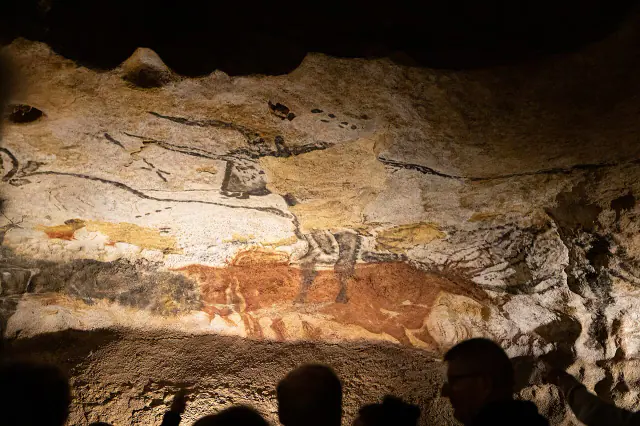
≈23,500–21,000 cal BP · debated contextual estimate
Overlapping datesLascaux
Prehistory
≈23,500–21,000 cal BP with 1950 origin; debated contextual estimate, replica image. It is an approximate scale conversion for ordering; not a new radiocarbon calibration.
Read the record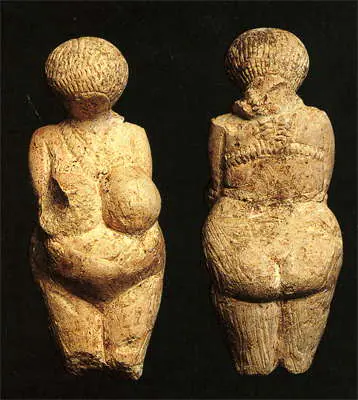
≈23,000–21,000 years
Overlapping datesKostenki I
Prehistory
Approximate catalogue age; editorial reference 2026 for ordering only, not calibrated dating.
Read the record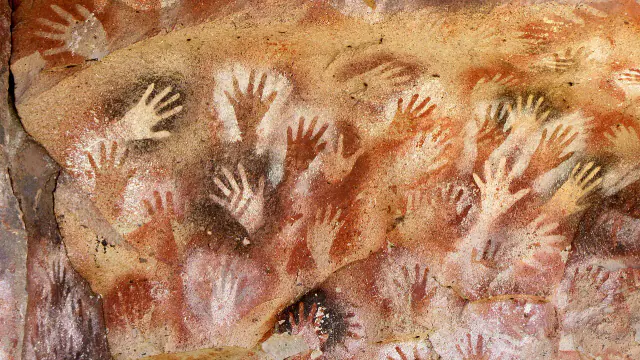
Sequence ≈9300–1300 BP
Cueva de las Manos
Prehistory
Sequence ≈9300–1300 BP converted with 1950 origin; not a single date for all images. It is an approximate scale conversion for ordering; not a new radiocarbon calibration.
Read the record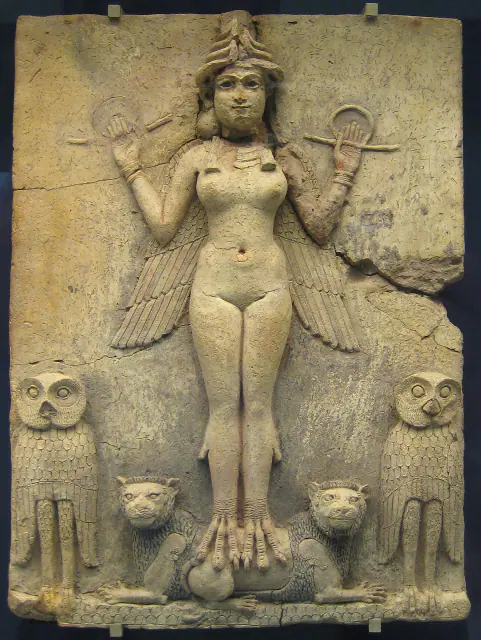
19th–18th centuries BCE
Queen of the Night
Sumer
Approximate dating according to the record.
Read the record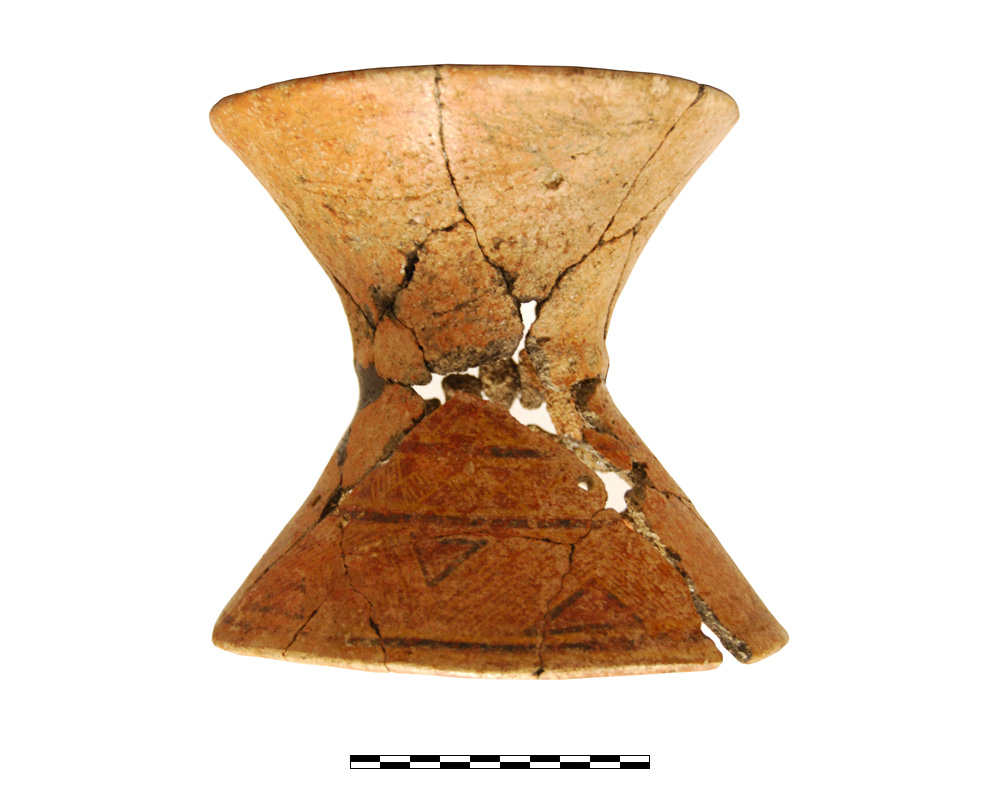
8th–7th centuries BCE · orientalizing
Ceramic stand 1010
Iberians
Chronology of the funerary context of Tomb 5, Orientalising horizon.
Read the record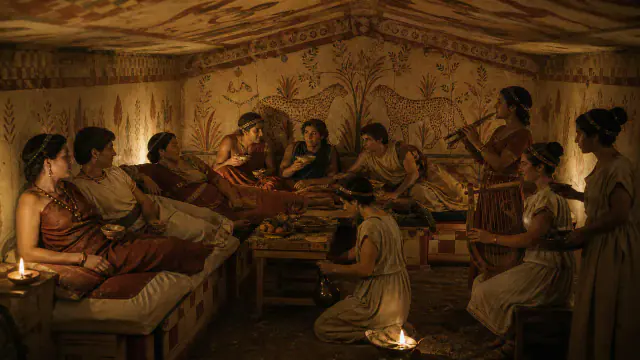
Around 480–470 BCE
Banquet under leopards
Etruscans and Rome
Approximate dating according to the record.
Read the record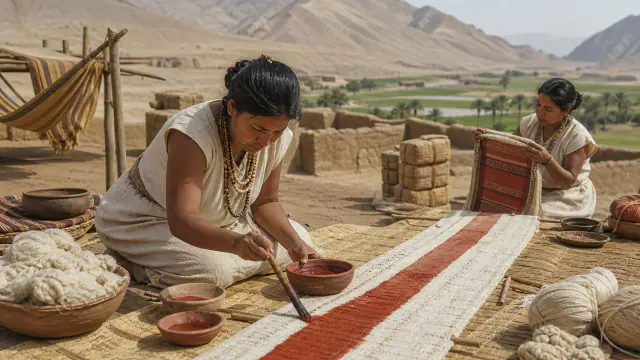
4th–3rd centuries BCE
The Karwa textile
Pre-Inca cultures
Approximate dating according to the record.
Read the record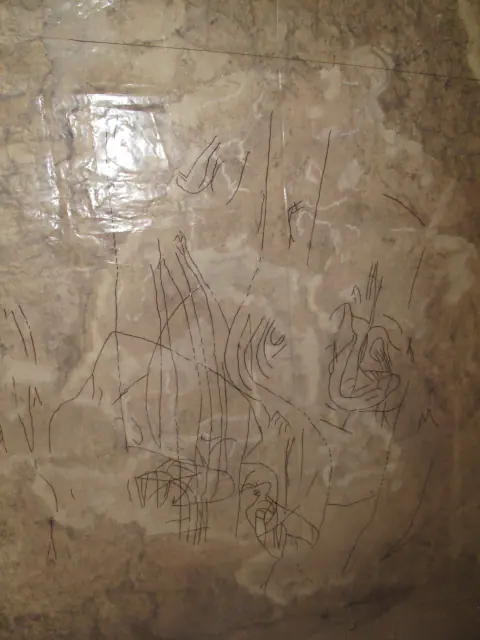
c. 100 BCE
The walls of San Bartolo
Maya worlds
Approximate dating according to the record.
Read the record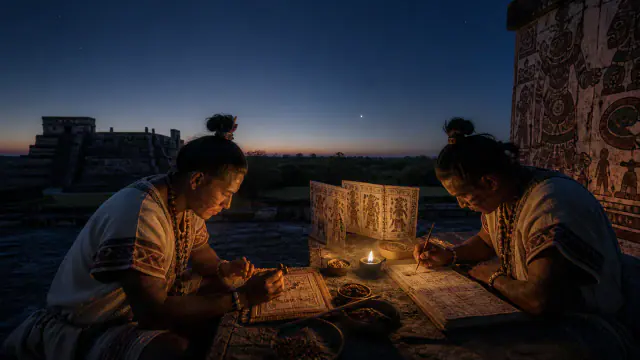
Preserved manuscript: Postclassic, probably 13th–14th centuries; earlier knowledge
Venus in the codex
Maya worlds
Probable date of the preserved manuscript, not of the origin of its knowledge.
Read the record
Also connected, without a comparable date (9)
These objects are not placed after the others: an unknown date does not mean a more recent object.
- BhimbetkaPrehistory · Mesolithic–historical and medieval period
- Blue that does not yieldMaya worlds · Documented use from the Classic, c. 300–1500 CE
- Eland CavePrehistory · Regional tradition of ≈4,000 years · up to historical period
- Game Pass ShelterSan histories · Regional rock art chronology · panel not dated in isolation
- KakaduPrehistory · Regional corpus ≈20,000 BP–contemporary era
- Leang KarampuangPrehistory · Minimum 51,200 years · dating published in 2024
- Quinkan CountryPrehistory · Regional art up to ≈27,000 BP · modern continuity
- Sierra de San FranciscoPrehistory · Broad tradition with direct dates ≈5290–295 BP
- Tassili n’AjjerPrehistory · Corpus ≈6000 BCE–first centuries CE
A closer look
About 1 min to read · 1 section. Further reading and sources · free access. Editorial review recorded: .
Two clocks for a prolonged history
Dating charcoal from a figure and dating the calcite situated above it do not answer exactly the same question. The first procedure approximates the age of the painted material; the second establishes a terminus ante quem for an image that already existed when the crust grew. A 2026 study compares both methods at Altamira and recalls the problems that uranium loss can cause. The result reinforces the existence of different pictorial episodes: the famous ceiling should not receive a single date for all its marks.
Location and territory
LOCATED SITE
Cave of Altamira · SpainCave marker; public visits are managed with strict conservation criteria.Sources and references

Did you enjoy this exhibit?
Your opinion helps us improve the museum. You can change it whenever you like.
Loading your rating…