
 English
 Español
 Français
 Italiano
 Deutsch
 Русский
 Português
 Polski
 Română
 Svenska
 Norsk bokmål
 Suomi
 Türkçe
 العربية
 简体中文
 한국어
 हिन्दी
 Ελληνικά
CULTURE · INFORMATION · ≈77,000–75,000 YEARS
Engraved ochre from Blombos
Signs before writing
Someone engraved these lines around 75,000 years ago. We still do not know what they meant.
Museum documentation · free public access, no account required.
Reconstruction · Declared visual hypothesis
Recreation contributed to the project. Not an archaeological photograph nor a metric facsimile. Materials, finish, proportions, and visible details may differ from the original. The image serves as visual support; the record and its sources distinguish the documented from the interpreted.
Explore in 3D
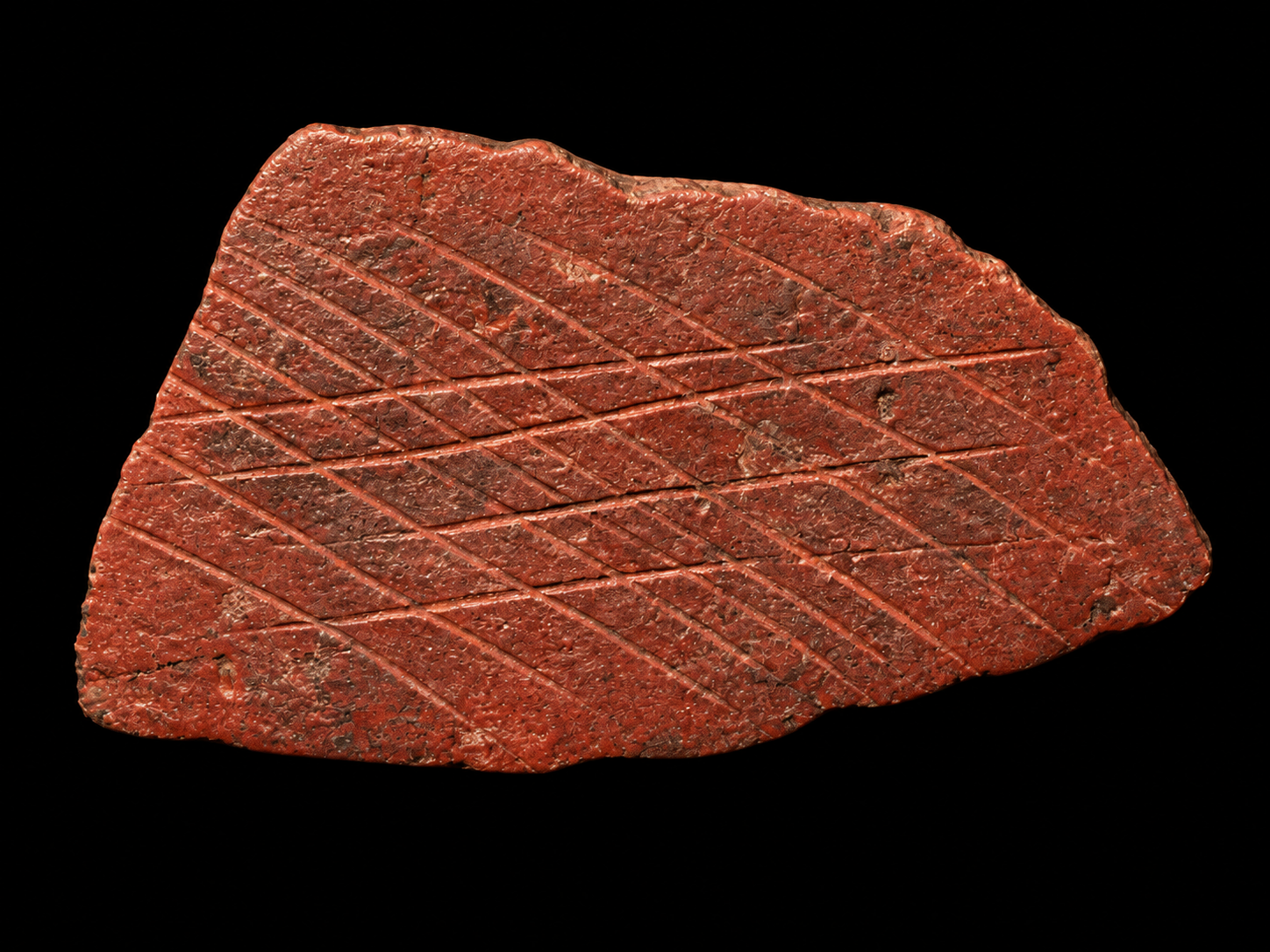
Load the model only when you want to explore it. Drag or use the arrow keys to turn it; + and − zoom. Closing it releases its memory.
User-contributed digital reconstruction; file metadata declares Tripo. Not an archaeological scan nor a metric replica. Display scale is indicative, not a measurement of the original; contributed geometry is preserved intact. Interpretation of an engraved ochre piece from Blombos. The incisions and their visual depth do not substitute archaeological documentation nor do they establish the meaning of the traces by themselves.
History and context
At Blombos Cave, pieces of ochre with systematic incised lines appeared. Marking a surface requires choosing a tool, direction, and repetition; the gesture demonstrates attention and a possible convention long before any known writing.
We do not know whether the pattern recorded identity, number, ownership, memory, or visual pleasure. Calling it "writing" would erase the difference between a structured mark and a system capable of encoding language.
Evidence and interpretation
The deliberate incisions and their archaeological context are documented. That they represent information is plausible; content, shared reading, and relationship to language are unknown.
Catalogue facts
- Date
- ≈77,000–75,000 years
- Location
- Blombos Cave · Western Cape, South Africa
- Material
- Engraved ochre
- Classification
- Deliberate mark · not deciphered writing
A SHARED TOPIC, DIFFERENT MOMENTS
Objects connected through time
Follow a topic across the collections. A shared tag is a way to compare objects, not proof that one culture influenced another.
The order uses the midpoint of each approximate date range; ranges can overlap. Spacing does not represent elapsed time. Swipe, scroll or use the arrows. With the sequence focused, use ← / →, Home or End.
Pigments14 dated objects
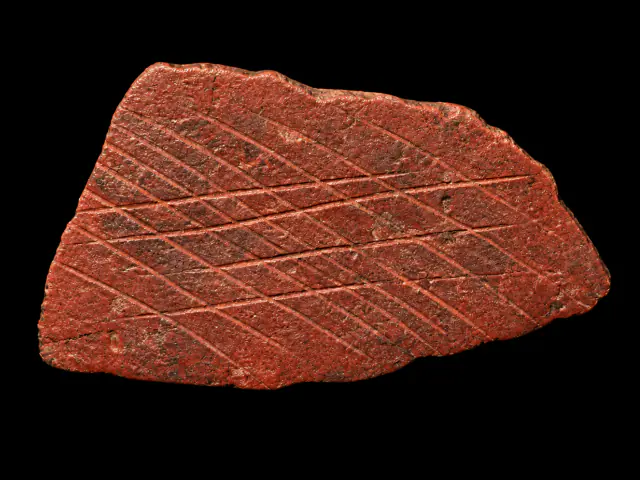 You are viewing
≈77,000–75,000 years
Engraved ochre from Blombos
Prehistory
Approximate catalogue age; editorial reference 2026 for ordering only, not calibrated dating.
Current record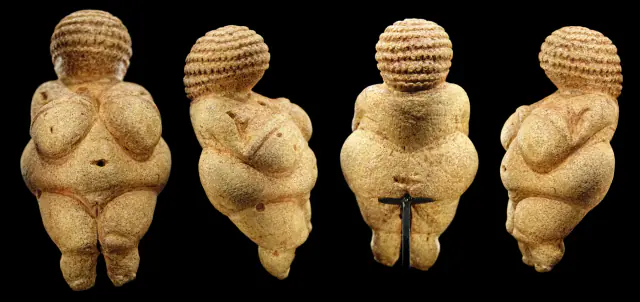
≈29,500 years
Willendorf
Prehistory
Approximate catalogue age; editorial reference 2026 for ordering only, not calibrated dating.
Read the record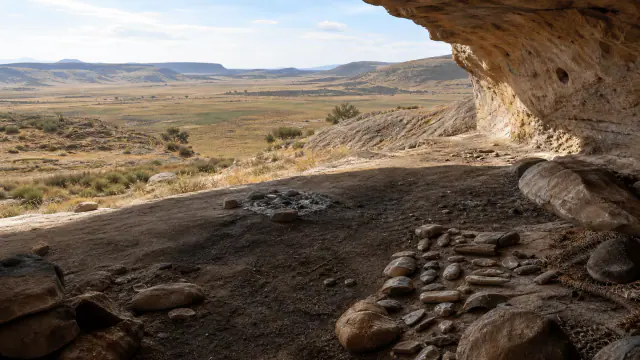
≈25.500–23.500 BCE
Before the San
San histories
Date of the representative element, not ethnic attribution of its authors.
Read the record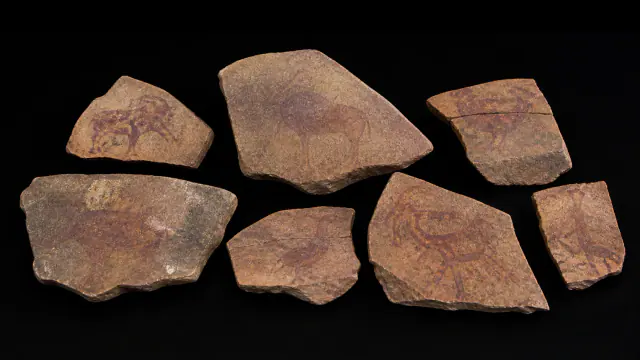
≈25.500–23.500 BCE
Before the name San
San histories
Dating of the context of the slabs; anonymous authors.
Read the record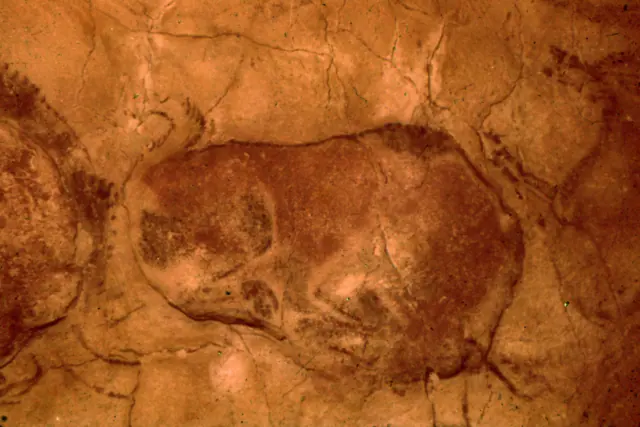
Assemblage ≈36,000–13,000 BP · bison ≈18,400–15,300 cal BP
Altamira
Prehistory
Assemblage range ≈36,000–13,000 BP, converted with 1950 origin; not a single date for the bison. It is an approximate scale conversion for ordering; not a new radiocarbon calibration.
Read the record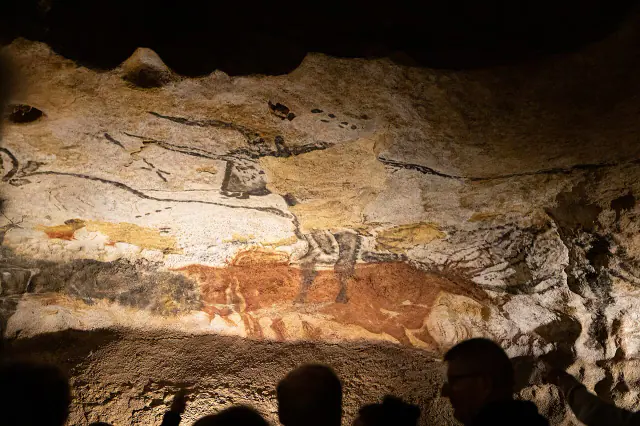
≈23,500–21,000 cal BP · debated contextual estimate
Lascaux
Prehistory
≈23,500–21,000 cal BP with 1950 origin; debated contextual estimate, replica image. It is an approximate scale conversion for ordering; not a new radiocarbon calibration.
Read the record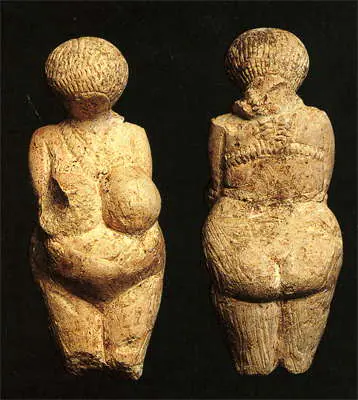
≈23,000–21,000 years
Kostenki I
Prehistory
Approximate catalogue age; editorial reference 2026 for ordering only, not calibrated dating.
Read the record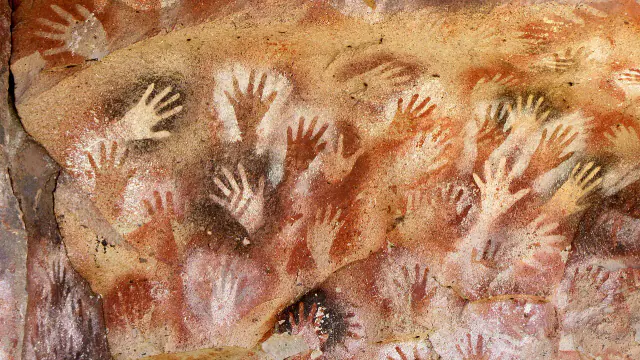
Sequence ≈9300–1300 BP
Cueva de las Manos
Prehistory
Sequence ≈9300–1300 BP converted with 1950 origin; not a single date for all images. It is an approximate scale conversion for ordering; not a new radiocarbon calibration.
Read the record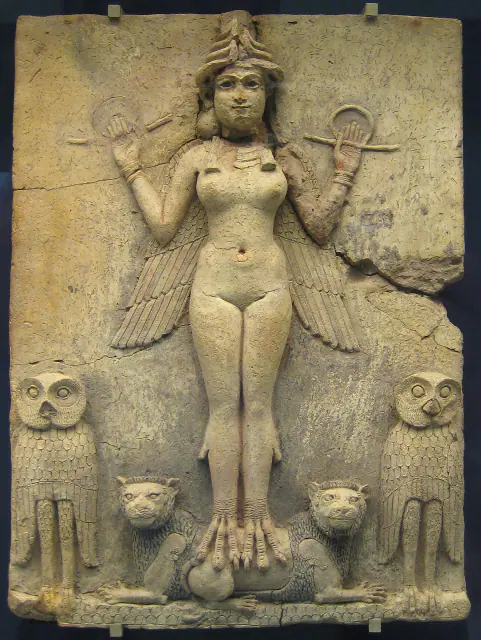
19th–18th centuries BCE
Queen of the Night
Sumer
Approximate dating according to the record.
Read the record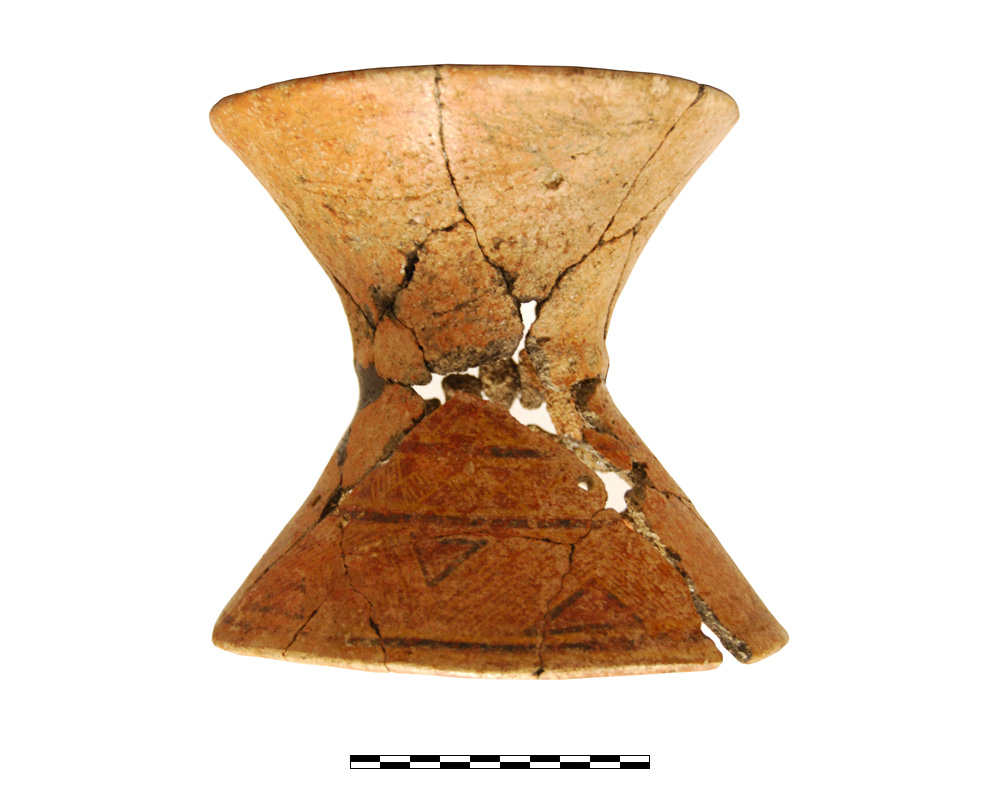
8th–7th centuries BCE · orientalizing
Ceramic stand 1010
Iberians
Chronology of the funerary context of Tomb 5, Orientalising horizon.
Read the record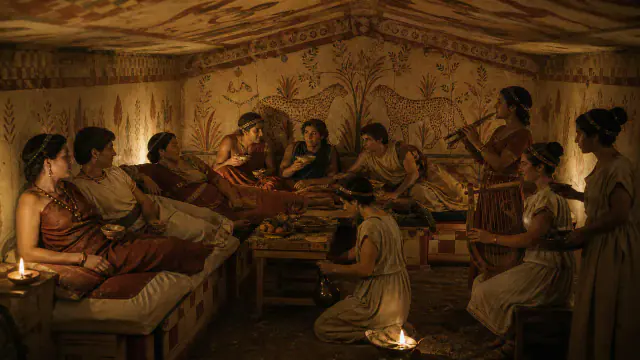
Around 480–470 BCE
Banquet under leopards
Etruscans and Rome
Approximate dating according to the record.
Read the record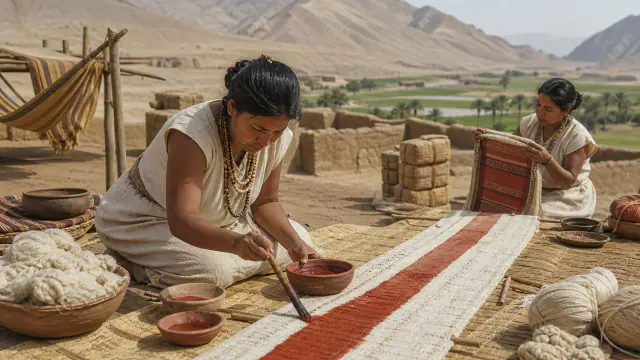
4th–3rd centuries BCE
The Karwa textile
Pre-Inca cultures
Approximate dating according to the record.
Read the record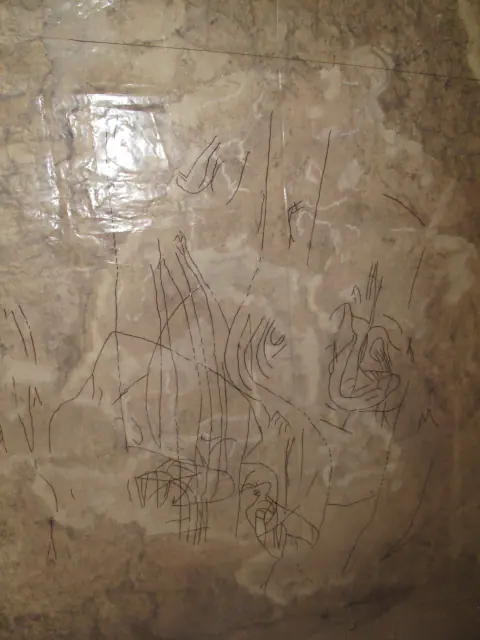
c. 100 BCE
The walls of San Bartolo
Maya worlds
Approximate dating according to the record.
Read the record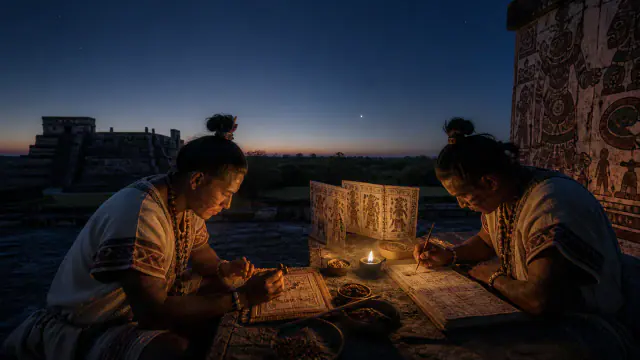
Preserved manuscript: Postclassic, probably 13th–14th centuries; earlier knowledge
Venus in the codex
Maya worlds
Probable date of the preserved manuscript, not of the origin of its knowledge.
Read the record
Also connected, without a comparable date (9)
These objects are not placed after the others: an unknown date does not mean a more recent object.
- BhimbetkaPrehistory · Mesolithic–historical and medieval period
- Blue that does not yieldMaya worlds · Documented use from the Classic, c. 300–1500 CE
- Eland CavePrehistory · Regional tradition of ≈4,000 years · up to historical period
- Game Pass ShelterSan histories · Regional rock art chronology · panel not dated in isolation
- KakaduPrehistory · Regional corpus ≈20,000 BP–contemporary era
- Leang KarampuangPrehistory · Minimum 51,200 years · dating published in 2024
- Quinkan CountryPrehistory · Regional art up to ≈27,000 BP · modern continuity
- Sierra de San FranciscoPrehistory · Broad tradition with direct dates ≈5290–295 BP
- Tassili n’AjjerPrehistory · Corpus ≈6000 BCE–first centuries CE
A closer look
About 4 min to read · 7 sections. Further reading and sources · free access. Editorial review recorded: .
Drawing is not the same as engraving
Blombos also preserves a drawing made with ochre on a silcrete flake, around 73,000 years old, distinct from the incised blocks in this record. The ends of its lines terminate at fractures: it may have belonged to a larger design. Experimental reproductions studied the pigment application and the movement required to trace it. Comparing both procedures — removing material by engraving and adding it by drawing — allows us to recognise distinct technical decisions without turning a grid into a deciphered alphabet.
Not all work marks are the same
To recognise an engraving, it is not enough to find scratches. The study of the Blombos ochres compares their surfaces with marks obtained by experimentally grinding, scraping, and engraving. Scraping to obtain powder usually produces sets of striations different from a line traced with a point. The microscope allows examination of their width, their ends, and the crossings between them. Thus a sequence of actions is reconstructed. Not all pieces offer the same clarity: in some fragments it is difficult to separate pigment extraction from another intention.
It was not a single attempt
The collection includes designs from different occupation phases, not only the famous block with a grid. There are parallel lines, cross-hatching, and other combinations, made on natural or previously worked surfaces. Researchers compare these differences to study whether a tradition of engraving existed. In some cases they also observed that an engraved surface was modified afterwards. That allows us to think of objects with multiple uses over their lifetime, rather than supposing each drawing was made to be preserved intact forever.
An experiment to remember the drawings
In 2020, designs from Blombos and Diepkloof were tested with current participants. Among other tasks, they had to remember and reproduce them. The more recent patterns in the series proved easier to reproduce. The authors considered this result compatible with a learned and transmitted tradition. They did not prove that the drawings equated to words or quantities. Nor did they directly observe prehistoric people: they worked with modern participants and selected forms. The interest of the experiment lies in formulating testable questions about the designs, not in recovering a lost message.
Preparing a mixture and storing it
Other finds from Blombos help us understand how well this material was known. In levels around a hundred thousand years old, two abalone shells appeared with residues of an ochre-rich mixture, along with tools for preparing it. These are distinct and older finds than the block highlighted in this record. Gathering materials, transforming them, and preserving the result required chaining several operations. The mixture may have served for painting or for other purposes; its presence does not allow us to choose a single application nor prove it was used on the body.
Ochre could also be a tool
A study presented by the SapienCE team in 2025 examined seven ochre pieces with particular shapes and wear. Experimental comparisons support their use for retouching stone by percussion and pressure. This result expands the known repertoire of uses for the material: not all ochre was paint, nor was every worked fragment a symbol. Nor does it turn the engraved block in this record into a retoucher. Function is studied piece by piece, attending to the traces each one actually preserves.
What remains around the object
The Blombos sediments contain tiny fragments of shells, bones, charcoal, pigments, and knapping residues. Studying them helps reconstruct activities that an isolated piece does not show. For example, shells may provide information about food brought to the cave, and their fractures, about what happened afterwards on the floor. Researchers relate these observations to the position of each sample. The engraved ochre belonged to a place where people also ate, worked, and accumulated waste; not a room dedicated exclusively to producing images.
Location and territory
LOCATED SITE
Blombos Cave · South AfricaApproximate marker of the cave in Western Cape.Where it is held
Iziko South African Museum
Item or group in the record · Documented collection
Archaeological collection; display rotation may change.
The holding institution is documented; public display may change. Check its official record before visiting.
Sources and references
- Smithsonian Human Origins · Blombos ochre
- Iziko Museums · Archaeology collection
- Nature · The earliest known drawing in history sends a message through 73,000 years
- Henshilwood, d'Errico and Watts · Engraved ochres from the Middle Stone Age levels at Blombos Cave (2009)
- Tylén and colleagues · The evolution of early symbolic behavior in Homo sapiens, PNAS (2020)
- Henshilwood and colleagues · A 100,000-Year-Old Ochre-Processing Workshop at Blombos Cave (2011), University of South Florida repository
- University of Bergen / SapienCE · Shaping the Past: Ochre as a Tool in Early Human Innovation (2025)
- University of Bergen / SapienCE · Tracking our earliest human ancestors from microscopic remains
Did you enjoy this exhibit?
Your opinion helps us improve the museum. You can change it whenever you like.
Loading your rating…