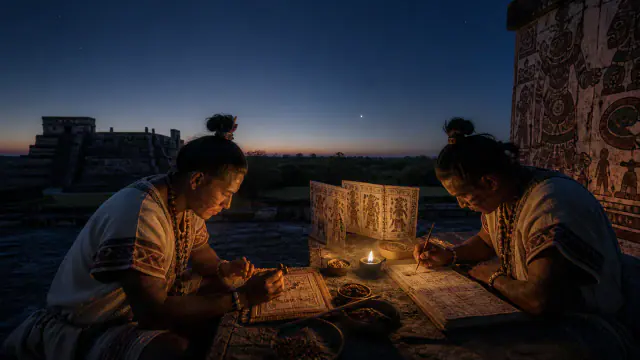
The murals of San Bartolo combine figures, gods, and writing several centuries before the peak of Classic Maya.
Museum documentation · free public access, no account required.
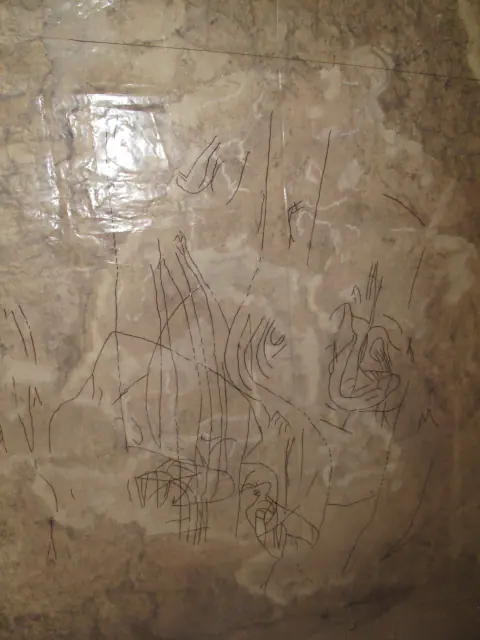
CONTEXTUAL DOCUMENTARY IMAGE · Conservation of Late Preclassic Murals at San Bartolo and the Temple of the Hieroglyphic Staircase at Yaxha-Nakum-Naranjo National Park, Ancient Maya Sites in the Eastern Petén · CC0
Contextual image · Contextual correspondence
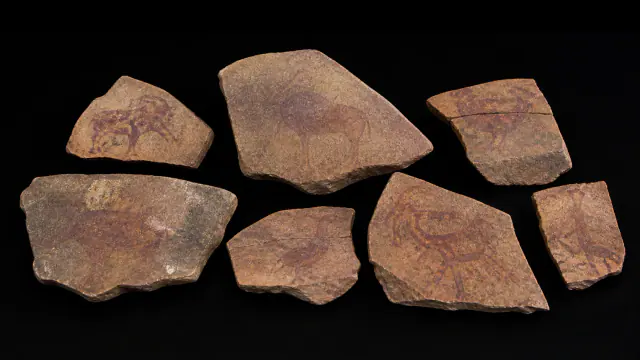
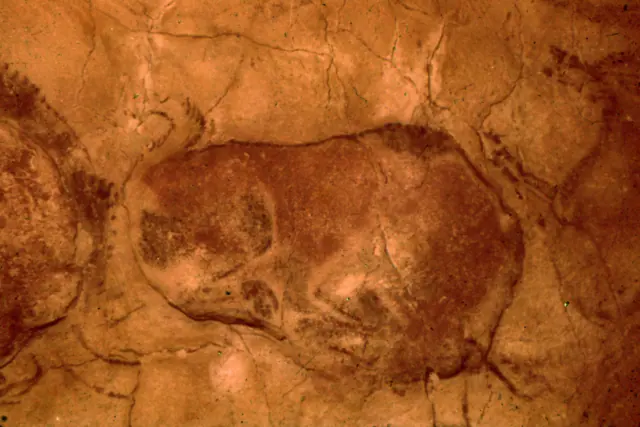
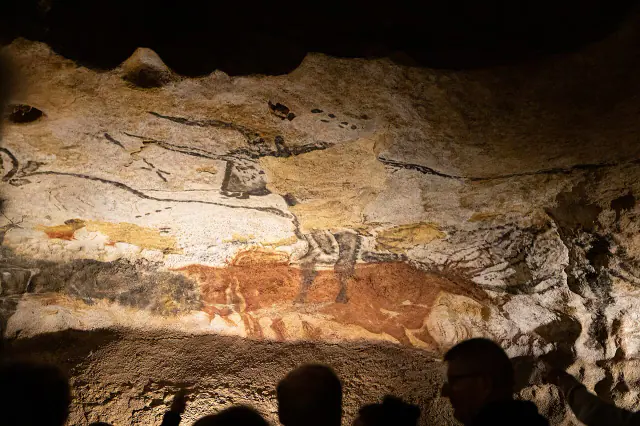
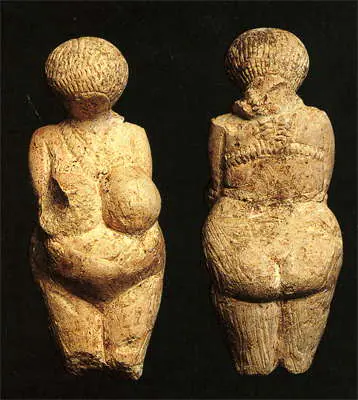
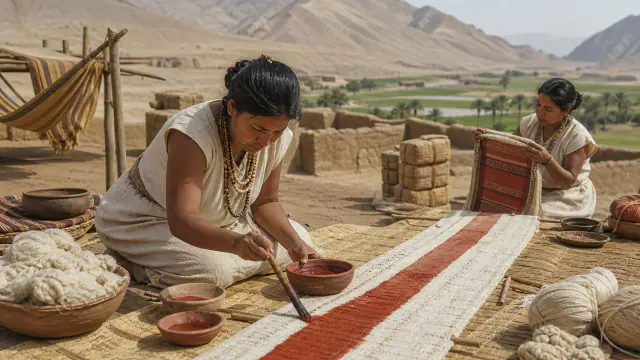
Contextual documentary image; does not exactly represent the described piece.
Exchanges Photos · Conservation of Late Preclassic Murals at San Bartolo and the Temple of the Hieroglyphic Staircase at Yaxha-Nakum-Naranjo National Park, Ancient Maya Sites in the Eastern Petén · Inventory: Conservation of Late Preclassic Murals at San Bartolo and the Temple of the Hieroglyphic Staircase at Yaxha-Nakum-Naranjo National Park, Ancient Maya Sites in the Eastern Petén (5859967815) · CC0
The murals of San Bartolo deployed human figures, deities, plants, and signs on finely prepared stucco walls. Their fluid line and polychromy show a mature tradition towards the 1st century BCE, not an experimental beginning of Maya art.
A scene seems to relate authority, maize, and creation episodes, but the reading depends on comparisons with texts and images much later. The mural reveals continuity of themes; it does not deliver a unique and translatable version of a 'sacred book'.
The Sub-1A chamber was buried by later constructions, a circumstance that protected fragments of painted stucco. Line, polychromy, and signs reveal towards 100 BCE a fully developed narrative tradition.
Maize, creation, and authority are consistent iconographic associations, but colonial texts are separated by many centuries. The exhibition must show parallels without subtitling the mural as a literal page of the Popol Vuh.
Evidence and interpretation
Documented fact: the paintings of Structure Sub-1A at San Bartolo are dated to around the 1st century BCE and combine figurative narrative and early signs. Interpretation and caution: links with creation and coronation myths are solid iconographic analyses but debatable; they must not be equated word for word with the colonial Popol Vuh.
Catalogue facts
Narrative date
c. 100 BCE
Location
San Bartolo, Petén, Guatemala
Material
Lime stucco · mineral and organic pigments
Context
Narrative painting, authority and Preclassic cosmology
Curatorial reading
The documented fact and its interpretation appear separately in the evidence block.
Date
c. 100 BCE
Location
San Bartolo, Petén, Guatemala
Support
Lime stucco · mineral and organic pigments
Documentary coverage
4 museum, heritage, primary corpus or research sources for this stop.
A SHARED TOPIC, DIFFERENT MOMENTS
Objects connected through time
Follow a topic across the collections. A shared tag is a way to compare objects, not proof that one culture influenced another.
The order uses the midpoint of each approximate date range; ranges can overlap. Spacing does not represent elapsed time. Swipe, scroll or use the arrows. With the sequence focused, use ← / →, Home or End.
Tassili n’AjjerPrehistory · Corpus ≈6000 BCE–first centuries CE
A closer look
About 1 min to read · 1 section. Further reading and sources · free access. Editorial review recorded: .
A calendar before the great murals
Two stucco fragments from an earlier phase of San Bartolo join to conserve the sign '7 Deer'. Their sealed context and radiocarbon datings place them between 300 and 200 BCE, approximately one and a half centuries before the Sub-1A chamber. The number combines bar and dots over a deer head. The find belongs to the 260-day calendar, which pairs thirteen numbers with twenty day names. It adds an early testimony of calendrical notation, although it does not allow knowing whether here it designated a day, a year, or a personal name.

 English
 Español
 Français
 Italiano
 Deutsch
 Русский
 Português
 Polski
 Română
 Svenska
 Norsk bokmål
 Suomi
 Türkçe
 العربية
 简体中文
 한국어
 हिन्दी
 Ελληνικά
 You are viewing