 English
 Español
 Français
 Italiano
 Deutsch
 Русский
 Português
 Polski
 Română
 Svenska
 Norsk bokmål
 Suomi
 Türkçe
 العربية
 简体中文
 한국어
 हिन्दी
 Ελληνικά
01 · INITIAL ATLAS · DIVISIONS AND REGIONS
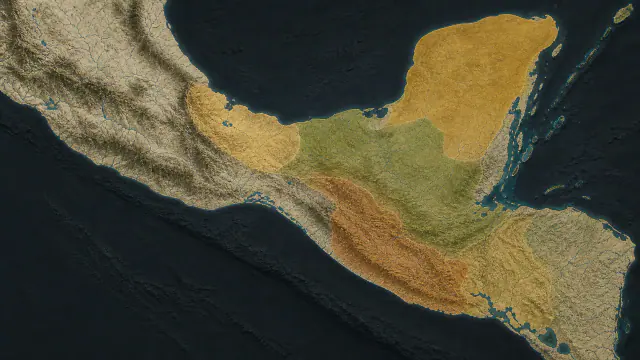
Map of the Maya
Locates Maya regions and Olmec centres with which there was contact, without confusing the two peoples.
Read the complete record → TRACEKEEPERS
HISTORY · OPEN COLLECTION
The collection introduces Olmec contexts as a distinct formative window before exploring Maya histories. Connections do not erase local developments, and the history of Maya peoples continues into the present.
42 complete records · free to read, no account needed
Read freely here. A free account saves your visits inside the museum.
Before you begin · Maya
Maya cities arose from local processes of cultivation, gathering and construction, within a very connected Mesoamerica.
Before the 2nd Millennium BCE
Mobility, gathering and maize cultivation combined in different ways according to region.
From ca. 1000 BCE
The construction of ceremonial spaces accompanied a gradual process of community settlement.
Late Preclassic and Classic
New forms of authority and political networks transformed centres with very different prior histories.
The lands that would later harbour Maya cities were inhabited for millennia by communities with different forms of mobility. Human and plant remains from Belize document changes in population and a growing importance of maize in the diet. Cultivation did not imply immediately abandoning hunting or gathering: each community combined resources and modified its relationship with forests, fields and wetlands.
In the Preclassic period, settlements and ceremonial spaces developed at different rates. At Ceibal, around 1000 BCE, formalised meeting places were constructed while some people still maintained mobile ways of life. Research compares these processes with those of Cuello and other areas: shared ceremonies may have contributed to gathering populations before all lived in permanent villages.
Contacts with Gulf societies and other Mesoamerican regions circulated objects and ideas, including expressions we call Olmec. Throughout the Preclassic, monumental centres and forms of authority grew; subsequently, the kingdoms and dynasties of the Classic period emerged. History had crises and reorganisations, and continues in today’s Maya peoples: it does not end with the abandonment of certain cities.
The route distinguishes the Olmec world and the Maya to observe contacts without turning one culture into a unique ancestor of the other.
Interpreting these traces. The results of a site do not describe the entire Maya region; sedentarisation processes were diverse.
Villages from c. 2500 BCE · centres from c. 1000 BCE · AMERICA
Access to the museum brings together the atlas and the background of the Maya. Afterwards, seven areas organise the historical context, culture, architecture, characters and society, treasures and equipment, beliefs and curiosities, and a historical door towards other museums. Each file preserves narrative layers, cautions and differentiated sources.
The room combines a specific visual catalog with an audited thematic dossier. Separates facts, interpretations and cautions; the 3D volumes continue to be replaceable markers until models with provenance and license are incorporated.
The museum first preserves twelve Olmec stops as a separate formative window and then continues with twelve traces of the Maya world, without erasing local developments or the continuity of contemporary Maya peoples.
A single door titled 'Maya' does not turn Olmec into a Maya phase: exchange, appropriation, and influence do not prove ethnic, linguistic, or political lineal descent.
Read the background and its sources →EXPLORE THE COLLECTION
Follow the museum’s curated order or go straight to a section. Every record includes its full public documentation and sources.
01 · COLLECTION
Consult the maps and initial context sheets to situate this museum in time and territory; then choose the areas that interest you most.
01 · INITIAL ATLAS · DIVISIONS AND REGIONS
Locates Maya regions and Olmec centres with which there was contact, without confusing the two peoples.
Read the complete record →02 · BEFORE THE WRITTEN KINGS · ARCHAIC–EARLY PRECLASSIC
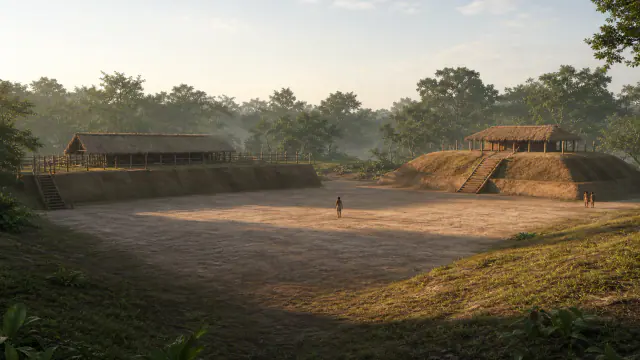
Ceibal developed in a region with Olmec contacts; that does not mean the Maya descended directly from them.
Read the complete record →02 · COLLECTION
The first stop reconstructs the area before the Maya; afterwards, places and processes allow entering their history without reducing it to a start date or an inevitable destiny.
01 · 01 · Veracruz · Transformed landscape
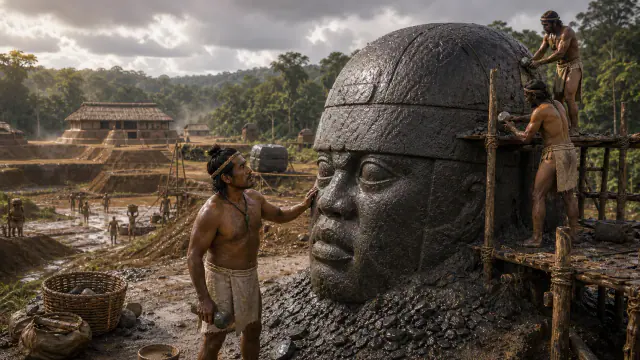
To build San Lorenzo, large quantities of earth were moved and the terrain was transformed.
Read the complete record →02 · 06 · Tabasco · Earth architecture
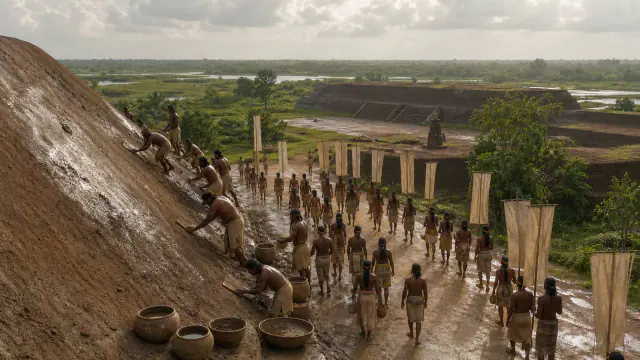
The pyramid, plazas, and platforms of La Venta were built mainly of earth.
Read the complete record →03 · 12 · Legacy · Regional transformation
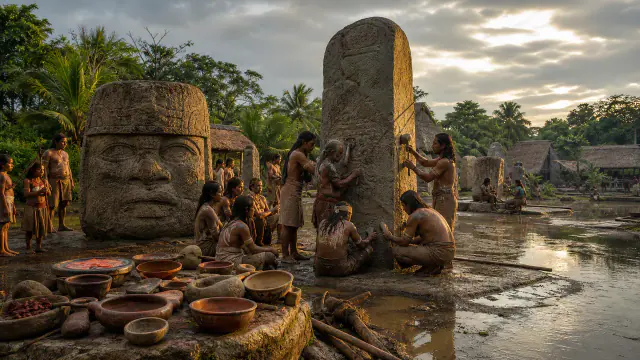
After the decline of La Venta, other centres such as Tres Zapotes continued creating sculptures and ceramics.
Read the complete record →04 · 13 · Early Preclassic · Mobile and sedentary life
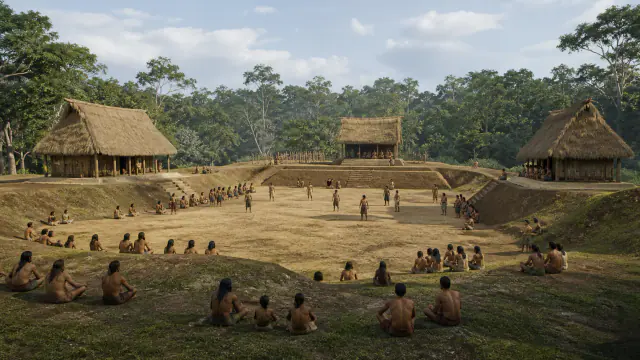
Ceibal already had a ceremonial plaza when groups with different settlement and mobility patterns coexisted.
Read the complete record →05 · 15 · Infrastructure · Seasonal forest
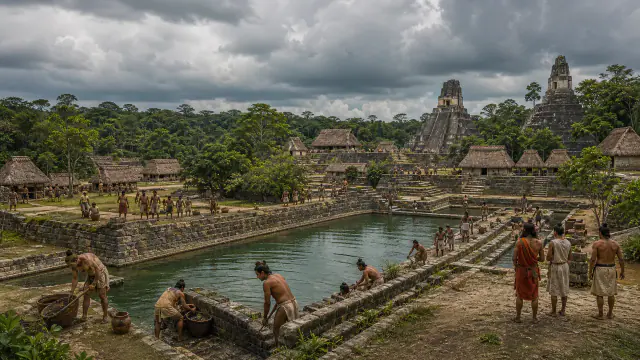
Tikal stored rainwater to supply its population during the dry months.
Read the complete record →06 · 19 · Conflict · Dynastic diplomacy
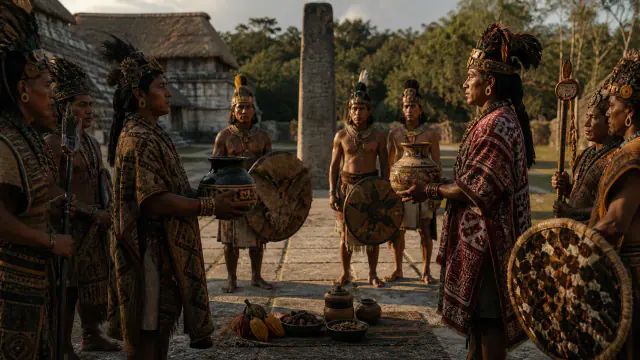
They did not clash as two empires with fixed borders, but as networks of cities that changed sides.
Read the complete record →07 · 20 · Copán · Monumental history
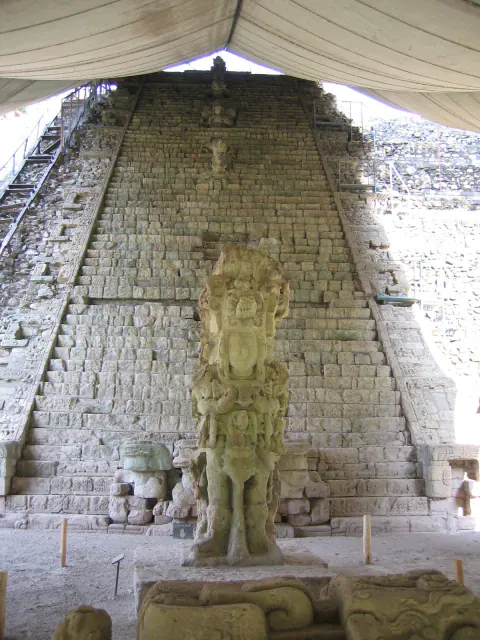
The stairway preserves a long dynastic inscription, although an ancient reconstruction altered part of its order.
Read the complete record →08 · 22 · Great Ballcourt · Political spectacle
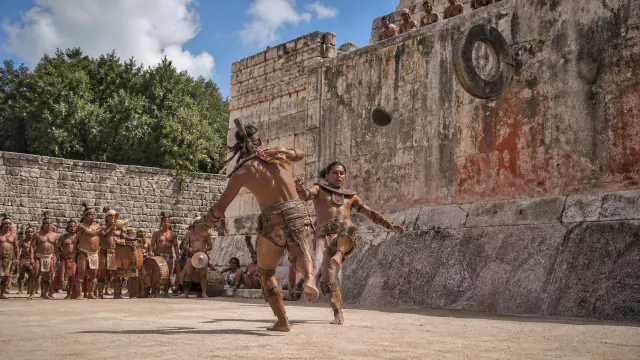
The relief shows decapitation; it does not turn every match into an execution.
Read the complete record →09 · 24 · Living Heritage · Theatre, dance and memory
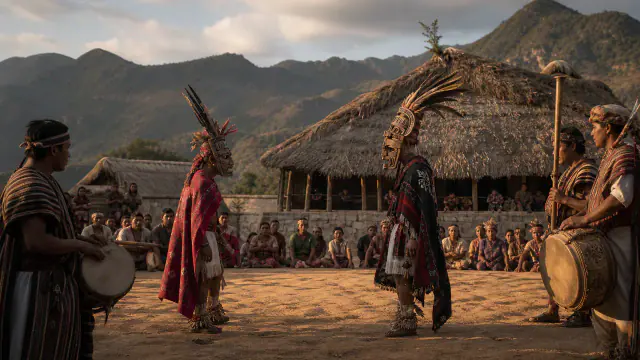
Rabinal Achí continues to be performed with dialogue, music, masks and dance in a living Maya tradition.
Read the complete record →03 · COLLECTION
These stops distinguish instruments, ritual actions, orality or writing and visual culture. Where there is no theatre, score or certain meaning, the museum preserves the limit.
01 · LIVING AND DOCUMENTED CULTURE · 01
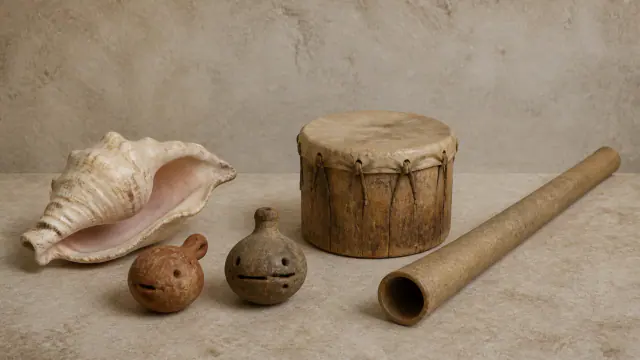
Maya images and findings document rattles, drums, trumpets and shells.
Read the complete record →02 · LIVING AND DOCUMENTED CULTURE · 02
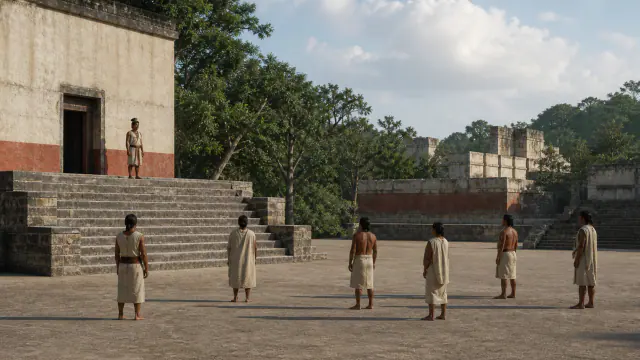
Plazas and stairways hosted dances, processions, ball games and rulers' ceremonies.
Read the complete record →03 · LIVING AND DOCUMENTED CULTURE · 03
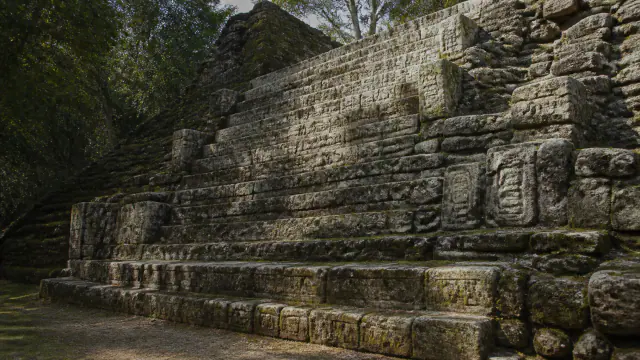
Maya inscriptions record dates, names, places and events of their dynasties.
Read the complete record →04 · LIVING AND DOCUMENTED CULTURE · 04
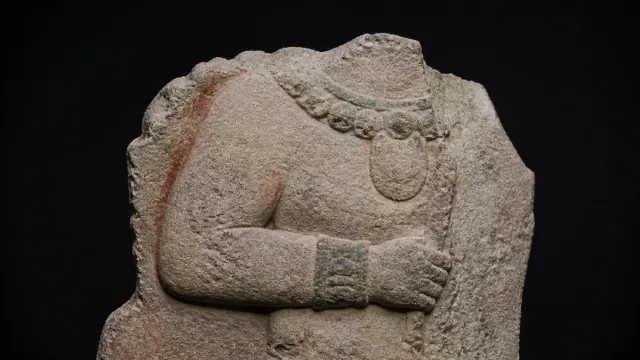
Headdresses, jade jewellery and postures helped identify the rank and kinship of the figures.
Read the complete record →04 · COLLECTION
These architectures explain how materials, water, work and memory organized the territory without converting an elevation reconstruction into certainty.
01 · ARCHITECTURE AND LANDSCAPE · 01
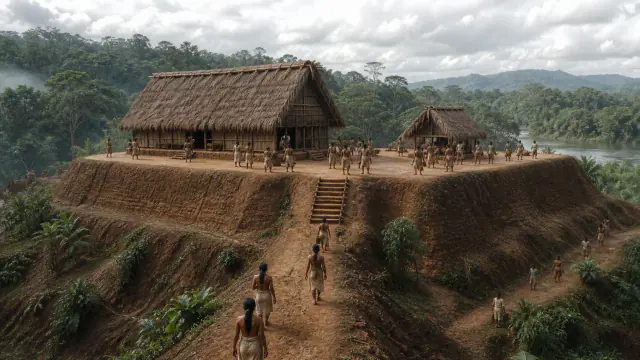
The Olmec centres of San Lorenzo and La Venta transformed the terrain and the course of water.
Read the complete record →02 · ARCHITECTURE AND LANDSCAPE · 02
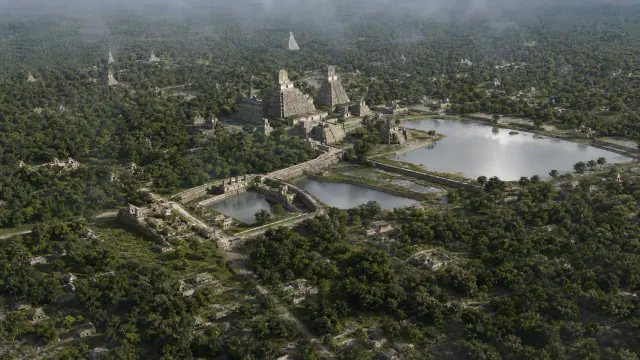
The temples, paths and water deposits connected different zones of Tikal.
Read the complete record →03 · ARCHITECTURE AND LANDSCAPE · 03
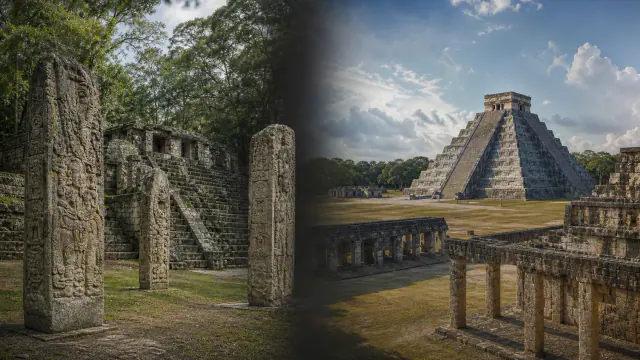
Copán and Chichén Itzá show distinct ways of using large buildings for inscriptions, games and ceremonies.
Read the complete record →05 · COLLECTION
Known people, reconstructed voices and collective footprints. From oldest to most recent according to life, reign or scene. The periods may overlap; The voices without a determinable date close the journey.
01 · 03 · Logistics · Monumentality
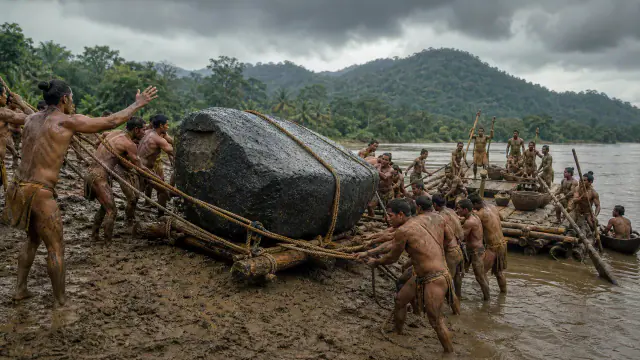
The basalt blocks for the colossal heads were transported from the Tuxtlas over tens of kilometres.
Read the complete record →02 · MAYA RULER · 5TH CENTURY
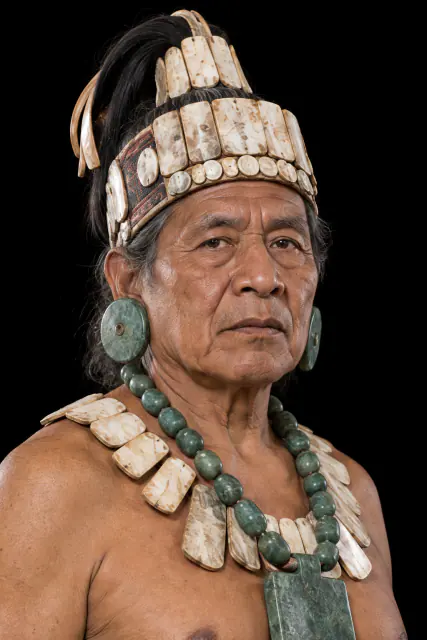
Inscriptions and a tomb allow us to approach the founder without turning later memory into a photograph.
Read the complete record →03 · ELITE WOMAN · 5TH CENTURY
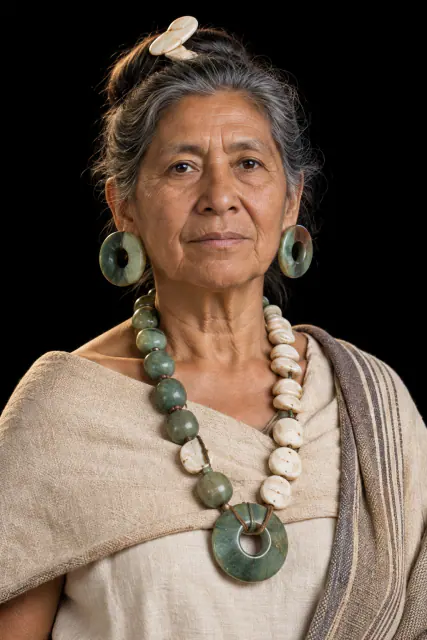
A burial documents a life; her name and kinship remain open.
Read the complete record →06 · COLLECTION
Concrete pieces to understand materials, decisions and knowledge systems, with separate evidence and interpretation.
01 · 02 · San Lorenzo · Portrait and power
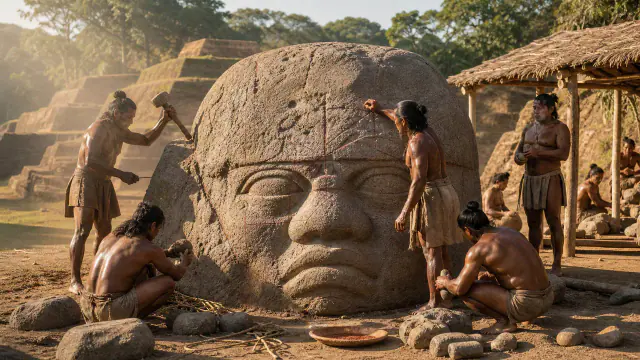
The head is usually interpreted as the portrait of a ruler whose name we do not know.
Read the complete record →02 · 04 · Sacred spring · Exceptional preservation
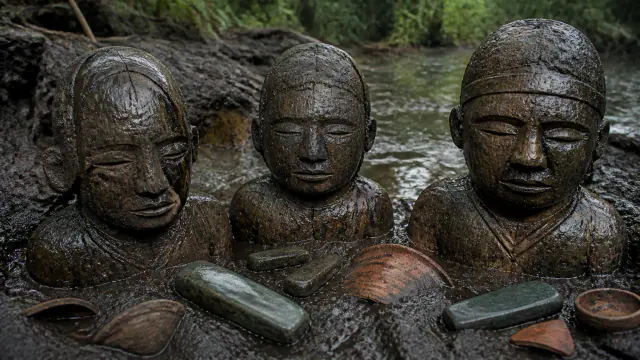
The moisture at El Manatí preserved wooden figures that would normally have been lost.
Read the complete record →03 · 05 · Organic object · Possible game
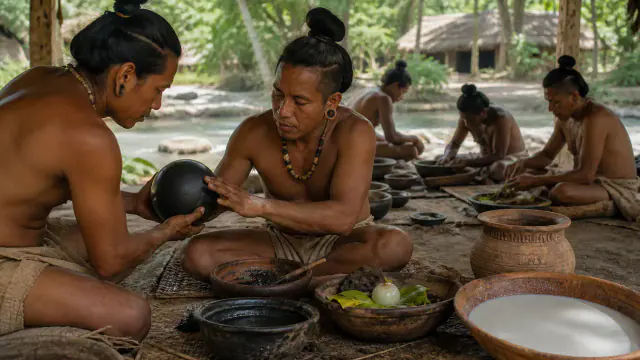
The balls preserve an ancient way of working rubber, but not the rules with which they were used.
Read the complete record →04 · 07 · La Venta · Buried deposit
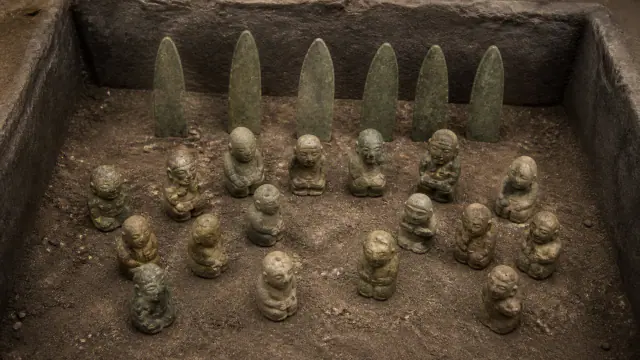
Sixteen figures and six axes were placed together before burial; we do not know what the scene represented.
Read the complete record →05 · 08 · A Complex · Massive offering
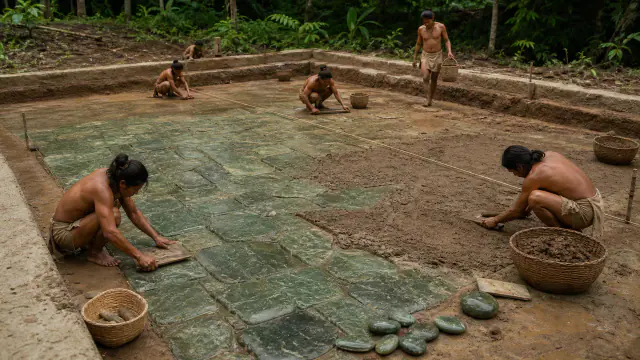
The green stone blocks were placed to form designs and then covered with clay.
Read the complete record →06 · 09 · Green stone · Mesoamerican networks
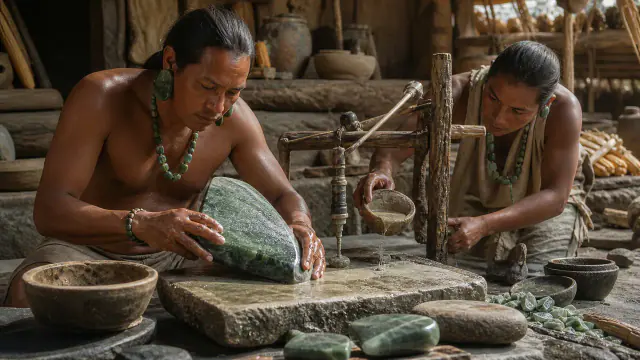
Jadeite from the Motagua valley travelled long distances and required much work to carve and polish.
Read the complete record →07 · 10 · Portable sculpture · Ritual image
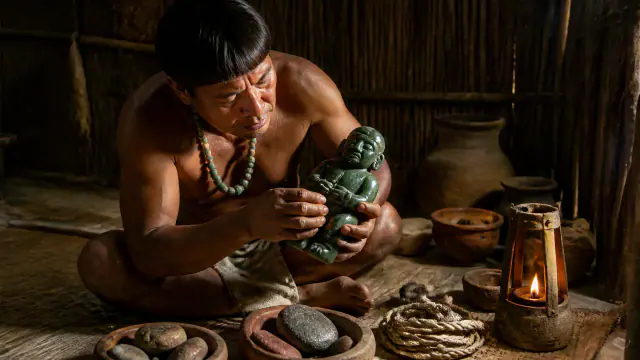
A young figure holds a smaller one and bears four faces incised on shoulders and knees.
Read the complete record →08 · 11 · Proposed writing · Open debate
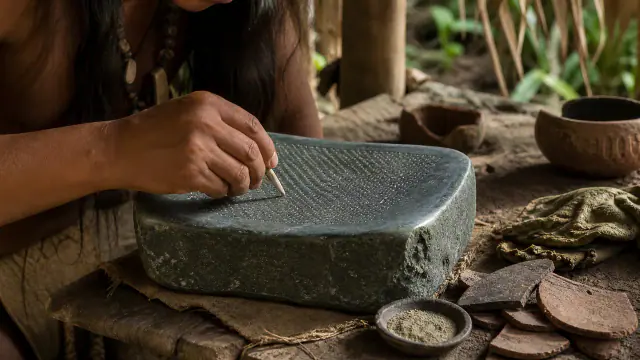
The signs could belong to a very ancient writing, but the circumstances of the discovery leave doubts.
Read the complete record →09 · 14 · Late Preclassic · Mural narrative
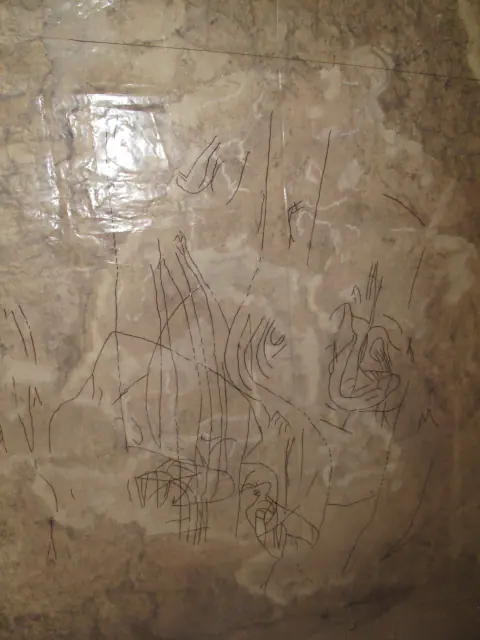
The murals of San Bartolo combine figures, gods, and writing several centuries before the peak of Classic Maya.
Read the complete record →10 · 16 · Tikal · Dynastic time
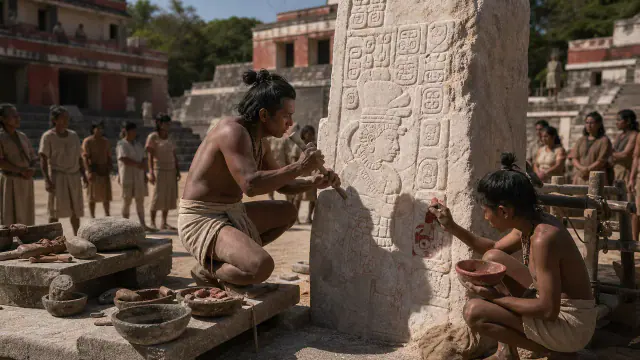
The stela preserves a date equivalent to 292 CE, the earliest Long Count date known at Tikal.
Read the complete record →11 · 21 · Dresden Codex · Ritual calculation
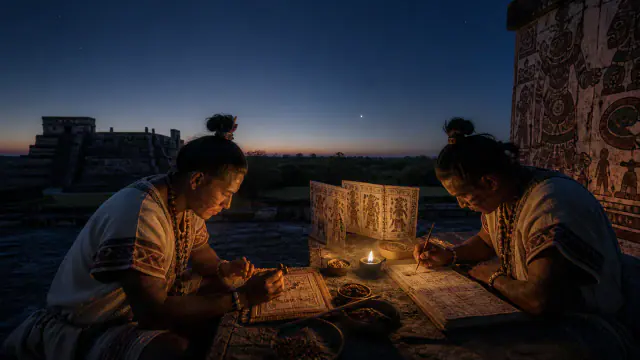
The scribes tracked 584 days repeatedly and adjusted the table to prevent drift.
Read the complete record →12 · 23 · Colour technology · Hybrid material
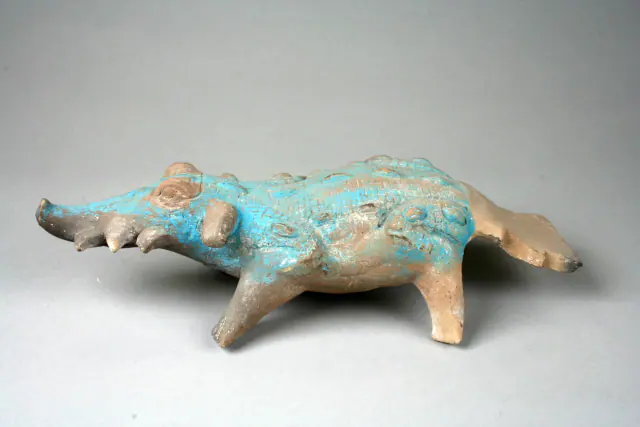
Maya blue combines plant indigo and clay to obtain a very resistant pigment.
Read the complete record →13 · DOCUMENTED OUTFIT · CLOSED CONTEXT OR CONTROLLED COMPARISON
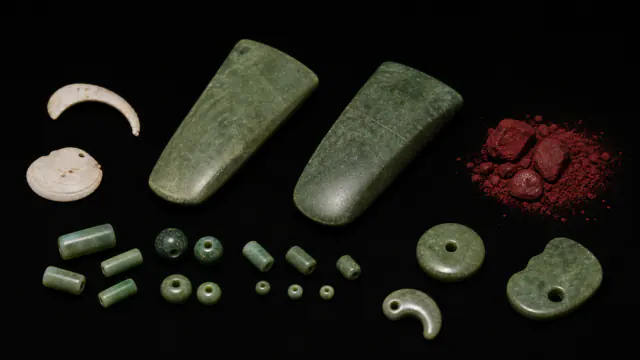
Tomb A at La Venta contained jade, beads, cinnabar and other objects alongside highly deteriorated human remains.
Read the complete record →14 · DOCUMENTED OUTFIT · CLOSED CONTEXT OR CONTROLLED COMPARISON
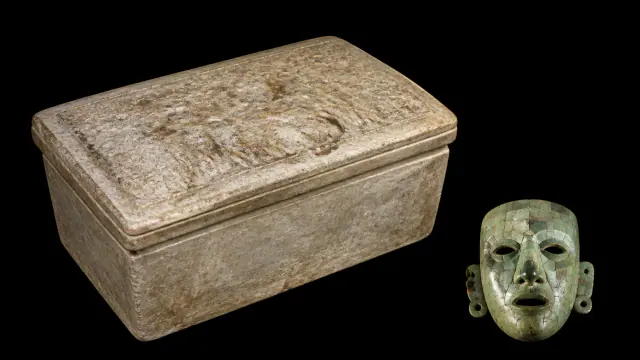
Pakal’s tomb preserved his sarcophagus, a mask and jade jewellery, together with other offerings.
Read the complete record →07 · COLLECTION
These cards separate what is documented from what is interpreted and recover practices, questions and details capable of changing our image of this culture.
01 · BELIEFS AND CURIOSITIES · 01
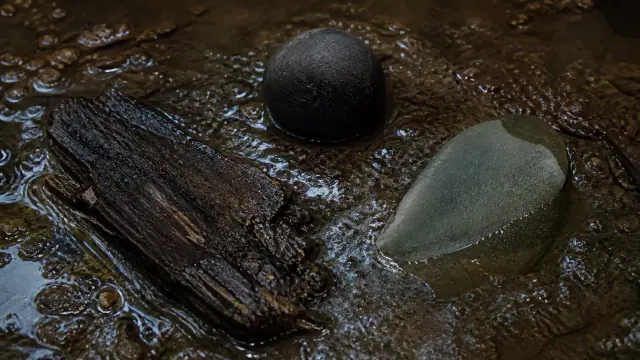
At El Manatí and La Venta, carefully chosen objects were deposited in places of ritual use.
Read the complete record →02 · BELIEFS AND CURIOSITIES · 02
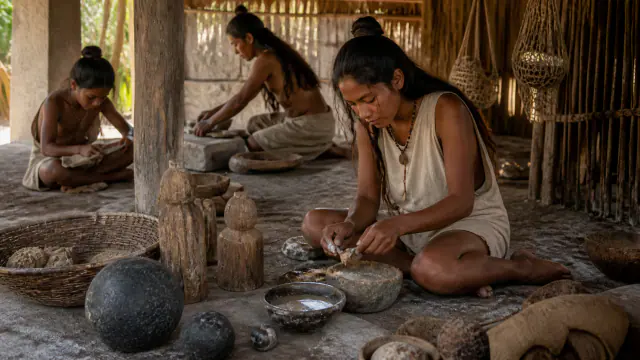
The wood and rubber preserved at El Manatí allow knowledge of work that rarely leaves traces.
Read the complete record →03 · BELIEFS AND CURIOSITIES · 03
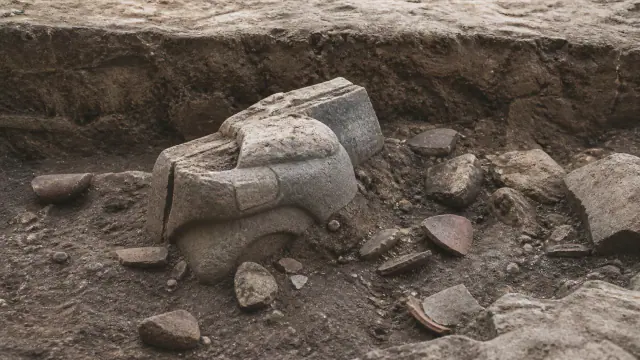
Burying figures or other objects did not always mean accompanying a deceased person.
Read the complete record →04 · BELIEFS AND CURIOSITIES · 01
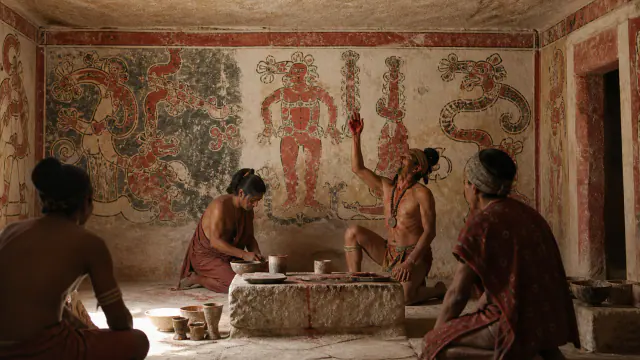
The murals of San Bartolo show supernatural beings, plants and ceremonies whose interpretation is still under investigation.
Read the complete record →05 · BELIEFS AND CURIOSITIES · 02
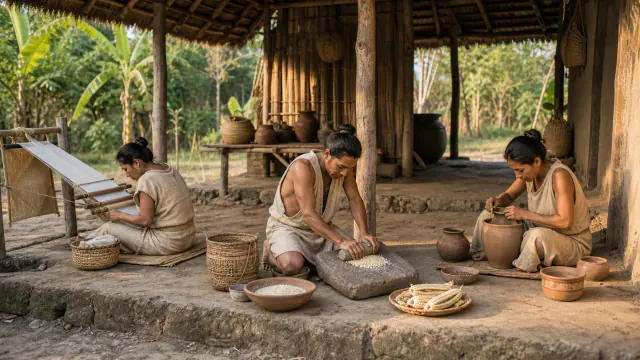
City life also depended on stored water, housing and work outside the palaces.
Read the complete record →06 · BELIEFS AND CURIOSITIES · 03
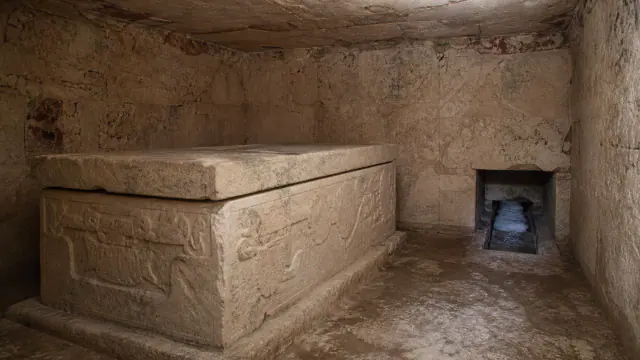
Pakal's tomb brings together inscriptions, offerings and a channel beneath the temple; it is part of a Maya history that continues today.
Read the complete record →08 · COLLECTION
Each door explains why the link exists, when it occurred, and what limits prevent contact from being converted into shared identity.
01 · GATE 01 · AMERICA · CAUTIOUS COMPARISON
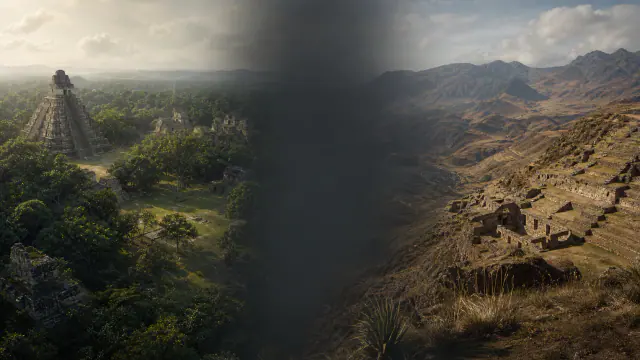
Continues in the Museum of Pre-Inca Cultures
Read the complete record →Las cabezas que no eran retratos
Discover the connected fiction project. The available Prehistory reader is in Spanish; other volumes are not presented as finished products for sale.
Explore the books →Try the available Prehistory browser alpha. Campaigns for the other cultures are still in development.
Open the game (Spanish) →Use each record’s institution and heritage links to continue your research. Country-by-country historical travel guides are planned, not yet published.
Historical travel →Discover artistic designs inspired by the collections and check each product’s availability. Museum access remains free.
Explore the collection →