 English
 Español
 Français
 Italiano
 Deutsch
 Русский
 Português
 Polski
 Română
 Svenska
 Norsk bokmål
 Suomi
 Türkçe
 العربية
 简体中文
 한국어
 हिन्दी
 Ελληνικά
01 · INITIAL ATLAS · DIVISIONS AND REGIONS
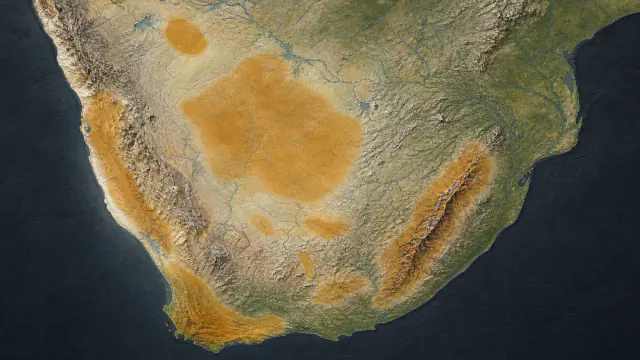
Map of the San
Discover landscapes and communities of Southern Africa, with different languages and histories that continue into the present.
Read the complete record → TRACEKEEPERS
HISTORY · OPEN COLLECTION
This collection connects archaeological evidence with identifiable historical voices and places. It does not treat a modern people as a timeless survival of prehistory or assign every ancient object to a named community.
24 complete records · free to read, no account needed
Read freely here. A free account saves your visits inside the museum.
Before you begin · San
This journey connects a very ancient archaeological past with historical and contemporary San voices, respecting the distance between these evidences.
c. 25500–23500 BCE
Animal figures on small stone slabs testify to prehistoric visual creation; the cultural identity of their authors remains unknown.
For Many Millennia
Archaeology and rock art record successive communities and environmental changes, with intervals and uneven dating.
1871–1873
His stories and teachings in |Xam are recorded with a proper name in the Bleek and Lloyd notebooks.
Southern Africa preserves a human history of immense depth. The painted stones of Apollo 11 Cave in Namibia depict animal figures in contexts dating back more than twenty-five thousand years. They testify to people capable of creating images and meanings, but they do not preserve the names of their communities nor an identity we can confidently attribute to them.
At Tsodilo in Botswana, successive occupations and thousands of paintings document changing ways of living and relating to the landscape. Not all images are from the same period nor do they have known authorship. Today, San and Hambukushu communities maintain spiritual relationships with their hills and water places; the site’s value includes this living history.
In the nineteenth century, |Xam people such as ǁKabbo transmitted stories, knowledge, and experiences collected in the Bleek and Lloyd Archive. Here we do know narrators, places, and circumstances, including colonial violence and the mediation of those who wrote. These voices allow us to approach specific histories without turning all San peoples into a single immobile society.
The museum’s objects, landscapes, and narratives invite comparison of evidence without losing the authorship or context of each.
Interpreting these traces. San comprises distinct peoples; contemporary communities are not intact survivals of Prehistory nor demonstrated authors of all ancient art.
Historical documentation: 19th century–present · landscapes of long duration · AFRICA
Access to the museum brings together the atlas and the background of San. Afterwards, seven areas order the historical context, culture, architecture, the people and society, treasures and grave goods, beliefs and curiosities, and a historical door towards other museums. Each card retains narrative layers, cautions and differentiated sources.
The room combines a specific visual catalog with an audited thematic dossier. Separates facts, interpretations and cautions; the 3D volumes continue to be replaceable markers until models with provenance and license are incorporated.
The transition is not the birth of a people, but the moment when historical sources allow attributing concrete voices and names.
Ethnographic analogy can formulate questions about the past; it does not demonstrate biological, ethnic or ritual continuity for all preceding art.
Read the background and its sources →EXPLORE THE COLLECTION
Follow the museum’s curated order or go straight to a section. Every record includes its full public documentation and sources.
01 · COLLECTION
Consult the maps and initial context sheets to situate this museum in time and territory; then choose the areas that interest you most.
01 · INITIAL ATLAS · DIVISIONS AND REGIONS
Discover landscapes and communities of Southern Africa, with different languages and histories that continue into the present.
Read the complete record →02 · BEFORE THE NAME · ARCHAEOLOGY, LANDSCAPE AND AUTHORSHIP
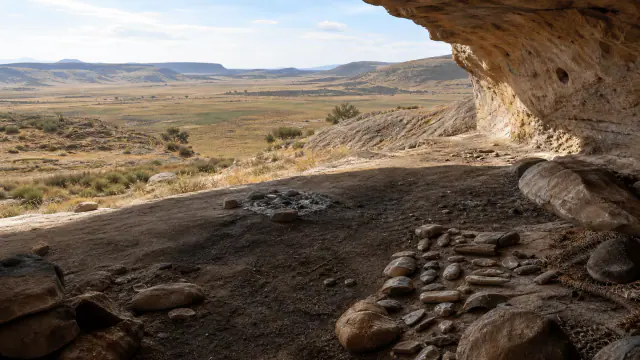
The antiquity of an image is not enough to know which community its authors belonged to.
Read the complete record →02 · COLLECTION
The first stop reconstructs the area before San; afterwards, places and processes allow entering its history without reducing it to a start date nor to an inevitable destination.
01 · 02 · CULTURAL LANDSCAPE · BOTSWANA
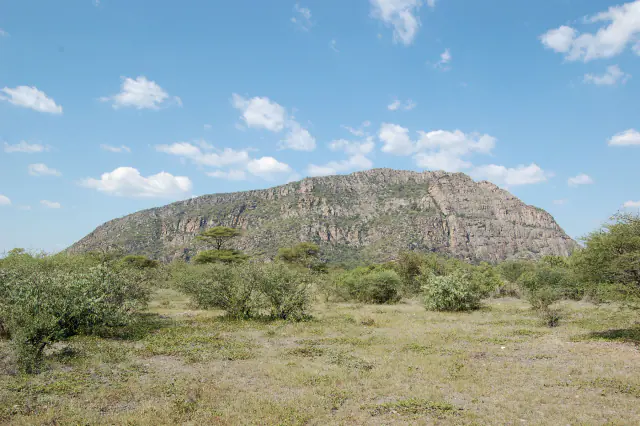
More than 4,500 paintings from different periods are preserved in a place sacred to San and Hambukushu communities.
Read the complete record →02 · 03 · ROCK ART · MALOTI-DRAKENSBERG
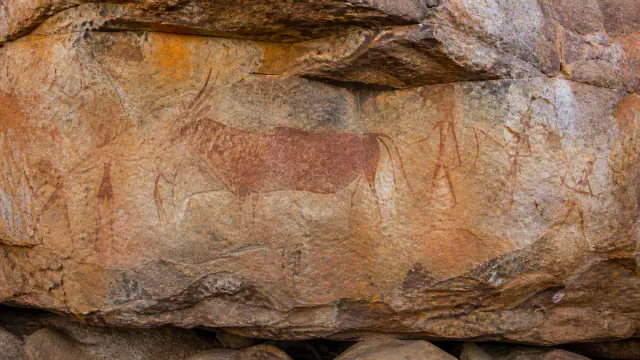
San accounts help interpret the figures, but do not allow us to know with certainty what each scene means.
Read the complete record →03 · 05 · LIVING HERITAGE · SOUTHERN KALAHARI
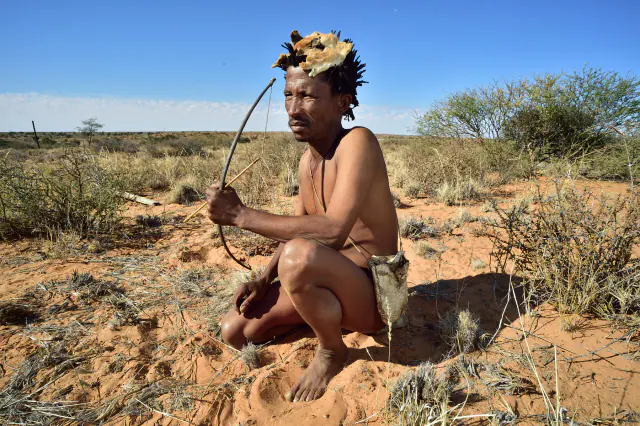
Knowledge of water, plants and paths forms part of a relationship with the land that remains alive.
Read the complete record →04 · 06 · MOBILITY · SHADE · PERISHABLE MATERIALS
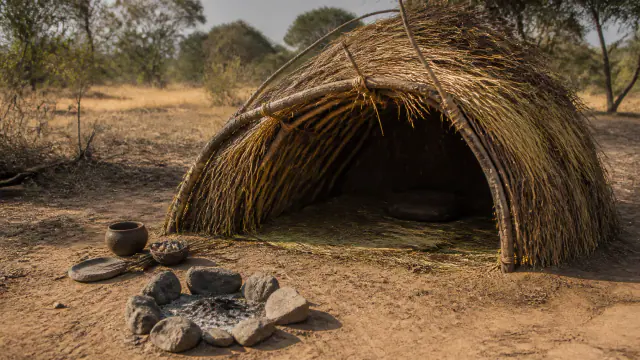
Branches, grass and fibres were used to build shelters suited to wind, shade and season.
Read the complete record →03 · COLLECTION
These stops distinguish instruments, ritual actions, orality or writing and visual culture. Where there is no theatre, score or certain meaning, the museum preserves the limit.
01 · LIVING AND DOCUMENTED CULTURE · 01
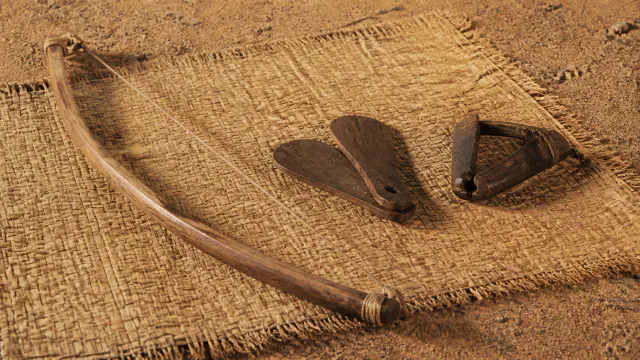
Twentieth-century recordings document several combined voices, clapping and musical bows in specific communities.
Read the complete record →02 · LIVING AND DOCUMENTED CULTURE · 02
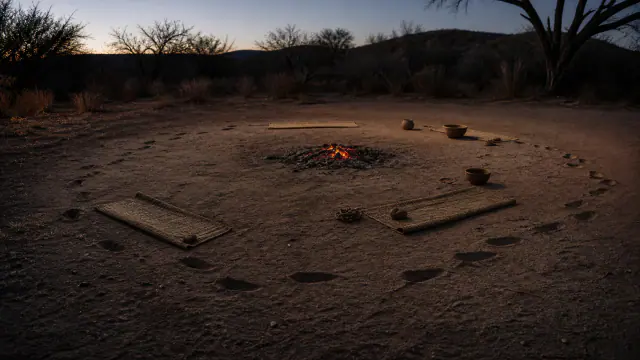
In the studied communities, singing and night dancing form part of healing practices.
Read the complete record →03 · LIVING AND DOCUMENTED CULTURE · 03
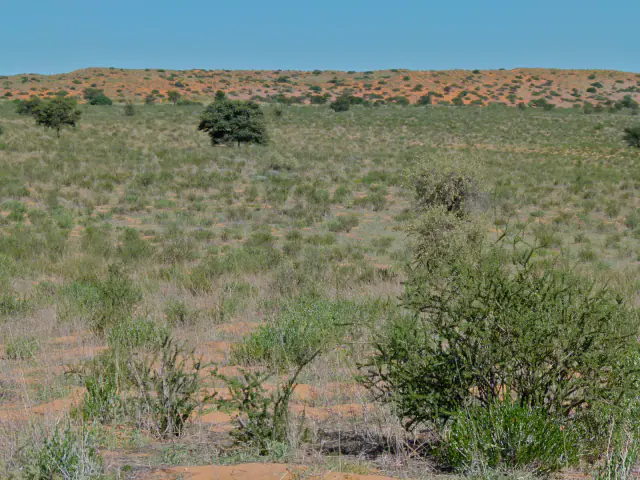
San languages belong to distinct families; clicks do not make them a single language.
Read the complete record →04 · LIVING AND DOCUMENTED CULTURE · 04
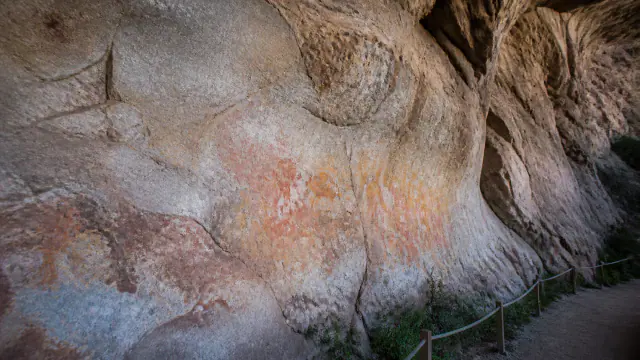
These paintings from different periods remain important to present-day communities.
Read the complete record →04 · COLLECTION
These architectures explain how materials, water, work and memory organized the territory without converting an elevation reconstruction into certainty.
01 · ARCHITECTURE AND LANDSCAPE · 01
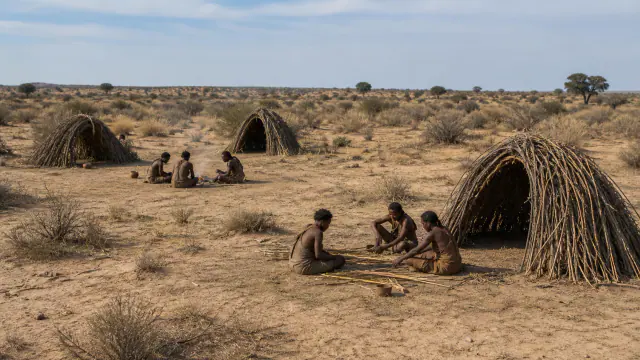
The position of shelters and hearths relates to families, tasks and seasonal changes.
Read the complete record →02 · ARCHITECTURE AND LANDSCAPE · 02
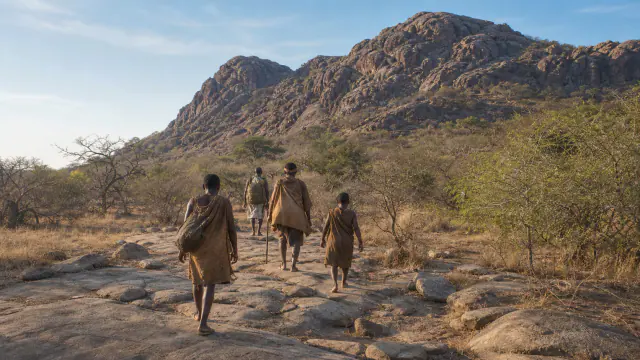
Shelters, paths, water and paintings allow different uses of this place over time to be known.
Read the complete record →03 · ARCHITECTURE AND LANDSCAPE · 03
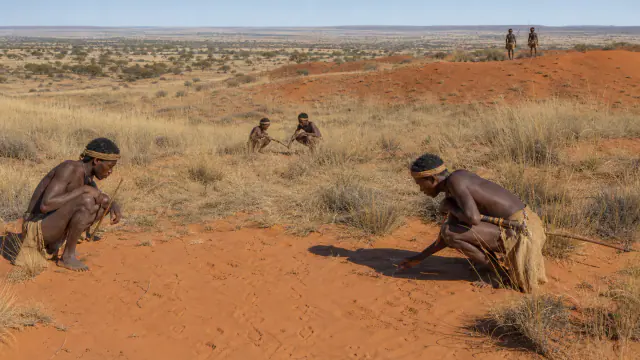
The cultural landscape includes routes, plants, narratives and contemporary rights.
Read the complete record →05 · COLLECTION
Known people, reconstructed voices and collective footprints. From oldest to most recent according to life, reign or scene. The periods may overlap; The voices without a determinable date close the journey.
01 · ARCHAEOLOGICAL RECREATION
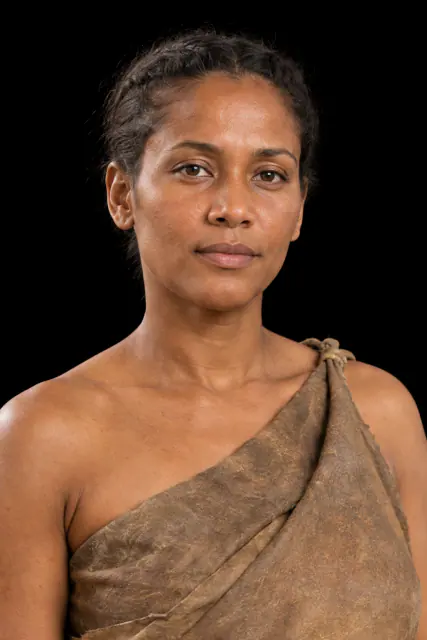
An individual documented through their burial; an interpretive appearance.
Read the complete record →02 · ARCHAEOLOGICAL RECREATION
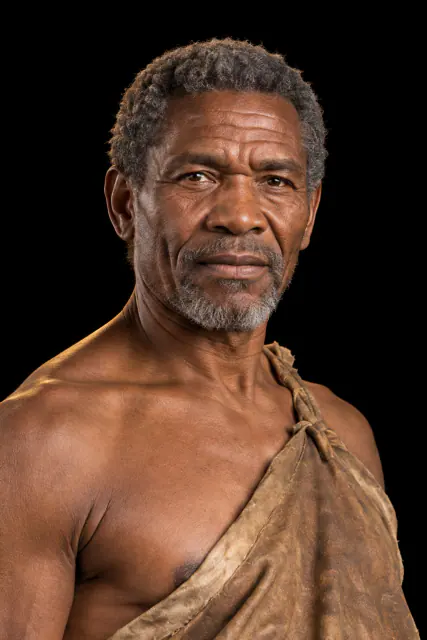
A coastal life before our era, known through a burial.
Read the complete record →06 · COLLECTION
Concrete pieces to understand materials, decisions and knowledge systems, with separate evidence and interpretation.
01 · 01 · ANONYMOUS ARCHAEOLOGY · ≈25,500–23,500 BCE
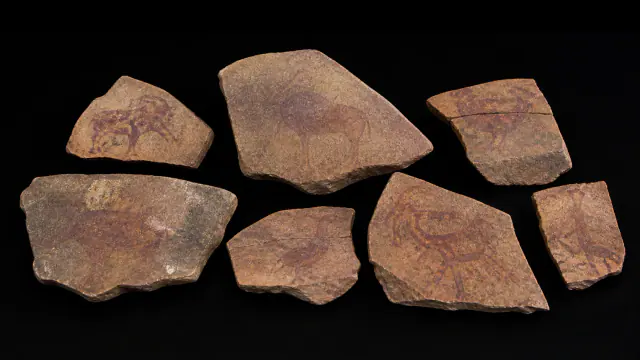
These stones preserve figures painted by people whose collective identity we do not know.
Read the complete record →02 · 04 · HISTORICAL OBJECT · 1816–1826
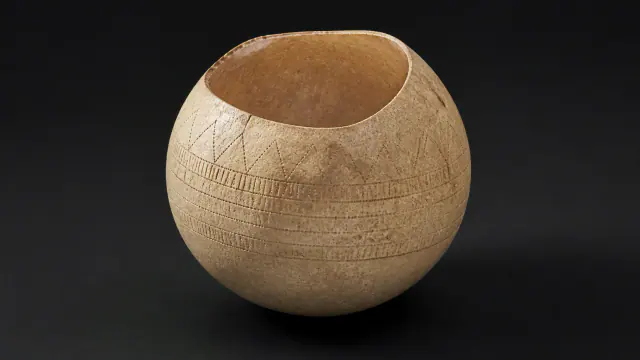
Light, durable and repairable: a water container made for mobility.
Read the complete record →03 · 09 · ARCHIVE · MEDIATION · TRANSLATION
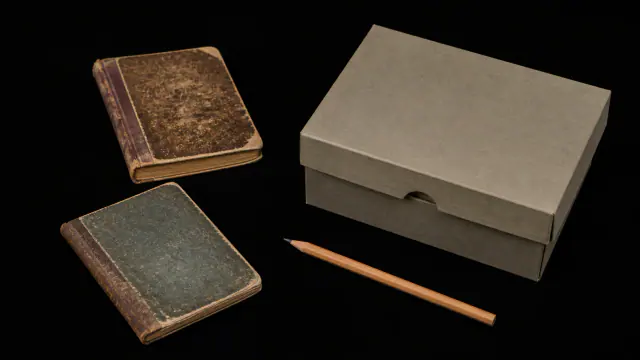
Comparing the notebooks, translations and editions allows us to see what decisions were made by those who recorded the narratives.
Read the complete record →04 · 10 · RECORDINGS · 1968–1972

The !Kung/Ju recordings document songs, clapping and movements of specific Kalahari communities.
Read the complete record →05 · 11 · DOCUMENTED MUSIC · KALAHARI
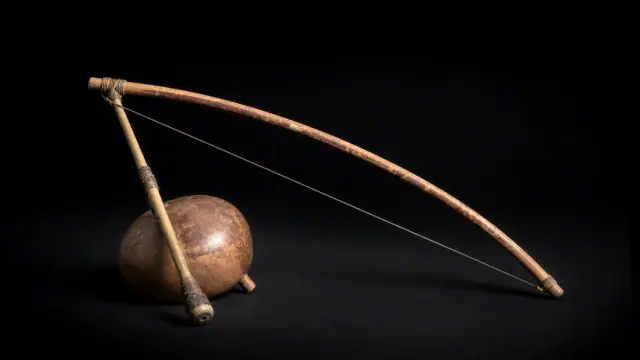
Records from Botswana and Namibia allow us to know instruments and ways of playing them, with identified performers and locations.
Read the complete record →07 · COLLECTION
These cards separate what is documented from what is interpreted and recover practices, questions and details capable of changing our image of this culture.
01 · BELIEFS AND CURIOSITIES · 01
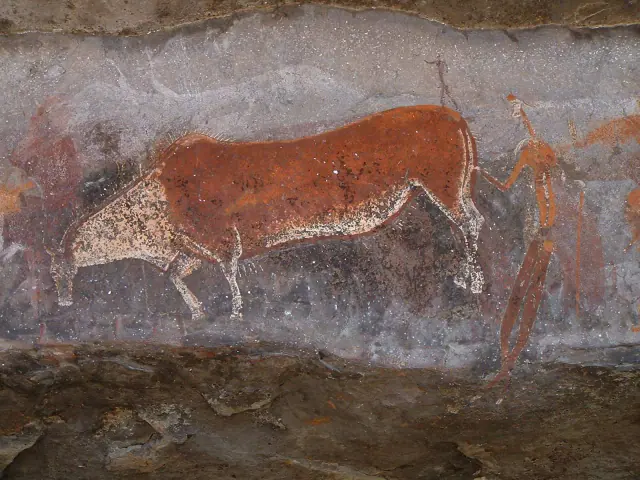
Dances and narratives help to propose interpretations of the paintings, but they do not explain all their scenes.
Read the complete record →02 · BELIEFS AND CURIOSITIES · 02
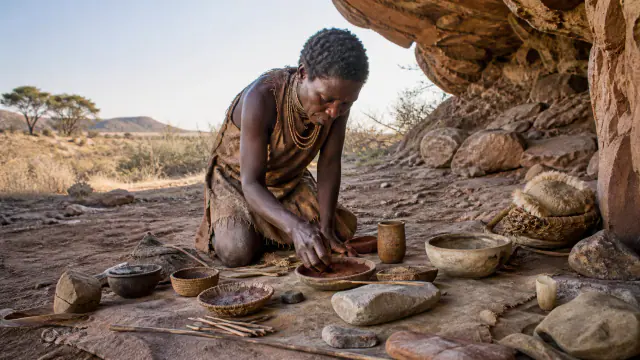
Carrying water, preparing shelters and teaching the young are activities that leave few archaeological traces.
Read the complete record →03 · BELIEFS AND CURIOSITIES · 03
The archives preserved names and narratives, but they also reflect the colonial inequalities of the time in which they were compiled.
Read the complete record →08 · COLLECTION
Each door explains why the link exists, when it occurred, and what limits prevent contact from being converted into shared identity.
01 · DOOR 01 · AFRICA · CONTACT
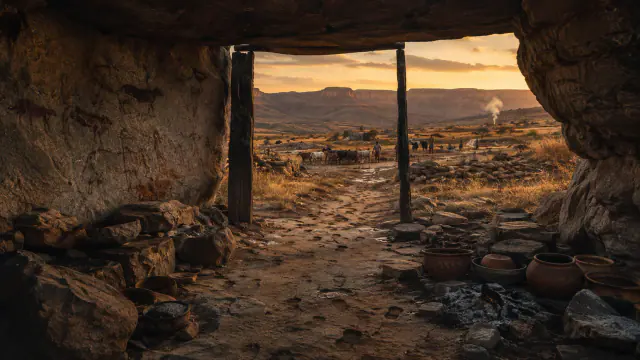
Continues in the Bantu Worlds museum
Read the complete record →El paisaje que seguía hablando
Discover the connected fiction project. The available Prehistory reader is in Spanish; other volumes are not presented as finished products for sale.
Explore the books →Try the available Prehistory browser alpha. Campaigns for the other cultures are still in development.
Open the game (Spanish) →Use each record’s institution and heritage links to continue your research. Country-by-country historical travel guides are planned, not yet published.
Historical travel →Discover artistic designs inspired by the collections and check each product’s availability. Museum access remains free.
Explore the collection →