16 · Tikal · Dynastic time
The date of 292 Stela 29: a day fixed in the Long Count
The stela preserves a date equivalent to 292 CE, the earliest Long Count date known at Tikal.
ON THIS PAGE
History and context Evidence and facts Objects connected through time Further reading Location and territory Sources and references Comments Museum documentation · free public access, no account required.
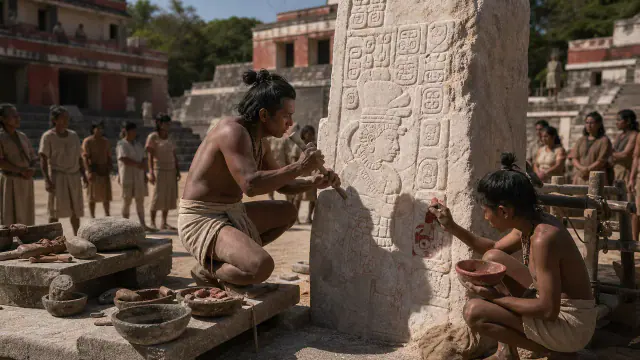
⛶ Enlarge imageDECLARED VISUAL RECONSTRUCTION · EXISTING EDITORIAL RESOURCE · TRACEKEEPERS Generated reconstruction · Declared visual hypothesis
Declared visual reconstruction for museographic context; it is not a photograph of the original nor documentary evidence.
History and context Stela 29 preserves the Long Count date equivalent to 292 CE, the oldest of this type known in Tikal. Figure and signs made it possible to situate a political ceremony with precision within an accumulative time.
The monument was not a neutral calendar: it selected events worthy of stone and linked them to the dynasty. Specialists convert its date to the current calendar via a widely accepted correlation, but the inscription is fragmented and does not tell the whole story of the city.
Stela 29 fixed a date equivalent to 292 CE and turned a courtly event into accumulative memory. The preserved fragment demonstrates calendrical precision without recovering the complete ceremony that once accompanied it.
The Gregorian equivalence depends on a widely accepted academic correlation and the inscription speaks with a dynastic voice. A timeline must distinguish internal Maya accuracy from modern conversion and monumental propaganda.
Evidence and interpretation Documented fact: UNESCO identifies Stela 29 as the earliest dated sculpture of Tikal, corresponding to the year 292 CE. Interpretation and caution: dates are exact within the Maya system, while their Gregorian equivalence depends on an academic correlation; the monumental text expresses a dynastic perspective.
Catalogue facts
Narrative date 292 CE
Location Tikal, Petén, Guatemala
Material Carved limestone, originally pigmented
Context Long Count, royal memory and monumental writing
Curatorial reading The documented fact and its interpretation appear separately in the evidence block.
Date 292 CE
Location Tikal, Petén, Guatemala
Support Carved limestone, originally pigmented
Documentary coverage 3 museum, heritage, primary corpus or research sources for this stop. Limestone12 Sculpture54 Inscriptions34 Writing44 Kingship and power33
The order uses the midpoint of each approximate date range; ranges can overlap. Spacing does not represent elapsed time. Swipe, scroll or use the arrows. With the sequence focused, use ← / →, Home or End.
Earlier Later
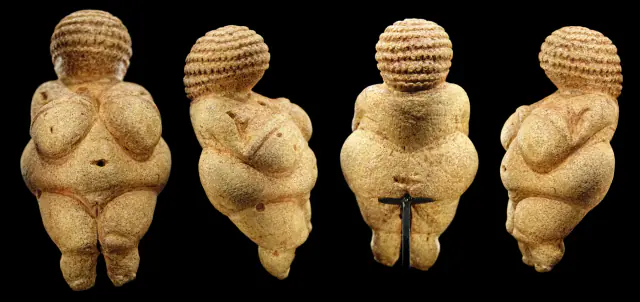
≈29,500 years
Willendorf Prehistory
Approximate catalogue age; editorial reference 2026 for ordering only, not calibrated dating.
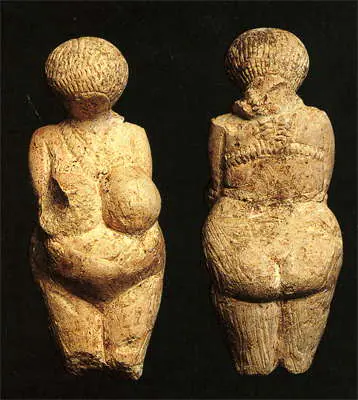
Read the record ≈23,000–21,000 years
Kostenki I Prehistory
Approximate catalogue age; editorial reference 2026 for ordering only, not calibrated dating.
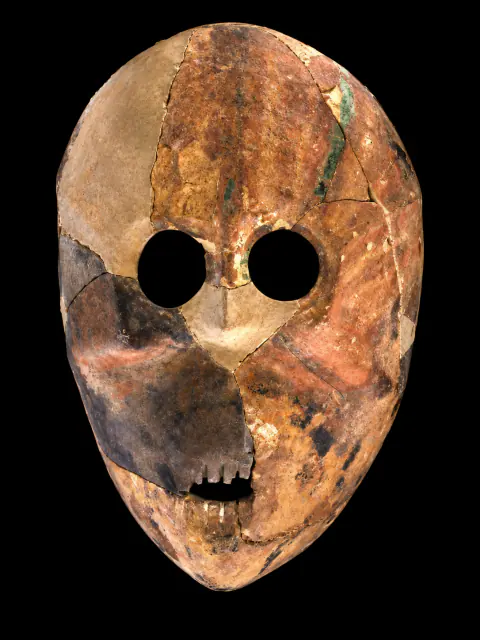
Read the record Eighth millennium BCE · context dating, not direct dating of the stone
Nahal Hemar mask Prehistory
Context dating, not direct dating of the stone.
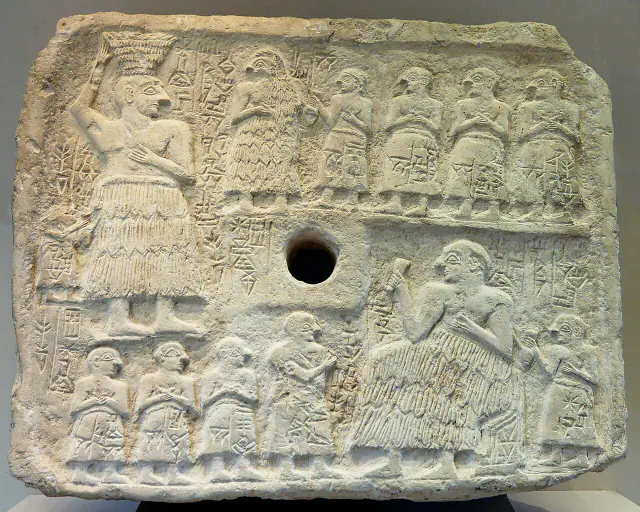
Read the record Mid-3rd millennium BCE · reign of Ur-Nanshe
Ur-Nanshe relief Sumer
The full 3rd millennium BCE provides broad limits for chronological ordering; the record specifies the middle of the millennium, in the reign of Ur-Nanshe.
Read the record Towards 2450–2425 BCE
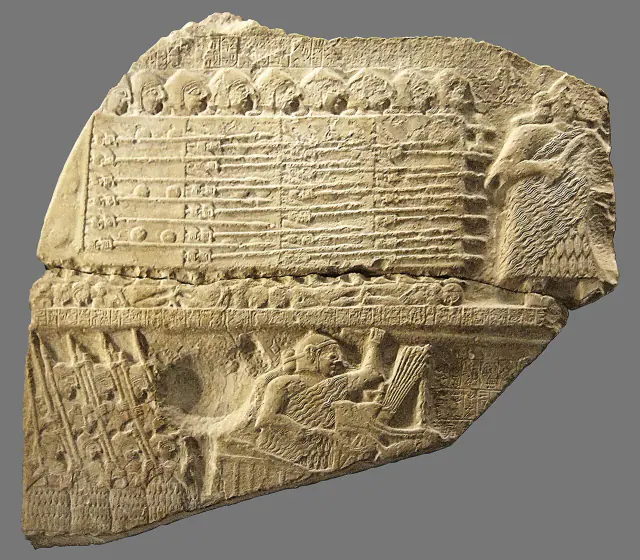
Stele of the Vultures Sumer
Approximate dating according to the record.
Read the record Reign of Naram-Sin, 2254–2218 BCE
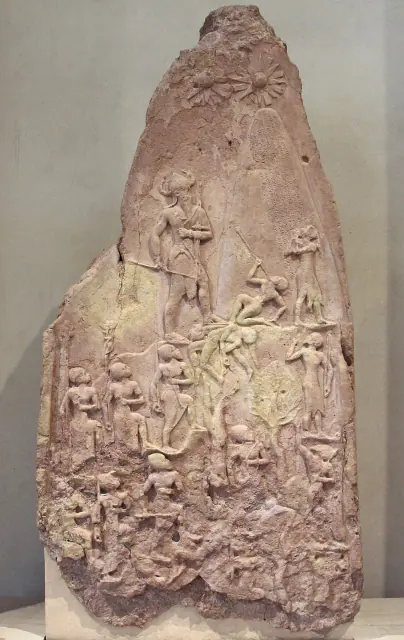
Naram-Sin Stele Sumer
Reign interval associated with the piece; the Elamite reuse is later.
Read the record c. 11th–10th century BCE
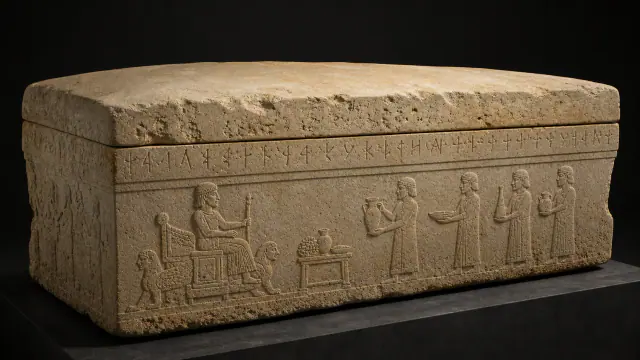
The voice of Ahiram Phoenicians
Approximate dating according to the record.
Read the record 825 BCE
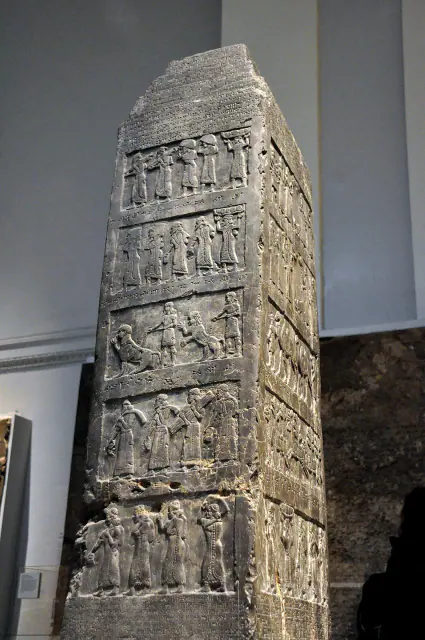
Black Obelisk Sumer
Approximate dating according to the record.
Read the record 6th–5th centuries BCE, mainly under Darius and Xerxes
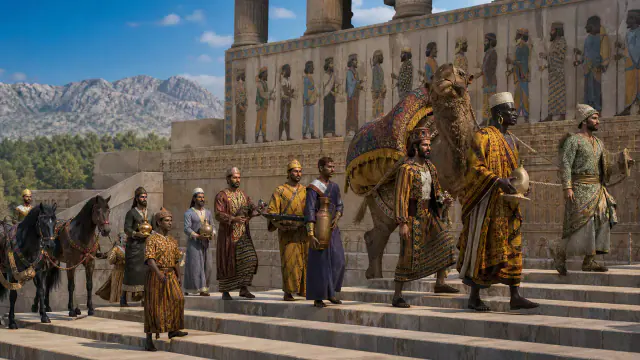
Twenty-three delegations Achaemenid Persia
Interval of the monumental programme under several reigns.
Read the record 1st century BCE–1st century CE
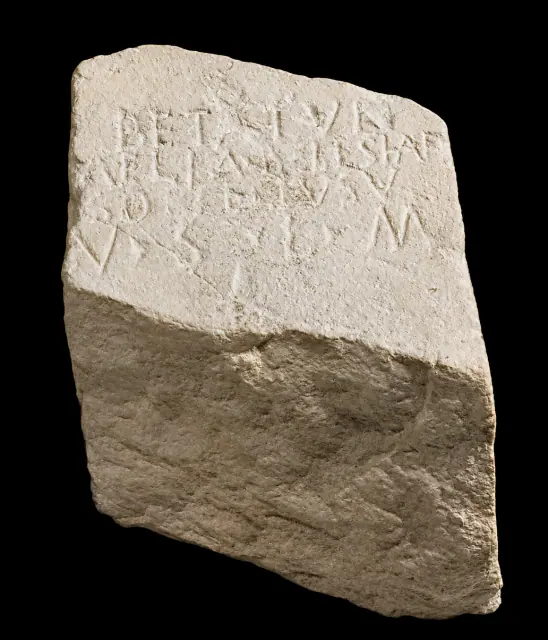
Betatun altar Iberians
Interval crossing the era change; there is no year zero.
Read the record You are viewing 292 CE
The date of 292 Maya worlds
Long Count date translated into the Common Era.
Current record 11 / 11 In the centre: The date of 292
Also connected, without a comparable date (1) These objects are not placed after the others: an unknown date does not mean a more recent object.
Before Persia Achaemenid Persia · Central core c. seventeenth century BCE; Neo-Elamite additions between the ninth and sixth centuries BCE You can scroll the first group without JavaScript. The other topics are also available below.
Sculpture Lion-man · ≈40,000 years · Aurignacian · PrehistoryLespugue · ≈28,000 years · PrehistoryZaraysk Bison · ≈23,000–21,000 years · PrehistoryShigir Idol · C. 10,000 BCE · approximation; debated dating · PrehistoryWarka Mask · End of the 4th millennium BCE · SumerGebel el-Arak knife · 3600–3200 BCE · Naqada II C–D · Ancient EgyptUruk Vase · ca. 3300–3000 BCE · SumerNarmer Palette · ca. 3100 BCE · Ancient EgyptBefore Yayoi · Middle Jōmon, ca. 3000 BCE · Yayoi JapanUr-Nanshe relief · Mid-3rd millennium BCE · reign of Ur-Nanshe · SumerThe goat from PG 1237 · ca. 2600–2400 BCE · SumerStele of the Vultures · Towards 2450–2425 BCE · SumerAkkadian sovereign head · Akkadian period · 23rd century BCE · SumerBassetki Statue · Akkadian period · 23rd century BCE · SumerNaram-Sin Stele · Reign of Naram-Sin, 2254–2218 BCE · SumerBefore Pre-Inca Cultures · Kotosh-Mito Tradition, c. 2200–1500 BCE; the enclosure is usually situated around 1800 BCE. · Pre-Inca culturesQueen of the Night · 19th–18th centuries BCE · SumerBull-leaping · c. 1600–1450 BCE · Greek worldsWooden faces · c. 1600–1000 BCE, in several phases · Maya worldsHead 2 · c. 1200–900 BCE · Maya worldsThe voice of Ahiram · c. 11th–10th century BCE · PhoeniciansBefore the Scythians and Sakas · Final Bronze–Initial Iron, ca. 1200–600 BCE · Scythians and SakaBlack Obelisk · 825 BCE · SumerIvory in Nimrud · 9th–8th centuries BCE · PhoeniciansLas Limas · c. 1000–600 BCE · Maya worldsAstarte from El Carambolo · 8th century BCE · PhoeniciansAstarte from El Carambolo · 8th century BCE · IberiansLamassu of Khorsabad · Reign of Sargon II · 721–705 BCE · SumerThe Lanzón · c. 900–500 BCE · Pre-Inca culturesStele of Esarhaddon · 7th century BC C. · 671 campaign BCE · SumerThe so-called ‘Priest of Cádiz’ · 7th century BCE · PhoeniciansThe so-called ‘Priest of Cádiz’ · 7th century BCE · IberiansThe Tello Obelisk · c. 800–500 BCE · Pre-Inca culturesAshurbanipal Hunt · 645–635 BCE · SumerHeads on the wall · c. 800–300 BCE · Pre-Inca culturesTwo voices in an urn · 530–520 BCE · Etruscans and RomeThe god on the roof · Towards 510–500 BCE · Etruscans and RomeGlazed brick guards · 522–486 BCE · Achaemenid PersiaTwenty-three delegations · 6th–5th centuries BCE, mainly under Darius and Xerxes · Achaemenid PersiaSarcophagus of Eshmunazar · first quarter of the 5th century BCE · PhoeniciansThe statue was the urn · First half of the 4th century BCE · IberiansThe Raimondi Stele · c. 400–200 BCE according to MNAAHP · Pre-Inca culturesTorreáguila fountain spout · 101–125 CE · Etruscans and RomeThe date of 292 · 292 CE · Maya worlds — You are viewingArticulated doll from Tarragona · Late 3rd–4th century CE · Etruscans and RomeSeven heads · c. 500–700 CE · Bantu-speaking worldsSeated figure · 13th century, date attributed by the museum · Mande WorldsGold rhinoceros · ca. 1220–1290; found in 1933 · Bantu-speaking worldsZimbabwe birds · main period of Great Zimbabwe, c. 12th–15th centuries · Bantu-speaking worldsKongo crucifix · 16th–17th centuries · Bantu-speaking worldsKuba ndop · ca. 1760 · Bantu-speaking worldsWithout a comparable date (not part of the chronological order):
Before Persia · Central core c. seventeenth century BCE; Neo-Elamite additions between the ninth and sixth centuries BCE · Achaemenid PersiaLararium of Vilauba · Roman period · Etruscans and RomeThe Thracian Horseman · Roman era · diffusion especially in the 2nd–3rd centuries CE · ThraciansInscriptions Naqada labels · ca. 3300–3100 BCE · Ancient EgyptNarmer Palette · ca. 3100 BCE · Ancient EgyptUr-Nanshe relief · Mid-3rd millennium BCE · reign of Ur-Nanshe · SumerStele of the Vultures · Towards 2450–2425 BCE · SumerBassetki Statue · Akkadian period · 23rd century BCE · SumerIndus seals · ca. 2600–1900 BCE · Indus civilisationNaram-Sin Stele · Reign of Naram-Sin, 2254–2218 BCE · SumerStele of Hammurabi · Towards 1750 BCE · SumerPhaistos Disc · ≈1700–1650 BCE · Greek worldsLinear A · c. 1700–1500 BCE · Greek worldsThe voice of Ahiram · c. 11th–10th century BCE · PhoeniciansThe Cascajal Block · Proposed c. 1000–900 BCE · Maya worldsBlack Obelisk · 825 BCE · SumerAstarte from El Carambolo · 8th century BCE · PhoeniciansAstarte from El Carambolo · 8th century BCE · IberiansStele of Esarhaddon · 7th century BC C. · 671 campaign BCE · SumerIvory with names · End of the 7th century–first half of the 6th century BCE · PhoeniciansShabti of Psamtek · 570–526 BCE · Ancient EgyptUni was also Astarte · Towards 510 BCE · Etruscans and RomeSarcophagus of Eshmunazar · first quarter of the 5th century BCE · PhoeniciansEzerovo Ring · 5th century BCE · chronology discussed in the bibliography · ThraciansTwenty-six voiceless signs · 5th–4th centuries BCE · Scythians and SakaThe inscription of Pistiros · 4th century BCE · ThraciansYan knife-money in the Gojoseon sphere · 4th–3rd centuries BCE · Ancient ChinaLead tablet · 4th–3rd centuries BCE · IberiansA coin with the memory of a blade · 323–222 BCE · Gojoseon and early KoreaA sky over the liver · End of the second–beginning of the first century BCE · Etruscans and RomeHand of Irulegui · First third of the 1st century BCE · IberiansBetatun altar · 1st century BCE–1st century CE · IberiansThe date of 292 · 292 CE · Maya worlds — You are viewingKilwa coin · 1482–1493 · Bantu-speaking worldsWithout a comparable date (not part of the chronological order):
Writing Naqada labels · ca. 3300–3100 BCE · Ancient EgyptIvory tablets · c. 3100–2900 BCE · Ancient EgyptJemdet Nasr · c. 3100–2900 BCE · SumerAccount of malt and barley · c. 3100–2900 BCE · SumerBefore the Hittites · c. 19th century BCE · HittitesPlimpton 322 · Paleo-Babylonian period · around 1800 BCE · SumerSumerian King List · Towards 1800 BCE · SumerStele of Hammurabi · Towards 1750 BCE · SumerLove song to Shu-Sin · Paleo-Babylonian copy, around 1900–1600 BCE according to CDLI · SumerSi.427 tablet · Towards 1900–1600 BCE · paleobabylonian; uncertain chronological attribution in CDLI · SumerPhaistos Disc · ≈1700–1650 BCE · Greek worldsSumerian Flood of Nippur · Towards 1650 BCE · SumerLinear A · c. 1700–1500 BCE · Greek worldsBoğazköy Archive · Above all 17th–13th centuries BCE · HittitesLinear B · c. 1375 BCE · Greek worldsAlaksandu of Wilusa · c. 1300 BCE · HittitesTreaty with Egypt · c. 1259 BCE, year 21 of Ramesses II · HittitesThe voice of Ahiram · c. 11th–10th century BCE · PhoeniciansFlood Tablet · 7th century BCE · SumerBabylonian map of the world · Towards 700–500 BCE · SumerUni was also Astarte · Towards 510 BCE · Etruscans and RomeRations for women and children · Towards 509–493 BCE · Achaemenid PersiaEzerovo Ring · 5th century BCE · chronology discussed in the bibliography · ThraciansThe archer in gold · Type introduced from the late 6th century; specimen from the 4th century BCE. · Achaemenid PersiaThe inscription of Pistiros · 4th century BCE · ThraciansDerveni Papyrus · copy conserved towards 340–320 BCE; comments on a previous text. · ThraciansLead tablet · 4th–3rd centuries BCE · IberiansHand of Irulegui · First third of the 1st century BCE · IberiansDenarius of Carisius · ≈25–23 BCE · IberiansBetatun altar · 1st century BCE–1st century CE · IberiansThe date of 292 · 292 CE · Maya worlds — You are viewingVenus in the codex · Preserved manuscript: Postclassic, probably 13th–14th centuries; earlier knowledge · Maya worldsCatalan Atlas · after 1375 and before November 1380 · Mande WorldsBamum document · 28 April 1922 · Bantu-speaking worldsEleven articles · Adopted April–May 2022; public portal 2025 · Batwa / Twa historiesWithout a comparable date (not part of the chronological order):
Kingship and power Narmer Palette · ca. 3100 BCE · Ancient EgyptPuabi headdress · ca. 2600–2450 BCE · SumerUr-Nanshe relief · Mid-3rd millennium BCE · reign of Ur-Nanshe · SumerStele of the Vultures · Towards 2450–2425 BCE · SumerAkkadian sovereign head · Akkadian period · 23rd century BCE · SumerNaram-Sin Stele · Reign of Naram-Sin, 2254–2218 BCE · SumerSumerian King List · Towards 1800 BCE · SumerStele of Hammurabi · Towards 1750 BCE · SumerGrave Circle A and Chrysolakkos · 18th–16th centuries BCE · Greek worldsBurial at K IV · circa 1750–1550 BCE · Nubia, Kerma and KushTutankhamun's grave goods · death towards 1323 BCE · Ancient EgyptFu Hao’s burial goods · ca. 1200 BCE · Ancient ChinaTribute to Assyria · c. 848 BCE · PhoeniciansBlack Obelisk · 825 BCE · SumerLamassu of Khorsabad · Reign of Sargon II · 721–705 BCE · SumerKushite king · c. 721–664 BCE · Nubia, Kerma and KushStele of Esarhaddon · 7th century BC C. · 671 campaign BCE · SumerAshurbanipal Hunt · 645–635 BCE · SumerIshtar Gate · 7th–6th centuries BCE · work of Nebuchadnezzar II · SumerTwenty-three delegations · 6th–5th centuries BCE, mainly under Darius and Xerxes · Achaemenid PersiaSarcophagus of Eshmunazar · first quarter of the 5th century BCE · PhoeniciansThe archer in gold · Type introduced from the late 6th century; specimen from the 4th century BCE. · Achaemenid PersiaSusa grave goods · c. 350 BCE · Achaemenid PersiaGolyamata Kosmatka · End of the 4th century – beginning of the 3rd century BCE; ritual burial at the beginning of the III according to Iskra. · ThraciansDenarius of Carisius · ≈25–23 BCE · IberiansThe date of 292 · 292 CE · Maya worlds — You are viewingPakal’s grave goods · sealed on 28 August 683 CE · Maya worldsCatalan Atlas · after 1375 and before November 1380 · Mande WorldsKuba ndop · ca. 1760 · Bantu-speaking worldsWithout a comparable date (not part of the chronological order):
A closer look About 1 min to read · 1 section. Further reading and sources · free access. Editorial review recorded: September 5, 2026 .
A format that changed over six centuries Stela 29 inaugurated in the preserved record of Tikal a long series of profile rulers, carved in relief on narrow supports. The Metropolitan notes that the basic format continued until the last monument of this type erected in the Great Plaza, in 869. Over time, headdresses, garments, and insignia acquired greater complexity, and the sides and backs offered space for extensive texts. Comparing monuments allows seeing persistence and change at once. The figure of 292 was not a mechanically repeated model: each commission selected other details to represent authority.
Location and territory Physical world map with routes of human evolution Present-day world coastline from Natural Earth in an equirectangular projection. The overlaid markers let you explore each milestone. Map base: Natural Earth 1:110m · public domain · present-day reference coastline LOCATED SITE
Tikal · Guatemala Marker of the Maya city. See The date of 292 in the museum Find this record in its gallery and save your route, favourites and places to explore later.
Open this exhibit in the museum → Museum access requires a free account. You can read this page's documentation without registering.
Did you enjoy this exhibit? Your opinion helps us improve the museum. You can change it whenever you like.
Loading your rating…

 English
 Español
 Français
 Italiano
 Deutsch
 Русский
 Português
 Polski
 Română
 Svenska
 Norsk bokmål
 Suomi
 Türkçe
 العربية
 简体中文
 한국어
 हिन्दी
 Ελληνικά
 You are viewing