
 English
 Español
 Français
 Italiano
 Deutsch
 Русский
 Português
 Polski
 Română
 Svenska
 Norsk bokmål
 Suomi
 Türkçe
 العربية
 简体中文
 한국어
 हिन्दी
 Ελληνικά
VASCONIC CONNECTION · IRON AGE
Hand of Irulegui
Hand of Irulegui: writing beside a door
A bronze hand links writing, homes and protection.
Museum documentation · free public access, no account required.
Reconstruction · Declared visual hypothesis
Image and model provided by the user. Not identified as photograph, archaeological scan or metric facsimile of the original.
Material provided to the project
Explore in 3D
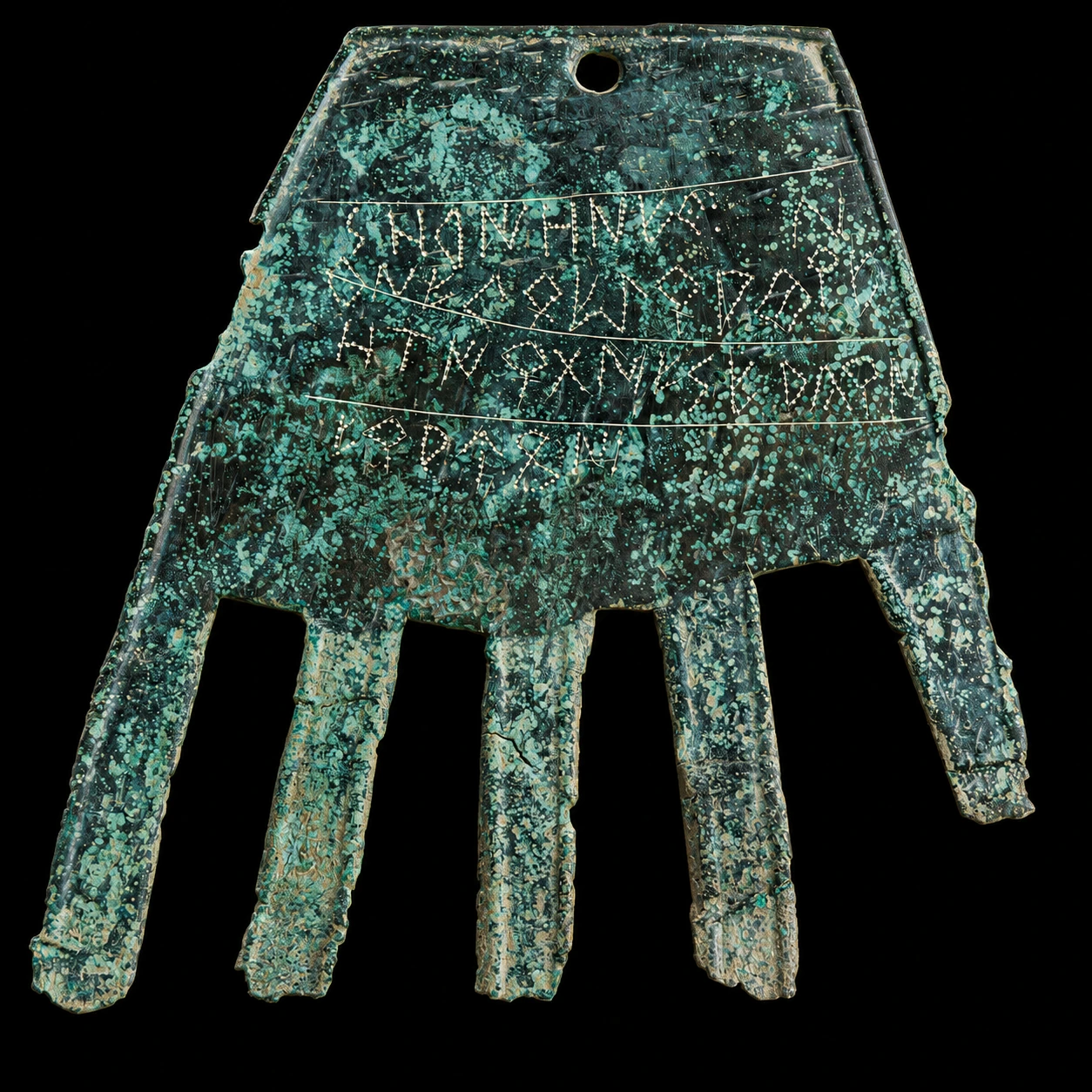
Load the model only when you want to explore it. Drag or use the arrow keys to turn it; + and − zoom. Closing it releases its memory.
User-provided 3D recreation; the signs and proportions are not certified as archaeological facsimile.
History and context
Found in 2021 in Irulegi, this hand-shaped lamina appeared beside the entrance of a dwelling destroyed in the first third of the 1st century BCE. Its signs were traced by incision and stippling.
Researchers propose a protective function. The relationship of its writing with the Iberian signaries explains its comparative presence in this room; the piece belongs to the Vasconic sphere. The linguistic interpretation and full translation remain open.
Evidence and interpretation
Documented archaeological context; protective function and text interpretation are proposals. The provided recreation does not certify the exact form of each sign.
Catalogue facts
- Date
- First third of the 1st century BCE
- Provenance
- Irulegi · Aranguren valley, Navarre
- Material
- Inscribed bronze lamina
- Classification
- Vasconic sphere · comparative connection, not strict Iberian piece
A SHARED TOPIC, DIFFERENT MOMENTS
Objects connected through time
Follow a topic across the collections. A shared tag is a way to compare objects, not proof that one culture influenced another.
The order uses the midpoint of each approximate date range; ranges can overlap. Spacing does not represent elapsed time. Swipe, scroll or use the arrows. With the sequence focused, use ← / →, Home or End.
Bronze23 dated objects
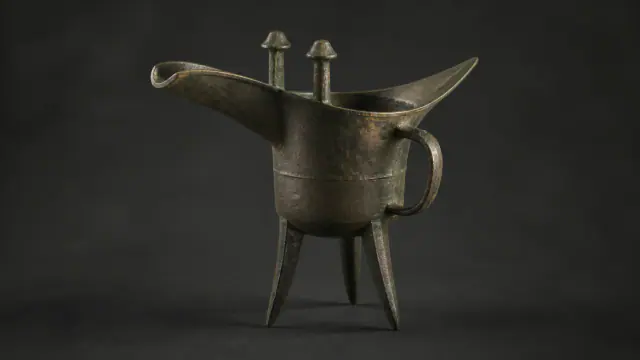
c. sixteenth century BCE
Jue
Ancient China
Approximate dating according to the record.
Read the record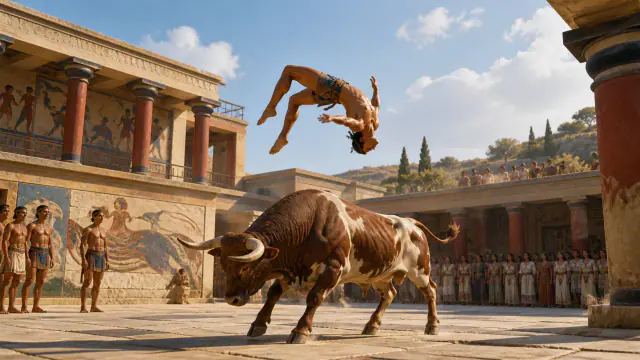
c. 1600–1450 BCE
Bull-leaping
Greek worlds
The iconography does not by itself determine a precise ritual.
Read the record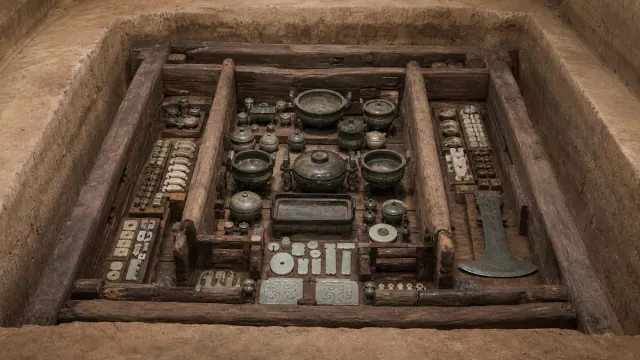
ca. 1200 BCE
Fu Hao’s burial goods
Ancient China
Approximate date of the grave goods; their objects have different histories.
Read the record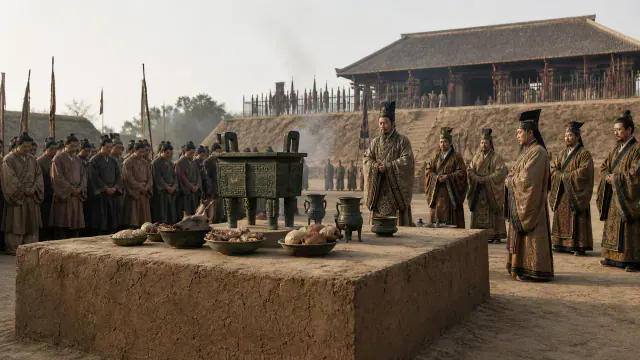
12th–11th centuries BCE
Liding
Ancient China
Approximate dating according to the record.
Read the record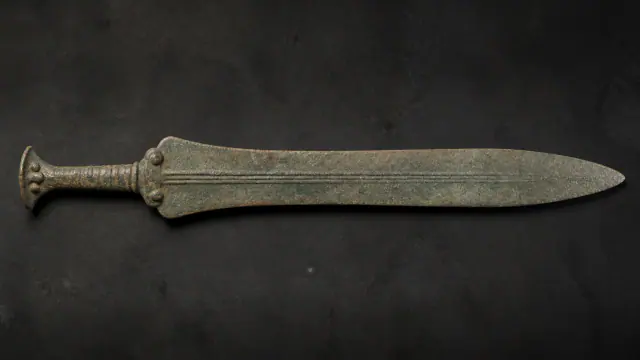
≈1200–1000 BCE · destruction of the talayot towards 790 BCE
Talayotic sword
Iberians
Proposed date of the sword, not of the later destruction of the talayot.
Read the record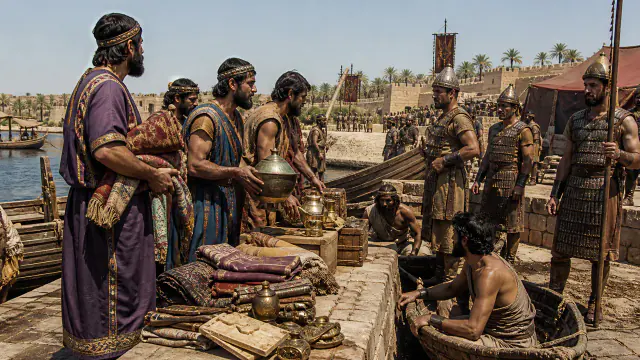
c. 848 BCE
Tribute to Assyria
Phoenicians
Approximate date of the historical scene represented.
Read the record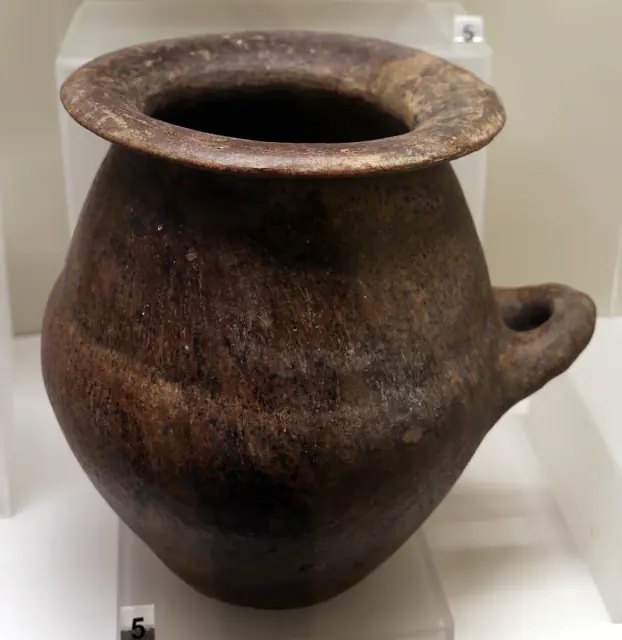
ca. 850–800 BCE
Before Etruscans and Rome
Etruscans and Rome
Approximate dating according to the record.
Read the record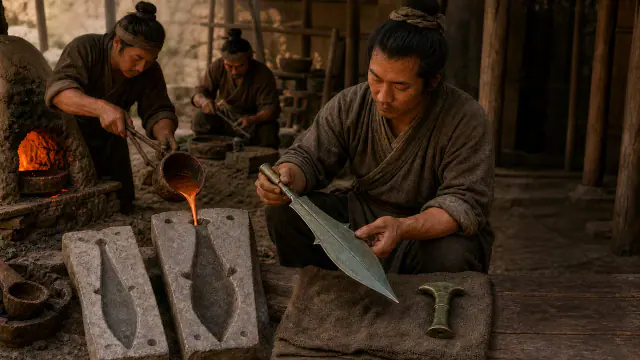
Towards 1000–400 BCE
The lute-shaped dagger
Gojoseon and early Korea
Typological framework of daggers; not a single manufacturing date.
Read the record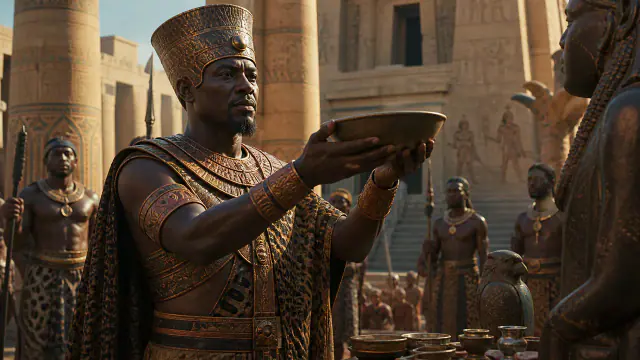
c. 721–664 BCE
Kushite king
Nubia, Kerma and Kush
Interval attributed to the specimen in the catalogue.
Read the record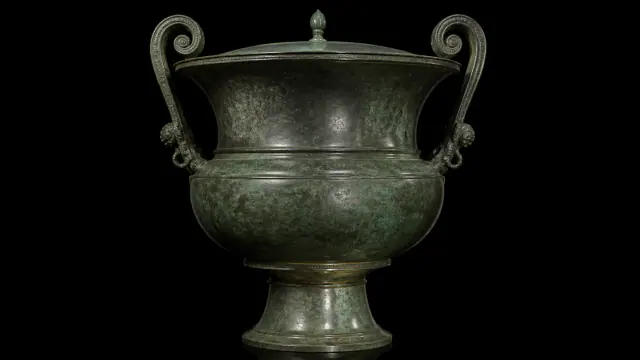
≈530–500 BCE
The great Greek krater of Vix
Greek worlds
Approximate dating according to the record.
Read the record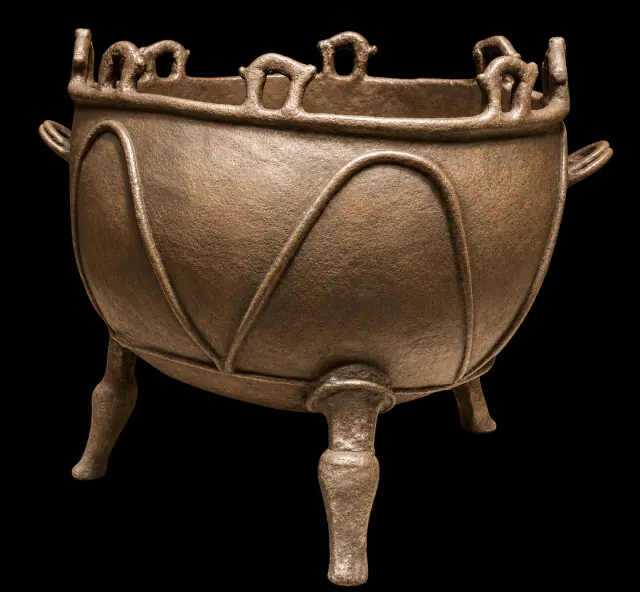
6th–5th centuries BCE
Scorțaru cauldron
Thracians
Approximate dating according to the record.
Read the record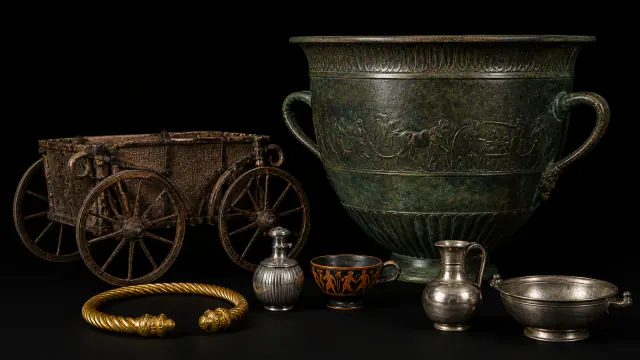
c. 500 BCE
Vix Tomb
Celtic worlds
Approximate date of the funerary assemblage.
Read the record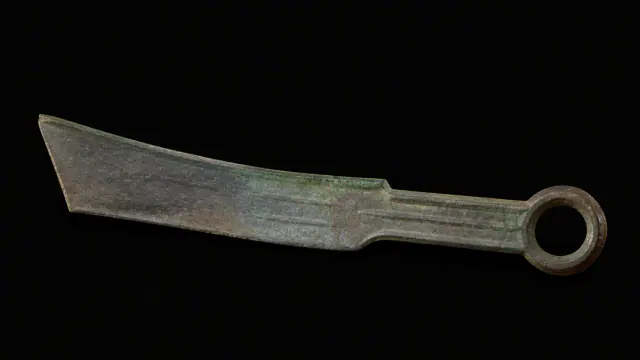
4th–3rd centuries BCE
Yan knife-money in the Gojoseon sphere
Ancient China
Approximate dating according to the record.
Read the record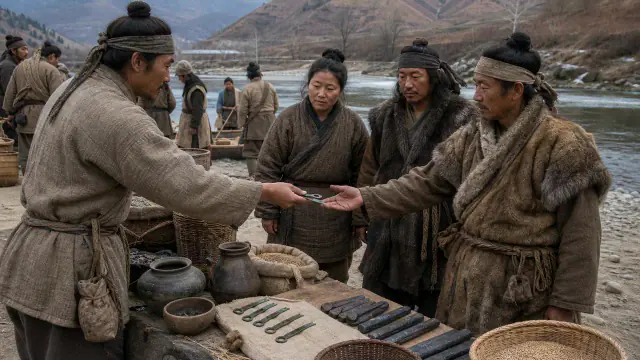
323–222 BCE
A coin with the memory of a blade
Gojoseon and early Korea
The knife form does not imply that the coin is a weapon.
Read the record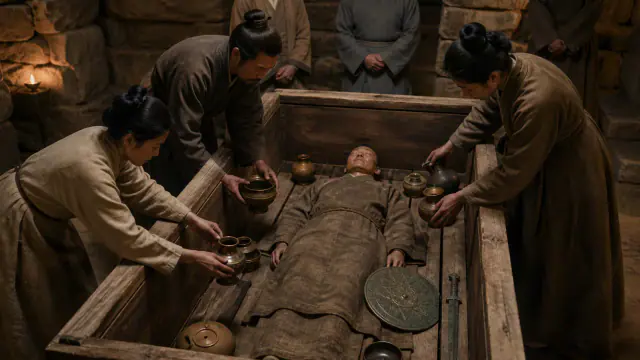
5th–1st centuries BCE
Overlapping datesThe blade became straight
Gojoseon and early Korea
Typological framework of production and deposits.
Read the record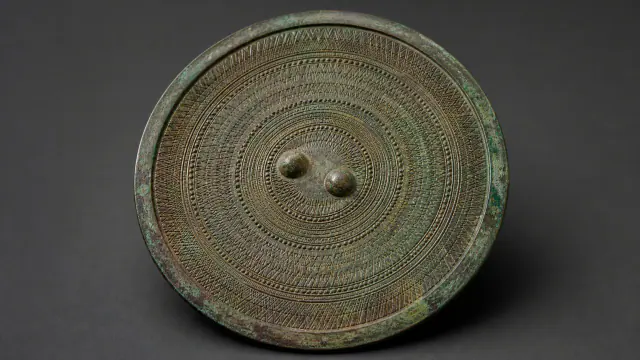
3rd–2nd centuries BCE
Geometry in very fine lines
Gojoseon and early Korea
Approximate dating according to the record.
Read the record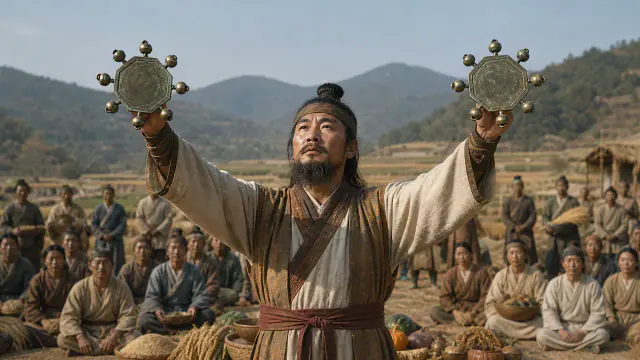
3rd–2nd centuries BCE
Eight voices in one hand
Gojoseon and early Korea
Approximate dating according to the record.
Read the record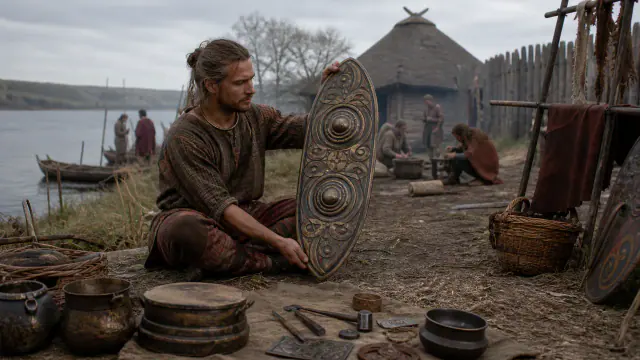
Around 350–50 BCE
Overlapping datesThe Shield that Did Not Fight
Celtic worlds
Prestige object; actual combat use is not presupposed.
Read the record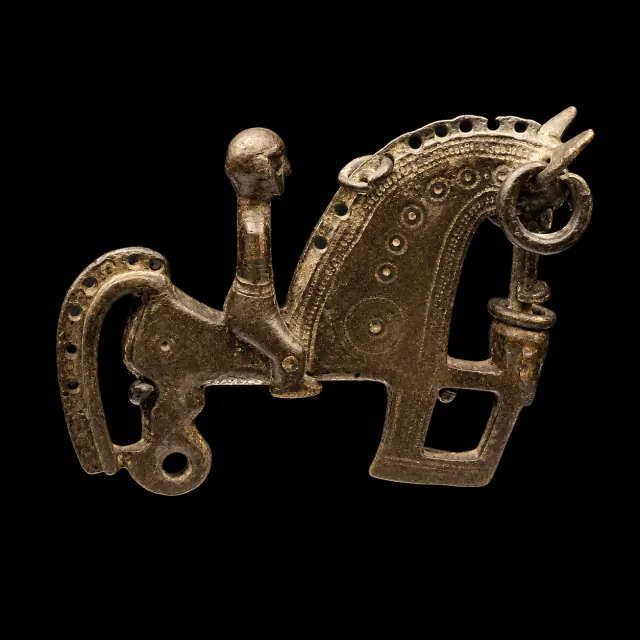
≈300–100 BCE
Overlapping datesFibula from Lancia
Iberians
Approximate dating according to the record.
Read the record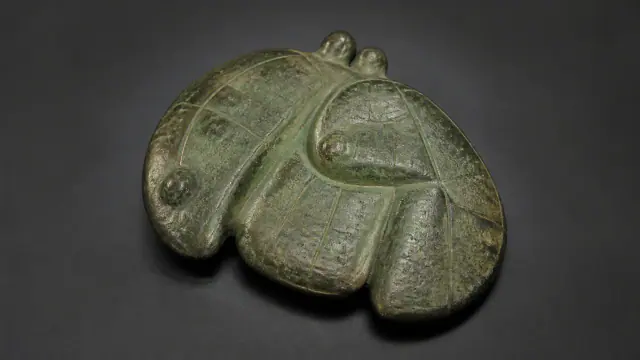
End of the second–beginning of the first century BCE
Overlapping datesA sky over the liver
Etruscans and Rome
The centuries II–I BCE are used in their full extent as an external ordering framework; the record specifies the end of the II and the beginning of the I.
Read the record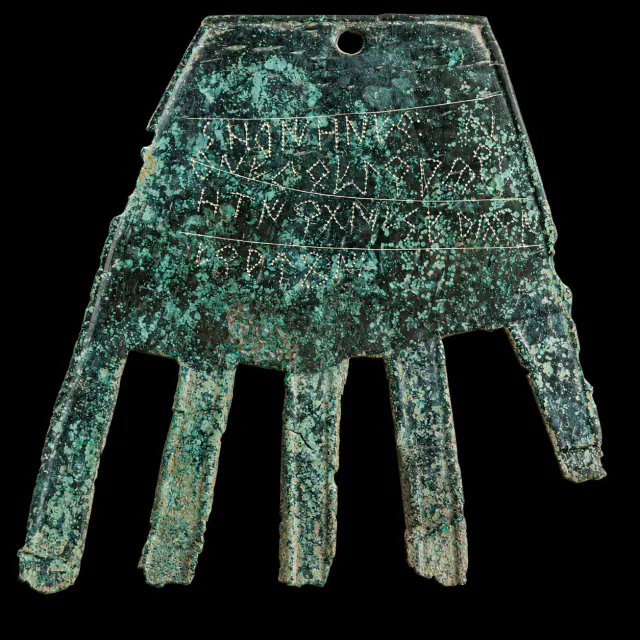 You are viewing
First third of the 1st century BCE
Hand of Irulegui
Iberians
First third of the 1st century BCE; date of the destroyed dwelling beside whose entrance it appeared.
Current record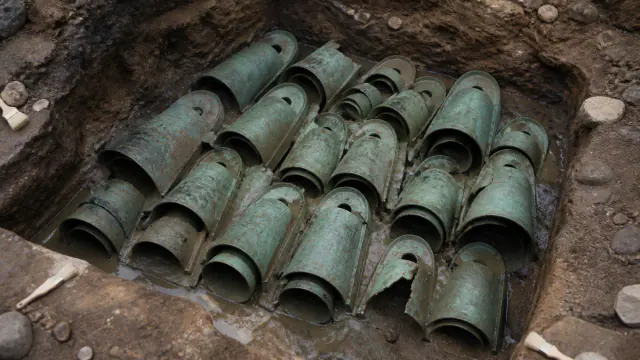
Buried towards the 1st century BCE–1st century CE
Overlapping datesThirty-nine buried bells
Yayoi Japan
Date of burial of the set; not manufacture of each bell.
Read the record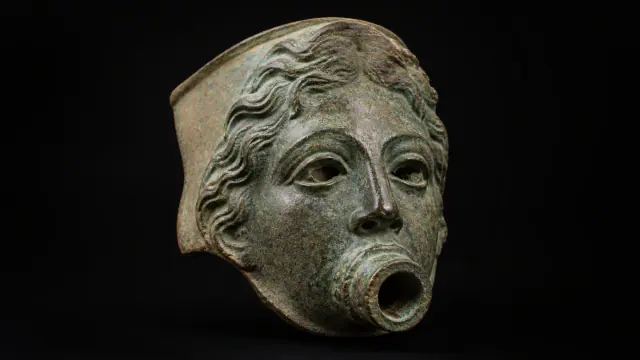
101–125 CE
Torreáguila fountain spout
Etruscans and Rome
Approximate dating according to the record.
Read the record
Also connected, without a comparable date (6)
These objects are not placed after the others: an unknown date does not mean a more recent object.
- Daegok-ri grave goodsGojoseon and early Korea · from c. 5th century BCE
- Early metallurgyAncient China · c. 1900–1500 BCE
- Four offerersIberians · Iberian period · individual dating according to catalogue
- Iron changes the frontierGojoseon and early Korea · 3rd–2nd centuries BCE
- The workshop inside the ditchYayoi Japan · 4th century BCE–3rd century CE, peak in Middle and Late Yayoi
- Weapons under the LakeCeltic worlds · Mainly 3rd–1st centuries BCE
A closer look
About 1 min to read · 1 section. Further reading and sources · free access. Editorial review recorded: .
Reading signs does not equate to translating a language
The first sequence is usually transcribed as sorioneku and has been related to Basque. That comparison does not provide a secure translation of the whole. The epigraphic publication examines alternative readings and segmentations: it is advisable to conserve the difference between observable traces and linguistic interpretations.
The perforation and the find beside the entrance of a dwelling support the proposal of a suspended hand with fingers pointing downward. Its possible protective function interprets that context; we do not know the words of those who placed it nor a concrete ceremony.
Location and territory
APPROXIMATE LOCATION
Irulegi · Aranguren valleyMarker of the settlement surroundings; does not represent the exact find spot.Sources and references
Did you enjoy this exhibit?
Your opinion helps us improve the museum. You can change it whenever you like.
Loading your rating…