
 English
 Español
 Français
 Italiano
 Deutsch
 Русский
 Português
 Polski
 Română
 Svenska
 Norsk bokmål
 Suomi
 Türkçe
 العربية
 简体中文
 한국어
 हिन्दी
 Ελληνικά
08 · OBJECT · SHANG WRITING
Oracle bones
Asking the ancestor and preserving the question
Bones and shells preserve questions and forecasts from Shang divination ceremonies.
Museum documentation · free public access, no account required.
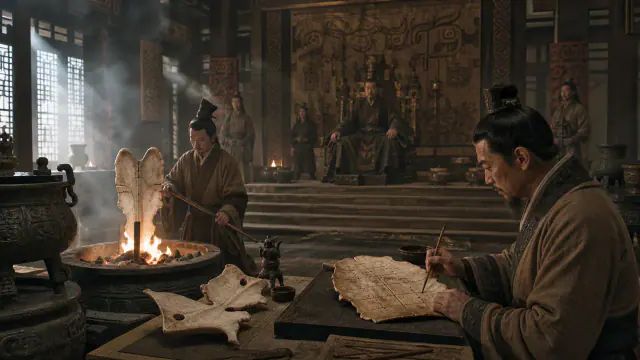
Generated reconstruction · Declared visual hypothesis
Declared visual reconstruction for museographic context; it is not a photograph of the original nor documentary evidence.
History and context
Turtle shells and animal bones were prepared, heated and then inscribed in Shang divination ceremonies. At Yin Xu they form the earliest known evidence of mature Chinese writing.
Writing is not yet a popular library. It is tied to royal practices and rituals; the cracks, the question and the record compose a procedure, not an isolated phrase.
Scapulae and shells were cleaned, thinned and perforated; a heat source produced cracks interpreted by specialists. The inscription could add date, question, forecast and verification.
Questions about harvest, childbirth, war, weather or sacrifice show court priorities. The silence about most inhabitants is part of the archive.
Evidence and interpretation
Documented fact: UNESCO and the Met describe oracle bones as Shang divination records; examples of mature writing begin around 1200 BCE. Interpretation and caution: Translating an inscription as a transparent voice of Shang society as a whole ignores its courtly and ritual framework. Documented expansion: UNESCO records over 150,000 fragments and thousands of signs; the Met preserves a Shang oracle bone. Expanded interpretation and caution: Not all fragments include all phases and many readings of signs or toponyms continue to be revised.
Catalogue facts
- Narrative date
- from ca. 1200 BCE
- Location
- Yin Xu/Anyang, Henan, China
- Material
- Animal bone and turtle shell inscribed
- Context
- Royal divination and archive
- Curatorial reading
- The documented fact and its interpretation appear separately in the evidence block.
- Supports
- Bovid scapulae and turtle plastrons
- Function
- Recorded royal divination
- Documentary coverage
- 4 museum, heritage, primary corpus or research sources for this stop.
A SHARED TOPIC, DIFFERENT MOMENTS
Objects connected through time
Follow a topic across the collections. A shared tag is a way to compare objects, not proof that one culture influenced another.
The order uses the midpoint of each approximate date range; ranges can overlap. Spacing does not represent elapsed time. Swipe, scroll or use the arrows. With the sequence focused, use ← / →, Home or End.
THE CURRENT OBJECT
Its date is not sufficiently established to place it on the timeline. We keep it here, separate from the dated objects.
 You are viewing
from ca. 1200 BCE
Oracle bones
Ancient China
«From ca. 1200 BCE» does not provide an end point; archive of several phases.
Current recordBone6 dated objects
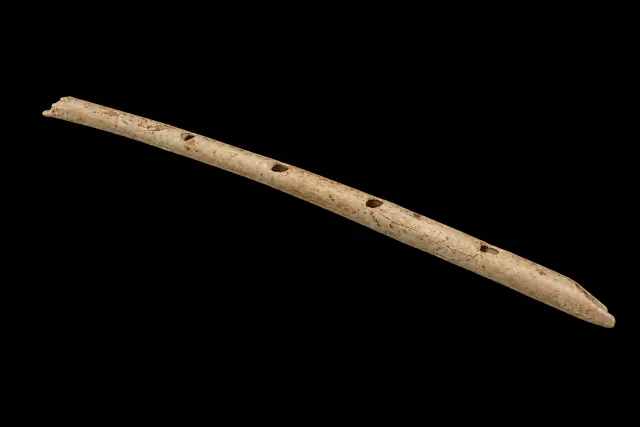
≈35,000–40,000 years
Hohle Fels flute
Prehistory
Approximate catalogue age; editorial reference 2026 for ordering only, not calibrated dating.
Read the record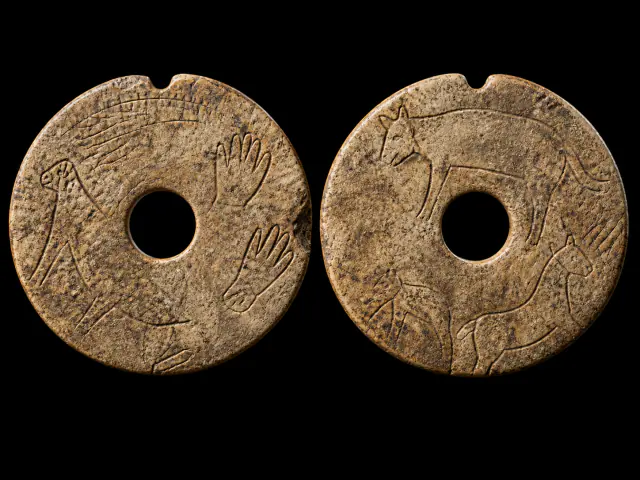
≈18,000–16,000 years
Rondelle de Mas-d'Azil
Prehistory
Approximate catalogue age; editorial reference 2026 for ordering only, not calibrated dating.
Read the record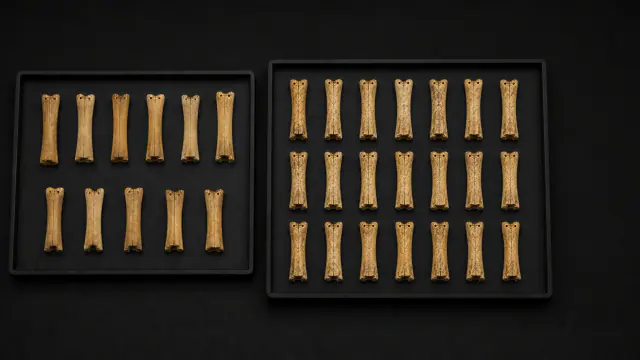
≈4000–3800 cal BCE
El Miradero spatula-idols
Prehistory
Date of the funerary assemblage.
Read the record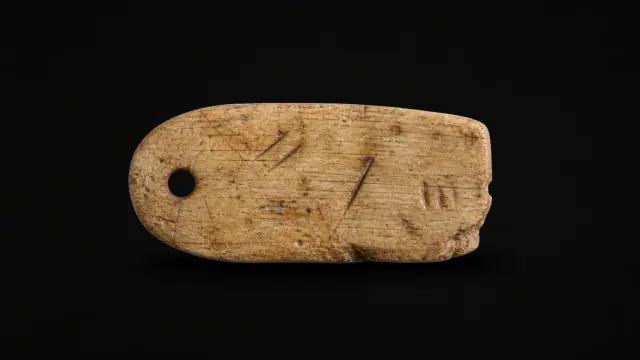
ca. 3300–3100 BCE
Naqada labels
Ancient Egypt
Date range for the assemblage of labels and inscribed materials, not a single object.
Read the record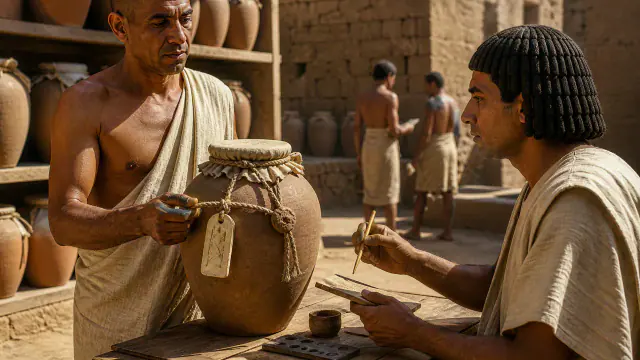
c. 3100–2900 BCE
Ivory tablets
Ancient Egypt
Date range for the assemblage of tablets and labels.
Read the record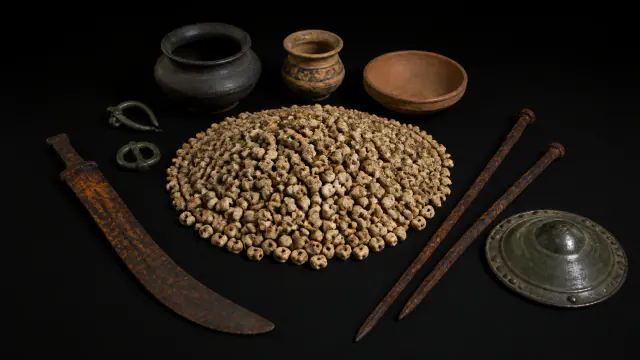
4th–3rd centuries BCE · necropolis chronology
453 astragali from Alarcos
Iberians
Funerary context chronology, not direct dating of each astragalus.
Read the record
Also connected, without a comparable date (2)
These objects are not placed after the others: an unknown date does not mean a more recent object.
- Bone needlePrehistory · No individual dating published on this record
- Ishango, without genealogical shortcutBatwa / Twa histories · More than 20,000 years; context ca. 25,000–20,000 BP
A closer look
About 1 min to read · 1 section. Further reading and sources · free access. Editorial review recorded: .
A specific enquiry about the birth of a child
The Ping 0247 plastron from Academia Sinica refers to the birth of Fu Hao during the reign of Wu Ding. According to the museum’s interpretation, the query related the expected day of birth to the fortune of the event and the baby’s sex. The document allows us to see what the court sought to ascertain, but also the cultural form of ordering uncertainty. It is not an obstetric diagnosis nor a personal account from the mother: it is a ritual question whose evaluative framework belongs to the setting that produced it.
Location and territory
LOCATED SITE
Yin Xu/Anyang · ChinaMarker of the late Shang capital.Where it is held
The Metropolitan Museum of Art
Reference material evidence · Documented collection
Reference specimen within a card on the oracle bone corpus.
The British Museum
Reference material evidence · Documented collection
Second material testimony linked to document the practice.
The holding institution is documented; public display may change. Check its official record before visiting.
Sources and references
Did you enjoy this exhibit?
Your opinion helps us improve the museum. You can change it whenever you like.
Loading your rating…