
 English
 Español
 Français
 Italiano
 Deutsch
 Русский
 Português
 Polski
 Română
 Svenska
 Norsk bokmål
 Suomi
 Türkçe
 العربية
 简体中文
 한국어
 हिन्दी
 Ελληνικά
11 · Treasure · regional prehistory
Ishango, without genealogical shortcut
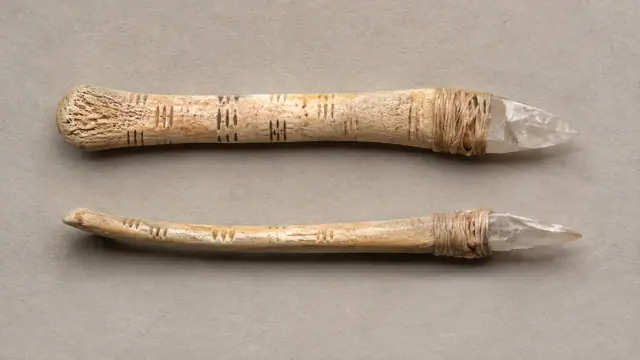
Composite tool from Ishango
This tool combines bone, a quartz point and incisions whose function remains under discussion.
Museum documentation · free public access, no account required.
Generated reconstruction · Declared visual hypothesis
AI REPLICA · consult official image for object study
History and context
The tool, about ten centimetres long, combines bone, a quartz point and incisions. It was found in 1950 beside Lake Edward.
Its function has generated hypotheses of counting, recording or decoration. None allow it to be attributed to identifiable Batwa ancestors.
Evidence and interpretation
Fact sheet and scientific portal of the Royal Belgian Institute of Natural Sciences.
Catalogue facts
- Narrative date
- More than 20,000 years; context ca. 25,000–20,000 BP
- Location
- Ishango, Congolese shore of Lake Edward, DRC; today Brussels
- Material
- bone, quartz and incisions
- Context
- Regional context without Batwa ethnic attribution.
- Curatorial reading
- The documented fact and its interpretation appear separately in the evidence block.
- Dossier axis
- treasures
- Research record
- BATWA · treasure-ishango-tool
- Documentary coverage
- 2 museum, heritage, primary corpus or research sources for this stop.
A SHARED TOPIC, DIFFERENT MOMENTS
Objects connected through time
Follow a topic across the collections. A shared tag is a way to compare objects, not proof that one culture influenced another.
The order uses the midpoint of each approximate date range; ranges can overlap. Spacing does not represent elapsed time. Swipe, scroll or use the arrows. With the sequence focused, use ← / →, Home or End.
THE CURRENT OBJECT
Its date is not sufficiently established to place it on the timeline. We keep it here, separate from the dated objects.
 You are viewing
More than 20,000 years; context ca. 25,000–20,000 BP
Ishango, without genealogical shortcut
Batwa / Twa histories
Age expressed in BP and ‘more than’ limit; no closed BP interval for the piece in the fact sheet.
Current recordBone6 dated objects
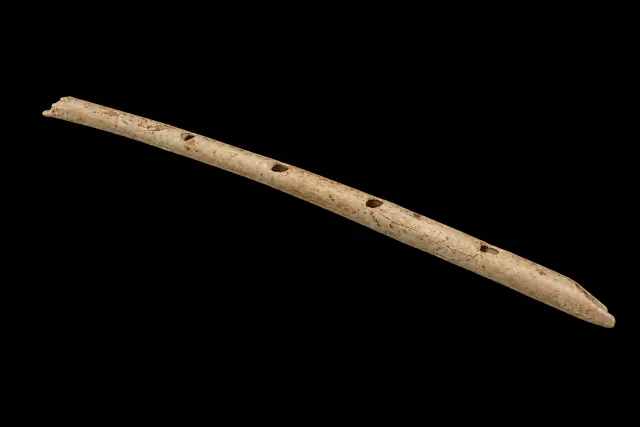
≈35,000–40,000 years
Hohle Fels flute
Prehistory
Approximate catalogue age; editorial reference 2026 for ordering only, not calibrated dating.
Read the record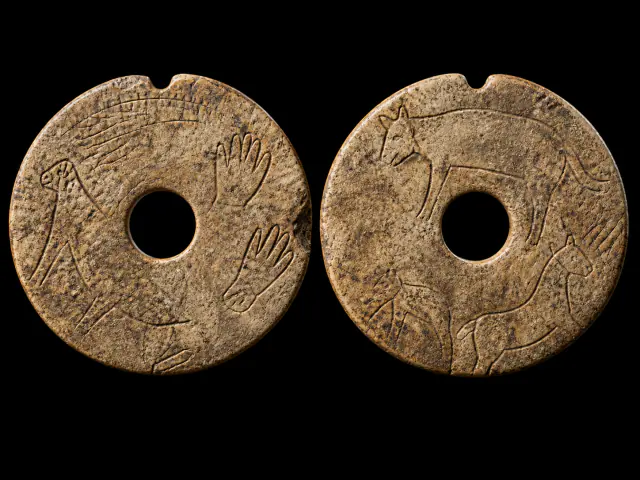
≈18,000–16,000 years
Rondelle de Mas-d'Azil
Prehistory
Approximate catalogue age; editorial reference 2026 for ordering only, not calibrated dating.
Read the record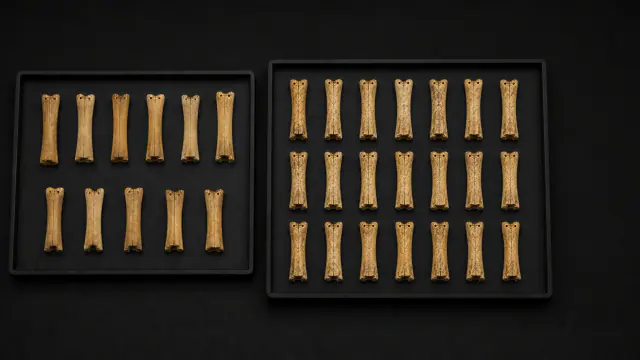
≈4000–3800 cal BCE
El Miradero spatula-idols
Prehistory
Date of the funerary assemblage.
Read the record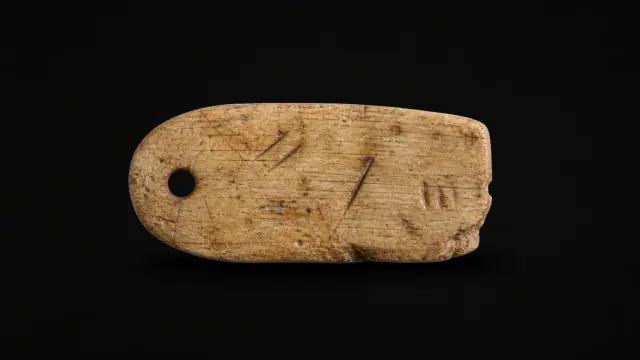
ca. 3300–3100 BCE
Naqada labels
Ancient Egypt
Date range for the assemblage of labels and inscribed materials, not a single object.
Read the record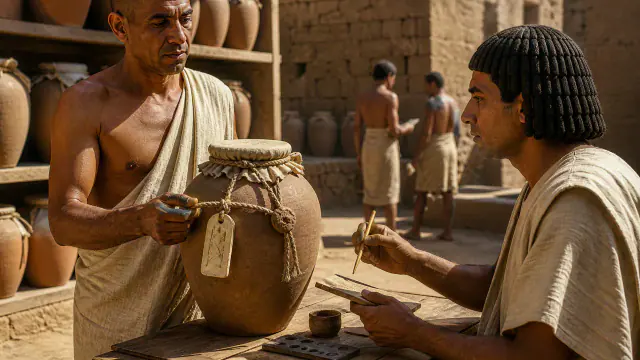
c. 3100–2900 BCE
Ivory tablets
Ancient Egypt
Date range for the assemblage of tablets and labels.
Read the record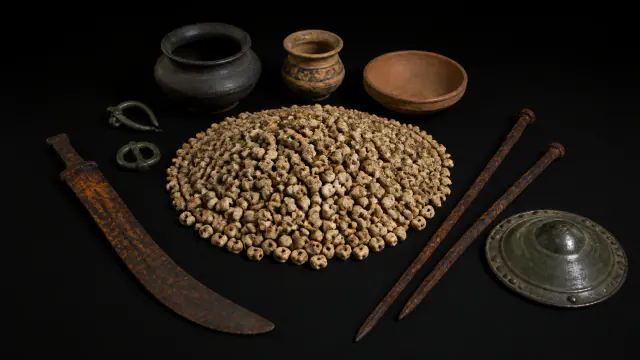
4th–3rd centuries BCE · necropolis chronology
453 astragali from Alarcos
Iberians
Funerary context chronology, not direct dating of each astragalus.
Read the record
Also connected, without a comparable date (2)
These objects are not placed after the others: an unknown date does not mean a more recent object.
- Bone needlePrehistory · No individual dating published on this record
- Oracle bonesAncient China · from ca. 1200 BCE
A closer look
About 1 min to read · 1 section. Further reading and sources · free access. Editorial review recorded: .
There is a second rod
In 1959 another incised bone appeared in the same stratigraphic layer as the first. The Belgian museum’s presentation also considers it a possible handle, although in this case it does not retain quartz. Jean de Heinzelin distinguished ninety incisions of different lengths and proposed relationships with counts in base six and ten. The museum notes that its study was never published. Comparing both finds adds a verifiable problem: counting marks is a material observation; reconstructing the system by which someone produced them remains an interpretation.
Where it is held
Royal Belgian Institute of Natural Sciences
Item or group in the record · Documented collection
The institutional fact sheet identifies the Ishango piece in the institute’s collections; no permanent exhibition is assumed on the date of the visit.
The holding institution is documented; public display may change. Check its official record before visiting.
Sources and references
Did you enjoy this exhibit?
Your opinion helps us improve the museum. You can change it whenever you like.
Loading your rating…