
 English
 Español
 Français
 Italiano
 Deutsch
 Русский
 Português
 Polski
 Română
 Svenska
 Norsk bokmål
 Suomi
 Türkçe
 العربية
 简体中文
 한국어
 हिन्दी
 Ελληνικά
CONNECTION, NOT IBERIAN PIECE · RELIGION IN TRANSFORMATION · KING'S FORT
Betatun altar
An Iberian deity written in Latin
A Latin inscription preserves an offering to Betatun, a deity with an indigenous name.
Museum documentation · free public access, no account required.
Reconstruction · Declared visual hypothesis
Interpretative recreation using AI from a photograph by Tyk, CC BY-SA4.0. Adapted under CC BY-SA4.0. Background, lighting and removal of modern ink; the epigraphic reading must be contrasted with the original. It is not an archaeological photograph nor a certified restitution. Microdetails, finish and colour are interpretative approximations.
Tracekeepers / OpenAI ImageGen; source photograph: Tyk · Museum of Jaén; photograph in Museo Íbero · Inventory: DJ/DA07677 · CC BY-SA 4.0
History and context
A small limestone altar preserves a Latin dedication to Betatun and the name of the offerer. The inscription employs Roman epigraphic conventions while the theonym has been identified as indigenous Iberian.
It is an exceptional case of transformed continuity: the public language, the monument's form and the civic framework are Roman, but a local religious relationship still finds a way to make itself visible.
The epigraphic reading has been revised and we do not know with certainty the gender, attributions or Greco-Roman equivalence of the deity. The importance lies in the name and the votive act, not in completing an imaginary pantheon.
Evidence and interpretation
Documented fact: altar, Latin text, regional provenance and epigraphic publication. Interpretation and caution: segmented reading of the theonym, identity of the deity and specific functions remain subject to specialised debate.
Catalogue facts
- Narrative date
- 1st century BCE–1st century CE
- Location
- Surroundings of Fuerte del Rey (Jaén)
- Material
- Limestone altar with Latin inscription
- Context
- Indigenous votive within Roman religious forms
- Classification
- Comparative connection · must not be presented as an Iberian piece
- Visual reference
- Figure of the altar in Palaeohispanica 7, pp. 251–262
A SHARED TOPIC, DIFFERENT MOMENTS
Objects connected through time
Follow a topic across the collections. A shared tag is a way to compare objects, not proof that one culture influenced another.
The order uses the midpoint of each approximate date range; ranges can overlap. Spacing does not represent elapsed time. Swipe, scroll or use the arrows. With the sequence focused, use ← / →, Home or End.
Limestone11 dated objects
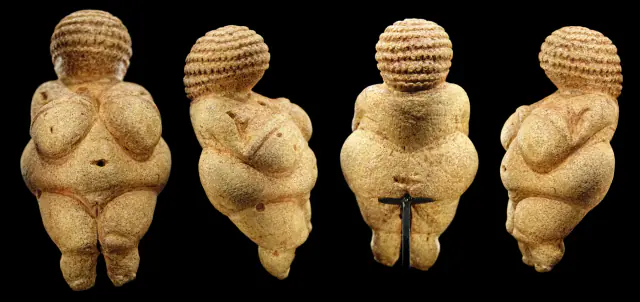
≈29,500 years
Willendorf
Prehistory
Approximate catalogue age; editorial reference 2026 for ordering only, not calibrated dating.
Read the record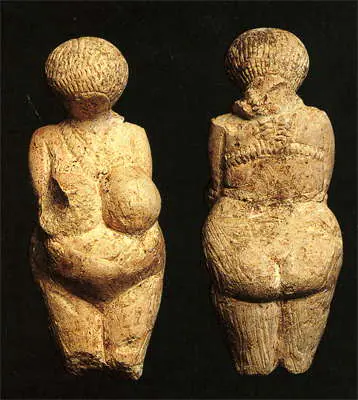
≈23,000–21,000 years
Kostenki I
Prehistory
Approximate catalogue age; editorial reference 2026 for ordering only, not calibrated dating.
Read the record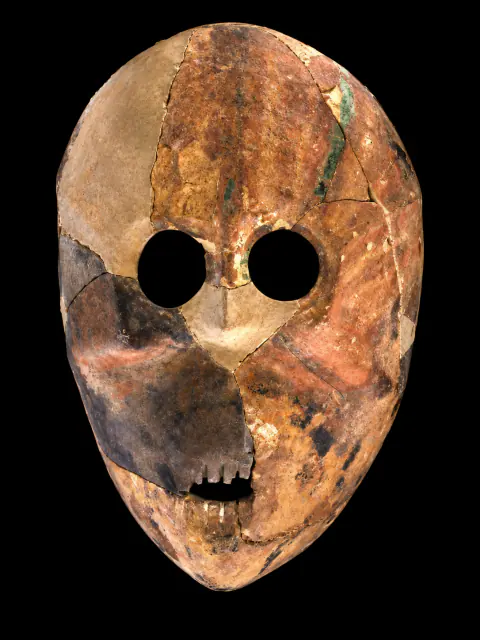
Eighth millennium BCE · context dating, not direct dating of the stone
Nahal Hemar mask
Prehistory
Context dating, not direct dating of the stone.
Read the record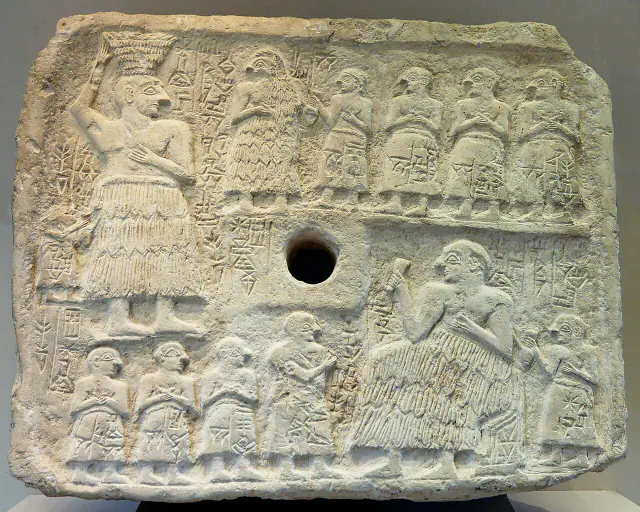
Mid-3rd millennium BCE · reign of Ur-Nanshe
Ur-Nanshe relief
Sumer
The full 3rd millennium BCE provides broad limits for chronological ordering; the record specifies the middle of the millennium, in the reign of Ur-Nanshe.
Read the record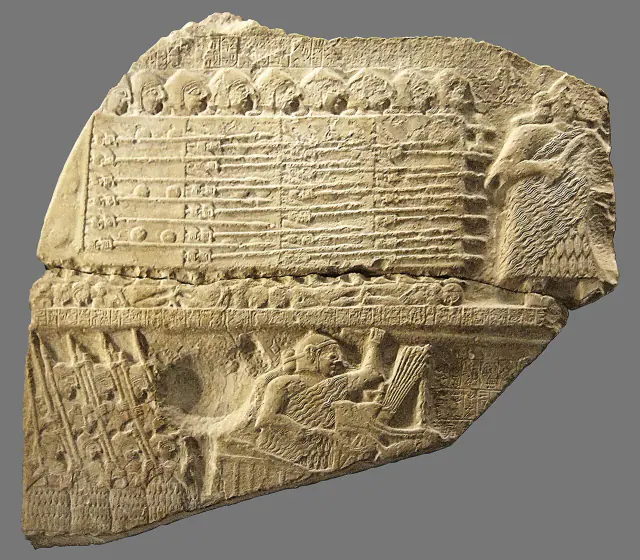
Towards 2450–2425 BCE
Stele of the Vultures
Sumer
Approximate dating according to the record.
Read the record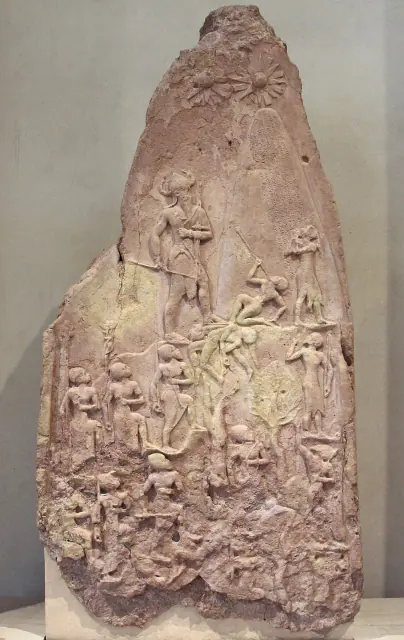
Reign of Naram-Sin, 2254–2218 BCE
Naram-Sin Stele
Sumer
Reign interval associated with the piece; the Elamite reuse is later.
Read the record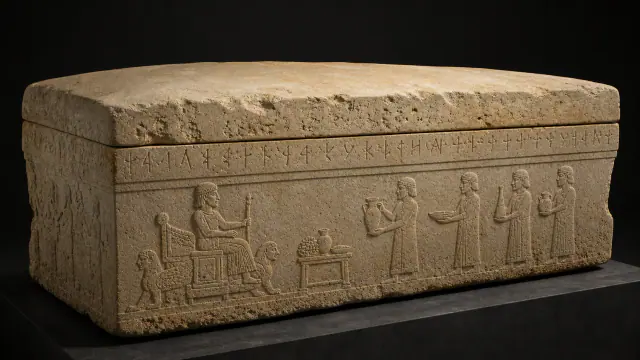
c. 11th–10th century BCE
The voice of Ahiram
Phoenicians
Approximate dating according to the record.
Read the record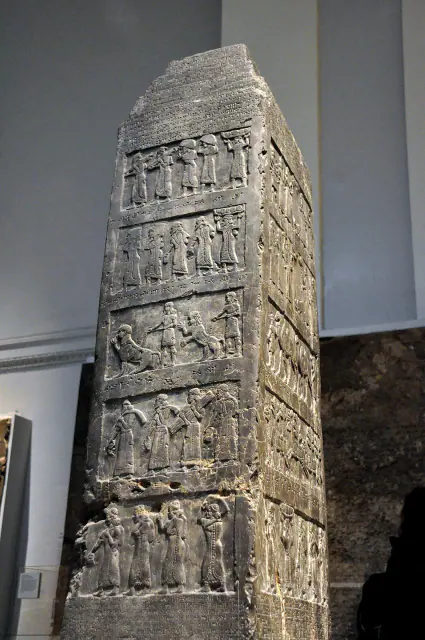
825 BCE
Black Obelisk
Sumer
Approximate dating according to the record.
Read the record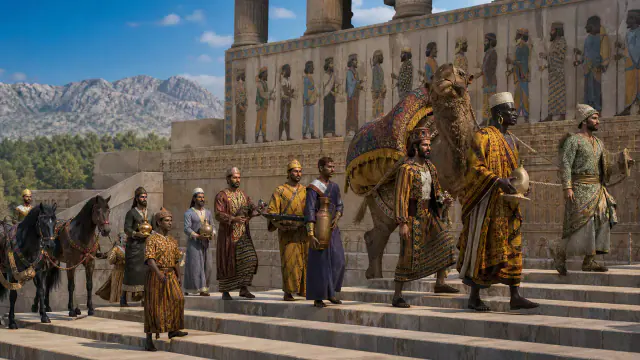
6th–5th centuries BCE, mainly under Darius and Xerxes
Twenty-three delegations
Achaemenid Persia
Interval of the monumental programme under several reigns.
Read the record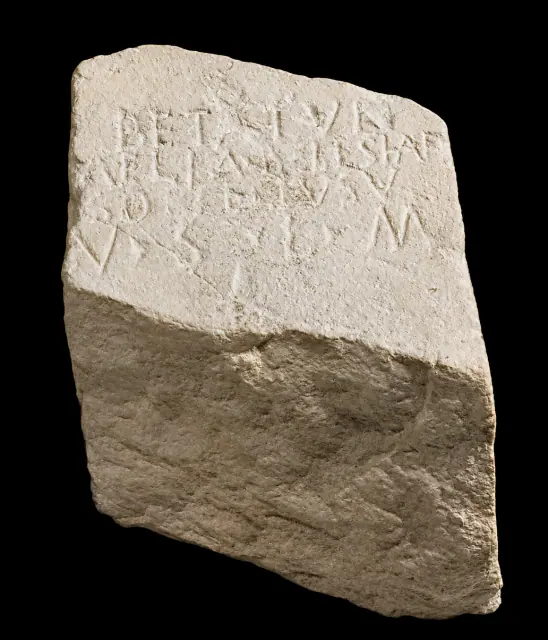 You are viewing
1st century BCE–1st century CE
Betatun altar
Iberians
Interval crossing the era change; there is no year zero.
Current record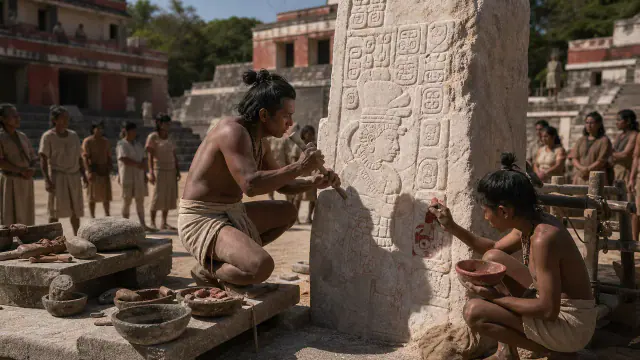
292 CE
The date of 292
Maya worlds
Long Count date translated into the Common Era.
Read the record
Also connected, without a comparable date (1)
These objects are not placed after the others: an unknown date does not mean a more recent object.
- Before PersiaAchaemenid Persia · Central core c. seventeenth century BCE; Neo-Elamite additions between the ninth and sixth centuries BCE
A closer look
About 1 min to read · 1 section. Further reading and sources · free access. Editorial review recorded: .
Where a name ends changes the reading
The epigraphic discussion also affects the name of the dedicant. Eduardo Orduña proposed reading Aelia Belesiar, bringing together a sequence that the first edition had separated between the name and an abbreviation of 'altar'. According to his examination of the photographs, there is no separating point that would justify that cut. Moreover, Belesiar can be analysed using the Iberian elements beles and iar. The proposal avoids introducing an abbreviation and an implied verb. It is an argued revision of the segmentation, not a new biography of Aelia nor a definitive translation of the entire inscription.
Reference images and provenance
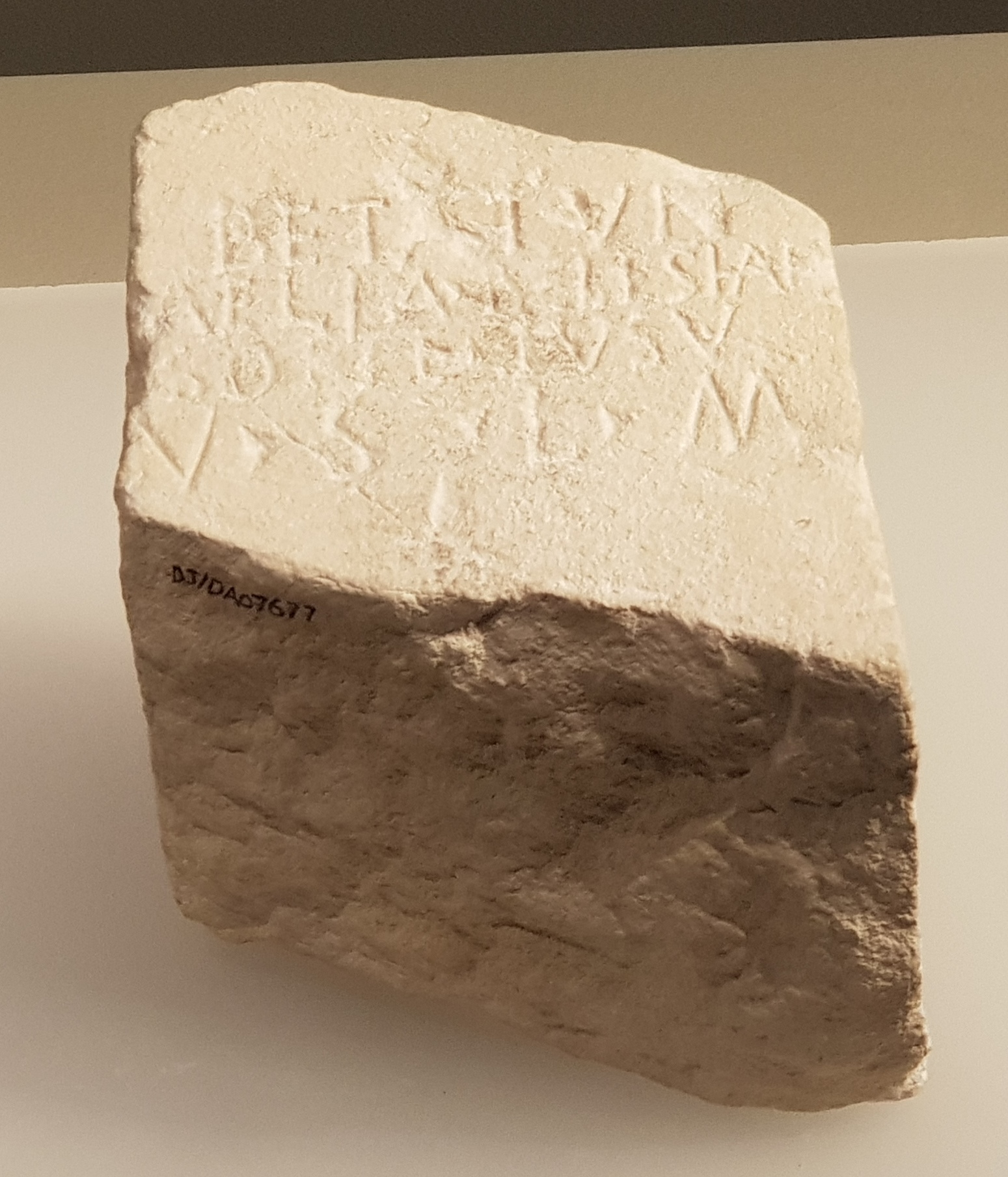 View full-size photograph ⛶
Documentary photograph without semantic retouching. Preserves the condition and visible details of the reference piece.
Documentary original · Exact correspondence
Tyk · Museum of Jaén; photograph in Museo Íbero · Inventory: DJ/DA07677

Where it is held
Jaén Museum
Item or group in the record · Documented collection
CER.ES · inventory DJ/DA07677; the intended attribution to the Museo Íbero does not demonstrate current display.
The holding institution is documented; public display may change. Check its official record before visiting.
Sources and references
Did you enjoy this exhibit?
Your opinion helps us improve the museum. You can change it whenever you like.
Loading your rating…