
 English
 Español
 Français
 Italiano
 Deutsch
 Русский
 Português
 Polski
 Română
 Svenska
 Norsk bokmål
 Suomi
 Türkçe
 العربية
 简体中文
 한국어
 हिन्दी
 Ελληνικά
PRE-POTTERY NEOLITHIC B · 8TH MILLENNIUM BCE · LIMESTONE
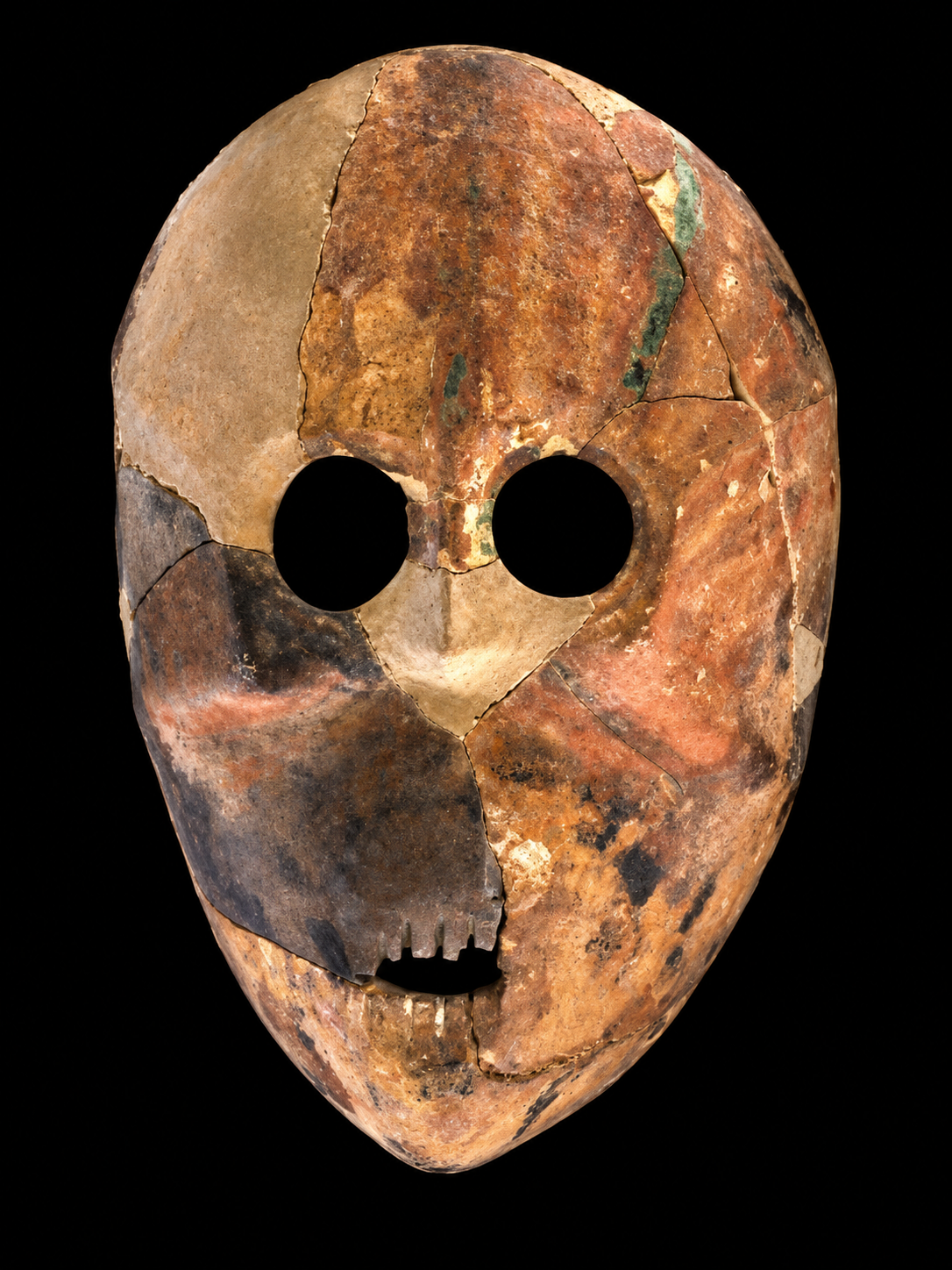
Nahal Hemar mask
A stone face of unknown use
The holes allowed the mask to be fastened. We do not know if it was worn or placed on a support.
Museum documentation · free public access, no account required.
Reconstruction · Declared visual hypothesis
Recreation contributed to the project. Not an archaeological photograph nor a metric facsimile. Materials, finish, proportions, and visible details may differ from the original. The image serves as visual support; the record and its sources distinguish the documented from the interpreted.
Explore in 3D
Load the model only when you want to explore it. Drag or use the arrow keys to turn it; + and − zoom. Closing it releases its memory.
User-contributed digital reconstruction; file metadata declares Tripo. Not an archaeological scan or a metric replica. Display scale is indicative, not a measurement of the original; the contributed geometry is preserved intact. Representation provided for the Nahal Hemar mask. The finish and cavities are not presented as documentation of the conserved state nor as evidence of how it was worn or used.
History and context
The 1983 excavation of Nahal Hemar recovered fragments of two stone masks. One could be reconstructed fairly completely. The limestone face retains openings, marked teeth and perforations around the edge.
In the same cave appeared objects of fibre, wood and bone, as well as treated human skulls. It has been proposed that the masks participated in actions related to ancestors. We do not know if they were worn, tied to a support or accompanied other objects.
Evidence and interpretation
The excavated provenance and preserved fragments allow the study of a real mask, not just a likeness. Its identity and exact function remain open. The image and model provided are recreations; their details do not replace examination of the original.
Catalogue facts
- Date
- Eighth millennium BCE · context dating, not direct dating of the stone
- Location
- Nahal Hemar Cave · Judean Desert, Israel
- Material
- Carved and perforated limestone
- Conservation
- Mask recomposed from fragments
A SHARED TOPIC, DIFFERENT MOMENTS
Objects connected through time
Follow a topic across the collections. A shared tag is a way to compare objects, not proof that one culture influenced another.
The order uses the midpoint of each approximate date range; ranges can overlap. Spacing does not represent elapsed time. Swipe, scroll or use the arrows. With the sequence focused, use ← / →, Home or End.
Limestone11 dated objects
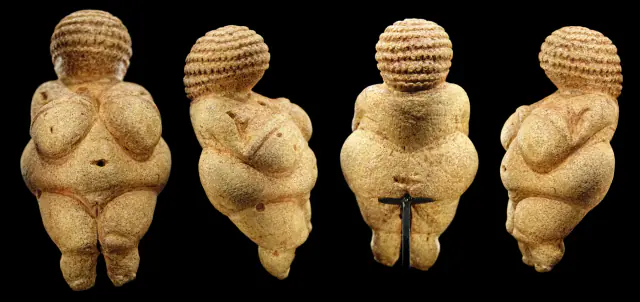
≈29,500 years
Willendorf
Prehistory
Approximate catalogue age; editorial reference 2026 for ordering only, not calibrated dating.
Read the record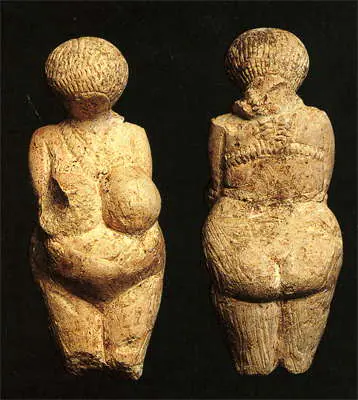
≈23,000–21,000 years
Kostenki I
Prehistory
Approximate catalogue age; editorial reference 2026 for ordering only, not calibrated dating.
Read the record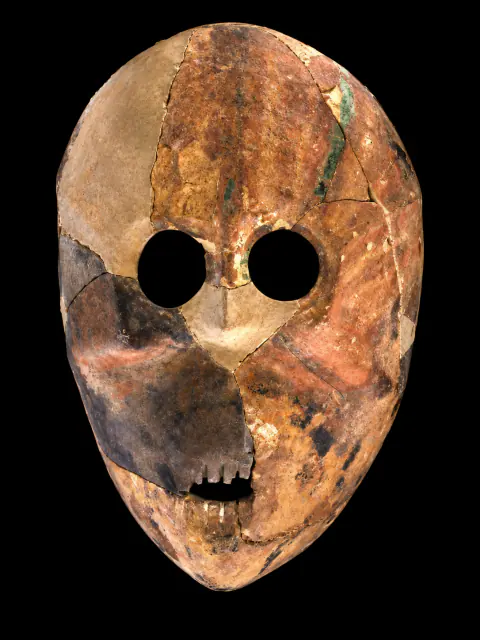 You are viewing
Eighth millennium BCE · context dating, not direct dating of the stone
Nahal Hemar mask
Prehistory
Context dating, not direct dating of the stone.
Current record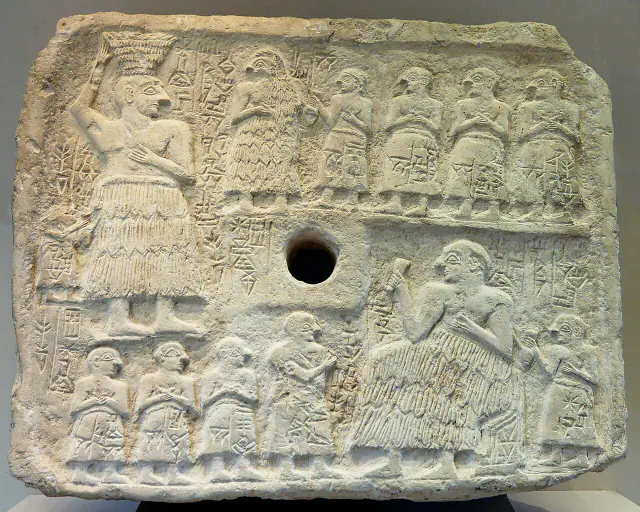
Mid-3rd millennium BCE · reign of Ur-Nanshe
Ur-Nanshe relief
Sumer
The full 3rd millennium BCE provides broad limits for chronological ordering; the record specifies the middle of the millennium, in the reign of Ur-Nanshe.
Read the record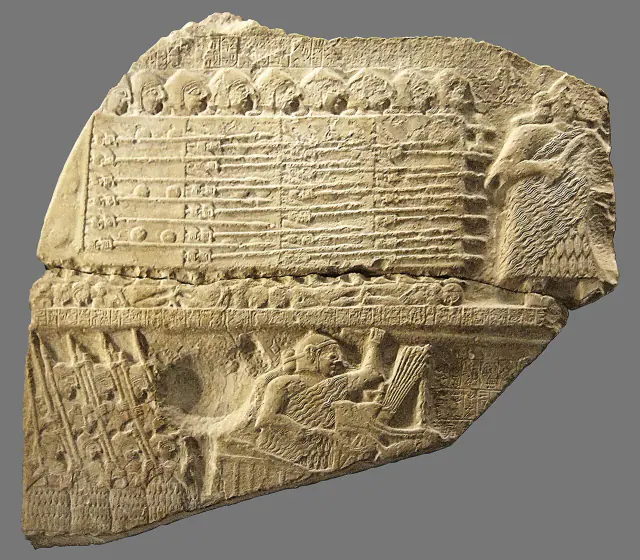
Towards 2450–2425 BCE
Stele of the Vultures
Sumer
Approximate dating according to the record.
Read the record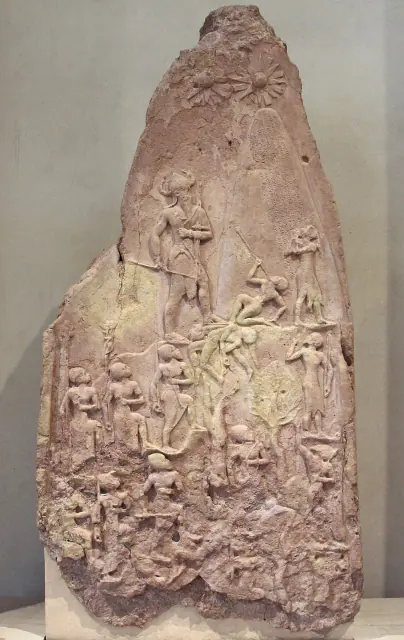
Reign of Naram-Sin, 2254–2218 BCE
Naram-Sin Stele
Sumer
Reign interval associated with the piece; the Elamite reuse is later.
Read the record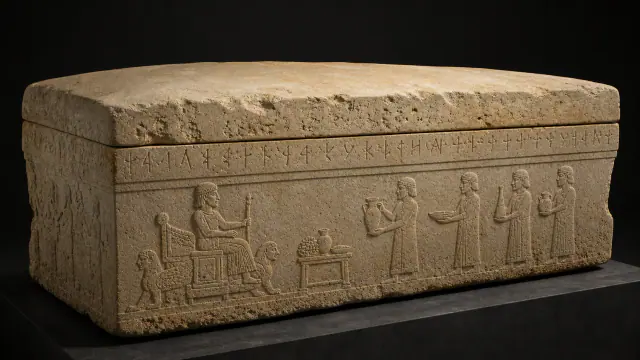
c. 11th–10th century BCE
The voice of Ahiram
Phoenicians
Approximate dating according to the record.
Read the record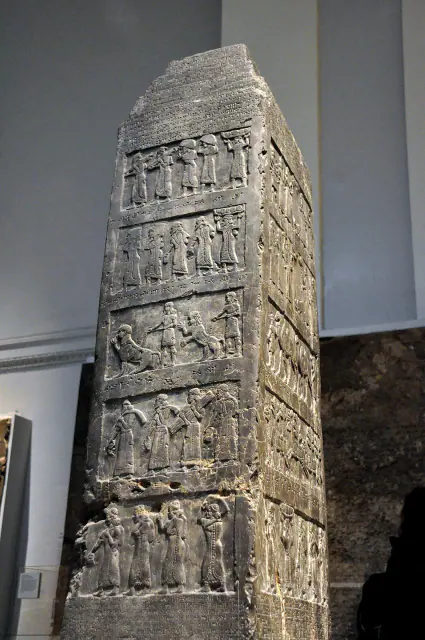
825 BCE
Black Obelisk
Sumer
Approximate dating according to the record.
Read the record
6th–5th centuries BCE, mainly under Darius and Xerxes
Twenty-three delegations
Achaemenid Persia
Interval of the monumental programme under several reigns.
Read the record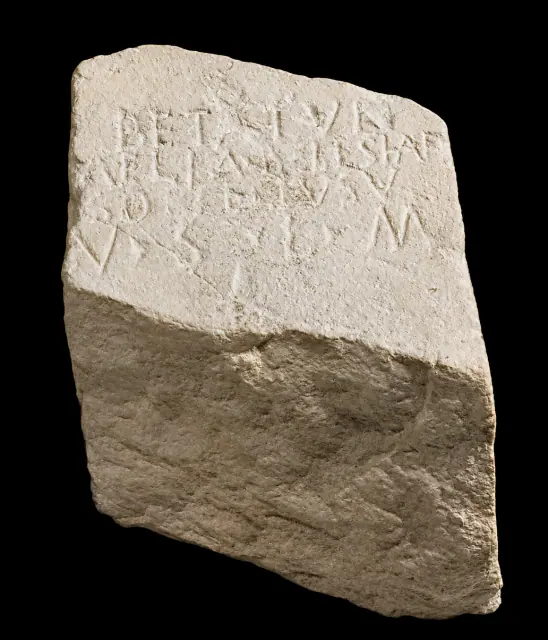
1st century BCE–1st century CE
Betatun altar
Iberians
Interval crossing the era change; there is no year zero.
Read the record
292 CE
The date of 292
Maya worlds
Long Count date translated into the Common Era.
Read the record
Also connected, without a comparable date (1)
These objects are not placed after the others: an unknown date does not mean a more recent object.
- Before PersiaAchaemenid Persia · Central core c. seventeenth century BCE; Neo-Elamite additions between the ninth and sixth centuries BCE
A closer look
About 4 min to read · 9 sections. Further reading and sources · free access. Editorial review recorded: .
A recomposed face
The fragments matter as much as the face we see today: the modern join allows its shape to be recognised, but does not return the object to its moment of use. The perforations admit several ways of securing it. The proposal of an ancestor cult does not equate to knowing a specific ceremony or identifying the person represented.
What the desert preserved
Aridity favoured the preservation of materials that usually disappear. A 2016 analysis identified animal and plant components in coatings on baskets and skulls. It did not analyse the mask's stone to date it: the approximate range 8200–7300 BCE corresponds to the cave context. Nor can every dark coating be called asphalt simply by its appearance.
- Research · Solazzo et al. · materials and context of Nahal Hemar (2016)Access recorded: .
Comparing a reconstruction with the evidence
The version in this entry is a contributed recreation. It serves to approach a form, not to measure the original or certify every detail. It is advisable to check the face, perforations, breaks and restoration against the museum documentation. A visual resemblance does not prove that a mask was worn.
An excavation after looting
Before archaeologists arrived, the cave had suffered clandestine excavations. According to conservator Debby Hershman, some looters were looking for ancient manuscripts and threw soil outside. In 1983 deposits still remained that could be studied. The cavity was small, not a large monumental chamber.
Recovering a mask did not consist solely of finding a stone face: it mattered to record its fragments and the objects appearing around it. The findspot provides something that a piece bought without context, however spectacular, cannot recover afterwards.
The face did not have only the colour of the stone
The Israel Museum describes traces of paint and human hair associated with the reconstructed mask, interpreted as a moustache and beard. Small figurines with paint and hair were also found. The stone could be combined with materials of very different texture and colour. The bare surface seen in many photographs does not necessarily summarise its ancient appearance. This information comes from the archaeological study, not from colours added by a digital recreation.
Other faces from the assemblage also had scent
Among the finds were human skulls decorated with a dark substance arranged like a net. A 2016 study detected components compatible with aromatic storax resin in residues from one of them. The authors suggested it may have perfumed it. This extends the comparison with the mask: images of people could combine appearance, material and scent. The analysis corresponds to those skull residues, not to the mask; it does not prove that all received the same treatment.
The same cave preserves material knowledge
Analyses of basket fragments identified proteins of bovine origin and, in one sample, a plant protein from sea squill. Their coatings may have helped to line or waterproof the vessels. The combination explains the mask's craft context: materials with different properties were selected for practical objects and others for possible ceremonial use. An exceptionally preserved basket allows the recognition of skills that normally disappear from the archaeological record.
Carving a face or modelling it on a skull
At Yiftahel, Galilee, three skulls were studied to which materials had been added to remake parts of the face. Shells were used in some eyes; in one case a small flint piece was also used. They are not stone masks like the Nahal Hemar one, but interventions on human remains. Comparing them allows a shared concern for the face and different material solutions to be distinguished, without turning all finds into a single ceremony.
What is learnt by looking inside
At Yiftahel CT scanning was used to observe bone, fillings and modelling without dismantling the faces. In one, the added face did not follow the exact anatomical position of eyes and nose. Returning to the Nahal Hemar mask we can ask: did they want to reproduce someone exactly or create a recognisable image of a person? Differences in proportion may be part of ancient decisions, and not simply errors by whoever worked the material. The comparison offers questions, not an automatic answer.
Location and territory
APPROXIMATE LOCATION
Nahal Hemar · Judean Desert, IsraelSurroundings of the cave of origin; does not represent current custody or an access route.Where it is held
Israel Antiquities Authority · documented by the Israel Museum, Jerusalem
Item or group in the record · Documented collection
The museum publication credits the Israel Antiquities Authority collection. Current display is not guaranteed.
The holding institution is documented; public display may change. Check its official record before visiting.
Sources and references
- Israel Museum · Debby Hershman on the excavation, paint and hair of the masks (2014)
- Solazzo et al. · materials and context of Nahal Hemar (2016)
- Solazzo et al. · protein and resin analysis of Nahal Hemar (Scientific Reports, 2016; full text in PMC)
- Slon et al. · CT scanning and modelling techniques of the Yiftahel skulls (PLOS ONE, 2014)
Did you enjoy this exhibit?
Your opinion helps us improve the museum. You can change it whenever you like.
Loading your rating…