08 · Iconography · Fertile and Predatory World
The Tello Obelisk Two beings linked in a column of plants and animals
A single stone brings together bodies that appear human, crocodilian, feline, avian and cultivated.
ON THIS PAGE
History and context Evidence and facts Objects connected through time Further reading Location and territory Where it is held Sources and references Comments Museum documentation · free public access, no account required.
⛶ Enlarge image← Previous Image 1 of 3 · Main image Next →
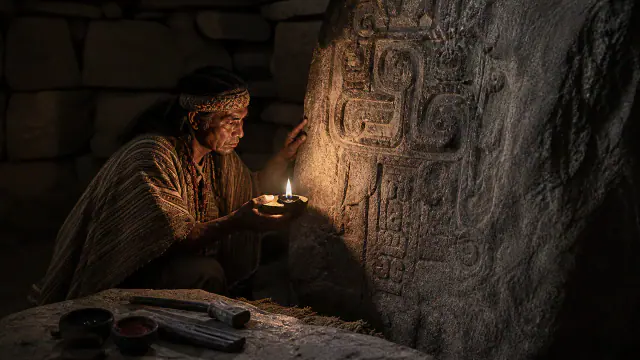
DECLARED VISUAL RECONSTRUCTION · EXISTING EDITORIAL RESOURCE · TRACEKEEPERS Generated reconstruction · Declared visual hypothesis
Declared visual reconstruction for museographic context; it is not a photograph of the original nor documentary evidence.
View full image: DECLARED VISUAL RECONSTRUCTION · EXISTING EDITORIAL RESOURCE · TRACEKEEPERS DECLARED VISUAL RECONSTRUCTION · EXISTING EDITORIAL RESOURCE · TRACEKEEPERS Generated reconstruction · Declared visual hypothesis
Declared visual reconstruction for museographic context; it is not a photograph of the original nor documentary evidence.
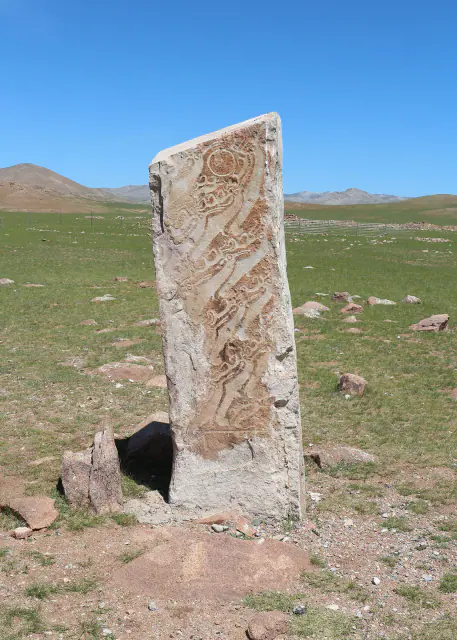
View full image: Original documentary · Photograph of the original Original documentary · Photograph of the original Documentary original · Exact correspondence
Documentary photograph published on Wikimedia Commons. The distinction from the main recreation is maintained. Web adaptation: size and format adjustment, without reconstructing parts or changing the photograph's content.
The museum preserves the original Tello Obelisk; photograph from the WikiAcción Perú expedition of February 2024.
Renata Maria Cristina · National Chavín Museum, Áncash · CC BY-SA 4.0
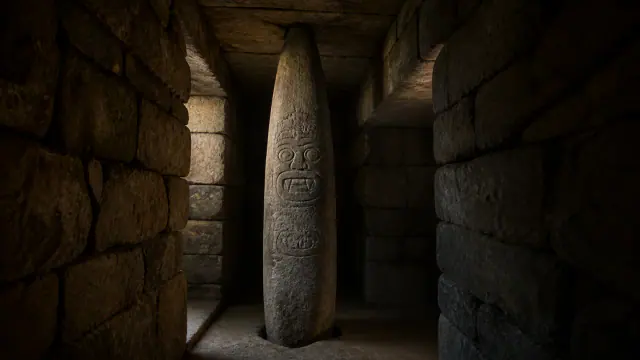
View full image: Detail of the original Detail of the original Documentary original · Exact correspondence
Documentary photograph published on Wikimedia Commons. The distinction from the main recreation is maintained. Web adaptation: size and format adjustment, without reconstructing parts or changing the photograph's content.
Another face of the same Tello Obelisk photographed at the National Chavín Museum.
Renata Maria Cristina · National Chavín Museum, Áncash · CC BY-SA 4.0
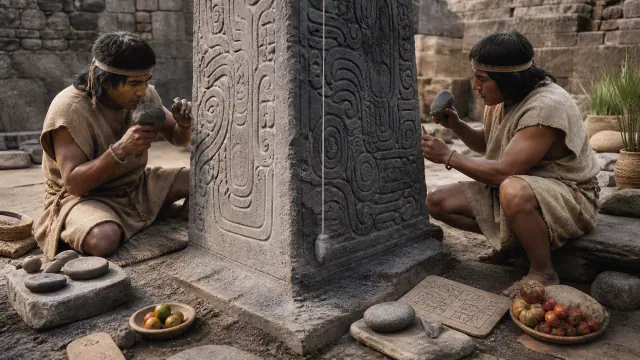
History and context The four faces of the Tello Obelisk are covered by two large beings whose bodies intertwine with plants, fruits, fangs, claws and secondary heads. The carving obliges walking around and mentally reconstructing a composition never seen complete from the front.
Pairs of crocodiles, fertility deities or complementary principles have been proposed. All recognise the density of ecological references; none can replace a lost text or turn each ambiguous form into a secure zoological species.
The four faces oblige walking around the obelisk to link two beings with fruits, plants, claws and secondary heads. No single viewpoint offers the complete composition at once.
Crocodiles, fertile pair or complementary principles are hypotheses that recognise their ecological density. Sex, species and narrative cannot be fixed as if each line were a zoological illustration.
Evidence and interpretation Documented fact: the Tello Obelisk is a Chavín lithic sculpture of four faces with two complex figures and vegetable and animal motifs; today it is conserved in the National Chavín Museum. Interpretation and caution: sex, species, name and narrative of the pair vary among specialists.
Catalogue facts
Narrative date c. 800–500 BCE
Location Chavín de Huántar; now National Chavín Museum, Peru
Material Granite carved in low relief
Context Classification of the world, complementarity and enveloping image
Curatorial reading The documented fact and its interpretation appear separately in the evidence block.
Date c. 800–500 BCE
Location Chavín de Huántar; now National Chavín Museum, Peru
Support Granite carved in low relief
Documentary coverage 4 museum, heritage, primary corpus or research sources for this stop. Granite4 Sculpture54 Animal imagery49 Engraving27
The order uses the midpoint of each approximate date range; ranges can overlap. Spacing does not represent elapsed time. Swipe, scroll or use the arrows. With the sequence focused, use ← / →, Home or End.
Earlier Later
3 / 4 In the centre: The Tello Obelisk
You can scroll the first group without JavaScript. The other topics are also available below.
Sculpture Lion-man · ≈40,000 years · Aurignacian · PrehistoryLespugue · ≈28,000 years · PrehistoryZaraysk Bison · ≈23,000–21,000 years · PrehistoryShigir Idol · C. 10,000 BCE · approximation; debated dating · PrehistoryWarka Mask · End of the 4th millennium BCE · SumerGebel el-Arak knife · 3600–3200 BCE · Naqada II C–D · Ancient EgyptUruk Vase · ca. 3300–3000 BCE · SumerNarmer Palette · ca. 3100 BCE · Ancient EgyptBefore Yayoi · Middle Jōmon, ca. 3000 BCE · Yayoi JapanUr-Nanshe relief · Mid-3rd millennium BCE · reign of Ur-Nanshe · SumerThe goat from PG 1237 · ca. 2600–2400 BCE · SumerStele of the Vultures · Towards 2450–2425 BCE · SumerAkkadian sovereign head · Akkadian period · 23rd century BCE · SumerBassetki Statue · Akkadian period · 23rd century BCE · SumerNaram-Sin Stele · Reign of Naram-Sin, 2254–2218 BCE · SumerBefore Pre-Inca Cultures · Kotosh-Mito Tradition, c. 2200–1500 BCE; the enclosure is usually situated around 1800 BCE. · Pre-Inca culturesQueen of the Night · 19th–18th centuries BCE · SumerBull-leaping · c. 1600–1450 BCE · Greek worldsWooden faces · c. 1600–1000 BCE, in several phases · Maya worldsHead 2 · c. 1200–900 BCE · Maya worldsThe voice of Ahiram · c. 11th–10th century BCE · PhoeniciansBefore the Scythians and Sakas · Final Bronze–Initial Iron, ca. 1200–600 BCE · Scythians and SakaBlack Obelisk · 825 BCE · SumerIvory in Nimrud · 9th–8th centuries BCE · PhoeniciansLas Limas · c. 1000–600 BCE · Maya worldsAstarte from El Carambolo · 8th century BCE · PhoeniciansAstarte from El Carambolo · 8th century BCE · IberiansLamassu of Khorsabad · Reign of Sargon II · 721–705 BCE · SumerThe Lanzón · c. 900–500 BCE · Pre-Inca culturesStele of Esarhaddon · 7th century BC C. · 671 campaign BCE · SumerThe so-called ‘Priest of Cádiz’ · 7th century BCE · PhoeniciansThe so-called ‘Priest of Cádiz’ · 7th century BCE · IberiansThe Tello Obelisk · c. 800–500 BCE · Pre-Inca cultures — You are viewingAshurbanipal Hunt · 645–635 BCE · SumerHeads on the wall · c. 800–300 BCE · Pre-Inca culturesTwo voices in an urn · 530–520 BCE · Etruscans and RomeThe god on the roof · Towards 510–500 BCE · Etruscans and RomeGlazed brick guards · 522–486 BCE · Achaemenid PersiaTwenty-three delegations · 6th–5th centuries BCE, mainly under Darius and Xerxes · Achaemenid PersiaSarcophagus of Eshmunazar · first quarter of the 5th century BCE · PhoeniciansThe statue was the urn · First half of the 4th century BCE · IberiansThe Raimondi Stele · c. 400–200 BCE according to MNAAHP · Pre-Inca culturesTorreáguila fountain spout · 101–125 CE · Etruscans and RomeThe date of 292 · 292 CE · Maya worldsArticulated doll from Tarragona · Late 3rd–4th century CE · Etruscans and RomeSeven heads · c. 500–700 CE · Bantu-speaking worldsSeated figure · 13th century, date attributed by the museum · Mande WorldsGold rhinoceros · ca. 1220–1290; found in 1933 · Bantu-speaking worldsZimbabwe birds · main period of Great Zimbabwe, c. 12th–15th centuries · Bantu-speaking worldsKongo crucifix · 16th–17th centuries · Bantu-speaking worldsKuba ndop · ca. 1760 · Bantu-speaking worldsWithout a comparable date (not part of the chronological order):
Before Persia · Central core c. seventeenth century BCE; Neo-Elamite additions between the ninth and sixth centuries BCE · Achaemenid PersiaLararium of Vilauba · Roman period · Etruscans and RomeThe Thracian Horseman · Roman era · diffusion especially in the 2nd–3rd centuries CE · ThraciansAnimal imagery Lion-man · ≈40,000 years · Aurignacian · PrehistoryBefore the San · ≈25.500–23.500 BCE · San historiesBefore the name San · ≈25.500–23.500 BCE · San historiesAltamira · Assemblage ≈36,000–13,000 BP · bison ≈18,400–15,300 cal BP · PrehistoryLascaux · ≈23,500–21,000 cal BP · debated contextual estimate · PrehistoryZaraysk Bison · ≈23,000–21,000 years · PrehistoryRondelle de Mas-d'Azil · ≈18,000–16,000 years · PrehistoryLamp from La Mouthe · ≈20,500–13,000 years · Magdalenian framework · PrehistoryEngraved stone from Çakmaktepe · PPNA · site proposal: ≈9600–8800 BCE, provisional · PrehistoryCueva de las Manos · Sequence ≈9300–1300 BP · PrehistoryCylinder seal · c. 3500–3100 BCE · SumerQueen's Lyre · ca. 2600–2500 BCE · SumerThe goat from PG 1237 · ca. 2600–2400 BCE · SumerIndus seals · ca. 2600–1900 BCE · Indus civilisationQueen of the Night · 19th–18th centuries BCE · SumerBull-leaping · c. 1600–1450 BCE · Greek worldsStag Vessel · 14th–13th centuries BCE · HittitesBefore the Scythians and Sakas · Final Bronze–Initial Iron, ca. 1200–600 BCE · Scythians and SakaIvory in Nimrud · 9th–8th centuries BCE · PhoeniciansLamassu of Khorsabad · Reign of Sargon II · 721–705 BCE · SumerThe Tello Obelisk · c. 800–500 BCE · Pre-Inca cultures — You are viewingAshurbanipal Hunt · 645–635 BCE · SumerBanquet under leopards · Around 480–470 BCE · Etruscans and RomeThe oldest knotted carpet · 5th–4th centuries BCE · Scythians and SakaThe silver amphora of Chertomlyk · 4th century BCE · Greek worldsThoth in the form of a baboon · 664–30 BCE · Ancient EgyptPoroina Mare Rhyton · Second half of the 4th century BCE · ThraciansBorovo · 4th century BC C.; 350–300 BCE in the ISAW catalog. · ThraciansLeipzig Fish Plate · Last third 4th–early 3rd century BCE · Greek worldsDove of the Amarejo · 3rd century BCE · IberiansChão de Lamas pectoral · 3rd–2nd centuries BCE · concealed in the early 1st century BCE · IberiansFibula from Lancia · ≈300–100 BCE · IberiansHorse fibula · 2nd century BCE · disputed chronology · IberiansThe dismantled cauldron · 2nd–1st centuries BCE · Celtic worldsKalathos of Alcorisa · 2nd–1st centuries BCE · IberiansEgyptian oil lamp with a fish, held in Laon · 3rd–4th centuries CE · Ancient EgyptLaon lamp with fish · 3rd–4th centuries CE · Etruscans and RomeGold rhinoceros · ca. 1220–1290; found in 1933 · Bantu-speaking worldsZimbabwe birds · main period of Great Zimbabwe, c. 12th–15th centuries · Bantu-speaking worldsWithout a comparable date (not part of the chronological order):
Engraving Engraved ochre from Blombos · ≈77,000–75,000 years · PrehistoryAltamira · Assemblage ≈36,000–13,000 BP · bison ≈18,400–15,300 cal BP · PrehistoryLascaux · ≈23,500–21,000 cal BP · debated contextual estimate · PrehistoryRondelle de Mas-d'Azil · ≈18,000–16,000 years · PrehistoryLamp from La Mouthe · ≈20,500–13,000 years · Magdalenian framework · PrehistoryEngraved stone from Çakmaktepe · PPNA · site proposal: ≈9600–8800 BCE, provisional · PrehistoryTwin-chambered vessel from Cova de l’Or · Early Neolithic · VI–V millennia BCE · PrehistoryBefore Nubia · V–IV millennium BCE · Nubia, Kerma and KushBefore Gojoseon · Middle Neolithic, c. 4000 BCE · Gojoseon and early KoreaCylinder seal · c. 3500–3100 BCE · SumerGuadancil idol-plaque · 3750–2500 cal BCE · IberiansStaff of Anta 4 · Late 4th–first half of the 3rd millennium BCE. · PrehistoryLinear A · c. 1700–1500 BCE · Greek worldsThe Cascajal Block · Proposed c. 1000–900 BCE · Maya worldsLas Limas · c. 1000–600 BCE · Maya worldsMotagua jade · c. 900–600 BCE · Maya worldsThe Tello Obelisk · c. 800–500 BCE · Pre-Inca cultures — You are viewingTwenty-six voiceless signs · 5th–4th centuries BCE · Scythians and SakaThe Raimondi Stele · c. 400–200 BCE according to MNAAHP · Pre-Inca culturesDove of the Amarejo · 3rd century BCE · IberiansUrewe vessel · regional range c. 800 BCE–650 CE · Bantu-speaking worldsLukasa · 19th–20th centuries · Bantu-speaking worldsWithout a comparable date (not part of the chronological order):
A closer look About 1 min to read · 1 section. Further reading and sources · free access. Editorial review recorded: September 5, 2026 .
The risks of repairing an ancient sculpture A study published in Microchemical Journal in 2018 examined the cement used in a 2010 intervention on the Tello Obelisk. That material had developed cracks and losses, compromising consolidation. The researchers combined X-ray analysis and Raman spectroscopy and distinguished three layers of cement; they linked sulphates and deterioration processes to the observed instability. The research does not interpret the carved beings: it studies a modern episode affecting its conservation. Viewing the piece requires recognising both histories, that of the ancient sculptural work and that of the added materials to support or repair it.
Location and territory Physical world map with routes of human evolution Present-day world coastline from Natural Earth in an equirectangular projection. The overlaid markers let you explore each milestone. Map base: Natural Earth 1:110m · public domain · present-day reference coastline LOCATED SITE
Chavín de Huántar · Peru Marker of the ceremonial centre. Where it is held Item or group in the record · Documented collection
The institution includes the Tello Obelisk among its highlighted pieces.
The holding institution is documented; public display may change. Check its official record before visiting.
See The Tello Obelisk in the museum Find this record in its gallery and save your route, favourites and places to explore later.
Open this exhibit in the museum → Museum access requires a free account. You can read this page's documentation without registering.
Did you enjoy this exhibit? Your opinion helps us improve the museum. You can change it whenever you like.
Loading your rating…

 English
 Español
 Français
 Italiano
 Deutsch
 Русский
 Português
 Polski
 Română
 Svenska
 Norsk bokmål
 Suomi
 Türkçe
 العربية
 简体中文
 한국어
 हिन्दी
 Ελληνικά
 You are viewing