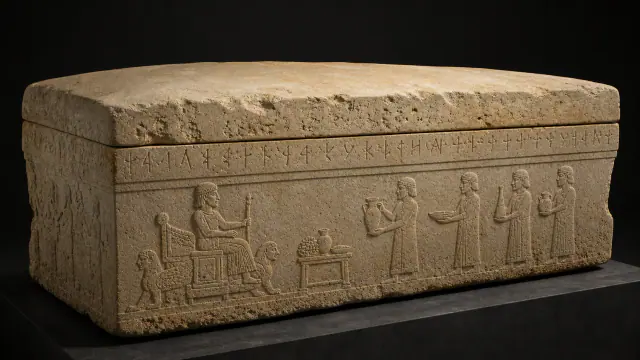
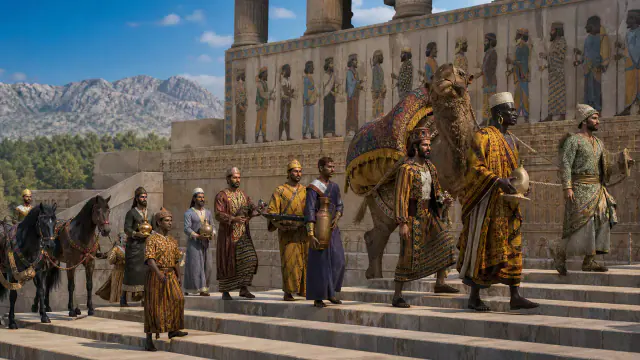
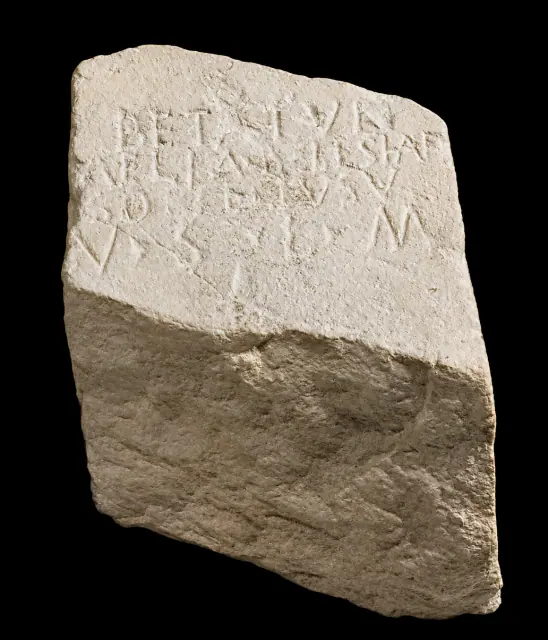
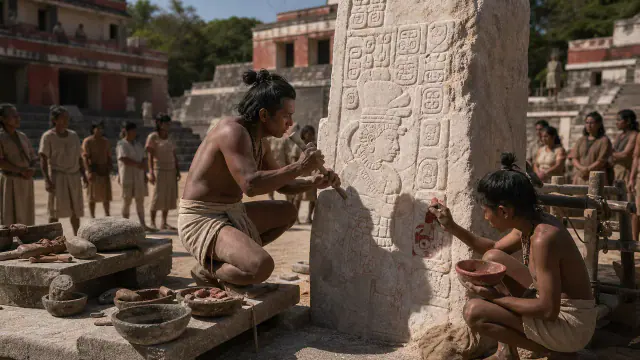
Declared visual reconstruction for museographic context; it is not a photograph of the original nor documentary evidence.
History and context
Before the Achaemenid Empire, Fars was not an empty stage. The region of Anshan formed part for centuries of Elamite political and cultural networks connected with Susa and the Iranian highlands. At Kurangun, a sacred relief dominated a river crossing: different generations returned to it, added figures and preserved its visual authority.
When Persian lineages settled and governed Anshan, they inherited places, titles and administrative practices already ancient. The Achaemenid rise was a transformation of that world, not a creation from scratch: even under the great kings, Elamite language remained an essential tool of archives and government.
Evidence and interpretation
Documented fact: Anshan was a fundamental region and political centre of the Elamite world.
Interpretation and caution: Always distinguish the Middle Elamite core from Neo-Elamite additions; the concrete identification of the deities remains debated.
Historical transition: The Achaemenids turned a regional tradition of authority into a transcontinental empire, conserving Elamite languages and specialists while articulating new Persian forms of kingship.
Limit of the transition: Do not present Elam as a Persian phase nor Kurangun as Achaemenid: both are regional antecedents whose influence is documented without implying continuous ethnic identity.
Catalogue facts
Previous period
III millennium–c. 700 BCE
Sphere of influence
Southwest of the Iranian plateau, especially Elam, Anshan and the Fars region
Threshold element
Relief of Kurangun
Element date
Central core c. seventeenth century BCE; Neo-Elamite additions between the ninth and sixth centuries BCE
Location
Fahlian River valley, near Nurabad, Fars, Iran
Material or support
Carved limestone
Documented fact 01
Anshan was a fundamental region and political centre of the Elamite world.
Documented fact 02
Kurangun preserves phases of carving separated by several centuries.
Documented fact 03
The early Achaemenids employed the title of king of Anshan.
Documented fact 04
Elamite remained an administrative language in the Achaemenid Empire.
Documented fact 05
Persepolis arose within a much older political and sacred landscape.
Visual credit
Elamite Museum · CC BY-SA 4.0
A SHARED TOPIC, DIFFERENT MOMENTS
Objects connected through time
Follow a topic across the collections. A shared tag is a way to compare objects, not proof that one culture influenced another.
The order uses the midpoint of each approximate date range; ranges can overlap. Spacing does not represent elapsed time. Swipe, scroll or use the arrows. With the sequence focused, use ← / →, Home or End.
THE CURRENT OBJECT
Its date is not sufficiently established to place it on the timeline. We keep it here, separate from the dated objects.
About 1 min to read · 1 section. Further reading and sources · free access. Editorial review recorded: .
Divine water above a real river
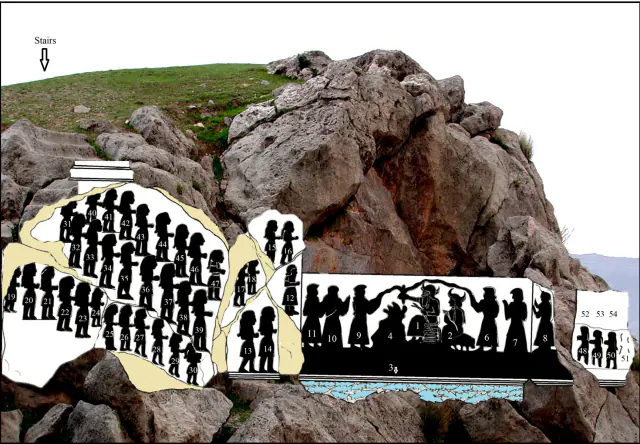
In the centre of the relief, the god sits on a throne formed by the coiled body of a serpent. Streams of water connect the side figures with emblems of authority; below appears a fragmentary frieze of fish. This composition links the sanctuary with the Fahlián river visible at its feet. Potts proposes identifying Napiriša and Kiririša, but also records other scholarly identifications. Water and serpents are iconographic observations; the names of the deities belong to comparative interpretation, not to a preserved inscription that certifies them.
III millennium–c. 700 BCE · Southwest of the Iranian plateau, especially Elam, Anshan and the Fars region
III–II millennia BCE · Documented
Anshan in the Elamite world
Fars participates in political and economic networks connecting the highlands with Susa and Mesopotamia.
seventeenth century BCE · Documented
The Kurangun rock sanctuary
The central core of the relief fixes a divine scene over a route in the Fahlian valley.
seventh–early sixth centuries BCE · Documented
Persian lineages in Anshan
Persian rulers adopt the title of kings of Anshan before the expansion of Cyrus II.
What changes and what we should not assume
The Achaemenids turned a regional tradition of authority into a transcontinental empire, conserving Elamite languages and specialists while articulating new Persian forms of kingship.
Do not present Elam as a Persian phase nor Kurangun as Achaemenid: both are regional antecedents whose influence is documented without implying continuous ethnic identity.
Relief of Kurangun
Central core c. seventeenth century BCE; Neo-Elamite additions between the ninth and sixth centuries BCE · Fahlian River valley, near Nurabad, Fars, Iran
A divine couple presides over a platform while processions added centuries later approach the sacred place. This superposition turns the wall into accumulated memory: the landscape was reused, reinterpreted and protected long before Persepolis. It is a visual gateway to the Elamite depth of the territory that would inherit Persian power.
Anshan was a fundamental region and political centre of the Elamite world.
Always distinguish the Middle Elamite core from the Neo-Elamite additions; the concrete identification of the deities remains debated.
Carved limestone
Wikimedia Commons · Kurangun relief fact sheet · Elamite Museum · CC BY-SA 4.0
Documented fact 01
Anshan was a fundamental region and political centre of the Elamite world.
Documented fact 02
Kurangun preserves phases of carving separated by several centuries.
Documented fact 03
The early Achaemenids employed the title of king of Anshan.
Documented fact 04
Elamite remained an administrative language in the Achaemenid Empire.
Documented fact 05
Persepolis arose within a much older political and sacred landscape.
Location and territory
REGIONAL AREA
Fahlian River valley, near Nurabad, Fars, IranApproximate maximum envelope; control varied by reigns and regions. The footprint marks the indicative center of the area, not a border or an exact point.

 English
 Español
 Français
 Italiano
 Deutsch
 Русский
 Português
 Polski
 Română
 Svenska
 Norsk bokmål
 Suomi
 Türkçe
 العربية
 简体中文
 한국어
 हिन्दी
 Ελληνικά
 You are viewing