DOCUMENTED OUTFIT · CLOSED CONTEXT OR CONTROLLED COMPARISON
Sarcophagus of Eshmunazar Eshmunazar: a tomb that threatens the intruder
The inscription on the sarcophagus of Eshmunazar commemorates the king and warns against disturbing his tomb.
ON THIS PAGE
History and context Evidence and facts Objects connected through time Further reading Location and territory Where it is held Sources and references Comments Museum documentation · free public access, no account required.
⛶ Enlarge image← Previous Image 1 of 2 · Main image Next →
Main image 2 DECLARED VISUAL RECONSTRUCTION · AI-GENERATED IMAGE · TRACEKEEPERS Generated reconstruction · Declared visual hypothesis
Declared visual reconstruction; not a photograph of the original nor documentary evidence.
View full image: DECLARED VISUAL RECONSTRUCTION · AI-GENERATED IMAGE · TRACEKEEPERS DECLARED VISUAL RECONSTRUCTION · AI-GENERATED IMAGE · TRACEKEEPERS Generated reconstruction · Declared visual hypothesis
Declared visual reconstruction; not a photograph of the original nor documentary evidence.
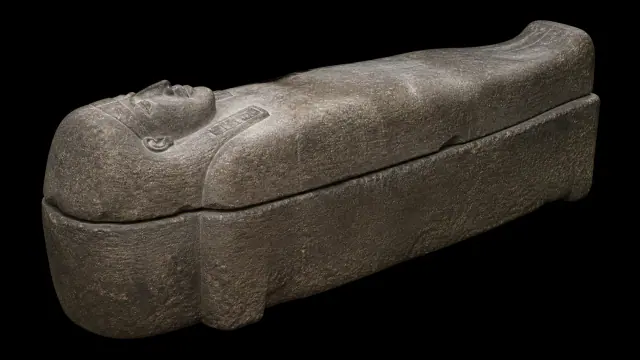
View full image: Original documentary · Photograph of the original Original documentary · Photograph of the original Documentary original · Exact correspondence
Documentary photograph published in Wikimedia Commons. The distinction from the main reconstruction is maintained. Web adaptation: size and format adjustment, without reconstructing parts or changing the photograph’s content.
The file record identifies Sarcophagus of Eshmunazar and its museum; the photograph is kept without digital restoration.
Onceinawhile · Musee du Louvre, Paris · CC BY-SA 4.0
History and context The inscription names the king, recounts constructions and territories and invokes a curse against whoever disturbs the tomb.
Representative objects: Anthropoid sarcophagus of Egyptian stone and Phoenician inscription.
Evidence and interpretation Documented fact: The inscription names the king, recounts constructions and territories and invokes a curse against whoever disturbs the tomb.
Obligatory caution: It is an individual monument, not a closed grave goods assemblage preserved. The Egyptian form does not make the deceased Egyptian.
Catalogue facts
Date first quarter of the 5th century BCE
Location Necropolis of Sidon · Lebanon
Complex Anthropoid sarcophagus of Egyptian stone and Phoenician inscription
Level Trousseau or funerary context with visible caution Stone29 Sculpture54 Inscriptions34 Funerary contexts64 Kingship and power33
The order uses the midpoint of each approximate date range; ranges can overlap. Spacing does not represent elapsed time. Swipe, scroll or use the arrows. With the sequence focused, use ← / →, Home or End.
Earlier Later
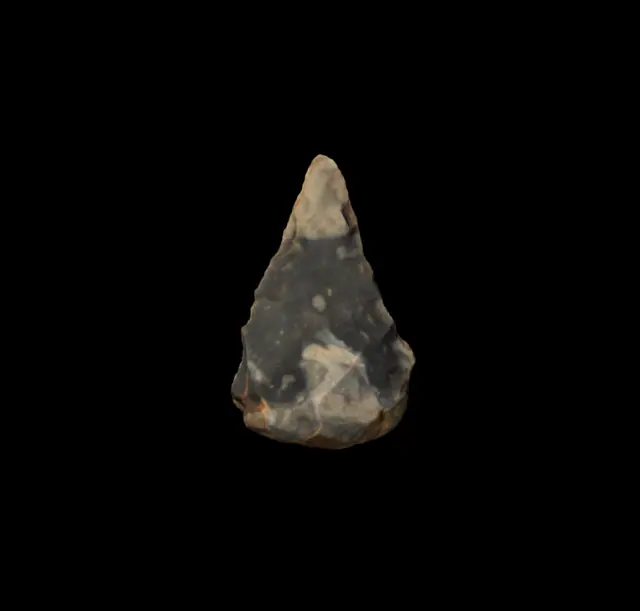
≈425,000–375,000 years
Swanscombe handaxe Prehistory
Approximate catalogue age for the Hoxnian interglacial (MIS 11); editorial reference 2026 for ordering only, not calibrated dating.
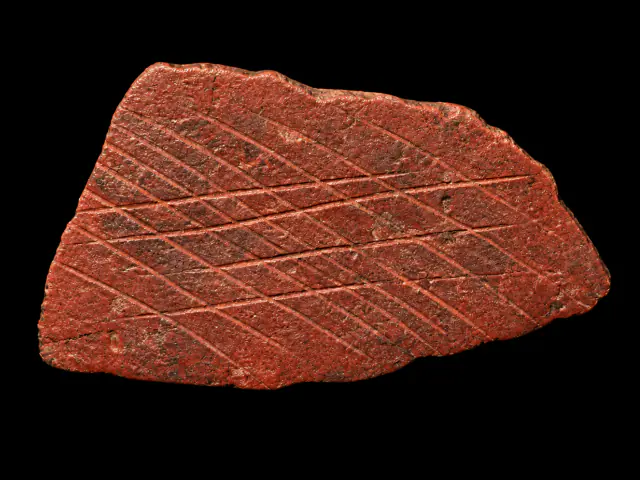
Read the record ≈77,000–75,000 years
Engraved ochre from Blombos Prehistory
Approximate catalogue age; editorial reference 2026 for ordering only, not calibrated dating.
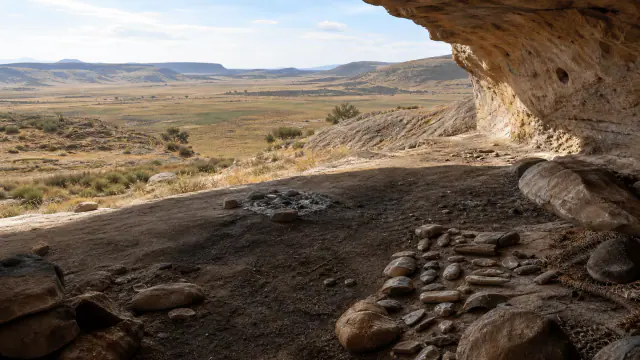
Read the record ≈25.500–23.500 BCE
Before the San San histories
Date of the representative element, not ethnic attribution of its authors.
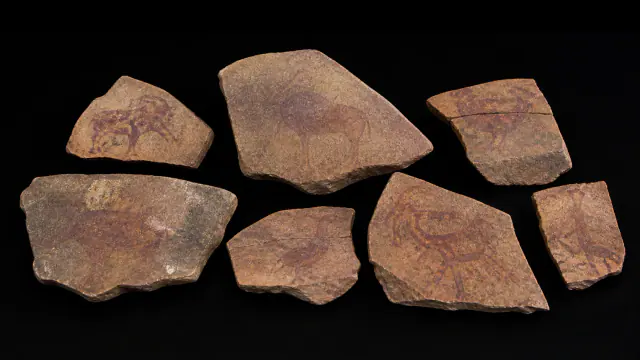
Read the record ≈25.500–23.500 BCE
Before the name San San histories
Dating of the context of the slabs; anonymous authors.
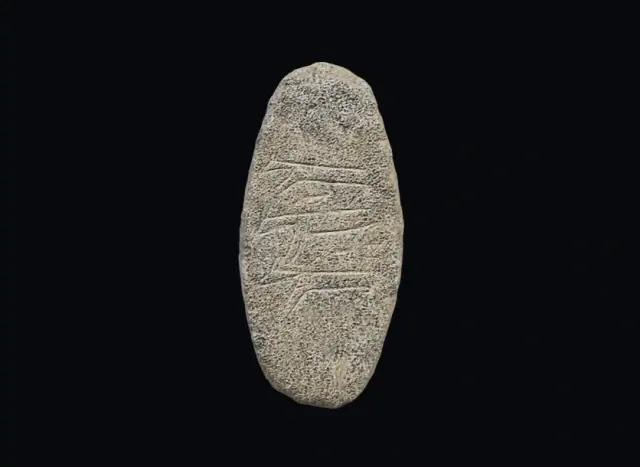
Read the record PPNA · site proposal: ≈9600–8800 BCE, provisional
Engraved stone from Çakmaktepe Prehistory
Provisional date range for the site; not direct dating of this stone.
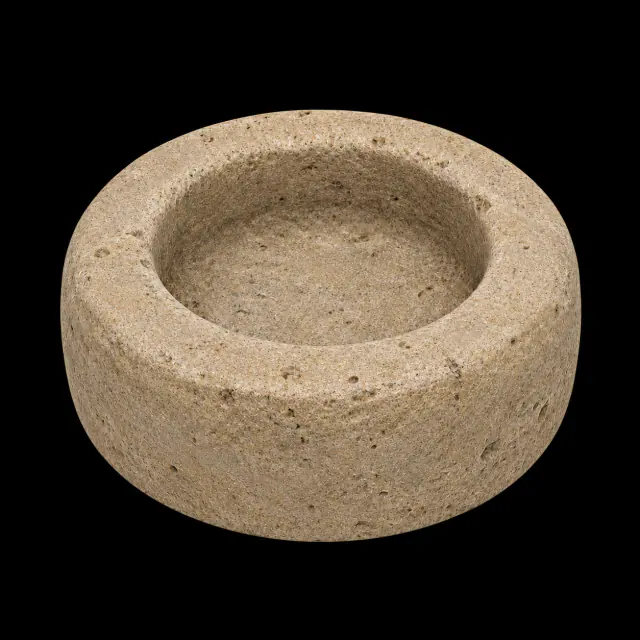
Read the record PPNA · ≈9600–8800 BCE, provisional proposal for the site
Grinding stone from Çakmaktepe Prehistory
Provisional date range for the site and the published tools; the identification of the image is unverified.
Read the record End of the 4th millennium BCE
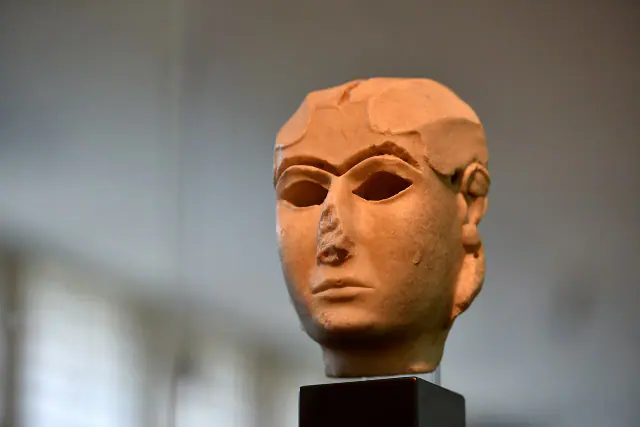
Warka Mask Sumer
The full 4th millennium BCE provides broad limits for chronological ordering; the record specifies the end of the millennium.
Read the record c. 3500–3100 BCE
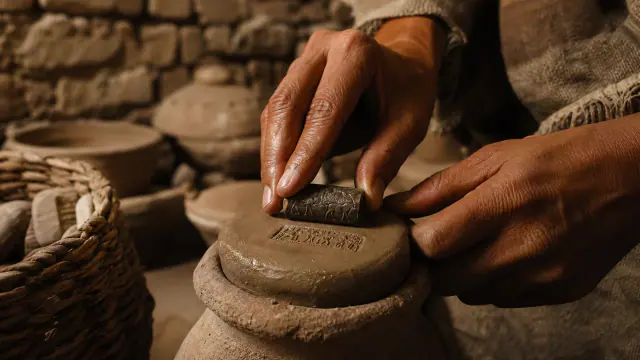
Cylinder seal Sumer
Approximate dating according to the record.
Read the record ca. 3300–3000 BCE
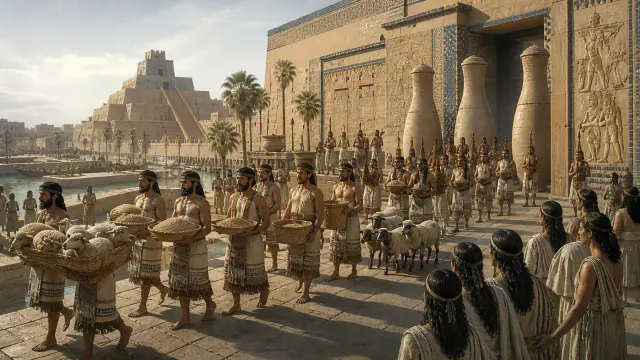
Uruk Vase Sumer
Approximate dating according to the record.
Read the record ca. 3100 BCE
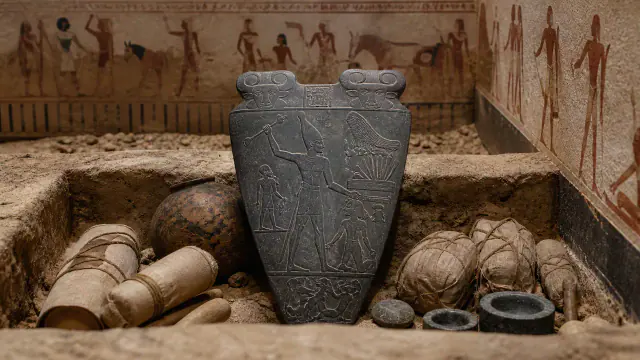
Narmer Palette Ancient Egypt
Approximate dating according to the record.
Read the record Towards 2900–2600 BCE
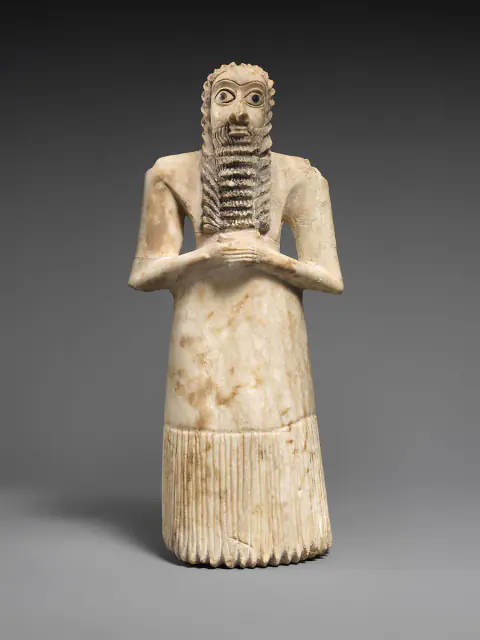
Worshiper of Tell Asmar Sumer
Approximate dating according to the record.
Read the record Towards 2400 BCE
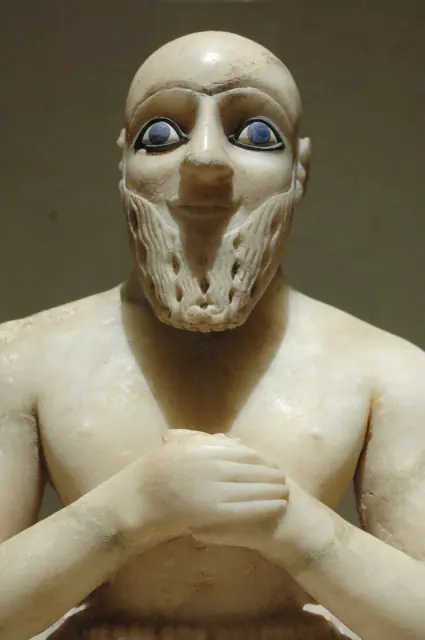
Statue of Ebih-Il Sumer
Approximate dating according to the record.
Read the record ca. 2600–1900 BCE
Weights Indus civilisation
Date range for the system of weights, not a year-specific date for each example.
Read the record Reign of Sargon II · 721–705 BCE
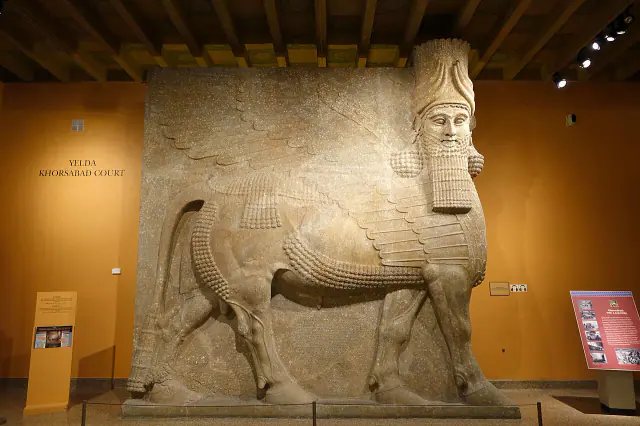
Lamassu of Khorsabad Sumer
Reign interval associated with the piece.
Read the record 645–635 BCE
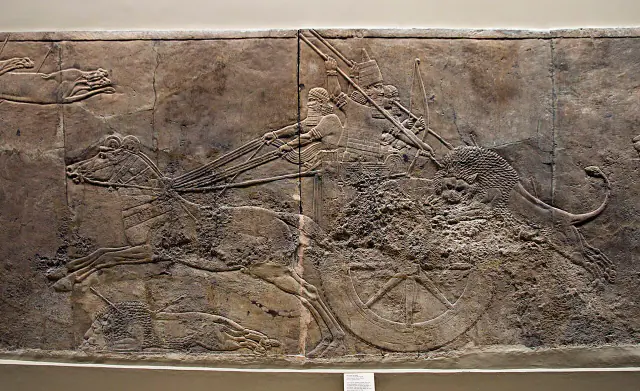
Ashurbanipal Hunt Sumer
Approximate dating according to the record.
Read the record c. 800–300 BCE
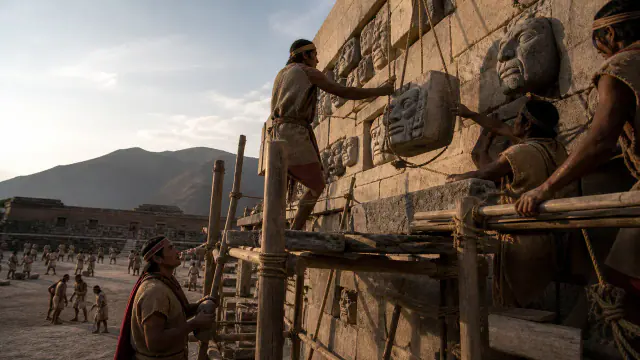
Overlapping dates Heads on the wall Pre-Inca cultures
Framework of the set of architectural heads.
Read the record You are viewing first quarter of the 5th century BCE
Sarcophagus of Eshmunazar Phoenicians
First quarter of the 5th century BCE
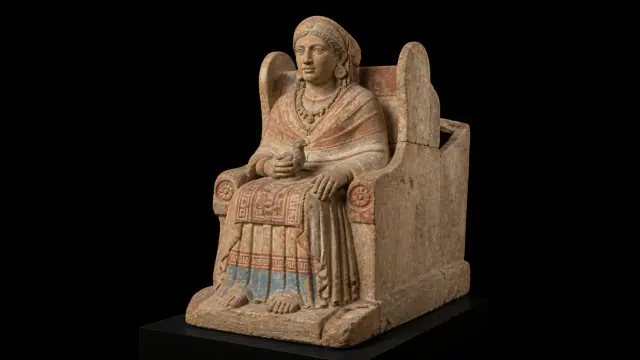
Current record First half of the 4th century BCE
The statue was the urn Iberians
First half of the 4th century BCE; date of the funerary context.
Read the record 4th century BCE
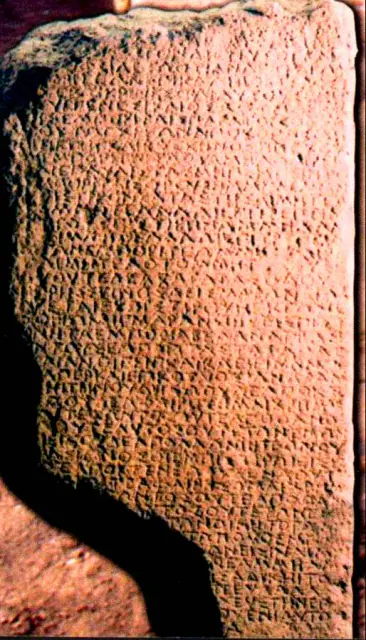
The inscription of Pistiros Thracians
Approximate dating according to the record.
Read the record 17 / 19 In the centre: Sarcophagus of Eshmunazar
Also connected, without a comparable date (10) These objects are not placed after the others: an unknown date does not mean a more recent object.
You can scroll the first group without JavaScript. The other topics are also available below.
Sculpture Lion-man · ≈40,000 years · Aurignacian · PrehistoryLespugue · ≈28,000 years · PrehistoryZaraysk Bison · ≈23,000–21,000 years · PrehistoryShigir Idol · C. 10,000 BCE · approximation; debated dating · PrehistoryWarka Mask · End of the 4th millennium BCE · SumerGebel el-Arak knife · 3600–3200 BCE · Naqada II C–D · Ancient EgyptUruk Vase · ca. 3300–3000 BCE · SumerNarmer Palette · ca. 3100 BCE · Ancient EgyptBefore Yayoi · Middle Jōmon, ca. 3000 BCE · Yayoi JapanUr-Nanshe relief · Mid-3rd millennium BCE · reign of Ur-Nanshe · SumerThe goat from PG 1237 · ca. 2600–2400 BCE · SumerStele of the Vultures · Towards 2450–2425 BCE · SumerAkkadian sovereign head · Akkadian period · 23rd century BCE · SumerBassetki Statue · Akkadian period · 23rd century BCE · SumerNaram-Sin Stele · Reign of Naram-Sin, 2254–2218 BCE · SumerBefore Pre-Inca Cultures · Kotosh-Mito Tradition, c. 2200–1500 BCE; the enclosure is usually situated around 1800 BCE. · Pre-Inca culturesQueen of the Night · 19th–18th centuries BCE · SumerBull-leaping · c. 1600–1450 BCE · Greek worldsWooden faces · c. 1600–1000 BCE, in several phases · Maya worldsHead 2 · c. 1200–900 BCE · Maya worldsThe voice of Ahiram · c. 11th–10th century BCE · PhoeniciansBefore the Scythians and Sakas · Final Bronze–Initial Iron, ca. 1200–600 BCE · Scythians and SakaBlack Obelisk · 825 BCE · SumerIvory in Nimrud · 9th–8th centuries BCE · PhoeniciansLas Limas · c. 1000–600 BCE · Maya worldsAstarte from El Carambolo · 8th century BCE · PhoeniciansAstarte from El Carambolo · 8th century BCE · IberiansLamassu of Khorsabad · Reign of Sargon II · 721–705 BCE · SumerThe Lanzón · c. 900–500 BCE · Pre-Inca culturesStele of Esarhaddon · 7th century BC C. · 671 campaign BCE · SumerThe so-called ‘Priest of Cádiz’ · 7th century BCE · PhoeniciansThe so-called ‘Priest of Cádiz’ · 7th century BCE · IberiansThe Tello Obelisk · c. 800–500 BCE · Pre-Inca culturesAshurbanipal Hunt · 645–635 BCE · SumerHeads on the wall · c. 800–300 BCE · Pre-Inca culturesTwo voices in an urn · 530–520 BCE · Etruscans and RomeThe god on the roof · Towards 510–500 BCE · Etruscans and RomeGlazed brick guards · 522–486 BCE · Achaemenid PersiaTwenty-three delegations · 6th–5th centuries BCE, mainly under Darius and Xerxes · Achaemenid PersiaSarcophagus of Eshmunazar · first quarter of the 5th century BCE · Phoenicians — You are viewingThe statue was the urn · First half of the 4th century BCE · IberiansThe Raimondi Stele · c. 400–200 BCE according to MNAAHP · Pre-Inca culturesTorreáguila fountain spout · 101–125 CE · Etruscans and RomeThe date of 292 · 292 CE · Maya worldsArticulated doll from Tarragona · Late 3rd–4th century CE · Etruscans and RomeSeven heads · c. 500–700 CE · Bantu-speaking worldsSeated figure · 13th century, date attributed by the museum · Mande WorldsGold rhinoceros · ca. 1220–1290; found in 1933 · Bantu-speaking worldsZimbabwe birds · main period of Great Zimbabwe, c. 12th–15th centuries · Bantu-speaking worldsKongo crucifix · 16th–17th centuries · Bantu-speaking worldsKuba ndop · ca. 1760 · Bantu-speaking worldsWithout a comparable date (not part of the chronological order):
Before Persia · Central core c. seventeenth century BCE; Neo-Elamite additions between the ninth and sixth centuries BCE · Achaemenid PersiaLararium of Vilauba · Roman period · Etruscans and RomeThe Thracian Horseman · Roman era · diffusion especially in the 2nd–3rd centuries CE · ThraciansInscriptions Naqada labels · ca. 3300–3100 BCE · Ancient EgyptNarmer Palette · ca. 3100 BCE · Ancient EgyptUr-Nanshe relief · Mid-3rd millennium BCE · reign of Ur-Nanshe · SumerStele of the Vultures · Towards 2450–2425 BCE · SumerBassetki Statue · Akkadian period · 23rd century BCE · SumerIndus seals · ca. 2600–1900 BCE · Indus civilisationNaram-Sin Stele · Reign of Naram-Sin, 2254–2218 BCE · SumerStele of Hammurabi · Towards 1750 BCE · SumerPhaistos Disc · ≈1700–1650 BCE · Greek worldsLinear A · c. 1700–1500 BCE · Greek worldsThe voice of Ahiram · c. 11th–10th century BCE · PhoeniciansThe Cascajal Block · Proposed c. 1000–900 BCE · Maya worldsBlack Obelisk · 825 BCE · SumerAstarte from El Carambolo · 8th century BCE · PhoeniciansAstarte from El Carambolo · 8th century BCE · IberiansStele of Esarhaddon · 7th century BC C. · 671 campaign BCE · SumerIvory with names · End of the 7th century–first half of the 6th century BCE · PhoeniciansShabti of Psamtek · 570–526 BCE · Ancient EgyptUni was also Astarte · Towards 510 BCE · Etruscans and RomeSarcophagus of Eshmunazar · first quarter of the 5th century BCE · Phoenicians — You are viewingEzerovo Ring · 5th century BCE · chronology discussed in the bibliography · ThraciansTwenty-six voiceless signs · 5th–4th centuries BCE · Scythians and SakaThe inscription of Pistiros · 4th century BCE · ThraciansYan knife-money in the Gojoseon sphere · 4th–3rd centuries BCE · Ancient ChinaLead tablet · 4th–3rd centuries BCE · IberiansA coin with the memory of a blade · 323–222 BCE · Gojoseon and early KoreaA sky over the liver · End of the second–beginning of the first century BCE · Etruscans and RomeHand of Irulegui · First third of the 1st century BCE · IberiansBetatun altar · 1st century BCE–1st century CE · IberiansThe date of 292 · 292 CE · Maya worldsKilwa coin · 1482–1493 · Bantu-speaking worldsWithout a comparable date (not part of the chronological order):
Funerary contexts Brno II Articulated Figure · ≈28,000 years cal BP · by funerary association · Prehistory'Jamila's' necklace · ≈7250–7000 BCE · PrehistoryThe Gold of Varna · Towards 4600–4200 BCE · ThraciansEl Miradero spatula-idols · ≈4000–3800 cal BCE · PrehistoryGuadancil idol-plaque · 3750–2500 cal BCE · IberiansStaff of Anta 4 · Late 4th–first half of the 3rd millennium BCE. · PrehistoryAbydos Boats · ca. 3000 BCE · Ancient EgyptQueen's Lyre · ca. 2600–2500 BCE · SumerPuabi headdress · ca. 2600–2450 BCE · SumerStandard of Ur · ca. 2600–2400 BCE · SumerCemetery R-37 · ca. 2550–2030 BCE · Indus civilisationKerma vessel · c. 1802–1640 BCE · Nubia, Kerma and KushGrave Circle A and Chrysolakkos · 18th–16th centuries BCE · Greek worldsBurial at K IV · circa 1750–1550 BCE · Nubia, Kerma and KushBefore Vedic India · c. 1900–1300 BCE · Vedic and later Indian worldsOsmankayası and Ilıca · ca. 1700/1650–1200 BCE · HittitesTutankhamun's grave goods · death towards 1323 BCE · Ancient EgyptFu Hao’s burial goods · ca. 1200 BCE · Ancient ChinaThe voice of Ahiram · c. 11th–10th century BCE · PhoeniciansBefore Etruscans and Rome · ca. 850–800 BCE · Etruscans and RomeThe urn under the helmet · 9th–8th centuries BCE · Etruscans and RomeTomb 1 at Kuntur Wasi · c. 800 BCE · Pre-Inca culturesBeads from Cerro de los Vientos · 8th–7th centuries BCE · orientalizing · IberiansCeramic stand 1010 · 8th–7th centuries BCE · orientalizing · IberiansRegolini-Galassi tomb · ca. 675–650 BCE · Etruscans and RomeShabti of Psamtek · 570–526 BCE · Ancient EgyptTwo voices in an urn · 530–520 BCE · Etruscans and RomeThe great Greek krater of Vix · ≈530–500 BCE · Greek worldsSteppe kurgans · 7th–4th centuries BCE · Scythians and SakaVix Tomb · c. 500 BCE · Celtic worldsLa Venta grave goods · ca. 600–400 BCE · Maya worldsSarcophagus of Eshmunazar · first quarter of the 5th century BCE · Phoenicians — You are viewingBanquet under leopards · Around 480–470 BCE · Etruscans and RomeTwenty-six voiceless signs · 5th–4th centuries BCE · Scythians and SakaThe oldest knotted carpet · 5th–4th centuries BCE · Scythians and SakaThe statue was the urn · First half of the 4th century BCE · IberiansGrave goods of Baza and Toya · First half of the 4th century BCE · IberiansThe Attic krater that took on a new life in Cástulo · 4th century BCE · Greek worldsThe silver amphora of Chertomlyk · 4th century BCE · Greek worldsThe Kul-Oba vase · 4th century BCE · Greek worldsSusa grave goods · c. 350 BCE · Achaemenid PersiaFaces of the Steppe · Second half of the 4th century BCE · Scythians and SakaLady of Ibiza · 4th–3rd centuries BCE · Phoenicians453 astragali from Alarcos · 4th–3rd centuries BCE · necropolis chronology · IberiansLady of Ibiza · 4th–3rd centuries BCE · IberiansFalcata from Almedinilla · 4th–3rd centuries BCE · IberiansGolyamata Kosmatka · End of the 4th century – beginning of the 3rd century BCE; ritual burial at the beginning of the III according to Iskra. · ThraciansThe blade became straight · 5th–1st centuries BCE · Gojoseon and early KoreaGeometry in very fine lines · 3rd–2nd centuries BCE · Gojoseon and early KoreaNorthern mound · 2nd–1st centuries BCE · Yayoi JapanTwo rows of coffins · Mainly Middle Yayoi, 2nd century BCE–1st century CE · Yayoi JapanKabusanza, ca. 400 · ca. 400 CE · Batwa / Twa historiesPakal’s grave goods · sealed on 28 August 683 CE · Maya worldsMissing grave goods · 13th–15th centuries according to the heritage overview · Bantu-speaking worldsWithout a comparable date (not part of the chronological order):
Kingship and power Narmer Palette · ca. 3100 BCE · Ancient EgyptPuabi headdress · ca. 2600–2450 BCE · SumerUr-Nanshe relief · Mid-3rd millennium BCE · reign of Ur-Nanshe · SumerStele of the Vultures · Towards 2450–2425 BCE · SumerAkkadian sovereign head · Akkadian period · 23rd century BCE · SumerNaram-Sin Stele · Reign of Naram-Sin, 2254–2218 BCE · SumerSumerian King List · Towards 1800 BCE · SumerStele of Hammurabi · Towards 1750 BCE · SumerGrave Circle A and Chrysolakkos · 18th–16th centuries BCE · Greek worldsBurial at K IV · circa 1750–1550 BCE · Nubia, Kerma and KushTutankhamun's grave goods · death towards 1323 BCE · Ancient EgyptFu Hao’s burial goods · ca. 1200 BCE · Ancient ChinaTribute to Assyria · c. 848 BCE · PhoeniciansBlack Obelisk · 825 BCE · SumerLamassu of Khorsabad · Reign of Sargon II · 721–705 BCE · SumerKushite king · c. 721–664 BCE · Nubia, Kerma and KushStele of Esarhaddon · 7th century BC C. · 671 campaign BCE · SumerAshurbanipal Hunt · 645–635 BCE · SumerIshtar Gate · 7th–6th centuries BCE · work of Nebuchadnezzar II · SumerTwenty-three delegations · 6th–5th centuries BCE, mainly under Darius and Xerxes · Achaemenid PersiaSarcophagus of Eshmunazar · first quarter of the 5th century BCE · Phoenicians — You are viewingThe archer in gold · Type introduced from the late 6th century; specimen from the 4th century BCE. · Achaemenid PersiaSusa grave goods · c. 350 BCE · Achaemenid PersiaGolyamata Kosmatka · End of the 4th century – beginning of the 3rd century BCE; ritual burial at the beginning of the III according to Iskra. · ThraciansDenarius of Carisius · ≈25–23 BCE · IberiansThe date of 292 · 292 CE · Maya worldsPakal’s grave goods · sealed on 28 August 683 CE · Maya worldsCatalan Atlas · after 1375 and before November 1380 · Mande WorldsKuba ndop · ca. 1760 · Bantu-speaking worldsWithout a comparable date (not part of the chronological order):
A closer look About 1 min to read · 1 section. Further reading and sources · free access. Editorial review recorded: September 5, 2026 .
The threat extends to the descendants Eshmunazar directs his warning both to kings and to ordinary people and asserts that no valuable objects have been deposited in his sarcophagus. The text attempts to dissuade from opening it, moving it or seeking another place for his remains. The imagined sanction is not limited to the looter: it includes losing burial, descendants and place among the dead. A plant image expresses this total destruction by the disappearance of roots below and fruits above. The protection of the body is thus linked to family continuity and to a memory that could be extinguished together with the lineage.
Location and territory Physical world map with routes of human evolution Present-day world coastline from Natural Earth in an equirectangular projection. The overlaid markers let you explore each milestone. Map base: Natural Earth 1:110m · public domain · present-day reference coastline LOCATED SITE
Sidon · Lebanon Marker of the historic city. Where it is held Item or group in the record · Documented collection
The holding institution is documented; public display may change. Check its official record before visiting.
See Sarcophagus of Eshmunazar in the museum Find this record in its gallery and save your route, favourites and places to explore later.
Open this exhibit in the museum → Museum access requires a free account. You can read this page's documentation without registering.
Did you enjoy this exhibit? Your opinion helps us improve the museum. You can change it whenever you like.
Loading your rating…

 English
 Español
 Français
 Italiano
 Deutsch
 Русский
 Português
 Polski
 Română
 Svenska
 Norsk bokmål
 Suomi
 Türkçe
 العربية
 简体中文
 한국어
 हिन्दी
 Ελληνικά
 You are viewing