
 English
 Español
 Français
 Italiano
 Deutsch
 Русский
 Português
 Polski
 Română
 Svenska
 Norsk bokmål
 Suomi
 Türkçe
 العربية
 简体中文
 한국어
 हिन्दी
 Ελληνικά
06 · Hwasun · precision before writing
Geometry in very fine lines
The fine-line mirror of Daegok-ri
The reverse of the mirror bears lines and triangles so fine that its manufacture required a mould of great precision.
Museum documentation · free public access, no account required.
Generated reconstruction · Declared visual hypothesis
Declared visual reconstruction; not a photograph of the original nor documentary evidence.
History and context
The Daegok-ri mirrors cover the reverse with extremely fine triangles and lines, organised around two handles. Their manufacture required a precise mould and control of a tin-rich alloy, brighter but also harder to work.
They may have reflected the sun in ceremonies as well as showing the face. That ritual function is reasonable from their composition and context, but was not observed directly; the piece demonstrates a craft science that did not need to leave a written manual.
The two Daegok-ri mirrors measure 18 and 14.6 centimetres in diameter. On the reverse, two knobs interrupt a pattern of triangles and lines so fine that the manufacture of the mould remains a subject of conservation research.
More tin increases brightness and sonority, but makes the bronze brittle and difficult to cast. The possible solar reflection in rituals connects optical property and authority, without our knowing ceremonial words, date or the exact position of the officiant.
Evidence and interpretation
Documented fact: The National Museum of Korea documents dimensions, Daegok-ri tomb, double handle and technical complexity of these mirrors. Interpretation and caution: use for reflecting sunlight in ceremonies is proposed from properties and context, not from contemporary text. Expanded documented fact: The National Museum of Korea documents dimensions, pattern, alloy and context of a wooden coffin with stone mound. Expanded interpretation and caution: The solar function and the 'theocracy' are reasoned museum interpretations, not contemporary textual descriptions.
Catalogue facts
- Narrative date
- 3rd–2nd centuries BCE
- Location
- Daegok-ri, Hwasun, South Jeolla
- Material
- Cast copper-tin bronze
- Context
- Individual tomb with rich bronze assemblage
- Curatorial reading
- The documented fact and its interpretation appear separately in the evidence block.
- Diameters
- The two mirrors measure 18 cm and 14.6 cm.
- Handles
- Each reverse bears two knobs surrounded by linear geometry.
- Complex
- They form part of eleven bronzes originally found in Daegok-ri, expanded by two daggers recovered in a later excavation.
- Documentary coverage
- 2 museum, heritage, primary corpus or research sources for this stop.
A SHARED TOPIC, DIFFERENT MOMENTS
Objects connected through time
Follow a topic across the collections. A shared tag is a way to compare objects, not proof that one culture influenced another.
The order uses the midpoint of each approximate date range; ranges can overlap. Spacing does not represent elapsed time. Swipe, scroll or use the arrows. With the sequence focused, use ← / →, Home or End.
Bronze23 dated objects
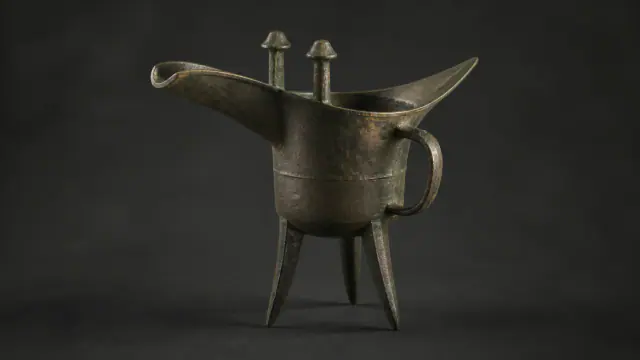
c. sixteenth century BCE
Jue
Ancient China
Approximate dating according to the record.
Read the record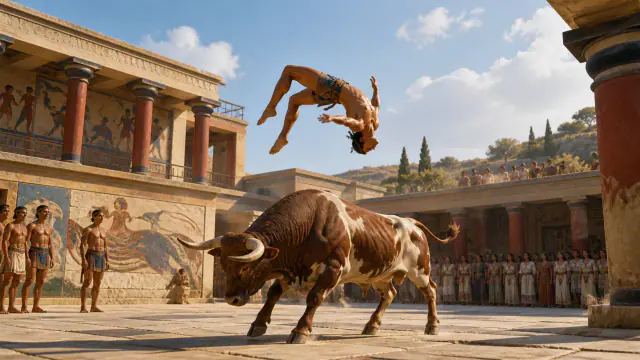
c. 1600–1450 BCE
Bull-leaping
Greek worlds
The iconography does not by itself determine a precise ritual.
Read the record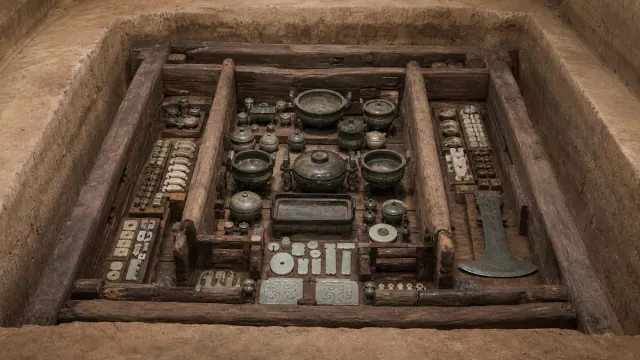
ca. 1200 BCE
Fu Hao’s burial goods
Ancient China
Approximate date of the grave goods; their objects have different histories.
Read the record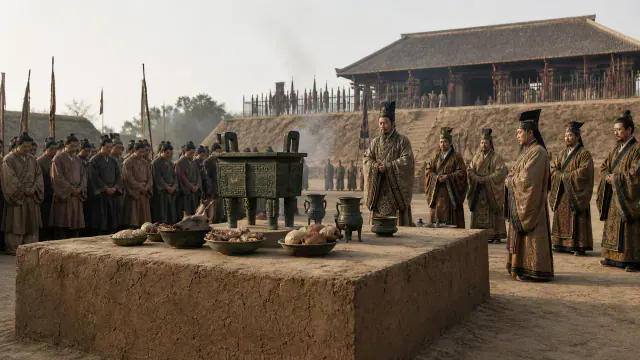
12th–11th centuries BCE
Liding
Ancient China
Approximate dating according to the record.
Read the record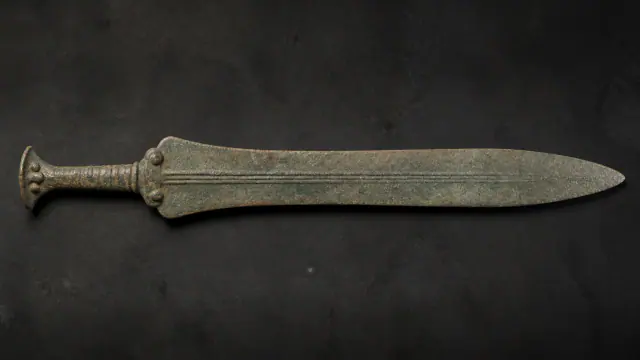
≈1200–1000 BCE · destruction of the talayot towards 790 BCE
Talayotic sword
Iberians
Proposed date of the sword, not of the later destruction of the talayot.
Read the record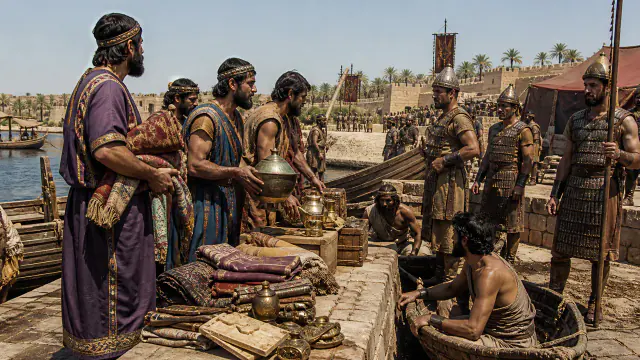
c. 848 BCE
Tribute to Assyria
Phoenicians
Approximate date of the historical scene represented.
Read the record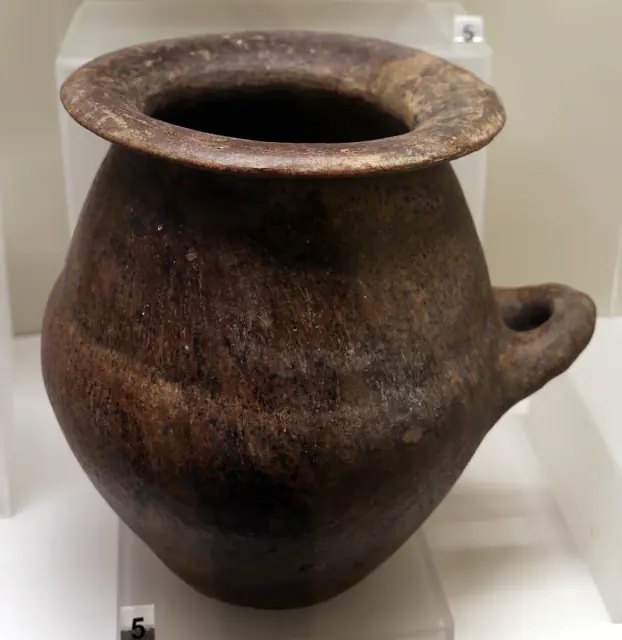
ca. 850–800 BCE
Before Etruscans and Rome
Etruscans and Rome
Approximate dating according to the record.
Read the record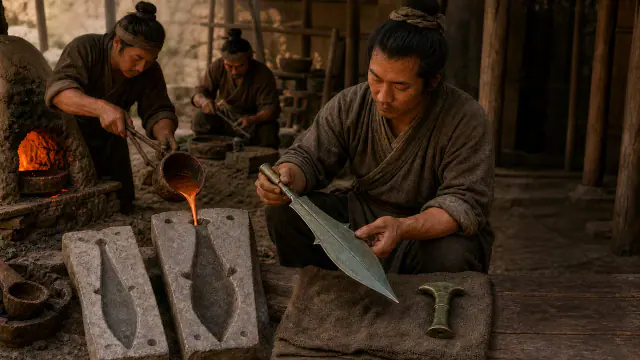
Towards 1000–400 BCE
The lute-shaped dagger
Gojoseon and early Korea
Typological framework of daggers; not a single manufacturing date.
Read the record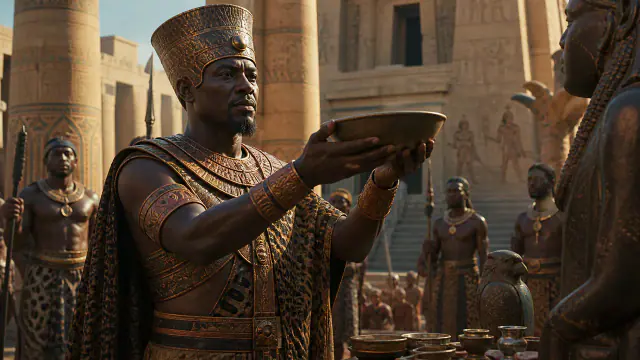
c. 721–664 BCE
Kushite king
Nubia, Kerma and Kush
Interval attributed to the specimen in the catalogue.
Read the record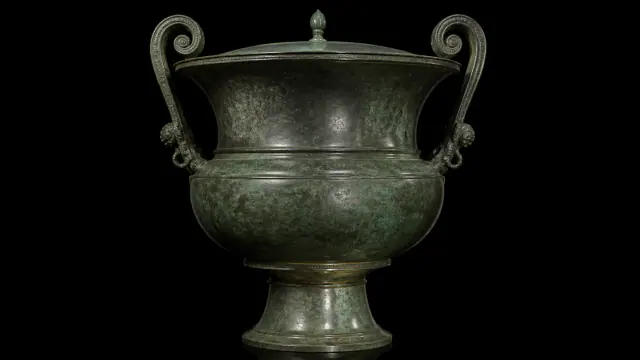
≈530–500 BCE
The great Greek krater of Vix
Greek worlds
Approximate dating according to the record.
Read the record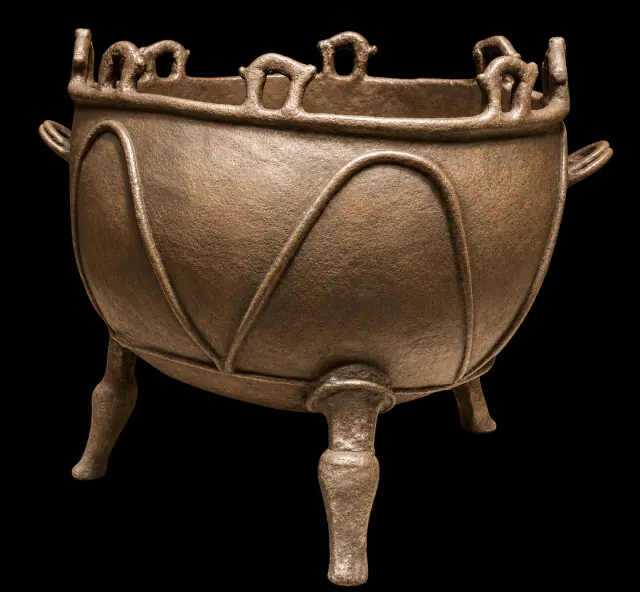
6th–5th centuries BCE
Scorțaru cauldron
Thracians
Approximate dating according to the record.
Read the record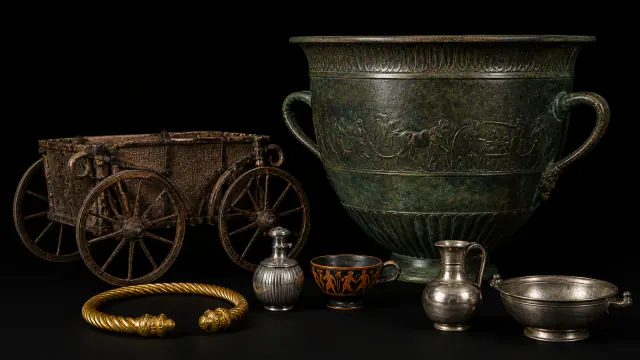
c. 500 BCE
Vix Tomb
Celtic worlds
Approximate date of the funerary assemblage.
Read the record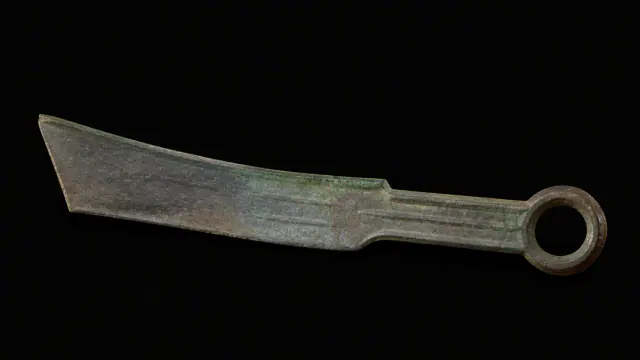
4th–3rd centuries BCE
Overlapping datesYan knife-money in the Gojoseon sphere
Ancient China
Approximate dating according to the record.
Read the record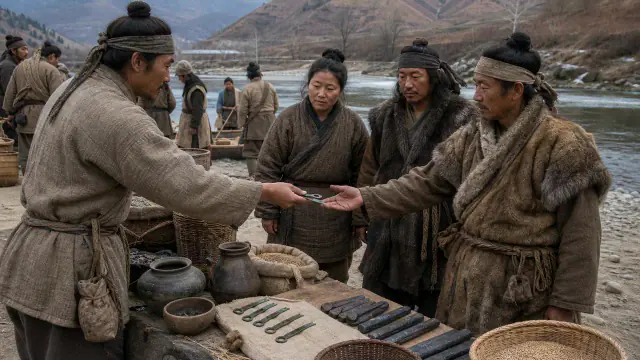
323–222 BCE
Overlapping datesA coin with the memory of a blade
Gojoseon and early Korea
The knife form does not imply that the coin is a weapon.
Read the record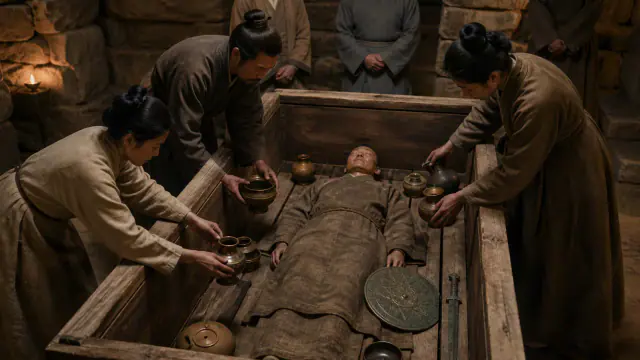
5th–1st centuries BCE
Overlapping datesThe blade became straight
Gojoseon and early Korea
Typological framework of production and deposits.
Read the record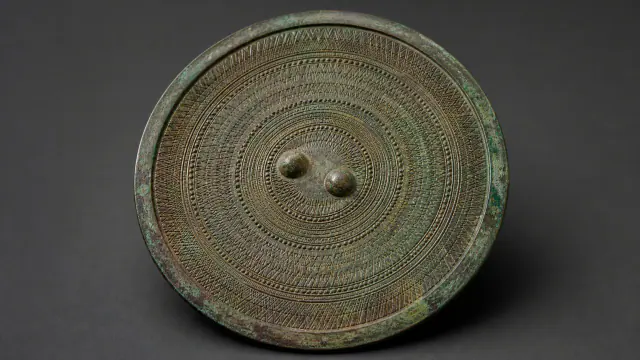 You are viewing
3rd–2nd centuries BCE
Geometry in very fine lines
Gojoseon and early Korea
Approximate dating according to the record.
Current record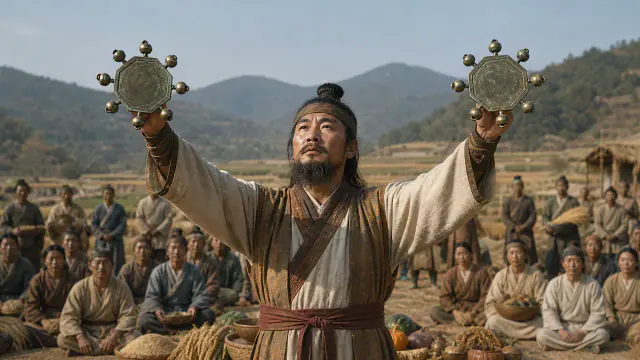
3rd–2nd centuries BCE
Overlapping datesEight voices in one hand
Gojoseon and early Korea
Approximate dating according to the record.
Read the record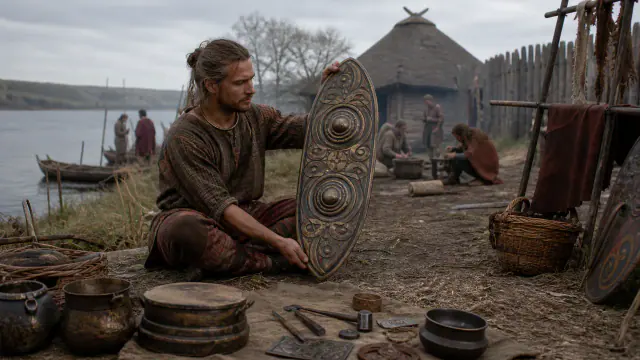
Around 350–50 BCE
Overlapping datesThe Shield that Did Not Fight
Celtic worlds
Prestige object; actual combat use is not presupposed.
Read the record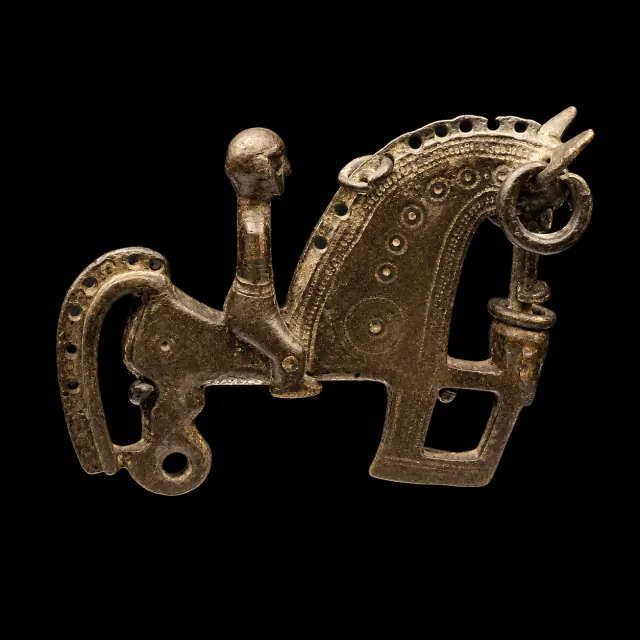
≈300–100 BCE
Overlapping datesFibula from Lancia
Iberians
Approximate dating according to the record.
Read the record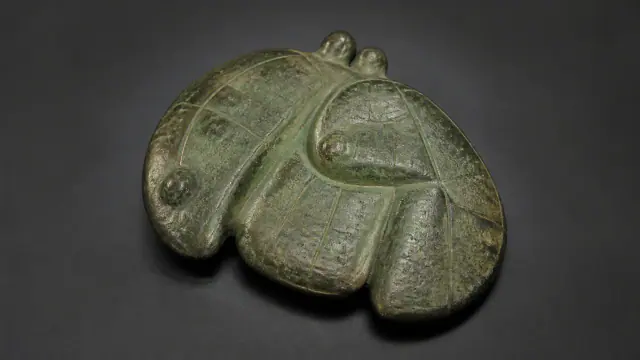
End of the second–beginning of the first century BCE
Overlapping datesA sky over the liver
Etruscans and Rome
The centuries II–I BCE are used in their full extent as an external ordering framework; the record specifies the end of the II and the beginning of the I.
Read the record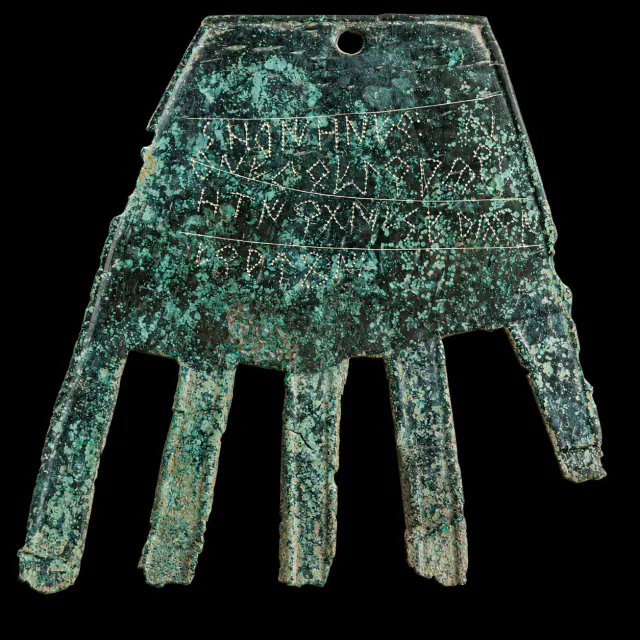
First third of the 1st century BCE
Hand of Irulegui
Iberians
First third of the 1st century BCE; date of the destroyed dwelling beside whose entrance it appeared.
Read the record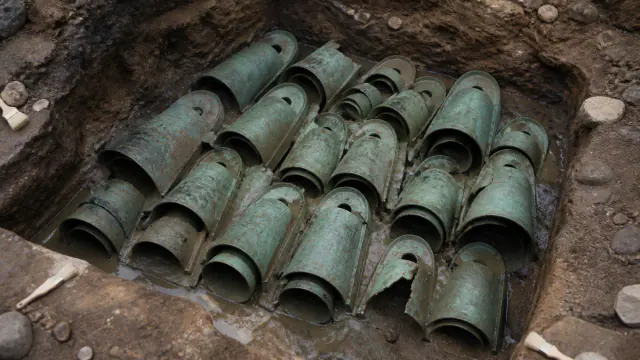
Buried towards the 1st century BCE–1st century CE
Thirty-nine buried bells
Yayoi Japan
Date of burial of the set; not manufacture of each bell.
Read the record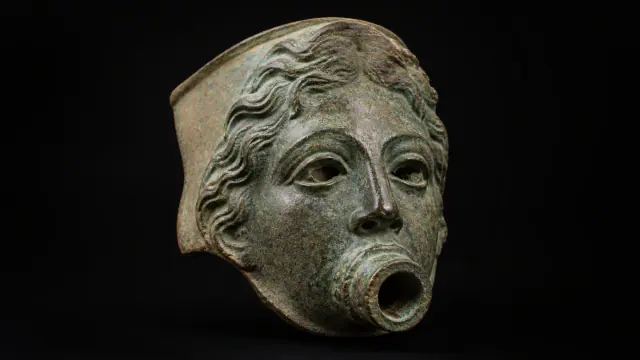
101–125 CE
Torreáguila fountain spout
Etruscans and Rome
Approximate dating according to the record.
Read the record
Also connected, without a comparable date (6)
These objects are not placed after the others: an unknown date does not mean a more recent object.
- Daegok-ri grave goodsGojoseon and early Korea · from c. 5th century BCE
- Early metallurgyAncient China · c. 1900–1500 BCE
- Four offerersIberians · Iberian period · individual dating according to catalogue
- Iron changes the frontierGojoseon and early Korea · 3rd–2nd centuries BCE
- The workshop inside the ditchYayoi Japan · 4th century BCE–3rd century CE, peak in Middle and Late Yayoi
- Weapons under the LakeCeltic worlds · Mainly 3rd–1st centuries BCE
A closer look
About 1 min to read · 1 section. Further reading and sources · free access. Editorial review recorded: .
A sand mould for tiny lines
The National Museum of Korea notes that no ancient moulds for these fine-line mirrors have yet been excavated. However, the conservation of another example, National Treasure 141 of Soongsil University, provided indications of manufacture using fine sand, in contrast to known stone moulds for other bronzes. In Daegok-ri, the triangles contain approximately two or three lines per millimetre. The comparison brings the problem to the craft work: preparing a surface capable of receiving and preserving that relief was as decisive as obtaining the alloy and controlling the pour.
Location and territory
LOCATED SITE
Daegok-ri/Hwasun · KoreaMegalithic landscape marker.Where it is held
National Museum of Korea
Item or group in the record · Documented collection
The holding institution is documented; public display may change. Check its official record before visiting.
Sources and references
Did you enjoy this exhibit?
Your opinion helps us improve the museum. You can change it whenever you like.
Loading your rating…