 English
 Español
 Français
 Italiano
 Deutsch
 Русский
 Português
 Polski
 Română
 Svenska
 Norsk bokmål
 Suomi
 Türkçe
 العربية
 简体中文
 한국어
 हिन्दी
 Ελληνικά
01 · INITIAL ATLAS · DIVISIONS AND REGIONS
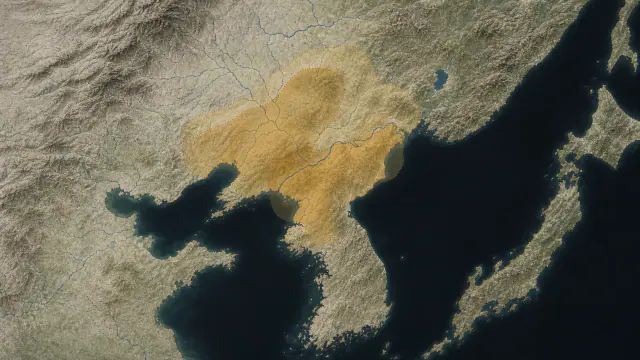
Map of Gojoseon
Explore the places related to Gojoseon and distinguish what we know from archaeology from the accounts of its origin.
Read the complete record → TRACEKEEPERS
HISTORY · OPEN COLLECTION
Intensifying agriculture, megalithic monuments and bronze networks shaped the regional background to Gojoseon. Later historical sources describe a political entity whose boundaries changed over time.
27 complete records · free to read, no account needed
Read freely here. A free account saves your visits inside the museum.
Before you begin · Gojoseon
Gojoseon appeared in a Northeast Asia where fishing, agriculture and exchange had transformed communities over millennia.
c. 8000–1500 BCE
Fishing, gathering, hunting and cultivation combine different resources; pottery allows cooking and preserving food.
From the 2nd millennium BCE
Agriculture gains weight; monumental tombs and prestige goods show new relations within and between communities.
1st millennium BCE
Regional powers and Bronze networks provide the context for studying the formation of the earliest states.
On the Korean Peninsula, Neolithic communities lived alongside rivers and coasts, hunting, fishing and gathering. They also practised small-scale cultivation and built semi-subterranean dwellings. Decorated ceramics associated with the Jeulmun horizon were used to prepare and store food; their differences show a regional diversity prior to any kingdom.
During the 2nd millennium BCE, agricultural settlements and undecorated Mumun ceramics gained importance. Everyday tools remained frequently of stone or wood, although bronze was known. Dolmens, daggers and other prestige objects allow the study of collective labour, social differences and contacts between the peninsula and Northeast China.
In this setting, regional powers developed, among them Gojoseon. Larger communities expanded their relations and authority over others, while goods and technologies circulated. To understand its beginnings, one must compare sites and texts: foundation traditions preserve memory and identity, but do not by themselves offer an archaeologically verified date.
The museum brings together ceramics, monuments and metals to observe how labour, prestige and territorial organisation changed.
Interpreting these traces. Not all dolmens belonged to Gojoseon nor can the Dangun narrative be used as an archaeological date for its foundation.
≈4th–3rd centuries BCE · secure historical evidence · EAST ASIA
Access to the museum brings together the atlas and the antecedents of Gojoseon. Afterwards, seven areas order the historical context, culture, architecture, figures and society, treasures and grave goods, beliefs and curiosities, and two historical doors to other museums. Each entry preserves narrative layers, cautions and differentiated sources.
The room combines a specific visual catalog with an audited thematic dossier. Separates facts, interpretations and cautions; the 3D volumes continue to be replaceable markers until models with provenance and license are incorporated.
Agricultural intensification, megaliths and bronze networks formed the social landscape in which Gojoseon later appears as a political entity with shifting frontiers.
Prehistoric archaeology does not literally confirm the traditional date of Dangun nor allow all Mumun or Liaoning complexes to be assigned to Gojoseon.
Read the background and its sources →EXPLORE THE COLLECTION
Follow the museum’s curated order or go straight to a section. Every record includes its full public documentation and sources.
01 · COLLECTION
Consult the maps and initial context sheets to situate this museum in time and territory; then choose the areas that interest you most.
01 · INITIAL ATLAS · DIVISIONS AND REGIONS
Explore the places related to Gojoseon and distinguish what we know from archaeology from the accounts of its origin.
Read the complete record →02 · BEFORE THE VISIBLE KINGDOM · JEULMUN AND MUMUN · 5000–500 BCE
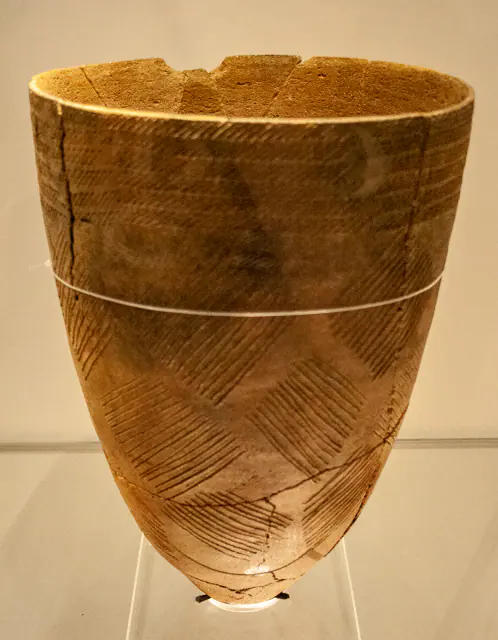
Before Gojoseon, the communities of the Han River were already fishing, cultivating and making decorated vessels.
Read the complete record →02 · COLLECTION
The first stop reconstructs the area before Gojoseon; then, places and processes allow entry into its history without reducing it to a start date or an inevitable destiny.
01 · 01 · Buyeo · communities before the kingdom
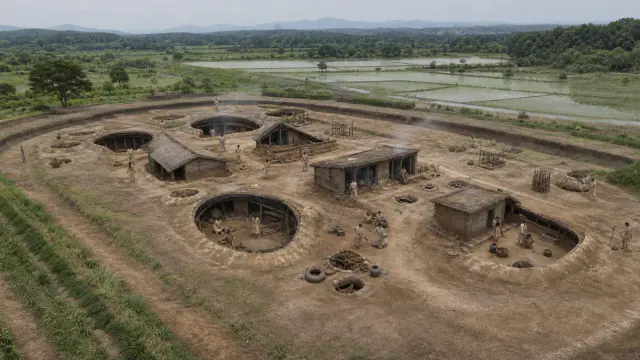
A large agricultural village produced its own pottery and cast bronze without abandoning stone tools.
Read the complete record →02 · 02 · Megalithism · a tomb visible from afar
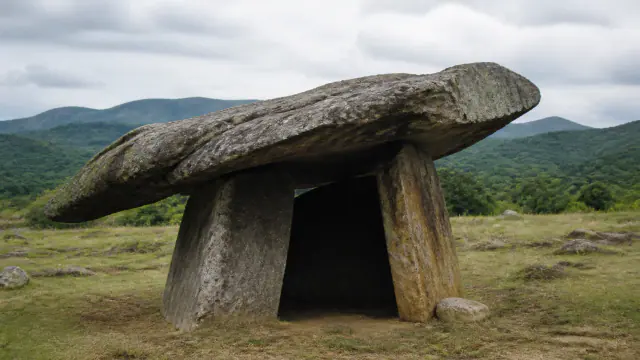
Transporting and raising the great slabs of these monuments required coordination and knowledge of stone.
Read the complete record →03 · 10 · Foundational myth · medieval memory of a remote past
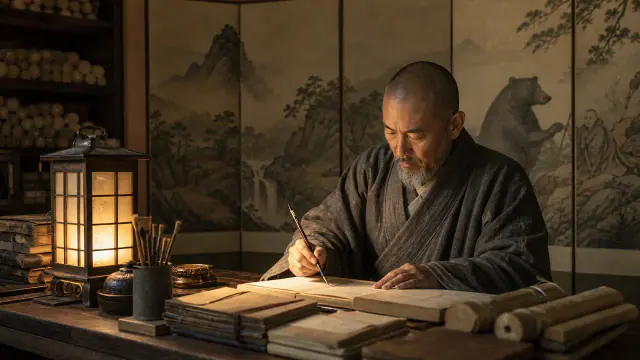
The story of the bear, Hwanung and Dangun is preserved for the first time in a book written more than a millennium after Gojoseon.
Read the complete record →03 · COLLECTION
These stops distinguish instruments, ritual actions, orality or writing and visual culture. Where there is no theatre, score or certain meaning, the museum preserves the limit.
01 · LIVING AND DOCUMENTED CULTURE · 01
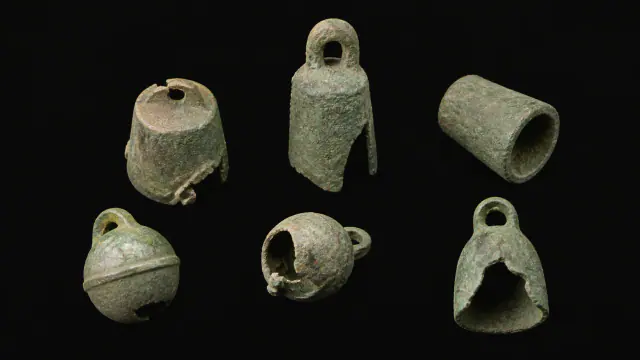
Some bronze objects could produce sound and may have been used in ceremonies.
Read the complete record →02 · LIVING AND DOCUMENTED CULTURE · 02
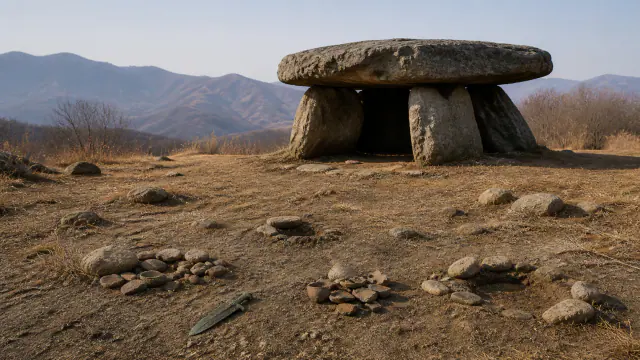
The graves and the objects deposited in them offer indications of gatherings and rituals, although many details remain unknown.
Read the complete record →03 · LIVING AND DOCUMENTED CULTURE · 03
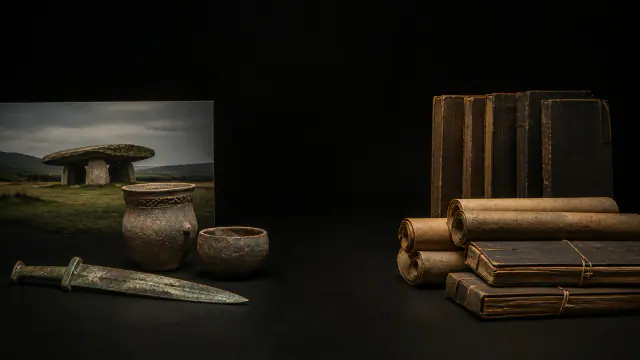
Chinese sources offer external news; the story of Dangun was recorded much later.
Read the complete record →04 · LIVING AND DOCUMENTED CULTURE · 04
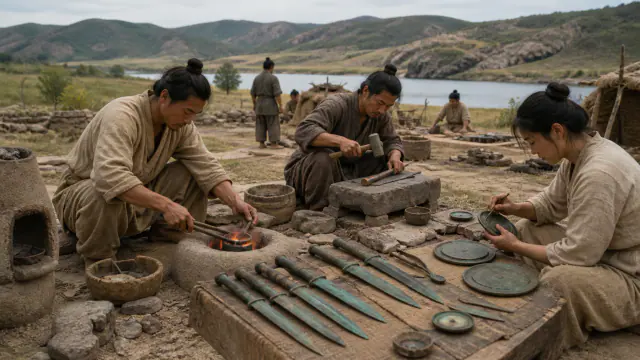
Bronze daggers and mirrors allow comparison of workshops and contacts between distinct regions.
Read the complete record →04 · COLLECTION
These architectures explain how materials, water, work and memory organized the territory without converting an elevation reconstruction into certainty.
01 · ARCHITECTURE AND LANDSCAPE · 01
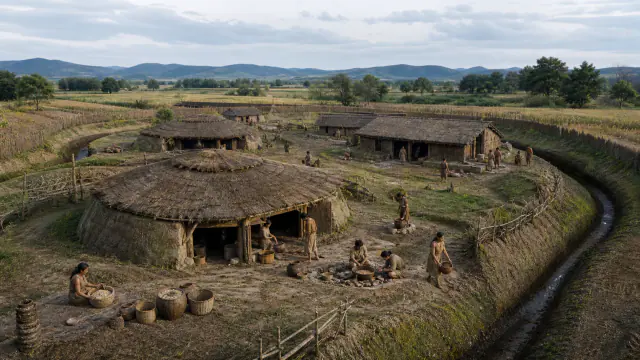
The partially excavated pit-houses and storage pits show how these Bronze Age communities were organised.
Read the complete record →02 · ARCHITECTURE AND LANDSCAPE · 02
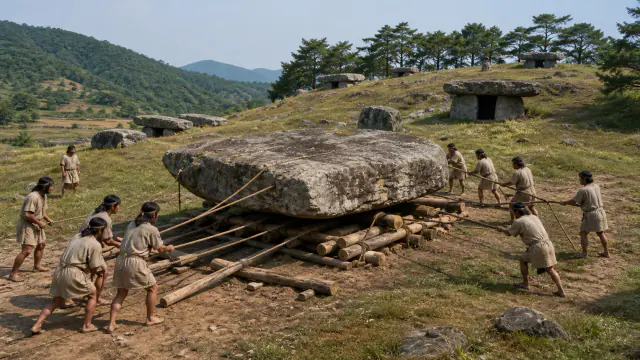
Ganghwa, Gochang and Hwasun preserve monuments of distinct forms and stone quarrying sites.
Read the complete record →03 · ARCHITECTURE AND LANDSCAPE · 03
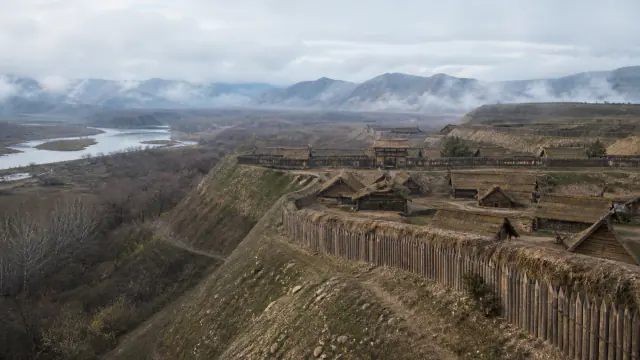
The name survives in texts, but its location is disputed.
Read the complete record →05 · COLLECTION
Known people, reconstructed voices and collective footprints. From oldest to most recent according to life, reign or scene. The periods may overlap; The voices without a determinable date close the journey.
01 · 11 · Beginnings of the 2nd century BCE · migration, coup and kingdom
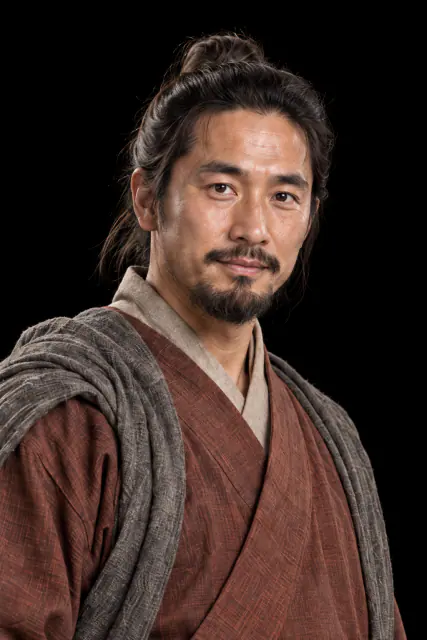
An ancient man of Yan crossed the border with followers, served Joseon and ended up occupying the throne.
Read the complete record →02 · 12 · 109–108 BCE · the end of Wiman Joseon
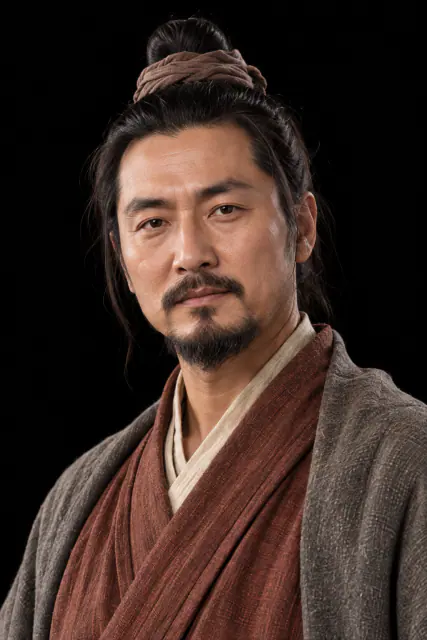
Han armies attacked by land and sea, but the city also fell through divisions among its leaders.
Read the complete record →06 · COLLECTION
Concrete pieces to understand materials, decisions and knowledge systems, with separate evidence and interpretation.
01 · 03 · Megalithic technology · follow the work chain
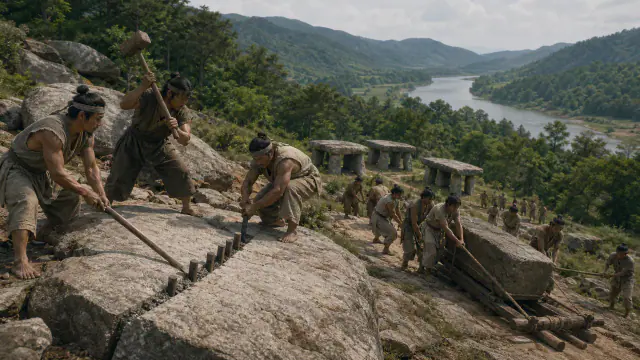
The rocks near the dolmens allow investigation of where the slabs came from and how they could have been transported.
Read the complete record →02 · 06 · Hwasun · precision before writing
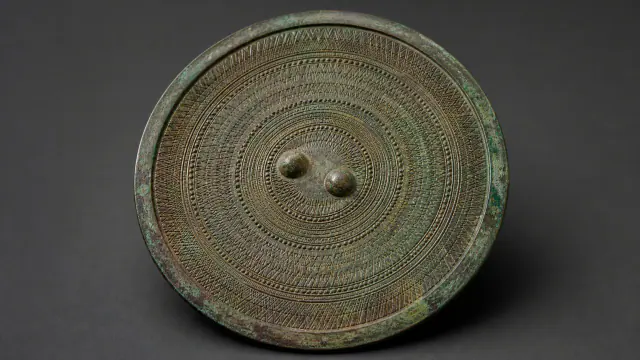
The reverse of the mirror bears lines and triangles so fine that its manufacture required a mould of great precision.
Read the complete record →03 · 07 · Sound · calling or warding off spirits
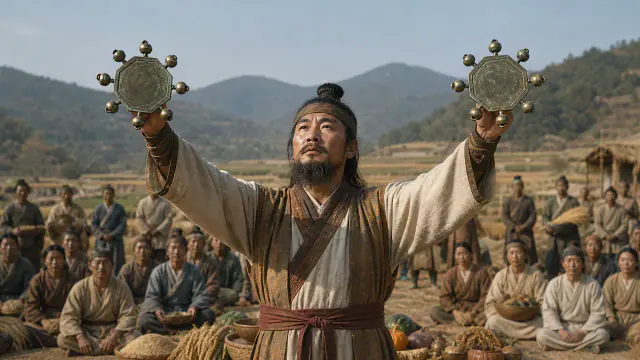
Eight small bells surround the central disc; moving the piece could make them sound together.
Read the complete record →04 · 08 · Exchange and migration · objects that crossed the Yalu
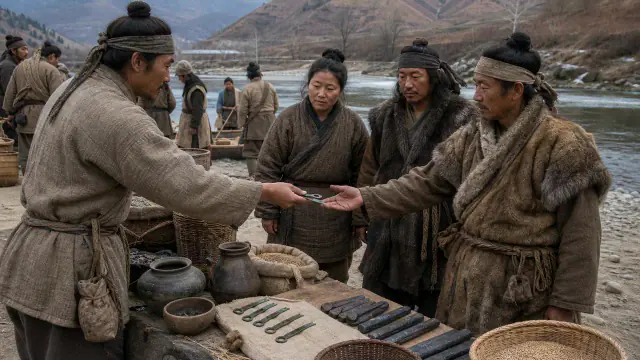
These bronze pieces in knife form were Yan coins, not weapons for cutting.
Read the complete record →05 · 09 · Northwest · a technology that did not arrive alone
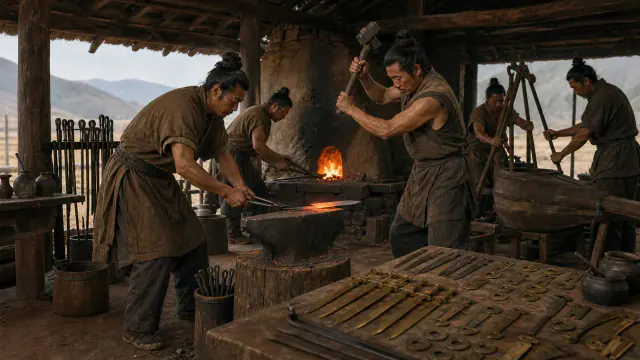
Iron swords, axes and tools appeared in the same corridor through which coins and refugees travelled.
Read the complete record →06 · DOCUMENTED OUTFIT · CLOSED CONTEXT OR CONTROLLED COMPARISON
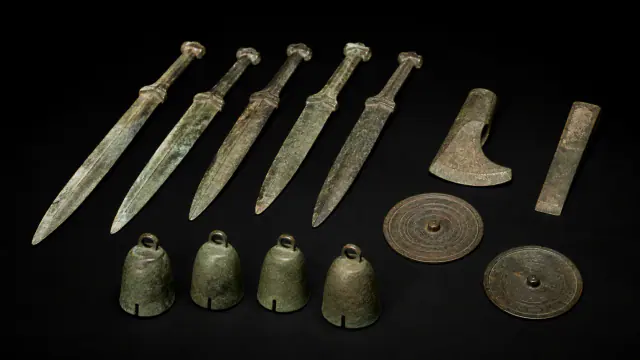
A single burial gathered daggers, tools, mirrors and ritual bronze bells.
Read the complete record →07 · WEAPONS AND EQUIPMENT
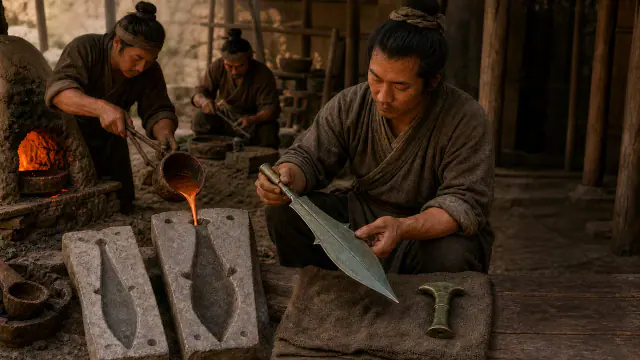
Blade and hilt were cast separately, creating a weapon recognisable on both sides of modern borders.
Read the complete record →08 · WEAPONS AND EQUIPMENT
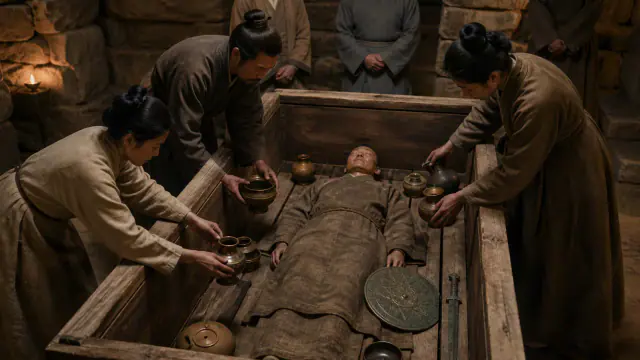
A straighter, sharper blade accompanied individual burials loaded with finely worked bronzes.
Read the complete record →07 · COLLECTION
These cards separate what is documented from what is interpreted and recover practices, questions and details capable of changing our image of this culture.
01 · BELIEFS AND CURIOSITIES · 01
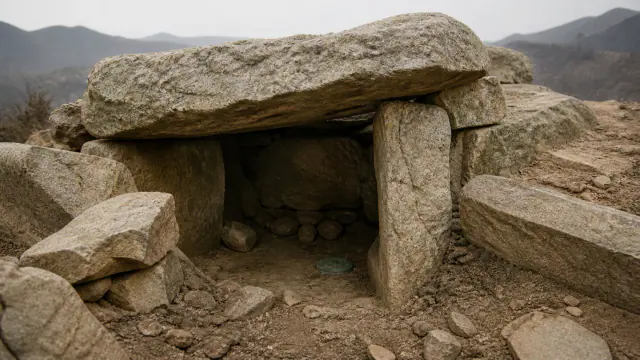
The daggers, mirrors and bells buried together could have related political power with ceremonies.
Read the complete record →02 · BELIEFS AND CURIOSITIES · 02
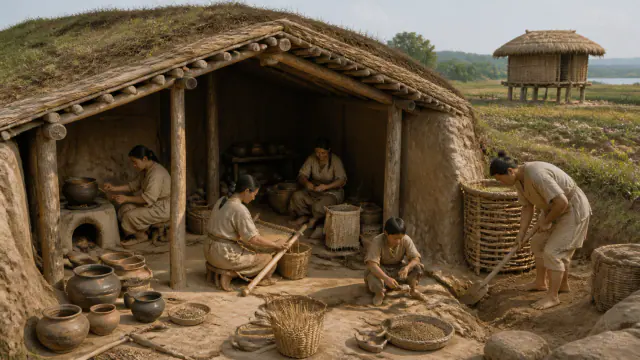
The houses, seeds and pottery show cooking, cultivation and repair tasks that barely appear in the chronicles of kings.
Read the complete record →03 · BELIEFS AND CURIOSITIES · 03
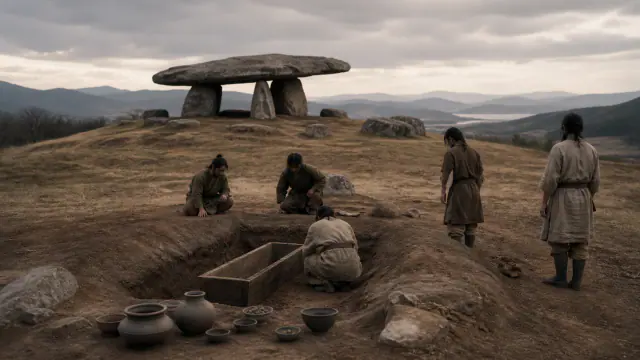
The large dolmens and individual burials with coffins show distinct funerary practices according to place and time.
Read the complete record →08 · COLLECTION
Each door explains why the link exists, when it occurred, and what limits prevent contact from being converted into shared identity.
01 · GATE 01 · ASIA · CONFLICT
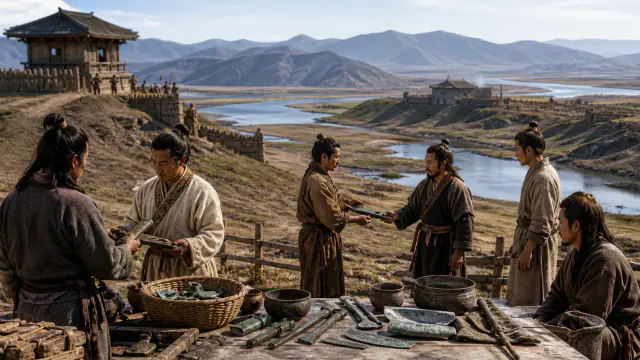
Continues in the Museum of Ancient China
Read the complete record →02 · GATE 02 · ASIA · EXCHANGE
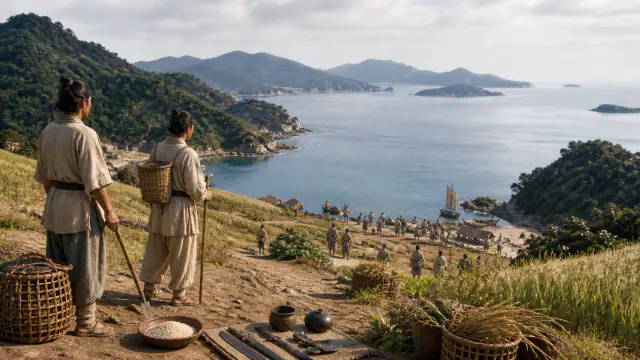
Continues at the Yayoi Museum
Read the complete record →El reino entre mito y bronce
Discover the connected fiction project. The available Prehistory reader is in Spanish; other volumes are not presented as finished products for sale.
Explore the books →Try the available Prehistory browser alpha. Campaigns for the other cultures are still in development.
Open the game (Spanish) →Use each record’s institution and heritage links to continue your research. Country-by-country historical travel guides are planned, not yet published.
Historical travel →Discover artistic designs inspired by the collections and check each product’s availability. Museum access remains free.
Explore the collection →