
 English
 Español
 Français
 Italiano
 Deutsch
 Русский
 Português
 Polski
 Română
 Svenska
 Norsk bokmål
 Suomi
 Türkçe
 العربية
 简体中文
 한국어
 हिन्दी
 Ελληνικά
FUNERARY ADORNMENT · PRE-POTTERY NEOLITHIC B
'Jamila's' necklace
A necklace of over 2,500 beads
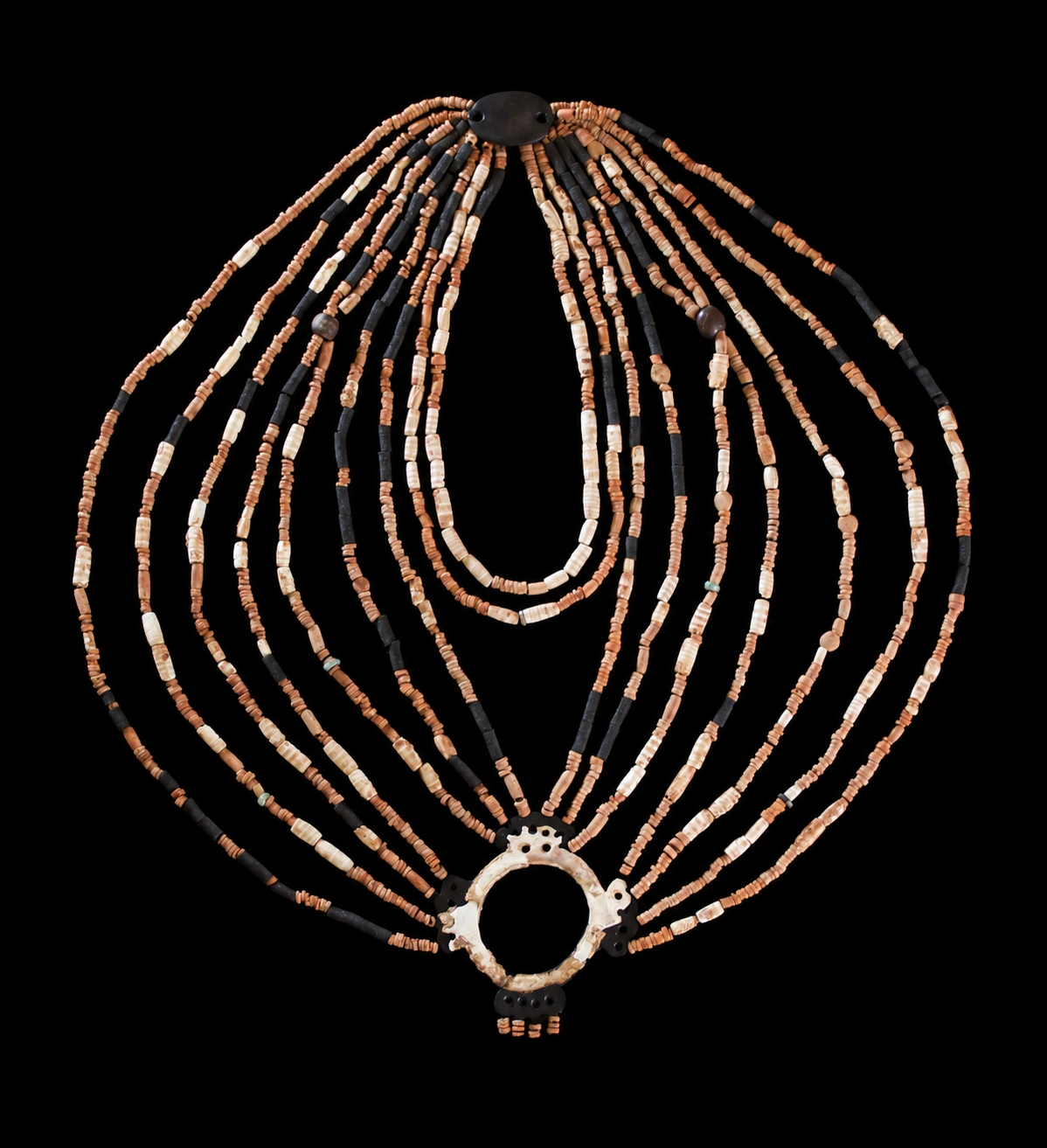
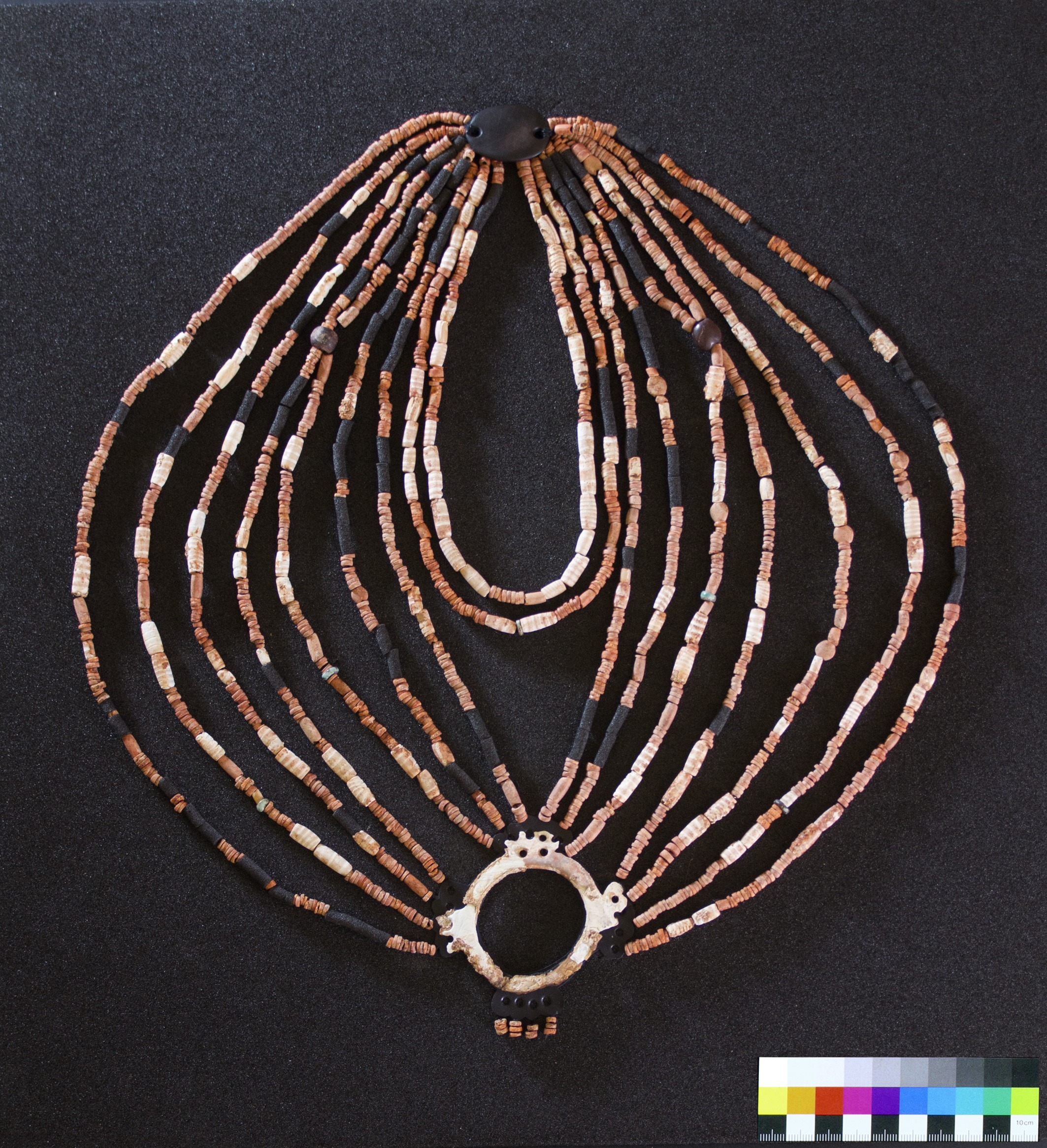
The necklace of a girl from Ba’ja comprised thousands of beads arranged in ten rows.
Museum documentation · free public access, no account required.
Reconstruction · Declared visual hypothesis
A. Burkhardt / Ba'ja Neolithic Project, fig. 23 of Alarashi et al. (2023), PLOS ONE 18(8): e0288075, CC BY 4.0. Interpretive edition with AI. The photograph shows a modern scientific mount with original components, modern cordage and identified black substitutes; not an intact Neolithic necklace. Does not certify the count of over 2500 beads nor the microscopic equivalence of each one; editorial comparison preserves scheme, main sequences and asymmetries. The necklace form is a modern scientific museographic hypothesis, not proof of intact Neolithic cordage. Does not restore lost mother-of-pearl, decomposed beads or unknown ancient cords. Not an archaeological photograph or a certified restitution. Micro-details, finish and colour are interpretive approximations.
Tracekeepers / OpenAI ImageGen; source photograph: A. Burkhardt (photo); Alarashi et al. / Ba'ja Neolithic Project · Petra Museum; mount display reported by the 2023 study · Inventory: Ba'ja CG7 · identificador arqueológico, no inventario de museo · CC BY 4.0
Explore in 3D
Load the model only when you want to explore it. Drag or use the arrow keys to turn it; + and − zoom. Closing it releases its memory.
User-contributed digital reconstruction; file metadata declares Tripo. Not an archaeological scan or a metric replica. Display scale is indicative, not a measurement of the original; the contributed geometry is preserved intact. Version V2 of the girl with necklace. Face, clothing and posture are hypothetical; not the isolated necklace nor an identified portrait. The model does not certify the number or arrangement of the Ba’ja beads. The previous version remains archived.
History and context
In 2018, beneath the floor of a dwelling at Ba‘ja, a cist tomb appeared. Within it, a child of around eight years old had been deposited in a foetal position. Over the chest and neck lay more than 2,500 beads, a haematite clasp and a finely engraved mother-of-pearl ring. The archaeological project presents her today with the nickname 'Jamila': this is not a name preserved from the Neolithic.
The fibres have disappeared, but the position of the beads, their wear and their dimensions allowed the proposal of a necklace of ten rows, measuring up to 30 × 30 centimetres and comprising around six metres of cordage. Red calcite, haematite, turquoise, Red Sea shells and two fossil amber beads connected that settlement hidden among gorges with a much wider world.
Evidence and interpretation
The tomb, the distribution of the beads and the materials are documented; the visible stringing is a scientific reconstruction among several possibilities. The female sex is considered probable, but could not be confirmed, and the necklace does not demonstrate rank, religion or the child's identity on its own.
Catalogue facts
- Date
- ≈7250–7000 BCE
- Location
- Tomb CG7 · Ba‘ja, southern Jordan
- Person
- Child of ≈8 years · probable sex, not confirmed
- Composition
- >2,500 beads · ten rows · mother-of-pearl ring
- Materials
- Calcite, haematite, turquoise, shells and fossil amber
- Display
- Reconstruction at the Petra Museum since 2021
A SHARED TOPIC, DIFFERENT MOMENTS
Objects connected through time
Follow a topic across the collections. A shared tag is a way to compare objects, not proof that one culture influenced another.
The order uses the midpoint of each approximate date range; ranges can overlap. Spacing does not represent elapsed time. Swipe, scroll or use the arrows. With the sequence focused, use ← / →, Home or End.
Jewellery and adornment35 dated objects
≈40,000 years · Aurignacian
Hohle Fels
Prehistory
Approximate catalogue age; editorial reference 2026 for ordering only, not calibrated dating.
Read the record You are viewing
≈7250–7000 BCE
'Jamila's' necklace
Prehistory
Approximate dating according to the record.
Current record
Towards 4600–4200 BCE
The Gold of Varna
Thracians
Date of the Varna funerary assemblage, not of an individual piece.
Read the record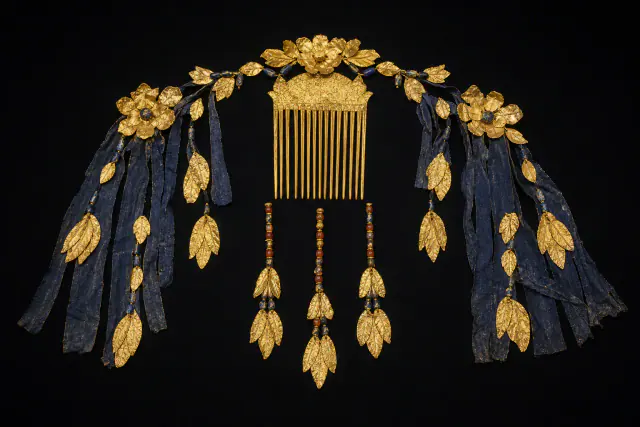
ca. 2600–2450 BCE
Puabi headdress
Sumer
Approximate dating according to the record.
Read the record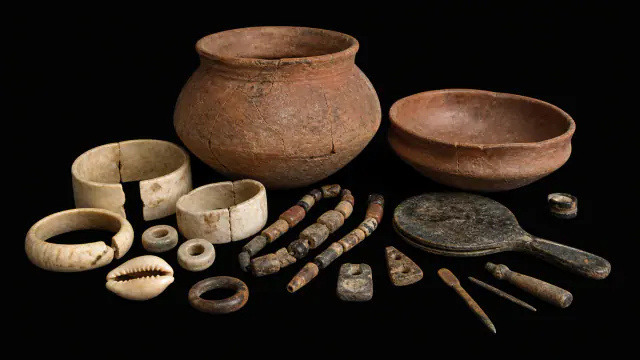
ca. 2550–2030 BCE
Cemetery R-37
Indus civilisation
Interval of the cemetery and its funerary group.
Read the record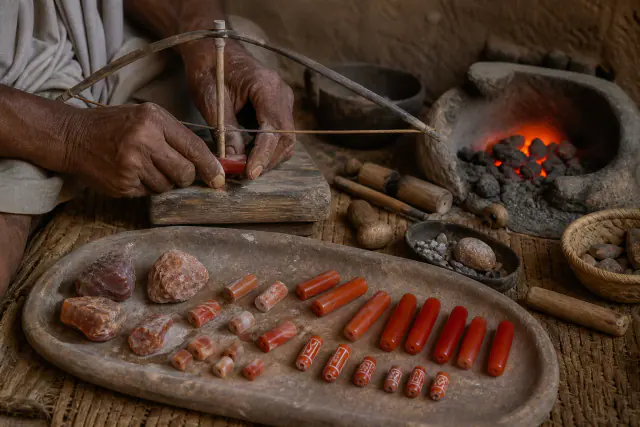
ca. 2600–1900 BCE
Carnelian beads
Indus civilisation
Archaeological framework of the bead assemblage and its production.
Read the record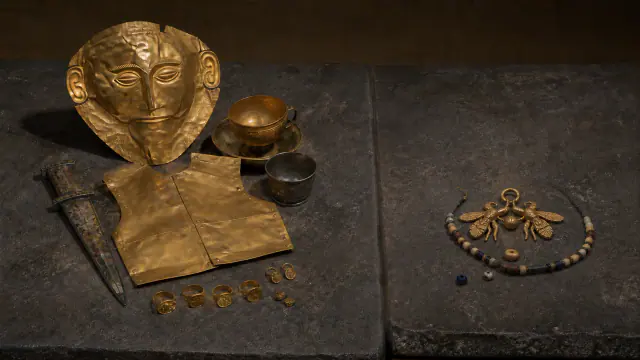
18th–16th centuries BCE
Grave Circle A and Chrysolakkos
Greek worlds
Comparative framework of different funerary assemblages.
Read the record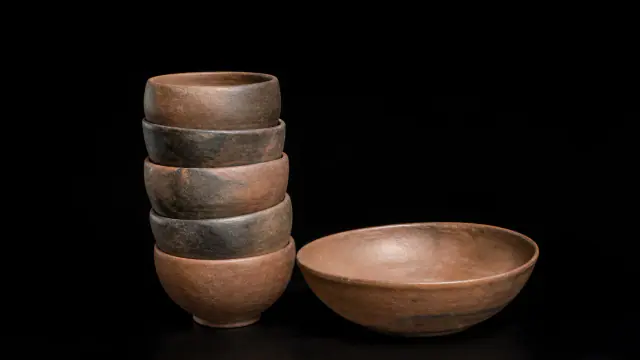
circa 1750–1550 BCE
Burial at K IV
Nubia, Kerma and Kush
Chronology of the funerary assemblage.
Read the record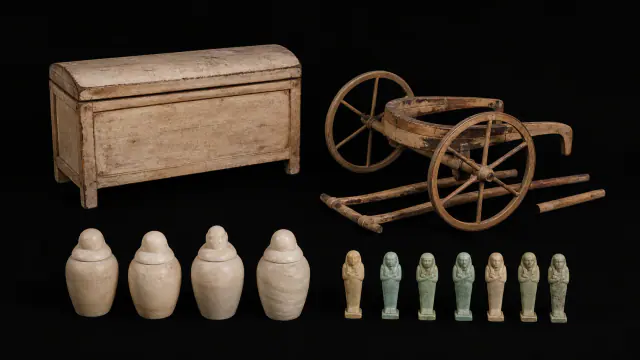
death towards 1323 BCE
Tutankhamun's grave goods
Ancient Egypt
Approximate date of burial, not date of manufacture of the entire trousseau.
Read the record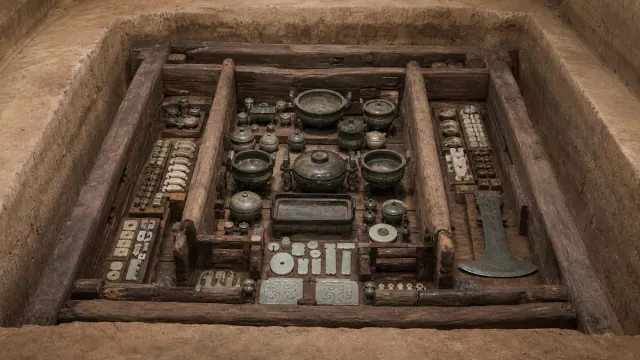
ca. 1200 BCE
Fu Hao’s burial goods
Ancient China
Approximate date of the grave goods; their objects have different histories.
Read the record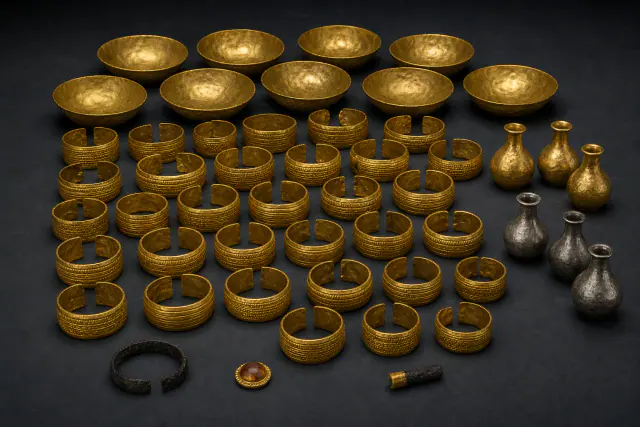
Final Bronze, c. 1000 BCE
Before the Iberias
Iberians
Date of the treasure, not of the preceding general period.
Read the record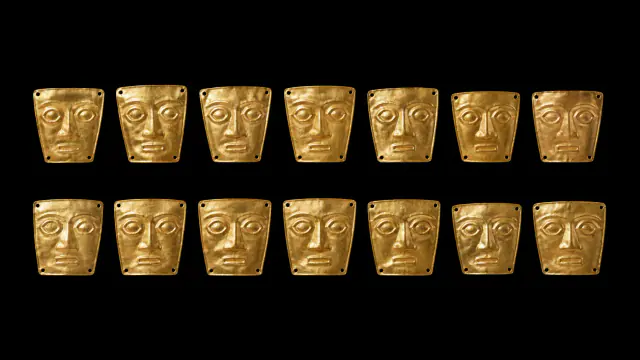
c. 800 BCE
Tomb 1 at Kuntur Wasi
Pre-Inca cultures
Approximate date of the funerary context.
Read the record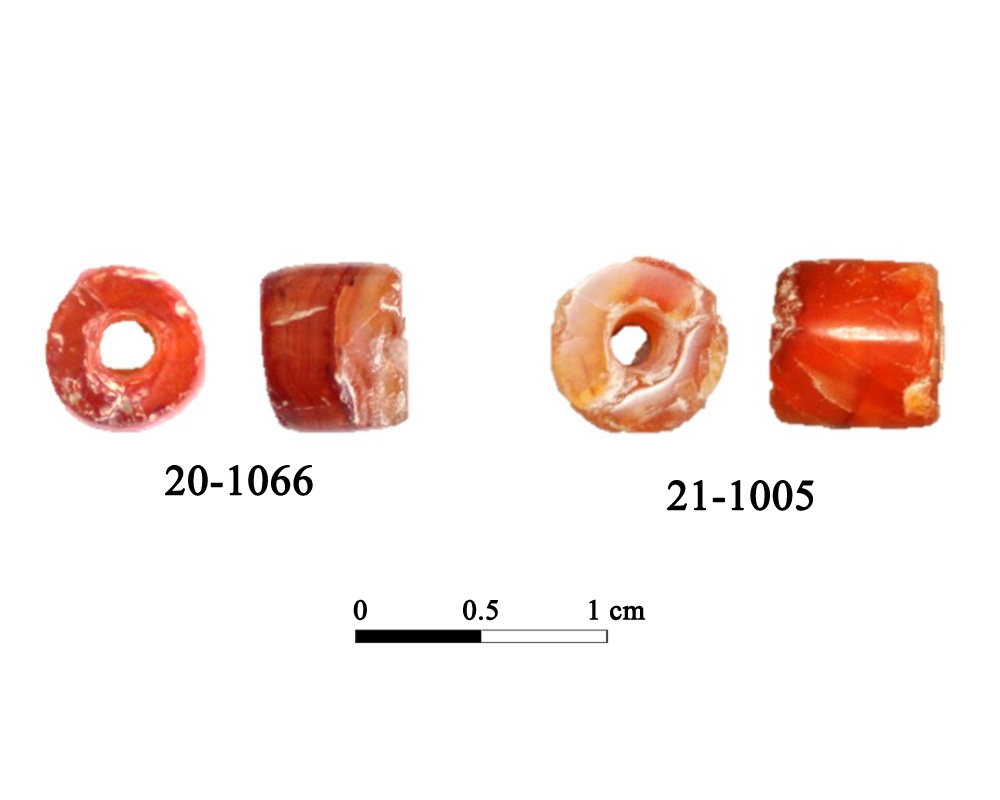
8th–7th centuries BCE · orientalizing
Beads from Cerro de los Vientos
Iberians
Chronology of the funerary context of Tomb 5, Orientalising horizon.
Read the record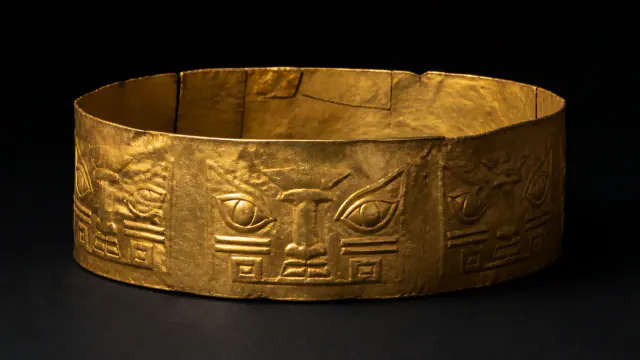
c. 800–550 BCE
Gold at Kuntur Wasi
Pre-Inca cultures
Approximate dating according to the record.
Read the record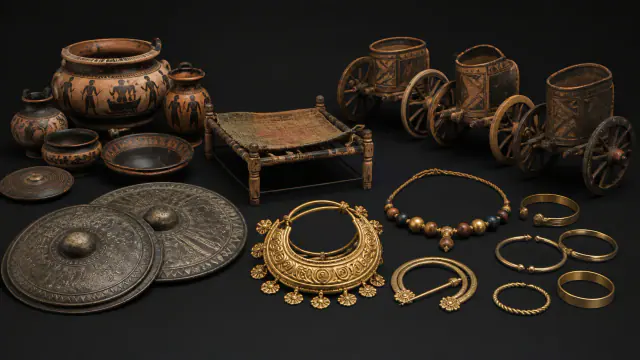
ca. 675–650 BCE
Regolini-Galassi tomb
Etruscans and Rome
Date of the funerary assemblage.
Read the record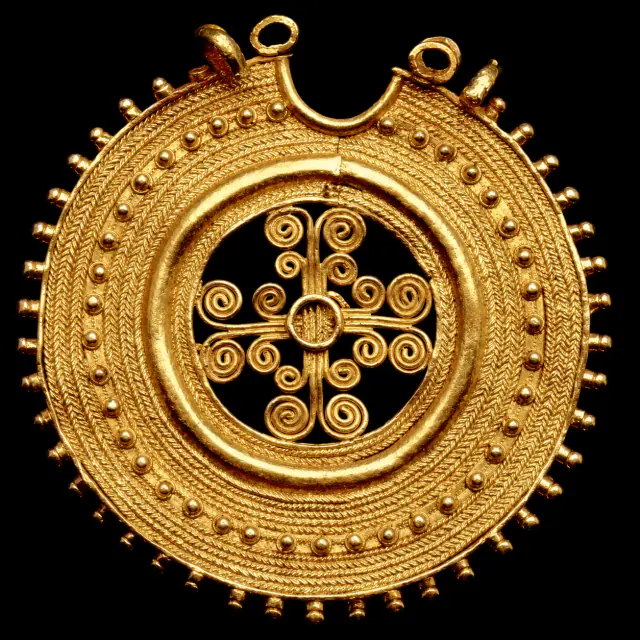
6th century BCE
Condomina Earring
Iberians
Approximate dating according to the record.
Read the record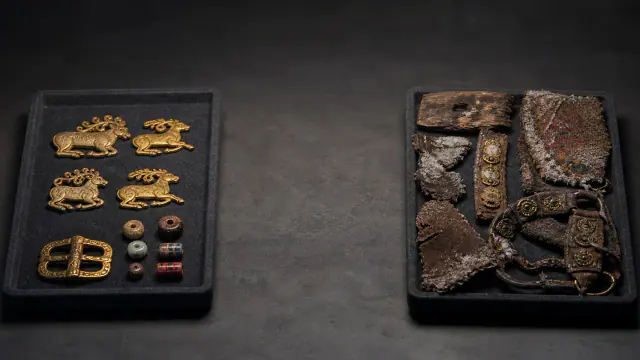
7th–4th centuries BCE
Steppe kurgans
Scythians and Saka
Comparative framework of various barrows and grave goods.
Read the record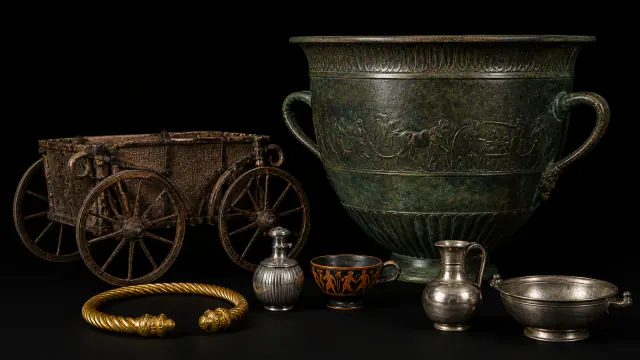
c. 500 BCE
Vix Tomb
Celtic worlds
Approximate date of the funerary assemblage.
Read the record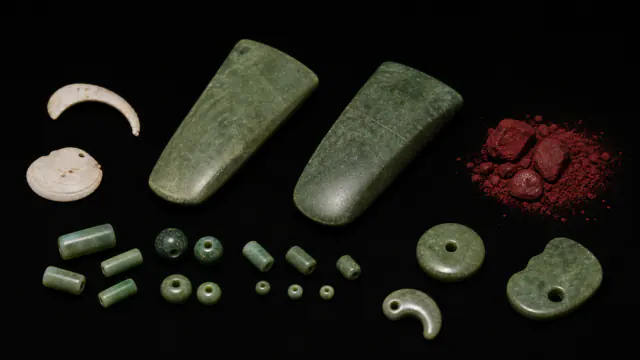
ca. 600–400 BCE
La Venta grave goods
Maya worlds
Date of the funerary assemblage.
Read the record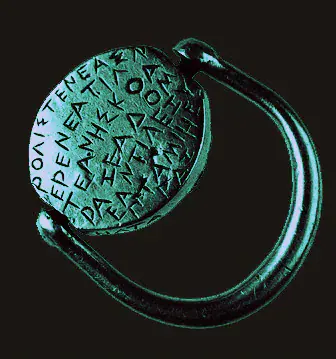
5th century BCE · chronology discussed in the bibliography
Ezerovo Ring
Thracians
The attribution to the 5th century BCE is discussed.
Read the record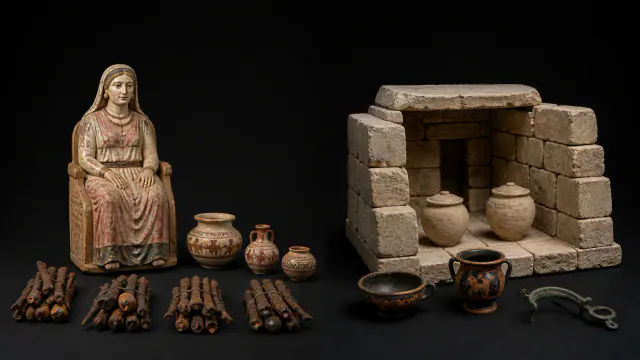
First half of the 4th century BCE
Grave goods of Baza and Toya
Iberians
First half of the 4th century BCE; date of the funerary set.
Read the record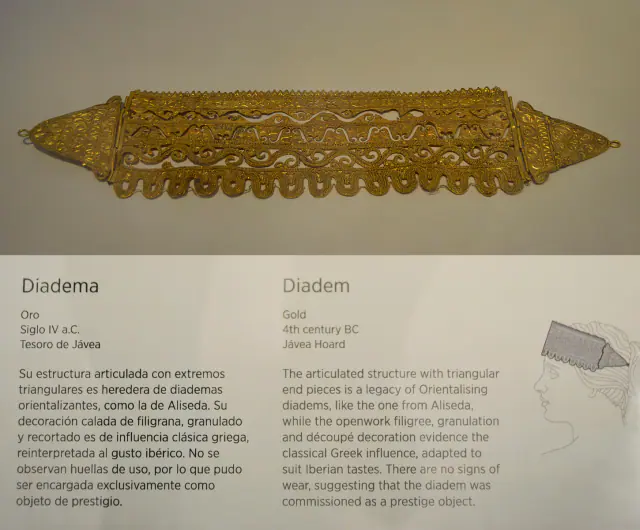
4th century BCE
Treasure of Jávea
Iberians
Approximate dating according to the record.
Read the record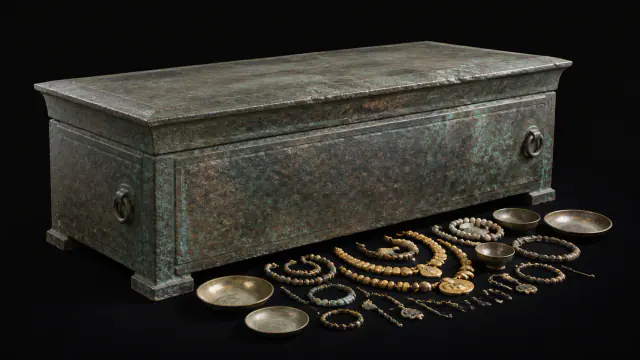
c. 350 BCE
Susa grave goods
Achaemenid Persia
Date of the funerary assemblage.
Read the record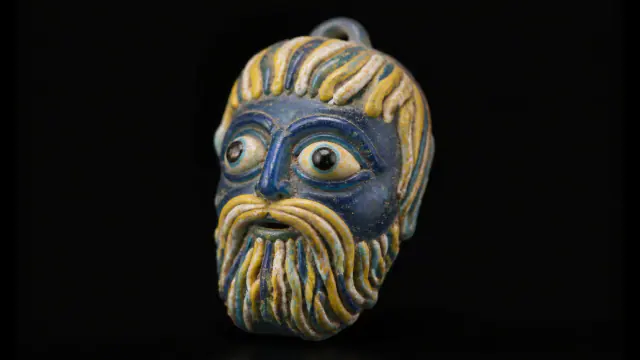
Mid 4th–3rd centuries BCE
Punic head pendant
Phoenicians
The full 4th–3rd centuries BCE provide broad limits for chronological ordering; the record qualifies the date as ‘mid’; no specific years are assigned to that subphase.
Read the record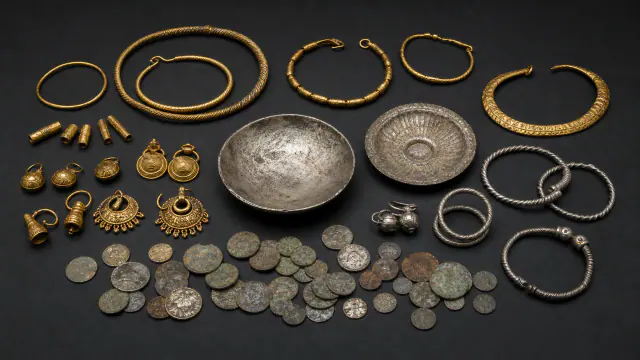
Jewellery from the 4th–3rd centuries BCE; concealment at the end of the 3rd century BCE.
Treasure of Cheste
Iberians
Interval of the jewellery, not of the later concealment.
Read the record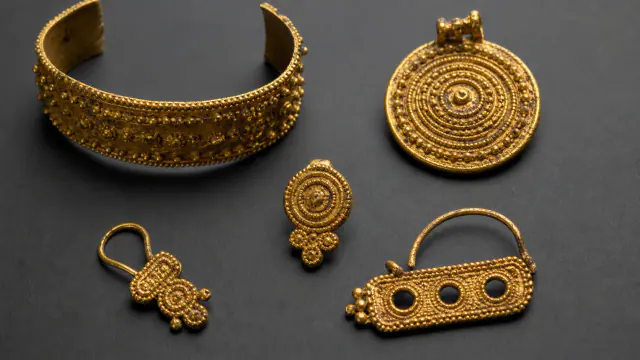
Jewellery: 5th–2nd centuries BCE; concealment probably around 80–73 BCE.
Marina Alta Hoard
Iberians
Interval of the jewellery, not of the Sertorian concealment.
Read the record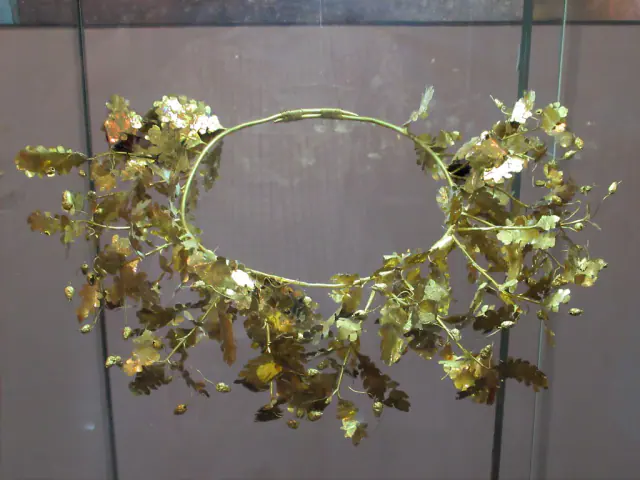
End of the 4th century – beginning of the 3rd century BCE; ritual burial at the beginning of the III according to Iskra.
Golyamata Kosmatka
Thracians
The full span of the 4th–3rd centuries BCE provides the outer bounds for chronological ordering; the record specifies the late 4th and early 3rd centuries. It does not imply that all the grave goods were made at the same time.
Read the record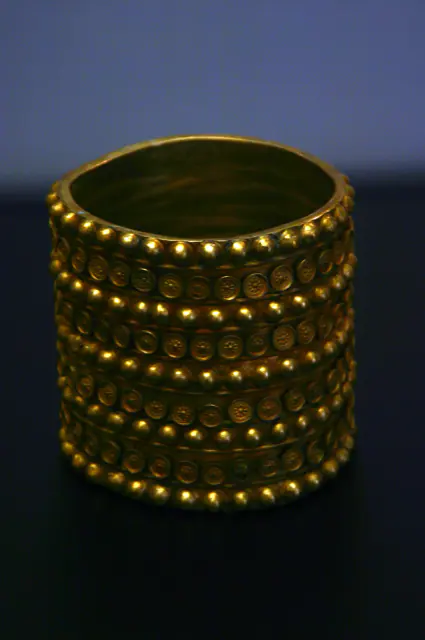
3rd century BCE
Mairena Hoard
Iberians
Approximate dating according to the record.
Read the record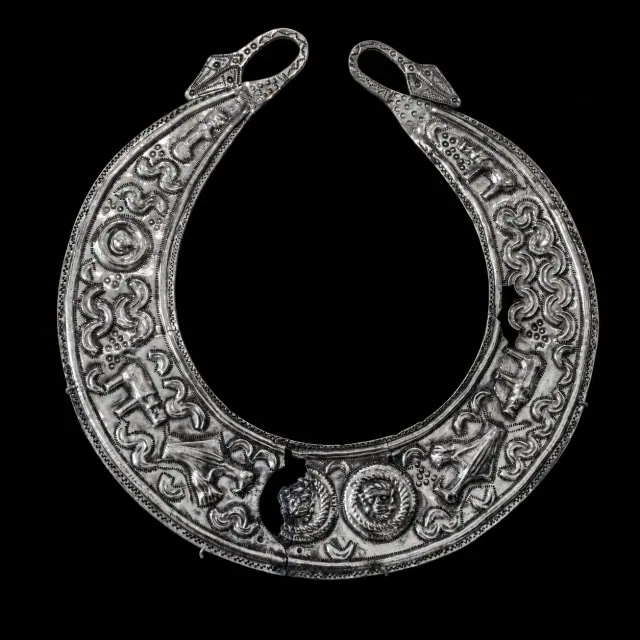
3rd–2nd centuries BCE · concealed in the early 1st century BCE
Chão de Lamas pectoral
Iberians
Centuries of manufacture of the piece; not a later date of concealment.
Read the record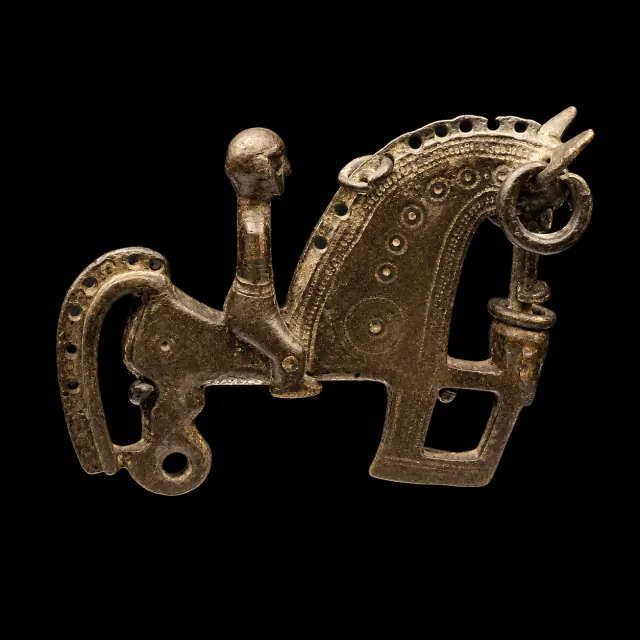
≈300–100 BCE
Fibula from Lancia
Iberians
Approximate dating according to the record.
Read the record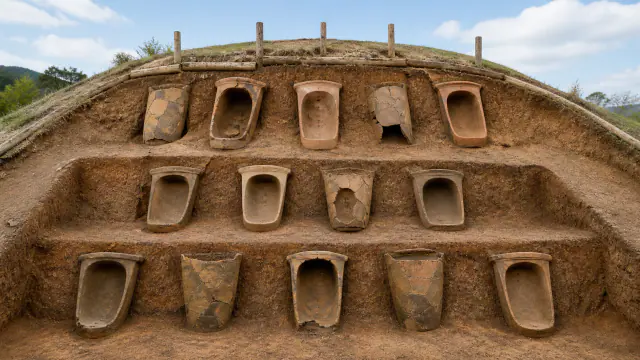
2nd–1st centuries BCE
Northern mound
Yayoi Japan
Date of the funerary assemblage.
Read the record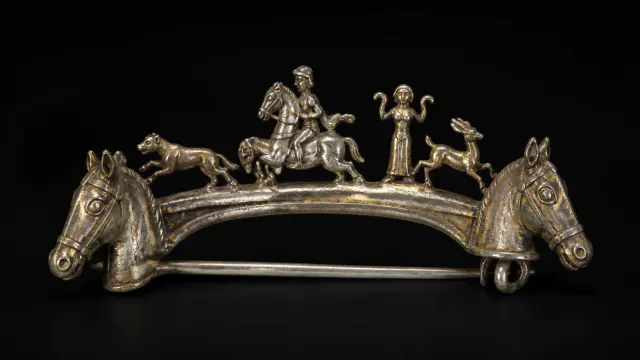
2nd century BCE · disputed chronology
Horse fibula
Iberians
The attribution to the 2nd century BCE is disputed.
Read the record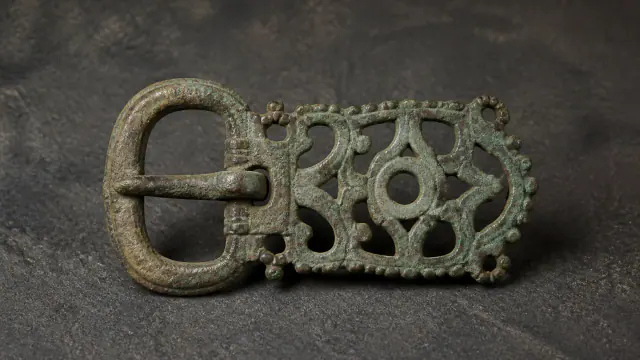
Second half of the IV century–V century CE
Simancas-type belt buckle
Iberians
The full 4th–5th centuries CE provide broad limits for chronological ordering; the record specifies the second half of the 4th century and the 5th.
Read the record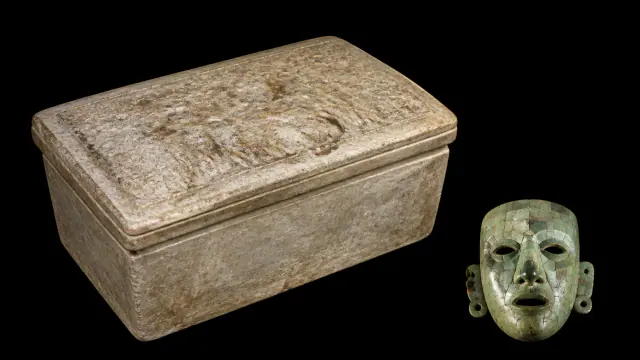
sealed on 28 August 683 CE
Pakal’s grave goods
Maya worlds
Date of tomb sealing; not manufacture of all grave goods pieces.
Read the record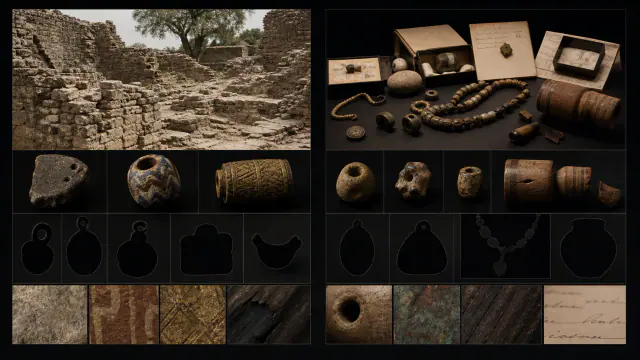
13th–15th centuries according to the heritage overview
Missing grave goods
Bantu-speaking worlds
Date range of the burial assemblage; incomplete individual inventories.
Read the record
Also connected, without a comparable date (1)
These objects are not placed after the others: an unknown date does not mean a more recent object.
- Dressing to be seenIberians · 6th–1st centuries BCE
A closer look
About 4 min to read · 7 sections. Further reading and sources · free access. Editorial review recorded: .
Wear allows reconstruction of a lost tension
The rounded edges and widened perforations of the clasp help propose where the cords pulled. The study examined 440 elements microscopically to compare manufacture and use, in addition to the alignments recorded during excavation. The necklace was not restrung merely for symmetry or modern taste: the pieces retain constraints on how they could have touched and hung. Even so, lost fibres leave alternatives. The reconstruction is a reasoned explanation of the relationships between beads, not the discovery of an intact Neolithic thread.
- Research · Alarashi and colleagues · PLOS ONE, Threads of memory, 2023Access recorded: .
Mother-of-pearl was used down to the last fragment
The central ring allows us to approach the workshops of Ba‘ja. Shells, unworked fragments and manufacturing waste from mother-of-pearl objects appeared at the settlement. When cutting a large ring, leftover pieces could become beads and small pendants. Even broken rings were kept to be reworked. Whoever made these ornaments had to adapt the design to the size and curvature of a raw material that was not to be wasted.
An irregular bead was not necessarily a mistake
The turquoise beads contrast with the regularity of many calcite beads. The study proposes an explanation: achieving a circular silhouette would have required removing part of a valued material. Preserving it could matter more than equalising shapes. Moreover, their intense wear shows those beads had a life before the burial. We do not know who wore them first, but the necklace gathered elements with different histories. Its value did not depend solely on everything looking newly made.
The necklace belonged to a community of artisans
Ornament manufacture was not an isolated activity in Ba‘ja. Excavations located small workspaces and abundant production waste from sandstone rings. These are distinct objects from the mother-of-pearl ring of this necklace: they must not be confused. Their unfinished pieces and breakages allow us to follow decisions and difficulties of the work. This comparison situates the child's adornment within a community accustomed to transforming materials with patience. It also reminds us that the finished pieces in the museum represent only part of the process: offcuts, failed attempts and unfinished objects remained in the workshop.
Before mounting the necklace, its pieces had to be saved
The beads had not all aged equally; the study by Alice Costes and Andrea Fischer separated them into groups according to their state of conservation. The mother-of-pearl presented a laminated structure requiring special attention. Some beads remained adhered to one another, preserving part of an ancient alignment. That is why cleaning and separating were not automatic operations: besides protecting the material, the information that could be lost through handling had to be preserved.
Why the mount contains visible substitutes
Not all beads could be restrung. The report documents small polyethylene foam substitutes in the mount and separate storage for other bead groups. It was not a matter of passing modern pieces off as ancient, but of showing the composition without endangering the most fragile remains. A museum reconstruction must explain how the adornment may have been organised and care for what survives. Sometimes conserving well means leaving an original piece out of the mount.
The tomb and the necklace were reunited in Jordan
The presentation at the Petra Museum was a shared effort. While the beads were studied and conserved, Jordanian specialists Hussein al-Sababha and Musa Serbil reconstructed the tomb structure with its recovered elements. The CARE project brought together research, conservation and outreach, with collaboration between Jordanian and European institutions. Exhibiting the necklace and its context together allows us to understand that it did not appear as a loose jewel. It also keeps the find near its place of origin and makes it accessible to the region's communities, as well as to those visiting Petra.
Reference images and provenance
 View full-size photograph ⛶
The photograph shows a modern scientific mount with original components, modern cordage and identified black substitutes; not an intact Neolithic necklace.
Contextual image · Contextual correspondence
A. Burkhardt (photo); Alarashi et al. / Ba'ja Neolithic Project · Petra Museum; mount display reported by the 2023 study · Inventory: Ba'ja CG7 · identificador arqueológico, no inventario de museo
Location and territory
LOCATED SITE
Ba'ja · JordanApproximate marker of the Neolithic settlement.Where it is held
Petra Museum
Component of the group · On display
Museographic reconstruction of the necklace with the documented beads from CG7, inaugurated in 2021.
The holding institution is documented; public display may change. Check its official record before visiting.
Sources and references
- PLOS ONE · study and reconstruction (2023)
- Ba‘ja Neolithic Project · display at Petra Museum
- Alarashi and colleagues · PLOS ONE, Threads of memory, 2023
- Alarashi and colleagues · manufacture, raw materials and use of the Ba‘ja necklace (PLOS ONE, 2023)
- Hans Georg K. Gebel · craft production and sandstone rings of Ba‘ja (2010)
- Alice Costes and Andrea Fischer · conservation and mounting of the CG7 tomb necklace (2023)
- Freie Universität Berlin · delivery of the necklace and tomb reconstruction at the Petra Museum (2021)
Did you enjoy this exhibit?
Your opinion helps us improve the museum. You can change it whenever you like.
Loading your rating…