Mari Archaic Dynastic IIIb
Statue of Ebih-Il Ebih-Il, a devotee of Mari
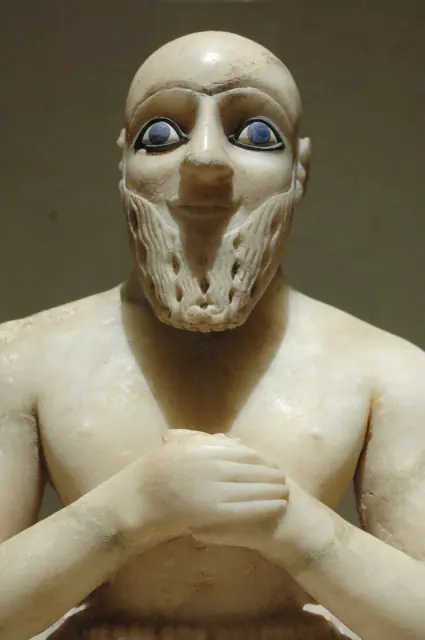
The embedded eyes make a seated figure appear to be looking back at us.
ON THIS PAGE
History and context Evidence and facts Objects connected through time Further reading Where it is held Sources and references Comments Museum documentation · free public access, no account required.
⛶ Enlarge imagePHOTOGRAPH OF THE ORIGINAL · Musée du Louvre, Oriental Antiquités · CC BY 2.5 for the photograph Documentary original · Exact correspondence
Detail of head, torso and hands of the original statue of Ebih-Il; The photograph does not show the entire seated figure.
Jastrow (Marie-Lan Nguyen) · Musée du Louvre, Oriental Antiquities · Inventory: AO 17551 A · M. 177 · CC BY 2.5 for photography
History and context Ebih-Il remains seated with his hands folded. The light stone, inlaid eyes and inscription allow recognition of an individual dedication in the Ishtar temple of Mari. This is not an anonymous figure to whom we have added a modern name.
Its title, nu-band, indicates a role of responsibility. The piece brings the visit to other cities on the Euphrates, not just those in the south. Nor does its inscription in Akkadian automatically make it a work of the later empire of Akkad: a language and an empire are not the same.
Evidence and interpretation Incomplete statue found in 1934. The foot fragments have separate records. No private experiences or thoughts of the dedicator are reconstructed from his expression.
Catalogue facts
Date of piece Towards 2400 BCE
Culture and period Mari Archaic Dynastic IIIb
Provenance Temple of Ishtar, Mari, present-day Syria
Material Alabaster, shell, lapis lazuli and bitumen
Inventory AO 17551 A · M. 177 Stone29 Shell and mother-of-pearl10 Ornamental stones7 Human imagery73 Worship and offerings29
The order uses the midpoint of each approximate date range; ranges can overlap. Spacing does not represent elapsed time. Swipe, scroll or use the arrows. With the sequence focused, use ← / →, Home or End.
Earlier Later
≈425,000–375,000 years
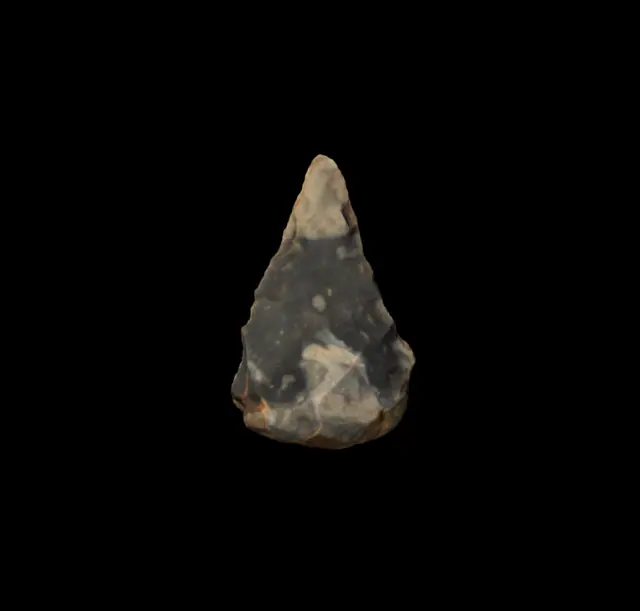
Swanscombe handaxe Prehistory
Approximate catalogue age for the Hoxnian interglacial (MIS 11); editorial reference 2026 for ordering only, not calibrated dating.
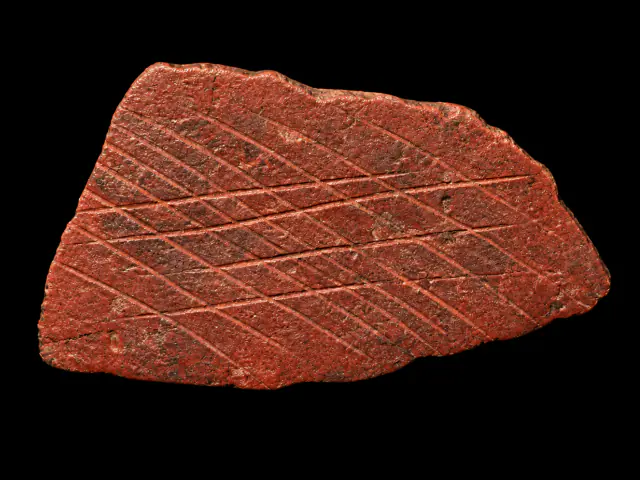
Read the record ≈77,000–75,000 years
Engraved ochre from Blombos Prehistory
Approximate catalogue age; editorial reference 2026 for ordering only, not calibrated dating.
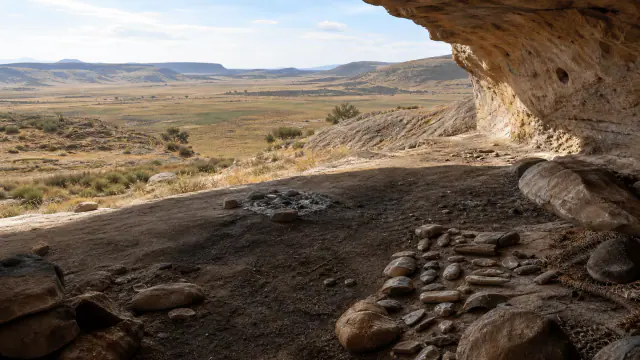
Read the record ≈25.500–23.500 BCE
Before the San San histories
Date of the representative element, not ethnic attribution of its authors.
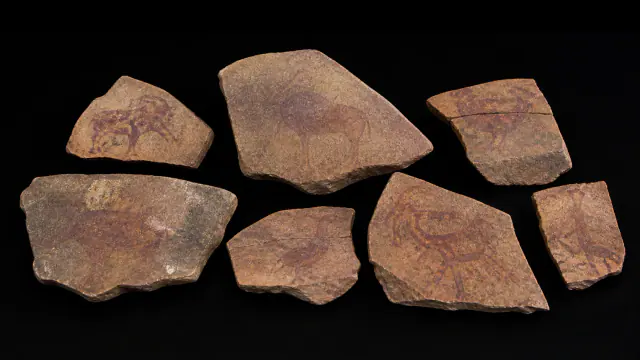
Read the record ≈25.500–23.500 BCE
Before the name San San histories
Dating of the context of the slabs; anonymous authors.
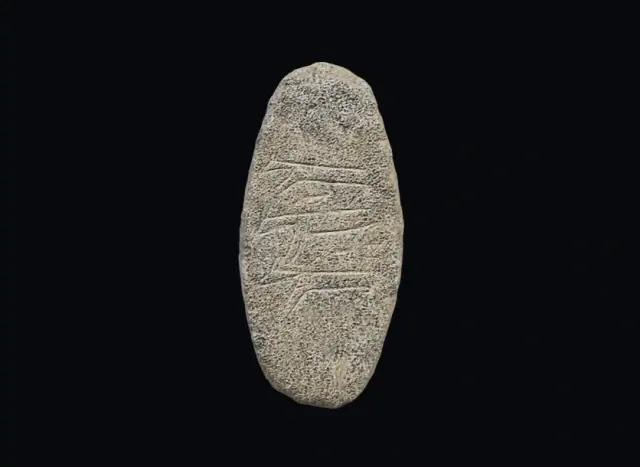
Read the record PPNA · site proposal: ≈9600–8800 BCE, provisional
Engraved stone from Çakmaktepe Prehistory
Provisional date range for the site; not direct dating of this stone.
Read the record PPNA · ≈9600–8800 BCE, provisional proposal for the site
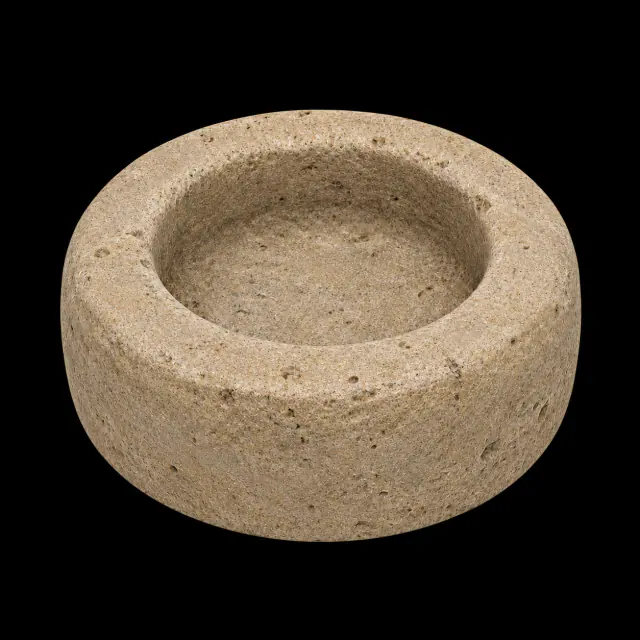
Grinding stone from Çakmaktepe Prehistory
Provisional date range for the site and the published tools; the identification of the image is unverified.
Read the record End of the 4th millennium BCE
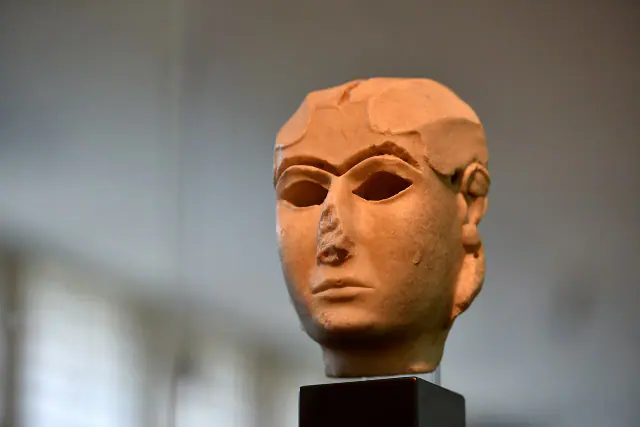
Warka Mask Sumer
The full 4th millennium BCE provides broad limits for chronological ordering; the record specifies the end of the millennium.
Read the record c. 3500–3100 BCE
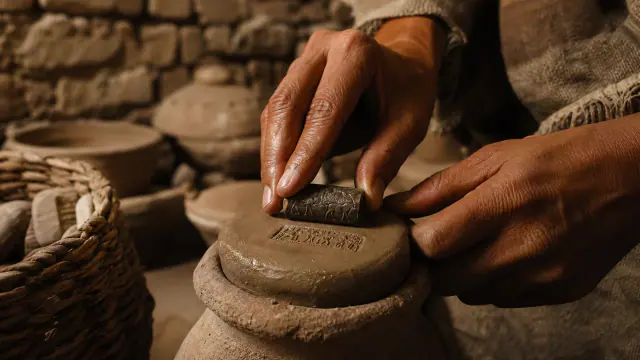
Cylinder seal Sumer
Approximate dating according to the record.
Read the record ca. 3300–3000 BCE
Uruk Vase Sumer
Approximate dating according to the record.
Read the record ca. 3100 BCE
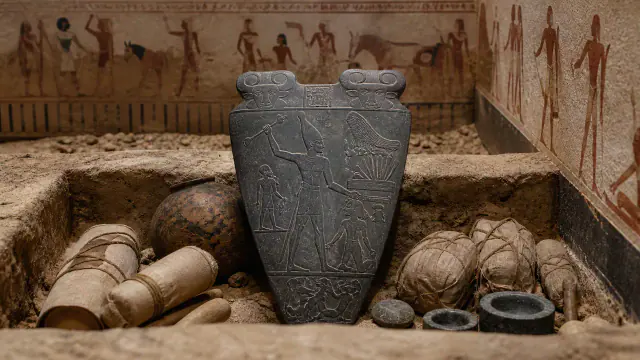
Narmer Palette Ancient Egypt
Approximate dating according to the record.
Read the record Towards 2900–2600 BCE
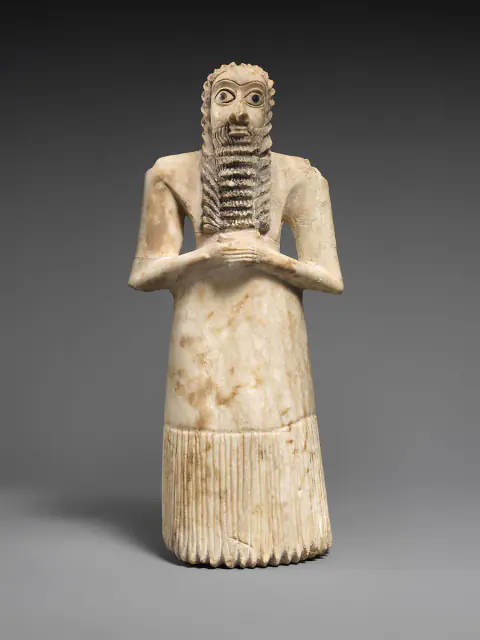
Worshiper of Tell Asmar Sumer
Approximate dating according to the record.
Read the record You are viewing Towards 2400 BCE
Statue of Ebih-Il Sumer
Approximate dating according to the record.
Current record ca. 2600–1900 BCE
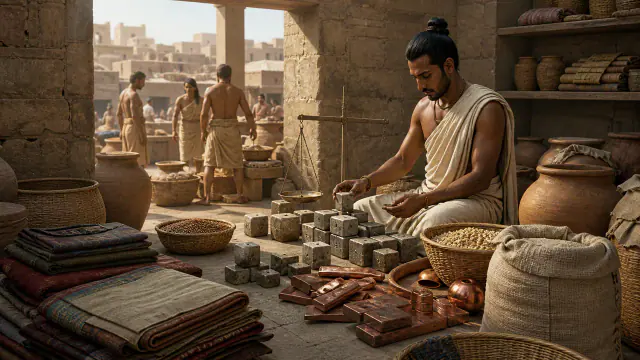
Overlapping dates Weights Indus civilisation
Date range for the system of weights, not a year-specific date for each example.
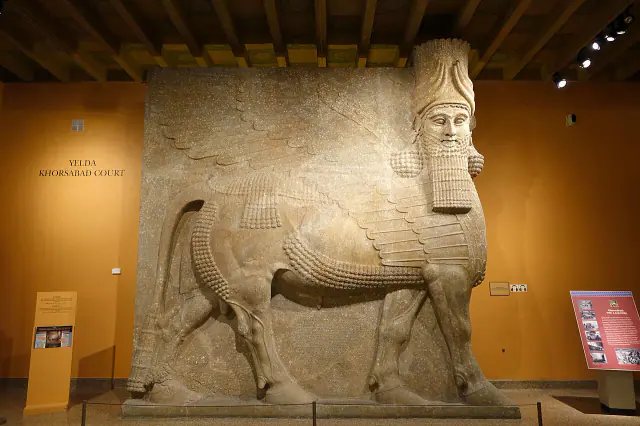
Read the record Reign of Sargon II · 721–705 BCE
Lamassu of Khorsabad Sumer
Reign interval associated with the piece.
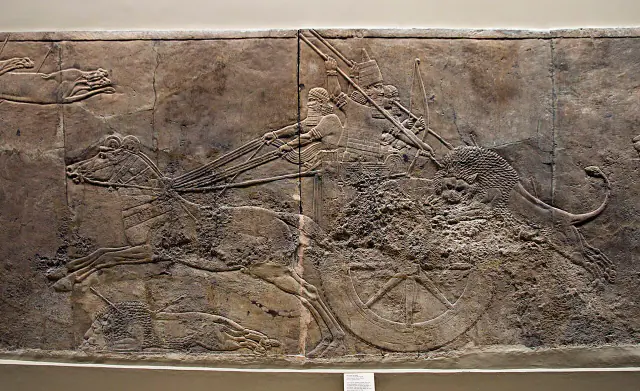
Read the record 645–635 BCE
Ashurbanipal Hunt Sumer
Approximate dating according to the record.
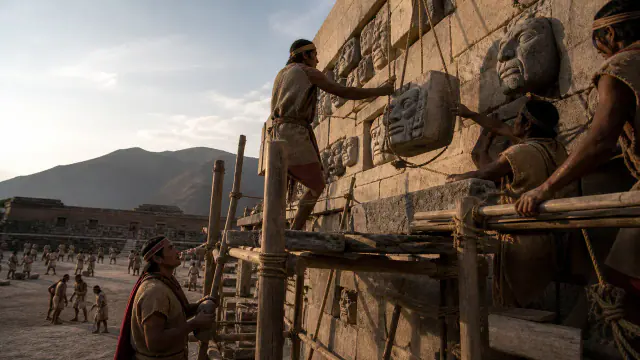
Read the record c. 800–300 BCE
Heads on the wall Pre-Inca cultures
Framework of the set of architectural heads.
Read the record first quarter of the 5th century BCE
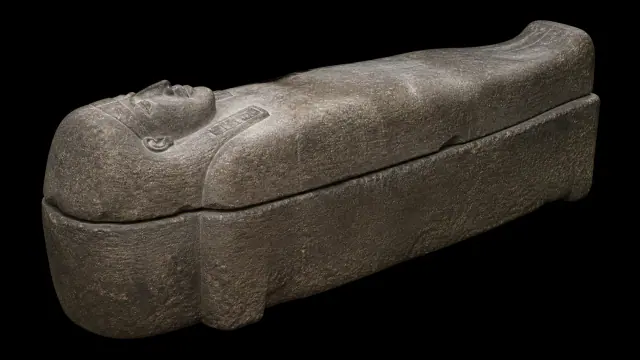
Sarcophagus of Eshmunazar Phoenicians
First quarter of the 5th century BCE
Read the record First half of the 4th century BCE
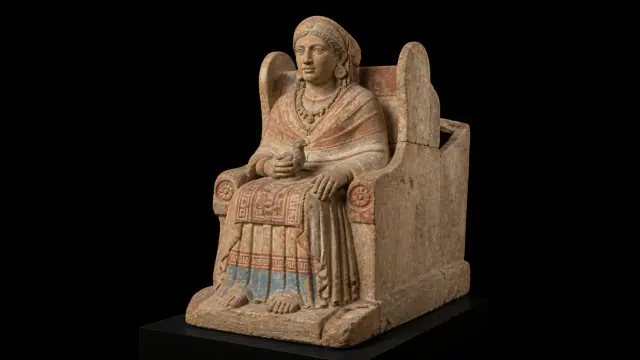
The statue was the urn Iberians
First half of the 4th century BCE; date of the funerary context.
Read the record 4th century BCE
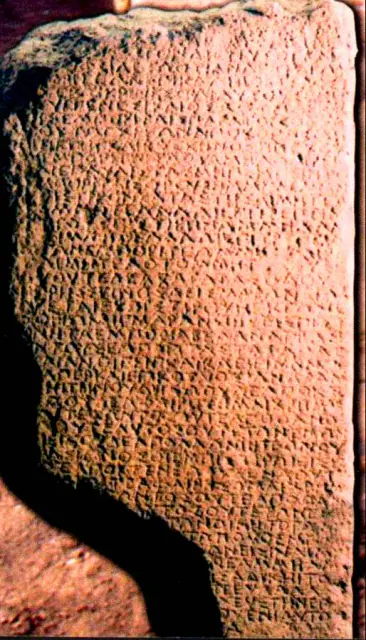
The inscription of Pistiros Thracians
Approximate dating according to the record.
Read the record 12 / 19 In the centre: Statue of Ebih-Il
Also connected, without a comparable date (10) These objects are not placed after the others: an unknown date does not mean a more recent object.
You can scroll the first group without JavaScript. The other topics are also available below.
Shell and mother-of-pearl 'Jamila's' necklace · ≈7250–7000 BCE · PrehistoryWorshiper of Tell Asmar · Towards 2900–2600 BCE · SumerRoyal Game of Ur · 2600–2400 BCE · SumerThe goat from PG 1237 · ca. 2600–2400 BCE · SumerStandard of Ur · ca. 2600–2400 BCE · SumerStatue of Ebih-Il · Towards 2400 BCE · Sumer — You are viewingThe Gallery of the Conch Shells · Main use c. 800–500 BCE · Pre-Inca culturesMissing grave goods · 13th–15th centuries according to the heritage overview · Bantu-speaking worldsWithout a comparable date (not part of the chronological order):
Ornamental stones 'Jamila's' necklace · ≈7250–7000 BCE · PrehistoryPuabi headdress · ca. 2600–2450 BCE · SumerStandard of Ur · ca. 2600–2400 BCE · SumerStatue of Ebih-Il · Towards 2400 BCE · Sumer — You are viewingCarnelian beads · ca. 2600–1900 BCE · Indus civilisationBeads from Cerro de los Vientos · 8th–7th centuries BCE · orientalizing · IberiansWithout a comparable date (not part of the chronological order):
Meluhha · ca. 2600–1900 BCE · Indus civilisationHuman imagery Lion-man · ≈40,000 years · Aurignacian · PrehistoryHohle Fels · ≈40,000 years · Aurignacian · PrehistoryWillendorf · ≈29,500 years · PrehistoryBrno II Articulated Figure · ≈28,000 years cal BP · by funerary association · PrehistoryDolní Věstonice I · ≈29,000–27,000 years · PrehistoryLespugue · ≈28,000 years · PrehistoryKostenki I · ≈23,000–21,000 years · PrehistoryShigir Idol · C. 10,000 BCE · approximation; debated dating · PrehistoryNahal Hemar mask · Eighth millennium BCE · context dating, not direct dating of the stone · PrehistoryEl Miradero spatula-idols · ≈4000–3800 cal BCE · PrehistoryWarka Mask · End of the 4th millennium BCE · SumerCueva de las Manos · Sequence ≈9300–1300 BP · PrehistoryUruk Vase · ca. 3300–3000 BCE · SumerWorshiper of Tell Asmar · Towards 2900–2600 BCE · SumerStandard of Ur · ca. 2600–2400 BCE · SumerStatue of Ebih-Il · Towards 2400 BCE · Sumer — You are viewingAkkadian sovereign head · Akkadian period · 23rd century BCE · SumerBassetki Statue · Akkadian period · 23rd century BCE · SumerBefore Pre-Inca Cultures · Kotosh-Mito Tradition, c. 2200–1500 BCE; the enclosure is usually situated around 1800 BCE. · Pre-Inca culturesQueen of the Night · 19th–18th centuries BCE · SumerBull-leaping · c. 1600–1450 BCE · Greek worldsWooden faces · c. 1600–1000 BCE, in several phases · Maya worldsHead 2 · c. 1200–900 BCE · Maya worldsIvory in Nimrud · 9th–8th centuries BCE · PhoeniciansLas Limas · c. 1000–600 BCE · Maya worldsAstarte from El Carambolo · 8th century BCE · PhoeniciansAstarte from El Carambolo · 8th century BCE · IberiansLamassu of Khorsabad · Reign of Sargon II · 721–705 BCE · SumerThe Lanzón · c. 900–500 BCE · Pre-Inca culturesOffering 4 · c. 800–600 BCE · Maya worldsKushite king · c. 721–664 BCE · Nubia, Kerma and KushThe so-called ‘Priest of Cádiz’ · 7th century BCE · PhoeniciansThe so-called ‘Priest of Cádiz’ · 7th century BCE · IberiansHeads on the wall · c. 800–300 BCE · Pre-Inca culturesShabti of Psamtek · 570–526 BCE · Ancient EgyptTwo voices in an urn · 530–520 BCE · Etruscans and RomeThe god on the roof · Towards 510–500 BCE · Etruscans and RomeGlazed brick guards · 522–486 BCE · Achaemenid PersiaTwenty-three delegations · 6th–5th centuries BCE, mainly under Darius and Xerxes · Achaemenid PersiaBanquet under leopards · Around 480–470 BCE · Etruscans and RomeThe statue was the urn · First half of the 4th century BCE · IberiansA battle on a comb · Early 4th century BCE · Scythians and SakaThe Kul-Oba vase · 4th century BCE · Greek worldsThe Solokha gold comb · 4th century BCE · Greek worldsFaces of the Steppe · Second half of the 4th century BCE · Scythians and SakaLady of Ibiza · 4th–3rd centuries BCE · PhoeniciansPunic head pendant · Mid 4th–3rd centuries BCE · PhoeniciansLady of Ibiza · 4th–3rd centuries BCE · IberiansThe Raimondi Stele · c. 400–200 BCE according to MNAAHP · Pre-Inca culturesChão de Lamas pectoral · 3rd–2nd centuries BCE · concealed in the early 1st century BCE · IberiansVas dels Guerrers · 3rd–early 2nd century BCE · IberiansWarriors' Vase · 3rd–2nd centuries BCE · IberiansThe dismantled cauldron · 2nd–1st centuries BCE · Celtic worldsThe walls of San Bartolo · c. 100 BCE · Maya worldsGladiators Cup of Chavagnes · 25–75 CE · Etruscans and RomeThracian Gladiator from Cádiz · 67–100 CE · Etruscans and RomeTorreáguila fountain spout · 101–125 CE · Etruscans and RomeArticulated doll from Tarragona · Late 3rd–4th century CE · Etruscans and RomeSeven heads · c. 500–700 CE · Bantu-speaking worldsSeated figure · 13th century, date attributed by the museum · Mande WorldsKongo crucifix · 16th–17th centuries · Bantu-speaking worldsKuba ndop · ca. 1760 · Bantu-speaking worldsWithout a comparable date (not part of the chronological order):
Before Persia · Central core c. seventeenth century BCE; Neo-Elamite additions between the ninth and sixth centuries BCE · Achaemenid PersiaBhimbetka · Mesolithic–historical and medieval period · PrehistoryEland Cave · Regional tradition of ≈4,000 years · up to historical period · PrehistoryFour offerers · Iberian period · individual dating according to catalogue · IberiansGame Pass Shelter · Regional rock art chronology · panel not dated in isolation · San historiesLararium of Vilauba · Roman period · Etruscans and RomeLeang Karampuang · Minimum 51,200 years · dating published in 2024 · PrehistoryQuinkan Country · Regional art up to ≈27,000 BP · modern continuity · PrehistorySierra de San Francisco · Broad tradition with direct dates ≈5290–295 BP · PrehistoryTassili n’Ajjer · Corpus ≈6000 BCE–first centuries CE · PrehistoryThe Thracian Horseman · Roman era · diffusion especially in the 2nd–3rd centuries CE · ThraciansWorship and offerings Uruk Vase · ca. 3300–3000 BCE · SumerWorshiper of Tell Asmar · Towards 2900–2600 BCE · SumerStatue of Ebih-Il · Towards 2400 BCE · Sumer — You are viewingBefore Phoenicia · 20th–18th centuries BCE · PhoeniciansJue · c. sixteenth century BCE · Ancient ChinaRubber before the stadium · c. 1600–1200 BCE for the oldest specimens · Maya worldsWooden faces · c. 1600–1000 BCE, in several phases · Maya worldsLiding · 12th–11th centuries BCE · Ancient ChinaAstarte from El Carambolo · 8th century BCE · PhoeniciansAstarte from El Carambolo · 8th century BCE · IberiansThe invisible mosaic · c. 900–600 BCE · Maya worldsOffering 4 · c. 800–600 BCE · Maya worldsUni was also Astarte · Towards 510 BCE · Etruscans and RomeThe god on the roof · Towards 510–500 BCE · Etruscans and RomeThoth in the form of a baboon · 664–30 BCE · Ancient EgyptPoroina Mare Rhyton · Second half of the 4th century BCE · ThraciansEight voices in one hand · 3rd–2nd centuries BCE · Gojoseon and early KoreaThirty-nine buried bells · Buried towards the 1st century BCE–1st century CE · Yayoi JapanBetatun altar · 1st century BCE–1st century CE · IberiansKongo crucifix · 16th–17th centuries · Bantu-speaking worldsWithout a comparable date (not part of the chronological order):
A closer look About 1 min to read · 1 section. Further reading and sources · free access. Editorial review recorded: September 14, 2026 .
Carving different materials on a stone The sculptor represented a basketry stool and a skirt of the type called kaunakès, in addition to contrasting the shaved head with the beard. They are different surfaces built on the alabaster figure; The seat represented is not a fiber piece of furniture that has come down to us. The Louvre believes that eyebrows and beard must also have received inlays. Looking at these areas allows us to recognize a work whose original combination of materials was more extensive than the one preserved.
Museum · Louvre · Nu-banda Ebih-Il Access recorded: September 14, 2026 . Where it is held Item or group in the record · Documented collection
Institution that preserves the piece; Check with the museum about its availability to visit.
Item or group in the record · Documented collection
The holding institution is documented; public display may change. Check its official record before visiting.
See Statue of Ebih-Il in the museum Find this record in its gallery and save your route, favourites and places to explore later.
Open this exhibit in the museum → Museum access requires a free account. You can read this page's documentation without registering.
Did you enjoy this exhibit? Your opinion helps us improve the museum. You can change it whenever you like.
Loading your rating…

 English
 Español
 Français
 Italiano
 Deutsch
 Русский
 Português
 Polski
 Română
 Svenska
 Norsk bokmål
 Suomi
 Türkçe
 العربية
 简体中文
 한국어
 हिन्दी
 Ελληνικά
 You are viewing