
 English
 Español
 Français
 Italiano
 Deutsch
 Русский
 Português
 Polski
 Română
 Svenska
 Norsk bokmål
 Suomi
 Türkçe
 العربية
 简体中文
 한국어
 हिन्दी
 Ελληνικά
Sumeria · Archaic Dynastic III
Royal Game of Ur
Royal Game of Ur: twenty squares
The board of twenty squares allows you to discover a form of game from ancient Mesopotamia.
Museum documentation · free public access, no account required.
Documentary original · Exact correspondence
Photograph of the original: Royal Game of Ur. Complete board with twenty squares, pieces and dice; showcase photograph with visible grain and useful framing.
Szilas · British Museum, London · Inventory: BM 120834; registro 1928,1009.378 · CC BY-SA 4.0
History and context
The twenty squares on this board are inlaid, some with rosettes. The wood did not reach us intact: the current appearance incorporates a reconstruction. When digging, Leonard Woolley's team had to hold the pieces before they could lift them.
We know it was played, but we can't hear the discussions about a roll. The rules that today allow games to be rehearsed come from later testimonies: they bring the visitor closer to a gaming tradition, they do not reproduce with certainty a Sumerian game.
Evidence and interpretation
Archaeological board with modern restoration. The rule tablet of 177 BCE is another object and belongs to a much later phase of the twenty-square game.
Catalogue facts
- Date of piece
- 2600–2400 BCE
- Culture and period
- Sumeria · Archaic Dynastic III
- Provenance
- Royal Cemetery of Ur, Iraq
- Material
- Shell and wood; rebuilt support
- Inventory
- BM 120834 · 1928,1009.378
A SHARED TOPIC, DIFFERENT MOMENTS
Objects connected through time
Follow a topic across the collections. A shared tag is a way to compare objects, not proof that one culture influenced another.
The order uses the midpoint of each approximate date range; ranges can overlap. Spacing does not represent elapsed time. Swipe, scroll or use the arrows. With the sequence focused, use ← / →, Home or End.
Wood13 dated objects
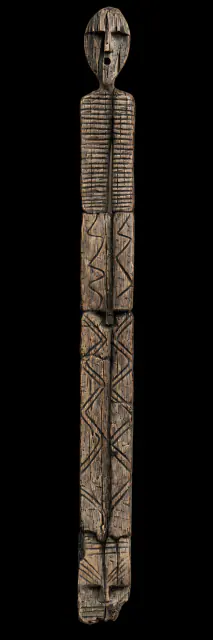
C. 10,000 BCE · approximation; debated dating
Shigir Idol
Prehistory
Approximation expressed in the record; dating debated.
Read the record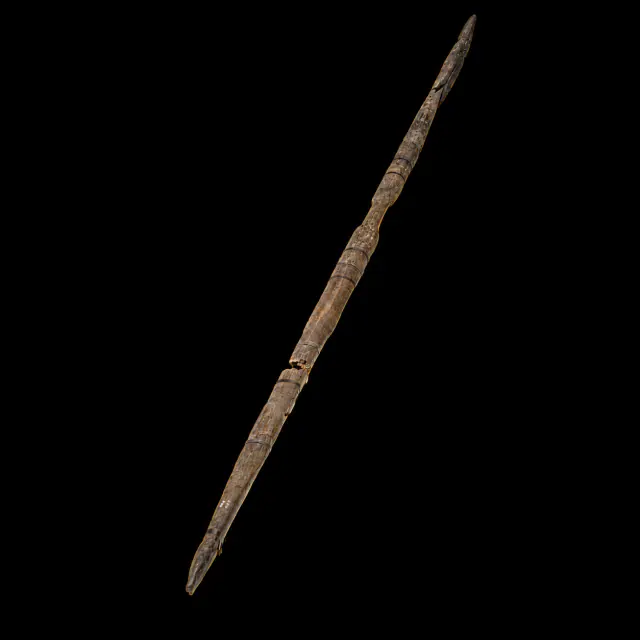
≈7000 BCE
Holmegaard bow
Prehistory
Date of the Holmegård bow; the Albuñol strings compared in the record date to ≈5300–4900 BCE.
Read the record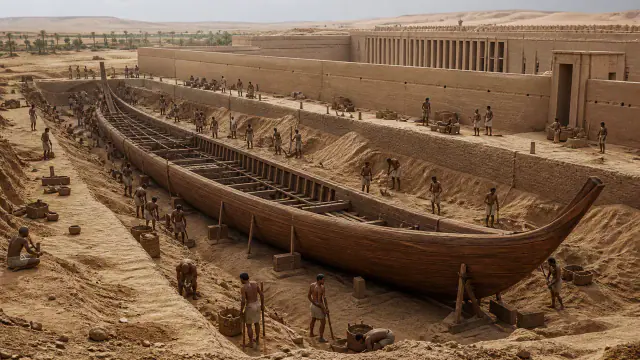
ca. 3000 BCE
Abydos Boats
Ancient Egypt
Approximate dating of the set of boats.
Read the record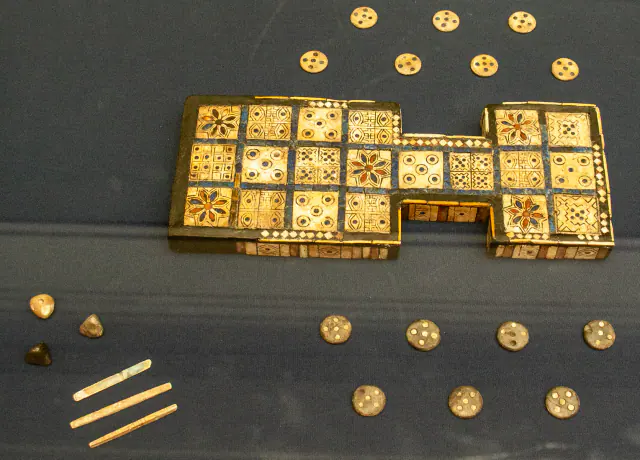 You are viewing
2600–2400 BCE
Royal Game of Ur
Sumer
Approximate dating according to the record.
Current record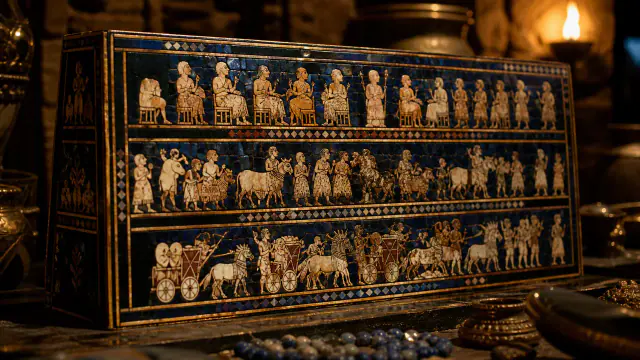
ca. 2600–2400 BCE
Overlapping datesStandard of Ur
Sumer
Unknown function; The scenes do not prove that it was a banner.
Read the record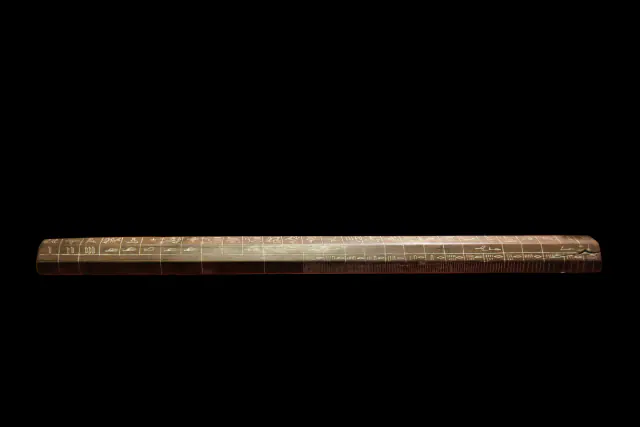
1330–1295 BCE · end of the 18th dynasty
Maya's cubit
Ancient Egypt
Approximate dating according to the record.
Read the record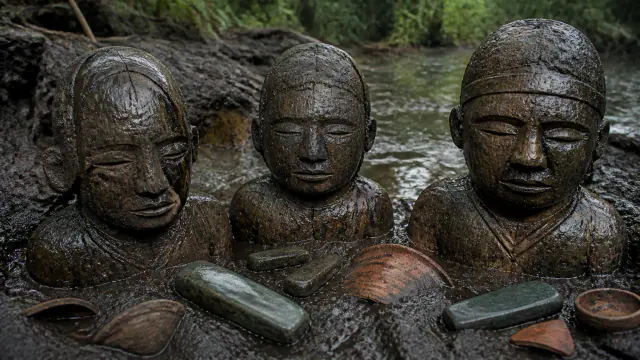
c. 1600–1000 BCE, in several phases
Wooden faces
Maya worlds
Deposit made in several phases; not simultaneous manufacture.
Read the record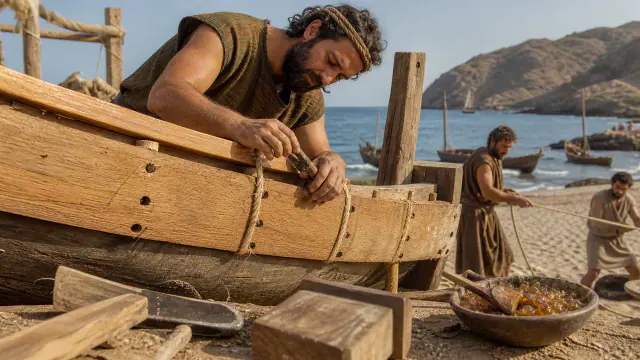
Second half of the 7th century BCE
Mazarrón 1
Phoenicians
Second half of the 7th century BCE
Read the record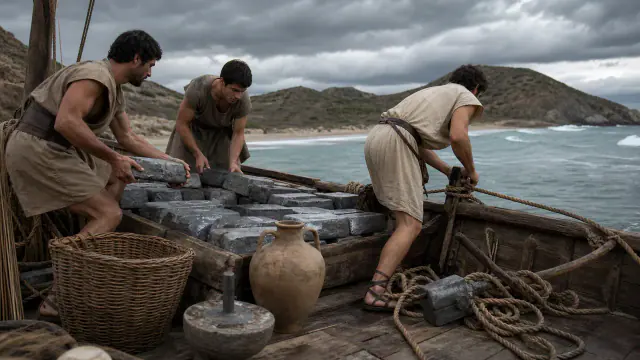
Second half of the 7th century BCE
Mazarrón 2
Phoenicians
Date of the shipwreck and its context; the cargo brings together several objects.
Read the record
5th–4th centuries BCE
Bow and arrows in a case
Scythians and Saka
Typological set of slings; no date for a single specimen.
Read the record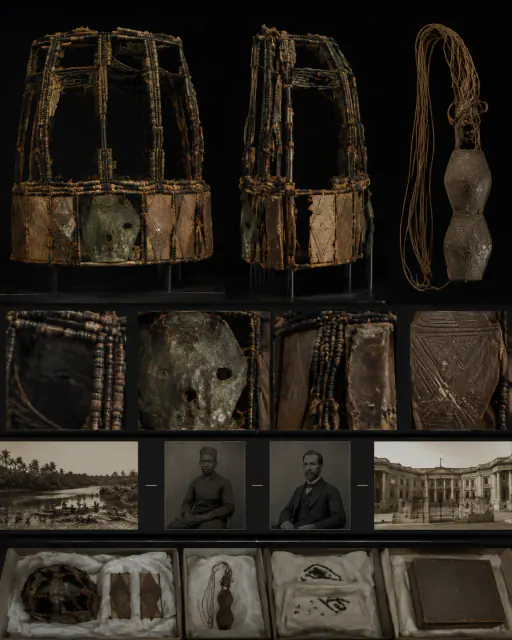
ca. 1760
Kuba ndop
Bantu-speaking worlds
Approximate dating according to the record.
Read the record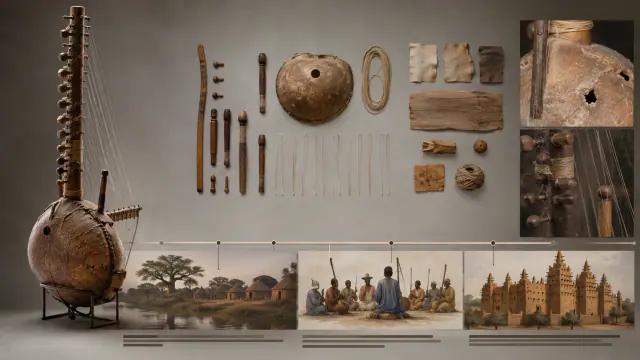
19th century
19th-century kora
Mande Worlds
The century of the surviving instrument, not the origin of the musical tradition.
Read the record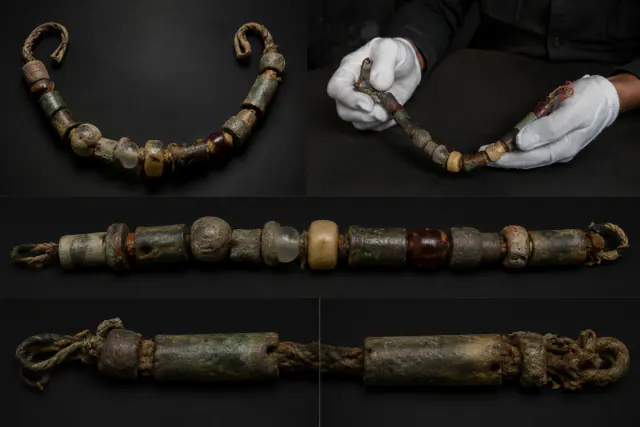
19th–20th centuries
Lukasa
Bantu-speaking worlds
Date range of the catalogued object, not the origin of the memory tradition.
Read the record
Also connected, without a comparable date (4)
These objects are not placed after the others: an unknown date does not mean a more recent object.
- Memory in performanceBantu-speaking worlds · 19th–20th centuries and transmitted practice
- Rice on stiltsYayoi Japan · Especially 1st–3rd centuries CE
- Rome learns in terracottaEtruscans and Rome · End of the sixth century BCE
- Tools in relationBatwa / Twa histories · ca. 1947
A closer look
About 1 min to read · 2 sections. Further reading and sources · free access. Editorial review recorded: .
An object that also had to be restored
The board card describes a drawer for pieces and the consolidation of inlays during excavation. The surface we observe brings together ancient material and conservation work. It should not be used as proof that the wood survived in its entirety.
- Museum · British Museum · board 120834Access recorded: .
The rules have another date
The Itti-Marduk-balatu document mentions five pieces per player, bets and divinatory interpretations. About two millennia separate it from this board. This distance forces us to distinguish the long life of the game from the exact rules of its first players.
- Museum · British Museum · rules written by Itti-Marduk-balatuAccess recorded: .
Location and territory
LOCATED SITE
Ur · IraqMarker for Tell el-Muqayyar and its necropolis.Where it is held
British Museum, London
Item or group in the record · Documented collection
Institution that preserves the piece; Check with the museum about its availability to visit.
The British Museum
Item or group in the record · Documented collection
The holding institution is documented; public display may change. Check its official record before visiting.
Sources and references
Did you enjoy this exhibit?
Your opinion helps us improve the museum. You can change it whenever you like.
Loading your rating…