07 · Writing · the limit of what we can read
Twenty-six voiceless signs The inscribed bowl of Issyk
A brief set of signs has produced many translations and none accepted by consensus.
ON THIS PAGE
History and context Evidence and facts Objects connected through time Further reading Location and territory Where it is held Sources and references Comments Museum documentation · free public access, no account required.
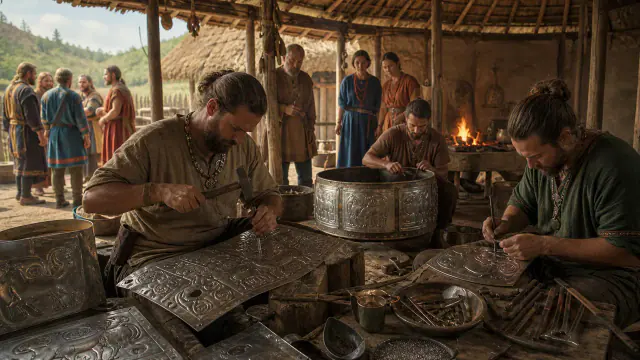
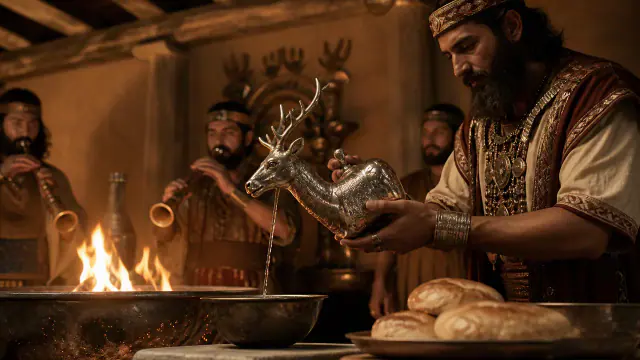
⛶ Enlarge imageDECLARED VISUAL RECONSTRUCTION · EXISTING EDITORIAL RESOURCE · TRACEKEEPERS Generated reconstruction · Declared visual hypothesis
Declared visual reconstruction for museographic context; it is not a photograph of the original nor documentary evidence.
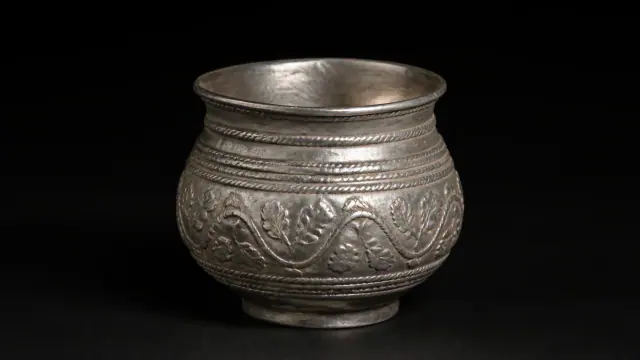
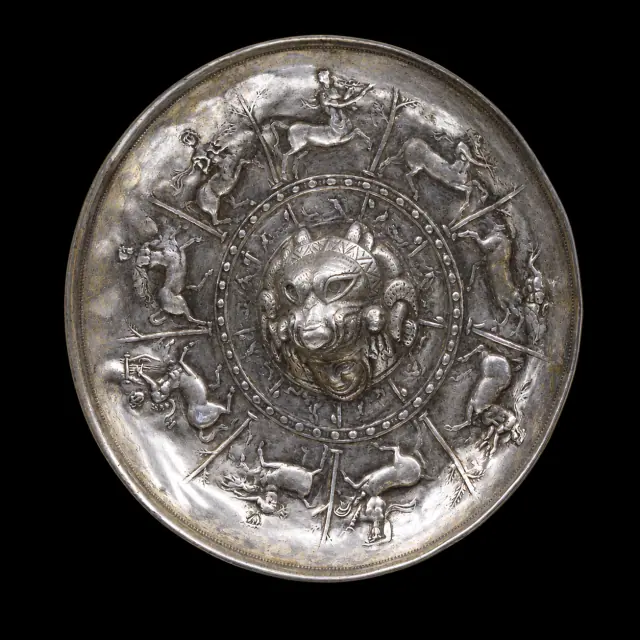
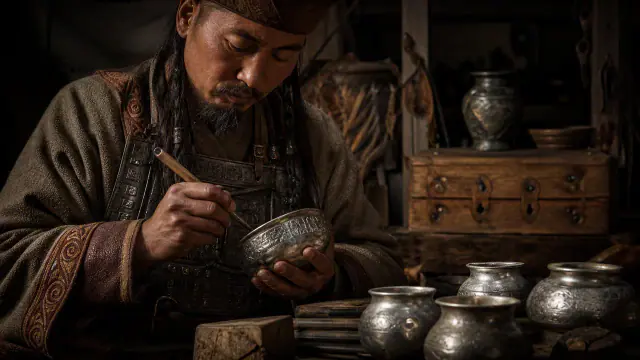
History and context Among the tomb’s vessels appeared a silver bowl with a short incised inscription. Its signs seem deliberate and form one of the most debated written testimonies of ancient Central Asia.
The astonishing effect lies in not pretending a translation. Iranian, Turkic and other readings have been proposed, but the text is too brief and the system is not deciphered. The object shows how silence too is data.
The inscription occupies two lines and retains twenty-six signs. Its brevity prevents securely constructing a complete system: sequence, orientation, language and kinship with other scripts have received incompatible proposals.
The bowl appeared within the same set as the golden person, but shared context does not equal authorship by the deceased. It could have been property, a gift, a reused vessel or a piece made for the funeral.
Evidence and interpretation Documented fact: the Issyk museum-reserve records a silver vessel with signs that remain undeciphered. Interpretation and caution: calling it a proven Saka alphabet or runic script, or translating a specific phrase, lacks scholarly consensus and should be avoided.
Additional documented evidence: the silver bowl from the Issyk kurgan bears two lines with twenty-six deliberately incised signs; no agreed translation exists.
Further interpretation and caution: do not present it as deciphered Turkic, Iranian or “runic” text; in some official sources, “runic” describes the shapes and does not establish any relationship with Germanic scripts.
Catalogue facts
Narrative date 5th–4th centuries BCE
Location Issyk barrow, Kazakhstan
Material Incised silver
Context Funerary vessel alongside the golden person
Curatorial reading The documented fact and its interpretation appear separately in the evidence block.
Registration 2 lines, 26 signs
Status System and language without consensus decipherment
Context Grave goods of the intact lateral chamber of Issyk
Documentary coverage 2 museum, heritage, primary corpus or research sources for this stop. Silver19 Vessels70 Inscriptions34 Engraving27 Funerary contexts64
The order uses the midpoint of each approximate date range; ranges can overlap. Spacing does not represent elapsed time. Swipe, scroll or use the arrows. With the sequence focused, use ← / →, Home or End.
Earlier Later
4 / 19 In the centre: Twenty-six voiceless signs
You can scroll the first group without JavaScript. The other topics are also available below.
Vessels Before Sumer · mid-6th–5th millennium BCE · SumerTwin-chambered vessel from Cova de l’Or · Early Neolithic · VI–V millennia BCE · PrehistoryBefore Egypt · ca. 4400–3800 BCE · Ancient EgyptBefore Nubia · V–IV millennium BCE · Nubia, Kerma and KushBefore Gojoseon · Middle Neolithic, c. 4000 BCE · Gojoseon and early KoreaBevel-rimmed bowl · ca. 3500–3000 BCE · SumerUruk Vase · ca. 3300–3000 BCE · SumerBefore Yayoi · Middle Jōmon, ca. 3000 BCE · Yayoi JapanVasiliki · ca. 2500–2200 BCE · Greek worldsBefore the Greeks · c. 2400–2200 BCE · Greek worldsBefore Ancient China · c. 2500–2000 BCE · Ancient ChinaLongshan · c. 2500–2000 BCE · Ancient ChinaKerma vessel · c. 1802–1640 BCE · Nubia, Kerma and KushGrave Circle A and Chrysolakkos · 18th–16th centuries BCE · Greek worldsBefore Vedic India · c. 1900–1300 BCE · Vedic and later Indian worldsJue · c. sixteenth century BCE · Ancient ChinaPithos · c. 1450–1375 BCE · Greek worldsTutankhamun's grave goods · death towards 1323 BCE · Ancient EgyptStag Vessel · 14th–13th centuries BCE · HittitesValchitran · second half of the 14th century–beginning of the 13th century BCE, according to NAIM; other publications use wider intervals from the Late Bronze. · ThraciansLiding · 12th–11th centuries BCE · Ancient ChinaBefore the Iberias · Final Bronze, c. 1000 BCE · IberiansGrey bowl from Hastinapura · c. 1100–800 BCE in the classical sequence of Hastinapura · Vedic and later Indian worldsBefore Etruscans and Rome · ca. 850–800 BCE · Etruscans and RomeThe urn under the helmet · 9th–8th centuries BCE · Etruscans and RomeTomb 1 at Kuntur Wasi · c. 800 BCE · Pre-Inca culturesRegolini-Galassi tomb · ca. 675–650 BCE · Etruscans and RomeThe great Greek krater of Vix · ≈530–500 BCE · Greek worldsScorțaru cauldron · 6th–5th centuries BCE · ThraciansVix Tomb · c. 500 BCE · Celtic worldsOrpheus among the Thracians · circa 440 BCE; attributed to the London Painter E 497. · ThraciansTwenty-six voiceless signs · 5th–4th centuries BCE · Scythians and Saka — You are viewingRogozen · mainly 5th–4th centuries BCE; The set has a history of accumulation, not a single manufacturing date. · ThraciansGrave goods of Baza and Toya · First half of the 4th century BCE · IberiansThe Attic krater that took on a new life in Cástulo · 4th century BCE · Greek worldsThe silver amphora of Chertomlyk · 4th century BCE · Greek worldsThe Kul-Oba vase · 4th century BCE · Greek worldsFaces of the Steppe · Second half of the 4th century BCE · Scythians and SakaPoroina Mare Rhyton · Second half of the 4th century BCE · ThraciansBorovo · 4th century BC C.; 350–300 BCE in the ISAW catalog. · ThraciansLeipzig Fish Plate · Last third 4th–early 3rd century BCE · Greek worldsGolyamata Kosmatka · End of the 4th century – beginning of the 3rd century BCE; ritual burial at the beginning of the III according to Iskra. · ThraciansPanagyurishte · late 4th century – early 3rd century BCE, towards 300 BCE · ThraciansDove of the Amarejo · 3rd century BCE · IberiansMairena Hoard · 3rd century BCE · IberiansVase from Chão de Lamas · Piece: III–II centuries BCE · concealment ≈110–76 BCE · IberiansVas dels Guerrers · 3rd–early 2nd century BCE · IberiansWarriors' Vase · 3rd–2nd centuries BCE · IberiansThe dismantled cauldron · 2nd–1st centuries BCE · Celtic worldsKalathos of Alcorisa · 2nd–1st centuries BCE · IberiansPatera from Perotito · Second half of the 2nd–beginnings of the 1st century BCE · IberiansUrewe vessel · regional range c. 800 BCE–650 CE · Bantu-speaking worldsTwo rows of coffins · Mainly Middle Yayoi, 2nd century BCE–1st century CE · Yayoi JapanCeramics that continued · Last third of the 2nd century BCE–1st century CE · IberiansRoman glass oinochoe · Late 1st century BCE–early 1st century CE · Etruscans and RomeGladiators Cup of Chavagnes · 25–75 CE · Etruscans and RomeEgyptian oil lamp with a fish, held in Laon · 3rd–4th centuries CE · Ancient EgyptLaon lamp with fish · 3rd–4th centuries CE · Etruscans and RomeWater in a shell · 1816–1826 · San historiesWithout a comparable date (not part of the chronological order):
Inscriptions Naqada labels · ca. 3300–3100 BCE · Ancient EgyptNarmer Palette · ca. 3100 BCE · Ancient EgyptUr-Nanshe relief · Mid-3rd millennium BCE · reign of Ur-Nanshe · SumerStele of the Vultures · Towards 2450–2425 BCE · SumerBassetki Statue · Akkadian period · 23rd century BCE · SumerIndus seals · ca. 2600–1900 BCE · Indus civilisationNaram-Sin Stele · Reign of Naram-Sin, 2254–2218 BCE · SumerStele of Hammurabi · Towards 1750 BCE · SumerPhaistos Disc · ≈1700–1650 BCE · Greek worldsLinear A · c. 1700–1500 BCE · Greek worldsThe voice of Ahiram · c. 11th–10th century BCE · PhoeniciansThe Cascajal Block · Proposed c. 1000–900 BCE · Maya worldsBlack Obelisk · 825 BCE · SumerAstarte from El Carambolo · 8th century BCE · PhoeniciansAstarte from El Carambolo · 8th century BCE · IberiansStele of Esarhaddon · 7th century BC C. · 671 campaign BCE · SumerIvory with names · End of the 7th century–first half of the 6th century BCE · PhoeniciansShabti of Psamtek · 570–526 BCE · Ancient EgyptUni was also Astarte · Towards 510 BCE · Etruscans and RomeSarcophagus of Eshmunazar · first quarter of the 5th century BCE · PhoeniciansEzerovo Ring · 5th century BCE · chronology discussed in the bibliography · ThraciansTwenty-six voiceless signs · 5th–4th centuries BCE · Scythians and Saka — You are viewingThe inscription of Pistiros · 4th century BCE · ThraciansYan knife-money in the Gojoseon sphere · 4th–3rd centuries BCE · Ancient ChinaLead tablet · 4th–3rd centuries BCE · IberiansA coin with the memory of a blade · 323–222 BCE · Gojoseon and early KoreaA sky over the liver · End of the second–beginning of the first century BCE · Etruscans and RomeHand of Irulegui · First third of the 1st century BCE · IberiansBetatun altar · 1st century BCE–1st century CE · IberiansThe date of 292 · 292 CE · Maya worldsKilwa coin · 1482–1493 · Bantu-speaking worldsWithout a comparable date (not part of the chronological order):
Engraving Engraved ochre from Blombos · ≈77,000–75,000 years · PrehistoryAltamira · Assemblage ≈36,000–13,000 BP · bison ≈18,400–15,300 cal BP · PrehistoryLascaux · ≈23,500–21,000 cal BP · debated contextual estimate · PrehistoryRondelle de Mas-d'Azil · ≈18,000–16,000 years · PrehistoryLamp from La Mouthe · ≈20,500–13,000 years · Magdalenian framework · PrehistoryEngraved stone from Çakmaktepe · PPNA · site proposal: ≈9600–8800 BCE, provisional · PrehistoryTwin-chambered vessel from Cova de l’Or · Early Neolithic · VI–V millennia BCE · PrehistoryBefore Nubia · V–IV millennium BCE · Nubia, Kerma and KushBefore Gojoseon · Middle Neolithic, c. 4000 BCE · Gojoseon and early KoreaCylinder seal · c. 3500–3100 BCE · SumerGuadancil idol-plaque · 3750–2500 cal BCE · IberiansStaff of Anta 4 · Late 4th–first half of the 3rd millennium BCE. · PrehistoryLinear A · c. 1700–1500 BCE · Greek worldsThe Cascajal Block · Proposed c. 1000–900 BCE · Maya worldsLas Limas · c. 1000–600 BCE · Maya worldsMotagua jade · c. 900–600 BCE · Maya worldsThe Tello Obelisk · c. 800–500 BCE · Pre-Inca culturesTwenty-six voiceless signs · 5th–4th centuries BCE · Scythians and Saka — You are viewingThe Raimondi Stele · c. 400–200 BCE according to MNAAHP · Pre-Inca culturesDove of the Amarejo · 3rd century BCE · IberiansUrewe vessel · regional range c. 800 BCE–650 CE · Bantu-speaking worldsLukasa · 19th–20th centuries · Bantu-speaking worldsWithout a comparable date (not part of the chronological order):
Funerary contexts Brno II Articulated Figure · ≈28,000 years cal BP · by funerary association · Prehistory'Jamila's' necklace · ≈7250–7000 BCE · PrehistoryThe Gold of Varna · Towards 4600–4200 BCE · ThraciansEl Miradero spatula-idols · ≈4000–3800 cal BCE · PrehistoryGuadancil idol-plaque · 3750–2500 cal BCE · IberiansStaff of Anta 4 · Late 4th–first half of the 3rd millennium BCE. · PrehistoryAbydos Boats · ca. 3000 BCE · Ancient EgyptQueen's Lyre · ca. 2600–2500 BCE · SumerPuabi headdress · ca. 2600–2450 BCE · SumerStandard of Ur · ca. 2600–2400 BCE · SumerCemetery R-37 · ca. 2550–2030 BCE · Indus civilisationKerma vessel · c. 1802–1640 BCE · Nubia, Kerma and KushGrave Circle A and Chrysolakkos · 18th–16th centuries BCE · Greek worldsBurial at K IV · circa 1750–1550 BCE · Nubia, Kerma and KushBefore Vedic India · c. 1900–1300 BCE · Vedic and later Indian worldsOsmankayası and Ilıca · ca. 1700/1650–1200 BCE · HittitesTutankhamun's grave goods · death towards 1323 BCE · Ancient EgyptFu Hao’s burial goods · ca. 1200 BCE · Ancient ChinaThe voice of Ahiram · c. 11th–10th century BCE · PhoeniciansBefore Etruscans and Rome · ca. 850–800 BCE · Etruscans and RomeThe urn under the helmet · 9th–8th centuries BCE · Etruscans and RomeTomb 1 at Kuntur Wasi · c. 800 BCE · Pre-Inca culturesBeads from Cerro de los Vientos · 8th–7th centuries BCE · orientalizing · IberiansCeramic stand 1010 · 8th–7th centuries BCE · orientalizing · IberiansRegolini-Galassi tomb · ca. 675–650 BCE · Etruscans and RomeShabti of Psamtek · 570–526 BCE · Ancient EgyptTwo voices in an urn · 530–520 BCE · Etruscans and RomeThe great Greek krater of Vix · ≈530–500 BCE · Greek worldsSteppe kurgans · 7th–4th centuries BCE · Scythians and SakaVix Tomb · c. 500 BCE · Celtic worldsLa Venta grave goods · ca. 600–400 BCE · Maya worldsSarcophagus of Eshmunazar · first quarter of the 5th century BCE · PhoeniciansBanquet under leopards · Around 480–470 BCE · Etruscans and RomeTwenty-six voiceless signs · 5th–4th centuries BCE · Scythians and Saka — You are viewingThe oldest knotted carpet · 5th–4th centuries BCE · Scythians and SakaThe statue was the urn · First half of the 4th century BCE · IberiansGrave goods of Baza and Toya · First half of the 4th century BCE · IberiansThe Attic krater that took on a new life in Cástulo · 4th century BCE · Greek worldsThe silver amphora of Chertomlyk · 4th century BCE · Greek worldsThe Kul-Oba vase · 4th century BCE · Greek worldsSusa grave goods · c. 350 BCE · Achaemenid PersiaFaces of the Steppe · Second half of the 4th century BCE · Scythians and SakaLady of Ibiza · 4th–3rd centuries BCE · Phoenicians453 astragali from Alarcos · 4th–3rd centuries BCE · necropolis chronology · IberiansLady of Ibiza · 4th–3rd centuries BCE · IberiansFalcata from Almedinilla · 4th–3rd centuries BCE · IberiansGolyamata Kosmatka · End of the 4th century – beginning of the 3rd century BCE; ritual burial at the beginning of the III according to Iskra. · ThraciansThe blade became straight · 5th–1st centuries BCE · Gojoseon and early KoreaGeometry in very fine lines · 3rd–2nd centuries BCE · Gojoseon and early KoreaNorthern mound · 2nd–1st centuries BCE · Yayoi JapanTwo rows of coffins · Mainly Middle Yayoi, 2nd century BCE–1st century CE · Yayoi JapanKabusanza, ca. 400 · ca. 400 CE · Batwa / Twa historiesPakal’s grave goods · sealed on 28 August 683 CE · Maya worldsMissing grave goods · 13th–15th centuries according to the heritage overview · Bantu-speaking worldsWithout a comparable date (not part of the chronological order):
A closer look About 1 min to read · 1 section. Further reading and sources · free access. Editorial review recorded: September 5, 2026 .
A small vessel among other silverwork The bowl measures only 7.7 centimetres in diameter and 2.2 in height, with a hemispheric profile and straight rim. The comparative inventory of Bonora and Habdulina places it alongside another silver piece from the same barrow: a spoon of sixteen centimetres whose handle represents the neck and head of a bird, possibly a swan. Comparing both returns the bowl to a set of metal utensils, beyond the inscription that concentrates its fame. Form, dimensions and manufacturing details allow the study of the pieces although the language of the signs remains debated.
Location and territory Physical world map with routes of human evolution Present-day world coastline from Natural Earth in an equirectangular projection. The overlaid markers let you explore each milestone. Map base: Natural Earth 1:110m · public domain · present-day reference coastline LOCATED SITE
Issyk kurgan · Kazakhstan Marker of the Issyk tumulus. Where it is held Item or group in the record · Documented collection
Official collection of the Issyk assemblage; no permanent exhibition of the piece is presupposed.
The holding institution is documented; public display may change. Check its official record before visiting.
See Twenty-six voiceless signs in the museum Find this record in its gallery and save your route, favourites and places to explore later.
Open this exhibit in the museum → Museum access requires a free account. You can read this page's documentation without registering.
Did you enjoy this exhibit? Your opinion helps us improve the museum. You can change it whenever you like.
Loading your rating…

 English
 Español
 Français
 Italiano
 Deutsch
 Русский
 Português
 Polski
 Română
 Svenska
 Norsk bokmål
 Suomi
 Türkçe
 العربية
 简体中文
 한국어
 हिन्दी
 Ελληνικά
 You are viewing