
 English
 Español
 Français
 Italiano
 Deutsch
 Русский
 Português
 Polski
 Română
 Svenska
 Norsk bokmål
 Suomi
 Türkçe
 العربية
 简体中文
 한국어
 हिन्दी
 Ελληνικά
TREASURES AND EVIDENCE
Rogozen
Rogozen: a collection accumulated over generations
The variety of 165 vessels suggests that the treasure was collected over several generations.
Museum documentation · free public access, no account required.
Documentary original · Exact correspondence
Silver vessels from the Rogozen treasure displayed in the Vratsa museum. View of the whole; Do not assign a figurative scene or a specific inscription without identifying the corresponding vessel.
Vassia Atanassova - Spiritia · CC BY-SA 3.0
History and context
A treasure can be a family biography. The 165 Rogozen vessels need not have come together from a single workshop: their diversity suggests an accumulation of prestige objects. Drinking and offering a cup could make the position of a ruling house visible to its guests.
Animals, plant motifs, mythological scenes and Greek inscriptions with the names of Thracian rulers coexist on the vessels. Silver thus preserves political relationships: people and objects circulated between communities that traded, exchanged gifts or entered into conflict.
Evidence and interpretation
165 vessels: 108 phialai, 54 jugs and 3 cups. Sources give different chronological ranges; the assemblage accumulated over time.
Catalogue facts
- Date
- mainly 5th–4th centuries BCE; The set has a history of accumulation, not a single manufacturing date.
- Location
- Rogozen · Bulgaria
A SHARED TOPIC, DIFFERENT MOMENTS
Objects connected through time
Follow a topic across the collections. A shared tag is a way to compare objects, not proof that one culture influenced another.
The order uses the midpoint of each approximate date range; ranges can overlap. Spacing does not represent elapsed time. Swipe, scroll or use the arrows. With the sequence focused, use ← / →, Home or End.
Silver19 dated objects
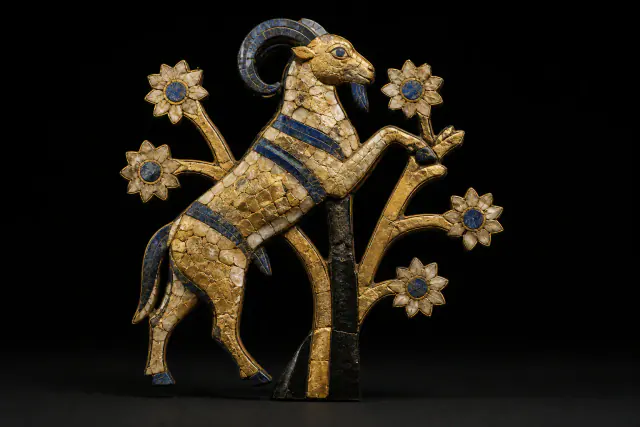
ca. 2600–2400 BCE
The goat from PG 1237
Sumer
The function as support is not resolved.
Read the record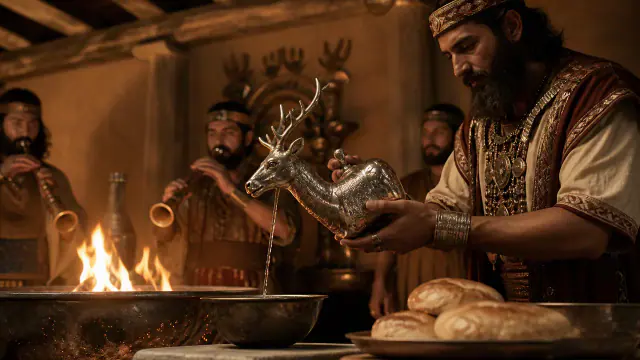
14th–13th centuries BCE
Stag Vessel
Hittites
Approximate dating according to the record.
Read the record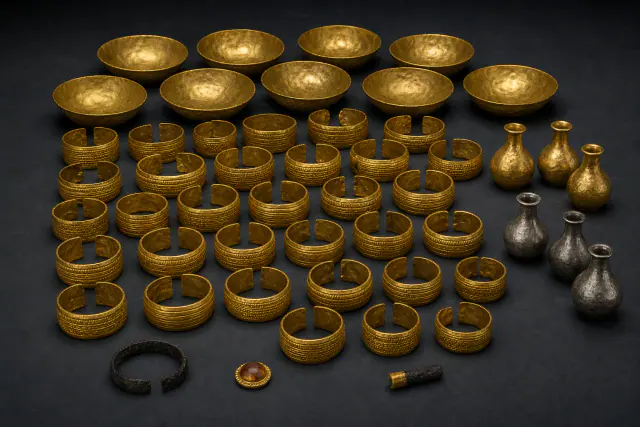
Final Bronze, c. 1000 BCE
Before the Iberias
Iberians
Date of the treasure, not of the preceding general period.
Read the record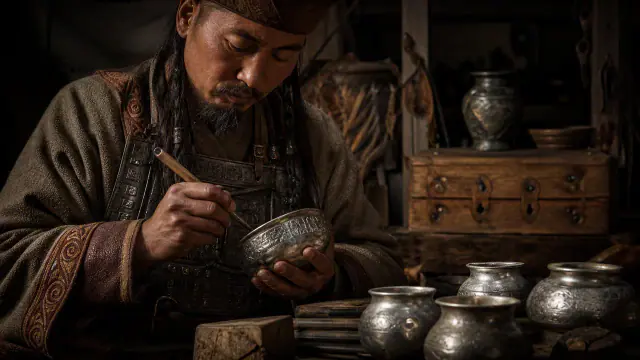
5th–4th centuries BCE
Overlapping datesTwenty-six voiceless signs
Scythians and Saka
Approximate dating according to the record.
Read the record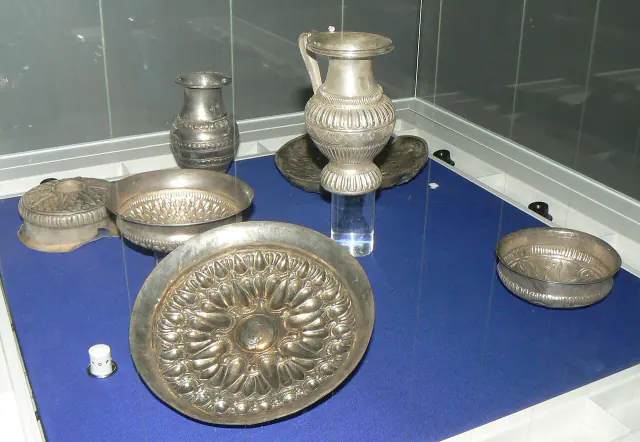 You are viewing
mainly 5th–4th centuries BCE; The set has a history of accumulation, not a single manufacturing date.
Rogozen
Thracians
Primary interval of the cumulative set, not single manufacturing date.
Current record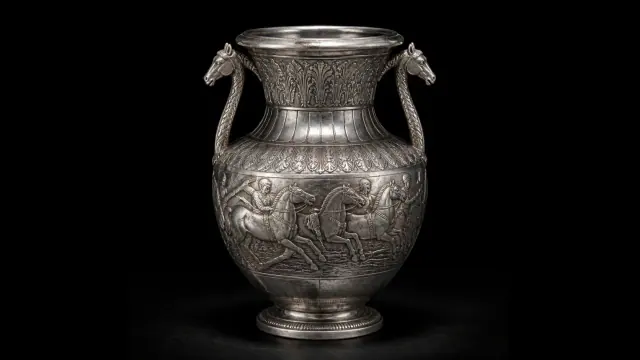
4th century BCE
Overlapping datesThe silver amphora of Chertomlyk
Greek worlds
Approximate dating according to the record.
Read the record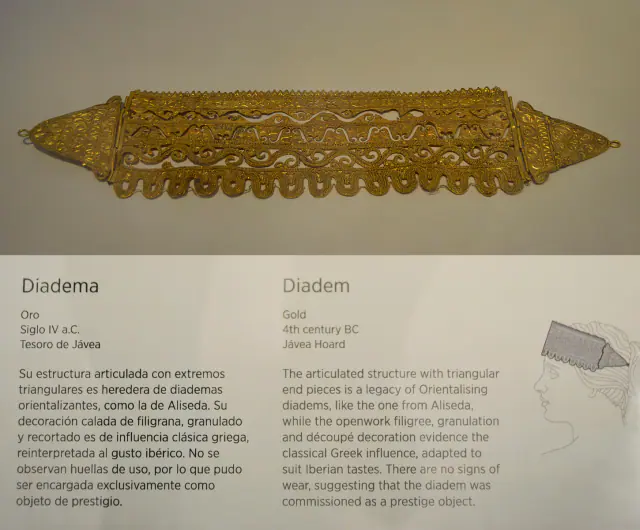
4th century BCE
Overlapping datesTreasure of Jávea
Iberians
Approximate dating according to the record.
Read the record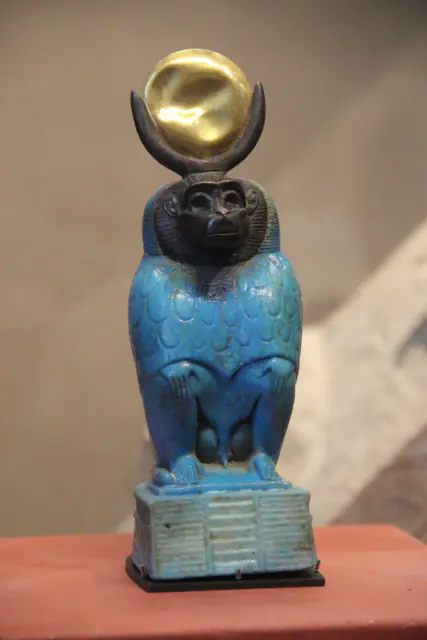
664–30 BCE
Overlapping datesThoth in the form of a baboon
Ancient Egypt
Approximate dating according to the record.
Read the record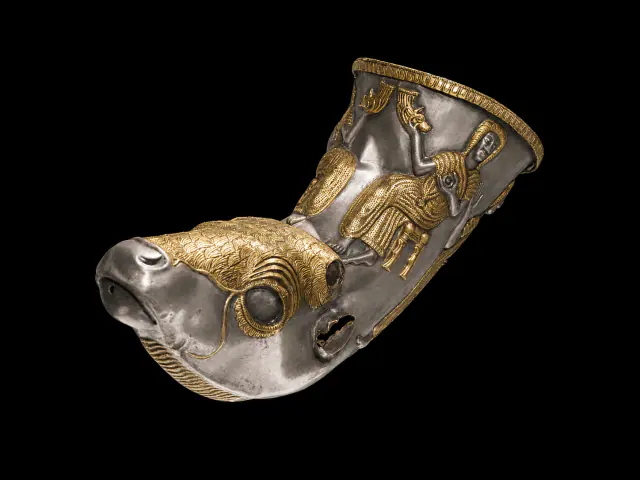
Second half of the 4th century BCE
Overlapping datesPoroina Mare Rhyton
Thracians
Second half of the 4th century BCE; the specific ritual is not known.
Read the record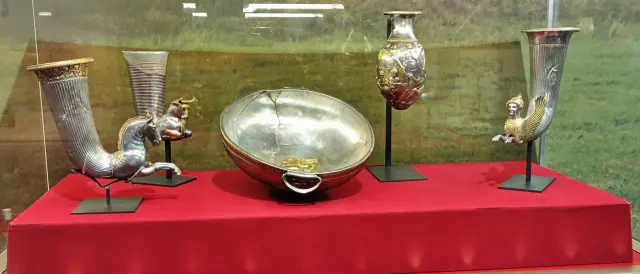
4th century BC C.; 350–300 BCE in the ISAW catalog.
Overlapping datesBorovo
Thracians
Explicit range from the ISAW catalog, included in the card.
Read the record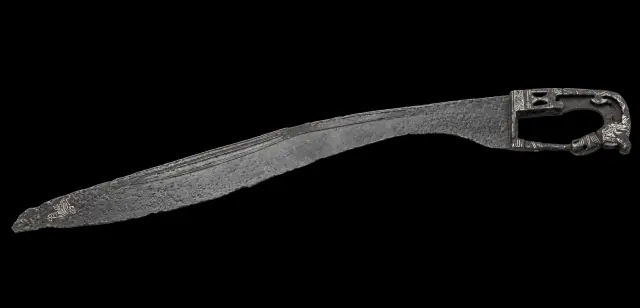
4th–3rd centuries BCE
Overlapping datesFalcata from Almedinilla
Iberians
Approximate dating according to the record.
Read the record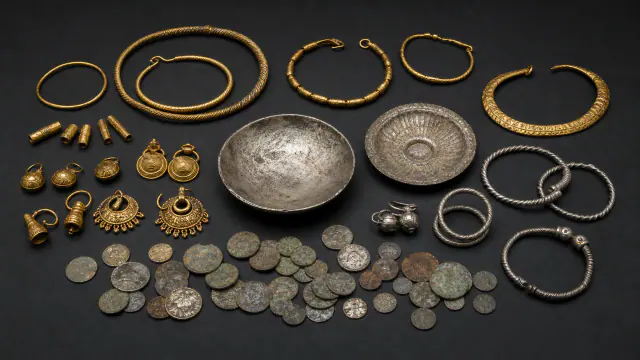
Jewellery from the 4th–3rd centuries BCE; concealment at the end of the 3rd century BCE.
Overlapping datesTreasure of Cheste
Iberians
Interval of the jewellery, not of the later concealment.
Read the record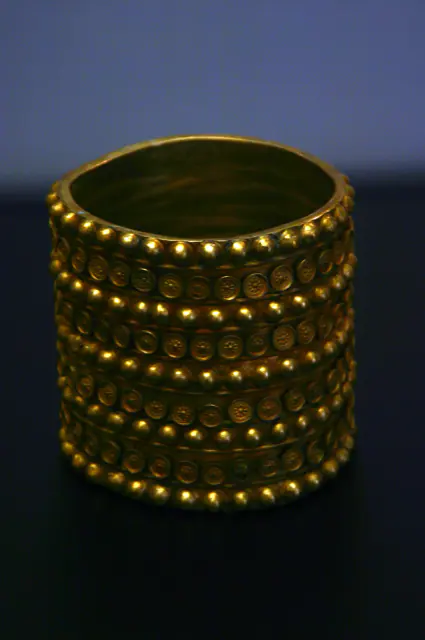
3rd century BCE
Mairena Hoard
Iberians
Approximate dating according to the record.
Read the record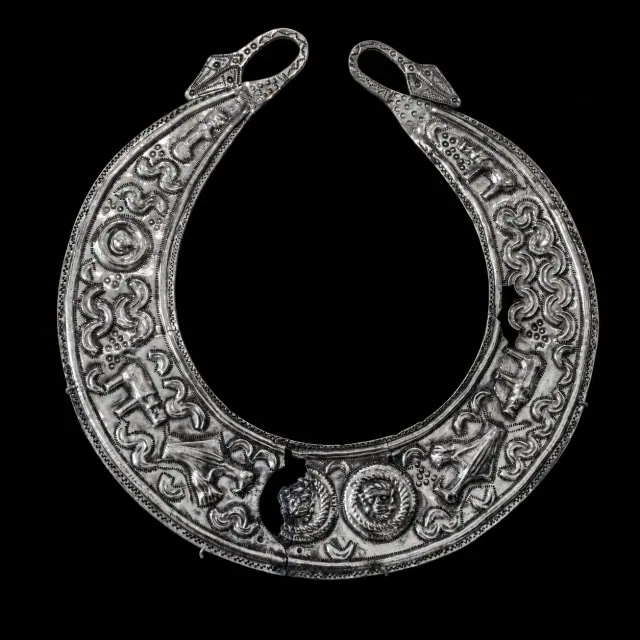
3rd–2nd centuries BCE · concealed in the early 1st century BCE
Chão de Lamas pectoral
Iberians
Centuries of manufacture of the piece; not a later date of concealment.
Read the record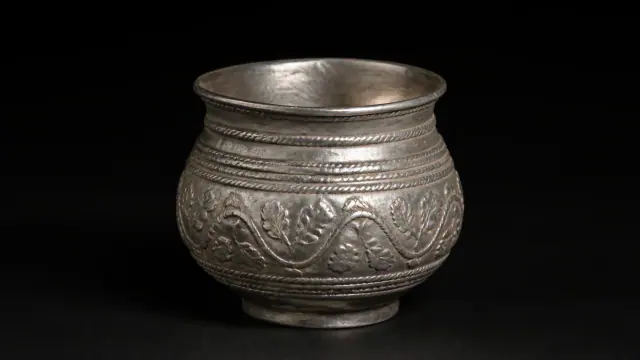
Piece: III–II centuries BCE · concealment ≈110–76 BCE
Vase from Chão de Lamas
Iberians
Centuries of manufacture of the vase; not a concealment interval of the treasure.
Read the record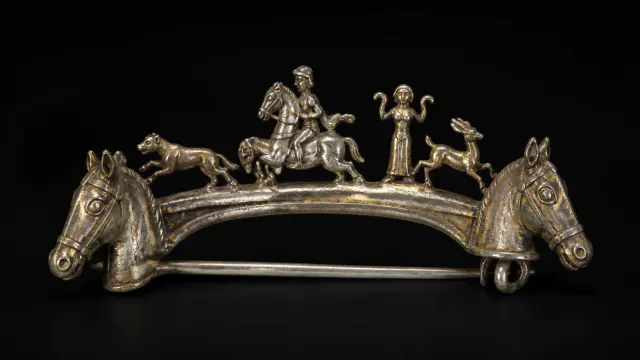
2nd century BCE · disputed chronology
Horse fibula
Iberians
The attribution to the 2nd century BCE is disputed.
Read the record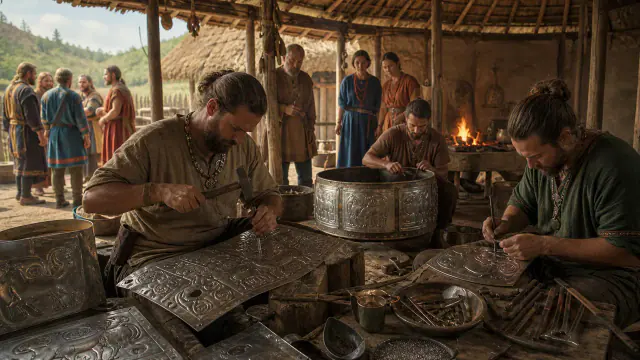
2nd–1st centuries BCE
The dismantled cauldron
Celtic worlds
Approximate dating according to the record.
Read the record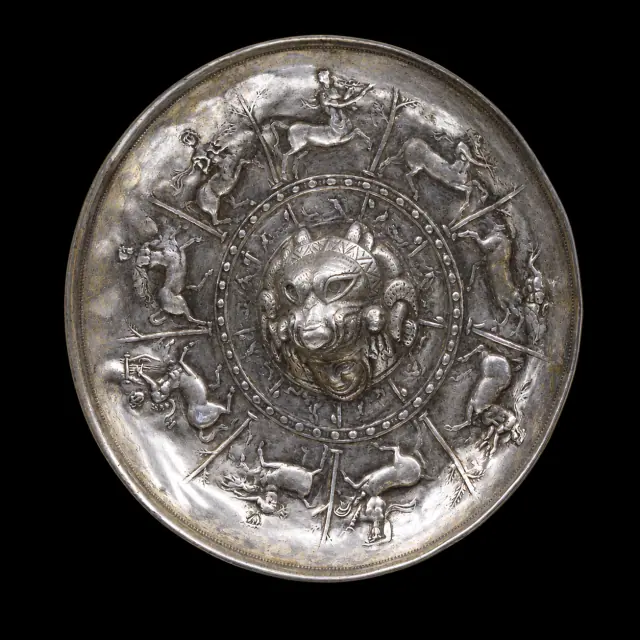
Second half of the 2nd–beginnings of the 1st century BCE
Patera from Perotito
Iberians
The full 2nd–1st centuries BCE provide broad limits for chronological ordering; the record specifies the second half of the 2nd century and the early 1st.
Read the record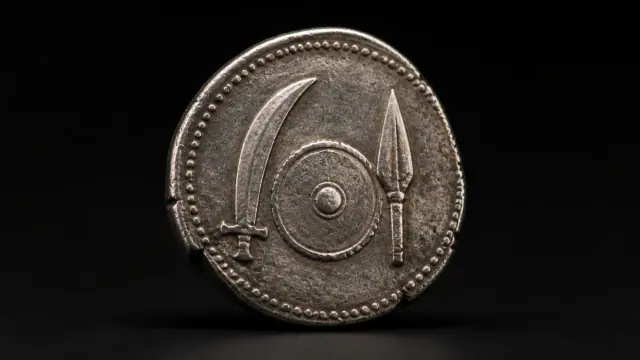
≈25–23 BCE
Denarius of Carisius
Iberians
Approximate dating according to the record.
Read the record
A closer look
About 1 min to read · 2 sections. Further reading and sources · free access. Editorial review recorded: .
count the pieces
The inventory of the Vratsa museum distinguishes 108 phialai, 54 jugs and 3 cups. Phialai are shallow containers, often with a central protuberance, used by various societies in the Mediterranean and the Balkans. The repetition of this shape together with the numerous jugs allows us to imagine much larger drinking services than individual tableware.
- Museum · Vratsa Museum: Rogozen, inventory and analysisAccess recorded: .
- Research · Oxford Classical Dictionary: RogozenAccess recorded: .
Gifts, loot and hiding
Some vessels preserve Greek inscriptions with the names of Thracian rulers and scenes from the Greek mythological repertoire. The differences between the pieces point to a history of accumulation. Gifts, exchanges and loot are possible avenues of circulation; None alone explains all the objects in the treasure.
- Museum · Vratsa Museum: Rogozen, inventory and analysisAccess recorded: .
- Research · Oxford Classical Dictionary: RogozenAccess recorded: .
Location and territory
APPROXIMATE LOCATION
Rogozen · BulgariaApproximate reference of origin or production, not exact findspot.Where it is held
Vratsa Regional History Museum
Item or group in the record · Documented collection
Rogozen Treasure collection; this record does not guarantee that all 165 vessels are displayed simultaneously.
The holding institution is documented; public display may change. Check its official record before visiting.
Sources and references
Did you enjoy this exhibit?
Your opinion helps us improve the museum. You can change it whenever you like.
Loading your rating…