
 English
 Español
 Français
 Italiano
 Deutsch
 Русский
 Português
 Polski
 Română
 Svenska
 Norsk bokmål
 Suomi
 Türkçe
 العربية
 简体中文
 한국어
 हिन्दी
 Ελληνικά
CONNECTION, NOT AN IBERIAN PIECE · CONNECTION · LUSITANIAN SILVER
Vase from Chão de Lamas
The container was also an offering
The vase and what it contained could have formed part of an offering.
Museum documentation · free public access, no account required.
Generated reconstruction · Declared visual hypothesis
Declared visual reconstruction; not a photograph of the original nor documentary evidence.
History and context
The swollen body and the neck in tartan are covered by repoussé cords and vegetal waves with leaves. Its form recalls caliciform ceramic vessels used in peninsular ritual contexts.
It has been proposed that it contained oil or another substance and that it was deposited as a double offering. The denarii from the treasure help to date the concealment, but not the exact moment of manufacture of each object.
Evidence and interpretation
Documented fact: typology, decoration and association with the monetary set are catalogued. Interpretation and caution: oily content, sanctuary and double offering are plausible functional reconstructions, not direct data.
Catalogue facts
- Narrative date
- Piece: III–II centuries BCE · concealment ≈110–76 BCE
- Location
- Chão de Lamas, Miranda do Corvo (Portugal)
- Material
- Repoussé silver
- Context
- Lusitanian treasure · western connection
- Classification
- Comparative connection · must not be presented as an Iberian piece
- Visual reference
- CERES · MAN 28587 · visual and provenance reference
A SHARED TOPIC, DIFFERENT MOMENTS
Objects connected through time
Follow a topic across the collections. A shared tag is a way to compare objects, not proof that one culture influenced another.
The order uses the midpoint of each approximate date range; ranges can overlap. Spacing does not represent elapsed time. Swipe, scroll or use the arrows. With the sequence focused, use ← / →, Home or End.
Silver19 dated objects
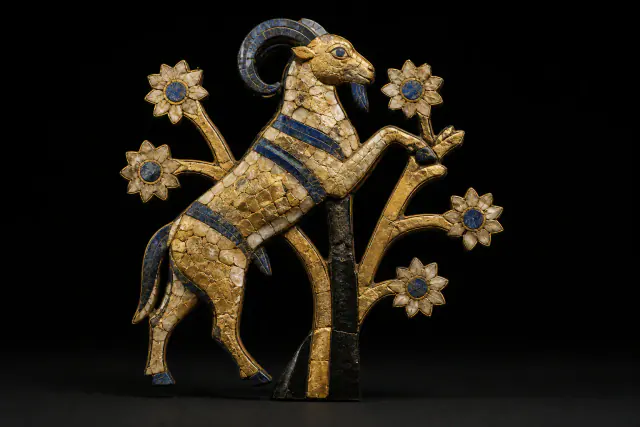
ca. 2600–2400 BCE
The goat from PG 1237
Sumer
The function as support is not resolved.
Read the record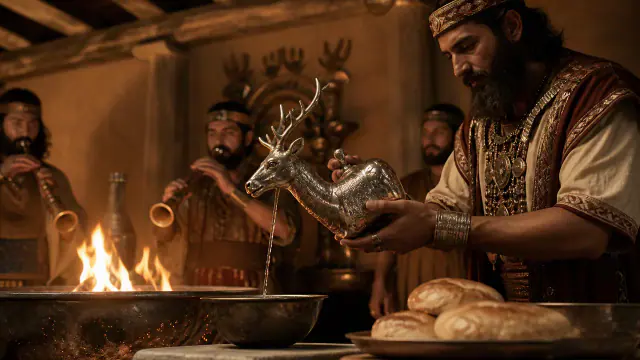
14th–13th centuries BCE
Stag Vessel
Hittites
Approximate dating according to the record.
Read the record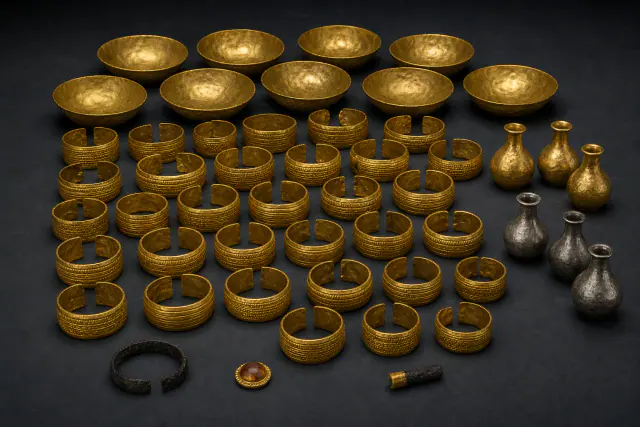
Final Bronze, c. 1000 BCE
Before the Iberias
Iberians
Date of the treasure, not of the preceding general period.
Read the record
5th–4th centuries BCE
Twenty-six voiceless signs
Scythians and Saka
Approximate dating according to the record.
Read the record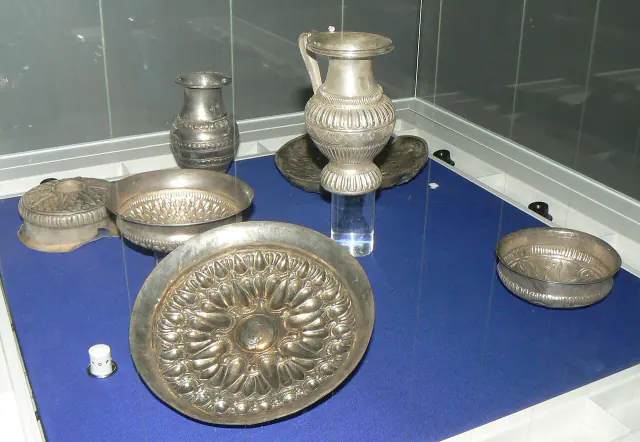
mainly 5th–4th centuries BCE; The set has a history of accumulation, not a single manufacturing date.
Rogozen
Thracians
Primary interval of the cumulative set, not single manufacturing date.
Read the record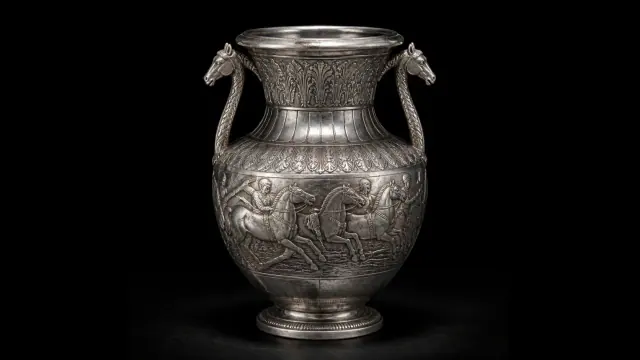
4th century BCE
The silver amphora of Chertomlyk
Greek worlds
Approximate dating according to the record.
Read the record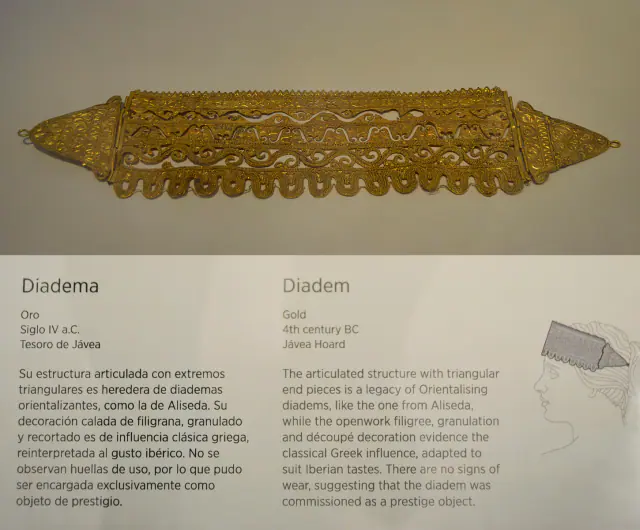
4th century BCE
Treasure of Jávea
Iberians
Approximate dating according to the record.
Read the record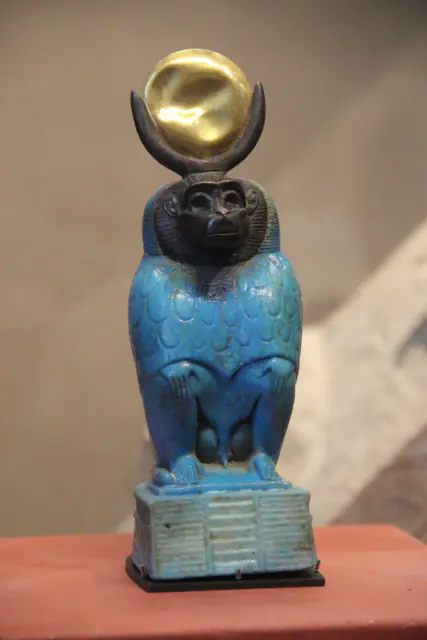
664–30 BCE
Overlapping datesThoth in the form of a baboon
Ancient Egypt
Approximate dating according to the record.
Read the record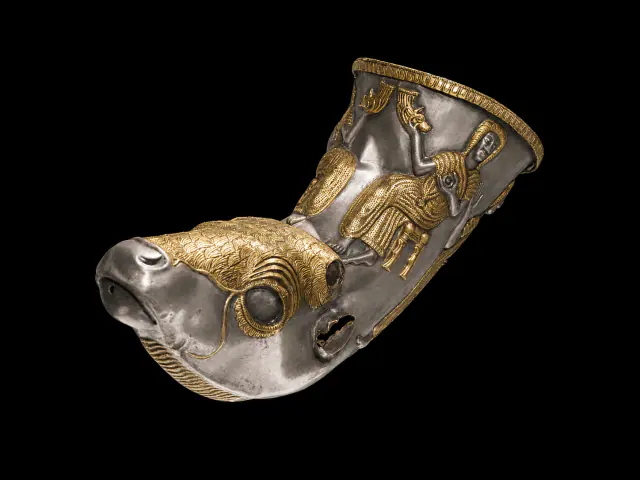
Second half of the 4th century BCE
Poroina Mare Rhyton
Thracians
Second half of the 4th century BCE; the specific ritual is not known.
Read the record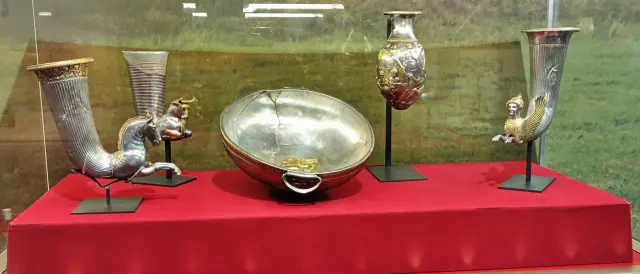
4th century BC C.; 350–300 BCE in the ISAW catalog.
Overlapping datesBorovo
Thracians
Explicit range from the ISAW catalog, included in the card.
Read the record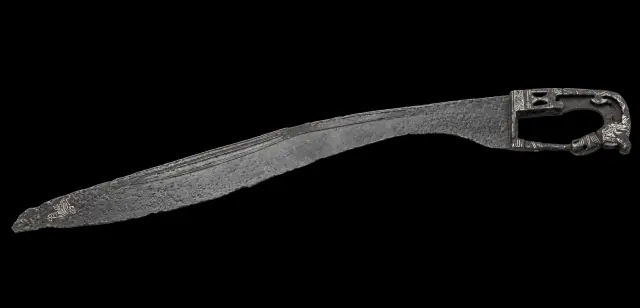
4th–3rd centuries BCE
Overlapping datesFalcata from Almedinilla
Iberians
Approximate dating according to the record.
Read the record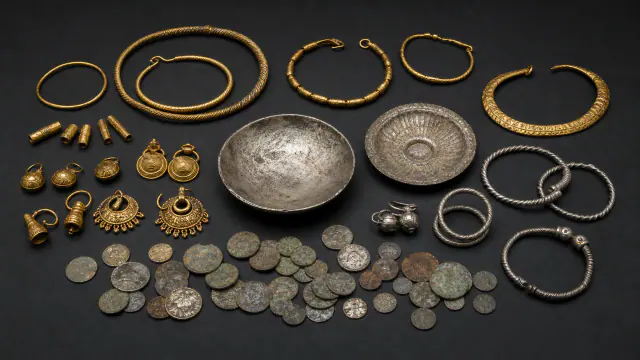
Jewellery from the 4th–3rd centuries BCE; concealment at the end of the 3rd century BCE.
Overlapping datesTreasure of Cheste
Iberians
Interval of the jewellery, not of the later concealment.
Read the record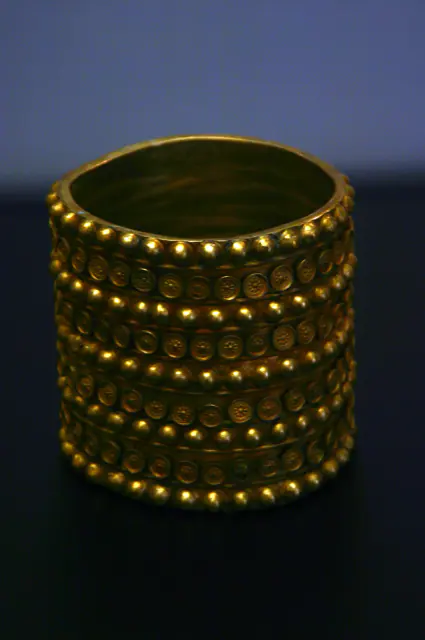
3rd century BCE
Overlapping datesMairena Hoard
Iberians
Approximate dating according to the record.
Read the record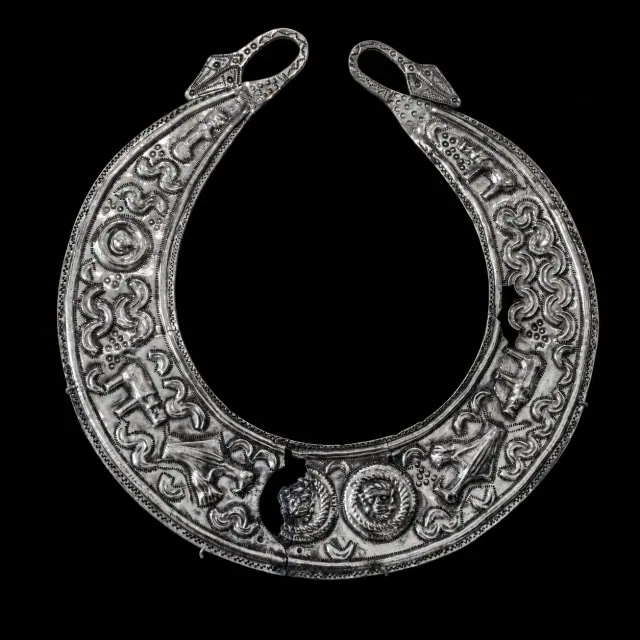
3rd–2nd centuries BCE · concealed in the early 1st century BCE
Overlapping datesChão de Lamas pectoral
Iberians
Centuries of manufacture of the piece; not a later date of concealment.
Read the record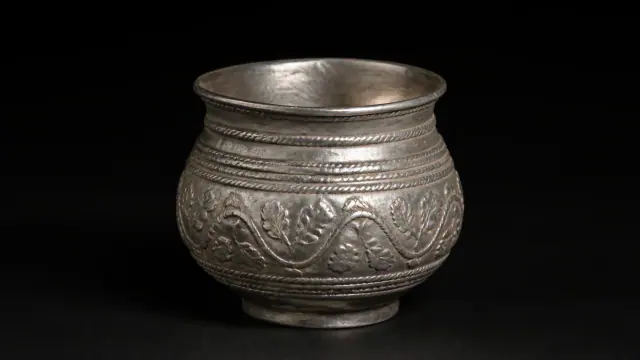 You are viewing
Piece: III–II centuries BCE · concealment ≈110–76 BCE
Vase from Chão de Lamas
Iberians
Centuries of manufacture of the vase; not a concealment interval of the treasure.
Current record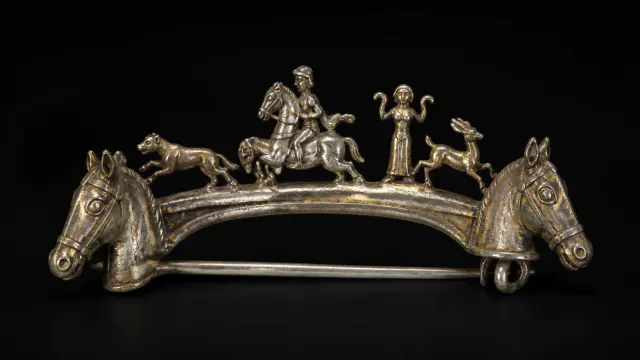
2nd century BCE · disputed chronology
Overlapping datesHorse fibula
Iberians
The attribution to the 2nd century BCE is disputed.
Read the record
2nd–1st centuries BCE
Overlapping datesThe dismantled cauldron
Celtic worlds
Approximate dating according to the record.
Read the record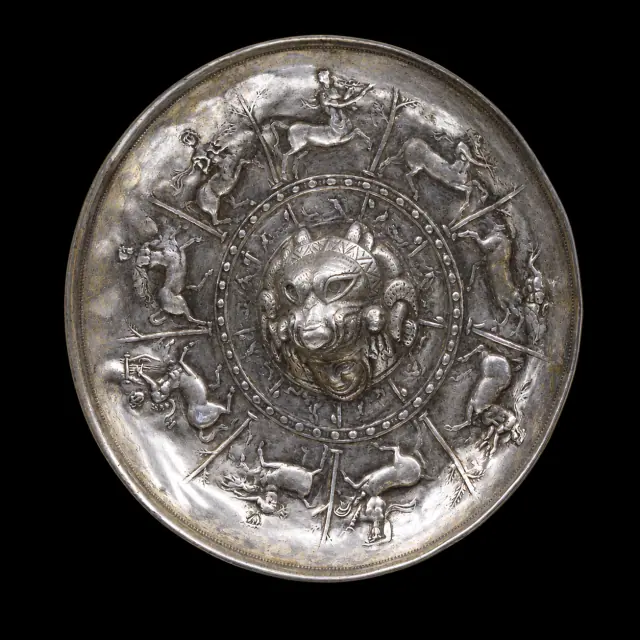
Second half of the 2nd–beginnings of the 1st century BCE
Overlapping datesPatera from Perotito
Iberians
The full 2nd–1st centuries BCE provide broad limits for chronological ordering; the record specifies the second half of the 2nd century and the early 1st.
Read the record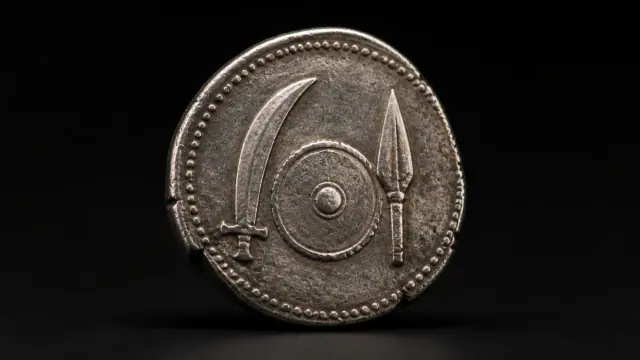
≈25–23 BCE
Denarius of Carisius
Iberians
Approximate dating according to the record.
Read the record
A closer look
About 1 min to read · 1 section. Further reading and sources · free access. Editorial review recorded: .
How the vessel reached a public collection
The vase was part of a joint acquisition, not of a museum-directed excavation. Esperanza Manso reconstructed the file: Elías Tormo mediated with Antonio Gonçalvez and the set was bought for fourteen thousand pesetas. A Royal Order arranged its entry on 31 March 1922; the following day the objects were inventoried with numbers 28586–28592. The documentation distinguishes two vases, a lid, two pectorals and two torques, besides the numerary. This trajectory explains why the association between the pieces is preserved, although the precise circumstances of the discovery remain unknown.
Where it is held
Museo Arqueológico Nacional (Madrid)
Item or group in the record · Documented collection
CER.ES · inventory 28587.
The holding institution is documented; public display may change. Check its official record before visiting.
Sources and references
Did you enjoy this exhibit?
Your opinion helps us improve the museum. You can change it whenever you like.
Loading your rating…