
 English
 Español
 Français
 Italiano
 Deutsch
 Русский
 Português
 Polski
 Română
 Svenska
 Norsk bokmål
 Suomi
 Türkçe
 العربية
 简体中文
 한국어
 हिन्दी
 Ελληνικά
CULTURE · FOOD, GIFTS AND HIERARCHY
The Banquet of Seuthes II
The banquet of Seuthes II according to Xenophon
Xenophon describes a banquet with gifts, food and wine in which favors were also negotiated.
Museum documentation · free public access, no account required.
Contextual image · Contextual correspondence
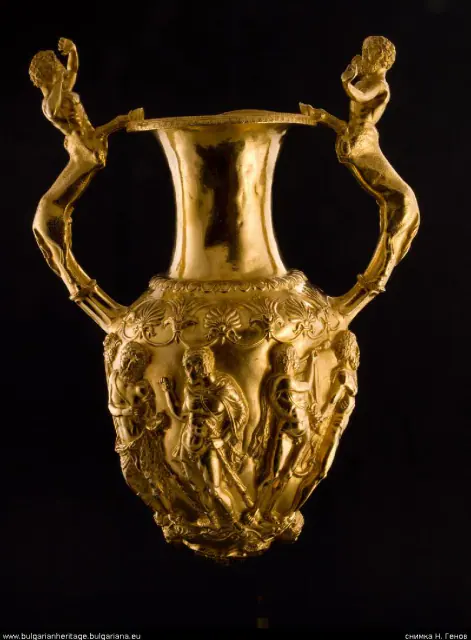
Amphora-rhyton from Panagyurishte, around 300 BCE. Later material comparison, no identified tableware from the banquet of Seuthes II narrated around 400 BCE. The Greek iconography of the vessel does not identify its users nor does it turn the whole into a royal portrait. Photograph preserved at native resolution of 800 × 1086 px; Limited detail when enlarged, without inventing or artificially increasing the resolution.
Nikolay Genov / Николай Генов · CC BY 3.0
History and context
Xenophon describes three-legged tables, bread, meat, and horns of wine at a banquet of Seuthes II. Guests bring gifts: the exchange shows who expects favor and who can grant it. It is not just any domestic meal, but a court scene told by a Greek participant.
Hospitality shares space with a very material problem: paying soldiers. The luxury of a table does not eliminate the tension between a ruler and those who have fought for him. Seutes II is a different character from Seutes III, associated with the bronze head and Seutopolis.
Evidence and interpretation
Ancient account of Xenophon, not a neutral transcription or model of the diet of all Thrace. The image of tableware contextualizes the gesture; It is not attributed to the banquet described.
Catalogue facts
- Date
- Towards 400 BCE. Anabasis episode
- Location
- Court of Seuthes II · Eastern Thrace; exact location not fixed
A SHARED TOPIC, DIFFERENT MOMENTS
Objects connected through time
Follow a topic across the collections. A shared tag is a way to compare objects, not proof that one culture influenced another.
The order uses the midpoint of each approximate date range; ranges can overlap. Spacing does not represent elapsed time. Swipe, scroll or use the arrows. With the sequence focused, use ← / →, Home or End.
THE CURRENT OBJECT
Its date is not sufficiently established to place it on the timeline. We keep it here, separate from the dated objects.
 You are viewing
Towards 400 BCE. Anabasis episode
The Banquet of Seuthes II
Thracians
Episode transmitted by Xenophon; no date of a preserved object.
Current recordBanqueting6 dated objects
≈530–500 BCE
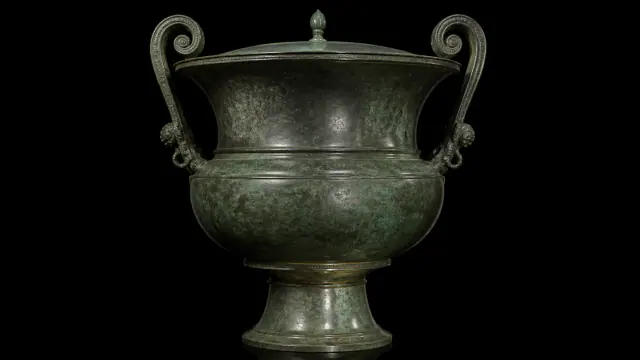
The great Greek krater of Vix
Greek worlds
Approximate dating according to the record.
Read the record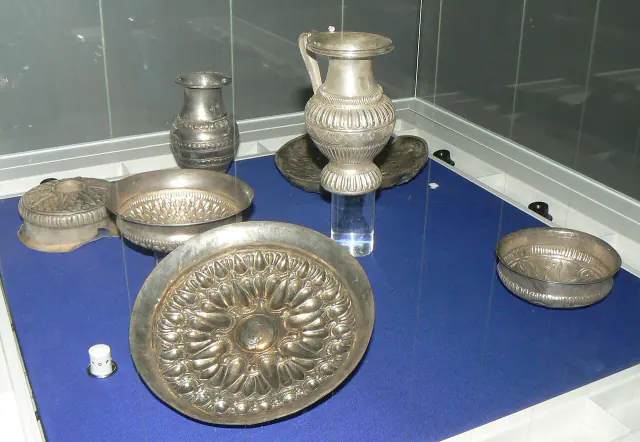
mainly 5th–4th centuries BCE; The set has a history of accumulation, not a single manufacturing date.
Rogozen
Thracians
Primary interval of the cumulative set, not single manufacturing date.
Read the record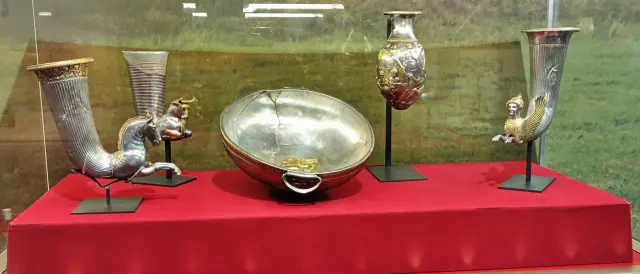
4th century BC C.; 350–300 BCE in the ISAW catalog.
Borovo
Thracians
Explicit range from the ISAW catalog, included in the card.
Read the record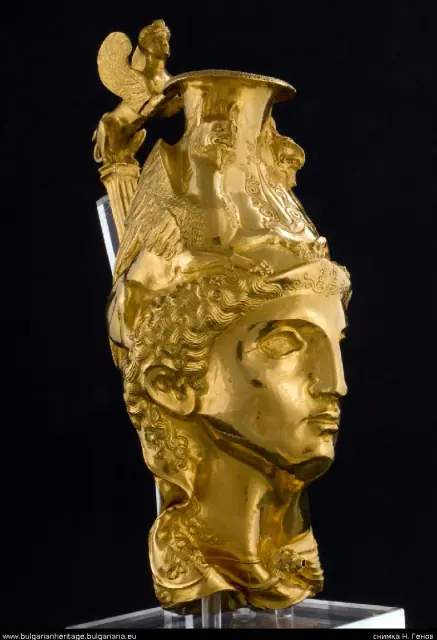
late 4th century – early 3rd century BCE, towards 300 BCE
Panagyurishte
Thracians
«Towards 300 BCE.» It is explicit orientation of the whole.
Read the record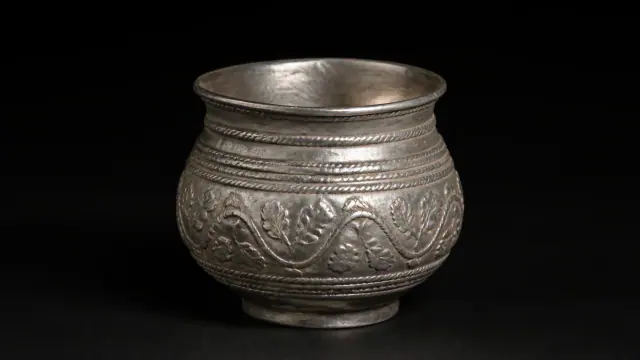
Piece: III–II centuries BCE · concealment ≈110–76 BCE
Vase from Chão de Lamas
Iberians
Centuries of manufacture of the vase; not a concealment interval of the treasure.
Read the record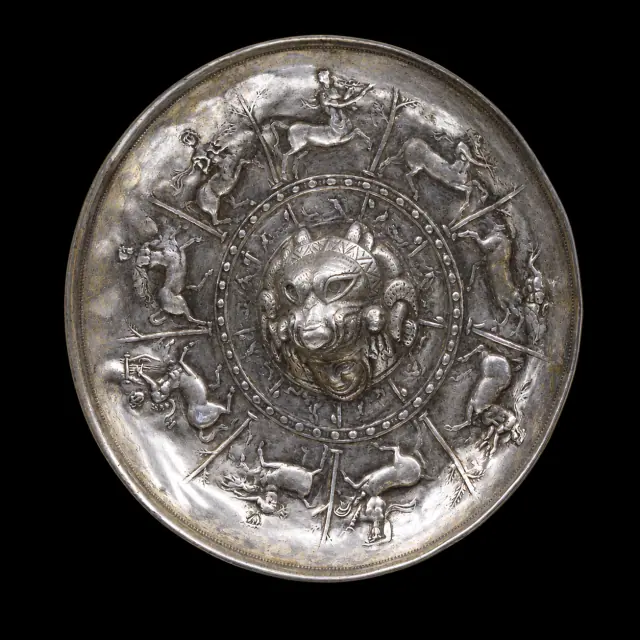
Second half of the 2nd–beginnings of the 1st century BCE
Patera from Perotito
Iberians
The full 2nd–1st centuries BCE provide broad limits for chronological ordering; the record specifies the second half of the 2nd century and the early 1st.
Read the record
A closer look
About 1 min to read · 2 sections. Further reading and sources · free access. Editorial review recorded: .
A gift that creates obligations
In episode VII, 3, the distribution and presentation of gifts places each guest before the king and the other attendees. Xenophon also transforms his own lack of a luxurious present into a verbal intervention. The anecdote allows us to ask what was worth more in that situation: the metal given, the men available or the word capable of presenting them as an alliance.
- Ancient text · Xenophon · Anabasis VII, 3: the banquet of Seuthes IIAccess recorded: .
Read who tells the scene
The narrator has a stake in the agreement and needs to explain his decisions. His attention to gifts, the order of the diners and rewards is not accidental. The card preserves this situated view: observing an elite ceremony does not authorize attributing the same practice to all families or to all centuries of Thracian history.
- Ancient text · Xenophon · Anabasis VII, 3: the banquet of Seuthes IIAccess recorded: .
Sources and references
Did you enjoy this exhibit?
Your opinion helps us improve the museum. You can change it whenever you like.
Loading your rating…