CONNECTION, NOT IBERIAN PIECE · CONNECTION · LUSITANIA
Chão de Lamas pectoral Silver for a world in transition
Serpents, boars, birds and fragmented bodies cover a silver crescent.
ON THIS PAGE
History and context Evidence and facts Objects connected through time Further reading Reference images Where it is held Sources and references Comments Museum documentation · free public access, no account required.
⛶ Enlarge image← Previous Image 1 of 2 · Main image Next →
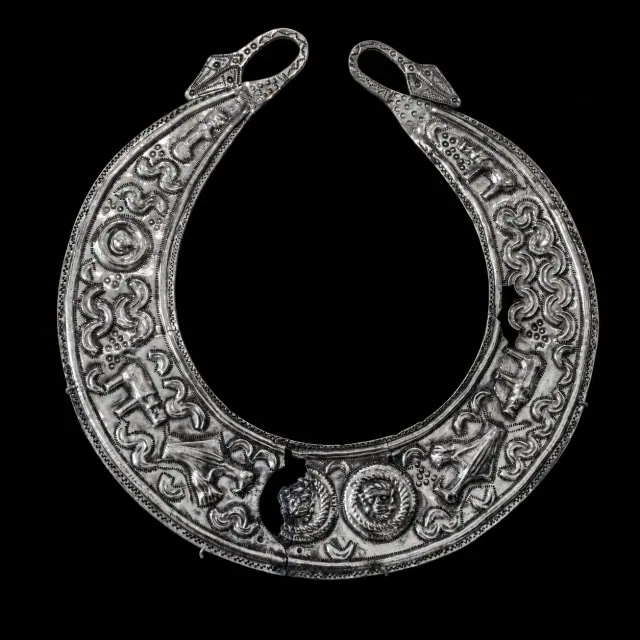
Main image 2 RECONSTRUCTION FROM THE ORIGINAL · IA · CC BY 2.0 Reconstruction · Declared visual hypothesis
AI-based interpretive recreation from photograph by Ángel M. Felicísimo. CC BY 2.0. Changes: black background, lighting and surface finish. Not an archaeological photograph nor a certified restitution. Microdetails, finish and colour are interpretive approximations.
Tracekeepers / OpenAI ImageGen; source photograph: Ángel M. Felicísimo · National Archaeological Museum of Spain · Inventory: MAN 28589 · CC BY 2.0
View full image: RECONSTRUCTION FROM THE ORIGINAL · IA · CC BY 2.0 RECONSTRUCTION FROM THE ORIGINAL · IA · CC BY 2.0 Reconstruction · Declared visual hypothesis
AI-based interpretive recreation from photograph by Ángel M. Felicísimo. CC BY 2.0. Changes: black background, lighting and surface finish. Not an archaeological photograph nor a certified restitution. Microdetails, finish and colour are interpretive approximations.
Tracekeepers / OpenAI ImageGen; source photograph: Ángel M. Felicísimo · National Archaeological Museum of Spain · Inventory: MAN 28589 · CC BY 2.0
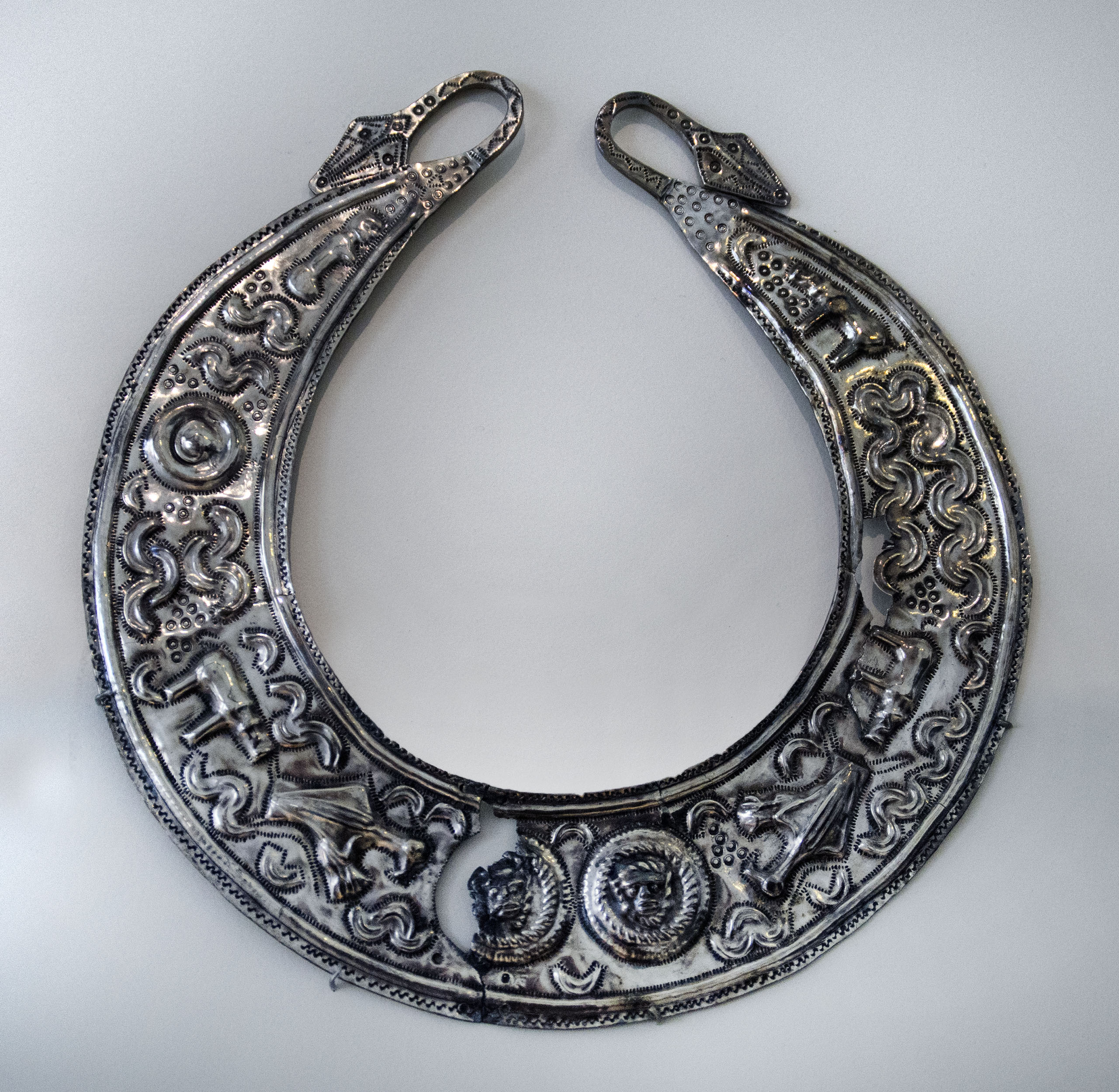
View full image: ORIGINAL PHOTOGRAPH · Ángel M. Felicísimo · CC BY 2.0 ORIGINAL PHOTOGRAPH · Ángel M. Felicísimo · CC BY 2.0 Documentary original · Exact correspondence
Documentary photograph without semantic retouching. Preserves the condition and visible details of the reference piece.
Ángel M. Felicísimo · National Archaeological Museum of Spain · Inventory: MAN 28589 · CC BY 2.0
History and context The repoussé plate ends in serpent heads and gathers animals, human figures and hybrid medallions. The treasure could have been a concealment of wealth or a deposit related to a sanctuary; both possibilities describe different actions.
Its iconography has been read as transition to the afterlife, regeneration or enemy sacrifice. These are consistent theories, not ancient subtitles. The wealth of the set shows contacts and shared languages in late western Iberia.
Evidence and interpretation Documented fact: decoration, technique, dimensions and belonging to the Chão de Lamas treasure are in the catalogue. Interpretation and caution: the sanctuary function and eschatological meaning derive from typology and iconography; they are presented as hypotheses.
Catalogue facts
Narrative date 3rd–2nd centuries BCE · concealed in the early 1st century BCE
Location Chão de Lamas, Miranda do Corvo (Portugal)
Material Repoussé silver
Context Lusitanian sphere · connection, not Iberian piece
Classification Comparative connection · must not be presented as an Iberian piece
Visual reference CERES · MAN 28589 · visual and provenance reference Silver19 Jewellery and adornment36 Embossing12 Animal imagery49 Human imagery73
The order uses the midpoint of each approximate date range; ranges can overlap. Spacing does not represent elapsed time. Swipe, scroll or use the arrows. With the sequence focused, use ← / →, Home or End.
Earlier Later
14 / 19 In the centre: Chão de Lamas pectoral
You can scroll the first group without JavaScript. The other topics are also available below.
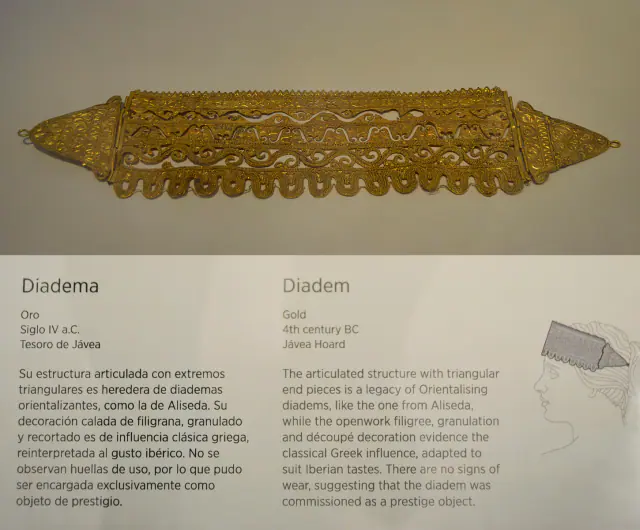
Jewellery and adornment Hohle Fels · ≈40,000 years · Aurignacian · Prehistory'Jamila's' necklace · ≈7250–7000 BCE · PrehistoryThe Gold of Varna · Towards 4600–4200 BCE · ThraciansPuabi headdress · ca. 2600–2450 BCE · SumerCemetery R-37 · ca. 2550–2030 BCE · Indus civilisationCarnelian beads · ca. 2600–1900 BCE · Indus civilisationGrave Circle A and Chrysolakkos · 18th–16th centuries BCE · Greek worldsBurial at K IV · circa 1750–1550 BCE · Nubia, Kerma and KushTutankhamun's grave goods · death towards 1323 BCE · Ancient EgyptFu Hao’s burial goods · ca. 1200 BCE · Ancient ChinaBefore the Iberias · Final Bronze, c. 1000 BCE · IberiansTomb 1 at Kuntur Wasi · c. 800 BCE · Pre-Inca culturesBeads from Cerro de los Vientos · 8th–7th centuries BCE · orientalizing · IberiansGold at Kuntur Wasi · c. 800–550 BCE · Pre-Inca culturesRegolini-Galassi tomb · ca. 675–650 BCE · Etruscans and RomeCondomina Earring · 6th century BCE · IberiansSteppe kurgans · 7th–4th centuries BCE · Scythians and SakaVix Tomb · c. 500 BCE · Celtic worldsLa Venta grave goods · ca. 600–400 BCE · Maya worldsEzerovo Ring · 5th century BCE · chronology discussed in the bibliography · ThraciansGrave goods of Baza and Toya · First half of the 4th century BCE · IberiansTreasure of Jávea · 4th century BCE · IberiansSusa grave goods · c. 350 BCE · Achaemenid PersiaPunic head pendant · Mid 4th–3rd centuries BCE · PhoeniciansTreasure of Cheste · Jewellery from the 4th–3rd centuries BCE; concealment at the end of the 3rd century BCE. · IberiansMarina Alta Hoard · Jewellery: 5th–2nd centuries BCE; concealment probably around 80–73 BCE. · IberiansGolyamata Kosmatka · End of the 4th century – beginning of the 3rd century BCE; ritual burial at the beginning of the III according to Iskra. · ThraciansMairena Hoard · 3rd century BCE · IberiansChão de Lamas pectoral · 3rd–2nd centuries BCE · concealed in the early 1st century BCE · Iberians — You are viewingFibula from Lancia · ≈300–100 BCE · IberiansNorthern mound · 2nd–1st centuries BCE · Yayoi JapanHorse fibula · 2nd century BCE · disputed chronology · IberiansSimancas-type belt buckle · Second half of the IV century–V century CE · IberiansPakal’s grave goods · sealed on 28 August 683 CE · Maya worldsMissing grave goods · 13th–15th centuries according to the heritage overview · Bantu-speaking worldsWithout a comparable date (not part of the chronological order):
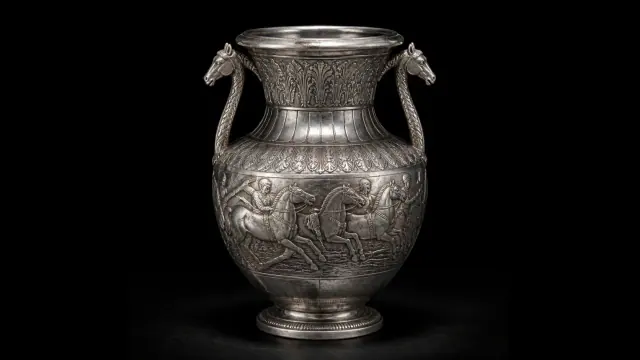
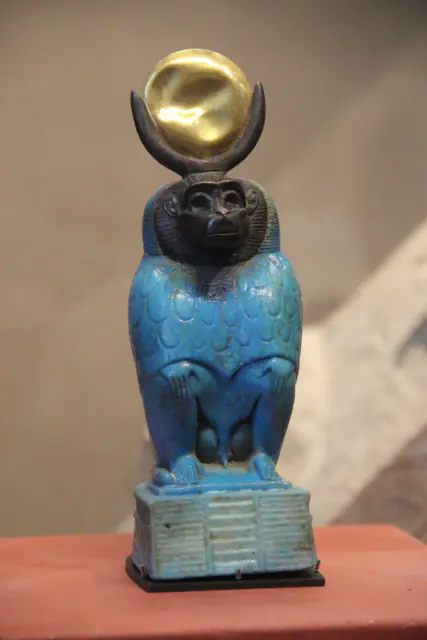
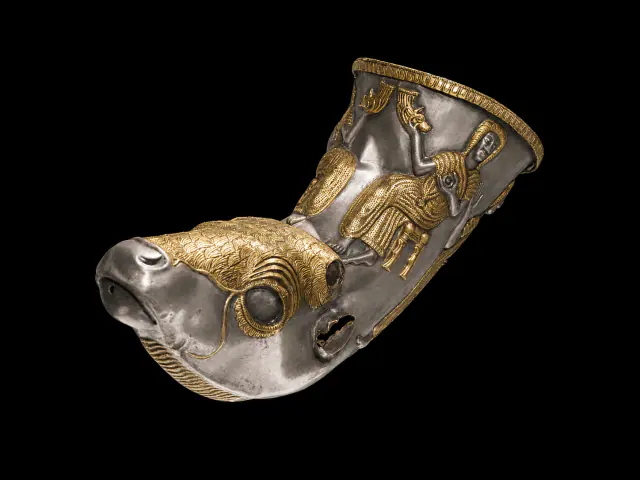
Embossing Stag Vessel · 14th–13th centuries BCE · HittitesTribute to Assyria · c. 848 BCE · PhoeniciansGold at Kuntur Wasi · c. 800–550 BCE · Pre-Inca culturesCoțofenești helmet · Second half of the 5th century – beginning of the 4th century BCE · ThraciansRogozen · mainly 5th–4th centuries BCE; The set has a history of accumulation, not a single manufacturing date. · ThraciansThe silver amphora of Chertomlyk · 4th century BCE · Greek worldsThe Kul-Oba vase · 4th century BCE · Greek worldsFaces of the Steppe · Second half of the 4th century BCE · Scythians and SakaChão de Lamas pectoral · 3rd–2nd centuries BCE · concealed in the early 1st century BCE · Iberians — You are viewingVase from Chão de Lamas · Piece: III–II centuries BCE · concealment ≈110–76 BCE · IberiansThe dismantled cauldron · 2nd–1st centuries BCE · Celtic worldsPatera from Perotito · Second half of the 2nd–beginnings of the 1st century BCE · IberiansAnimal imagery Lion-man · ≈40,000 years · Aurignacian · PrehistoryBefore the San · ≈25.500–23.500 BCE · San historiesBefore the name San · ≈25.500–23.500 BCE · San historiesAltamira · Assemblage ≈36,000–13,000 BP · bison ≈18,400–15,300 cal BP · PrehistoryLascaux · ≈23,500–21,000 cal BP · debated contextual estimate · PrehistoryZaraysk Bison · ≈23,000–21,000 years · PrehistoryRondelle de Mas-d'Azil · ≈18,000–16,000 years · PrehistoryLamp from La Mouthe · ≈20,500–13,000 years · Magdalenian framework · PrehistoryEngraved stone from Çakmaktepe · PPNA · site proposal: ≈9600–8800 BCE, provisional · PrehistoryCueva de las Manos · Sequence ≈9300–1300 BP · PrehistoryCylinder seal · c. 3500–3100 BCE · SumerQueen's Lyre · ca. 2600–2500 BCE · SumerThe goat from PG 1237 · ca. 2600–2400 BCE · SumerIndus seals · ca. 2600–1900 BCE · Indus civilisationQueen of the Night · 19th–18th centuries BCE · SumerBull-leaping · c. 1600–1450 BCE · Greek worldsStag Vessel · 14th–13th centuries BCE · HittitesBefore the Scythians and Sakas · Final Bronze–Initial Iron, ca. 1200–600 BCE · Scythians and SakaIvory in Nimrud · 9th–8th centuries BCE · PhoeniciansLamassu of Khorsabad · Reign of Sargon II · 721–705 BCE · SumerThe Tello Obelisk · c. 800–500 BCE · Pre-Inca culturesAshurbanipal Hunt · 645–635 BCE · SumerBanquet under leopards · Around 480–470 BCE · Etruscans and RomeThe oldest knotted carpet · 5th–4th centuries BCE · Scythians and SakaThe silver amphora of Chertomlyk · 4th century BCE · Greek worldsThoth in the form of a baboon · 664–30 BCE · Ancient EgyptPoroina Mare Rhyton · Second half of the 4th century BCE · ThraciansBorovo · 4th century BC C.; 350–300 BCE in the ISAW catalog. · ThraciansLeipzig Fish Plate · Last third 4th–early 3rd century BCE · Greek worldsDove of the Amarejo · 3rd century BCE · IberiansChão de Lamas pectoral · 3rd–2nd centuries BCE · concealed in the early 1st century BCE · Iberians — You are viewingFibula from Lancia · ≈300–100 BCE · IberiansHorse fibula · 2nd century BCE · disputed chronology · IberiansThe dismantled cauldron · 2nd–1st centuries BCE · Celtic worldsKalathos of Alcorisa · 2nd–1st centuries BCE · IberiansEgyptian oil lamp with a fish, held in Laon · 3rd–4th centuries CE · Ancient EgyptLaon lamp with fish · 3rd–4th centuries CE · Etruscans and RomeGold rhinoceros · ca. 1220–1290; found in 1933 · Bantu-speaking worldsZimbabwe birds · main period of Great Zimbabwe, c. 12th–15th centuries · Bantu-speaking worldsWithout a comparable date (not part of the chronological order):
Human imagery Lion-man · ≈40,000 years · Aurignacian · PrehistoryHohle Fels · ≈40,000 years · Aurignacian · PrehistoryWillendorf · ≈29,500 years · PrehistoryBrno II Articulated Figure · ≈28,000 years cal BP · by funerary association · PrehistoryDolní Věstonice I · ≈29,000–27,000 years · PrehistoryLespugue · ≈28,000 years · PrehistoryKostenki I · ≈23,000–21,000 years · PrehistoryShigir Idol · C. 10,000 BCE · approximation; debated dating · PrehistoryNahal Hemar mask · Eighth millennium BCE · context dating, not direct dating of the stone · PrehistoryEl Miradero spatula-idols · ≈4000–3800 cal BCE · PrehistoryWarka Mask · End of the 4th millennium BCE · SumerCueva de las Manos · Sequence ≈9300–1300 BP · PrehistoryUruk Vase · ca. 3300–3000 BCE · SumerWorshiper of Tell Asmar · Towards 2900–2600 BCE · SumerStandard of Ur · ca. 2600–2400 BCE · SumerStatue of Ebih-Il · Towards 2400 BCE · SumerAkkadian sovereign head · Akkadian period · 23rd century BCE · SumerBassetki Statue · Akkadian period · 23rd century BCE · SumerBefore Pre-Inca Cultures · Kotosh-Mito Tradition, c. 2200–1500 BCE; the enclosure is usually situated around 1800 BCE. · Pre-Inca culturesQueen of the Night · 19th–18th centuries BCE · SumerBull-leaping · c. 1600–1450 BCE · Greek worldsWooden faces · c. 1600–1000 BCE, in several phases · Maya worldsHead 2 · c. 1200–900 BCE · Maya worldsIvory in Nimrud · 9th–8th centuries BCE · PhoeniciansLas Limas · c. 1000–600 BCE · Maya worldsAstarte from El Carambolo · 8th century BCE · PhoeniciansAstarte from El Carambolo · 8th century BCE · IberiansLamassu of Khorsabad · Reign of Sargon II · 721–705 BCE · SumerThe Lanzón · c. 900–500 BCE · Pre-Inca culturesOffering 4 · c. 800–600 BCE · Maya worldsKushite king · c. 721–664 BCE · Nubia, Kerma and KushThe so-called ‘Priest of Cádiz’ · 7th century BCE · PhoeniciansThe so-called ‘Priest of Cádiz’ · 7th century BCE · IberiansHeads on the wall · c. 800–300 BCE · Pre-Inca culturesShabti of Psamtek · 570–526 BCE · Ancient EgyptTwo voices in an urn · 530–520 BCE · Etruscans and RomeThe god on the roof · Towards 510–500 BCE · Etruscans and RomeGlazed brick guards · 522–486 BCE · Achaemenid PersiaTwenty-three delegations · 6th–5th centuries BCE, mainly under Darius and Xerxes · Achaemenid PersiaBanquet under leopards · Around 480–470 BCE · Etruscans and RomeThe statue was the urn · First half of the 4th century BCE · IberiansA battle on a comb · Early 4th century BCE · Scythians and SakaThe Kul-Oba vase · 4th century BCE · Greek worldsThe Solokha gold comb · 4th century BCE · Greek worldsFaces of the Steppe · Second half of the 4th century BCE · Scythians and SakaLady of Ibiza · 4th–3rd centuries BCE · PhoeniciansPunic head pendant · Mid 4th–3rd centuries BCE · PhoeniciansLady of Ibiza · 4th–3rd centuries BCE · IberiansThe Raimondi Stele · c. 400–200 BCE according to MNAAHP · Pre-Inca culturesChão de Lamas pectoral · 3rd–2nd centuries BCE · concealed in the early 1st century BCE · Iberians — You are viewingVas dels Guerrers · 3rd–early 2nd century BCE · IberiansWarriors' Vase · 3rd–2nd centuries BCE · IberiansThe dismantled cauldron · 2nd–1st centuries BCE · Celtic worldsThe walls of San Bartolo · c. 100 BCE · Maya worldsGladiators Cup of Chavagnes · 25–75 CE · Etruscans and RomeThracian Gladiator from Cádiz · 67–100 CE · Etruscans and RomeTorreáguila fountain spout · 101–125 CE · Etruscans and RomeArticulated doll from Tarragona · Late 3rd–4th century CE · Etruscans and RomeSeven heads · c. 500–700 CE · Bantu-speaking worldsSeated figure · 13th century, date attributed by the museum · Mande WorldsKongo crucifix · 16th–17th centuries · Bantu-speaking worldsKuba ndop · ca. 1760 · Bantu-speaking worldsWithout a comparable date (not part of the chronological order):
Before Persia · Central core c. seventeenth century BCE; Neo-Elamite additions between the ninth and sixth centuries BCE · Achaemenid PersiaBhimbetka · Mesolithic–historical and medieval period · PrehistoryEland Cave · Regional tradition of ≈4,000 years · up to historical period · PrehistoryFour offerers · Iberian period · individual dating according to catalogue · IberiansGame Pass Shelter · Regional rock art chronology · panel not dated in isolation · San historiesLararium of Vilauba · Roman period · Etruscans and RomeLeang Karampuang · Minimum 51,200 years · dating published in 2024 · PrehistoryQuinkan Country · Regional art up to ≈27,000 BP · modern continuity · PrehistorySierra de San Francisco · Broad tradition with direct dates ≈5290–295 BP · PrehistoryTassili n’Ajjer · Corpus ≈6000 BCE–first centuries CE · PrehistoryThe Thracian Horseman · Roman era · diffusion especially in the 2nd–3rd centuries CE · ThraciansA closer look About 1 min to read · 1 section. Further reading and sources · free access. Editorial review recorded: September 5, 2026 .
The composition directs the gaze towards two faces In the centre appear two frontal male heads, with curly hair, thick beards and slightly open mouths. Their large eyes lack indicated pupils. Each face occupies a medallion with a roped edge; between them are interposed horizontal signs resembling a C. To the sides, two large birds of prey and then two verracos are oriented towards this centre. Olmos and Moreno Conde study this organisation as a narrative articulated around an axis, not as a casual sum of animals. The arrangement can be observed; proposals about gaze, breath or heroic transit belong to their interpretation.
Reference images and provenance View full-size photograph ⛶ ORIGINAL PHOTOGRAPH · Ángel M. Felicísimo · CC BY 2.0 Documentary photograph without semantic retouching. Preserves the condition and visible details of the reference piece.
Documentary original · Exact correspondence
Ángel M. Felicísimo · National Archaeological Museum of Spain · Inventory: MAN 28589
Where it is held Item or group in the record · Documented collection
CER.ES · inventory 28589.
The holding institution is documented; public display may change. Check its official record before visiting.
See Chão de Lamas pectoral in the museum Find this record in its gallery and save your route, favourites and places to explore later.
Open this exhibit in the museum → Museum access requires a free account. You can read this page's documentation without registering.
Did you enjoy this exhibit? Your opinion helps us improve the museum. You can change it whenever you like.
Loading your rating…

 English
 Español
 Français
 Italiano
 Deutsch
 Русский
 Português
 Polski
 Română
 Svenska
 Norsk bokmål
 Suomi
 Türkçe
 العربية
 简体中文
 한국어
 हिन्दी
 Ελληνικά

 You are viewing
 View full-size photograph ⛶
