
 English
 Español
 Français
 Italiano
 Deutsch
 Русский
 Português
 Polski
 Română
 Svenska
 Norsk bokmål
 Suomi
 Türkçe
 العربية
 简体中文
 한국어
 हिन्दी
 Ελληνικά
JEWELLERY · CAÑETE DE LAS TORRES
Horse fibula
A hunt fits in a brooch
A rider, a dog and a fawn decorate this silver brooch for fastening clothing.
Museum documentation · free public access, no account required.
Generated reconstruction · Declared visual hypothesis
Declared visual reconstruction; not a photograph of the original nor documentary evidence.
History and context
On the silver bridge, a rider with caetra pursues a fawn while a dog runs in the opposite direction. Horse protomes and a figure of the Potnia theron type complete a piece where structure and scene are inseparable.
The fibula was cast, decorated and partially gilded. Its complexity could communicate equestrian rank, prestigious hunting and symbolic protection; these readings do not equate to identifying the owner or a deity with a secure name.
Evidence and interpretation
Documented fact: technique, materials, catalogued provenance and hunting scene are observable. Interpretation and caution: identification with Potnia theron and equestrian status are plausible iconographic and social readings, not preserved names.
Catalogue facts
- Narrative date
- 2nd century BCE · disputed chronology
- Location
- Cañete de las Torres (Córdoba)
- Material
- Cast silver, traces of overgilding
- Context
- La Tène-type fibula with plastic decoration
- Classification
- Iberian collection or explicit interpretive resource
- Visual reference
- National Archaeological Museum 23170; hypothetically generated image, not photograph of the original. CE/DA02821/35 corresponds to another fibula.
A SHARED TOPIC, DIFFERENT MOMENTS
Objects connected through time
Follow a topic across the collections. A shared tag is a way to compare objects, not proof that one culture influenced another.
The order uses the midpoint of each approximate date range; ranges can overlap. Spacing does not represent elapsed time. Swipe, scroll or use the arrows. With the sequence focused, use ← / →, Home or End.
Silver19 dated objects
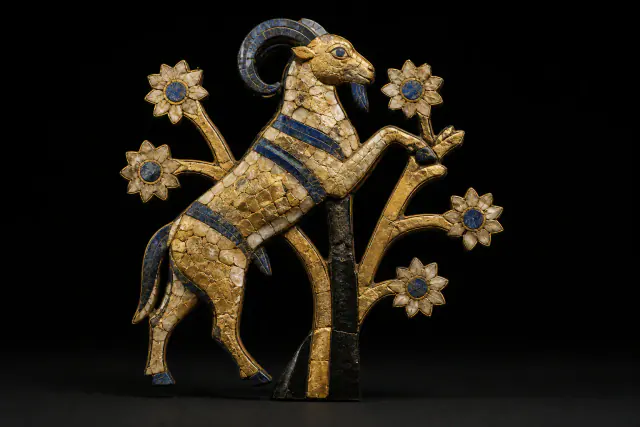
ca. 2600–2400 BCE
The goat from PG 1237
Sumer
The function as support is not resolved.
Read the record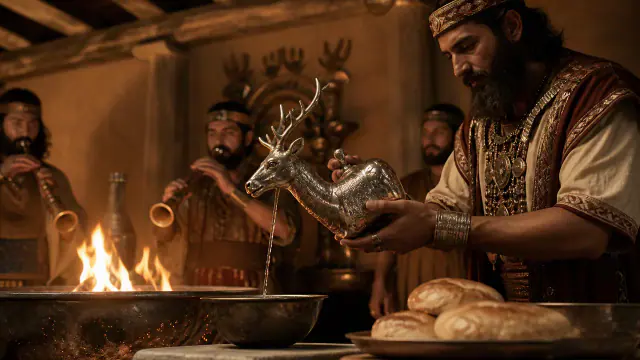
14th–13th centuries BCE
Stag Vessel
Hittites
Approximate dating according to the record.
Read the record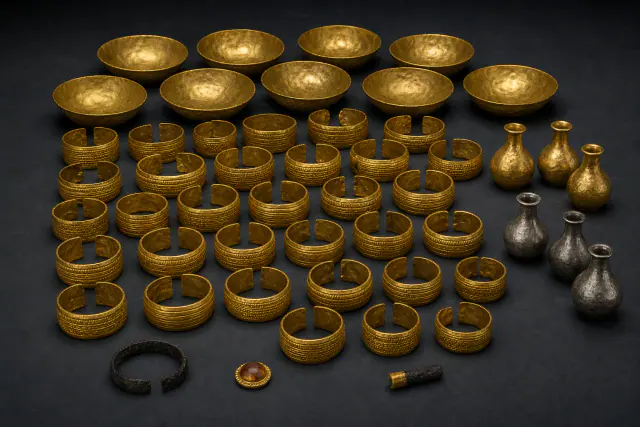
Final Bronze, c. 1000 BCE
Before the Iberias
Iberians
Date of the treasure, not of the preceding general period.
Read the record
5th–4th centuries BCE
Twenty-six voiceless signs
Scythians and Saka
Approximate dating according to the record.
Read the record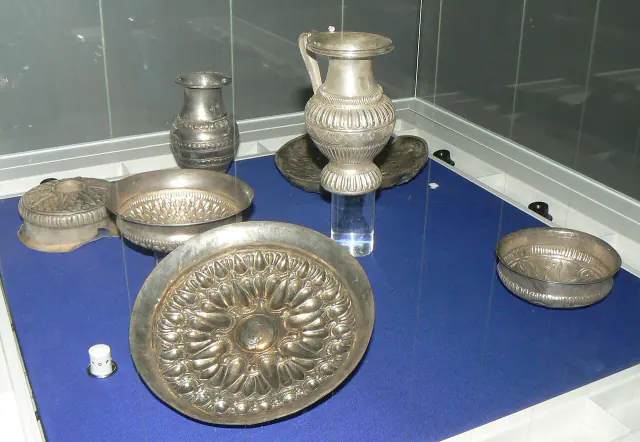
mainly 5th–4th centuries BCE; The set has a history of accumulation, not a single manufacturing date.
Rogozen
Thracians
Primary interval of the cumulative set, not single manufacturing date.
Read the record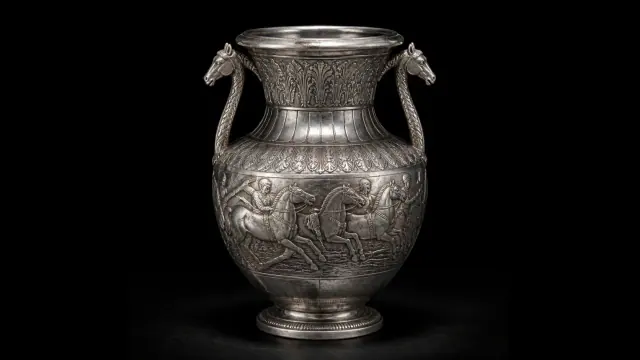
4th century BCE
The silver amphora of Chertomlyk
Greek worlds
Approximate dating according to the record.
Read the record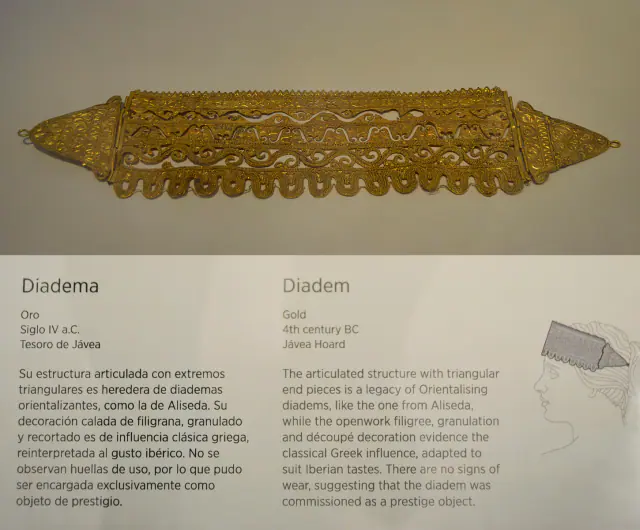
4th century BCE
Treasure of Jávea
Iberians
Approximate dating according to the record.
Read the record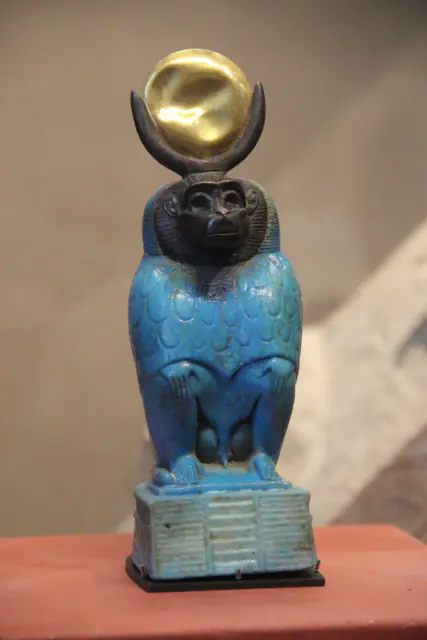
664–30 BCE
Overlapping datesThoth in the form of a baboon
Ancient Egypt
Approximate dating according to the record.
Read the record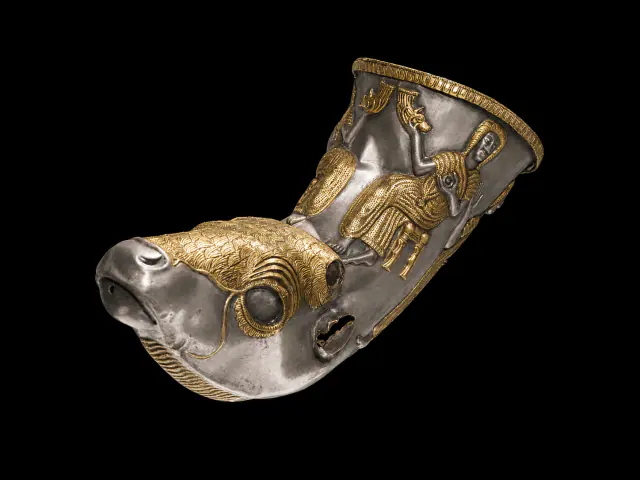
Second half of the 4th century BCE
Poroina Mare Rhyton
Thracians
Second half of the 4th century BCE; the specific ritual is not known.
Read the record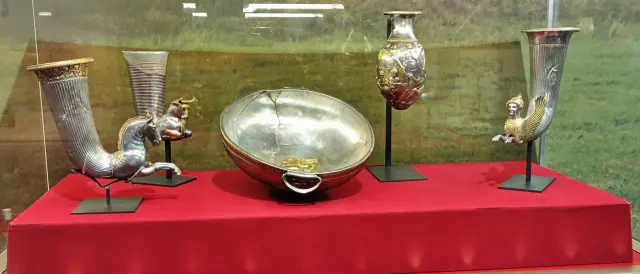
4th century BC C.; 350–300 BCE in the ISAW catalog.
Borovo
Thracians
Explicit range from the ISAW catalog, included in the card.
Read the record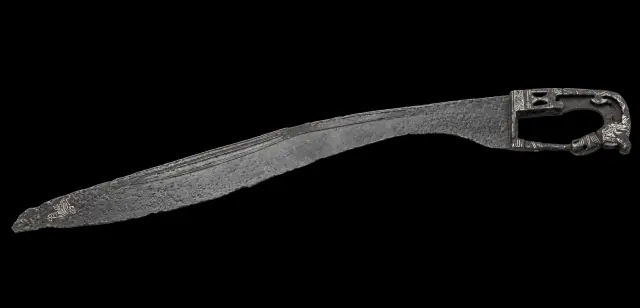
4th–3rd centuries BCE
Falcata from Almedinilla
Iberians
Approximate dating according to the record.
Read the record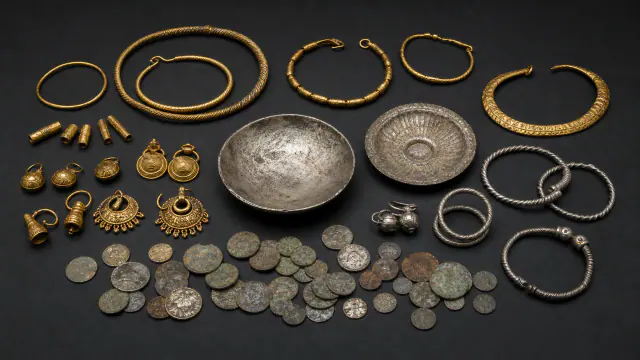
Jewellery from the 4th–3rd centuries BCE; concealment at the end of the 3rd century BCE.
Treasure of Cheste
Iberians
Interval of the jewellery, not of the later concealment.
Read the record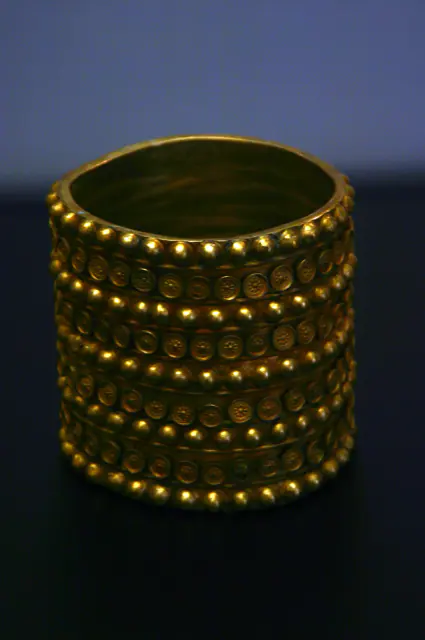
3rd century BCE
Mairena Hoard
Iberians
Approximate dating according to the record.
Read the record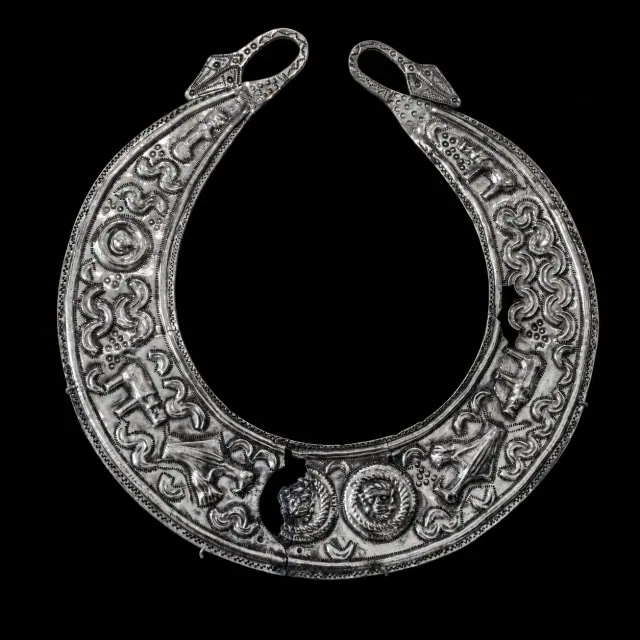
3rd–2nd centuries BCE · concealed in the early 1st century BCE
Overlapping datesChão de Lamas pectoral
Iberians
Centuries of manufacture of the piece; not a later date of concealment.
Read the record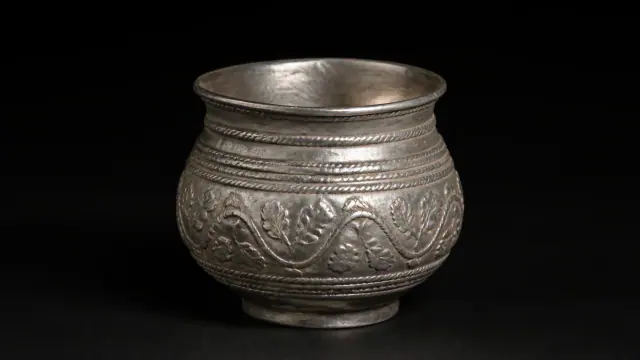
Piece: III–II centuries BCE · concealment ≈110–76 BCE
Overlapping datesVase from Chão de Lamas
Iberians
Centuries of manufacture of the vase; not a concealment interval of the treasure.
Read the record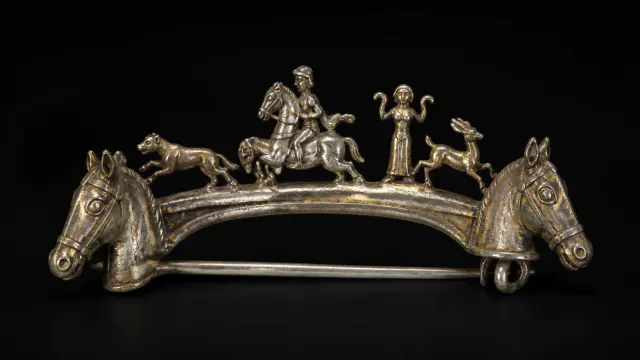 You are viewing
2nd century BCE · disputed chronology
Horse fibula
Iberians
The attribution to the 2nd century BCE is disputed.
Current record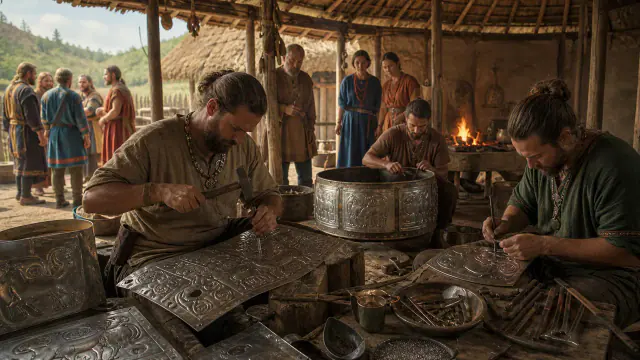
2nd–1st centuries BCE
Overlapping datesThe dismantled cauldron
Celtic worlds
Approximate dating according to the record.
Read the record
Second half of the 2nd–beginnings of the 1st century BCE
Overlapping datesPatera from Perotito
Iberians
The full 2nd–1st centuries BCE provide broad limits for chronological ordering; the record specifies the second half of the 2nd century and the early 1st.
Read the record
≈25–23 BCE
Denarius of Carisius
Iberians
Approximate dating according to the record.
Read the record
A closer look
About 1 min to read · 1 section. Further reading and sources · free access. Editorial review recorded: .
The horse's legs also close the brooch
The study by Consuelo Mata and collaborators allows tracking how anatomy becomes mechanism: the horse's front legs join to form the fibula's foot and needle housing; a prolonged appendix turns back toward the front animals. The review identifies the prey as a schematic boar by its curled tail, as opposed to the fawn described in CERES. Behind the rider, a short-haired figure with incised clothing and crossed hands over the waist is observed. These observations correspond to the Cañete specimen of the MAN, inventory 23170.
Where it is held
Museo Arqueológico Nacional (Madrid)
Item or group in the record · Documented collection
CER.ES · inventory 23170. The inventory CE/DA02821/35 corresponds to another piece, not the Cañete fibula.
The holding institution is documented; public display may change. Check its official record before visiting.
Sources and references
Did you enjoy this exhibit?
Your opinion helps us improve the museum. You can change it whenever you like.
Loading your rating…