
 English
 Español
 Français
 Italiano
 Deutsch
 Русский
 Português
 Polski
 Română
 Svenska
 Norsk bokmål
 Suomi
 Türkçe
 العربية
 简体中文
 한국어
 हिन्दी
 Ελληνικά
ZOOMORPHIC SCULPTURE · PORCUNA
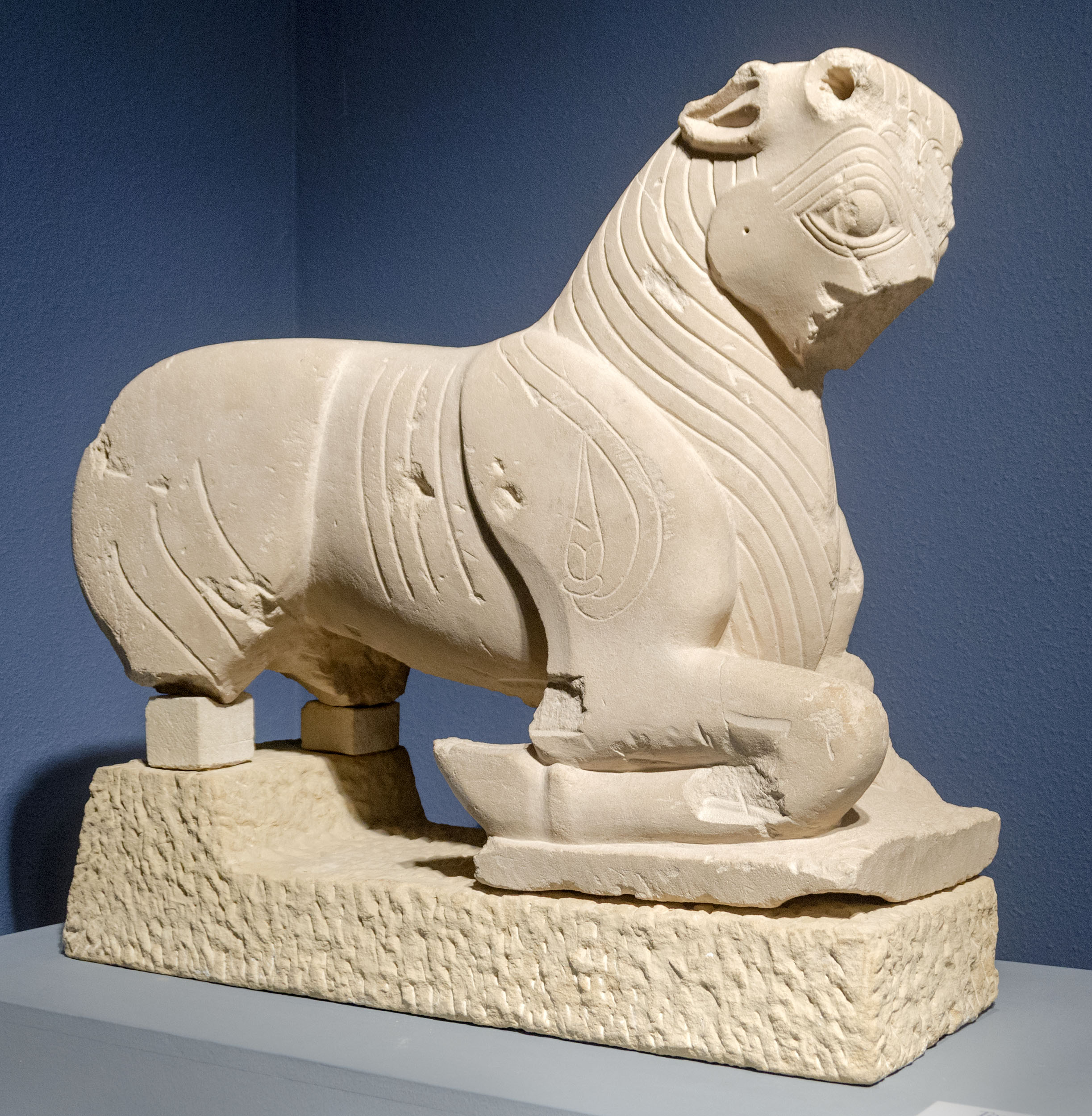
Porcuna Bull
A small animal with monumental weight
The figure of a bull could have different meanings depending on where it was placed.
Museum documentation · free public access, no account required.
Reconstruction · Declared visual hypothesis
AI-based interpretive recreation from Ángel M. Felicísimo, CC BY-SA4.0. Adapted under CC BY-SA4.0. Black background, neutral lighting, removal of mounting and surface cleaning. Not an archaeological photograph nor a certified restitution. Microdetails, finish and colour are interpretive approximations.
Tracekeepers / OpenAI ImageGen; source photograph: Ángel M. Felicísimo · Jaén Museum · Inventory: CE/DA00818 · CC BY-SA 4.0
History and context
The sculpture reduces the bull's body and accentuates the features that make it recognisable. In Iberian repertoires, bovids and other animals could protect tombs, articulate elite narratives or participate in ritual languages.
Calling it 'little bull' brings the piece closer to the visitor, but may conceal its monumental function. The current scale of the fragment does not equal the symbolic scale it had within its architectural context.
Bovine cattle were draught force, meat, hide, bone and reproductive capacity. Sacrificing such an animal, when it actually occurred, meant renouncing years of potential work and turned the banquet or offering into an economic and social statement.
The abundance of sculpted bulls in necropolises does not by itself demonstrate bull sacrifices. To identify a victim, faunal remains, processing traces, deposits and context are needed; the image belongs to a broader protective and funerary language.
Evidence and interpretation
Documented fact: bovids appear in economy, ritual deposits and Iberian funerary sculpture. Interpretation and caution: strength, fertility, water, protection and regeneration are interpretive fields; 'taurobolium' designates a later Roman rite and should not be used as a generic name for an Iberian sacrifice.
Catalogue facts
- Narrative date
- Late 7th to early 6th century BCE
- Location
- Porcuna (Jaén)
- Material
- Limestone
- Context
- Zoomorphic sculpture · monumental context
- Classification
- Iberian collection or explicit interpretive resource
- Visual reference
- CER.ES · Jaén Museum CE/DA00818
A closer look
About 1 min to read · 1 section. Further reading and sources · free access. Editorial review recorded: .
The holes preserve a lost decoration
The surface was not necessarily bare as it is today. Chapa and Vallejo identified perforations in the forehead flower, both cheeks, the left shoulder and the tail tip; they relate them to added accessories, possibly metallic, which are no longer preserved. The distribution is also not perfectly symmetrical: some fastenings appear only on the left and the tail rests on that thigh. Together with the slight deviation of the neck, these details suggest a preferred view. Examining the small holes allows the reconstruction of a composite object, not just a sculpture carved from a single material.
Reference images and provenance
 View full-size photograph ⛶
Documentary photograph without semantic retouching. Preserves the condition and visible details of the reference piece.
Documentary original · Exact correspondence
Ángel M. Felicísimo · Jaén Museum · Inventory: CE/DA00818

Where it is held
The holding institution is documented; public display may change. Check its official record before visiting.
Sources and references
Did you enjoy this exhibit?
Your opinion helps us improve the museum. You can change it whenever you like.
Loading your rating…