 English
 Español
 Français
 Italiano
 Deutsch
 Русский
 Português
 Polski
 Română
 Svenska
 Norsk bokmål
 Suomi
 Türkçe
 العربية
 简体中文
 한국어
 हिन्दी
 Ελληνικά
01 · INITIAL ATLAS · NODES AND ROUTES
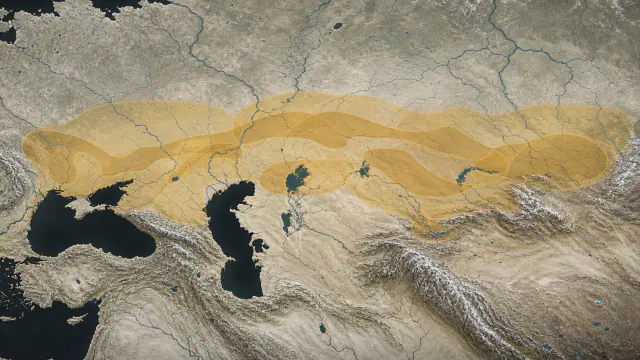
Map of Scythians and Sakas
Follow the routes, settlements and graves of the different steppe peoples.
Read the complete record → TRACEKEEPERS
HISTORY · OPEN COLLECTION
Horse-based mobility, exchange and burial networks linked communities across the steppe. The horizons later described as Scythian and Saka connected regions from the Black Sea to Central Asia without forming a single uniform people.
30 complete records · free to read, no account needed
Read freely here. A free account saves your visits inside the museum.
Before you begin · Scythians and Saka
The Scythian and Saka peoples formed part of an older history of pastoralism, mobility and encounters across Eurasia.
II millennium BCE
Herding livestock and contacts between territories sustain different ways of inhabiting the steppes.
c. 1200–600 BCE
Monuments, tumuli and horse deposits configure ritual landscapes of the end of the Bronze Age.
From c. 900 BCE
Tumuli, harnesses and animal art document connected equestrian societies, with important differences between their regions.
During the Bronze Age, distinct steppe communities developed pastoral economies and ways of moving with their animals. Life depended on knowing pastures, water and seasons. Inhabiting these vast spaces did not mean living without links: contacts allowed the exchange of materials, techniques and objects between very distant regions.
In Mongolia, deer stone complexes, tumuli and altars from approximately 1200–600 BCE show shared ceremonial landscapes. Animal images and horse remains reveal the social and ritual importance of these links. They constitute an antecedent and an eastern context for the steppe world, without representing the exclusive origin of all its peoples.
At the beginning of the first millennium BCE, assemblages associated with the Scythian world are recognised: burials under tumuli, equestrian equipment and objects decorated with animals. Greek sources used the name Scythians and Persian sources the name Saka for diverse populations. Their networks linked spaces of Central Asia and Siberia with the north of the Black Sea.
The museum’s objects allow exploration of how horses, weapons, textiles and represented animals expressed belonging, skill and prestige.
Interpreting these traces. Scythian and Saka do not designate a single state; artistic similarities do not prove that all these communities shared the same identity.
c. 800–700 BCE · EUROASIAN STEPPE
Access to the museum brings together the atlas and the background on Scythians and Sakas. Then, seven areas organise the historical context, culture, architecture, figures and society, treasures and grave goods, beliefs and curiosities, and five historical doors to other museums. Each entry preserves narrative layers, cautions and differentiated sources.
The room combines a specific visual catalog with an audited thematic dossier. Separates facts, interpretations and cautions; the 3D volumes continue to be replaceable markers until models with provenance and license are incorporated.
From these equestrian and funerary networks emerged the horizons that historical sources would call Scythian and Saka, connected from the Black Sea to Central Asia.
Deer stones are not automatically Scythian: they belong to earlier and diverse communities. Their visual resemblance to later art indicates possible connections, not a demonstrated identity.
Read the background and its sources →EXPLORE THE COLLECTION
Follow the museum’s curated order or go straight to a section. Every record includes its full public documentation and sources.
01 · COLLECTION
Consult the maps and initial context sheets to situate this museum in time and territory; then choose the areas that interest you most.
01 · INITIAL ATLAS · NODES AND ROUTES
Follow the routes, settlements and graves of the different steppe peoples.
Read the complete record →02 · BEFORE THE NAMES SCYTHIAN AND SAKA · 1200–700 BCE
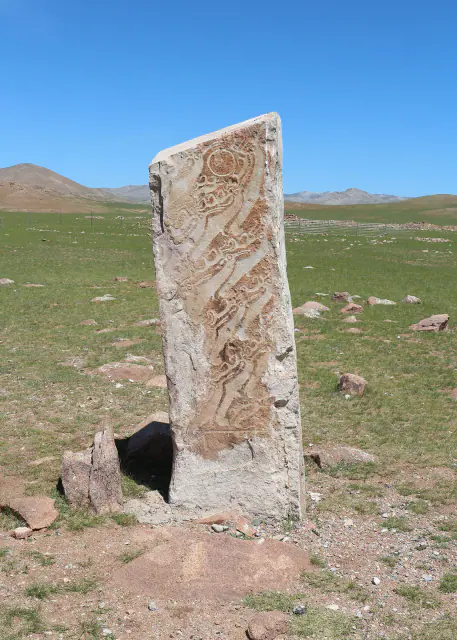
Communities in Mongolia and neighbouring regions already raised tombs and stelae decorated with deer before references to Scythians and Sakas.
Read the complete record →02 · COLLECTION
The first stop reconstructs the area before Scythians and Sakas; afterwards, places and processes allow entry into their history without reducing it to a start date or an inevitable destination.
01 · 01 · Tuva · the earliest animal style
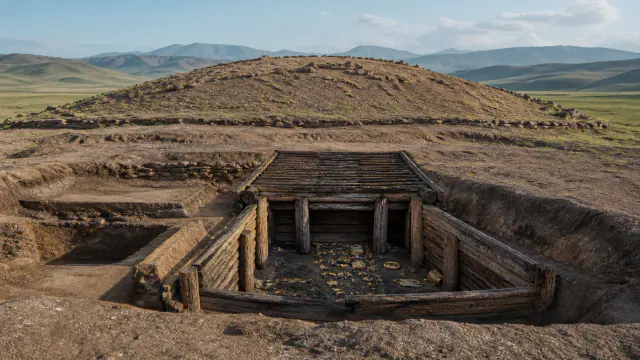
Thousands of gold pieces remained around two people for more than twenty-six centuries.
Read the complete record →02 · 02 · Altai · a chamber sealed by climate
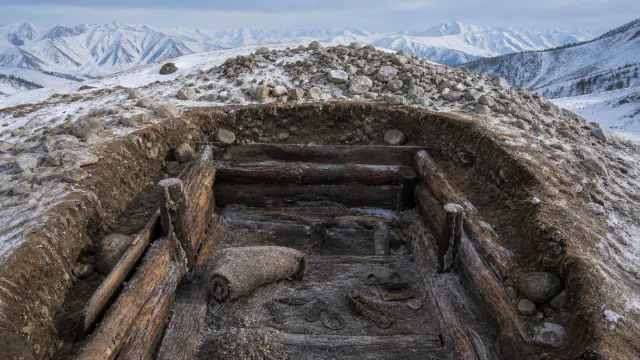
The frozen water inside the tombs preserved clothing, carpets, leather and bodies.
Read the complete record →03 · 12 · Dnieper · a Greek vase on Scythian life
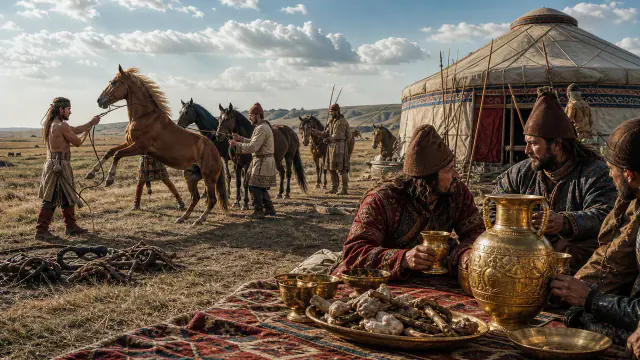
This silver-gilt amphora shows several men handling horses.
Read the complete record →03 · COLLECTION
These stops distinguish instruments, ritual actions, orality or writing and visual culture. Where there is no theatre, score or certain meaning, the museum preserves the limit.
01 · LIVING AND DOCUMENTED CULTURE · 01
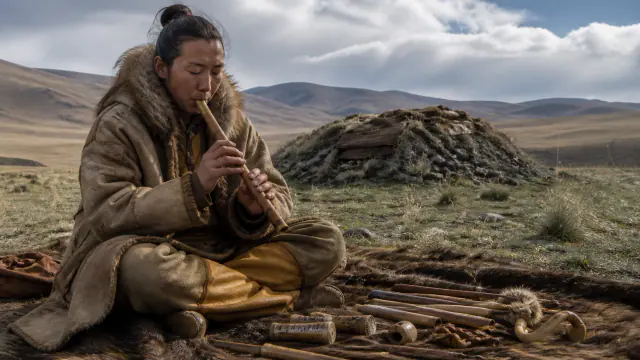
The Pazyryk instruments allow us to study how they were constructed, although we do not know what music was played on them.
Read the complete record →02 · LIVING AND DOCUMENTED CULTURE · 02
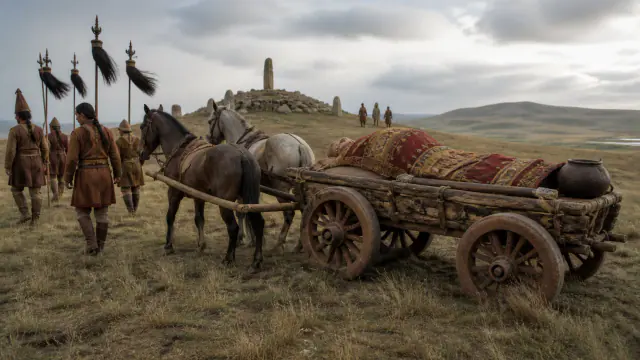
Building the tombs and preparing horses, bodies and grave goods required much labour.
Read the complete record →03 · LIVING AND DOCUMENTED CULTURE · 03
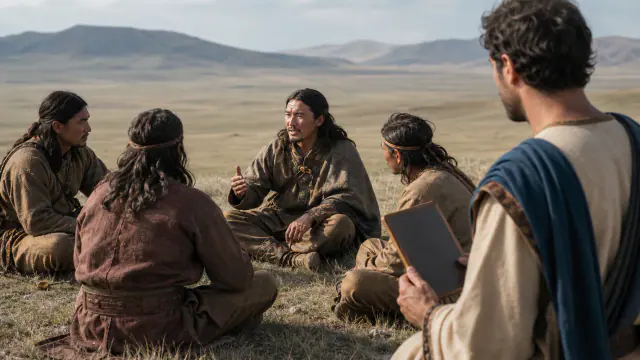
Persian and Greek sources name groups from the outside.
Read the complete record →04 · LIVING AND DOCUMENTED CULTURE · 04
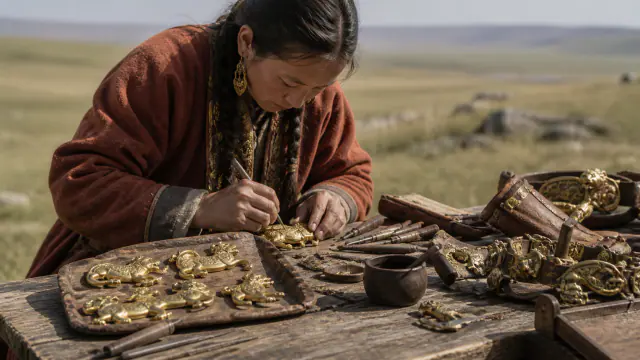
Predators, prey and fantastic animals appear on plaques, weapons, wood and tattoos.
Read the complete record →04 · COLLECTION
These architectures explain how materials, water, work and memory organized the territory without converting an elevation reconstruction into certainty.
01 · ARCHITECTURE AND LANDSCAPE · 01
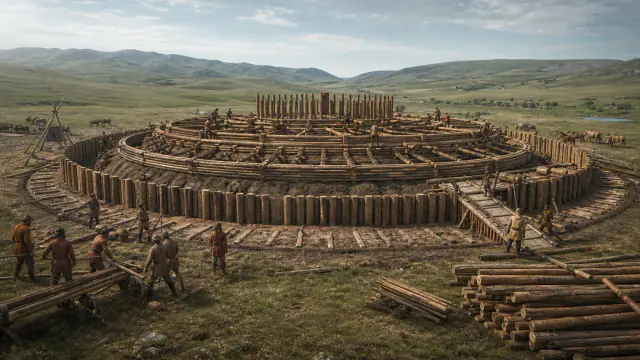
Building these large tombs, with chambers arranged around a centre, required planning and abundant resources.
Read the complete record →02 · ARCHITECTURE AND LANDSCAPE · 02
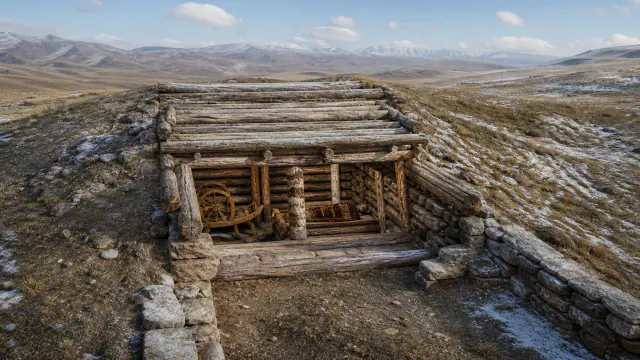
Log, stone and ice chambers preserved textiles and bodies.
Read the complete record →03 · ARCHITECTURE AND LANDSCAPE · 03
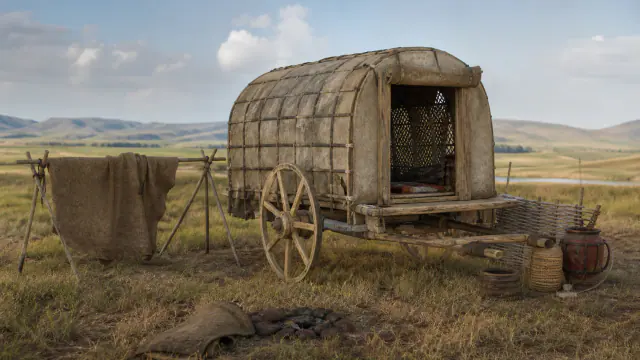
The dismountable structures, the carts and the felt allowed the dwelling to be moved.
Read the complete record →05 · COLLECTION
Known people, reconstructed voices and collective footprints. From oldest to most recent according to life, reign or scene. The periods may overlap; The voices without a determinable date close the journey.
01 · 08 · Achaemenid Empire · a defeat carved by the victor
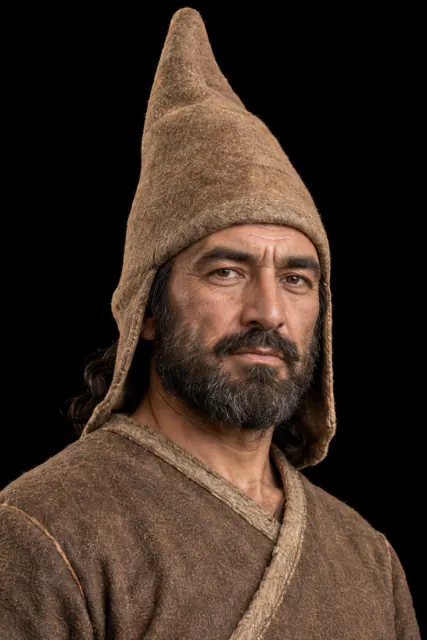
Darius incorporated a Saka chief into his row of defeated rebels and distinguished him by his headdress.
Read the complete record →02 · 05 · Ukok Plateau · body, silk and distance
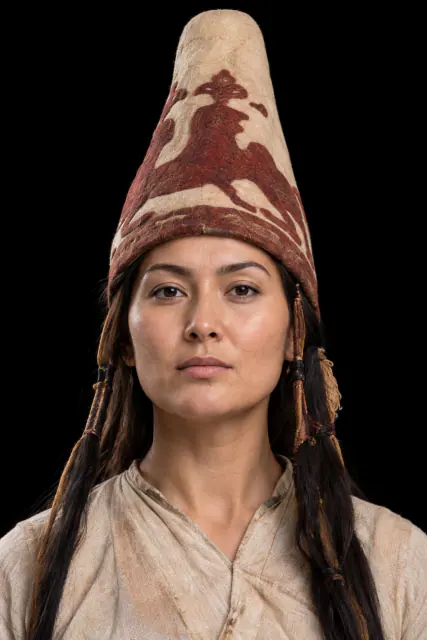
An adult woman wore animal tattoos and an imported silk blouse into a frozen tomb.
Read the complete record →03 · 06 · Semirechye · a body turned into an emblem
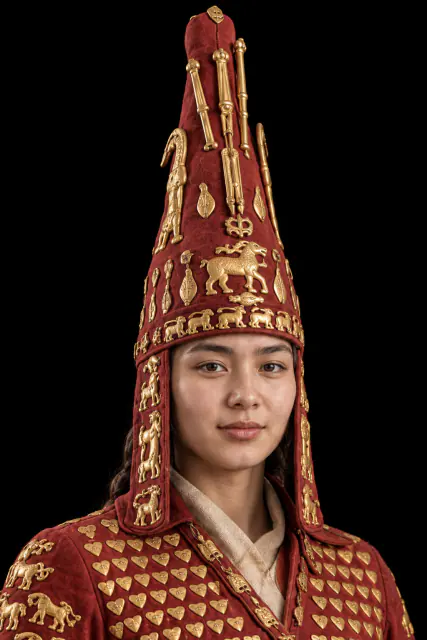
A young person was buried with thousands of gold ornaments; their reconstruction is today known as the Golden Man.
Read the complete record →06 · COLLECTION
Concrete pieces to understand materials, decisions and knowledge systems, with separate evidence and interpretation.
01 · 03 · Kurgan 5 · horses that survived in wool
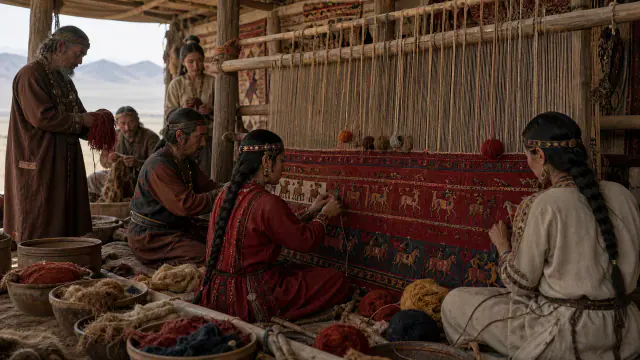
Over a million knots depicted horsemen, deer and griffins before being trapped in ice.
Read the complete record →02 · 04 · Altai · prestige, mobility and sacrifice
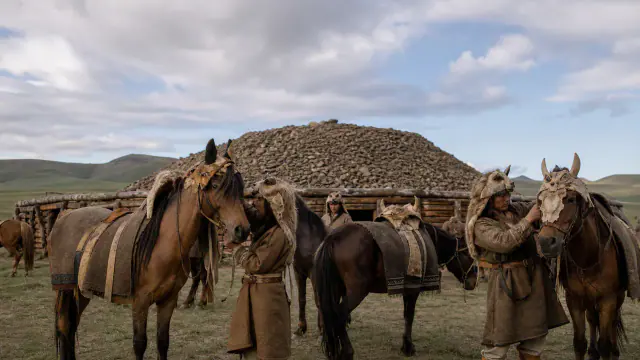
Saddled horses accompanied the dead with felts, bridles and headdresses that transformed their appearance.
Read the complete record →03 · 07 · Writing · the limit of what we can read
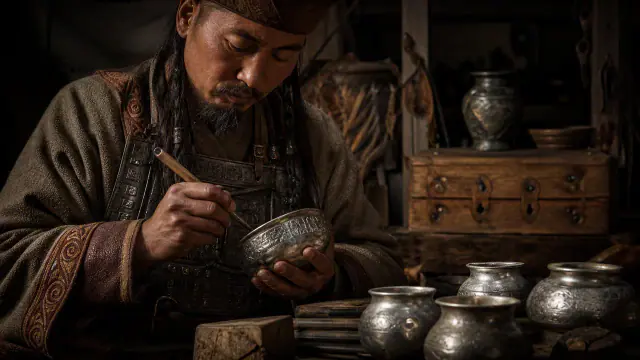
A brief set of signs has produced many translations and none accepted by consensus.
Read the complete record →04 · DOCUMENTED OUTFIT · CLOSED CONTEXT OR CONTROLLED COMPARISON
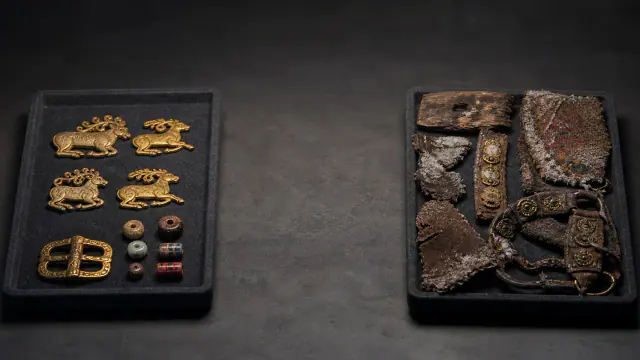
These burials preserved gold ornaments, weapons and materials uncommon in other graves, such as clothing, felt and leather.
Read the complete record →05 · WEAPONS AND EQUIPMENT
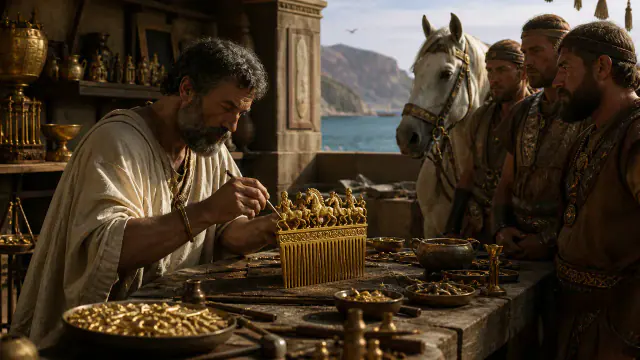
Three combatants face each other on gold teeth in a work made for a steppe tomb.
Read the complete record →06 · WEAPONS AND EQUIPMENT
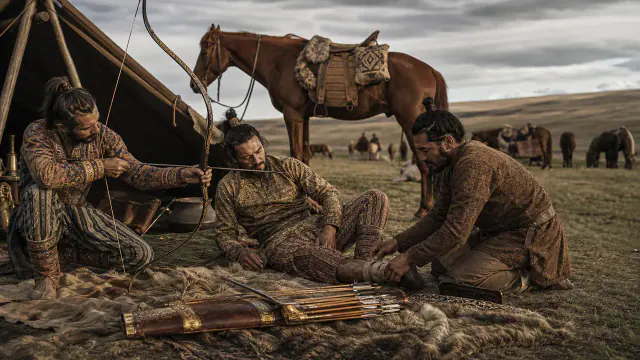
The scenes show several men speaking, attending to others and drawing a bow, with details of their clothing and equipment.
Read the complete record →07 · WEAPONS AND EQUIPMENT
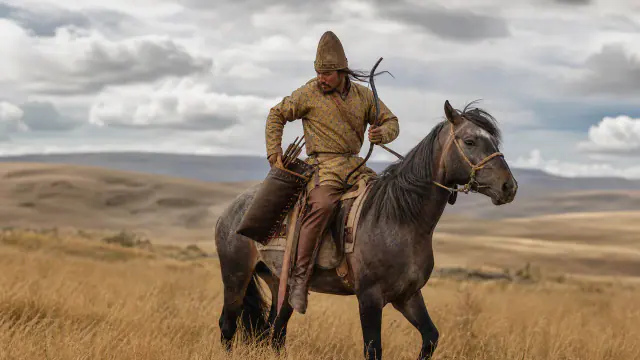
A single case protected a composite bow and arrows, ready for use from the side.
Read the complete record →07 · COLLECTION
These cards separate what is documented from what is interpreted and recover practices, questions and details capable of changing our image of this culture.
01 · BELIEFS AND CURIOSITIES · 01
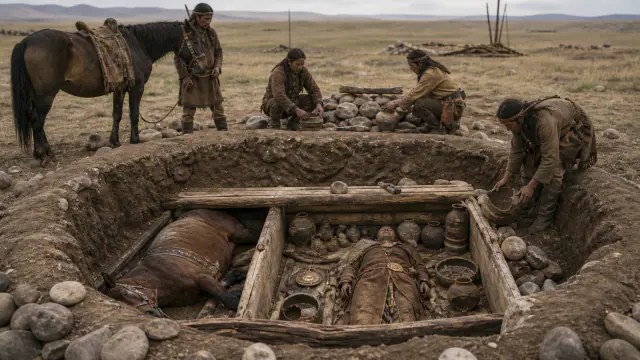
The graves allow recognition of ceremonies and offerings, but not reconstruction of all beliefs of those who prepared them.
Read the complete record →02 · BELIEFS AND CURIOSITIES · 02
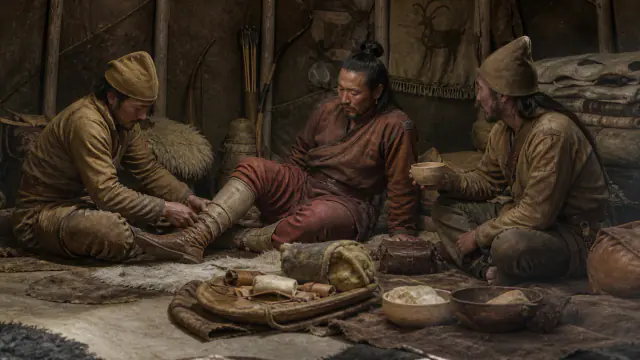
Boots, clothing, bowls and felts preserved in the ice show how people dressed, travelled and prepared food.
Read the complete record →03 · BELIEFS AND CURIOSITIES · 03
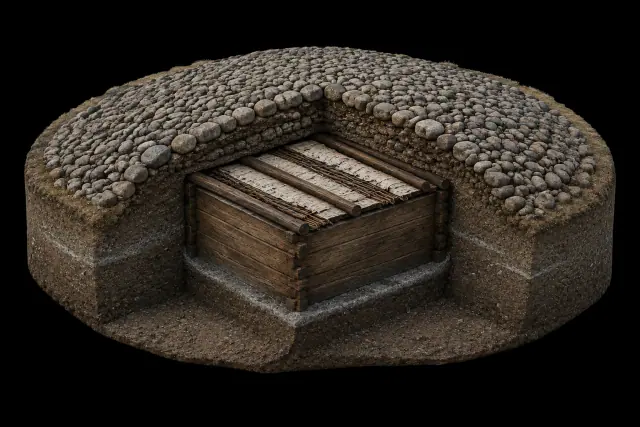
Thawing threatens these graves, and present-day communities also participate in the debate on how to conserve them.
Read the complete record →08 · COLLECTION
Each door explains why the link exists, when it occurred, and what limits prevent contact from being converted into shared identity.
01 · DOOR 01 · ASIA · EXCHANGE
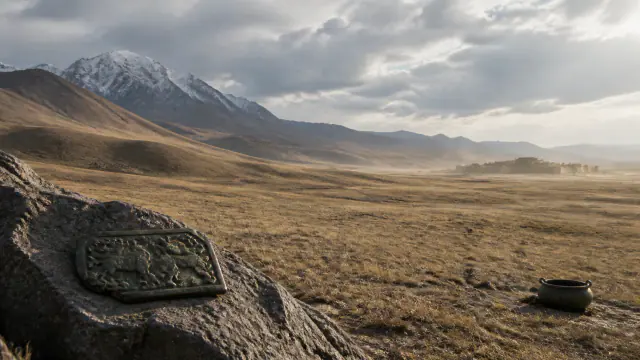
Continues in the Museum of Ancient China
Read the complete record →02 · GATE 02 · ASIA · CONTACT
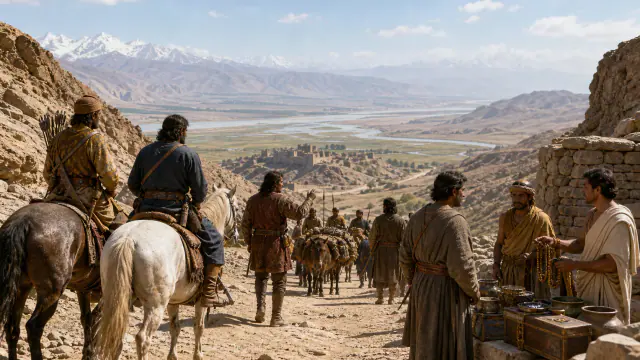
Continues in the Vedic India museum
Read the complete record →03 · DOOR 03 · ASIA · CONFLICT
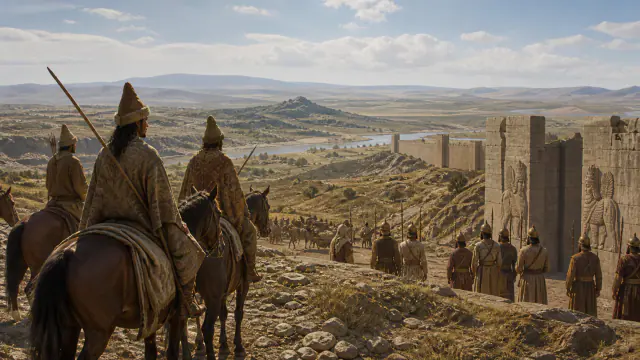
Continued at the Persia Museum
Read the complete record →04 · GATE 04 · EUROPE · EXCHANGE
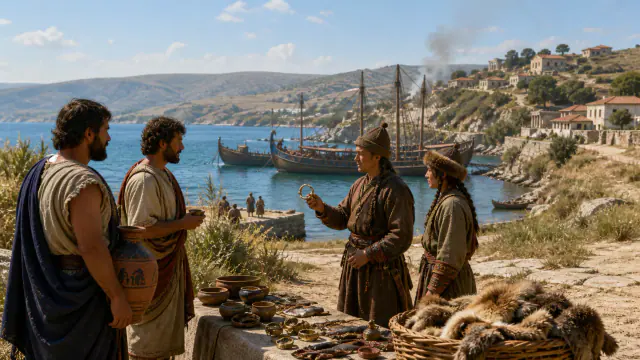
Continues in the Greek museum
Read the complete record →05 · DOOR 05 · EUROPE · EXCHANGE
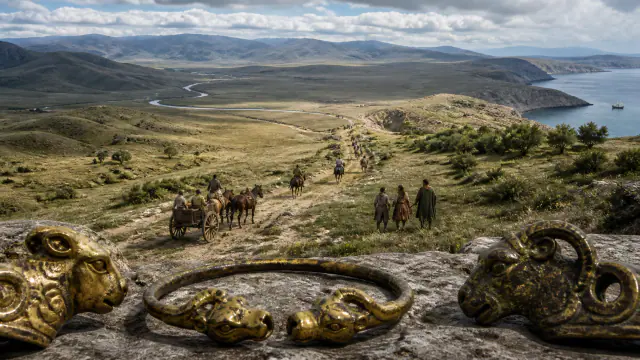
Continues in the Museum of the Celts
Read the complete record →El horizonte que viajaba
Discover the connected fiction project. The available Prehistory reader is in Spanish; other volumes are not presented as finished products for sale.
Explore the books →Try the available Prehistory browser alpha. Campaigns for the other cultures are still in development.
Open the game (Spanish) →Use each record’s institution and heritage links to continue your research. Country-by-country historical travel guides are planned, not yet published.
Historical travel →Discover artistic designs inspired by the collections and check each product’s availability. Museum access remains free.
Explore the collection →