
 English
 Español
 Français
 Italiano
 Deutsch
 Русский
 Português
 Polski
 Română
 Svenska
 Norsk bokmål
 Suomi
 Türkçe
 العربية
 简体中文
 한국어
 हिन्दी
 Ελληνικά
EASTERN GRAVETTIAN · ≈23,000–21,000 YEARS
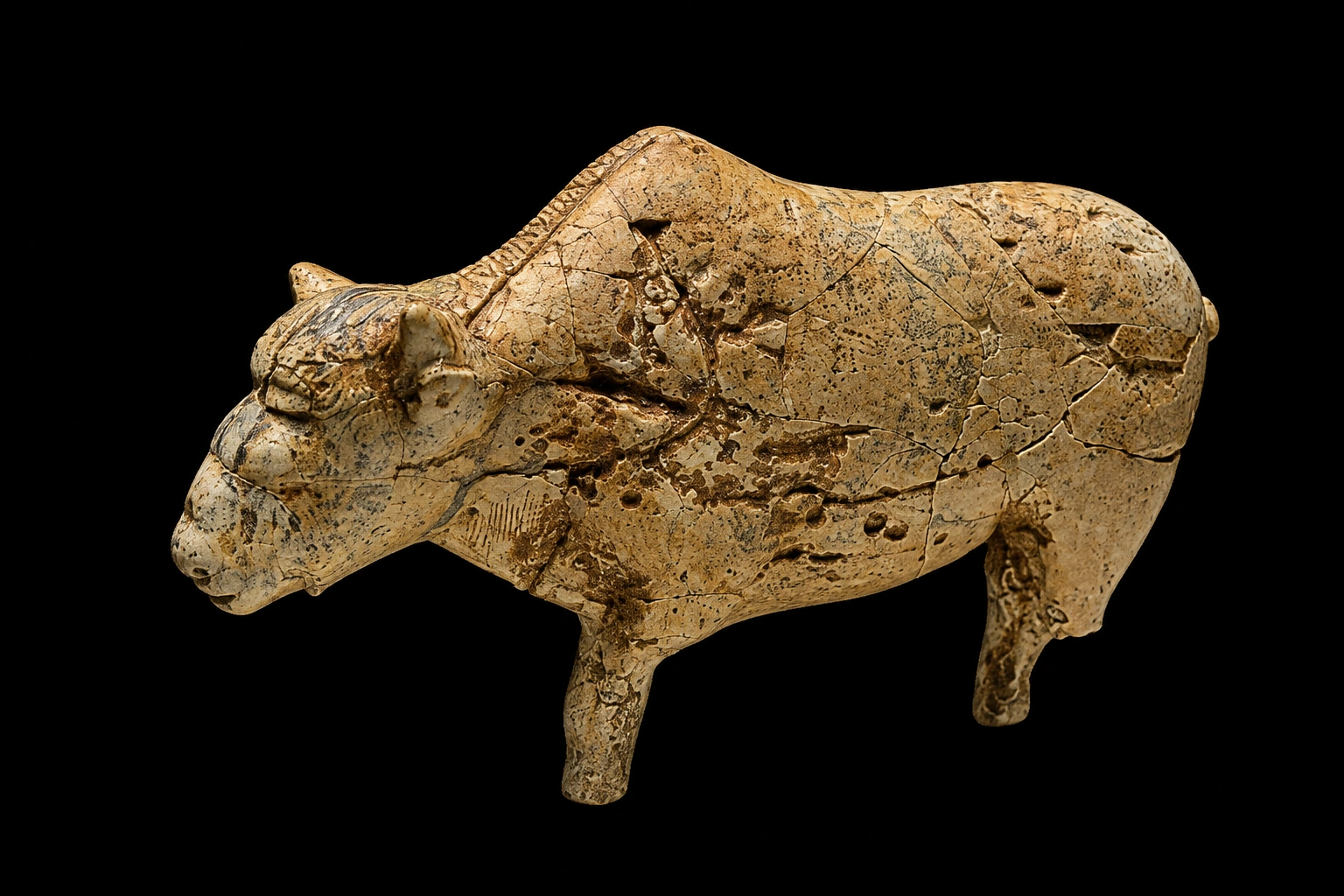
Zaraysk Bison
A bison placed upside down in a small pit
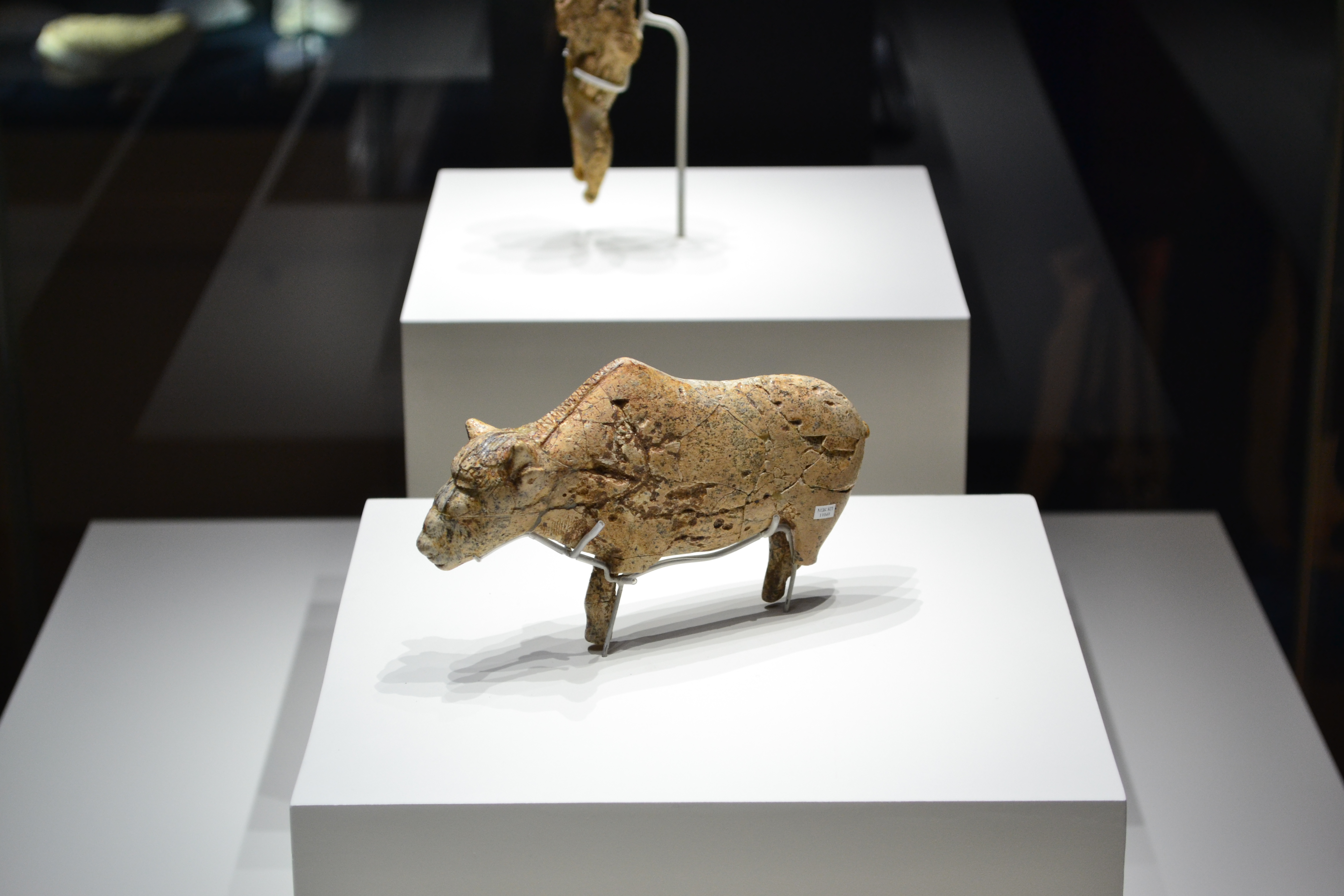
This small bison figure retains ochre traces and was found placed upside down in a pit.
Museum documentation · free public access, no account required.
Reconstruction · Declared visual hypothesis
Vash Alex kun / Wikimedia Commons, CC BY-SA 4.0. AI-assisted interpretive edition. Original figure with damaged legs, incisions and major fractures preserved. Texture and microfissures have been reinterpreted upon enlarging the small piece from the photograph; not a facsimile or document for trace analysis. Does not certify the minimum surface hidden by support/label. Sex, rite and meaning are not represented as facts. Not an archaeological photograph or certified restitution. Microdetails, finish and colour are interpretive approximations.
Tracekeepers / OpenAI ImageGen; source photograph: Vash Alex kun · Zaraysk Kremlin State Museum-Reserve · Inventory: Número de acceso no confirmado · CC BY-SA 4.0
Explore in 3D
Load the model only when you want to explore it. Drag or use the arrow keys to turn it; + and − zoom. Closing it releases its memory.
User-contributed digital reconstruction; file metadata declares Tripo. It is not an archaeological scan nor a metric replica. The display scale is indicative, not a measurement of the original; the contributed geometry is preserved intact. Interpretation of the Zaraysk bison figure, not a living animal. Volume, texture and details are contrasted with the catalogue sources, not with an authenticity deduced from the digital file.
History and context
The free-standing ivory sculpture, 16.4 centimetres long, was found in 2001 at Zaraysk A. It models a compact bison and retains red ochre; the legs were damaged and the body was placed in a small prepared deposit.
It has been proposed that it represents a female and that its burial participated in a hunting rite. These are possible readings, not facts. What is extraordinary is the material sequence: carving, pigment, damage and intentional deposition.
Evidence and interpretation
Ivory, morphology, ochre and prepared context are documented. Sex, symbolic death and hunting magic cannot be proven.
Catalogue facts
- Date
- ≈23,000–21,000 years
- Location
- Zaraysk A · Moscow Oblast, Russia
- Material and length
- Mammoth ivory · 16.4 cm
- Find context
- 2001 · prepared deposit
A SHARED TOPIC, DIFFERENT MOMENTS
Objects connected through time
Follow a topic across the collections. A shared tag is a way to compare objects, not proof that one culture influenced another.
The order uses the midpoint of each approximate date range; ranges can overlap. Spacing does not represent elapsed time. Swipe, scroll or use the arrows. With the sequence focused, use ← / →, Home or End.
Ivory11 dated objects
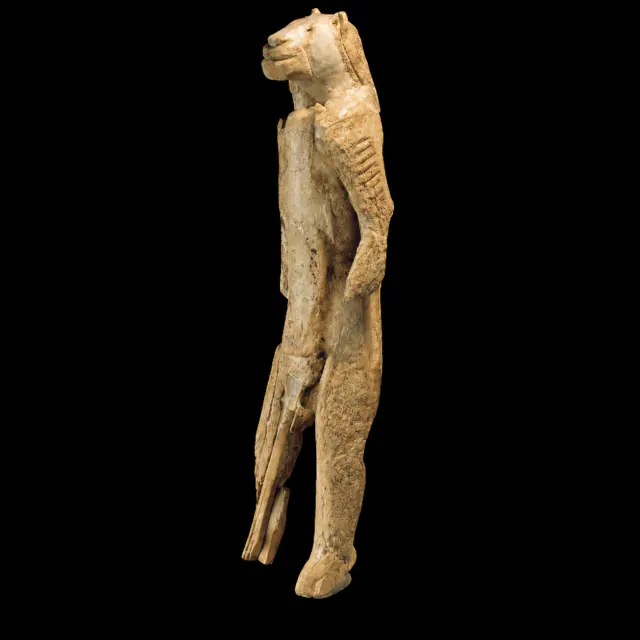
≈40,000 years · Aurignacian
Lion-man
Prehistory
Approximate catalogue age; editorial reference 2026 for ordering only, not calibrated dating.
Read the record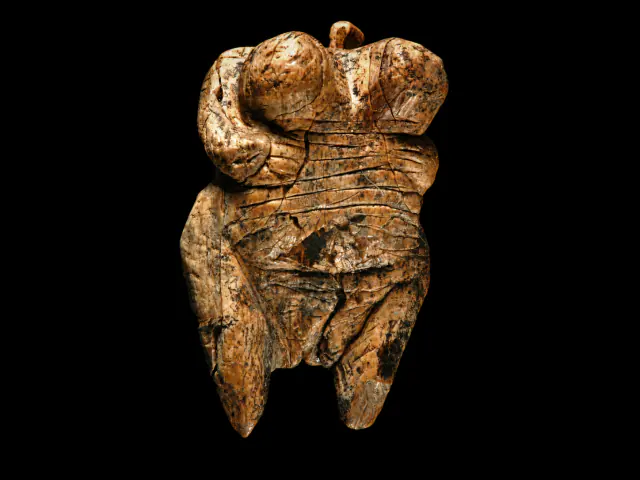
≈40,000 years · Aurignacian
Hohle Fels
Prehistory
Approximate catalogue age; editorial reference 2026 for ordering only, not calibrated dating.
Read the record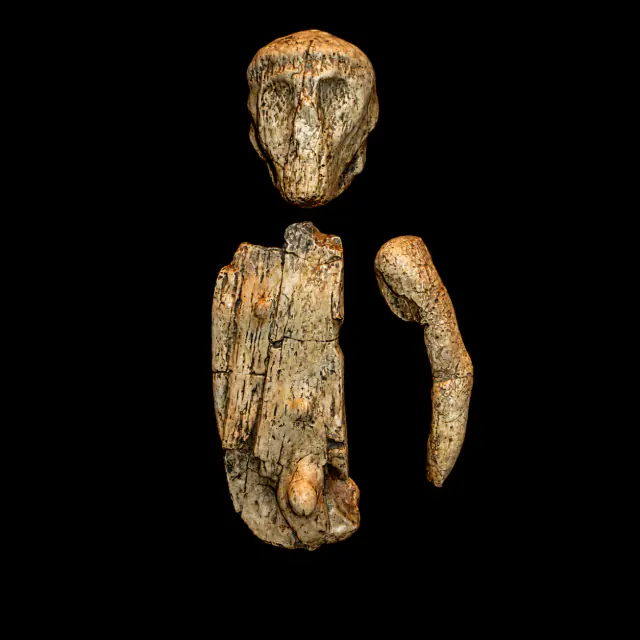
≈28,000 years cal BP · by funerary association
Brno II Articulated Figure
Prehistory
≈28,000 cal BP converted with 1950 origin; date by funerary association. An approximate scale conversion for ordering; not a new radiocarbon calibration.
Read the record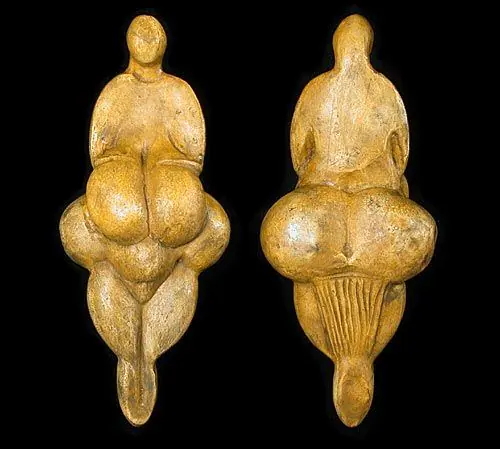
≈28,000 years
Lespugue
Prehistory
Approximate catalogue age; editorial reference 2026 for ordering only, not calibrated dating.
Read the record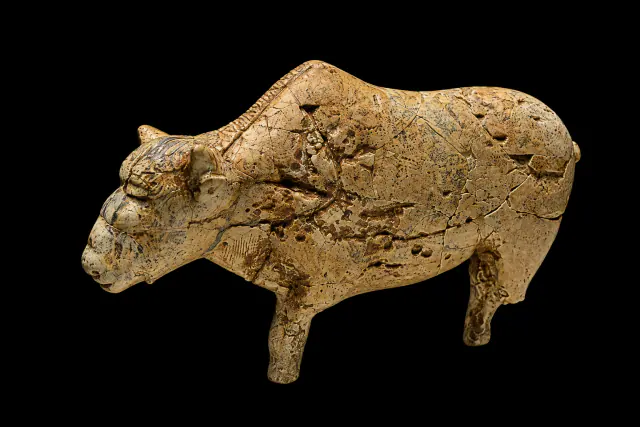 You are viewing
≈23,000–21,000 years
Zaraysk Bison
Prehistory
Approximate catalogue age; editorial reference 2026 for ordering only, not calibrated dating.
Current record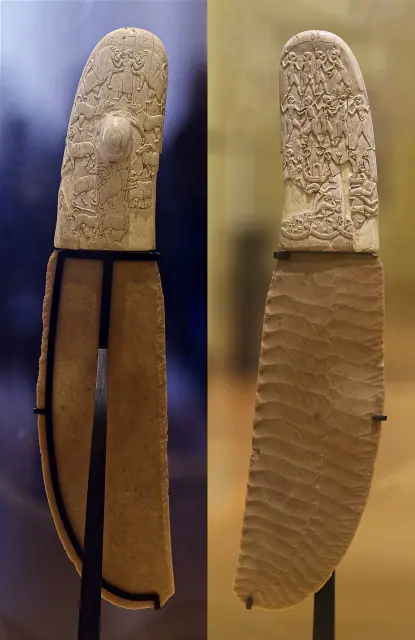
3600–3200 BCE · Naqada II C–D
Gebel el-Arak knife
Ancient Egypt
Approximate dating according to the record.
Read the record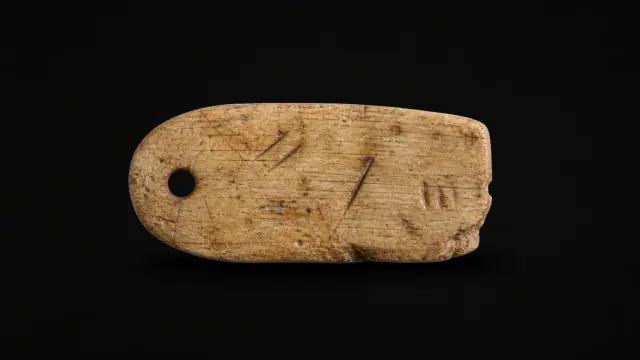
ca. 3300–3100 BCE
Naqada labels
Ancient Egypt
Date range for the assemblage of labels and inscribed materials, not a single object.
Read the record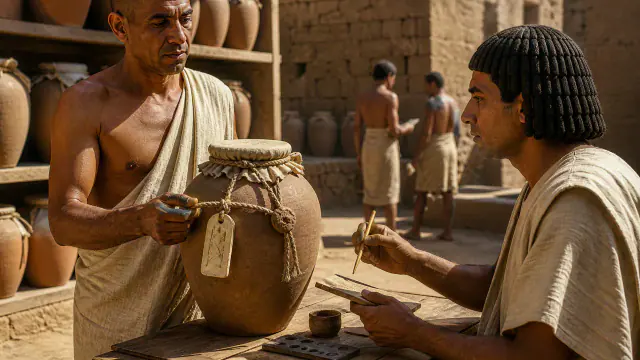
c. 3100–2900 BCE
Ivory tablets
Ancient Egypt
Date range for the assemblage of tablets and labels.
Read the record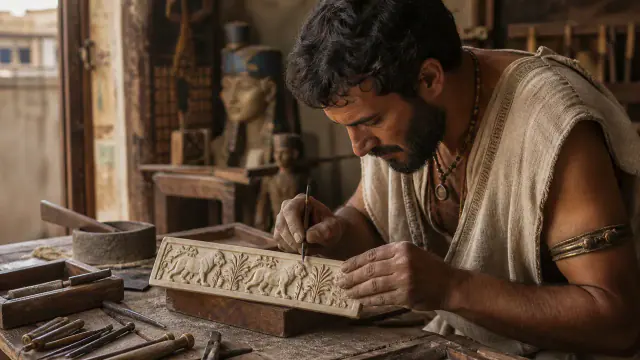
9th–8th centuries BCE
Ivory in Nimrud
Phoenicians
Frame of a set of ivories, not a single carving.
Read the record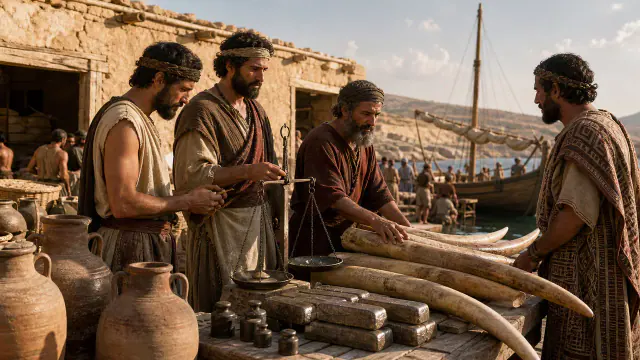
End of the 7th century–first half of the 6th century BCE
Ivory with names
Phoenicians
The full 7th–6th centuries BCE provide broad limits for chronological ordering; the record specifies the late 7th century and the first half of the 6th.
Read the record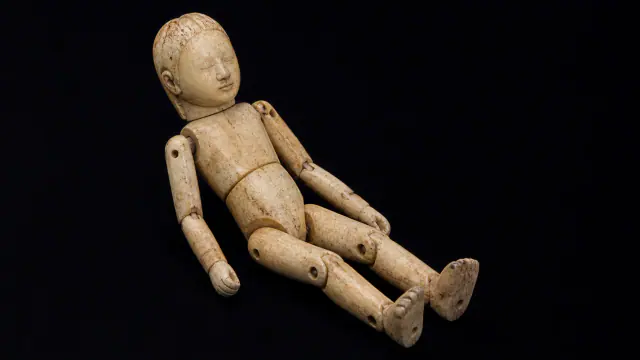
Late 3rd–4th century CE
Articulated doll from Tarragona
Etruscans and Rome
Used in the 3rd–4th centuries CE in its full extent as an external ordering framework; the entry specifies the late 3rd and 4th century.
Read the record
Also connected, without a comparable date (1)
These objects are not placed after the others: an unknown date does not mean a more recent object.
- Nile towards NubiaAncient Egypt · ca. 3300–2800 BCE
A closer look
About 3 min to read · 7 sections. Further reading and sources · free access. Editorial review recorded: .
The pit preserves more than the figure
The excavation publication describes, beneath the bison's neck, a small tubular animal bone with transverse cuts; a mammoth tooth fragment also appeared at the bottom. Those deposit details matter as much as the ivory silhouette. Drawing levels and positions allows the study of an association that would disappear if only the sculpture were kept in a display case. The gathering of different materials invites investigation into how the pit was prepared, but does not by itself prove a sacrifice or a hunting magic formula.
A bison made from another animal's tusk
The sculptor worked a fragment of mammoth tusk. According to Wolf and Conard's documentation, they oriented the bison's head towards the tusk's cavity and the tail towards its tip. They did not, therefore, start from a uniform block: they had to resolve the figure within a material with its own structure. When viewing the animal in profile, it is worth remembering that relationship between the chosen form and the available material, in addition to appreciating its anatomy.
What a study replica teaches
The Urformen project brought together researchers and ivory carvers to study and reproduce Palaeolithic sculptures, including this bison. A replica allows volumes that a frontal photograph does not explain well to be observed and forces one to confront carving decisions. But the project also used modern tools and reconstructions of lost parts. That is why it does not equate to exactly repeating the Palaeolithic work. It is a way of investigating possibilities, provided one distinguishes what is copied from the original from what is added.
The red was not only where first seen
Pakhunov and Lev's photographic analysis examined the colour distribution on the surface. By increasing contrast, red traces were recognised in more areas than were evident to the naked eye, including parts of the back and belly. This type of work does not consist of freely colouring the sculpture to make it more attractive. It seeks to record preserved traces, compare their position and distinguish them from the appearance produced by lighting or a conventional photograph.
Not every stain is an original decoration
The surface study also changed the interpretation of some dark stains. Ekaterina Devlet explains that photography in different conditions and relief analysis indicated those marks had formed after the figure was buried. It is a good example of why one should not reconstruct its original colour by simply copying all current stains. The object preserves both signals of its manufacture and changes that occurred over thousands of years underground.
It was not the only way to create images
Amirkhanov and Lev's publication on the artistic finds from Zaraysk presents human and animal figures, engraved ivory plaques and bone objects with geometric decoration. The bison belongs to that set of ways of working and representing, not to an isolated activity known only through a single exceptional work. Comparing the supports allows one to ask how volume, line and surface were combined. Sharing a site does not mean, however, that all pieces were the work of a single person.
A piece within an inhabited place
Zaraysk lies by the Osiotr river, in the Oka basin. Researcher Amirkhanov's synthesis describes several sectors of the site and a wide variety of animal remains and objects, including ornaments made from teeth. That archaeological environment returns the sculpture to a place where distinct activities developed. The mammoth that provided the ivory and the bison represented fulfil different roles in the piece; the image cannot be automatically read as an inventory of what was eaten.
Reference images and provenance
 View full-size photograph ⛶
Original figure with damaged legs, incisions and major fractures preserved.
Documentary original · Exact correspondence
Vash Alex kun · Zaraysk Kremlin State Museum-Reserve · Inventory: Número de acceso no confirmado

Location and territory
LOCATED SITE
Zaraysk A · RussiaApproximate marker for the Palaeolithic site.Where it is held
Zaraysk Kremlin State Museum-Reserve
Item or group in the record · Permanent exhibition
The holding institution is documented; public display may change. Check its official record before visiting.
Sources and references
- Zaraysk Kremlin Museum-Reserve · exhibition
- Amirkhanov and Lev · Bulletin de la Société préhistorique française, study of the Zaraysk bison, 2009
- Sibylle Wolf and Nicholas J. Conard — Urformen: Figürliche Eiszeitkunst Europas (2022)
- A. S. Pakhunov and S. Yu. Lev — Research photography of the Zaraysk bison sculpture, KSIA 241 (2015), pp. 20–27
- Ekaterina G. Devlet — A New Reality of Rock Art (Science First Hand, 2016)
- Hizri Amirkhanov and Sergey Lev — New finds of art objects from the Upper Palaeolithic site of Zaraysk, Russia (Antiquity, 2008)
- H. A. Amirkhanov — Zaraysk, Great Russian Encyclopedia, vol. 10 (2008)
Did you enjoy this exhibit?
Your opinion helps us improve the museum. You can change it whenever you like.
Loading your rating…