
 English
 Español
 Français
 Italiano
 Deutsch
 Русский
 Português
 Polski
 Română
 Svenska
 Norsk bokmål
 Suomi
 Türkçe
 العربية
 简体中文
 한국어
 हिन्दी
 Ελληνικά
07 · Shipwreck · Supply Chains
Ivory with names
Elephant tusks from Bajo de la Campana
Before becoming a comb or luxury plaque, ivory crossed the sea as marked raw material.
Museum documentation · free public access, no account required.
Generated reconstruction · Declared visual hypothesis
Declared visual reconstruction for museographic context; it is not a photograph of the original nor documentary evidence.
History and context
A ship wrecked near La Manga was transporting dozens of elephant tusks together with tin, copper, lead, ceramics, perfumes and other goods. Ten pieces bore inscriptions: brief signals inserted into a logistics network linking very distant origins.
The cargo mixes raw materials and finished products. This combination dismantles a simple «East to West» route: there was selection, redistribution, repair and negotiation in multiple ports, with local communities actively participating.
The ten inscribed tusks introduce writing within a logistics chain, but their brief marks do not tell a narrative. They may have distinguished batches, individuals or successive controls before the sea froze the cargo.
Ivory, tin, copper, lead, ceramics and perfumes did not need to share an origin. The ship brought together materials at different stages of transformation, making visible a network of stops, redistribution and future workshops.
Evidence and interpretation
Documented fact: ARQVA documents at least 53 elephant tusks or fragments and ten inscriptions in the Phoenician wreck of Bajo de la Campana. Interpretation and caution: the marks may relate to ownership, names or cargo control, but their exact function and all readings are not settled. Documented expansion: ARQVA documents at least fifty-three elephant tusks or fragments, ten with inscriptions, associated with a diverse cargo from the end of the 7th or beginning of the 6th century BCE. Expanded interpretation and caution: The readings of the marks and the biological origin of all the tusks are not settled; they must not become a translated cargo manifesto or a secure linear route.
Catalogue facts
- Narrative date
- End of the 7th century–first half of the 6th century BCE
- Location
- Bajo de la Campana, Murcia coast, Spain
- Material
- Ivory · tin · copper · lead · ceramic
- Context
- Trade, contact and long-distance raw materials
- Curatorial reading
- The documented fact and its interpretation appear separately in the evidence block.
- Evidence
- Archaeological context, materiality and chronology.
- Caution
- Do not convert stylistic diffusion or contact into political domination.
- Documentary coverage
- 2 museum, heritage, primary corpus or research sources for this stop.
A SHARED TOPIC, DIFFERENT MOMENTS
Objects connected through time
Follow a topic across the collections. A shared tag is a way to compare objects, not proof that one culture influenced another.
The order uses the midpoint of each approximate date range; ranges can overlap. Spacing does not represent elapsed time. Swipe, scroll or use the arrows. With the sequence focused, use ← / →, Home or End.
Ivory11 dated objects
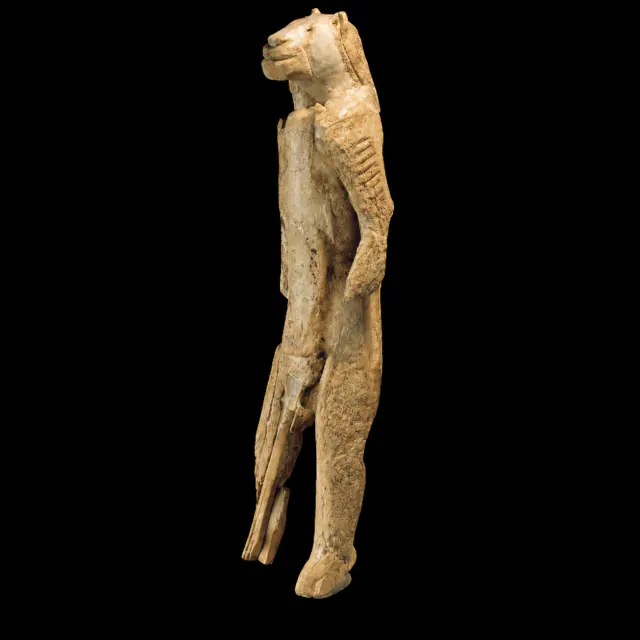
≈40,000 years · Aurignacian
Lion-man
Prehistory
Approximate catalogue age; editorial reference 2026 for ordering only, not calibrated dating.
Read the record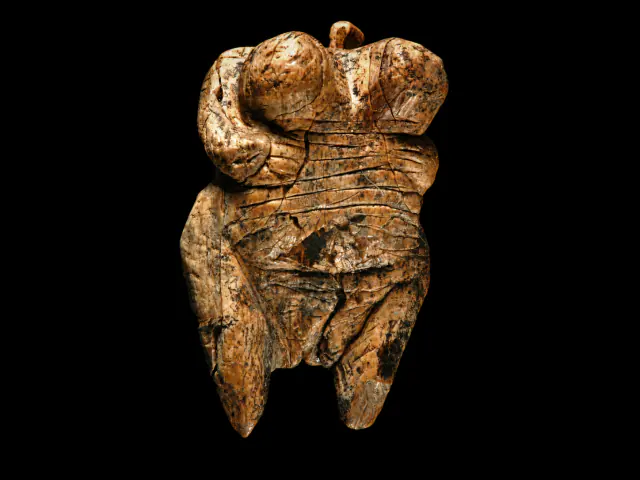
≈40,000 years · Aurignacian
Hohle Fels
Prehistory
Approximate catalogue age; editorial reference 2026 for ordering only, not calibrated dating.
Read the record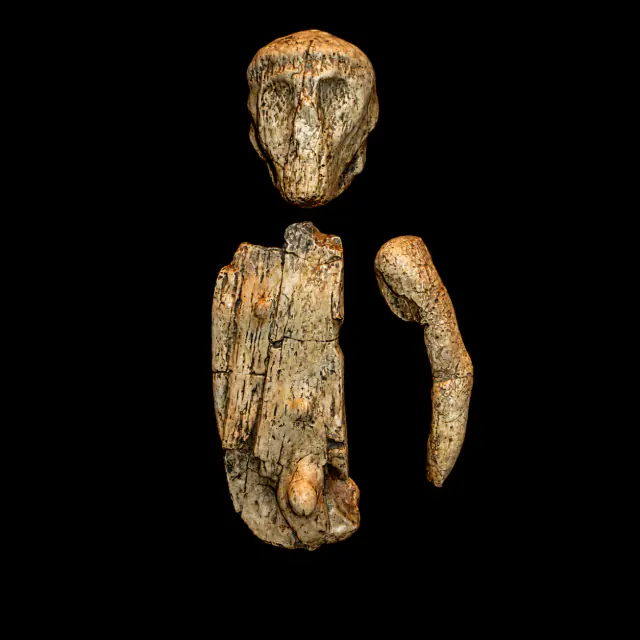
≈28,000 years cal BP · by funerary association
Brno II Articulated Figure
Prehistory
≈28,000 cal BP converted with 1950 origin; date by funerary association. An approximate scale conversion for ordering; not a new radiocarbon calibration.
Read the record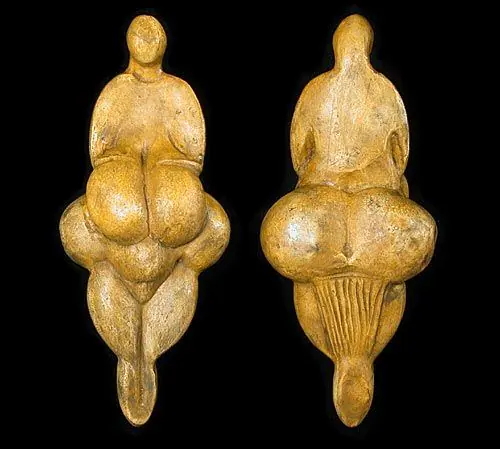
≈28,000 years
Lespugue
Prehistory
Approximate catalogue age; editorial reference 2026 for ordering only, not calibrated dating.
Read the record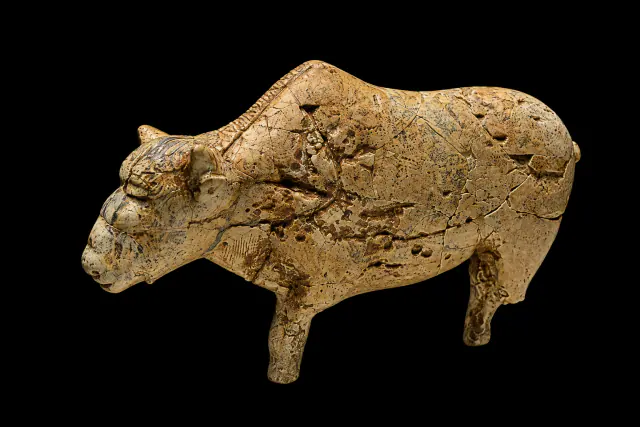
≈23,000–21,000 years
Zaraysk Bison
Prehistory
Approximate catalogue age; editorial reference 2026 for ordering only, not calibrated dating.
Read the record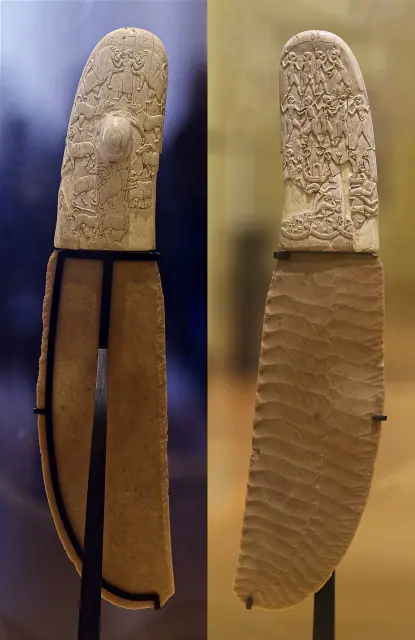
3600–3200 BCE · Naqada II C–D
Gebel el-Arak knife
Ancient Egypt
Approximate dating according to the record.
Read the record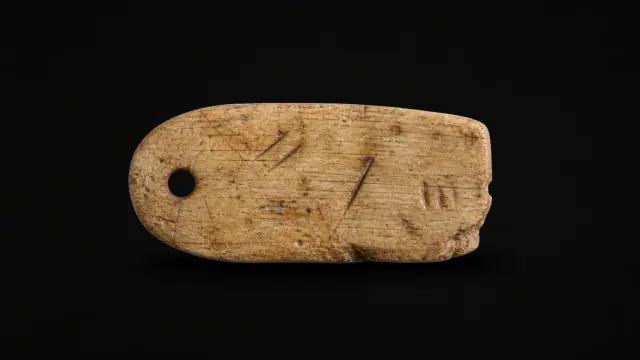
ca. 3300–3100 BCE
Naqada labels
Ancient Egypt
Date range for the assemblage of labels and inscribed materials, not a single object.
Read the record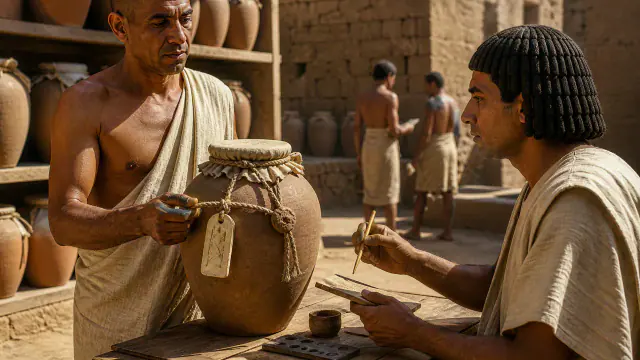
c. 3100–2900 BCE
Ivory tablets
Ancient Egypt
Date range for the assemblage of tablets and labels.
Read the record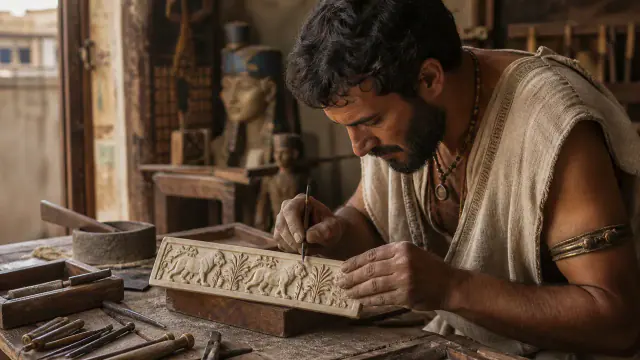
9th–8th centuries BCE
Ivory in Nimrud
Phoenicians
Frame of a set of ivories, not a single carving.
Read the record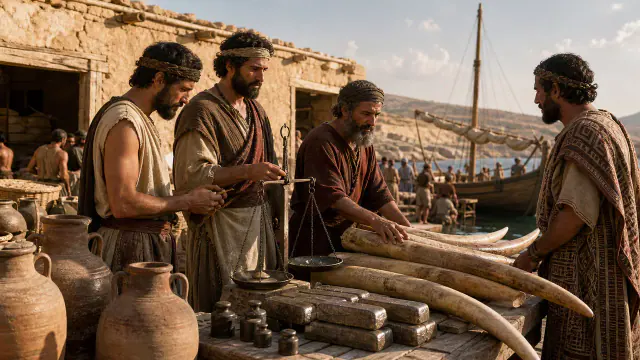 You are viewing
End of the 7th century–first half of the 6th century BCE
Ivory with names
Phoenicians
The full 7th–6th centuries BCE provide broad limits for chronological ordering; the record specifies the late 7th century and the first half of the 6th.
Current record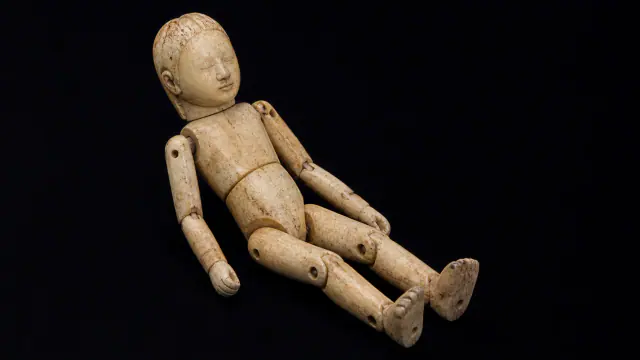
Late 3rd–4th century CE
Articulated doll from Tarragona
Etruscans and Rome
Used in the 3rd–4th centuries CE in its full extent as an external ordering framework; the entry specifies the late 3rd and 4th century.
Read the record
Also connected, without a comparable date (1)
These objects are not placed after the others: an unknown date does not mean a more recent object.
- Nile towards NubiaAncient Egypt · ca. 3300–2800 BCE
A closer look
About 1 min to read · 1 section. Further reading and sources · free access. Editorial review recorded: .
An inscribed blessing
The reading of one of the inscriptions as a blessing to Eshmunkhalots led the excavator Mark Polzer to propose a votive use beforehand for some tusks. Elizabeth Knott takes up that hypothesis in the Met publication on the wreck. It is a substantial difference from interpreting all the marks as simple commercial labels: a tusk could acquire religious significance before becoming transported merchandise. The presence of an altar at the same site raises another question, as it is unresolved whether it was ship's equipment or cargo. Both interpretations remain open.
Where it is held
National Museum of Underwater Archaeology · ARQVA
Item or group in the record · Documented collection
The holding institution is documented; public display may change. Check its official record before visiting.
Sources and references
Did you enjoy this exhibit?
Your opinion helps us improve the museum. You can change it whenever you like.
Loading your rating…