
 English
 Español
 Français
 Italiano
 Deutsch
 Русский
 Português
 Polski
 Română
 Svenska
 Norsk bokmål
 Suomi
 Türkçe
 العربية
 简体中文
 한국어
 हिन्दी
 Ελληνικά
03 · OBJECT · DYNASTY I
Ivory tablets
A label can remember an event
Oil, quantity and date fit on a small token tied to a vessel.
Museum documentation · free public access, no account required.
Generated reconstruction · Declared visual hypothesis
Declared visual reconstruction for museographic context; it is not a photograph of the original nor documentary evidence.
History and context
Ivory, bone or wooden tablets from Abydos and Saqqara were associated with containers and recorded quality, quantity and events. They are material administration: each brand accompanied a specific good.
The wow effect is not in its size, but in its scope. A minimal tablet could link a delivery of oil with a royal date and a larger archive.
The tablets could be hung from jars of expensive oil. Images of events, names and quantities brought together royal memory and material control in a few centimeters.
The fact that the verbs were not written completely reminds us that reading them required shared knowledge. They were aids within an institution, not self-sufficient texts for any reader.
Evidence and interpretation
Documented fact: UCL documents 1st Dynasty tablets linked to jars, with information about products and events. Interpretation and caution: Not all of them worked in the same way, and translating their signs as a modern administrative calendar simplifies their uses. Documented extension: UCL records tablets from the First Dynasty associated with jars and found mainly in royal tombs of Abydos and tombs of Saqqara. Interpretation and expanded caution: The scenes are not complete calendars and various sign readings remain disputed.
Catalogue facts
- Narrative date
- c. 3100–2900 BCE
- Location
- Abydos and Saqqara, Egypt
- Material
- Inscribed ivory, bone or wood
- Context
- Goods labeling
- Curatorial reading
- The documented fact and its interpretation appear separately in the evidence block.
- Use
- Labels attached to oil containers
- Information
- Quality, quantity, name and annual event
- Documentary coverage
- 2 museum, heritage, primary corpus or research sources for this stop.
A SHARED TOPIC, DIFFERENT MOMENTS
Objects connected through time
Follow a topic across the collections. A shared tag is a way to compare objects, not proof that one culture influenced another.
The order uses the midpoint of each approximate date range; ranges can overlap. Spacing does not represent elapsed time. Swipe, scroll or use the arrows. With the sequence focused, use ← / →, Home or End.
Ivory11 dated objects
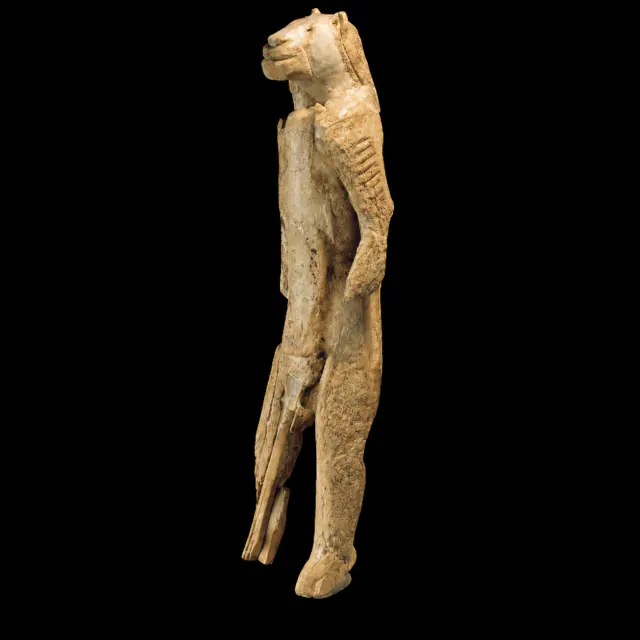
≈40,000 years · Aurignacian
Lion-man
Prehistory
Approximate catalogue age; editorial reference 2026 for ordering only, not calibrated dating.
Read the record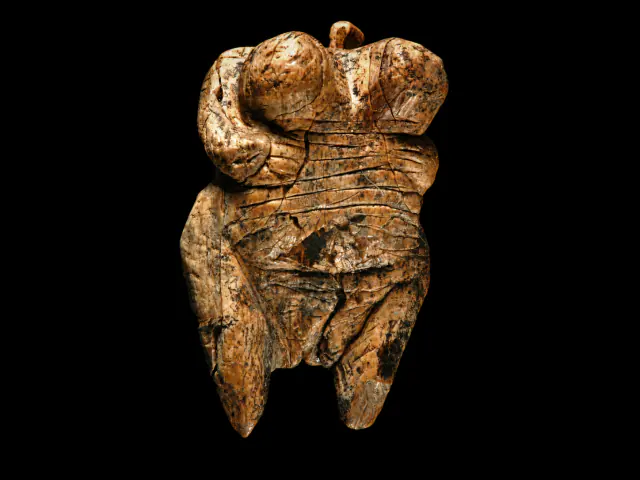
≈40,000 years · Aurignacian
Hohle Fels
Prehistory
Approximate catalogue age; editorial reference 2026 for ordering only, not calibrated dating.
Read the record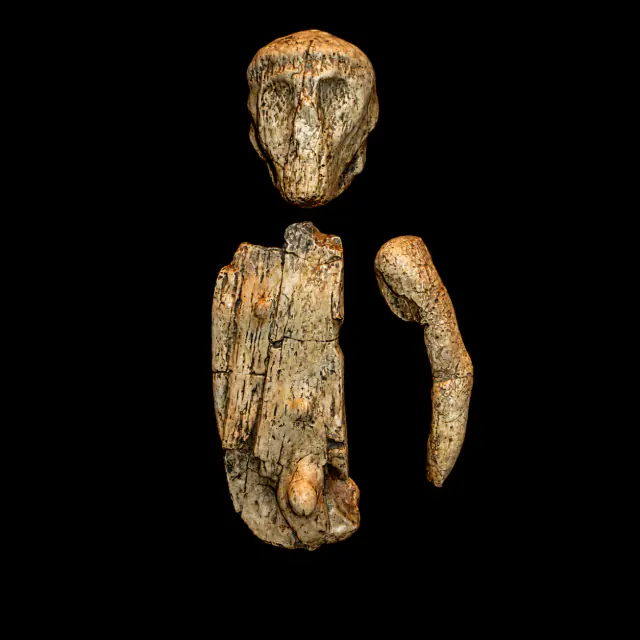
≈28,000 years cal BP · by funerary association
Brno II Articulated Figure
Prehistory
≈28,000 cal BP converted with 1950 origin; date by funerary association. An approximate scale conversion for ordering; not a new radiocarbon calibration.
Read the record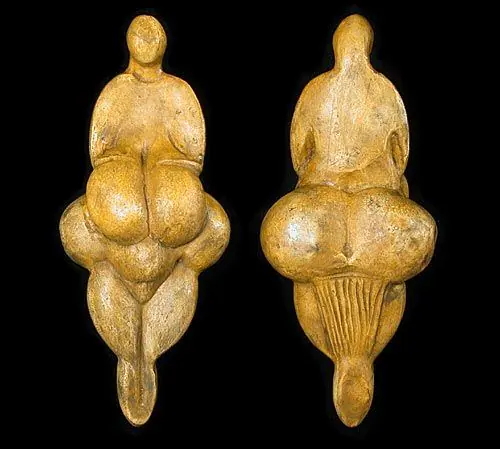
≈28,000 years
Lespugue
Prehistory
Approximate catalogue age; editorial reference 2026 for ordering only, not calibrated dating.
Read the record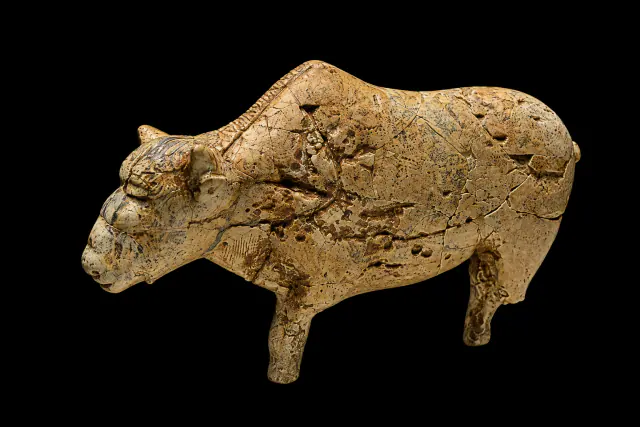
≈23,000–21,000 years
Zaraysk Bison
Prehistory
Approximate catalogue age; editorial reference 2026 for ordering only, not calibrated dating.
Read the record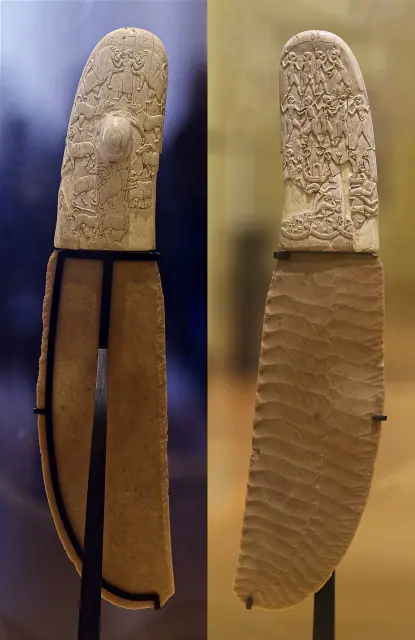
3600–3200 BCE · Naqada II C–D
Gebel el-Arak knife
Ancient Egypt
Approximate dating according to the record.
Read the record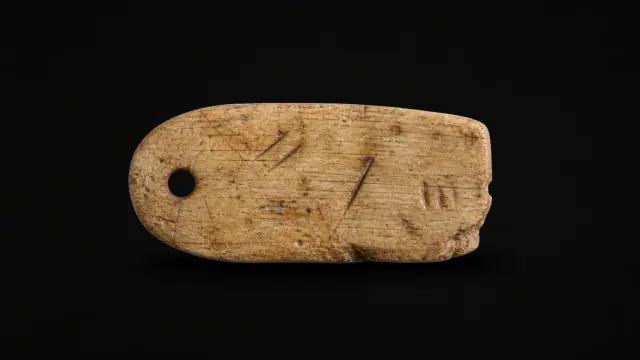
ca. 3300–3100 BCE
Overlapping datesNaqada labels
Ancient Egypt
Date range for the assemblage of labels and inscribed materials, not a single object.
Read the record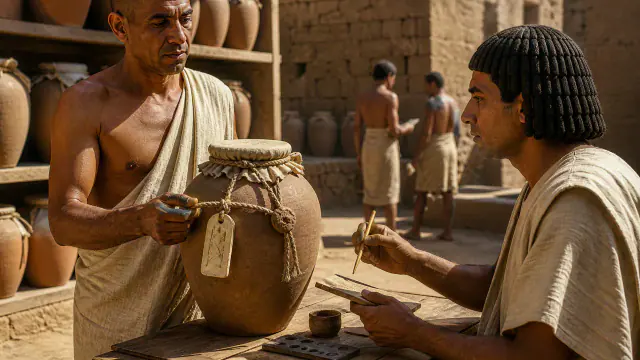 You are viewing
c. 3100–2900 BCE
Ivory tablets
Ancient Egypt
Date range for the assemblage of tablets and labels.
Current record
9th–8th centuries BCE
Ivory in Nimrud
Phoenicians
Frame of a set of ivories, not a single carving.
Read the record
End of the 7th century–first half of the 6th century BCE
Ivory with names
Phoenicians
The full 7th–6th centuries BCE provide broad limits for chronological ordering; the record specifies the late 7th century and the first half of the 6th.
Read the record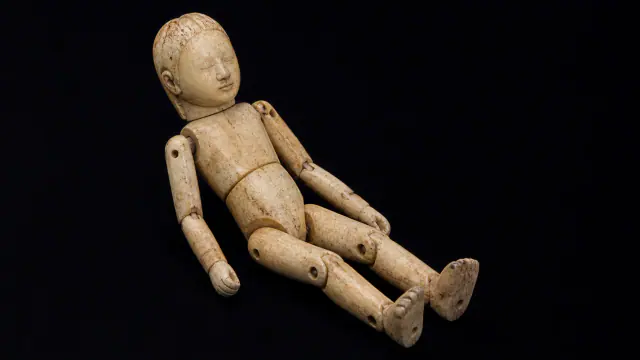
Late 3rd–4th century CE
Articulated doll from Tarragona
Etruscans and Rome
Used in the 3rd–4th centuries CE in its full extent as an external ordering framework; the entry specifies the late 3rd and 4th century.
Read the record
Also connected, without a comparable date (1)
These objects are not placed after the others: an unknown date does not mean a more recent object.
- Nile towards NubiaAncient Egypt · ca. 3300–2800 BCE
A closer look
About 1 min to read · 1 section. Further reading and sources · free access. Editorial review recorded: .
Flip the label
The British Museum's Den EA55586 label was not linked to an oil jug: a pair of sandals is incised on the reverse, identifying the type of object with which it was associated. The front combines the king with raised mace, a captive, the banner of Upuaut and the name of the Inka official behind the sovereign. The piece preserves the suspension hole and was restored from three fragments. Reading both sides allows us to distinguish material content, authority and ceremonial image, and avoids attributing a single function to all the labels of the first dynasty.
- Museum · British Museum · Ivory label for a sandal of King Den, EA55586Access recorded: .
Location and territory
LOCATED SITE
Abydos · EgyptMarker of the archaeological landscape of Abydos.Sources and references
Did you enjoy this exhibit?
Your opinion helps us improve the museum. You can change it whenever you like.
Loading your rating…