
 English
 Español
 Français
 Italiano
 Deutsch
 Русский
 Português
 Polski
 Română
 Svenska
 Norsk bokmål
 Suomi
 Türkçe
 العربية
 简体中文
 한국어
 हिन्दी
 Ελληνικά
PAVLOVIAN/GRAVETTIAN · ≈29,000–27,000 YEARS
Dolní Věstonice I
A fired clay figurine from the Palaeolithic
Analysis of the interior ruled out that the clay mixture contained powdered bone.
Museum documentation · free public access, no account required.
Reconstruction · Declared visual hypothesis
Recreation contributed to the project together with the 3D model of the piece. It is not an archaeological photograph or a metric facsimile. Materials, finish, proportions and visible details may differ from the original. The photograph of the original is kept as a documentary reference.
Explore in 3D
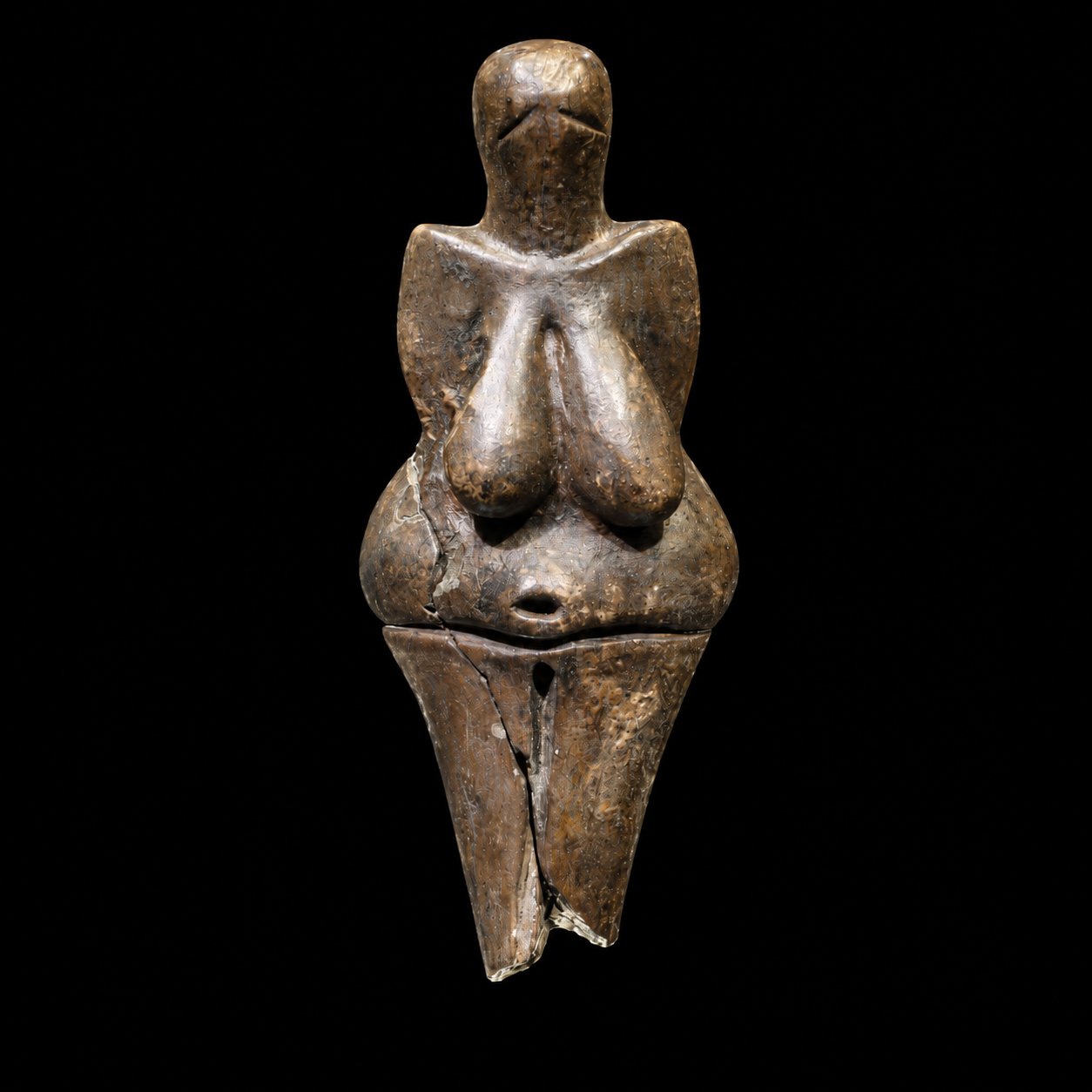
Load the model only when you want to explore it. Drag or use the arrow keys to turn it; + and − zoom. Closing it releases its memory.
User-supplied digital reconstruction; file metadata declares Tripo. It is not an archaeological scan or a metric replica; the supplied geometry is preserved intact. The model is displayed enlarged about five times so that it can be examined in the gallery: the original measures 111 mm. All the figurines in this section use the same enlargement, so they keep their relative sizes. The model’s finish does not reproduce the composition of the ceramic paste or the imprint documented on the original.
History and context
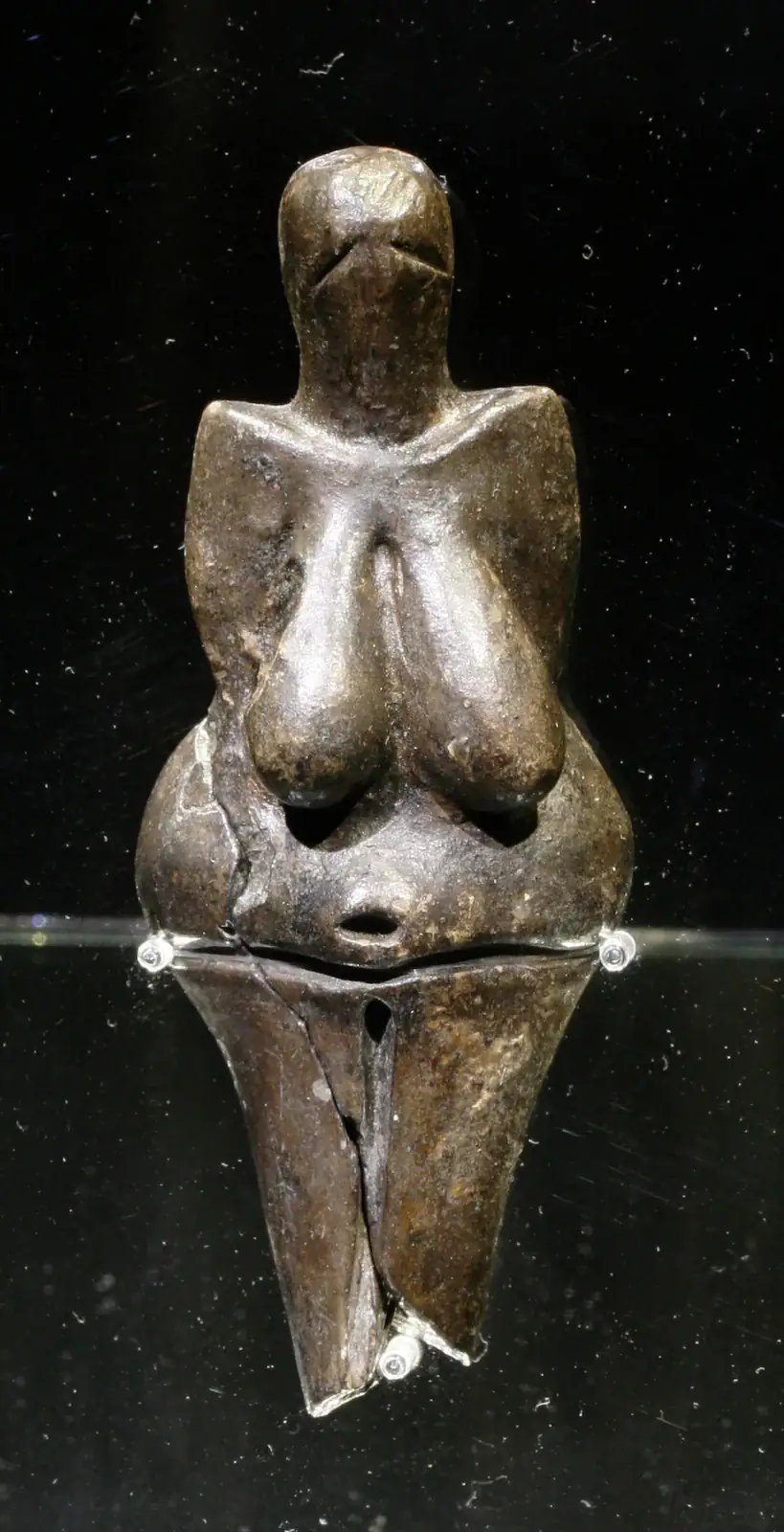
Found on 13 July 1925, figurine DV 30000 was modelled in loess or clay and fired. A small fingerprint remained on the surface; it does not allow identification of the age of the person who left it.
A 2024 micro-CT study ruled out powdered bone or ivory in the paste. The correction matters: a museum must be able to withdraw a "wow fact" when the material contradicts it.
Evidence and interpretation
Ceramic composition, dimensions, date and fingerprint are documented. The fingerprint does not prove child authorship; function and meaning remain open.
Catalogue facts
- Date
- ≈29,000–27,000 years
- Location
- Dolní Věstonice I · Moravia, Czech Republic
- Inventory
- DV 30000
- Material and measurements
- Fired loess or clay · 111 × 44 × 26 mm
A SHARED TOPIC, DIFFERENT MOMENTS
Objects connected through time
Follow a topic across the collections. A shared tag is a way to compare objects, not proof that one culture influenced another.
The order uses the midpoint of each approximate date range; ranges can overlap. Spacing does not represent elapsed time. Swipe, scroll or use the arrows. With the sequence focused, use ← / →, Home or End.
Clay32 dated objects
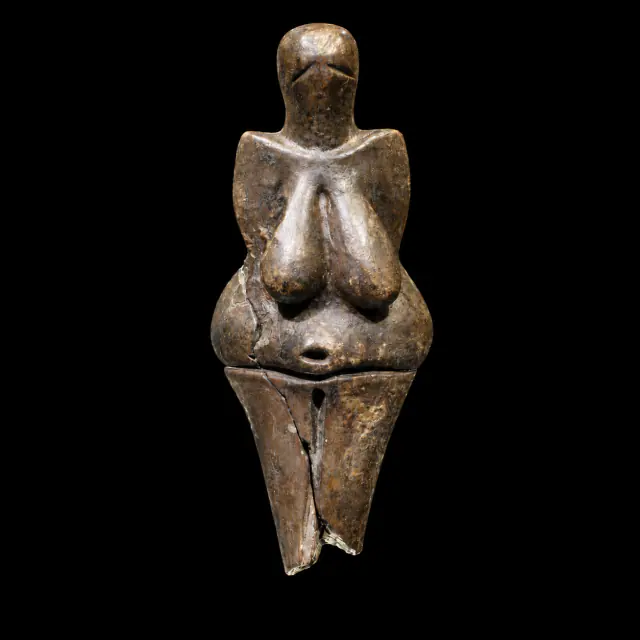 You are viewing
≈29,000–27,000 years
Dolní Věstonice I
Prehistory
Approximate catalogue age; editorial reference 2026 for ordering only, not calibrated dating.
Current record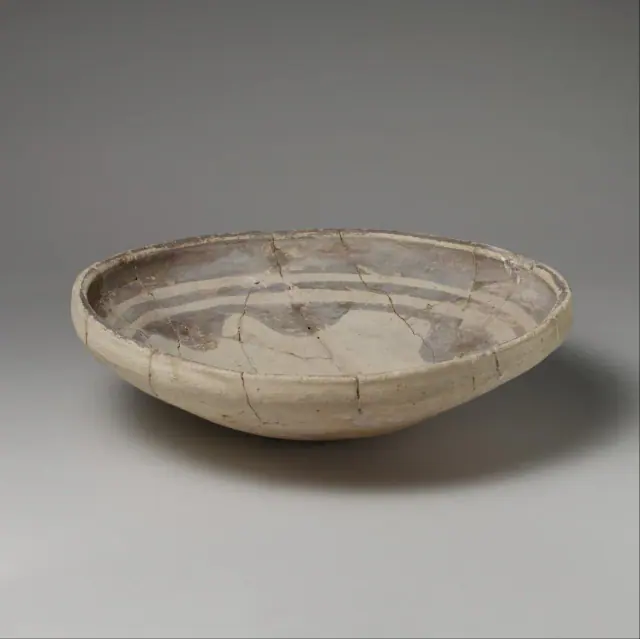
mid-6th–5th millennium BCE
Before Sumer
Sumer
The full 6th–5th millennia BCE provide broad limits for chronological ordering; the record qualifies the date as ‘mid’; the item's date is used, not the broader preceding period.
Read the record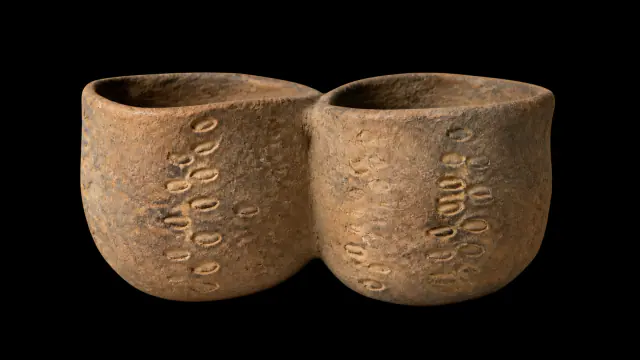
Early Neolithic · VI–V millennia BCE
Twin-chambered vessel from Cova de l’Or
Prehistory
Interval of the VI–V millennia BCE; no precise annual date.
Read the record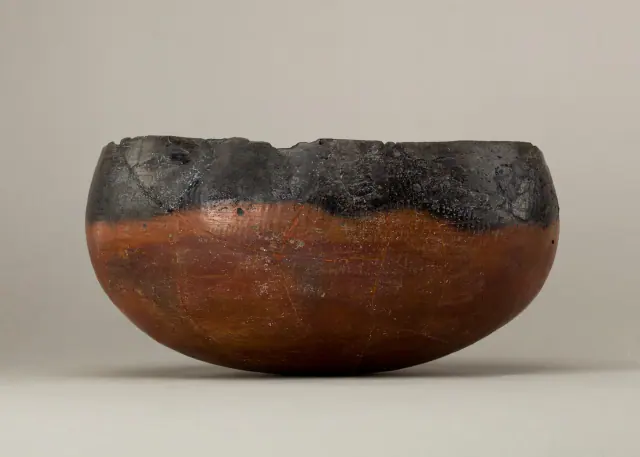
ca. 4400–3800 BCE
Before Egypt
Ancient Egypt
Date of the representative vessel, not of the entire predynastic period.
Read the record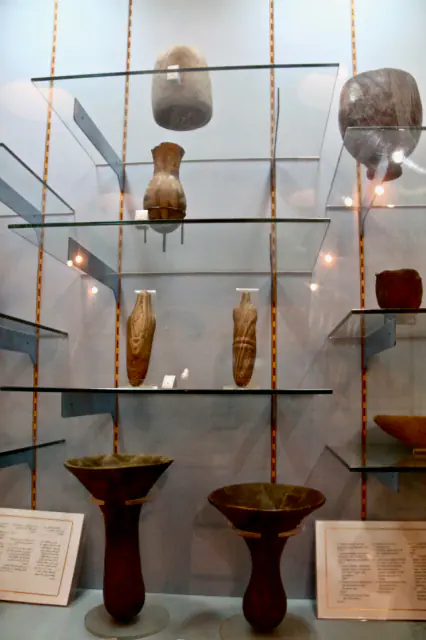
V–IV millennium BCE
Before Nubia
Nubia, Kerma and Kush
Interval of the V–IV millennia BCE of the element, not of the entire preceding period.
Read the record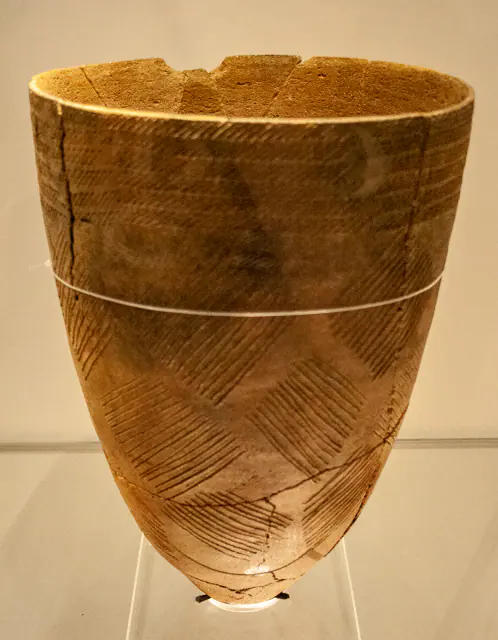
Middle Neolithic, c. 4000 BCE
Before Gojoseon
Gojoseon and early Korea
Date of the ceramic element, not of the preceding period.
Read the record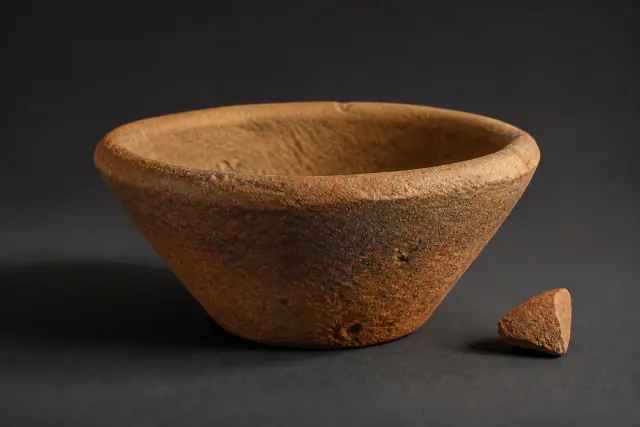
ca. 3500–3000 BCE
Bevel-rimmed bowl
Sumer
The wage ration hypothesis is not used as a functional label.
Read the record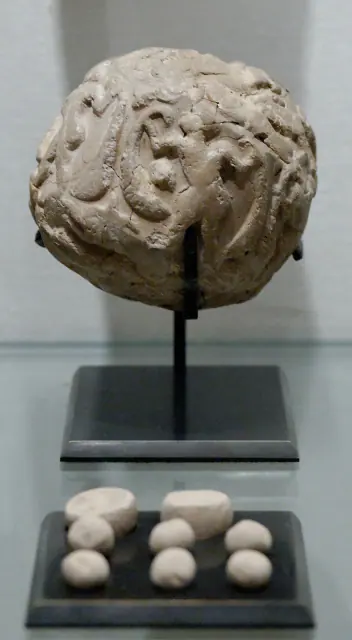
3500–2900 BCE · proto-urban period; towards 3300 BCE as a guide, not exact date
Susa accounting bulla
Sumer
Posted range; "towards 3300" is just orientation within that range.
Read the record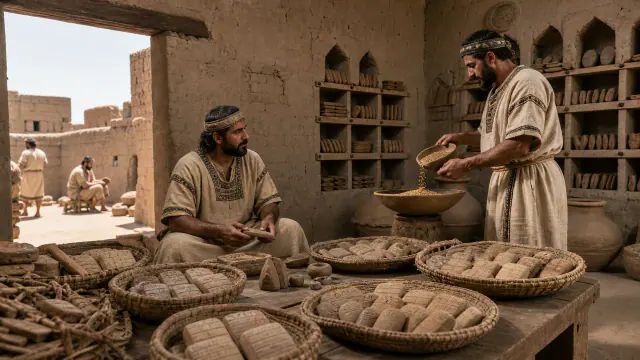
c. 3100–2900 BCE
Jemdet Nasr
Sumer
Approximate dating according to the record.
Read the record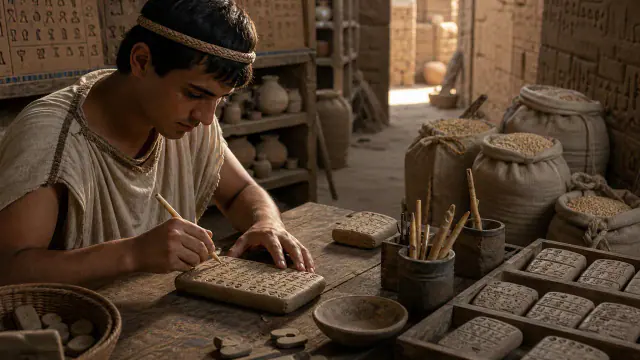
c. 3100–2900 BCE
Account of malt and barley
Sumer
Approximate dating according to the record.
Read the record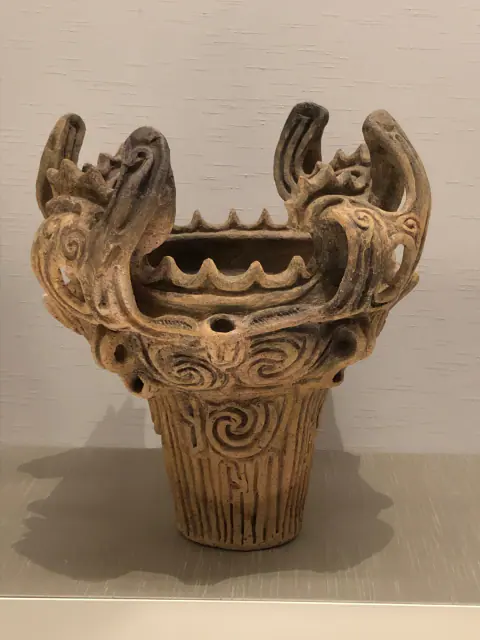
Middle Jōmon, ca. 3000 BCE
Before Yayoi
Yayoi Japan
Date of the Jōmon element, not of the entire preceding period.
Read the record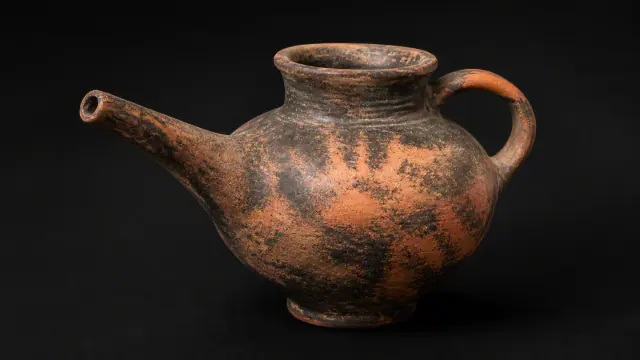
ca. 2500–2200 BCE
Vasiliki
Greek worlds
Date range for the regional pottery assemblage.
Read the record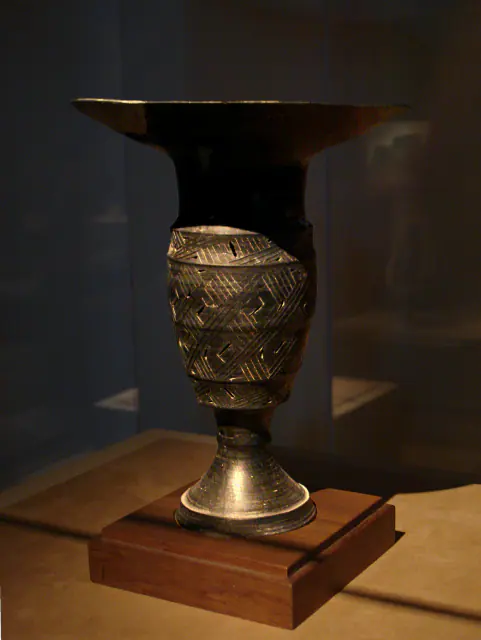
c. 2500–2000 BCE
Before Ancient China
Ancient China
Approximate dating according to the record.
Read the record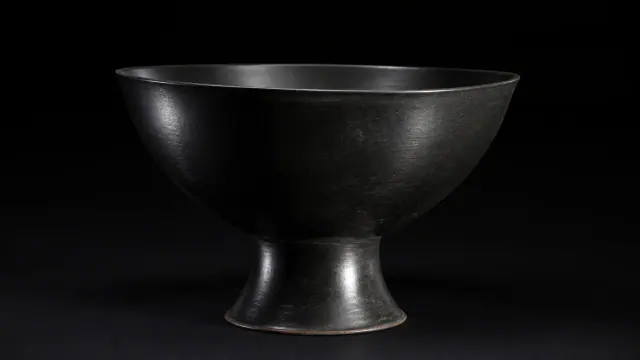
c. 2500–2000 BCE
Longshan
Ancient China
Date range for the Longshan pottery assemblage.
Read the record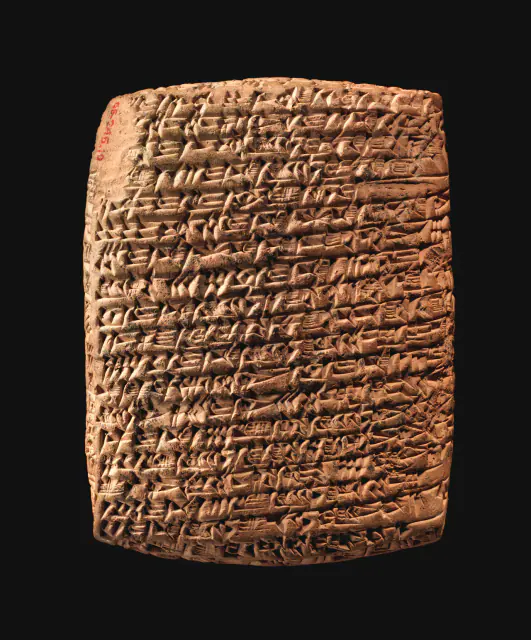
c. 19th century BCE
Before the Hittites
Hittites
Date of the representative document, not of the entire preceding period.
Read the record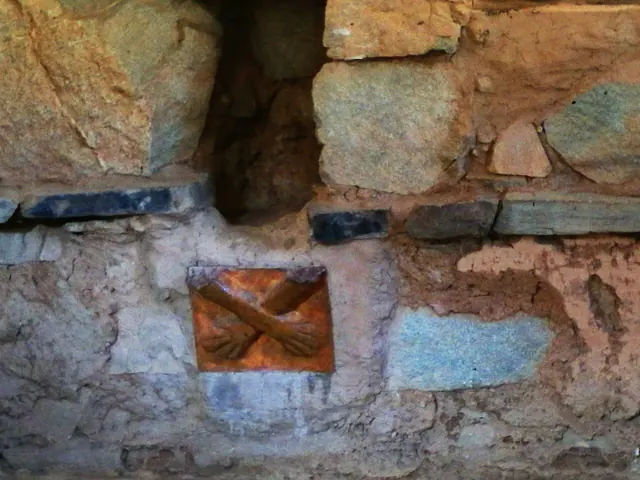
Kotosh-Mito Tradition, c. 2200–1500 BCE; the enclosure is usually situated around 1800 BCE.
Before Pre-Inca Cultures
Pre-Inca cultures
Element tradition interval; "around 1800" orients the enclosure.
Read the record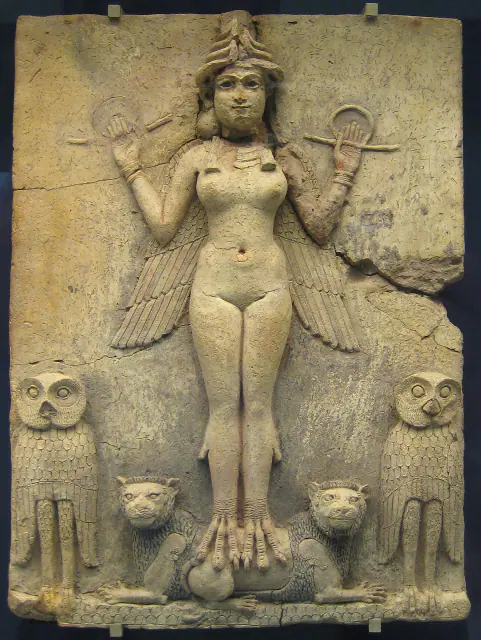
19th–18th centuries BCE
Queen of the Night
Sumer
Approximate dating according to the record.
Read the record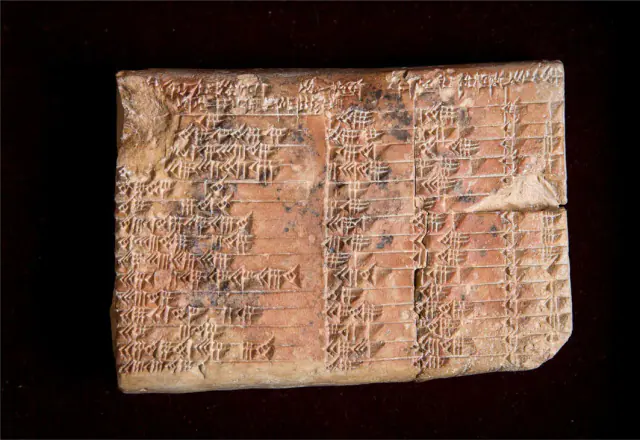
Paleo-Babylonian period · around 1800 BCE
Plimpton 322
Sumer
Approximate dating according to the record.
Read the record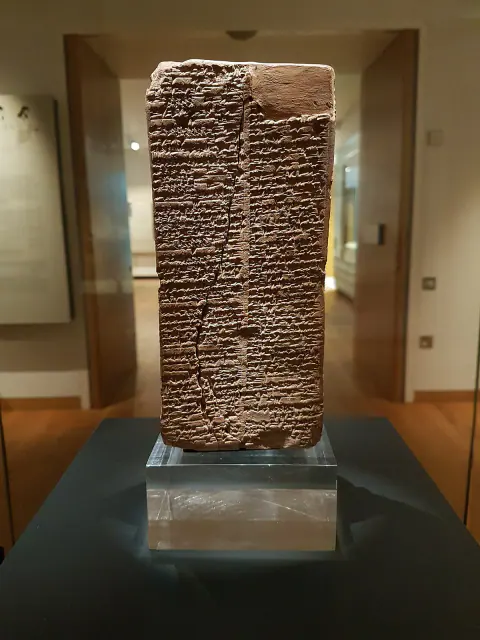
Towards 1800 BCE
Sumerian King List
Sumer
Date of preserved copy, not of reigns listed.
Read the record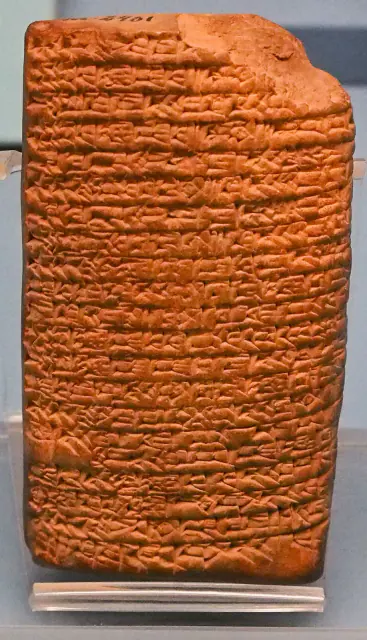
Paleo-Babylonian copy, around 1900–1600 BCE according to CDLI
Love song to Shu-Sin
Sumer
Date of the preserved Paleo-Babylonian copy, not of the origin of the song.
Read the record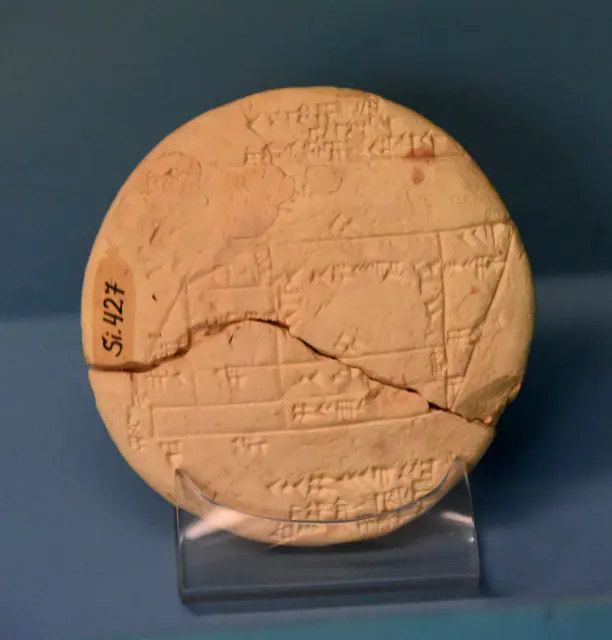
Towards 1900–1600 BCE · paleobabylonian; uncertain chronological attribution in CDLI
Si.427 tablet
Sumer
Unclear chronological attribution in CDLI.
Read the record
≈1700–1650 BCE
Phaistos Disc
Greek worlds
The signs have no accepted reading.
Read the record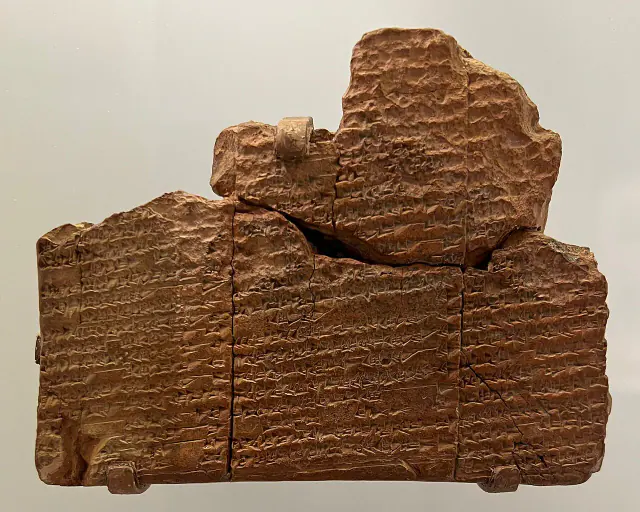
Towards 1650 BCE
Sumerian Flood of Nippur
Sumer
Approximate dating according to the record.
Read the record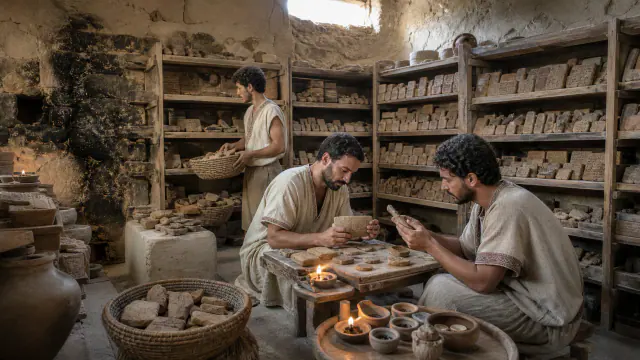
Above all 17th–13th centuries BCE
Boğazköy Archive
Hittites
Main date range for the archive, not a single date for all the tablets.
Read the record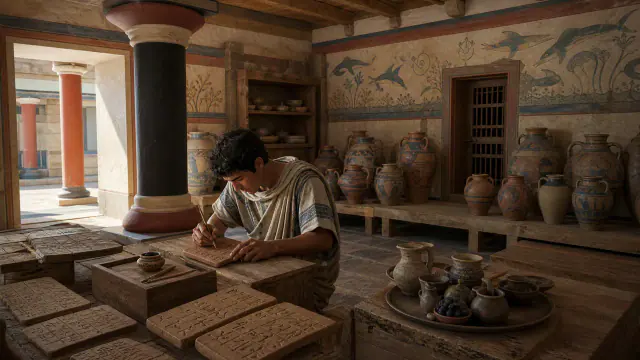
c. 1375 BCE
Linear B
Greek worlds
Approximate dating according to the record.
Read the record
c. 1300 BCE
Alaksandu of Wilusa
Hittites
Approximate dating according to the record.
Read the record
c. 1259 BCE, year 21 of Ramesses II
Treaty with Egypt
Hittites
Date of the treaty and its copy; not of the origin of relations between the two kingdoms.
Read the record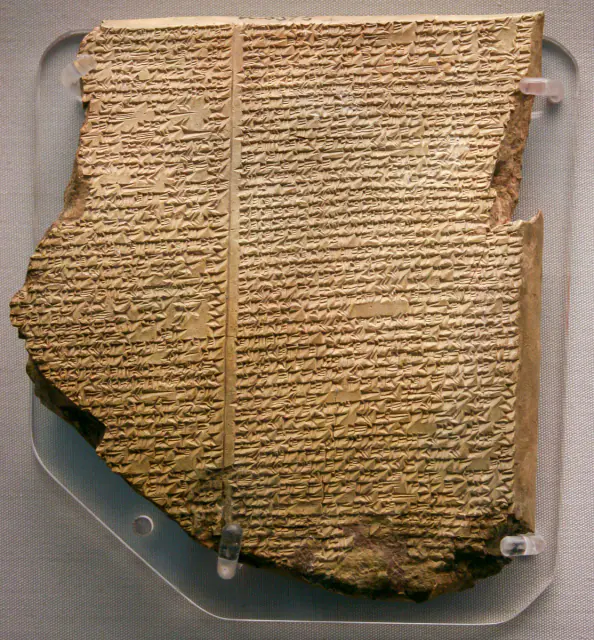
7th century BCE
Flood Tablet
Sumer
Approximate dating according to the record.
Read the record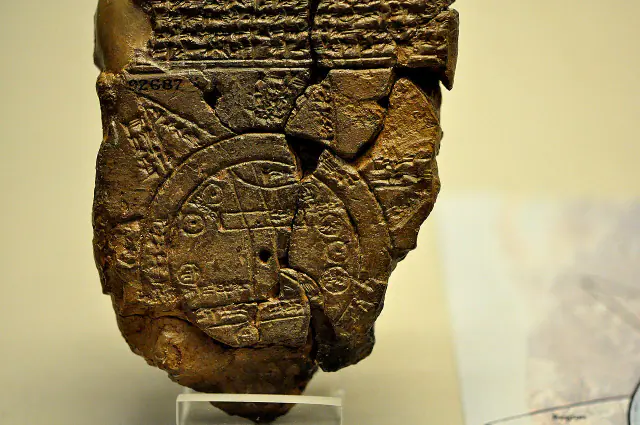
Towards 700–500 BCE
Babylonian map of the world
Sumer
Approximate dating according to the record.
Read the record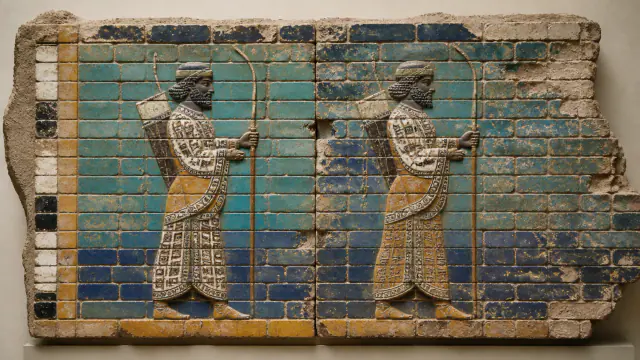
522–486 BCE
Glazed brick guards
Achaemenid Persia
Date range associated with the reign of the decoration.
Read the record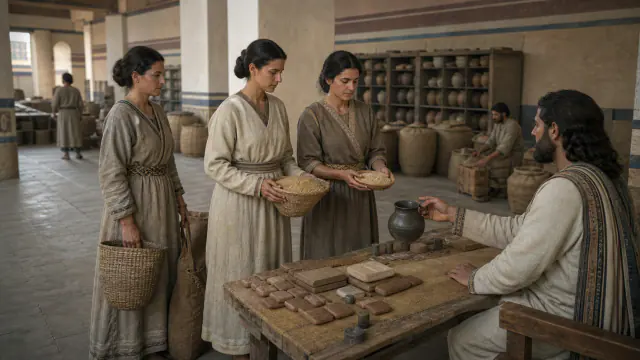
Towards 509–493 BCE
Rations for women and children
Achaemenid Persia
Date range of the archive and its documents.
Read the record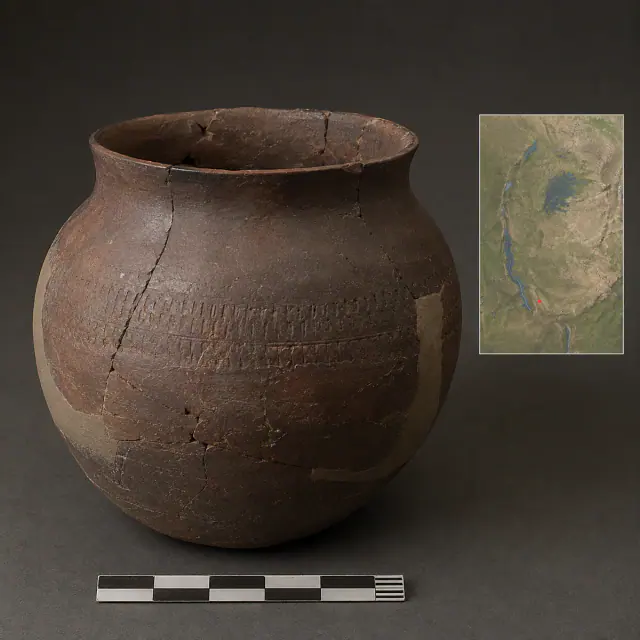
regional range c. 800 BCE–650 CE
Urewe vessel
Bantu-speaking worlds
Regional date range for the Urewe type, not an individual date for each vessel.
Read the record
Also connected, without a comparable date (8)
These objects are not placed after the others: an unknown date does not mean a more recent object.
- A White Wall on the DanubeCeltic worlds · 6th century BCE
- Blue that does not yieldMaya worlds · Documented use from the Classic, c. 300–1500 CE
- Cyrus speaks as king of BabylonAchaemenid Persia · After the conquest of Babylon in 539 BCE
- Early potteryMande Worlds · before ca. 9400 cal BCE
- Made in GaramaGaramantes · I millennium BCE–I millennium CE
- Piece-mold castingAncient China · c. 1600–1046 BCE
- The unfinished gestureBatwa / Twa histories · 1947
- Vessels without a languageBantu-speaking worlds · Urewe, broad regional range ca. 800 BCE–650 CE
A closer look
About 1 min to read · 1 section. Further reading and sources · free access. Editorial review recorded: .
Tomography also reveals how it was modelled
Internal images show no joins between added parts, supporting that the figure was worked from a single portion of paste. The sediment contains rock fragments and natural microfossils. It is a way of reconstructing the technical gesture without cutting the object. The research also detected significant internal cracks: knowing its interior not only expands the manufacturing narrative, but also helps decide how to handle it and avoid new breakages. Conservation and historical interpretation share the same tool here.
Reference images and provenance
 View full-size photograph ⛶
Photograph by Petr Novák, Wikipedia, taken at the Lovci mamutů exhibition of the National Museum in Prague in 2007. The piece belongs to the Moravian Museum; the location of this photograph is the Prague exhibition. Image resized and converted to WebP.
Documentary original · Exact correspondence
Petr Novák, Wikipedia · Moravian Museum · Anthropos · Inventory: DV 30000

Location and territory
LOCATED SITE
Dolní Věstonice I · CzechiaPalaeolithic settlement marker.Where it is held
Moravian Museum · Anthropos
Item or group in the record · Documented collection
The holding institution is documented; public display may change. Check its official record before visiting.
Sources and references
Did you enjoy this exhibit?
Your opinion helps us improve the museum. You can change it whenever you like.
Loading your rating…