
 English
 Español
 Français
 Italiano
 Deutsch
 Русский
 Português
 Polski
 Română
 Svenska
 Norsk bokmål
 Suomi
 Türkçe
 العربية
 简体中文
 한국어
 हिन्दी
 Ελληνικά
BEFORE THE IBERIAS · BRONZE AGE—ORIENTALIZING
Before the Iberias
The Villena Treasure, prior to the Iberians
The Villena Treasure shows the wealth that already existed in the region before the Iberian peoples.
Museum documentation · free public access, no account required.
Generated reconstruction · Declared visual hypothesis
Declared visual reconstruction; not a photograph of the original nor documentary evidence.
History and context
Before a recognisable Iberian identity existed, the levant and southeastern peninsula were occupied by Bronze Age communities that farmed, raised livestock and controlled passes, metals and springs. Settlements such as Cabezo Redondo show a society capable of gathering raw materials, specialists and exceptional objects.
During the Final Bronze and the orientalising period, those local networks transformed as they related to Phoenician navigators and, later, Greeks. It was not the sudden substitution of a population nor the birth of a nation: it was a regional and uneven process from which the distinct societies we now group under the name of Iberians emerged.
Evidence and interpretation
Documented fact: The Villena Treasure contains 59 objects and amounts to around ten kilograms of gold. Interpretation and caution: The date and interpretation as concealment or offering remain open to nuance; do not attribute the set to a monarchy nor call it Iberian. Historical transition: From those Bronze Age communities and their selective dialogue with the Mediterranean arose, between the 6th and 1st centuries BCE, multiple Iberian societies with their own languages, cities and aristocracies. Limit of the transition: The Villena Treasure is prior to the Iberian world and should not be presented as an Iberian work; it explains a regional substratum, not a demonstrated ethnic continuity.
Catalogue facts
- Previous period
- c. 1500–500 BCE
- Sphere of influence
- Eastern and southeastern Iberian peninsula, with focus on the Villena corridor and Mediterranean networks
- Threshold element
- Villena Treasure
- Element date
- Final Bronze, c. 1000 BCE
- Location
- Rambla del Panadero, Villena, Alicante, Spain
- Material or support
- Gold, silver, iron and amber
- Documented fact 01
- The Villena Treasure contains 59 objects and amounts to around ten kilograms of gold.
- Documented fact 02
- It was found in 1963 near Villena and is conserved by the municipal museum.
- Documented fact 03
- Cabezo Redondo was a notable Bronze Age settlement in the Villena corridor.
- Documented fact 04
- Iberian cultures were defined several centuries later and never constituted a single state.
- Documented fact 05
- Phoenician and Greek contacts acted upon already complex local traditions.
- Visual credit
- Julio Garcia · CC BY 2.0
A SHARED TOPIC, DIFFERENT MOMENTS
Objects connected through time
Follow a topic across the collections. A shared tag is a way to compare objects, not proof that one culture influenced another.
The order uses the midpoint of each approximate date range; ranges can overlap. Spacing does not represent elapsed time. Swipe, scroll or use the arrows. With the sequence focused, use ← / →, Home or End.
Gold32 dated objects
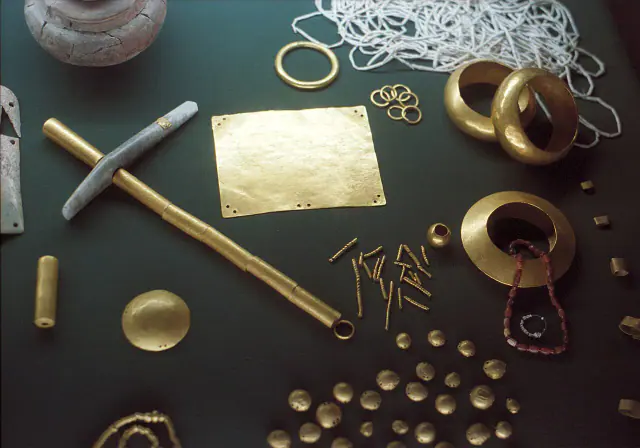
Towards 4600–4200 BCE
The Gold of Varna
Thracians
Date of the Varna funerary assemblage, not of an individual piece.
Read the record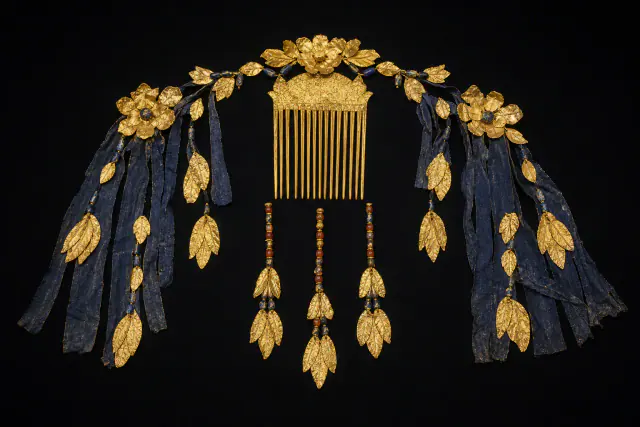
ca. 2600–2450 BCE
Puabi headdress
Sumer
Approximate dating according to the record.
Read the record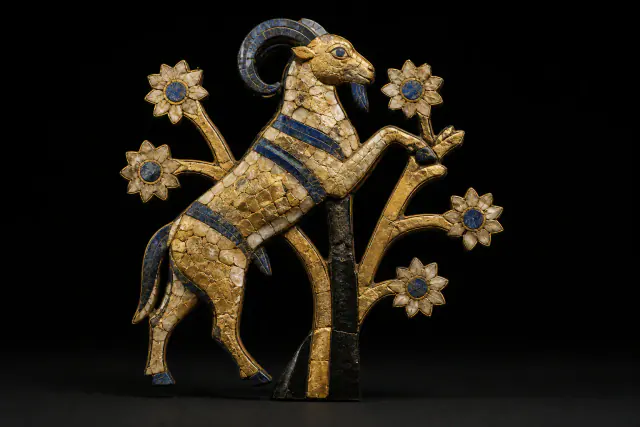
ca. 2600–2400 BCE
The goat from PG 1237
Sumer
The function as support is not resolved.
Read the record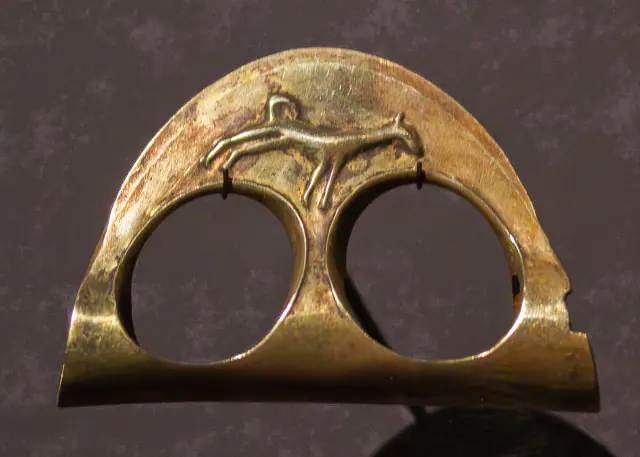
20th–18th centuries BCE
Before Phoenicia
Phoenicians
Approximate dating according to the record.
Read the record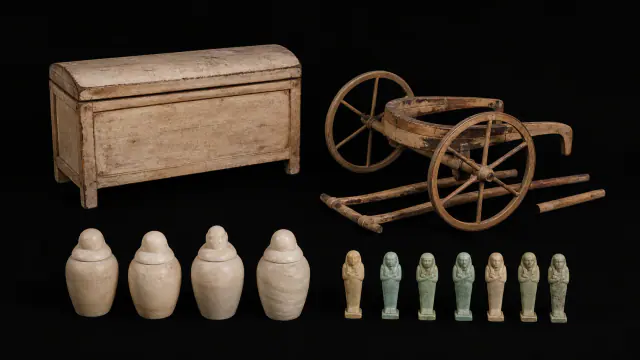
death towards 1323 BCE
Tutankhamun's grave goods
Ancient Egypt
Approximate date of burial, not date of manufacture of the entire trousseau.
Read the record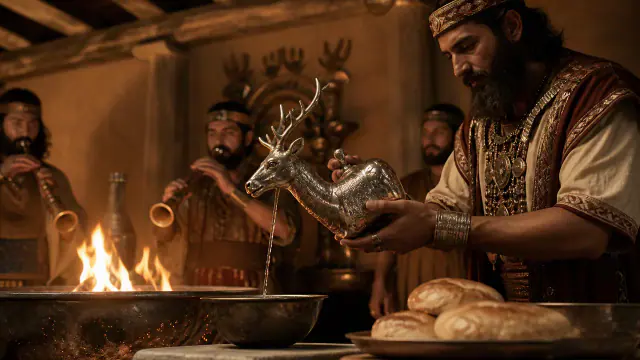
14th–13th centuries BCE
Stag Vessel
Hittites
Approximate dating according to the record.
Read the record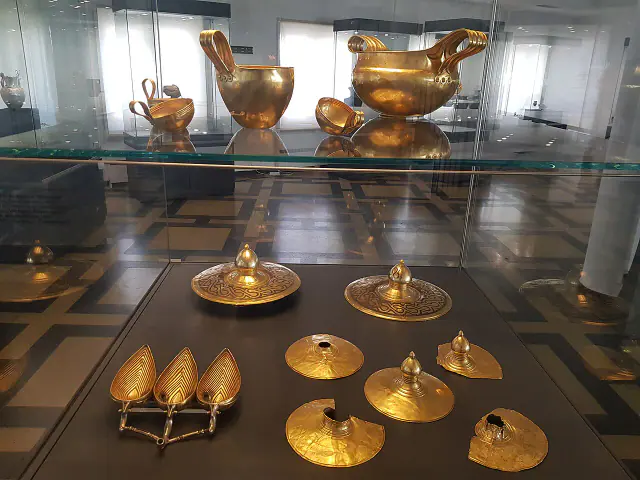
second half of the 14th century–beginning of the 13th century BCE, according to NAIM; other publications use wider intervals from the Late Bronze.
Valchitran
Thracians
The full 14th–13th centuries BCE provide broad limits for chronological ordering; the record specifies the second half of the 14th and early 13th century according to NAIM; other chronologies for the assemblage are broader.
Read the record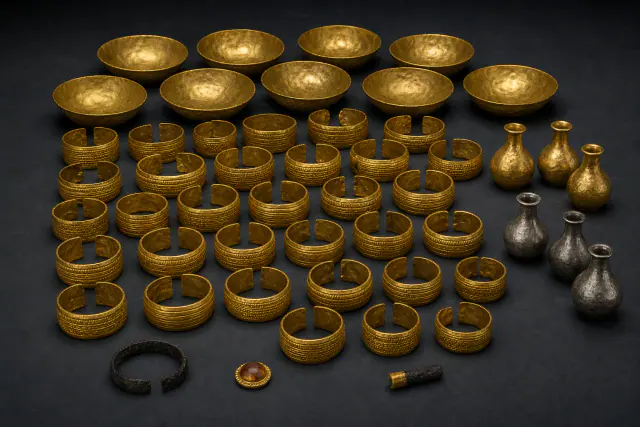 You are viewing
Final Bronze, c. 1000 BCE
Before the Iberias
Iberians
Date of the treasure, not of the preceding general period.
Current record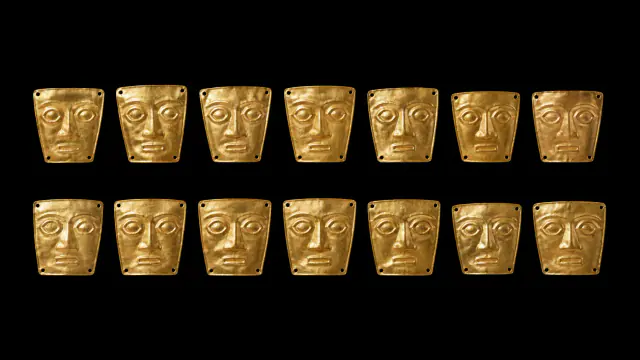
c. 800 BCE
Tomb 1 at Kuntur Wasi
Pre-Inca cultures
Approximate date of the funerary context.
Read the record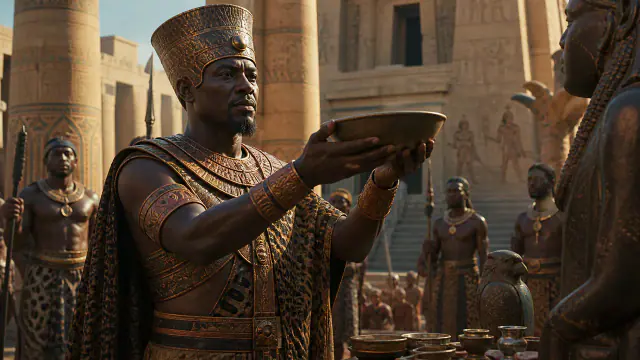
c. 721–664 BCE
Kushite king
Nubia, Kerma and Kush
Interval attributed to the specimen in the catalogue.
Read the record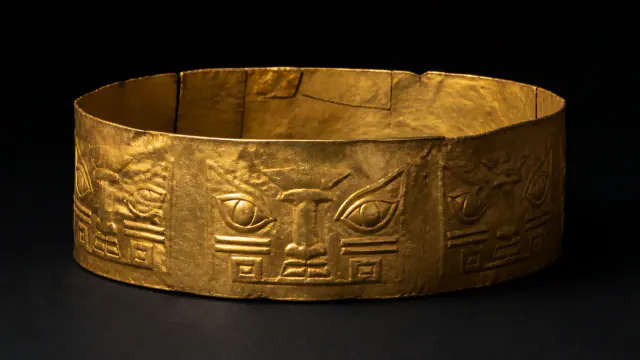
c. 800–550 BCE
Gold at Kuntur Wasi
Pre-Inca cultures
Approximate dating according to the record.
Read the record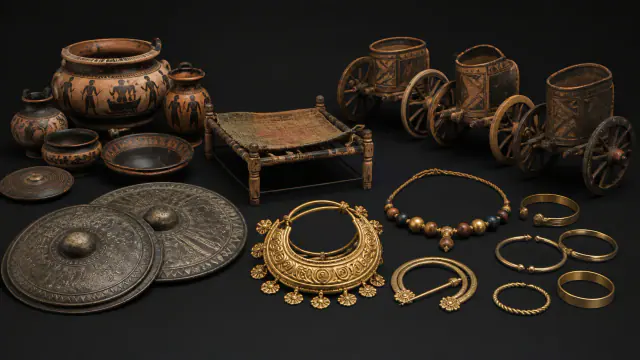
ca. 675–650 BCE
Regolini-Galassi tomb
Etruscans and Rome
Date of the funerary assemblage.
Read the record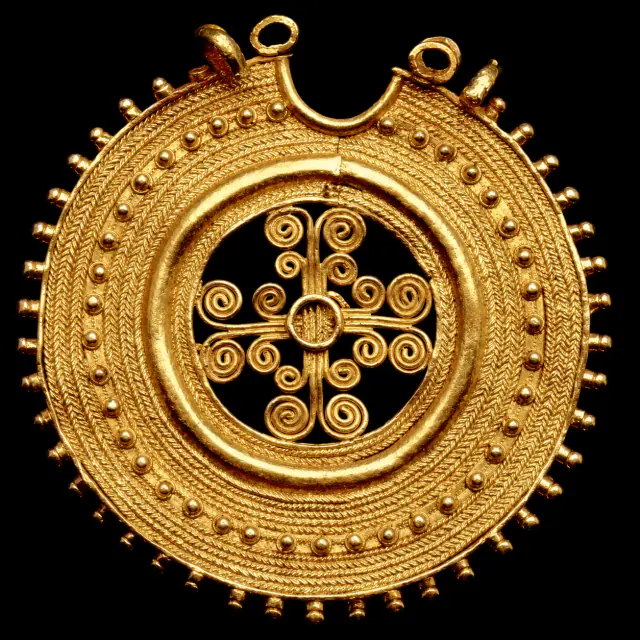
6th century BCE
Condomina Earring
Iberians
Approximate dating according to the record.
Read the record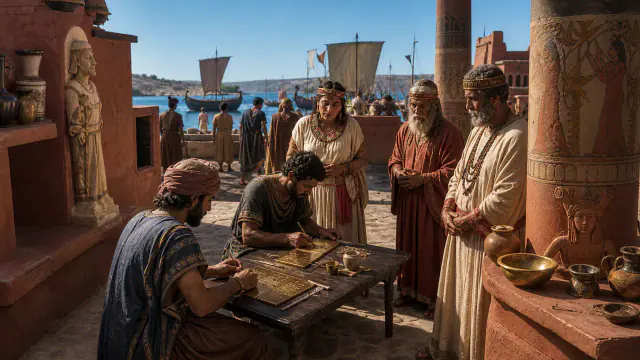
Towards 510 BCE
Uni was also Astarte
Etruscans and Rome
Approximate dating according to the record.
Read the record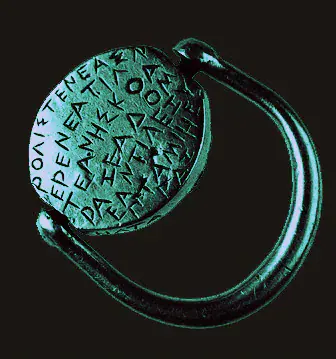
5th century BCE · chronology discussed in the bibliography
Ezerovo Ring
Thracians
The attribution to the 5th century BCE is discussed.
Read the record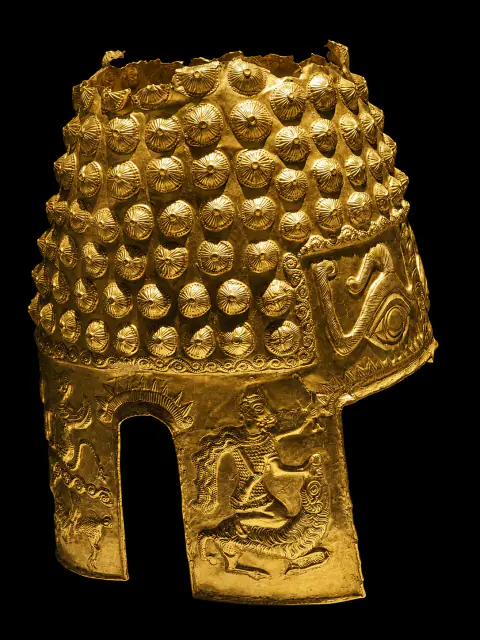
Second half of the 5th century – beginning of the 4th century BCE
Coțofenești helmet
Thracians
The full 5th–4th centuries BCE provide broad limits for chronological ordering; the record specifies the second half of the 5th and early 4th century.
Read the record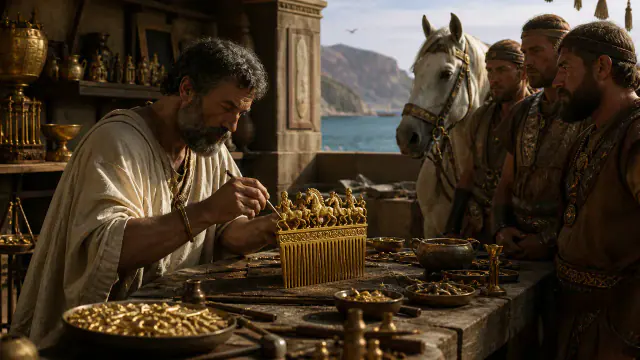
Early 4th century BCE
A battle on a comb
Scythians and Saka
The fourth century BCE is used in its full extent as an outer ordering framework; the entry specifies the beginning.
Read the record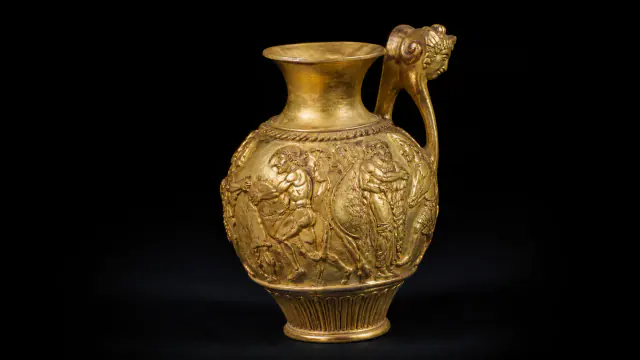
4th century BCE
The Kul-Oba vase
Greek worlds
Approximate dating according to the record.
Read the record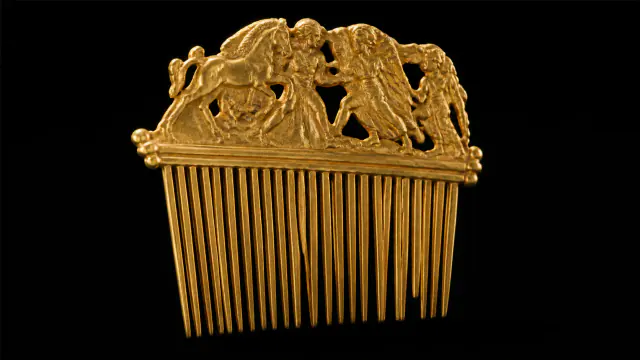
4th century BCE
The Solokha gold comb
Greek worlds
Approximate dating according to the record.
Read the record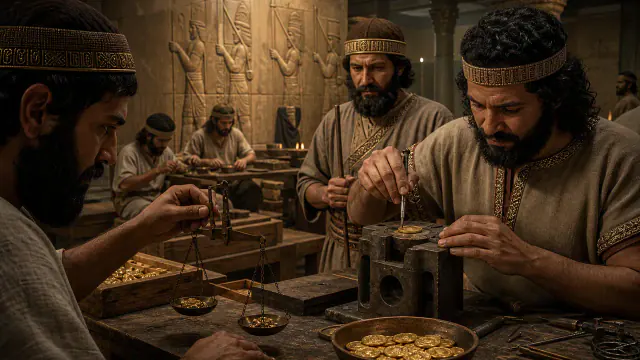
Type introduced from the late 6th century; specimen from the 4th century BCE.
The archer in gold
Achaemenid Persia
Century of the specimen; not an earlier introduction date of the type.
Read the record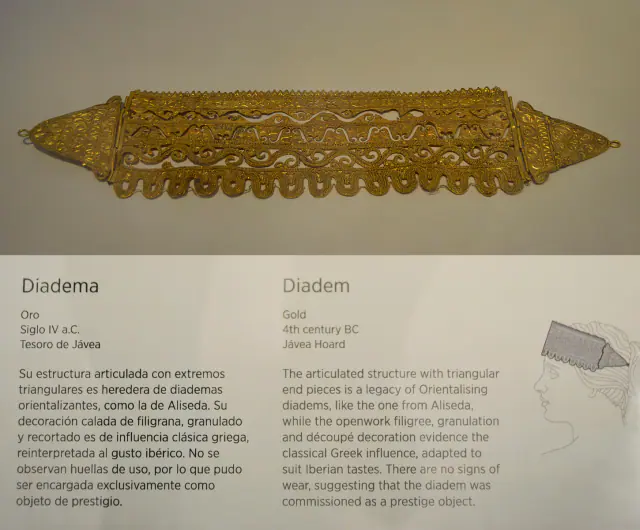
4th century BCE
Treasure of Jávea
Iberians
Approximate dating according to the record.
Read the record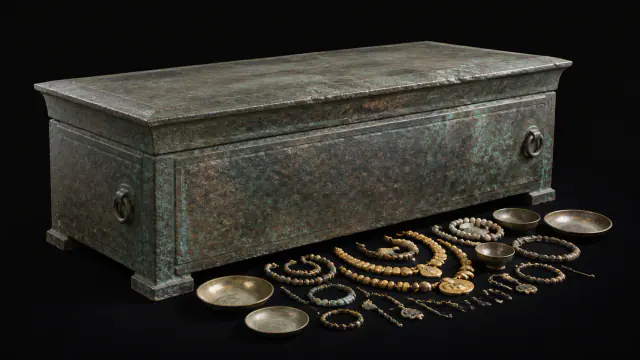
c. 350 BCE
Susa grave goods
Achaemenid Persia
Date of the funerary assemblage.
Read the record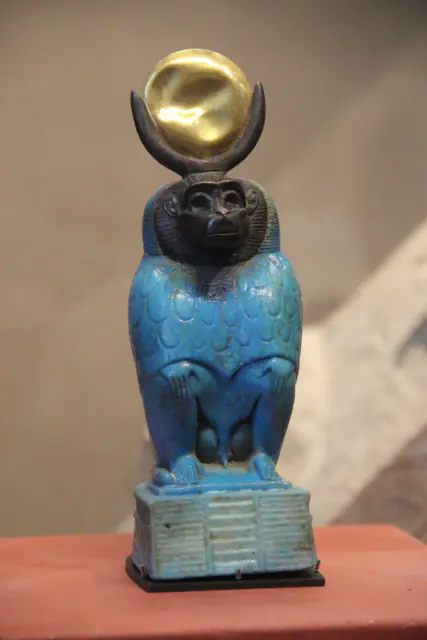
664–30 BCE
Thoth in the form of a baboon
Ancient Egypt
Approximate dating according to the record.
Read the record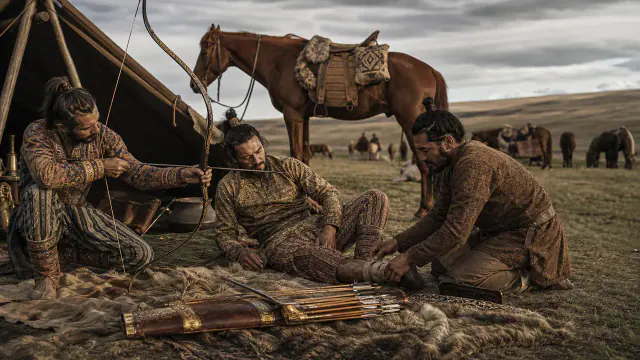
Second half of the 4th century BCE
Faces of the Steppe
Scythians and Saka
Approximate dating according to the record.
Read the record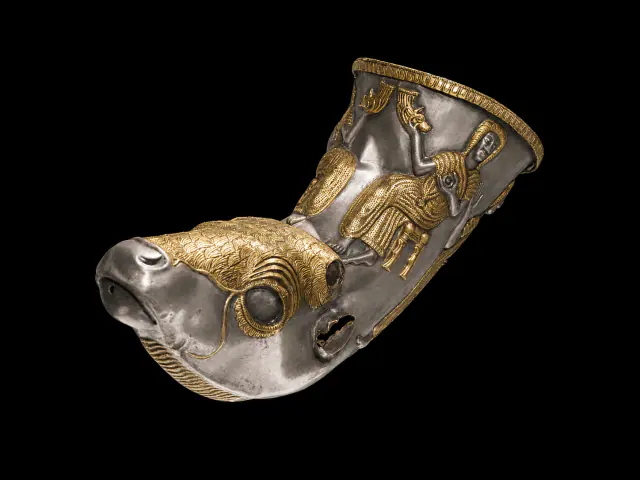
Second half of the 4th century BCE
Poroina Mare Rhyton
Thracians
Second half of the 4th century BCE; the specific ritual is not known.
Read the record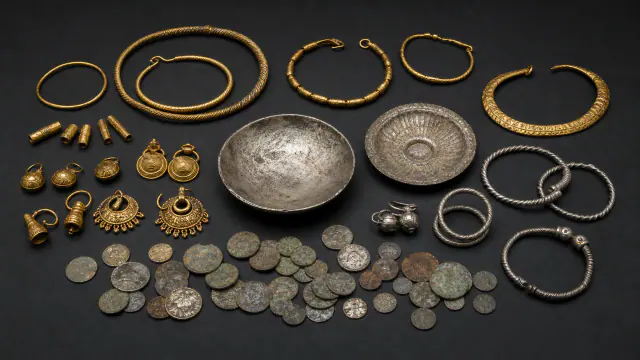
Jewellery from the 4th–3rd centuries BCE; concealment at the end of the 3rd century BCE.
Treasure of Cheste
Iberians
Interval of the jewellery, not of the later concealment.
Read the record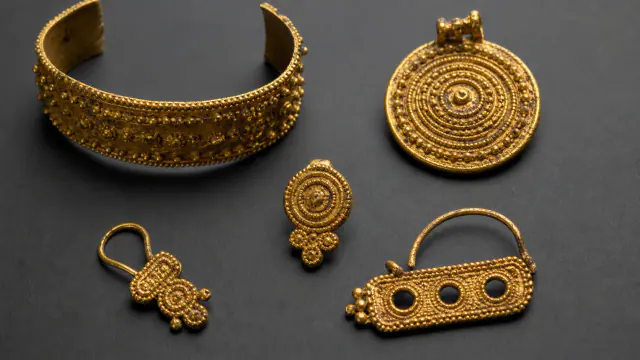
Jewellery: 5th–2nd centuries BCE; concealment probably around 80–73 BCE.
Marina Alta Hoard
Iberians
Interval of the jewellery, not of the Sertorian concealment.
Read the record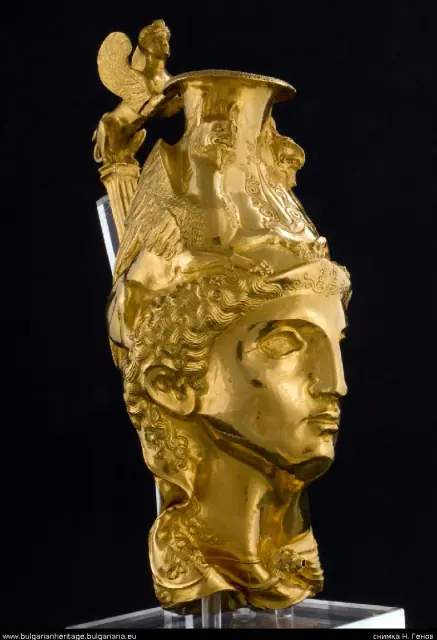
late 4th century – early 3rd century BCE, towards 300 BCE
Panagyurishte
Thracians
«Towards 300 BCE.» It is explicit orientation of the whole.
Read the record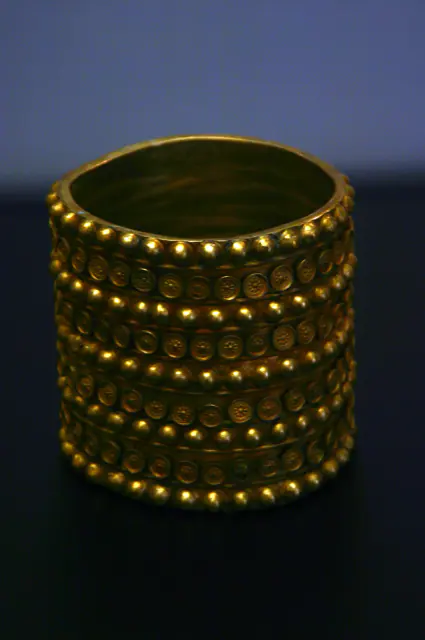
3rd century BCE
Mairena Hoard
Iberians
Approximate dating according to the record.
Read the record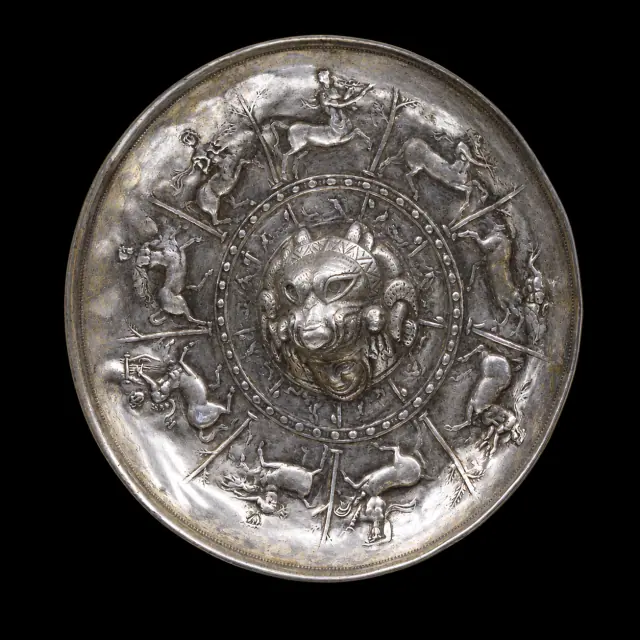
Second half of the 2nd–beginnings of the 1st century BCE
Patera from Perotito
Iberians
The full 2nd–1st centuries BCE provide broad limits for chronological ordering; the record specifies the second half of the 2nd century and the early 1st.
Read the record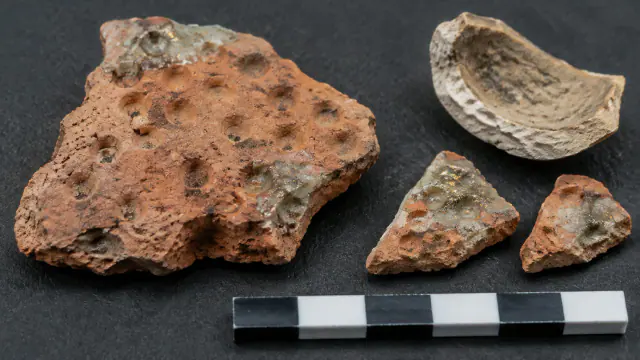
9th–11th centuries CE
Moulds for gold
Mande Worlds
Date range of the archaeometallurgical material in its documented context.
Read the record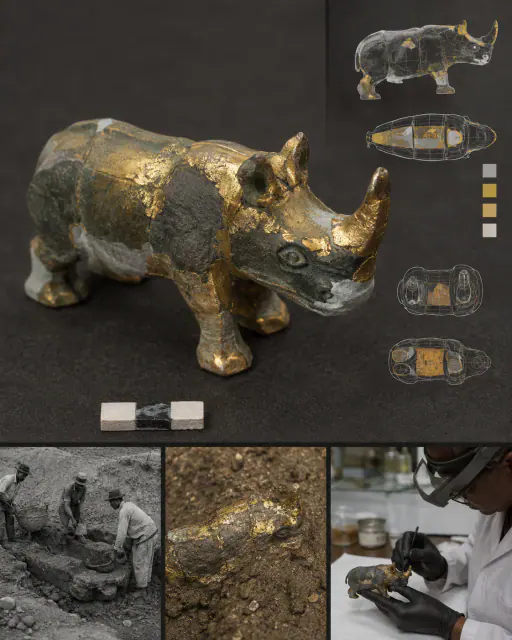
ca. 1220–1290; found in 1933
Gold rhinoceros
Bantu-speaking worlds
Date of the object/context; 1933 is the year of discovery.
Read the record
A closer look
About 1 min to read · 1 section. Further reading and sources · free access. Editorial review recorded: .
Iron could have arrived from the sky before leaving a foundry
An archaeometallurgical study published in Trabajos de Prehistoria in 2023 analysed a hollow hemisphere and an iron bracelet from the Villena Treasure. The results support a meteoric origin for both objects. The proposal allows them to be situated in the Late Bronze Age without requiring that local iron production from terrestrial ores already existed. The nuance changes the reading of the set: finding iron does not by itself oblige dating a piece to the Iron Age. The attribution comes from compositional analyses, not from its shiny appearance nor from a legendary tradition.
The region before this culture
c. 1500–500 BCE · Eastern and southeastern Iberian peninsula, with focus on the Villena corridor and Mediterranean networks
c. 2500–1500 BCE · Documented
Bronze Age communities
Villages and fortified settlements consolidate agriculture, livestock and metallurgy in the eastern and southeastern peninsula.
c. 1700–1100 BCE · Documented
Cabezo Redondo and the concentration of wealth
The Villena settlement articulates production, exchange and hierarchies before the Iberian cultural horizon.
8th–6th centuries BCE · Documented
The orientalising turn
Mediterranean contacts and indigenous developments reorder trade, writing, power and funerary rituals.
What changes and what we should not assume
From those Bronze Age communities and their selective dialogue with the Mediterranean arose, between the 6th and 1st centuries BCE, multiple Iberian societies with their own languages, cities and aristocracies.
The Villena Treasure is prior to the Iberian world and should not be presented as an Iberian work; it explains a regional substratum, not a demonstrated ethnic continuity.
Villena Treasure
Final Bronze, c. 1000 BCE · Rambla del Panadero, Villena, Alicante, Spain
This deposit brings together dozens of pieces —bracelets, bowls and vessels— whose weight and craftsmanship reveal an extraordinary capacity to accumulate and transform valuable materials. Its presence alongside the Cabezo Redondo setting raises a powerful question: who could gather such wealth centuries before the Iberian cities?
The Villena Treasure contains 59 objects and amounts to around ten kilograms of gold.
The date and interpretation as concealment or offering remain open to nuance; do not attribute the set to a monarchy nor call it Iberian.
Gold, silver, iron and amber
Wikimedia Commons · Villena Treasure fact sheet · Julio Garcia · CC BY 2.0
- Documented fact 01
- The Villena Treasure contains 59 objects and amounts to around ten kilograms of gold.
- Documented fact 02
- It was found in 1963 near Villena and is conserved by the municipal museum.
- Documented fact 03
- Cabezo Redondo was a notable Bronze Age settlement in the Villena corridor.
- Documented fact 04
- Iberian cultures were defined several centuries later and never constituted a single state.
- Documented fact 05
- Phoenician and Greek contacts acted upon already complex local traditions.
Where it is held
Museum of Villena · MUVI
Item or group in the record · On display
The institution confirms that the Villena Treasure is exhibited in the museum.
The holding institution is documented; public display may change. Check its official record before visiting.
Sources and references

Did you enjoy this exhibit?
Your opinion helps us improve the museum. You can change it whenever you like.
Loading your rating…