07 · RITUAL · PRECIOUS METAL
Stag Vessel Drinking from a god modelled in silver
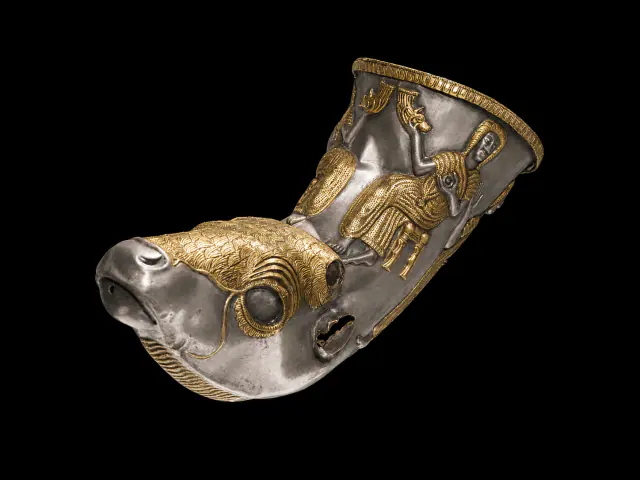
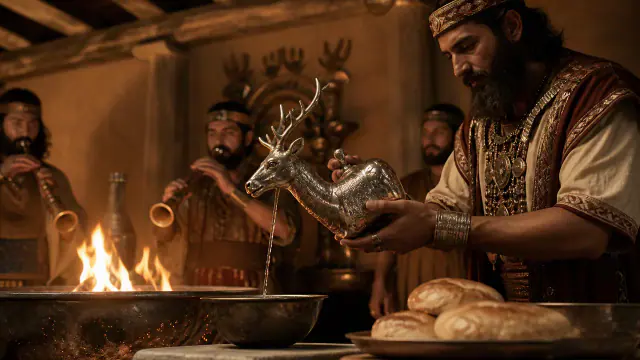
This silver vessel in the shape of a stag is decorated with a scene of offering to the gods.
ON THIS PAGE
History and context Evidence and facts Objects connected through time Further reading Where it is held Sources and references Comments Museum documentation · free public access, no account required.
⛶ Enlarge image← Previous Image 1 of 4 · Main image Next →
DECLARED VISUAL RECONSTRUCTION · EXISTING EDITORIAL RESOURCE · TRACEKEEPERS Generated reconstruction · Declared visual hypothesis
Declared visual reconstruction for museographic context; it is not a photograph of the original nor documentary evidence.
View full image: DECLARED VISUAL RECONSTRUCTION · EXISTING EDITORIAL RESOURCE · TRACEKEEPERS DECLARED VISUAL RECONSTRUCTION · EXISTING EDITORIAL RESOURCE · TRACEKEEPERS Generated reconstruction · Declared visual hypothesis
Declared visual reconstruction for museographic context; it is not a photograph of the original nor documentary evidence.
View full image: Documentary original · Vessel terminating in the forepart of a stag · 1989.281.10 · view 1 Documentary original · Vessel terminating in the forepart of a stag · 1989.281.10 · view 1 Documentary original · Exact correspondence
Documentary photograph of the conserved original; it is not an AI recreation. Web adaptation: size and format adjustment, without reconstructing parts or changing the photograph's content.
Silver vessel in the form of a stag, Met 1989.281.10: exact object cited in the entry. Each photograph belongs to the same specimen.
The Metropolitan Museum of Art (photographer not individualised) · The Metropolitan Museum of Art · Inventory: 1989.281.10 · CC0 1.0 · The Met Open Access
View full image: Detail of the original · Detail of the relief of the silver vessel Detail of the original · Detail of the relief of the silver vessel Documentary original · Exact correspondence
Documentary photograph of the conserved original; it is not an AI recreation. Web adaptation: size and format adjustment, without reconstructing parts or changing the photograph's content.
Silver vessel in the form of a stag, Met 1989.281.10: exact object cited in the entry. Each photograph belongs to the same specimen.
The Metropolitan Museum of Art (photographer not individualised) · The Metropolitan Museum of Art · Inventory: 1989.281.10 · CC0 1.0 · The Met Open Access
History and context This silver vessel ends in the head and chest of a stag. On its rim, a repoussé scene gathers deities, liquid offering, bread or instrument and participants before a brazier.
Hittite inventories mention animal vessels assigned to gods. The scene allows reconstructing libation gestures, but not identifying with certainty all the characters nor asserting that the preserved object came from a specific temple.
The stag's body was assembled from at least a dozen sheets of hammered silver and received gold and inlays now lost. The frieze preserves deities, offering, brazier and participants around the edge.
There is no pouring hole in the chest and the exact archaeological provenance is unknown, so 'temple rhyton' would be an excessive label. Even the sex of a figure and some objects of the frieze remain under discussion.
Evidence and interpretation Documented fact: hammered silver, gold inlay, ritual frieze and imperial dating are observable. Interpretation and caution: the protective deity associated with the stag is a solid identification but not all signs and participants have a unanimous reading; the exact archaeological provenance is unknown.
Catalogue facts
Narrative date 14th–13th centuries BCE
Location Central Anatolia; exact provenance not documented
Material Hammered and repoussé silver · gold inlay
Context Cult zoomorphic vessel or royal gift
Curatorial reading The documented fact and its interpretation appear separately in the evidence block.
Date 14th–13th centuries BCE
Location Central Anatolia; exact provenance not documented
Support Hammered and repoussé silver · gold inlay
Documentary coverage 2 museum, heritage, primary corpus or research sources for this stop. Silver19 Gold32 Vessels70 Animal imagery49 Embossing12
The order uses the midpoint of each approximate date range; ranges can overlap. Spacing does not represent elapsed time. Swipe, scroll or use the arrows. With the sequence focused, use ← / →, Home or End.
Earlier Later
2 / 19 In the centre: Stag Vessel
You can scroll the first group without JavaScript. The other topics are also available below.
Gold The Gold of Varna · Towards 4600–4200 BCE · ThraciansPuabi headdress · ca. 2600–2450 BCE · SumerThe goat from PG 1237 · ca. 2600–2400 BCE · SumerBefore Phoenicia · 20th–18th centuries BCE · PhoeniciansTutankhamun's grave goods · death towards 1323 BCE · Ancient EgyptStag Vessel · 14th–13th centuries BCE · Hittites — You are viewingValchitran · second half of the 14th century–beginning of the 13th century BCE, according to NAIM; other publications use wider intervals from the Late Bronze. · ThraciansBefore the Iberias · Final Bronze, c. 1000 BCE · IberiansTomb 1 at Kuntur Wasi · c. 800 BCE · Pre-Inca culturesKushite king · c. 721–664 BCE · Nubia, Kerma and KushGold at Kuntur Wasi · c. 800–550 BCE · Pre-Inca culturesRegolini-Galassi tomb · ca. 675–650 BCE · Etruscans and RomeCondomina Earring · 6th century BCE · IberiansUni was also Astarte · Towards 510 BCE · Etruscans and RomeEzerovo Ring · 5th century BCE · chronology discussed in the bibliography · ThraciansCoțofenești helmet · Second half of the 5th century – beginning of the 4th century BCE · ThraciansA battle on a comb · Early 4th century BCE · Scythians and SakaThe Kul-Oba vase · 4th century BCE · Greek worldsThe Solokha gold comb · 4th century BCE · Greek worldsThe archer in gold · Type introduced from the late 6th century; specimen from the 4th century BCE. · Achaemenid PersiaTreasure of Jávea · 4th century BCE · IberiansSusa grave goods · c. 350 BCE · Achaemenid PersiaThoth in the form of a baboon · 664–30 BCE · Ancient EgyptFaces of the Steppe · Second half of the 4th century BCE · Scythians and SakaPoroina Mare Rhyton · Second half of the 4th century BCE · ThraciansTreasure of Cheste · Jewellery from the 4th–3rd centuries BCE; concealment at the end of the 3rd century BCE. · IberiansMarina Alta Hoard · Jewellery: 5th–2nd centuries BCE; concealment probably around 80–73 BCE. · IberiansPanagyurishte · late 4th century – early 3rd century BCE, towards 300 BCE · ThraciansMairena Hoard · 3rd century BCE · IberiansPatera from Perotito · Second half of the 2nd–beginnings of the 1st century BCE · IberiansMoulds for gold · 9th–11th centuries CE · Mande WorldsGold rhinoceros · ca. 1220–1290; found in 1933 · Bantu-speaking worldsVessels Before Sumer · mid-6th–5th millennium BCE · SumerTwin-chambered vessel from Cova de l’Or · Early Neolithic · VI–V millennia BCE · PrehistoryBefore Egypt · ca. 4400–3800 BCE · Ancient EgyptBefore Nubia · V–IV millennium BCE · Nubia, Kerma and KushBefore Gojoseon · Middle Neolithic, c. 4000 BCE · Gojoseon and early KoreaBevel-rimmed bowl · ca. 3500–3000 BCE · SumerUruk Vase · ca. 3300–3000 BCE · SumerBefore Yayoi · Middle Jōmon, ca. 3000 BCE · Yayoi JapanVasiliki · ca. 2500–2200 BCE · Greek worldsBefore the Greeks · c. 2400–2200 BCE · Greek worldsBefore Ancient China · c. 2500–2000 BCE · Ancient ChinaLongshan · c. 2500–2000 BCE · Ancient ChinaKerma vessel · c. 1802–1640 BCE · Nubia, Kerma and KushGrave Circle A and Chrysolakkos · 18th–16th centuries BCE · Greek worldsBefore Vedic India · c. 1900–1300 BCE · Vedic and later Indian worldsJue · c. sixteenth century BCE · Ancient ChinaPithos · c. 1450–1375 BCE · Greek worldsTutankhamun's grave goods · death towards 1323 BCE · Ancient EgyptStag Vessel · 14th–13th centuries BCE · Hittites — You are viewingValchitran · second half of the 14th century–beginning of the 13th century BCE, according to NAIM; other publications use wider intervals from the Late Bronze. · ThraciansLiding · 12th–11th centuries BCE · Ancient ChinaBefore the Iberias · Final Bronze, c. 1000 BCE · IberiansGrey bowl from Hastinapura · c. 1100–800 BCE in the classical sequence of Hastinapura · Vedic and later Indian worldsBefore Etruscans and Rome · ca. 850–800 BCE · Etruscans and RomeThe urn under the helmet · 9th–8th centuries BCE · Etruscans and RomeTomb 1 at Kuntur Wasi · c. 800 BCE · Pre-Inca culturesRegolini-Galassi tomb · ca. 675–650 BCE · Etruscans and RomeThe great Greek krater of Vix · ≈530–500 BCE · Greek worldsScorțaru cauldron · 6th–5th centuries BCE · ThraciansVix Tomb · c. 500 BCE · Celtic worldsOrpheus among the Thracians · circa 440 BCE; attributed to the London Painter E 497. · ThraciansTwenty-six voiceless signs · 5th–4th centuries BCE · Scythians and SakaRogozen · mainly 5th–4th centuries BCE; The set has a history of accumulation, not a single manufacturing date. · ThraciansGrave goods of Baza and Toya · First half of the 4th century BCE · IberiansThe Attic krater that took on a new life in Cástulo · 4th century BCE · Greek worldsThe silver amphora of Chertomlyk · 4th century BCE · Greek worldsThe Kul-Oba vase · 4th century BCE · Greek worldsFaces of the Steppe · Second half of the 4th century BCE · Scythians and SakaPoroina Mare Rhyton · Second half of the 4th century BCE · ThraciansBorovo · 4th century BC C.; 350–300 BCE in the ISAW catalog. · ThraciansLeipzig Fish Plate · Last third 4th–early 3rd century BCE · Greek worldsGolyamata Kosmatka · End of the 4th century – beginning of the 3rd century BCE; ritual burial at the beginning of the III according to Iskra. · ThraciansPanagyurishte · late 4th century – early 3rd century BCE, towards 300 BCE · ThraciansDove of the Amarejo · 3rd century BCE · IberiansMairena Hoard · 3rd century BCE · IberiansVase from Chão de Lamas · Piece: III–II centuries BCE · concealment ≈110–76 BCE · IberiansVas dels Guerrers · 3rd–early 2nd century BCE · IberiansWarriors' Vase · 3rd–2nd centuries BCE · IberiansThe dismantled cauldron · 2nd–1st centuries BCE · Celtic worldsKalathos of Alcorisa · 2nd–1st centuries BCE · IberiansPatera from Perotito · Second half of the 2nd–beginnings of the 1st century BCE · IberiansUrewe vessel · regional range c. 800 BCE–650 CE · Bantu-speaking worldsTwo rows of coffins · Mainly Middle Yayoi, 2nd century BCE–1st century CE · Yayoi JapanCeramics that continued · Last third of the 2nd century BCE–1st century CE · IberiansRoman glass oinochoe · Late 1st century BCE–early 1st century CE · Etruscans and RomeGladiators Cup of Chavagnes · 25–75 CE · Etruscans and RomeEgyptian oil lamp with a fish, held in Laon · 3rd–4th centuries CE · Ancient EgyptLaon lamp with fish · 3rd–4th centuries CE · Etruscans and RomeWater in a shell · 1816–1826 · San historiesWithout a comparable date (not part of the chronological order):
Animal imagery Lion-man · ≈40,000 years · Aurignacian · PrehistoryBefore the San · ≈25.500–23.500 BCE · San historiesBefore the name San · ≈25.500–23.500 BCE · San historiesAltamira · Assemblage ≈36,000–13,000 BP · bison ≈18,400–15,300 cal BP · PrehistoryLascaux · ≈23,500–21,000 cal BP · debated contextual estimate · PrehistoryZaraysk Bison · ≈23,000–21,000 years · PrehistoryRondelle de Mas-d'Azil · ≈18,000–16,000 years · PrehistoryLamp from La Mouthe · ≈20,500–13,000 years · Magdalenian framework · PrehistoryEngraved stone from Çakmaktepe · PPNA · site proposal: ≈9600–8800 BCE, provisional · PrehistoryCueva de las Manos · Sequence ≈9300–1300 BP · PrehistoryCylinder seal · c. 3500–3100 BCE · SumerQueen's Lyre · ca. 2600–2500 BCE · SumerThe goat from PG 1237 · ca. 2600–2400 BCE · SumerIndus seals · ca. 2600–1900 BCE · Indus civilisationQueen of the Night · 19th–18th centuries BCE · SumerBull-leaping · c. 1600–1450 BCE · Greek worldsStag Vessel · 14th–13th centuries BCE · Hittites — You are viewingBefore the Scythians and Sakas · Final Bronze–Initial Iron, ca. 1200–600 BCE · Scythians and SakaIvory in Nimrud · 9th–8th centuries BCE · PhoeniciansLamassu of Khorsabad · Reign of Sargon II · 721–705 BCE · SumerThe Tello Obelisk · c. 800–500 BCE · Pre-Inca culturesAshurbanipal Hunt · 645–635 BCE · SumerBanquet under leopards · Around 480–470 BCE · Etruscans and RomeThe oldest knotted carpet · 5th–4th centuries BCE · Scythians and SakaThe silver amphora of Chertomlyk · 4th century BCE · Greek worldsThoth in the form of a baboon · 664–30 BCE · Ancient EgyptPoroina Mare Rhyton · Second half of the 4th century BCE · ThraciansBorovo · 4th century BC C.; 350–300 BCE in the ISAW catalog. · ThraciansLeipzig Fish Plate · Last third 4th–early 3rd century BCE · Greek worldsDove of the Amarejo · 3rd century BCE · IberiansChão de Lamas pectoral · 3rd–2nd centuries BCE · concealed in the early 1st century BCE · IberiansFibula from Lancia · ≈300–100 BCE · IberiansHorse fibula · 2nd century BCE · disputed chronology · IberiansThe dismantled cauldron · 2nd–1st centuries BCE · Celtic worldsKalathos of Alcorisa · 2nd–1st centuries BCE · IberiansEgyptian oil lamp with a fish, held in Laon · 3rd–4th centuries CE · Ancient EgyptLaon lamp with fish · 3rd–4th centuries CE · Etruscans and RomeGold rhinoceros · ca. 1220–1290; found in 1933 · Bantu-speaking worldsZimbabwe birds · main period of Great Zimbabwe, c. 12th–15th centuries · Bantu-speaking worldsWithout a comparable date (not part of the chronological order):
Embossing Stag Vessel · 14th–13th centuries BCE · Hittites — You are viewingTribute to Assyria · c. 848 BCE · PhoeniciansGold at Kuntur Wasi · c. 800–550 BCE · Pre-Inca culturesCoțofenești helmet · Second half of the 5th century – beginning of the 4th century BCE · ThraciansRogozen · mainly 5th–4th centuries BCE; The set has a history of accumulation, not a single manufacturing date. · ThraciansThe silver amphora of Chertomlyk · 4th century BCE · Greek worldsThe Kul-Oba vase · 4th century BCE · Greek worldsFaces of the Steppe · Second half of the 4th century BCE · Scythians and SakaChão de Lamas pectoral · 3rd–2nd centuries BCE · concealed in the early 1st century BCE · IberiansVase from Chão de Lamas · Piece: III–II centuries BCE · concealment ≈110–76 BCE · IberiansThe dismantled cauldron · 2nd–1st centuries BCE · Celtic worldsPatera from Perotito · Second half of the 2nd–beginnings of the 1st century BCE · IberiansA closer look About 1 min to read · 1 section. Further reading and sources · free access. Editorial review recorded: September 5, 2026 .
The small signs may point to a dedicant Van den Hout's study proposes that the inscriptions on the vessel do not name only deities. An expression interpreted as 'daughter of the land' has parallels applied to royal women and could identify the dedicant. Her name and territory are not resolved. Placing that inscription alongside the gods would have associated the woman with the offering action, even without depicting her unequivocally. It is an argued epigraphic proposal, not an identification of the vessel as securely belonging to a known queen.
Where it is held Item or group in the record · Documented collection
The holding institution is documented; public display may change. Check its official record before visiting.
See Stag Vessel in the museum Find this record in its gallery and save your route, favourites and places to explore later.
Open this exhibit in the museum → Museum access requires a free account. You can read this page's documentation without registering.
Did you enjoy this exhibit? Your opinion helps us improve the museum. You can change it whenever you like.
Loading your rating…

 English
 Español
 Français
 Italiano
 Deutsch
 Русский
 Português
 Polski
 Română
 Svenska
 Norsk bokmål
 Suomi
 Türkçe
 العربية
 简体中文
 한국어
 हिन्दी
 Ελληνικά
 You are viewing