
 English
 Español
 Français
 Italiano
 Deutsch
 Русский
 Português
 Polski
 Română
 Svenska
 Norsk bokmål
 Suomi
 Türkçe
 العربية
 简体中文
 한국어
 हिन्दी
 Ελληνικά
10 · Cajamarca · Regional network, not colony
Gold at Kuntur Wasi
A feline crown far from the Chavín sanctuary
The jewellery from Kuntur Wasi shares motifs with other regions, without proving dependence on Chavín.
Museum documentation · free public access, no account required.
Generated reconstruction · Declared visual hypothesis
Declared visual reconstruction; not a photograph of the original nor documentary evidence.
History and context
In tombs at Kuntur Wasi appeared crowns, pectorals and other ornaments of worked gold sheet. Feline and avian faces link these pieces to repertoires disseminated during the Chavín horizon, while the site maintained its own regional architecture and traditions.
Gold moved with people, techniques and ideas and shone differently when walking or under a flame. Visual resemblance does not prove conquest from Chavín de Huántar: Kuntur Wasi was a creative participant, not a peripheral branch.
Crowns and pectorals of hammered sheet come from tombs excavated at Kuntur Wasi, a Cajamarca centre with its own architecture. Felines and birds connect it to Cupisnique-Chavín repertoires without erasing regional production.
The gleam of gold could act with movement and light, but does not demonstrate conquest or administration from Chavín de Huántar. Exchange, pilgrimage and emulation explain links without turning the site into a branch.
Evidence and interpretation
Documented fact: Kuntur Wasi produced some of the earliest gold assemblages excavated in the Andes, with iconography linked to the Cupisnique-Chavín tradition. Interpretation and caution: exchange, pilgrimage and emulation explain possible connections; there is no evidence of Chavín military administration over the site.
Catalogue facts
- Narrative date
- c. 800–550 BCE
- Location
- Kuntur Wasi, Cajamarca, Peru
- Material
- Hammered and repoussé gold sheet
- Context
- Metallurgy, prestige and interregional contact
- Curatorial reading
- The documented fact and its interpretation appear separately in the evidence block.
- Date
- c. 800–550 BCE
- Location
- Kuntur Wasi, Cajamarca, Peru
- Support
- Hammered and repoussé gold sheet
- Documentary coverage
- 4 museum, heritage, primary corpus or research sources for this stop.
A SHARED TOPIC, DIFFERENT MOMENTS
Objects connected through time
Follow a topic across the collections. A shared tag is a way to compare objects, not proof that one culture influenced another.
The order uses the midpoint of each approximate date range; ranges can overlap. Spacing does not represent elapsed time. Swipe, scroll or use the arrows. With the sequence focused, use ← / →, Home or End.
Gold32 dated objects
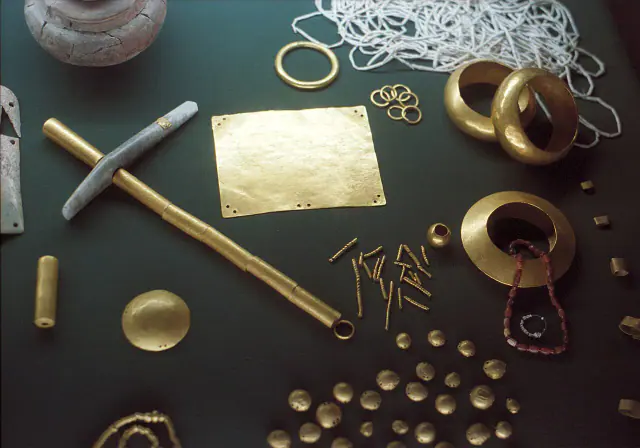
Towards 4600–4200 BCE
The Gold of Varna
Thracians
Date of the Varna funerary assemblage, not of an individual piece.
Read the record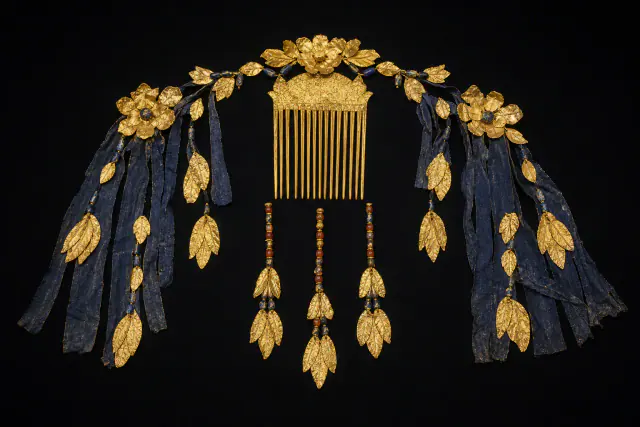
ca. 2600–2450 BCE
Puabi headdress
Sumer
Approximate dating according to the record.
Read the record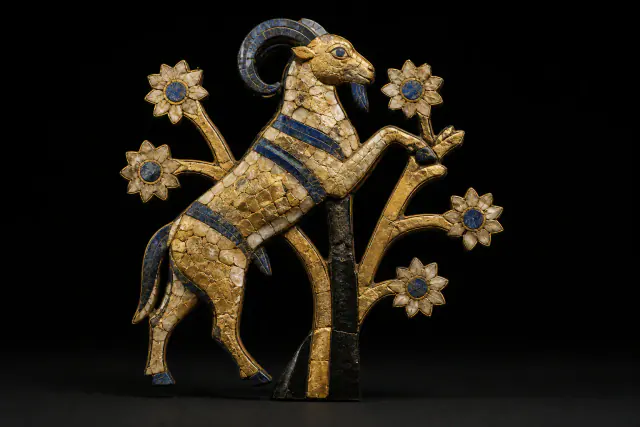
ca. 2600–2400 BCE
The goat from PG 1237
Sumer
The function as support is not resolved.
Read the record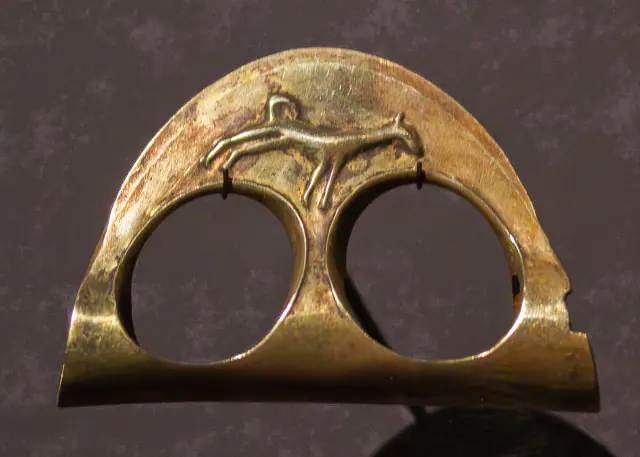
20th–18th centuries BCE
Before Phoenicia
Phoenicians
Approximate dating according to the record.
Read the record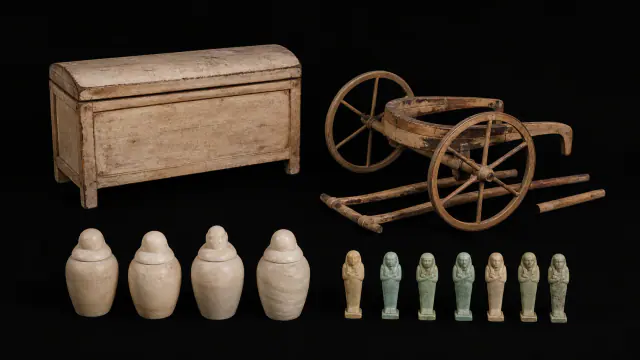
death towards 1323 BCE
Tutankhamun's grave goods
Ancient Egypt
Approximate date of burial, not date of manufacture of the entire trousseau.
Read the record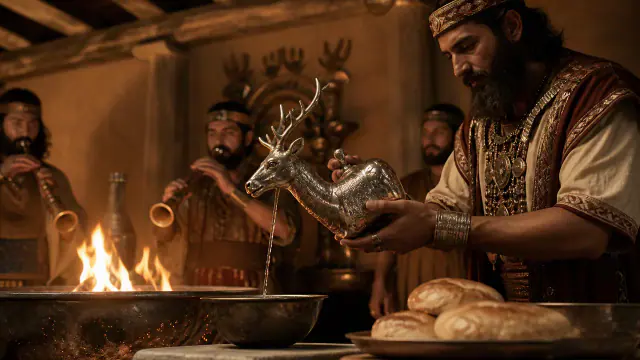
14th–13th centuries BCE
Stag Vessel
Hittites
Approximate dating according to the record.
Read the record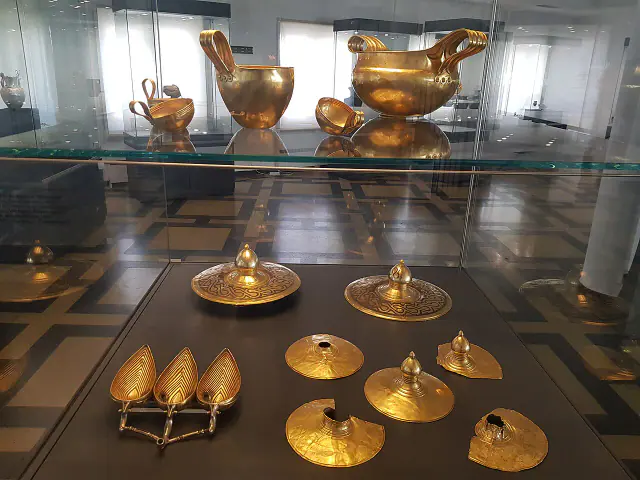
second half of the 14th century–beginning of the 13th century BCE, according to NAIM; other publications use wider intervals from the Late Bronze.
Valchitran
Thracians
The full 14th–13th centuries BCE provide broad limits for chronological ordering; the record specifies the second half of the 14th and early 13th century according to NAIM; other chronologies for the assemblage are broader.
Read the record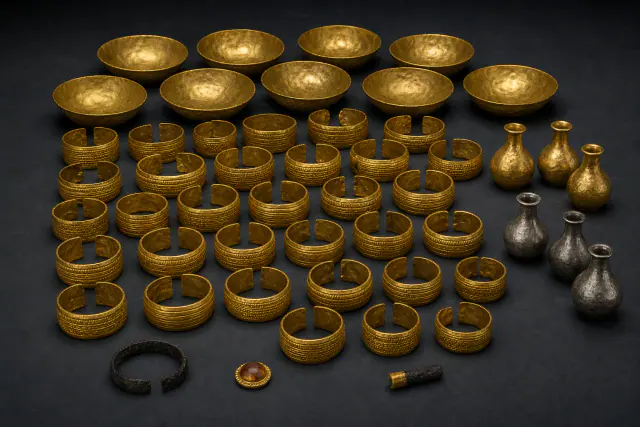
Final Bronze, c. 1000 BCE
Before the Iberias
Iberians
Date of the treasure, not of the preceding general period.
Read the record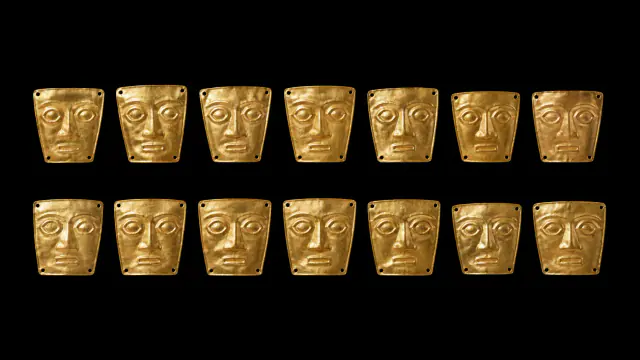
c. 800 BCE
Overlapping datesTomb 1 at Kuntur Wasi
Pre-Inca cultures
Approximate date of the funerary context.
Read the record
c. 721–664 BCE
Overlapping datesKushite king
Nubia, Kerma and Kush
Interval attributed to the specimen in the catalogue.
Read the record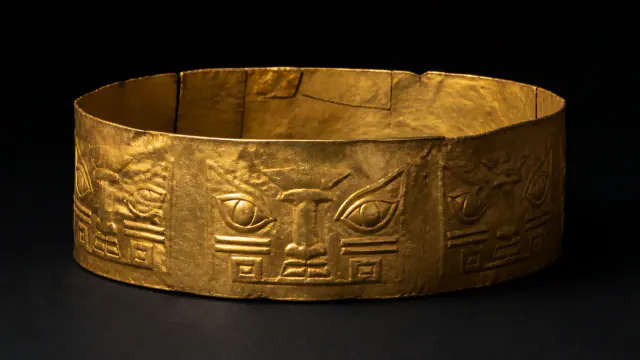 You are viewing
c. 800–550 BCE
Gold at Kuntur Wasi
Pre-Inca cultures
Approximate dating according to the record.
Current record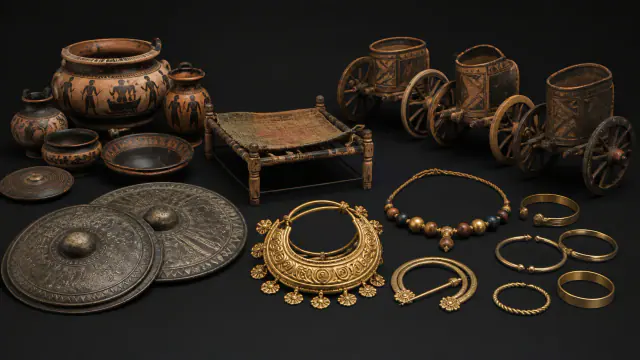
ca. 675–650 BCE
Overlapping datesRegolini-Galassi tomb
Etruscans and Rome
Date of the funerary assemblage.
Read the record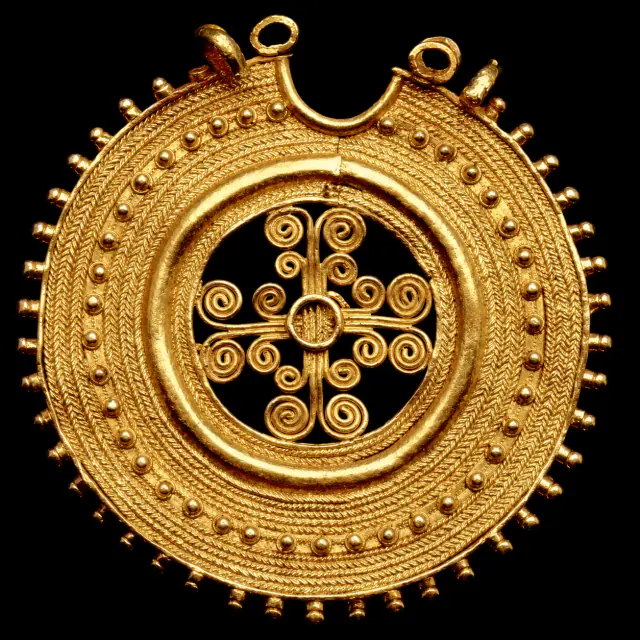
6th century BCE
Overlapping datesCondomina Earring
Iberians
Approximate dating according to the record.
Read the record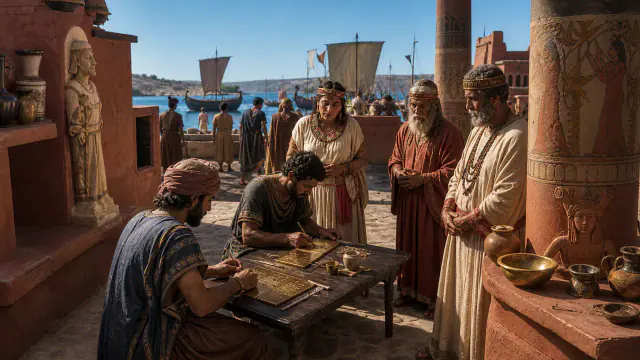
Towards 510 BCE
Uni was also Astarte
Etruscans and Rome
Approximate dating according to the record.
Read the record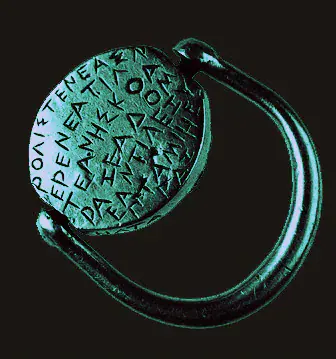
5th century BCE · chronology discussed in the bibliography
Ezerovo Ring
Thracians
The attribution to the 5th century BCE is discussed.
Read the record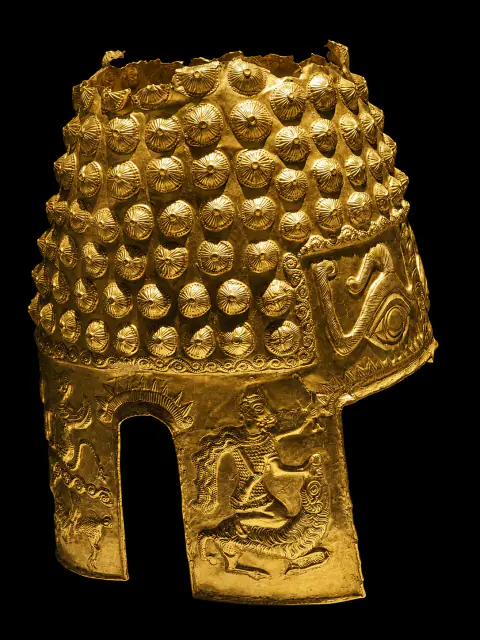
Second half of the 5th century – beginning of the 4th century BCE
Coțofenești helmet
Thracians
The full 5th–4th centuries BCE provide broad limits for chronological ordering; the record specifies the second half of the 5th and early 4th century.
Read the record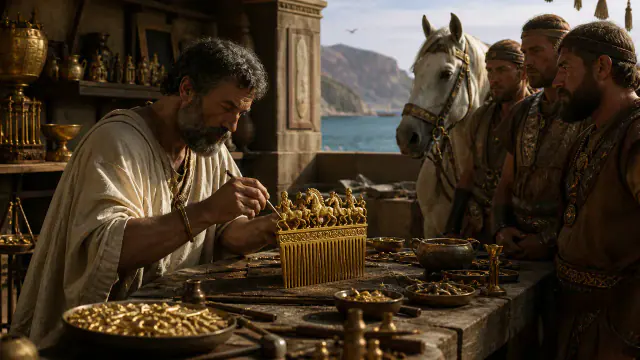
Early 4th century BCE
A battle on a comb
Scythians and Saka
The fourth century BCE is used in its full extent as an outer ordering framework; the entry specifies the beginning.
Read the record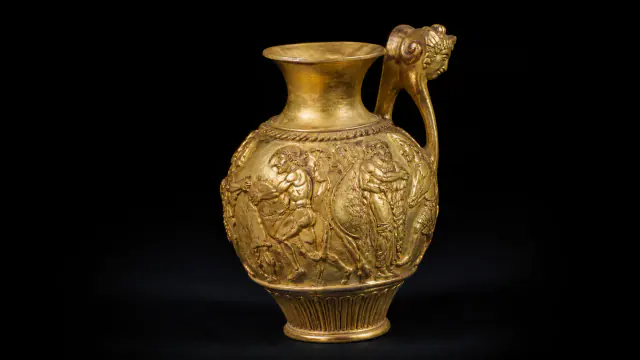
4th century BCE
The Kul-Oba vase
Greek worlds
Approximate dating according to the record.
Read the record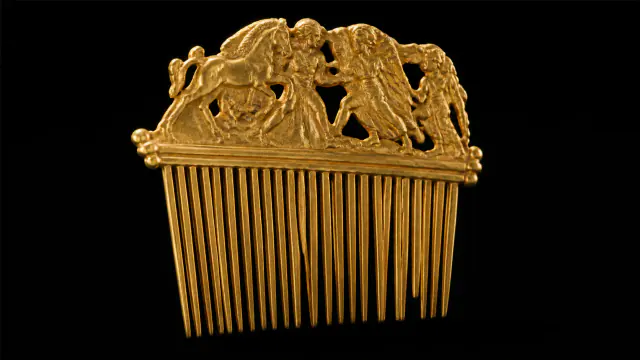
4th century BCE
The Solokha gold comb
Greek worlds
Approximate dating according to the record.
Read the record
Type introduced from the late 6th century; specimen from the 4th century BCE.
The archer in gold
Achaemenid Persia
Century of the specimen; not an earlier introduction date of the type.
Read the record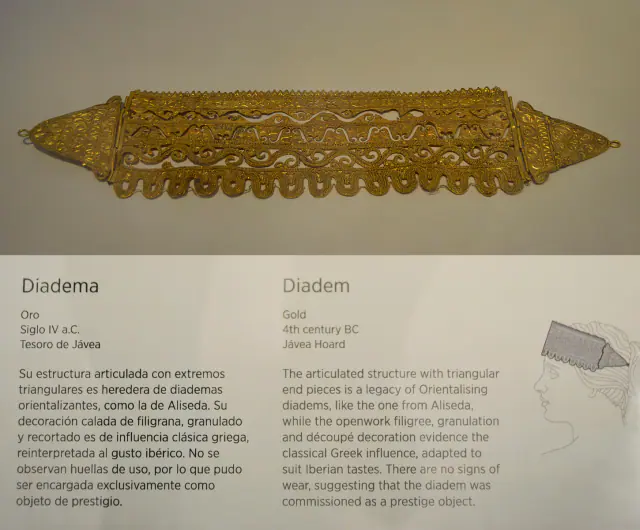
4th century BCE
Treasure of Jávea
Iberians
Approximate dating according to the record.
Read the record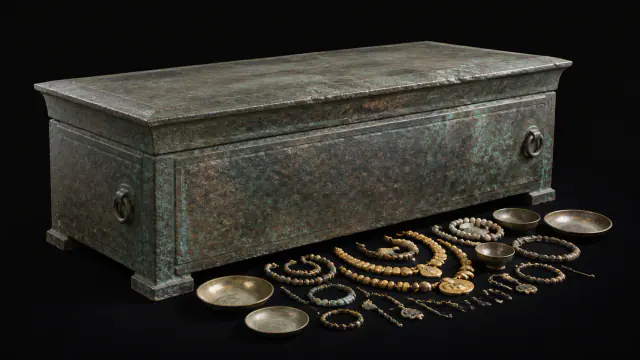
c. 350 BCE
Susa grave goods
Achaemenid Persia
Date of the funerary assemblage.
Read the record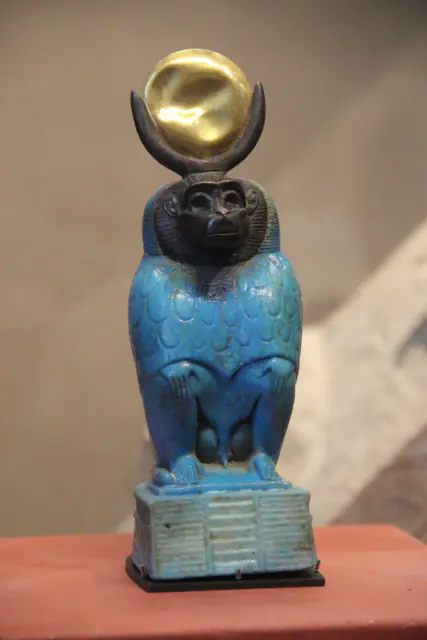
664–30 BCE
Overlapping datesThoth in the form of a baboon
Ancient Egypt
Approximate dating according to the record.
Read the record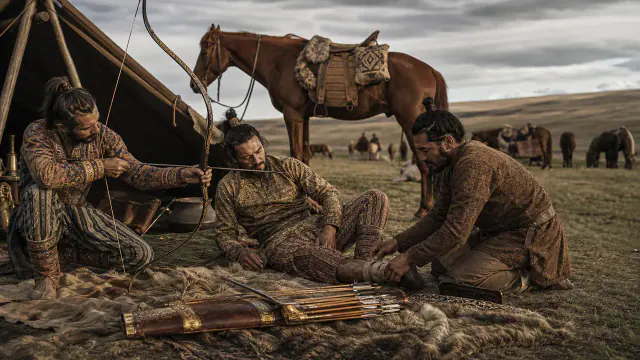
Second half of the 4th century BCE
Faces of the Steppe
Scythians and Saka
Approximate dating according to the record.
Read the record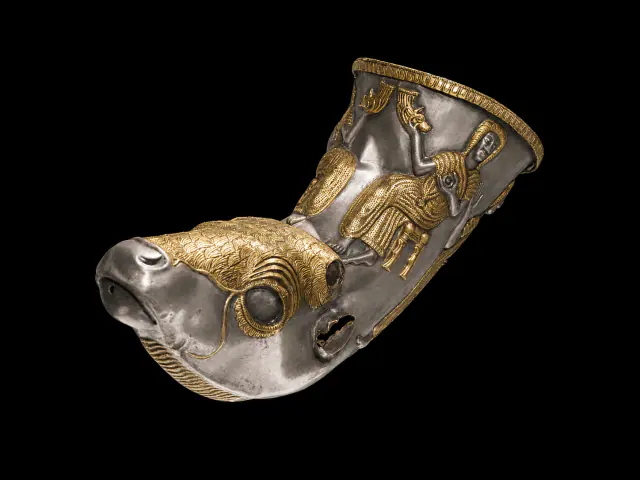
Second half of the 4th century BCE
Poroina Mare Rhyton
Thracians
Second half of the 4th century BCE; the specific ritual is not known.
Read the record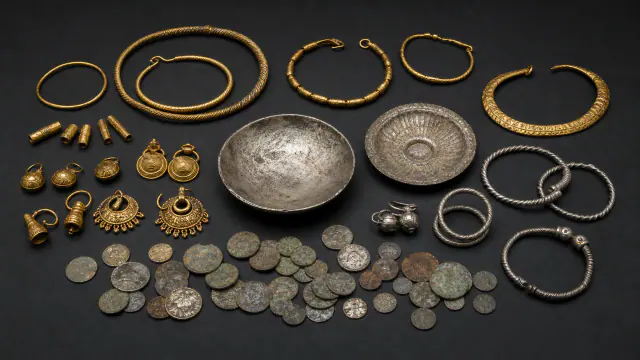
Jewellery from the 4th–3rd centuries BCE; concealment at the end of the 3rd century BCE.
Treasure of Cheste
Iberians
Interval of the jewellery, not of the later concealment.
Read the record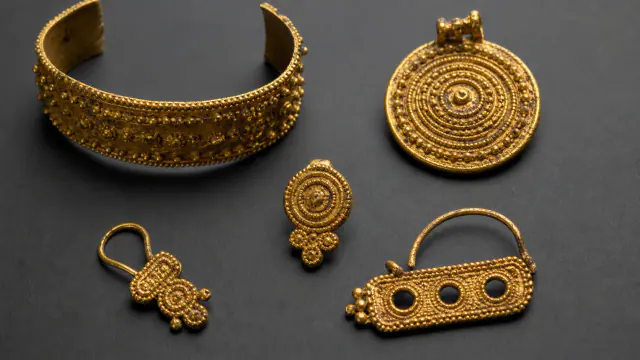
Jewellery: 5th–2nd centuries BCE; concealment probably around 80–73 BCE.
Marina Alta Hoard
Iberians
Interval of the jewellery, not of the Sertorian concealment.
Read the record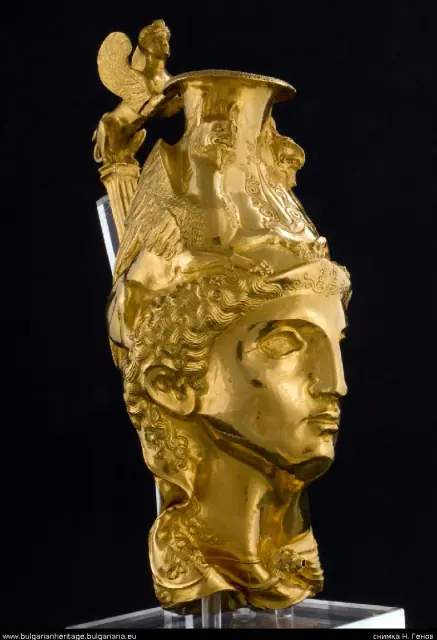
late 4th century – early 3rd century BCE, towards 300 BCE
Panagyurishte
Thracians
«Towards 300 BCE.» It is explicit orientation of the whole.
Read the record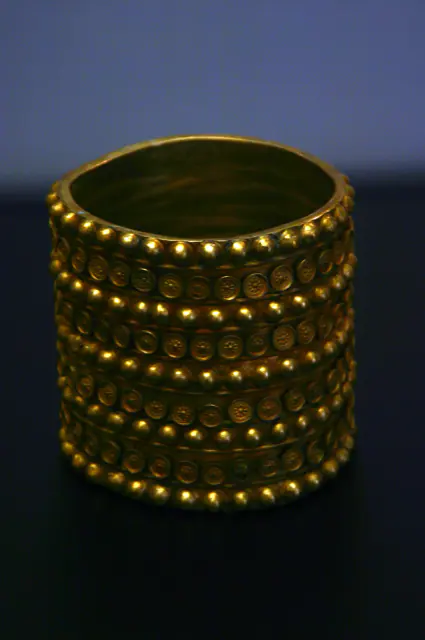
3rd century BCE
Mairena Hoard
Iberians
Approximate dating according to the record.
Read the record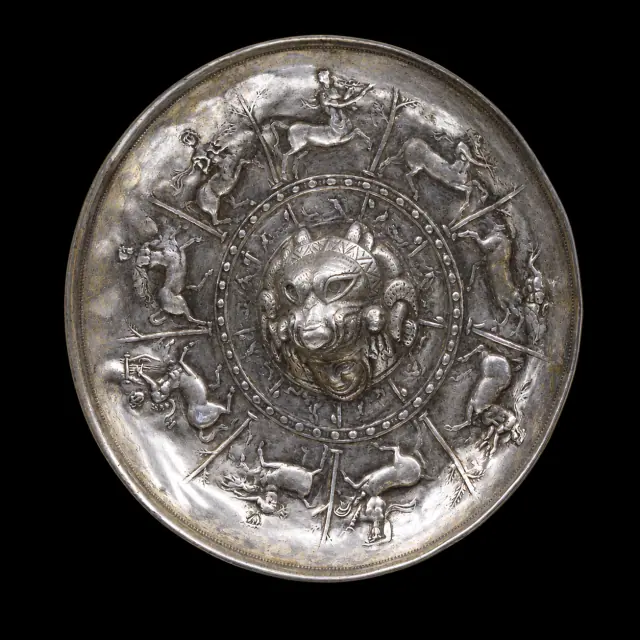
Second half of the 2nd–beginnings of the 1st century BCE
Patera from Perotito
Iberians
The full 2nd–1st centuries BCE provide broad limits for chronological ordering; the record specifies the second half of the 2nd century and the early 1st.
Read the record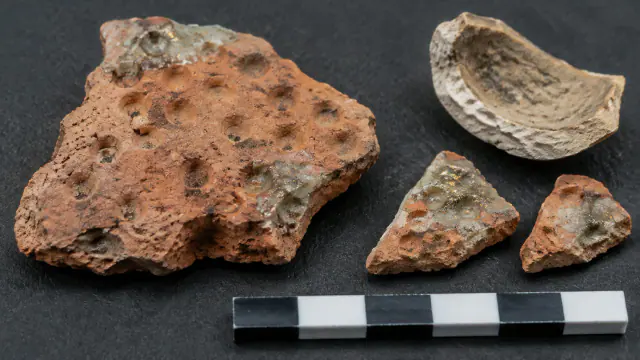
9th–11th centuries CE
Moulds for gold
Mande Worlds
Date range of the archaeometallurgical material in its documented context.
Read the record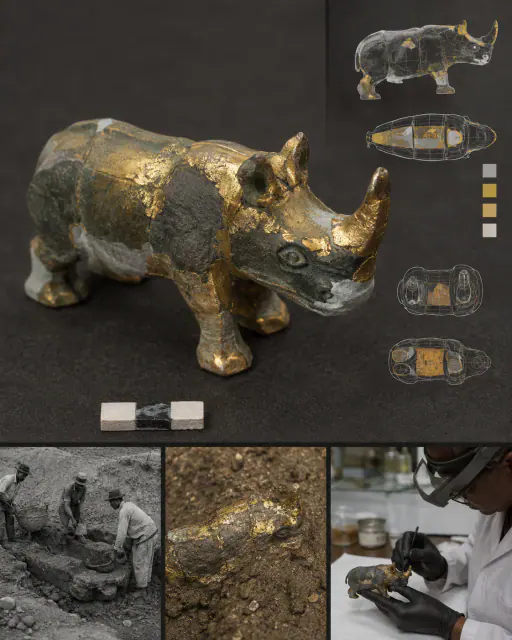
ca. 1220–1290; found in 1933
Gold rhinoceros
Bantu-speaking worlds
Date of the object/context; 1933 is the year of discovery.
Read the record
A closer look
About 1 min to read · 1 section. Further reading and sources · free access. Editorial review recorded: .
A replica that also reproduces the metal
The replicas of the Kuntur Wasi objects documented by the University Museum of Tokyo did not merely copy outlines. The team carried out elemental analysis and reproduced differences in the proportion of gold in different parts of the pieces. This decision shows material variations relevant to understanding manufacture. The crown of fourteen faces, from tomb 1, thus became a problem of form and composition. An informed reproduction allows explaining technical procedures, always identifying itself as a replica and without substituting the study of the original.
Where it is held
Kuntur Wasi Museum
Item or group in the record · Documented collection
The Ministry of Culture documents the crown, its temporary loan in London and its return to the Kuntur Wasi Museum in March 2022.
The holding institution is documented; public display may change. Check its official record before visiting.
Sources and references
Did you enjoy this exhibit?
Your opinion helps us improve the museum. You can change it whenever you like.
Loading your rating…