
 English
 Español
 Français
 Italiano
 Deutsch
 Русский
 Português
 Polski
 Română
 Svenska
 Norsk bokmål
 Suomi
 Türkçe
 العربية
 简体中文
 한국어
 हिन्दी
 Ελληνικά
09 · Archaic Rome · a capital made by connected hands
Rome learns in terracotta
Etruscan artisans in the Capitoline temple
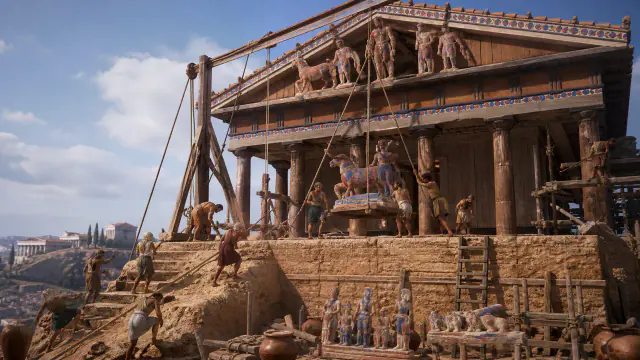
Roman authors attributed the sculptures of the first Capitoline temple to an artisan from Veii.
Museum documentation · free public access, no account required.
Generated reconstruction · Declared visual hypothesis
Declared visual reconstruction for museographic context; it is not a photograph of the original nor documentary evidence.
History and context
The first great temple of Jupiter Capitolinus employed the Italian tradition of podium, wood and architectural terracotta. Roman authors attributed its sculptures to the artist Vulca of Veii, a memory of specialists who crossed urban boundaries.
We do not have a payroll of workers nor can we assign each fragment to an individual. The tradition matters because Rome remembered that its monumental image did not arise in isolation: it depended on techniques and repertoires developed in Etruscan cities.
The ETRU museum preserves the tradition according to which the generation of coroplasts from Veii associated with Vulca received commissions for the Capitoline. This memory recognises the mobility of specialists between an Etruscan city and Rome at the end of the sixth century BCE.
Hollow and polychrome terracottas reduced weight on wooden beams and could be manufactured in sections. The monumental programme was technologically Italian and Mediterranean at once, not an incomplete version of a Greek marble temple.
Evidence and interpretation
Documented fact: the Etruscan influence on Roman art, religion and technology is widely documented; terracottas were central in Italian temples. Interpretation and caution: Vulca and specific commissions are known from later Roman literature, not from an excavated signature on the Capitoline. Expanded documentation: Ancient sources and museum tradition attribute Capitoline sculptures to Vulca or Veientine workshops; Italian architecture used podium, wood and terracotta. Expanded interpretation and caution: No signature, worker payroll or complete set is preserved that would allow assigning each piece to Vulca; the attribution is literary and stylistic.
Catalogue facts
- Narrative date
- End of the sixth century BCE
- Location
- Capitoline Hill, Rome
- Material
- Wood, tufa, tiles and polychrome terracotta
- Context
- Construction of the Temple of Jupiter Optimus Maximus
- Curatorial reading
- The documented fact and its interpretation appear separately in the evidence block.
- Specialty
- Coroplasts: sculptors and manufacturers in terracotta
- Mobility
- Commissions remembered between Veii and Rome
- Structure
- Wooden roof protected and decorated with terracottas
- Documentary coverage
- 4 museum, heritage, primary corpus or research sources for this stop.
A SHARED TOPIC, DIFFERENT MOMENTS
Objects connected through time
Follow a topic across the collections. A shared tag is a way to compare objects, not proof that one culture influenced another.
The order uses the midpoint of each approximate date range; ranges can overlap. Spacing does not represent elapsed time. Swipe, scroll or use the arrows. With the sequence focused, use ← / →, Home or End.
THE CURRENT OBJECT
Its date is not sufficiently established to place it on the timeline. We keep it here, separate from the dated objects.
 You are viewing
End of the sixth century BCE
Rome learns in terracotta
Etruscans and Rome
Historical construction of the end of the sixth century BCE, not an individual date of a piece.
Current recordWood13 dated objects
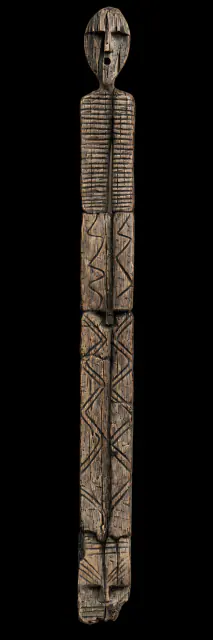
C. 10,000 BCE · approximation; debated dating
Shigir Idol
Prehistory
Approximation expressed in the record; dating debated.
Read the record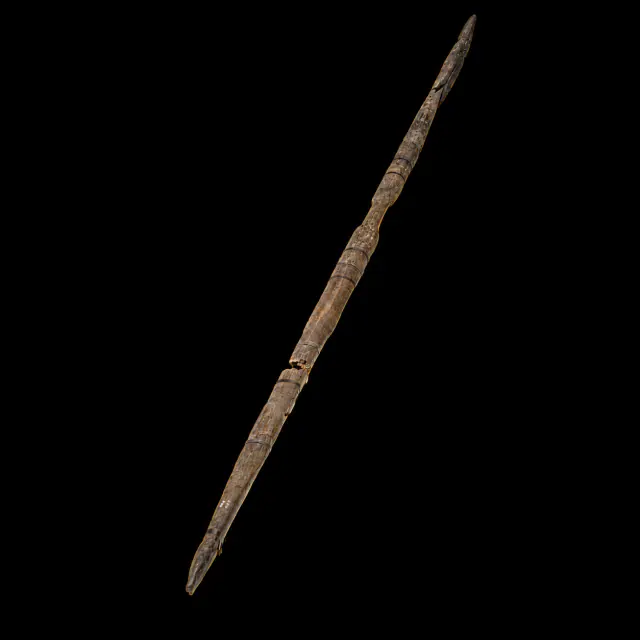
≈7000 BCE
Holmegaard bow
Prehistory
Date of the Holmegård bow; the Albuñol strings compared in the record date to ≈5300–4900 BCE.
Read the record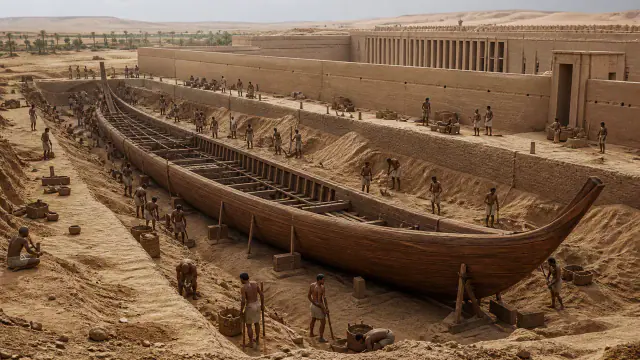
ca. 3000 BCE
Abydos Boats
Ancient Egypt
Approximate dating of the set of boats.
Read the record
2600–2400 BCE
Royal Game of Ur
Sumer
Approximate dating according to the record.
Read the record
ca. 2600–2400 BCE
Standard of Ur
Sumer
Unknown function; The scenes do not prove that it was a banner.
Read the record
1330–1295 BCE · end of the 18th dynasty
Maya's cubit
Ancient Egypt
Approximate dating according to the record.
Read the record
c. 1600–1000 BCE, in several phases
Wooden faces
Maya worlds
Deposit made in several phases; not simultaneous manufacture.
Read the record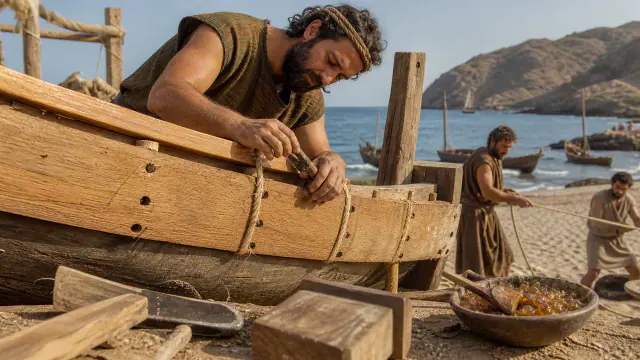
Second half of the 7th century BCE
Mazarrón 1
Phoenicians
Second half of the 7th century BCE
Read the record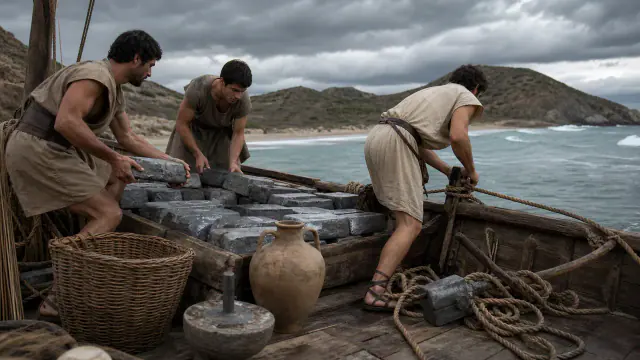
Second half of the 7th century BCE
Mazarrón 2
Phoenicians
Date of the shipwreck and its context; the cargo brings together several objects.
Read the record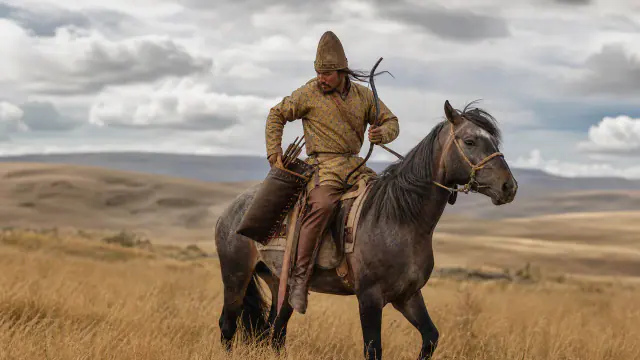
5th–4th centuries BCE
Bow and arrows in a case
Scythians and Saka
Typological set of slings; no date for a single specimen.
Read the record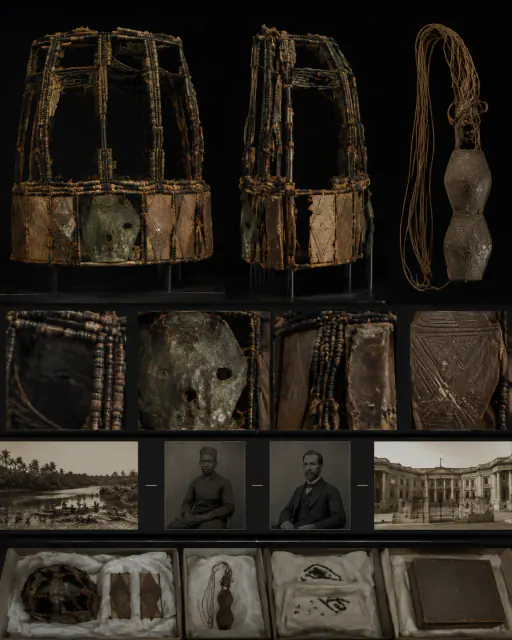
ca. 1760
Kuba ndop
Bantu-speaking worlds
Approximate dating according to the record.
Read the record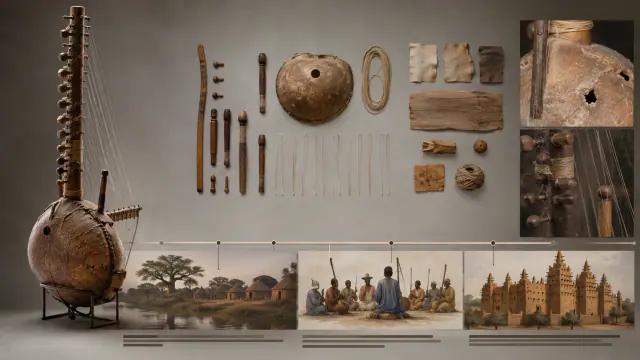
19th century
19th-century kora
Mande Worlds
The century of the surviving instrument, not the origin of the musical tradition.
Read the record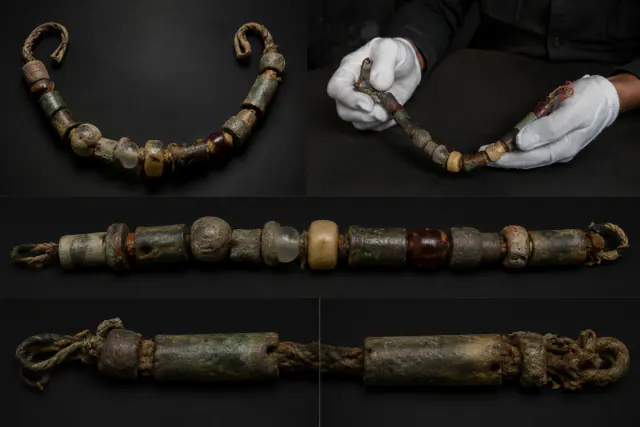
19th–20th centuries
Lukasa
Bantu-speaking worlds
Date range of the catalogued object, not the origin of the memory tradition.
Read the record
Also connected, without a comparable date (3)
These objects are not placed after the others: an unknown date does not mean a more recent object.
- Memory in performanceBantu-speaking worlds · 19th–20th centuries and transmitted practice
- Rice on stiltsYayoi Japan · Especially 1st–3rd centuries CE
- Tools in relationBatwa / Twa histories · ca. 1947
A closer look
About 1 min to read · 1 section. Further reading and sources · free access. Editorial review recorded: .
Colour was also part of the cult
Pliny the Elder relates Vulca to the image of Jupiter commissioned for the Capitoline and recalls that the terracotta statue was painted with minium red. In the same passage he defends the dignity of those ancient clay images against the later wealth of gold and silver. It is a Roman assessment written centuries after the works attributed to the artisan. The testimony documents how those materials and their colour were remembered, but it does not substitute a preserved contract nor allow exact reconstruction of the entire lost statue.
Where it is held
Museo Nazionale Etrusco di Villa Giulia
Reference material evidence · On display
The Apollo of Veii is a conserved testimony of the coroplasts' workshops; it is not presented as a piece from the lost Capitoline temple.
The holding institution is documented; public display may change. Check its official record before visiting.
Sources and references
Did you enjoy this exhibit?
Your opinion helps us improve the museum. You can change it whenever you like.
Loading your rating…