 English
 Español
 Français
 Italiano
 Deutsch
 Русский
 Português
 Polski
 Română
 Svenska
 Norsk bokmål
 Suomi
 Türkçe
 العربية
 简体中文
 한국어
 हिन्दी
 Ελληνικά
01 · INITIAL ATLAS · ORIGIN AND EXPANSION
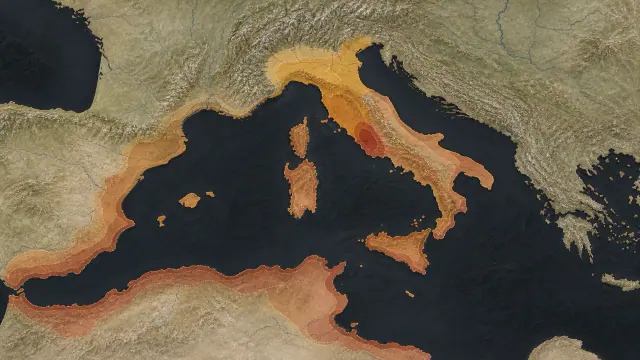
Map of Etruscans and Rome
Locate the Etruscan cities and follow Rome’s expansion across the Mediterranean.
Read the complete record → TRACEKEEPERS
HISTORY · OPEN COLLECTION
Villages and established burial grounds preceded the growth of cities. Etruscan city-states developed in Etruria, while Rome grew from connected hilltop settlements in Latium.
43 complete records · free to read, no account needed
Read freely here. A free account saves your visits inside the museum.
Before you begin · Etruscans and Rome
Etruscan cities and Rome grew in a landscape of villages, fields, necropolises and exchange routes that came before.
11th–10th centuries BCE
Villages and burials in central Italy document a human landscape prior to the historical cities.
9th–8th centuries BCE
In Etruria, centres and funerary practices grow that allow study of the beginnings of Etruscan history.
8th–6th centuries BCE
Etruria and Latium reorganise population, authority and exchanges in related but different trajectories.
At the end of the Bronze Age, central Italy brought together communities settled on hills and agricultural territories. Dwellings and funerary assemblages allow study of how they organised themselves without relying on foundation narratives written much later. In Latium, materials from the 11th and 10th centuries BCE show a world prior to the city of Rome and its tradition of kings.
During the 9th and 8th centuries BCE, the communities that archaeology calls Villanovan developed important centres in Etruria. Cremations, urns and objects deposited in tombs allow recognition of shared practices and social differences. Their location favoured control of land, metals and communications. In Latium, other communities followed their own trajectories: proximity and exchange did not mean political identity.
The concentration of population and resources contributed to the growth of Etruscan cities. Mediterranean contacts expanded techniques, goods and prestige languages. Rome also formed through the integration and transformation of earlier settlements. Its history intertwined with that of Latins, Etruscans and other neighbours, before the republican and imperial expansion that occupies much of the route.
Urns, prestige objects and urban testimonies help situate the origins of Etruria and Rome before their great monuments.
Interpreting these traces. The traditional foundation date of Rome does not replace the urban formation process documented by archaeology.
≈900–700 BCE → Rome from ≈750 · EUROPE AND AEGEAN
Access to the museum brings together the atlas and background of Etruscans and Rome. Then, seven areas organise the historical context, culture, architecture, figures and society, treasures and grave goods, beliefs and curiosities, and five historical gateways to other museums. Each file preserves narrative layers, cautions and differentiated sources.
The room combines a specific visual catalog with an audited thematic dossier. Separates facts, interpretations and cautions; the 3D volumes continue to be replaceable markers until models with provenance and license are incorporated.
The concentration of villages and the definition of stable necropolises led to urban communities: in Etruria, city-states emerged; in Latium, Rome grew from interconnected hilltop nuclei.
Villanovan describes an archaeological facies. Its relationship with later Etruscan or Latin identities must be explained as a process, not as an immediate equivalence.
Read the background and its sources →EXPLORE THE COLLECTION
Follow the museum’s curated order or go straight to a section. Every record includes its full public documentation and sources.
01 · COLLECTION
Consult the maps and initial context sheets to situate this museum in time and territory; then choose the areas that interest you most.
01 · INITIAL ATLAS · ORIGIN AND EXPANSION
Locate the Etruscan cities and follow Rome’s expansion across the Mediterranean.
Read the complete record →02 · BEFORE ETRURIA AND ROMA · 15th–9th centuries BCE
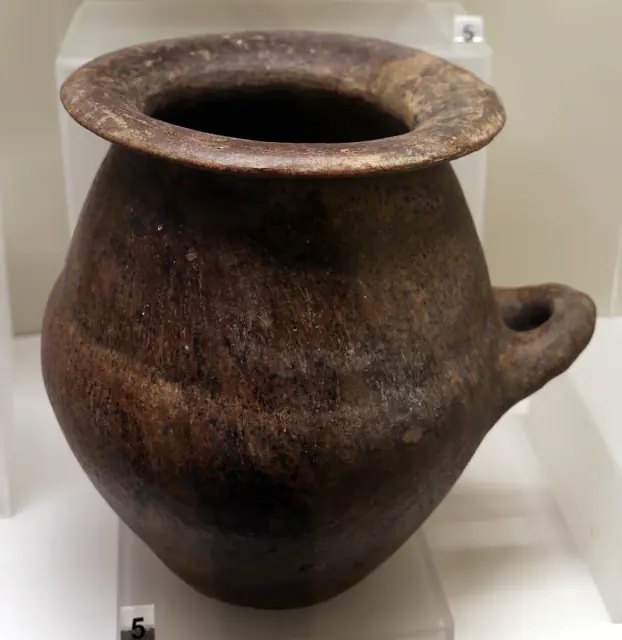
Before the Etruscan cities and Rome, the hills of central Italy were occupied by small communities.
Read the complete record →02 · COLLECTION
The first stop reconstructs the area before Etruscans and Rome; afterwards, places and processes allow entry into their history without reducing it to a starting date or an inevitable destiny.
01 · 02 · Caere · architecture for generations
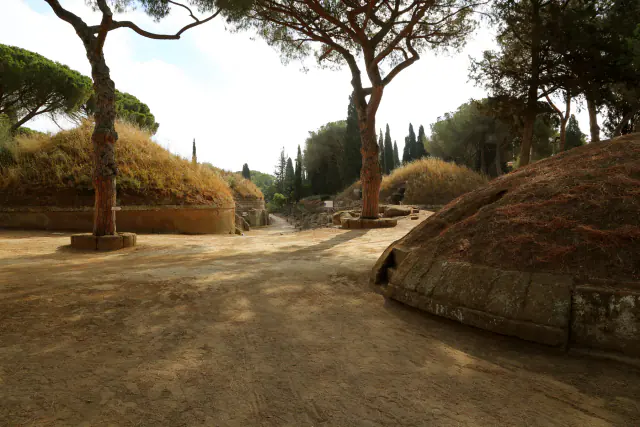
The tombs of the Banditaccia were organised in streets and many imitated rooms of a house.
Read the complete record →02 · 04 · Cerveteri · walls that guard a life
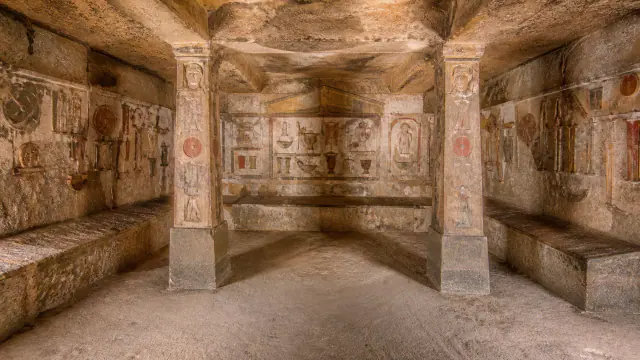
The walls of the tomb show weapons, tools and animals realised in painted stucco.
Read the complete record →03 · 12 · Writing · from the Aegean to Etruria and Rome
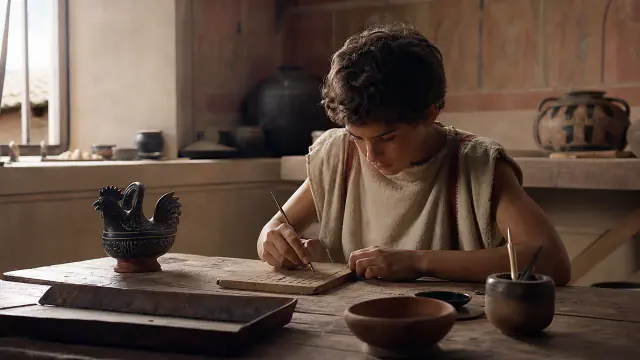
This vessel in the form of a rooster bears an Etruscan alphabet, part of the history of the Latin alphabet.
Read the complete record →03 · COLLECTION
These stops distinguish instruments, ritual actions, orality or writing and visual culture. Where there is no theatre, score or certain meaning, the museum preserves the limit.
01 · LIVING AND DOCUMENTED CULTURE · 01
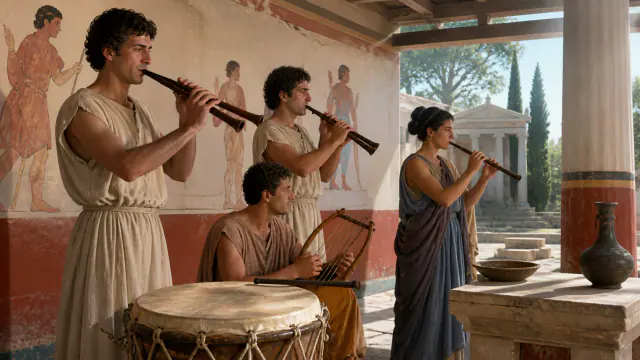
Wind, string and percussion instruments accompanied banquets, funerals, processions and spectacles.
Read the complete record →02 · LIVING AND DOCUMENTED CULTURE · 02
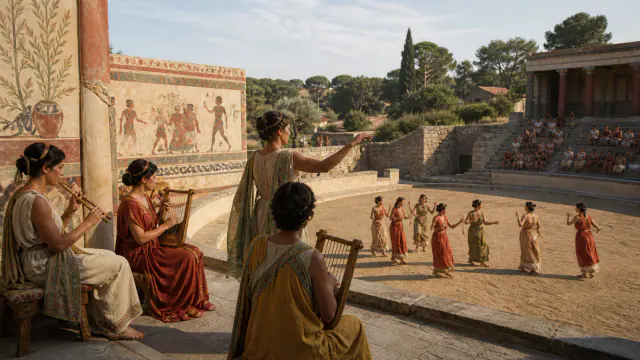
Etruscan paintings show dances and banquets; Rome later developed theatres, amphitheatres and circuses.
Read the complete record →03 · LIVING AND DOCUMENTED CULTURE · 03
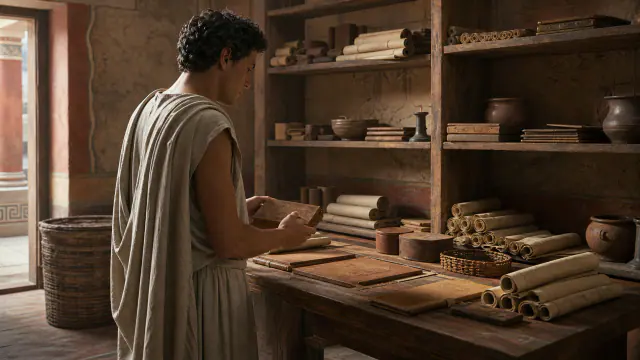
The Etruscan alphabet can be read and many formulae understood, but the conserved vocabulary is limited.
Read the complete record →04 · LIVING AND DOCUMENTED CULTURE · 04
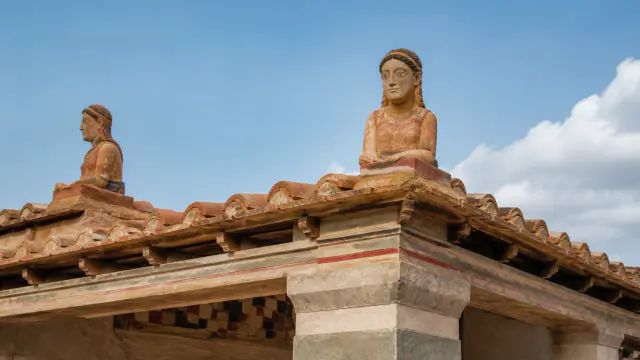
Etruscan temples and tombs had painted terracotta sculptures; Rome developed other forms of portraiture and decoration.
Read the complete record →05 · 101–125 CE · BRONZE · ROMAN VILLA
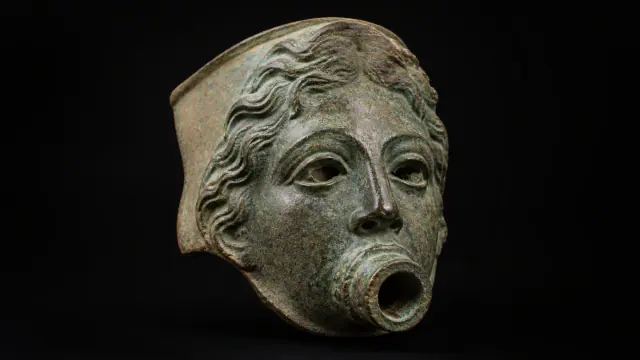
The form recalls the theatre; its certain function was to conduct water.
Read the complete record →06 · 67–100 CE · TERRACOTTA
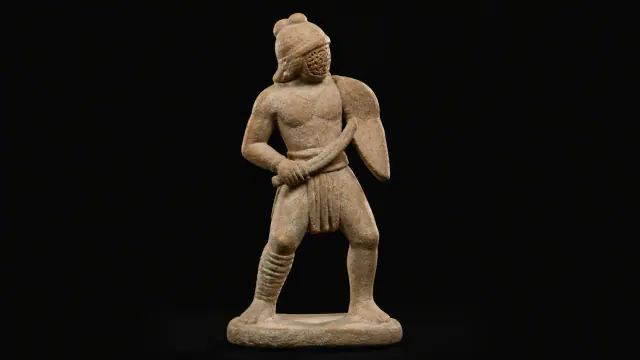
A small curved sword distinguishes the Thracian gladiator type.
Read the complete record →07 · EL RASILLO · BARAJAS · CENTURIES I–II CE · RESEARCH
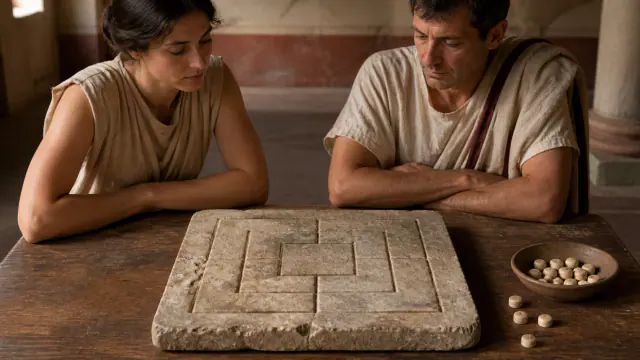
We know the design of three squares of the board, but we cannot be certain what rules were used.
Read the complete record →08 · 25–75 CE · MOULDED GLASS · PROBABLE GAUL
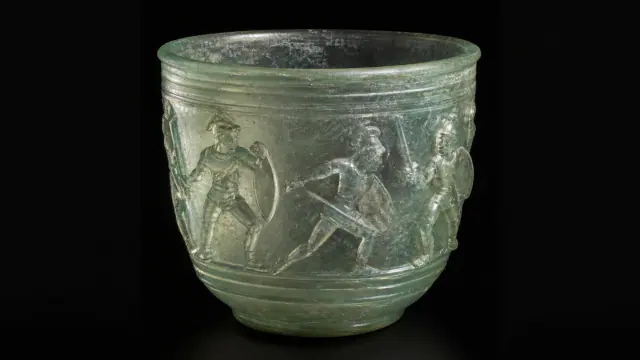
It does not represent chariot races: its scenes and names belong to gladiators.
Read the complete record →04 · COLLECTION
These architectures explain how materials, water, work and memory organized the territory without converting an elevation reconstruction into certainty.
01 · ARCHITECTURE AND LANDSCAPE · 01
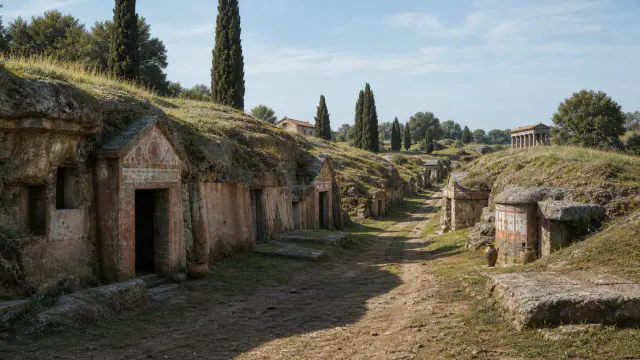
Cerveteri and Tarquinia organised tombs as houses, streets and painted chambers.
Read the complete record →02 · ARCHITECTURE AND LANDSCAPE · 02
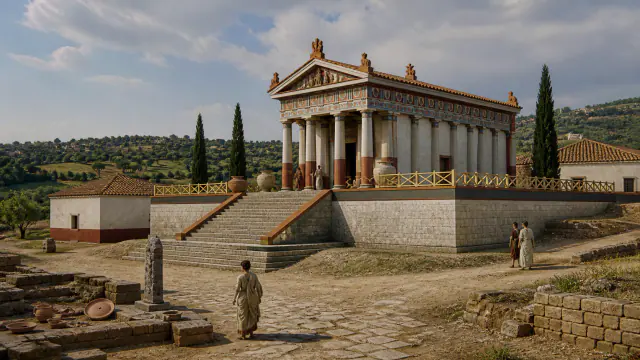
The remains of the Portonaccio temple allow the study of its buildings, terracotta sculptures and cult practices.
Read the complete record →03 · ARCHITECTURE AND LANDSCAPE · 03
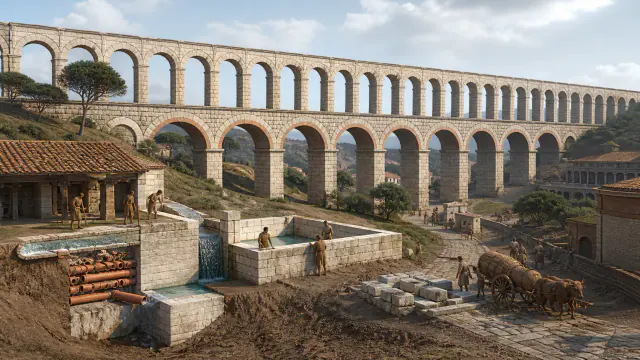
Rome multiplied vaults, aqueducts, roads and spectacle buildings.
Read the complete record →05 · COLLECTION
Known people, reconstructed voices and collective footprints. From oldest to most recent according to life, reign or scene. The periods may overlap; The voices without a determinable date close the journey.
01 · 08 · Tiber Valley · war between neighbouring cities
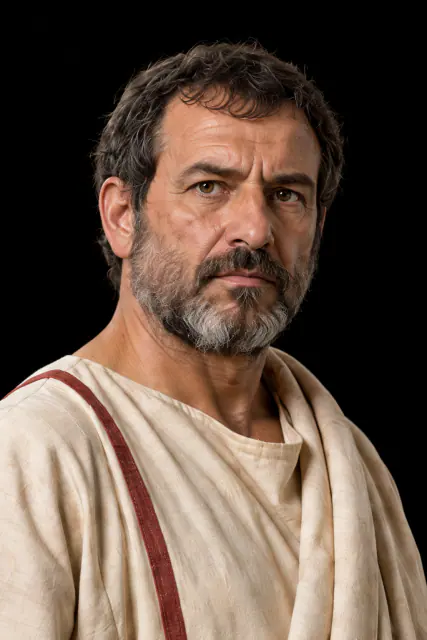
Rome’s great rival was a day’s journey away, not in a remote world.
Read the complete record →02 · 11 · Chiusi · identity in Roman times
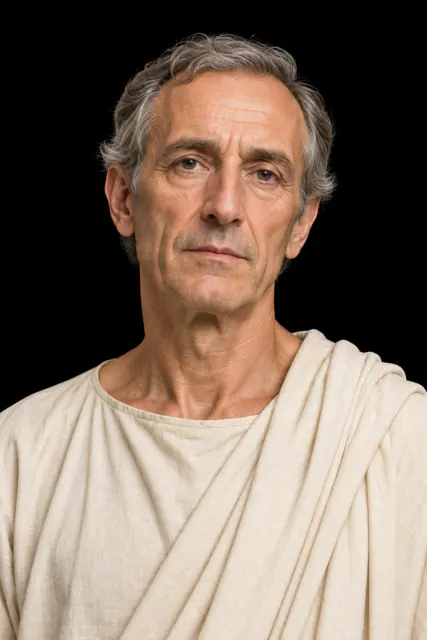
A Latin-looking name was fixed in an Etruscan inscription on an Etruscan urn.
Read the complete record →03 · CHRONOLOGICAL WING · SCULPTURE · HISTORICALLY ATTESTED FIGURE
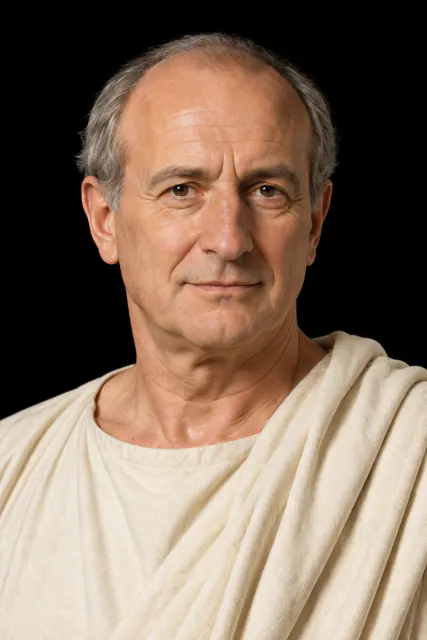
Cicero’s speeches and letters allow us to know his political ideas, relationships and concerns.
Read the complete record →04 · CHRONOLOGICAL BAR · COIN · HISTORICALLY ATTESTED FIGURE
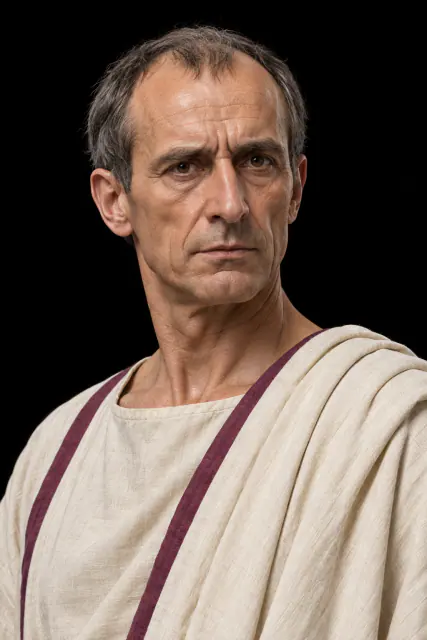
Shortly before his death, Julius Caesar authorised coins bearing his portrait and titles.
Read the complete record →05 · CHRONOLOGICAL WING · TEXT · FIGURE HISTORICALLY ATTESTED
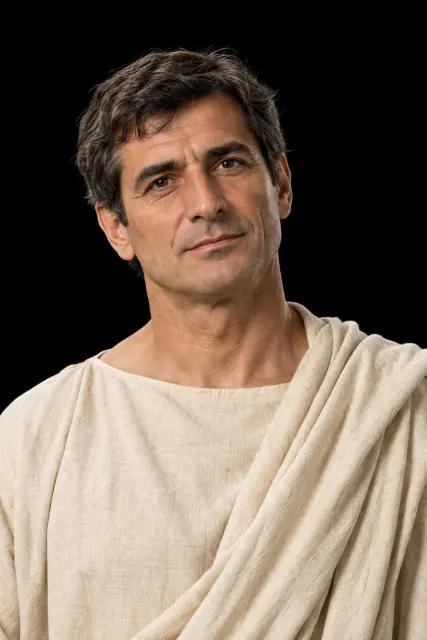
A mosaic postdating his life identifies Virgil by a verse from the Aeneid.
Read the complete record →06 · HISTORICAL FIGURE · WHO WROTE THESE HISTORIES
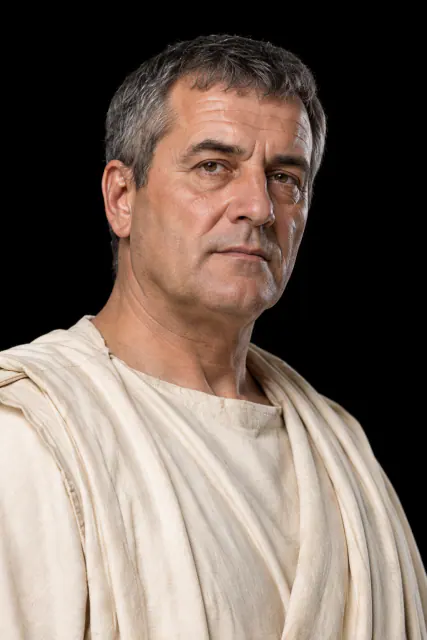
Tacitus wrote about imperial power from his experience as a senator, choosing which conflicts and behaviours to highlight.
Read the complete record →07 · CHRONOLOGICAL WING · RELIEF · HISTORICALLY ATTESTED FIGURE
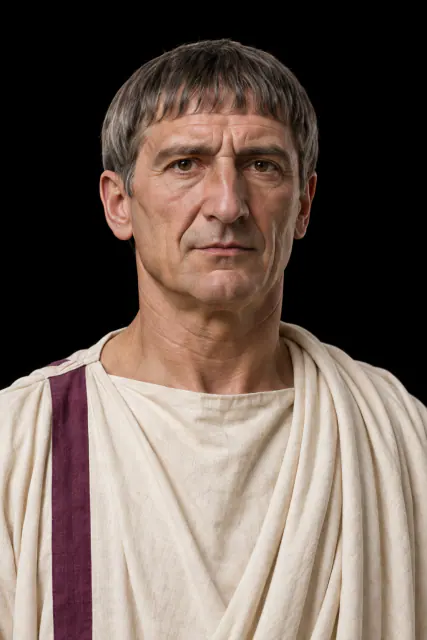
Trajan commemorated his campaigns with monuments and reliefs that present the emperor’s official version.
Read the complete record →08 · CHRONOLOGICAL WING · SCULPTURE · HISTORICALLY ATTESTED FIGURE
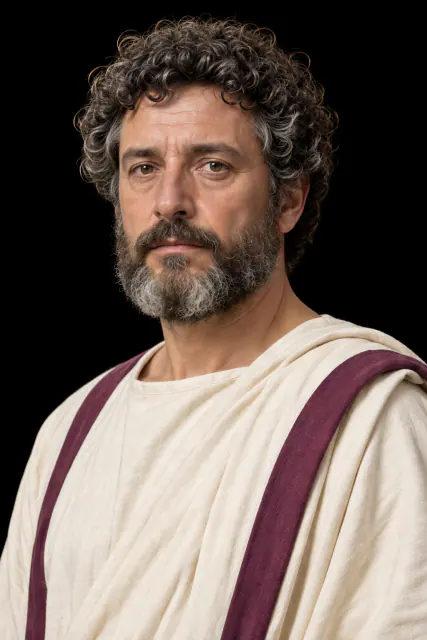
From Marcus Aurelius we have official portraits and personal reflections gathered in his Meditations.
Read the complete record →09 · CHRONOLOGICAL BAR · COIN · HISTORICALLY ATTESTED FIGURE
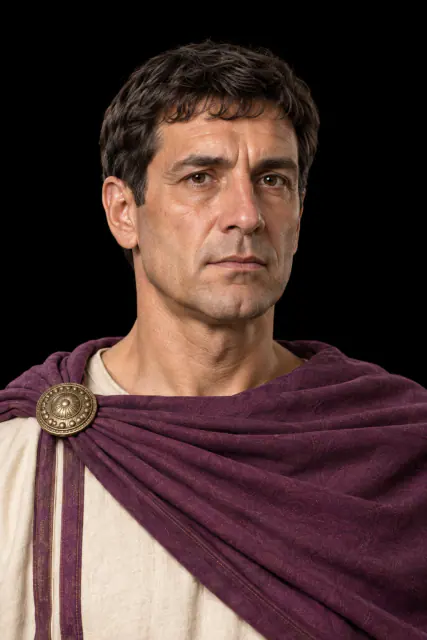
Constantine defeated his rivals, favoured Christianity and founded Constantinople.
Read the complete record →06 · COLLECTION
Concrete pieces to understand materials, decisions and knowledge systems, with separate evidence and interpretation.
01 · 01 · Cerveteri · an identity made ash
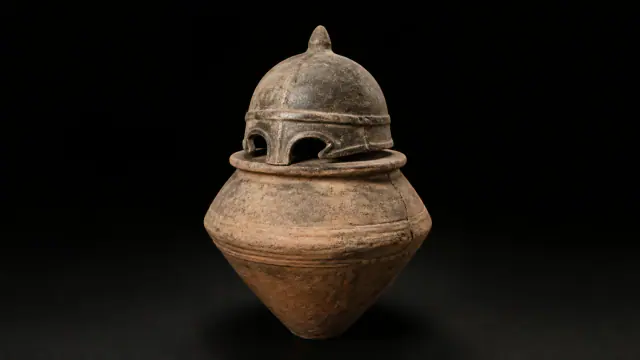
A closed vessel with a helmet-shaped lid held the cremated remains of a person.
Read the complete record →02 · 03 · Monterozzi · music facing death
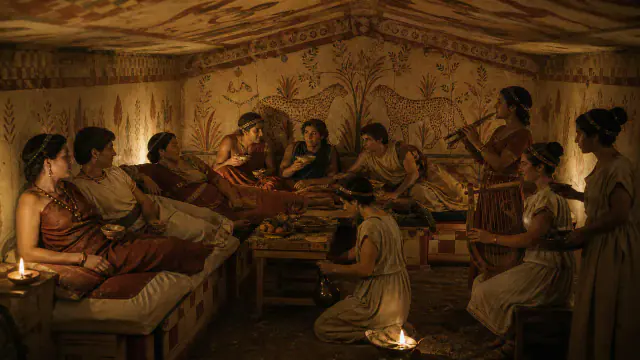
The paintings show a banquet with reclining couples, musicians and people serving.
Read the complete record →03 · 05 · Caere · a banquet modelled in terracotta
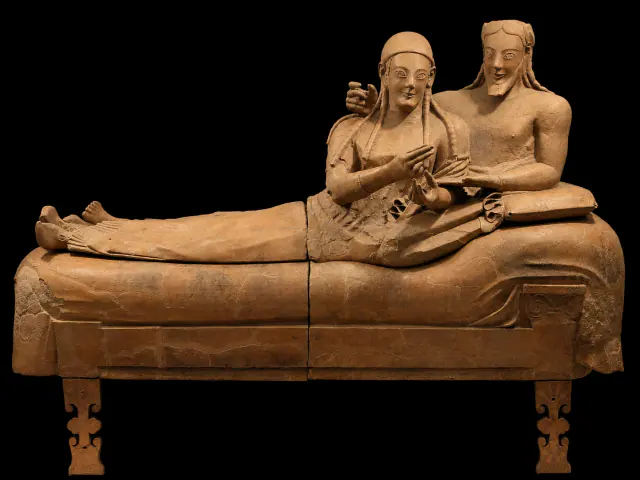
It looks like a monumental sarcophagus, but it was an urn for ashes reconstructed from hundreds of fragments.
Read the complete record →04 · 06 · Veii · sculpture against the sky
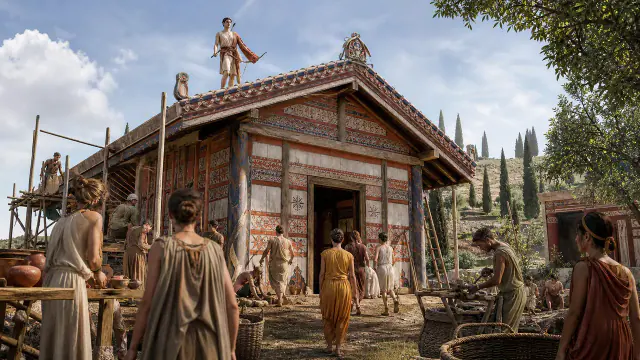
The statue of Apollo formed part of a group placed on the roof of the temple.
Read the complete record →05 · 07 · Port of Caere · two tongues before a goddess
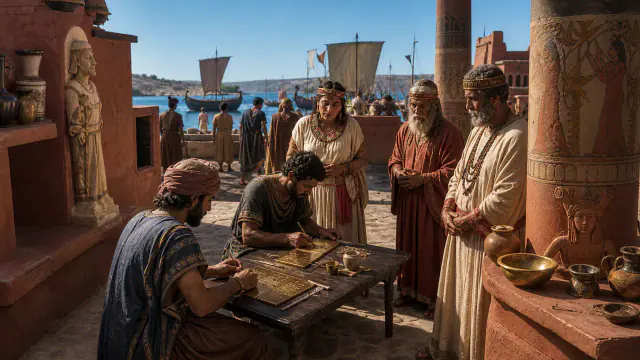
A ruler wrote his devotion in Etruscan and Phoenician, by the sea where merchants arrived.
Read the complete record →06 · 09 · Archaic Rome · a capital made by connected hands
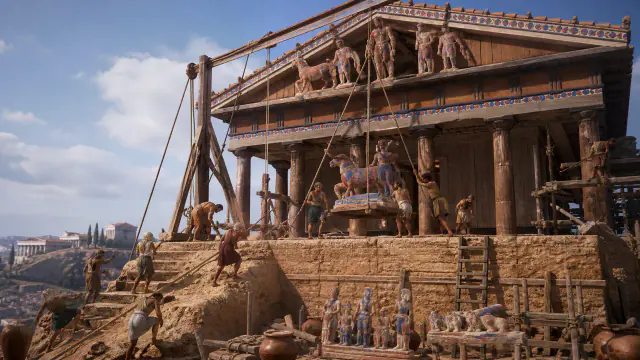
Roman authors attributed the sculptures of the first Capitoline temple to an artisan from Veii.
Read the complete record →07 · 10 · Haruspicy · reading signs in a victim
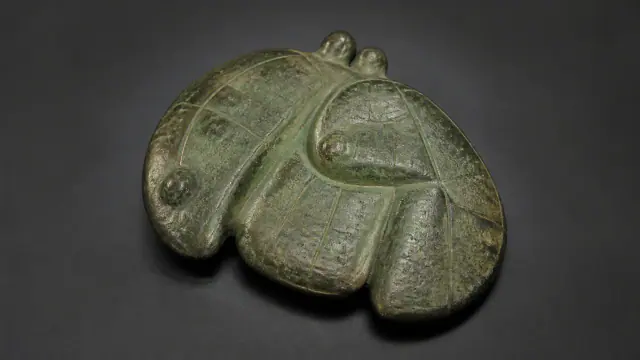
This liver model bears the names of gods and is related to the learning of Etruscan divination.
Read the complete record →08 · CENTURIES III–IV CE · IVORY · NECROPOLIS
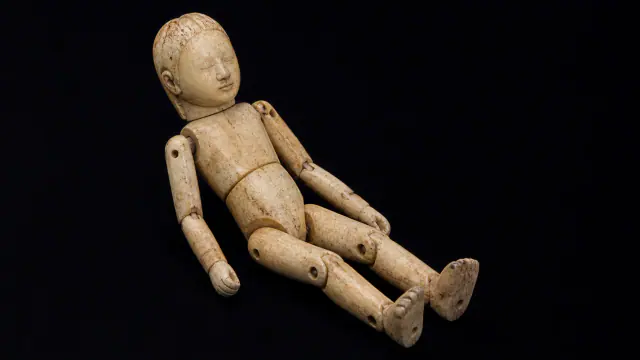
The doll has movable arms and legs and appeared in the tomb of a girl.
Read the complete record →09 · HISPANIA ROMANA · HISPANIC TERRA SIGILLATA
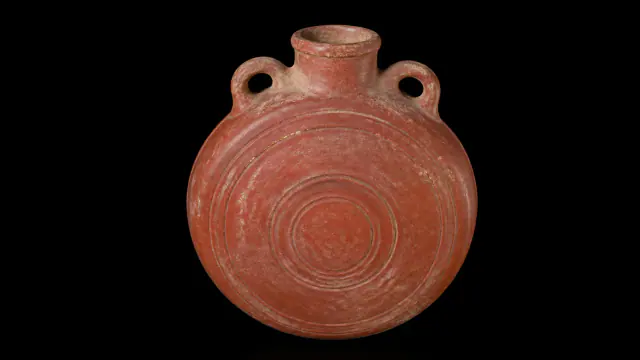
The Liédena flask has two handles and geometric and vegetal decoration on both faces.
Read the complete record →10 · LATE 1st century BCE–EARLY 1st century CE · GLASS
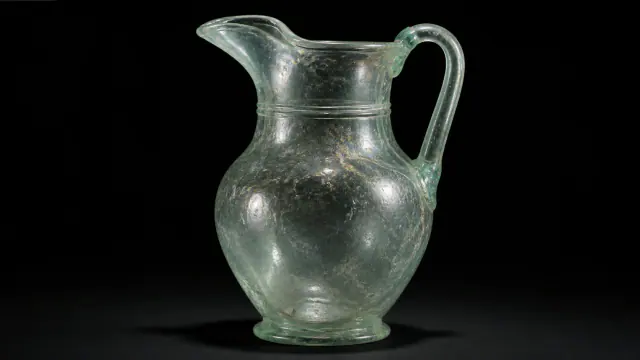
The shape of this glass jar facilitates pouring liquids, although we do not know what it contained.
Read the complete record →11 · DOCUMENTED OUTFIT · CLOSED CONTEXT OR CONTROLLED COMPARISON
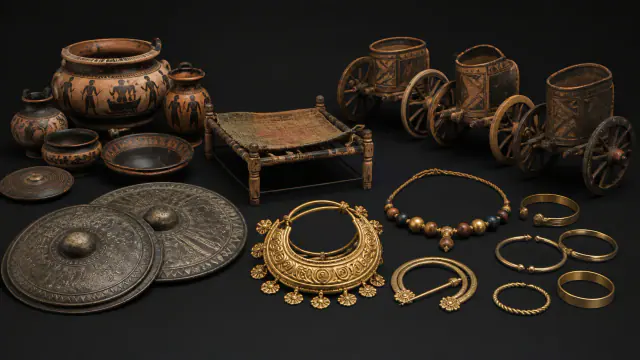
The Regolini-Galassi tomb brought together jewellery, tableware, shields and chariots alongside two people buried in different ways.
Read the complete record →07 · COLLECTION
These cards separate what is documented from what is interpreted and recover practices, questions and details capable of changing our image of this culture.
01 · HISPANIA ROMANA · VILAUBA · 1987 DISCOVERY
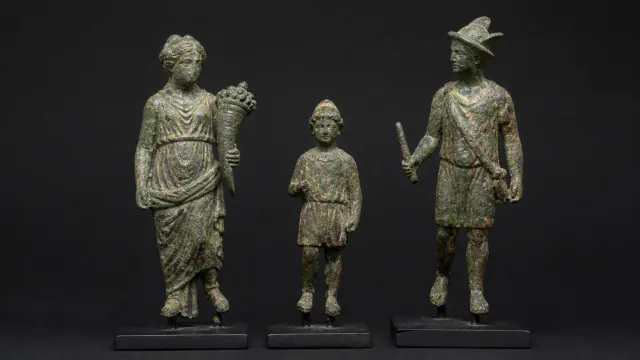
The figures of Fortuna, a Lar and Mercury formed a small domestic cult set in Vilauba.
Read the complete record →02 · ROMAN EGYPT · 3rd–4th CENTURY · MOULDED CLAY
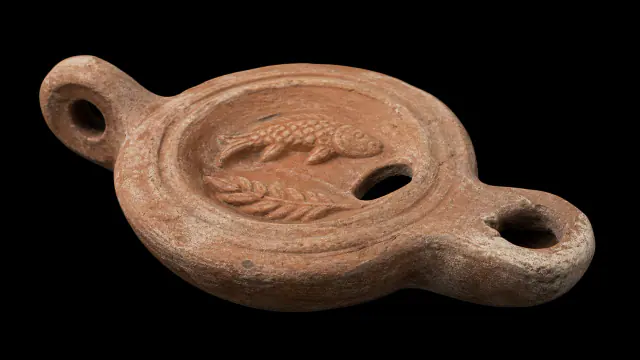
The lamp is decorated with a fish and an ear of wheat; these motifs are not sufficient to establish that it was Christian.
Read the complete record →08 · COLLECTION
Each door explains why the link exists, when it occurred, and what limits prevent contact from being converted into shared identity.
01 · DOOR 01 · AFRICA · CONTACT
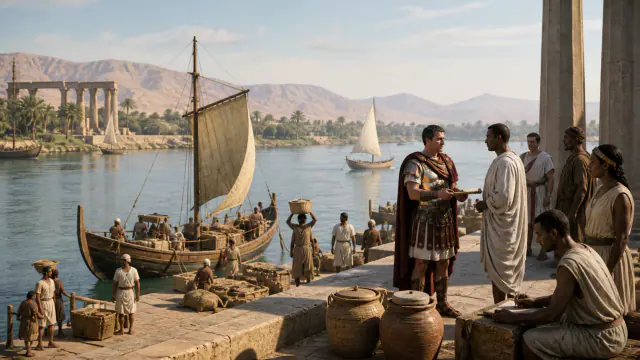
Continues in the Egypt museum
Read the complete record →02 · DOOR 02 · AFRICA · CONFLICT
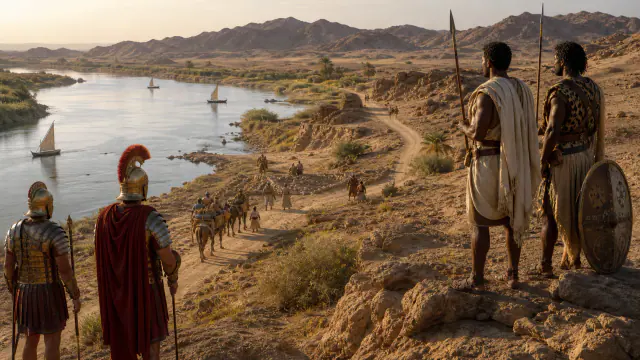
Continued at the Nubian Museum
Read the complete record →03 · DOOR 03 · ASIA · CONFLICT
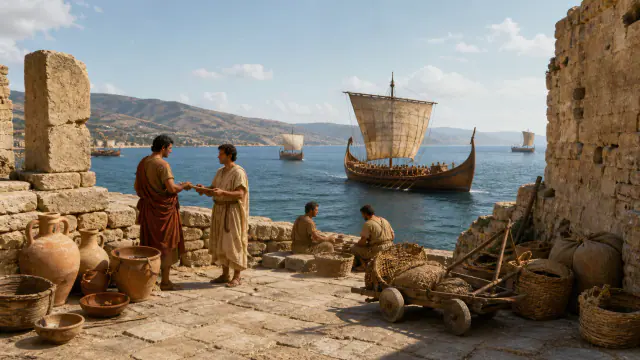
Continues in the Phenicia museum
Read the complete record →04 · DOOR 04 · EUROPE · INFLUENCE
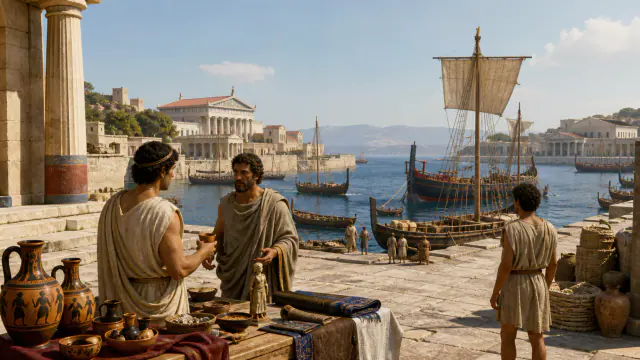
Continues in the Greek museum
Read the complete record →05 · DOOR 05 · EUROPE · CONFLICT
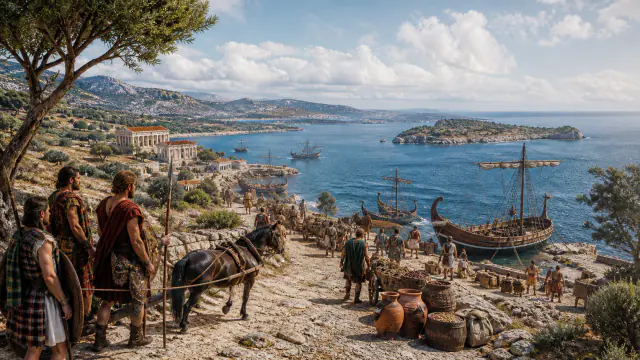
Continues in the Museum of the Celts
Read the complete record →La ciudad de muchas deudas
Discover the connected fiction project. The available Prehistory reader is in Spanish; other volumes are not presented as finished products for sale.
Explore the books →Try the available Prehistory browser alpha. Campaigns for the other cultures are still in development.
Open the game (Spanish) →Use each record’s institution and heritage links to continue your research. Country-by-country historical travel guides are planned, not yet published.
Historical travel →Discover artistic designs inspired by the collections and check each product’s availability. Museum access remains free.
Explore the collection →