
 English
 Español
 Français
 Italiano
 Deutsch
 Русский
 Português
 Polski
 Română
 Svenska
 Norsk bokmål
 Suomi
 Türkçe
 العربية
 简体中文
 한국어
 हिन्दी
 Ελληνικά
07 · Shimane · bronze to be seen and then hidden
Thirty-nine buried bells
The dōtaku deposit at Kamo Iwakura
The largest known set of Yayoi bells was placed on its side on a slope and never recovered.
Museum documentation · free public access, no account required.
Generated reconstruction · Declared visual hypothesis
Declared visual reconstruction; not a photograph of the original nor documentary evidence.
History and context
In 1996, works uncovered thirty-nine dōtaku buried together. These thin-walled bells were made for ceremony and display; some share marks and motifs with pieces from other sites, a sign of networks between communities.
We do not know why they were hidden: protection during a crisis, ritual closure or transfer of power are possibilities. The deposit preserves a collective decision whose moment was clear to its authors and opaque to us.
Twenty dōtaku measure around 45 cm and nineteen around 30 cm; many were nested one inside another and deposited on their side. The compact placement demonstrates planning, not casual loss.
Fifteen sets share a mould and some parallels appear in Kinki and Shikoku. The mould network connects workshops and communities, while the final concentration in Izumo turned travelling objects into an extraordinary local act.
Evidence and interpretation
Documented fact: the official guide of Shimane documents 39 bells, the largest single-site set in Japan, found in the deposit position. Interpretation and caution: cause, participants and expectation of recovery are not resolved. Expanded documented fact: Official sources record 39 pieces, sizes, lateral deposit, nesting and same-mould relationships. Expanded interpretation and caution: It is not known why they were buried nor if they expected to recover them; many late dōtaku were not designed to sound.
Catalogue facts
- Narrative date
- Buried towards the 1st century BCE–1st century CE
- Location
- Kamo Iwakura, Unnan, Shimane
- Material
- Cast bronze
- Context
- Deposit concentrated on a slope
- Curatorial reading
- The documented fact and its interpretation appear separately in the evidence block.
- Quantity
- Thirty-nine dōtaku constitute the largest known single-deposit set in Japan.
- Sizes
- Twenty measure around 45 cm and nineteen are close to 30 cm.
- Mould networks
- Pieces from the same mould appear at Kamo Iwakura and in other regions of western Japan.
- Documentary coverage
- 4 museum, heritage, primary corpus or research sources for this stop.
A SHARED TOPIC, DIFFERENT MOMENTS
Objects connected through time
Follow a topic across the collections. A shared tag is a way to compare objects, not proof that one culture influenced another.
The order uses the midpoint of each approximate date range; ranges can overlap. Spacing does not represent elapsed time. Swipe, scroll or use the arrows. With the sequence focused, use ← / →, Home or End.
Bronze23 dated objects
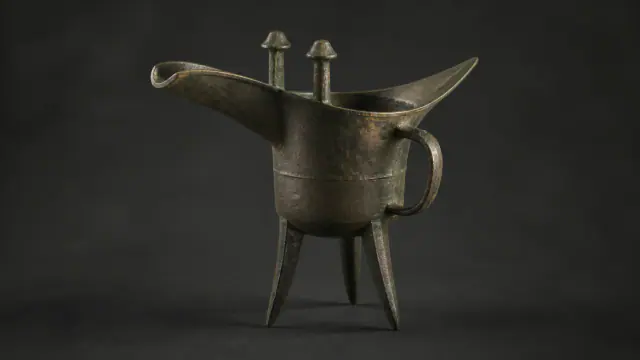
c. sixteenth century BCE
Jue
Ancient China
Approximate dating according to the record.
Read the record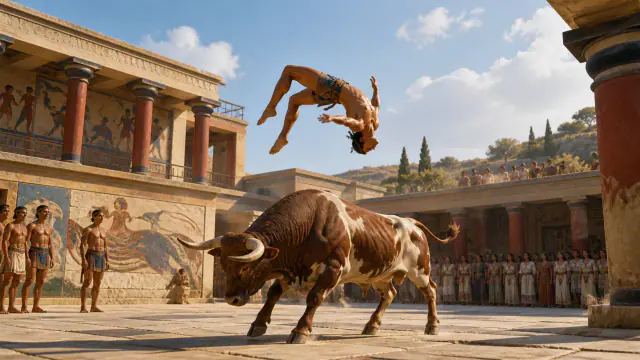
c. 1600–1450 BCE
Bull-leaping
Greek worlds
The iconography does not by itself determine a precise ritual.
Read the record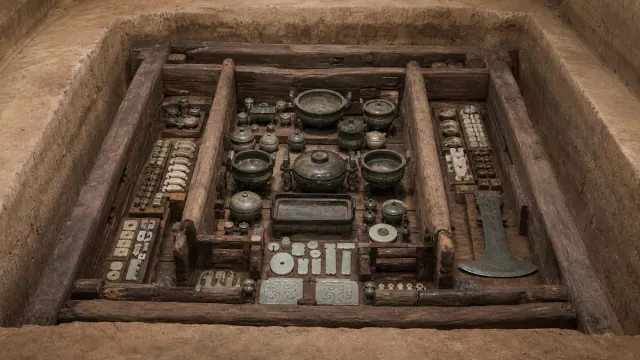
ca. 1200 BCE
Fu Hao’s burial goods
Ancient China
Approximate date of the grave goods; their objects have different histories.
Read the record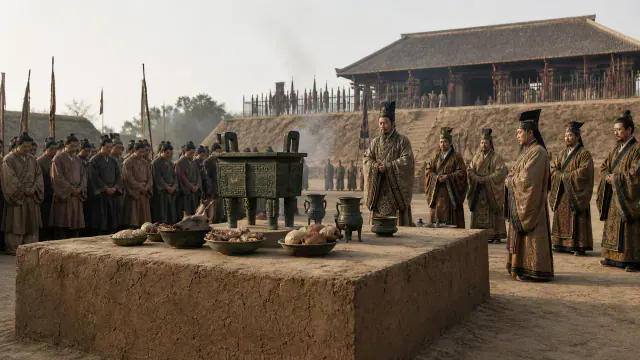
12th–11th centuries BCE
Liding
Ancient China
Approximate dating according to the record.
Read the record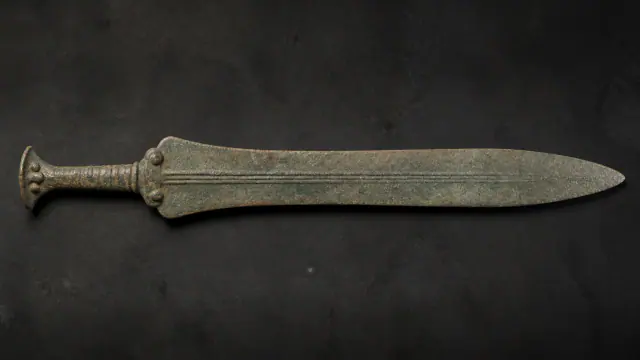
≈1200–1000 BCE · destruction of the talayot towards 790 BCE
Talayotic sword
Iberians
Proposed date of the sword, not of the later destruction of the talayot.
Read the record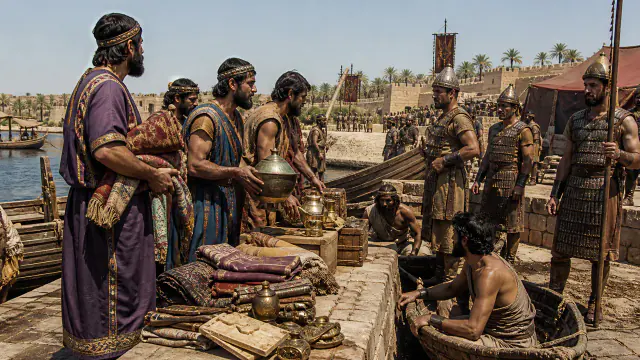
c. 848 BCE
Tribute to Assyria
Phoenicians
Approximate date of the historical scene represented.
Read the record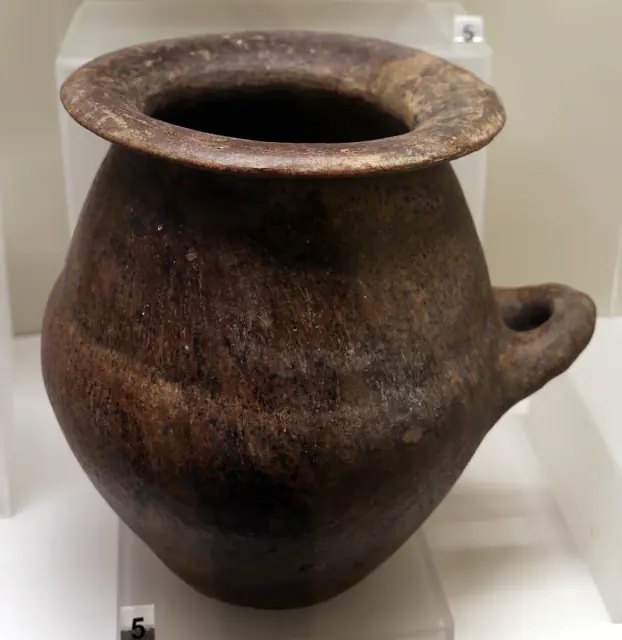
ca. 850–800 BCE
Before Etruscans and Rome
Etruscans and Rome
Approximate dating according to the record.
Read the record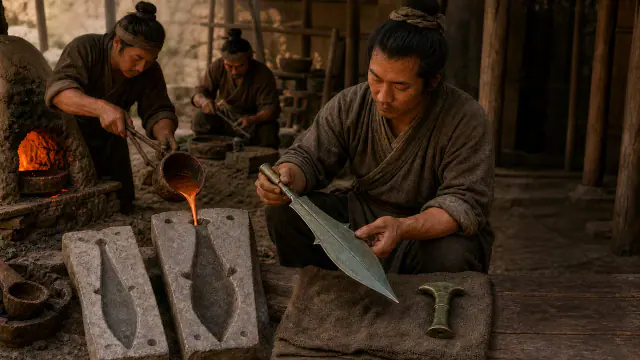
Towards 1000–400 BCE
The lute-shaped dagger
Gojoseon and early Korea
Typological framework of daggers; not a single manufacturing date.
Read the record
c. 721–664 BCE
Kushite king
Nubia, Kerma and Kush
Interval attributed to the specimen in the catalogue.
Read the record
≈530–500 BCE
The great Greek krater of Vix
Greek worlds
Approximate dating according to the record.
Read the record
6th–5th centuries BCE
Scorțaru cauldron
Thracians
Approximate dating according to the record.
Read the record
c. 500 BCE
Vix Tomb
Celtic worlds
Approximate date of the funerary assemblage.
Read the record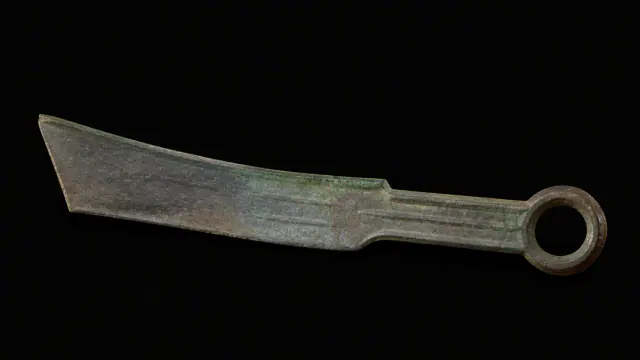
4th–3rd centuries BCE
Yan knife-money in the Gojoseon sphere
Ancient China
Approximate dating according to the record.
Read the record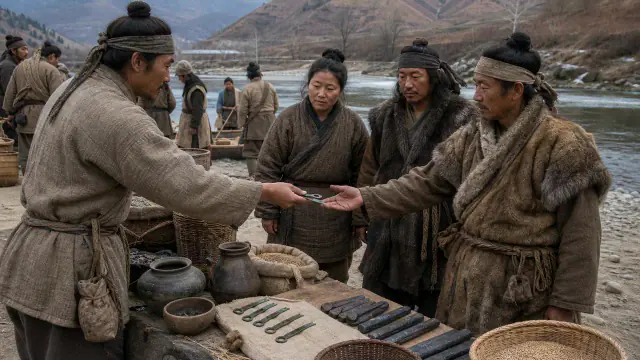
323–222 BCE
A coin with the memory of a blade
Gojoseon and early Korea
The knife form does not imply that the coin is a weapon.
Read the record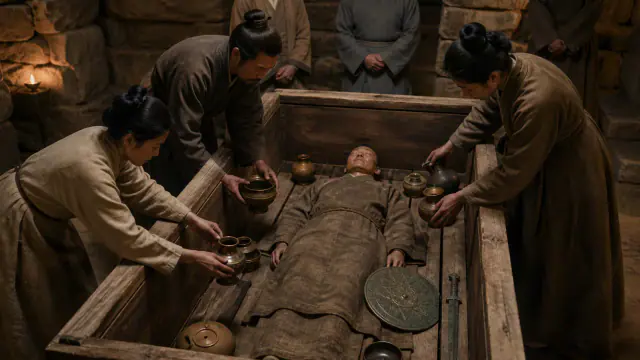
5th–1st centuries BCE
Overlapping datesThe blade became straight
Gojoseon and early Korea
Typological framework of production and deposits.
Read the record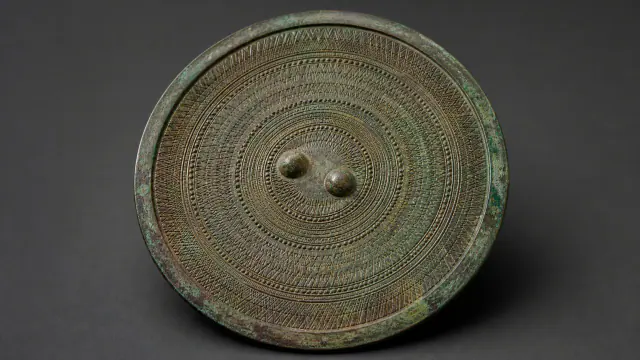
3rd–2nd centuries BCE
Geometry in very fine lines
Gojoseon and early Korea
Approximate dating according to the record.
Read the record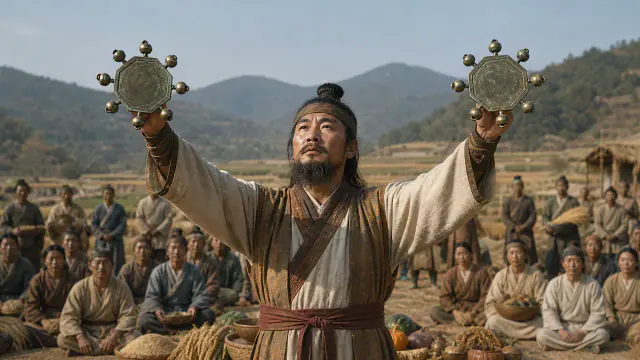
3rd–2nd centuries BCE
Eight voices in one hand
Gojoseon and early Korea
Approximate dating according to the record.
Read the record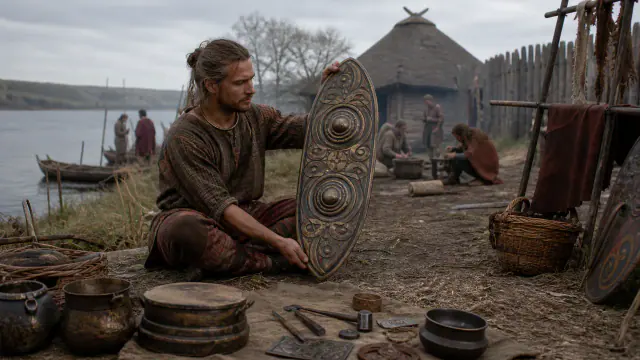
Around 350–50 BCE
Overlapping datesThe Shield that Did Not Fight
Celtic worlds
Prestige object; actual combat use is not presupposed.
Read the record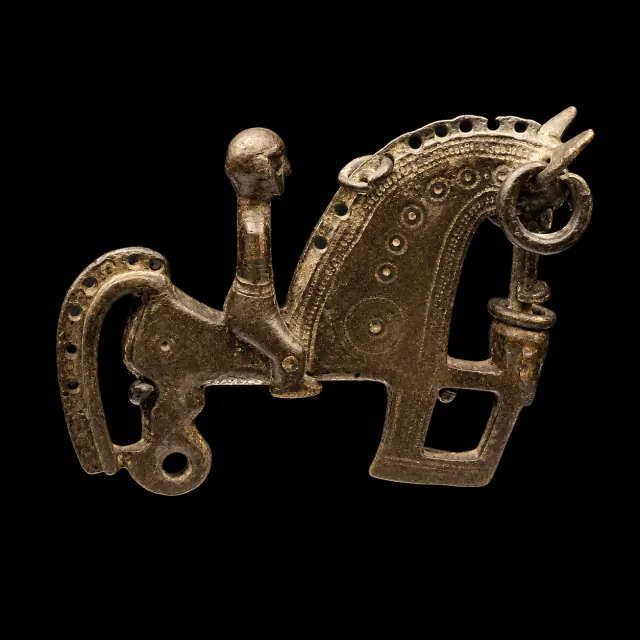
≈300–100 BCE
Overlapping datesFibula from Lancia
Iberians
Approximate dating according to the record.
Read the record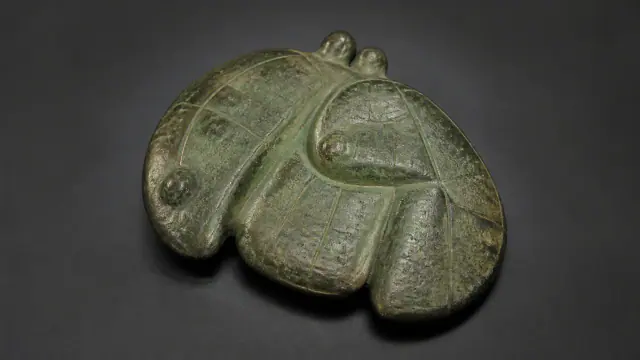
End of the second–beginning of the first century BCE
Overlapping datesA sky over the liver
Etruscans and Rome
The centuries II–I BCE are used in their full extent as an external ordering framework; the record specifies the end of the II and the beginning of the I.
Read the record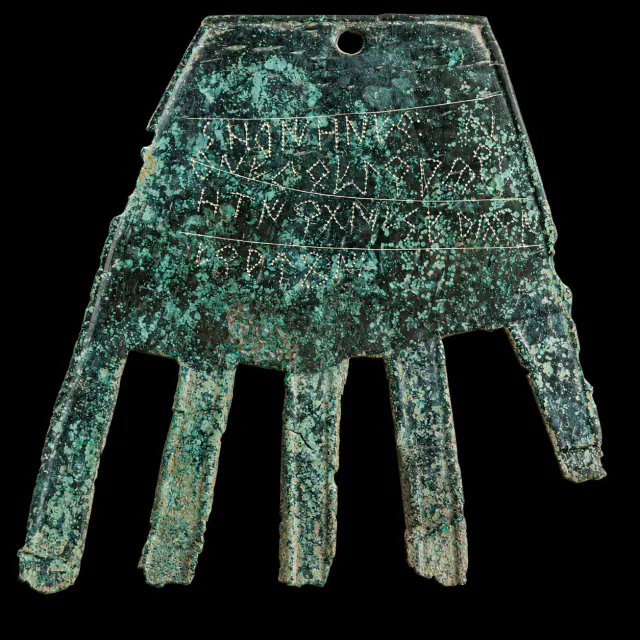
First third of the 1st century BCE
Overlapping datesHand of Irulegui
Iberians
First third of the 1st century BCE; date of the destroyed dwelling beside whose entrance it appeared.
Read the record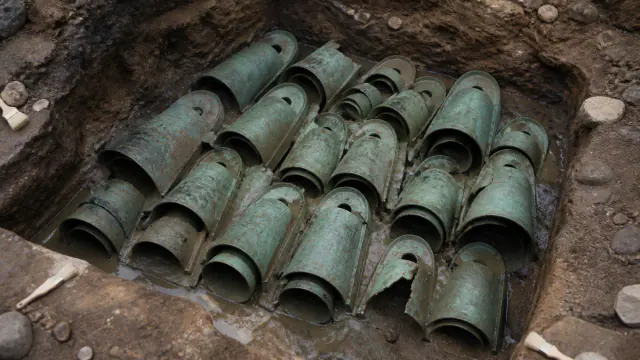 You are viewing
Buried towards the 1st century BCE–1st century CE
Thirty-nine buried bells
Yayoi Japan
Date of burial of the set; not manufacture of each bell.
Current record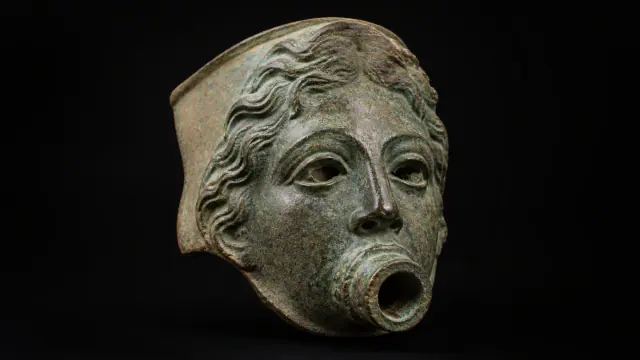
101–125 CE
Torreáguila fountain spout
Etruscans and Rome
Approximate dating according to the record.
Read the record
Also connected, without a comparable date (6)
These objects are not placed after the others: an unknown date does not mean a more recent object.
- Daegok-ri grave goodsGojoseon and early Korea · from c. 5th century BCE
- Early metallurgyAncient China · c. 1900–1500 BCE
- Four offerersIberians · Iberian period · individual dating according to catalogue
- Iron changes the frontierGojoseon and early Korea · 3rd–2nd centuries BCE
- The workshop inside the ditchYayoi Japan · 4th century BCE–3rd century CE, peak in Middle and Late Yayoi
- Weapons under the LakeCeltic worlds · Mainly 3rd–1st centuries BCE
A closer look
About 1 min to read · 1 section. Further reading and sources · free access. Editorial review recorded: .
Small marks, wide connections
Some Kamo Iwakura bells bear a saltire mark that also appears on bronze swords from the nearby Kōjindani deposit. Its presence links two distinct object assemblages and raises questions about who marked them and brought them together. Another singular decoration is a human face on the handle, with lines beneath the eyes. Interpreting it as a ritual specialist is a suggestive proposal, not a secure identification. These details show why it is worth examining surfaces and handles: relationships between deposits may be preserved in signals much smaller than the bells’ size.
- Museum · Shimane Museum of Ancient Izumo · Kamo Iwakura bellsAccess recorded: .
Where it is held
Shimane Museum of Ancient Izumo
Component of the group · Documented collection
Institutional record of the Kamo-Iwakura bronze bells.
The holding institution is documented; public display may change. Check its official record before visiting.
Sources and references
Did you enjoy this exhibit?
Your opinion helps us improve the museum. You can change it whenever you like.
Loading your rating…