
 English
 Español
 Français
 Italiano
 Deutsch
 Русский
 Português
 Polski
 Română
 Svenska
 Norsk bokmål
 Suomi
 Türkçe
 العربية
 简体中文
 한국어
 हिन्दी
 Ελληνικά
11 · DOCUMENTED MUSIC · KALAHARI
Musical bows
Musical bows and other instruments
Records from Botswana and Namibia allow us to know instruments and ways of playing them, with identified performers and locations.
Museum documentation · free public access, no account required.
Generated reconstruction · Declared visual hypothesis
Declared visual reconstruction; not a photograph of the original nor documentary evidence.
History and context
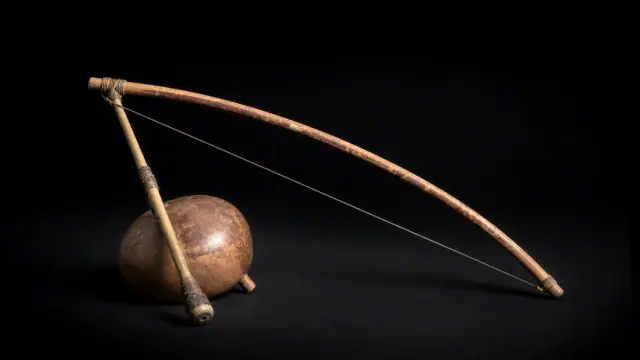
Musical bows, pluribows and other instruments appear in records from Botswana and Namibia with specific techniques.
Each track must credit performer, community, place and date. Mixing them into a ‘prehistoric’ music would erase authorship and context.
The recordings document musical bows and pluribows through concrete performances, not only as isolated objects. Technique, repertoire and occasion depend on performer and place.
Using these tracks to sonorise Prehistory would produce a fictitious continuity. The museum accredits edition and context, and does not compose a pan-San voice.
Evidence and interpretation
Instruments and performances were recorded and described. Antiquity of repertoires and pan-San identity cannot be deduced.
Catalogue facts
- Narrative date
- Twentieth-century ethnomusicological documentation
- Location
- Botswana and Namibia · situated records
- Material
- Musical bows and recordings
- Context
- Sound heritage
- Curatorial reading
- The documented fact and its interpretation appear separately in the evidence block.
- Sound archive
- Smithsonian Folkways
- Rule of use
- Credit performer, community, place and date
- Documentary coverage
- 2 museum, heritage, primary corpus or research sources for this stop.
A SHARED TOPIC, DIFFERENT MOMENTS
Objects connected through time
Follow a topic across the collections. A shared tag is a way to compare objects, not proof that one culture influenced another.
The order uses the midpoint of each approximate date range; ranges can overlap. Spacing does not represent elapsed time. Swipe, scroll or use the arrows. With the sequence focused, use ← / →, Home or End.
THE CURRENT OBJECT
Its date is not sufficiently established to place it on the timeline. We keep it here, separate from the dated objects.
 You are viewing
Twentieth-century ethnomusicological documentation
Musical bows
San histories
The twentieth century dates the documentation, not the origin of the musical bows.
Current recordMusical instruments6 dated objects
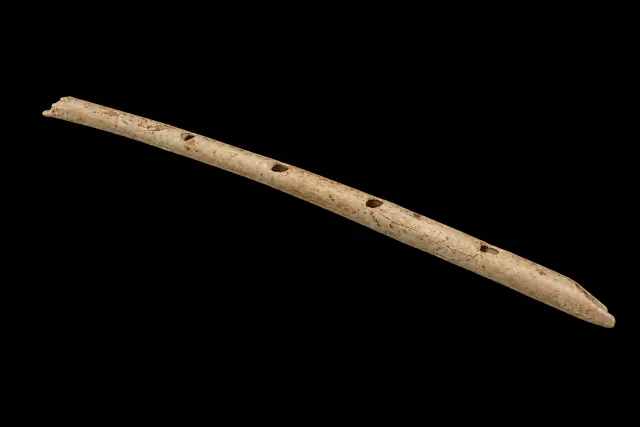
≈35,000–40,000 years
Hohle Fels flute
Prehistory
Approximate catalogue age; editorial reference 2026 for ordering only, not calibrated dating.
Read the record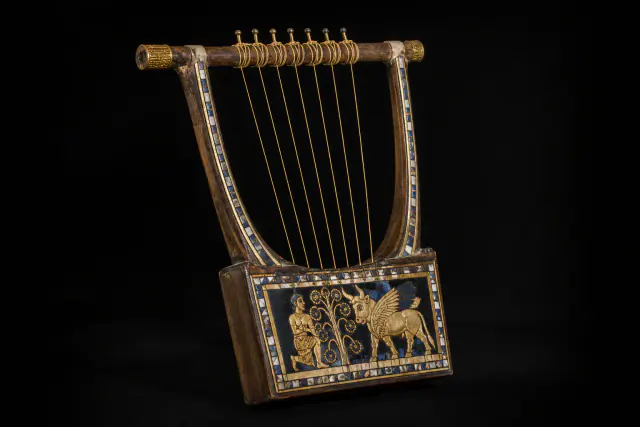
ca. 2600–2500 BCE
Queen's Lyre
Sumer
Approximate dating according to the record.
Read the record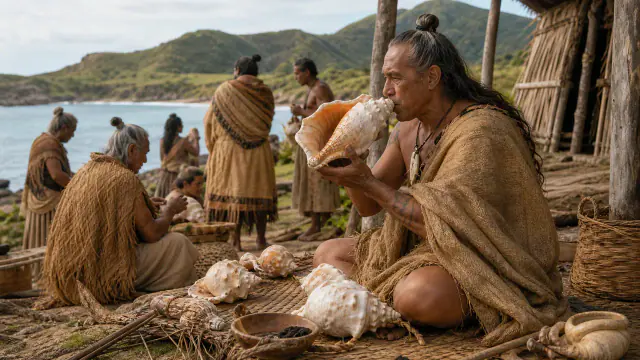
Main use c. 800–500 BCE
The Gallery of the Conch Shells
Pre-Inca cultures
Main period of use of the shell ensemble.
Read the record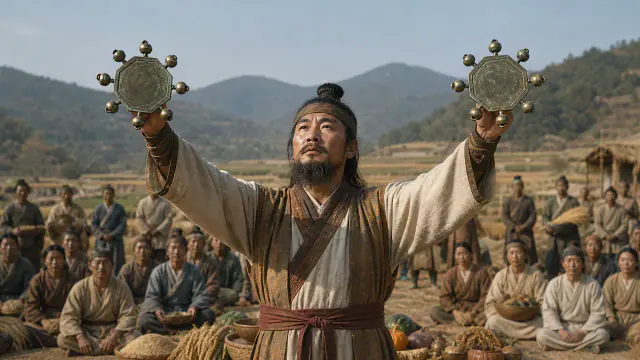
3rd–2nd centuries BCE
Eight voices in one hand
Gojoseon and early Korea
Approximate dating according to the record.
Read the record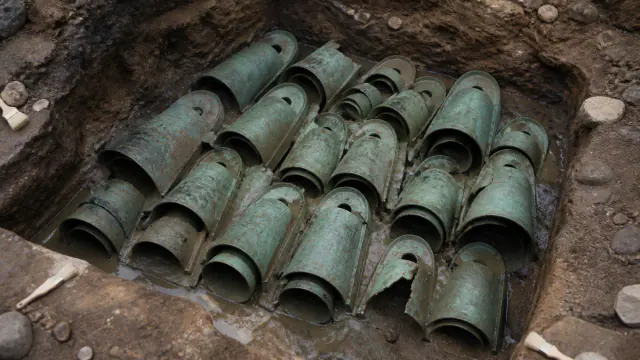
Buried towards the 1st century BCE–1st century CE
Thirty-nine buried bells
Yayoi Japan
Date of burial of the set; not manufacture of each bell.
Read the record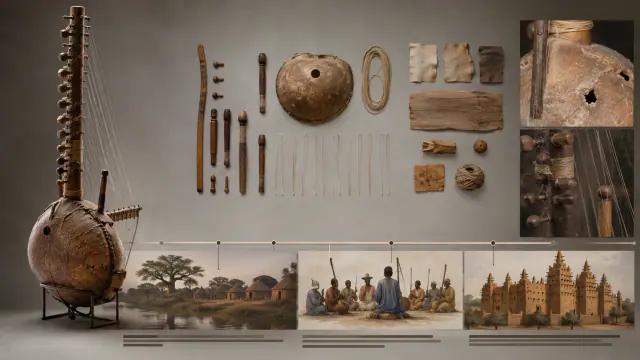
19th century
19th-century kora
Mande Worlds
The century of the surviving instrument, not the origin of the musical tradition.
Read the record
Also connected, without a comparable date (4)
These objects are not placed after the others: an unknown date does not mean a more recent object.
- Daegok-ri grave goodsGojoseon and early Korea · from c. 5th century BCE
- Living m’bolonMande Worlds · The present with historical memory
- Sosso-BalaMande Worlds · Tradition linked through narrative to the 13th century; the present instrument and its custodianship have their own chronology
- Trumpet from NumantiaIberians · No individual dating published on this record
A closer look
About 1 min to read · 1 section. Further reading and sources · free access. Editorial review recorded: .
Materials that reveal adaptation
The documented instrumental repertoire includes bows with gut strings, metal pluribows and a bow with a tin resonator. Also appearing is the sitengena, a plucked lamellophone, in performances such as that of Ti !Kay, known as Jimmy, of Xai Xai. These material differences are part of musical history: performers could work with resources from diverse origins. The presence of metal or a tin does not reduce the cultural relevance of a performance; it allows recognition of technical choices by musicians living in contemporary, connected societies.
- Museum · Smithsonian Folkways · Instrumental Music of the Kalahari SanAccess recorded: .
Where it is held
Smithsonian Folkways Recordings
Reference material evidence · Library or archive
Sound archive used as testimony of documented instruments and performers; it does not imply custody of all physical instruments.
The holding institution is documented; public display may change. Check its official record before visiting.
Sources and references
Did you enjoy this exhibit?
Your opinion helps us improve the museum. You can change it whenever you like.
Loading your rating…