
 English
 Español
 Français
 Italiano
 Deutsch
 Русский
 Português
 Polski
 Română
 Svenska
 Norsk bokmål
 Suomi
 Türkçe
 العربية
 简体中文
 한국어
 हिन्दी
 Ελληνικά
25 · TREASURE · tradition linked through narrative to the 13th century; the present instrument and its custodianship have their own chronology
Sosso-Bala
Cultural space of Sosso-Bala
The balafon and its custodians are part of a living tradition of music, memory and teaching.
Museum documentation · free public access, no account required.
Editorial visualisation · Contextual correspondence
Declared editorial visualisation, based on the cartography and sources of the fact sheet; it is not an exact historical frontier.
History and context
The balafon and the place where it is kept are living symbols of Manding memory and cohesion.
Continuity also resides in protocols, transmission and relationships, not only in the instrument’s physical age. Limitation: UNESCO documents the present-day heritage; it does not certify that the visible wood is an intact object from the 13th century.
Evidence and interpretation
ORAL+VIVA. The balafon and the place where it is kept are living symbols of Manding memory and cohesion. What this does not establish: UNESCO documents the present-day heritage; it does not certify that the visible wood is an intact object from the 13th century.
Catalogue facts
- Narrative date
- Tradition linked through narrative to the 13th century; the present instrument and its custodianship have their own chronology
- Location
- Nyagassola, Guinea
- Material
- living heritage and an object under community custodianship
- Context
- Community sanctuary in Nyagassola; no relocation is proposed. Custody: The Dökala/Kouyaté family and the community of Nyagassola, in accordance with local rules; UNESCO recognition.
- Curatorial reading
- The documented fact and its interpretation appear separately in the evidence block.
- Dossier axis
- art-music
- Research record
- MANDE · EVI-11
- Documentary coverage
- 1 museum source, heritage, primary corpus or research for this stop.
A SHARED TOPIC, DIFFERENT MOMENTS
Objects connected through time
Follow a topic across the collections. A shared tag is a way to compare objects, not proof that one culture influenced another.
The order uses the midpoint of each approximate date range; ranges can overlap. Spacing does not represent elapsed time. Swipe, scroll or use the arrows. With the sequence focused, use ← / →, Home or End.
THE CURRENT OBJECT
Its date is not sufficiently established to place it on the timeline. We keep it here, separate from the dated objects.
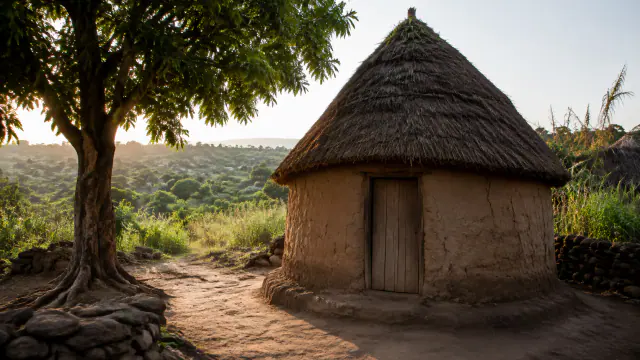 You are viewing
Tradition linked through narrative to the 13th century; the present instrument and its custodianship have their own chronology
Sosso-Bala
Mande Worlds
The narrative link with the 13th century does not date the surviving instrument.
Current recordMusical instruments6 dated objects
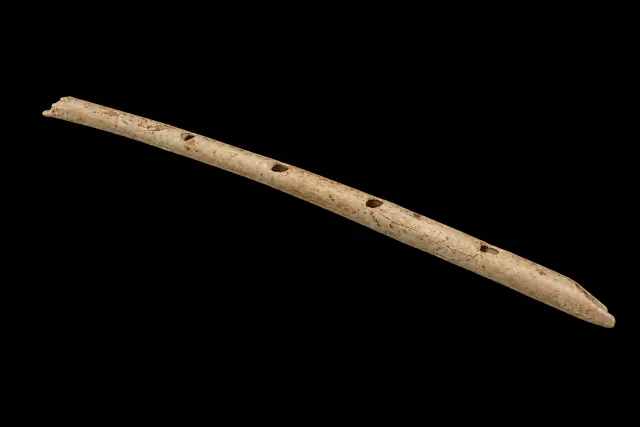
≈35,000–40,000 years
Hohle Fels flute
Prehistory
Approximate catalogue age; editorial reference 2026 for ordering only, not calibrated dating.
Read the record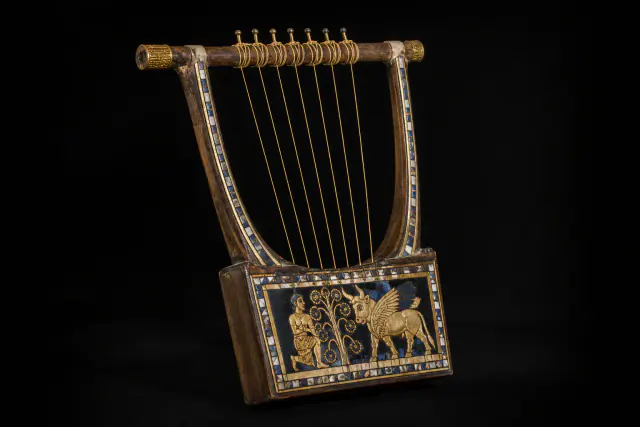
ca. 2600–2500 BCE
Queen's Lyre
Sumer
Approximate dating according to the record.
Read the record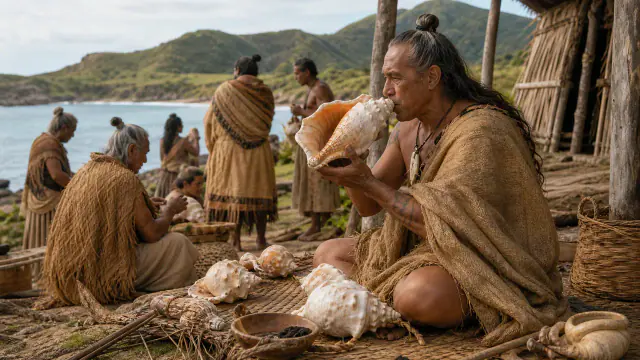
Main use c. 800–500 BCE
The Gallery of the Conch Shells
Pre-Inca cultures
Main period of use of the shell ensemble.
Read the record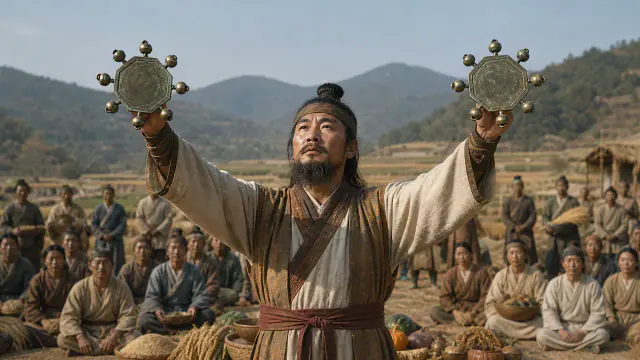
3rd–2nd centuries BCE
Eight voices in one hand
Gojoseon and early Korea
Approximate dating according to the record.
Read the record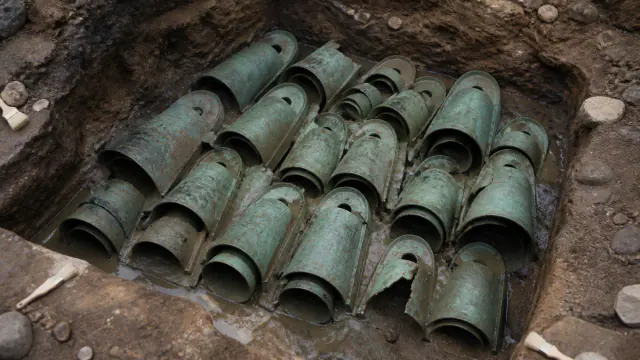
Buried towards the 1st century BCE–1st century CE
Thirty-nine buried bells
Yayoi Japan
Date of burial of the set; not manufacture of each bell.
Read the record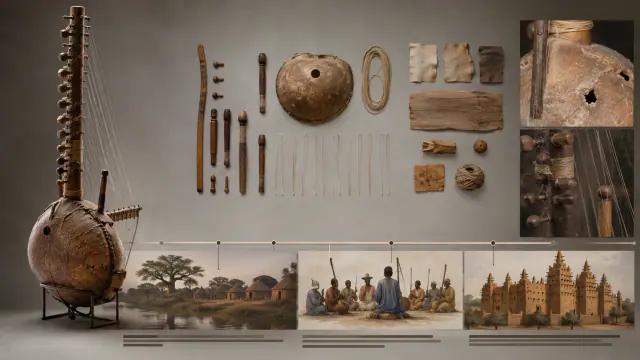
19th century
19th-century kora
Mande Worlds
The century of the surviving instrument, not the origin of the musical tradition.
Read the record
Also connected, without a comparable date (4)
These objects are not placed after the others: an unknown date does not mean a more recent object.
- Daegok-ri grave goodsGojoseon and early Korea · from c. 5th century BCE
- Living m’bolonMande Worlds · The present with historical memory
- Musical bowsSan histories · Twentieth-century ethnomusicological documentation
- Trumpet from NumantiaIberians · No individual dating published on this record
A closer look
About 1 min to read · 1 section. Further reading and sources · free access. Editorial review recorded: .
Custodianship also means teaching
In Nyagassola, custody corresponds to the Balatigui, patriarch of the Dökala family. The UNESCO file explains that only he can play the Sosso-Bala on certain occasions, among them Muslim New Year and funerals, and that he teaches the balafon to children from the age of seven. Safeguarding thus depends on a relationship between authority, calendar and learning. Rural exodus reduces the student body, while the locality’s material difficulties complicate continuity: protecting the instrument also requires sustaining the conditions in which new musicians can form.
- Heritage · UNESCO · Cultural space of Sosso-Bala, file 00009Access recorded: .
Sources and references
Did you enjoy this exhibit?
Your opinion helps us improve the museum. You can change it whenever you like.
Loading your rating…