 English
 Español
 Français
 Italiano
 Deutsch
 Русский
 Português
 Polski
 Română
 Svenska
 Norsk bokmål
 Suomi
 Türkçe
 العربية
 简体中文
 한국어
 हिन्दी
 Ελληνικά
01 · INITIAL ATLAS · ORIGIN AND EXPANSION
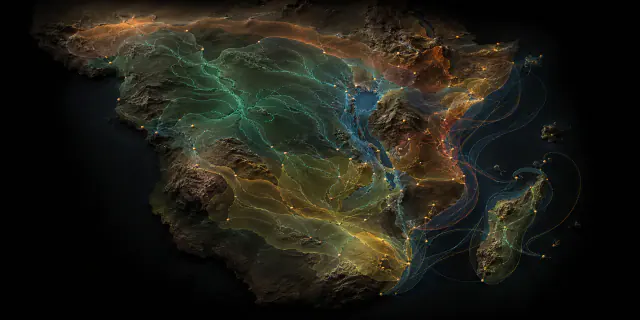
Map of Bantu Worlds
Related languages spread over millennia among communities with distinct histories.
Read the complete record → TRACEKEEPERS
HISTORY · OPEN COLLECTION
These histories concern many languages and societies, not one civilisation with a single departure date. Linguistic branches, populations and archaeological evidence converged gradually along several corridors.
37 complete records · free to read, no account needed
Read freely here. A free account saves your visits inside the museum.
Before you begin · Bantu worlds
Bantu history links many societies through the kinship of their languages and movements and exchanges developed over millennia.
Before the Bantu dispersals
Archaeological sequences in central Africa show societies and environmental changes prior to linguistic expansions.
Around 5000–4000 years ago
Linguistic models place first branches in central-western Africa; the dates and routes remain under investigation.
Later millennia
Mobility, contact and language adoption contribute to diverse societies in central, eastern and southern Africa.
The forests and savannas of central-western Africa were inhabited long before the expansion of Bantu languages. In landscapes such as Lopé-Okanda in Gabon, sites from different periods document occupations, tools and changes in land use. The people who arrived later found existing communities and knowledge, not an empty continent.
The comparison of vocabularies and sounds allows proposing an ancestral language and studying its diversification. Many models place its early stages near the current border between Nigeria and Cameroon, several millennia ago. This reconstruction is a research tool: it does not equate to having found a founding people, an original text or a route followed by all families.
Over the following millennia, speakers of Bantu languages moved, established communities and maintained contacts in very different regions. Crops, knowledge and practices circulated through people’s movements and relationships with their neighbours. Archaeology, linguistics and genetics help study these processes, but their chronologies and maps do not automatically coincide.
The museum shows concrete languages, techniques and societies to understand large-scale connections without erasing local differences.
Interpreting these traces. Bantu designates a language family, not a race or an empire; language, agriculture and metallurgy did not always spread together.
c. 3000 BCE–present · linguistic dispersal and regional trajectories · AFRICA
Access to the museum brings together the atlas and the background of Bantu Worlds. Then, seven areas organise the historical context, culture, architecture, characters and society, treasures and grave goods, beliefs and curiosities, and three historical doors to other museums. Each file preserves narrative layers, cautions and differentiated sources.
The room combines a specific visual catalog with an audited thematic dossier. Separates facts, interpretations and cautions; the 3D volumes continue to be replaceable markers until models with provenance and license are incorporated.
The museum’s start is not a departure date, but the gradual convergence of linguistic branches, populations and archaeological assemblages in several corridors.
Do not automatically attribute all Iron Age pottery or metallurgy to Bantu speakers, nor assume that agriculture, iron and language travelled together in a single movement.
Read the background and its sources →EXPLORE THE COLLECTION
Follow the museum’s curated order or go straight to a section. Every record includes its full public documentation and sources.
01 · COLLECTION
Consult the maps and initial context sheets to situate this museum in time and territory; then choose the areas that interest you most.
01 · INITIAL ATLAS · ORIGIN AND EXPANSION
Related languages spread over millennia among communities with distinct histories.
Read the complete record →02 · BEFORE THE DISPERSAL · RECONSTRUCTED LANGUAGES AND INHABITED LANDSCAPES
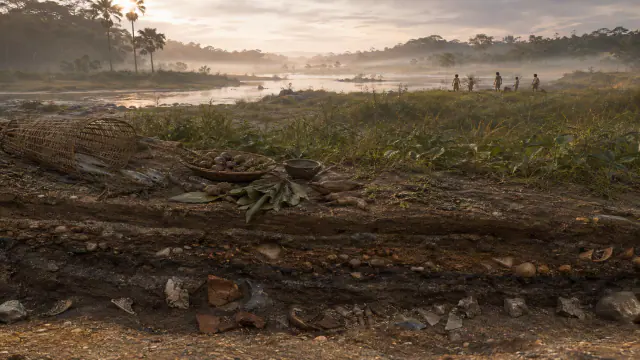
Comparing languages allows proposing ancient relationships, but not reconstructing a single route followed by all their communities.
Read the complete record →02 · COLLECTION
The first stop reconstructs the area before Bantu Worlds; afterwards, places and processes allow entry into its history without reducing it to a start date or an inevitable destination.
01 · 01 · CONTEXT · TERMINOLOGY
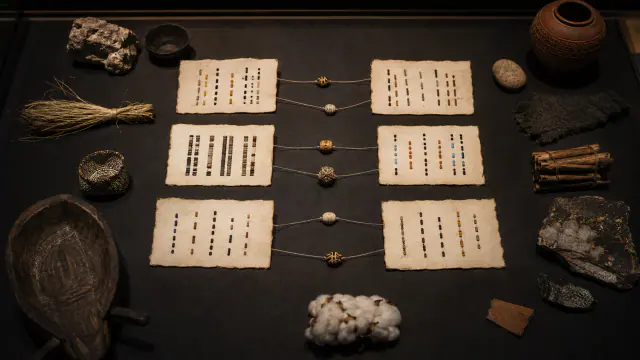
A language family is not a race, a single people nor a state.
Read the complete record →02 · 02 · CONTEXT · ARCHAEOLINGUISTICS
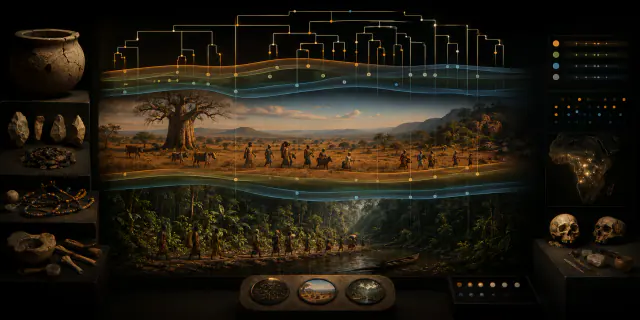
Linguistic models propose different routes and branches; they do not describe the journey of a single group.
Read the complete record →03 · 03 · CONTEXT · ARCHAEOLOGICAL METHOD
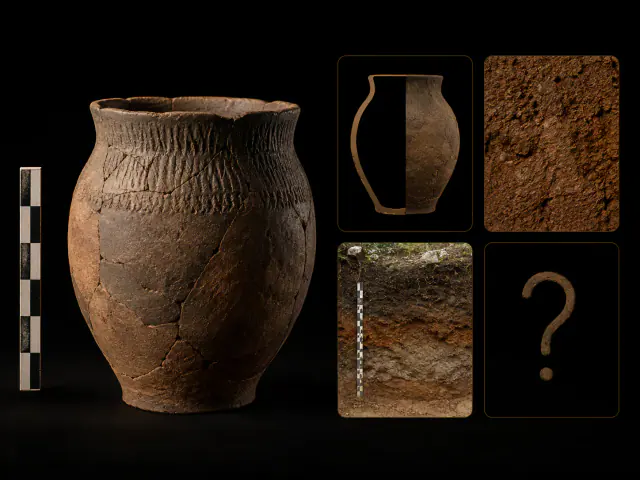
Pottery allows the study of techniques and contacts, but does not by itself reveal the language of its maker.
Read the complete record →04 · 04 · CONTEXT · GENETICS
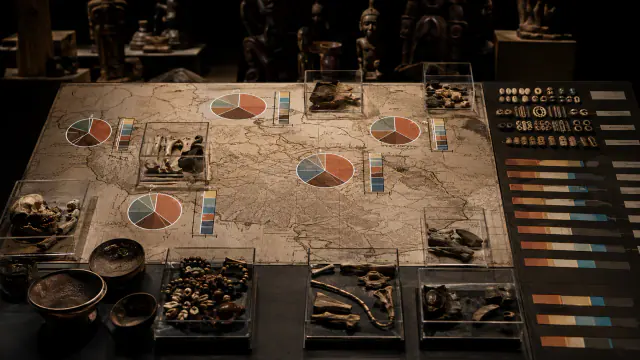
DNA helps investigate kinship and population movements, but does not indicate what language a person spoke.
Read the complete record →05 · 05 · CONTEXT · ECOLOGY AND SUBSISTENCE
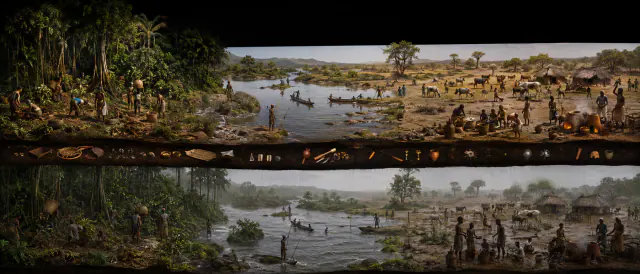
Fishing, hunting, farming and herding were combined in different ways according to the resources and knowledge of each place.
Read the complete record →06 · 06 · CONTEXT · REGIONAL HISTORIES
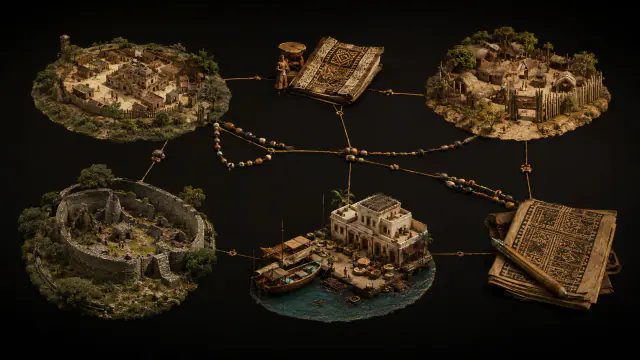
Kongo, Luba, Kuba, Great Zimbabwe and the Swahili coast are not stages of a single civilization.
Read the complete record →03 · COLLECTION
These stops distinguish instruments, ritual actions, orality or writing and visual culture. Where there is no theatre, score or certain meaning, the museum preserves the limit.
01 · LIVING AND DOCUMENTED CULTURE · 01
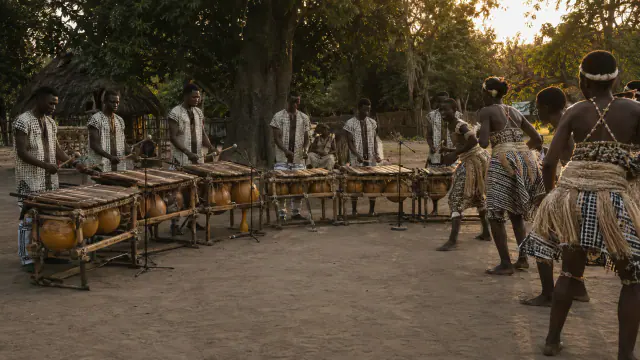
In Chopi ensembles, xylophones of different sizes accompany songs and dances.
Read the complete record →02 · LIVING AND DOCUMENTED CULTURE · 02
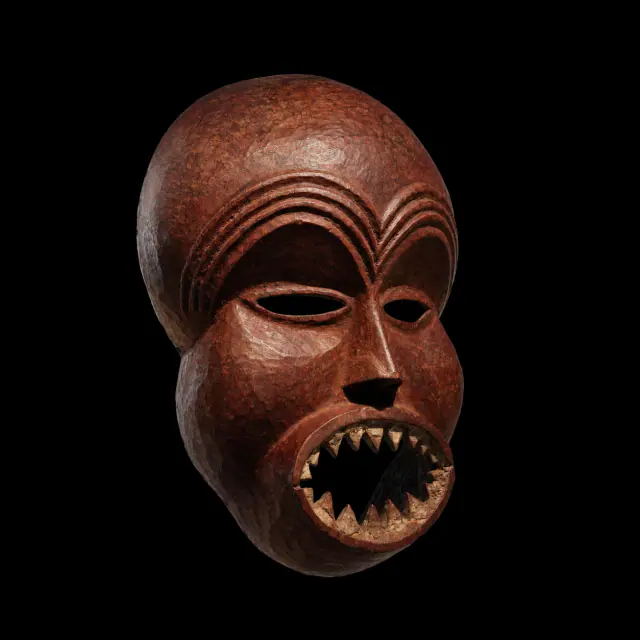
Mask performances culminate the mukanda, an initiation process that includes teaching and community participation.
Read the complete record →03 · LIVING AND DOCUMENTED CULTURE · 03
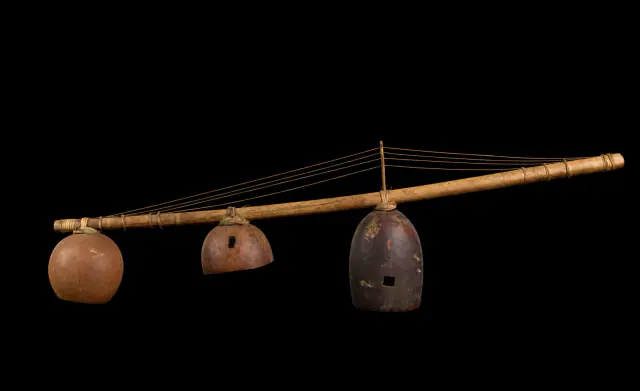
The mvet brings together a string instrument, narratives and knowledge shared with audience participation.
Read the complete record →04 · LIVING AND DOCUMENTED CULTURE · 04
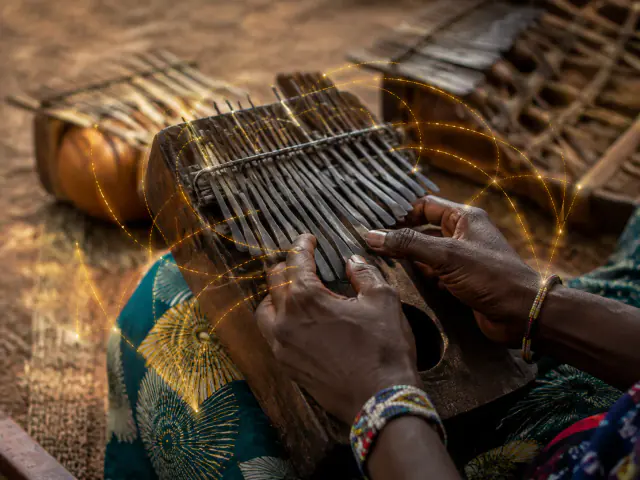
Plucking its metal tongues combines musical patterns used in celebrations, ceremonies and entertainment.
Read the complete record →04 · COLLECTION
These architectures explain how materials, water, work and memory organized the territory without converting an elevation reconstruction into certainty.
01 · ARCHITECTURE AND LANDSCAPE · 01
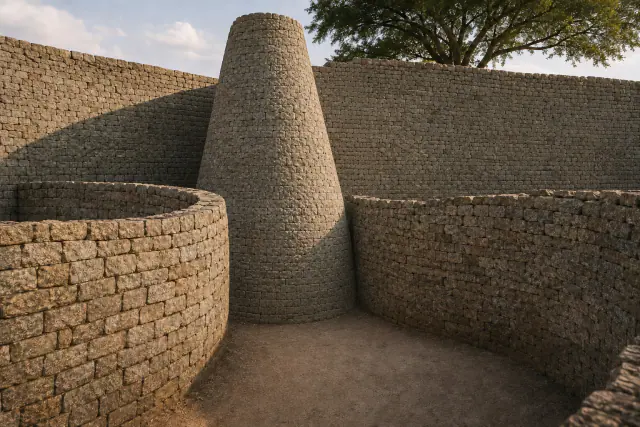
The granite walls, built without mortar, were part of a city connected to the African interior and the Indian Ocean.
Read the complete record →02 · ARCHITECTURE AND LANDSCAPE · 02
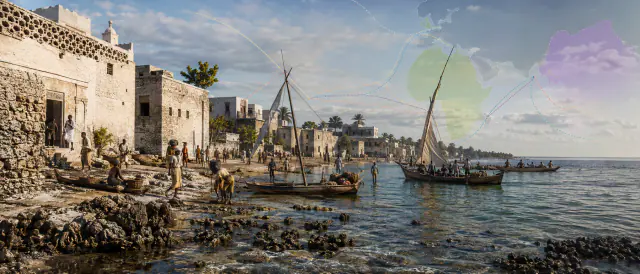
Mosques, houses and palaces built from coral were part of African cities connected to Indian Ocean trade.
Read the complete record →03 · ARCHITECTURE AND LANDSCAPE · 03
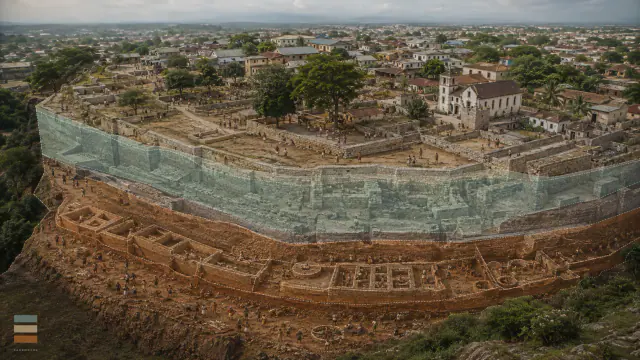
The capital of the Kingdom of Kongo incorporated Christian buildings into a city that already had royal residences and ritual spaces.
Read the complete record →05 · COLLECTION
Known people, reconstructed voices and collective footprints. From oldest to most recent according to life, reign or scene. The periods may overlap; The voices without a determinable date close the journey.
01 · 07 · RECONSTRUCTED VOICE · UREWE
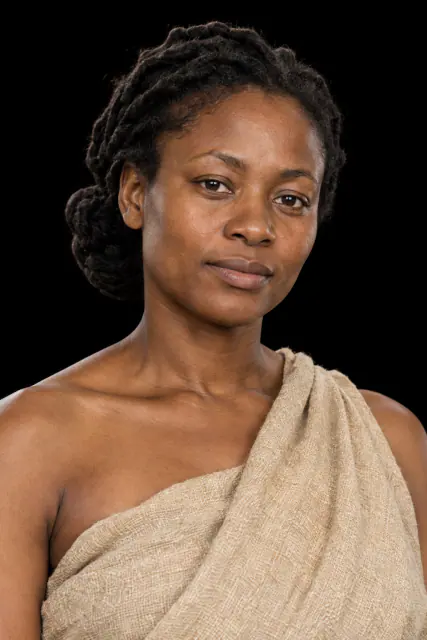
Nia is a fictional potter created to explain documented techniques; she does not represent an identified historical person.
Read the complete record →02 · ARCHAEOLOGICAL RECONSTRUCTION · UNNAMED PERSON
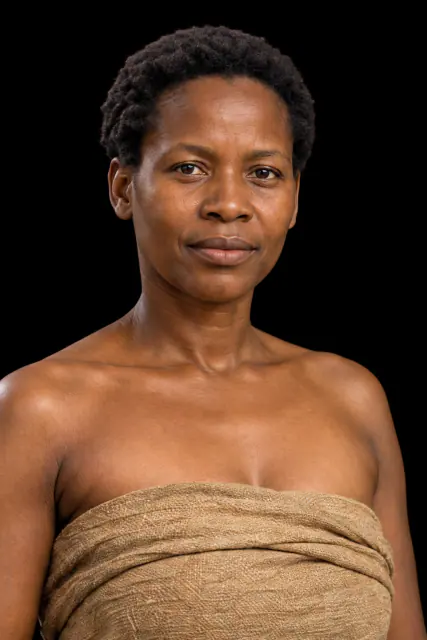
A burial by the lake allows us to speak of a life without inventing a name for it.
Read the complete record →06 · COLLECTION
Concrete pieces to understand materials, decisions and knowledge systems, with separate evidence and interpretation.
01 · 14 · SENSITIVE EVIDENCE · ANCIENT DNA
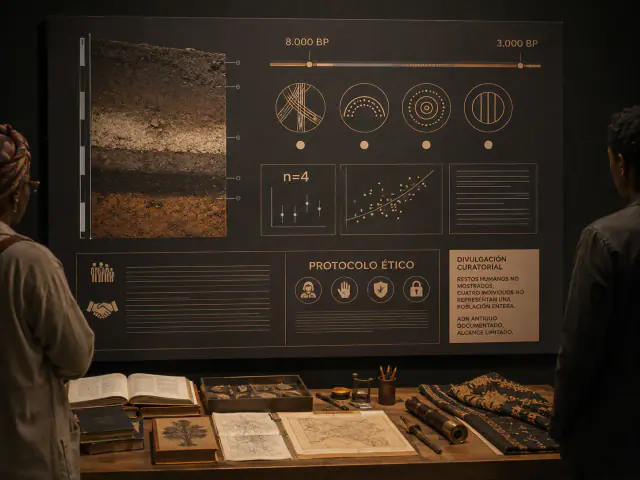
Their remains allow us to investigate the ancient population of the region without attributing to them a language we do not know.
Read the complete record →02 · 15 · OBJECT TO BE SELECTED · GREAT LAKES
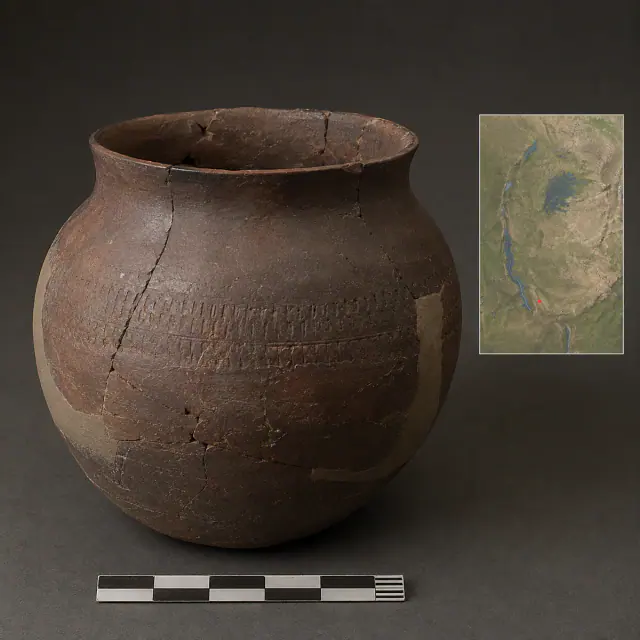
Its form and decoration help us understand techniques and contacts, but do not identify the language of its maker.
Read the complete record →03 · 16 · POTTERY ASSEMBLAGE · SOUTH AFRICA
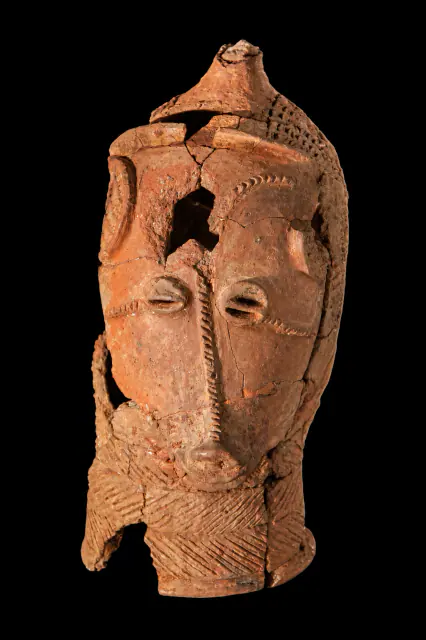
Seven hollow sculptures were reconstructed from the fragments; their exact function remains under discussion.
Read the complete record →04 · 17 · COIN · KILWA
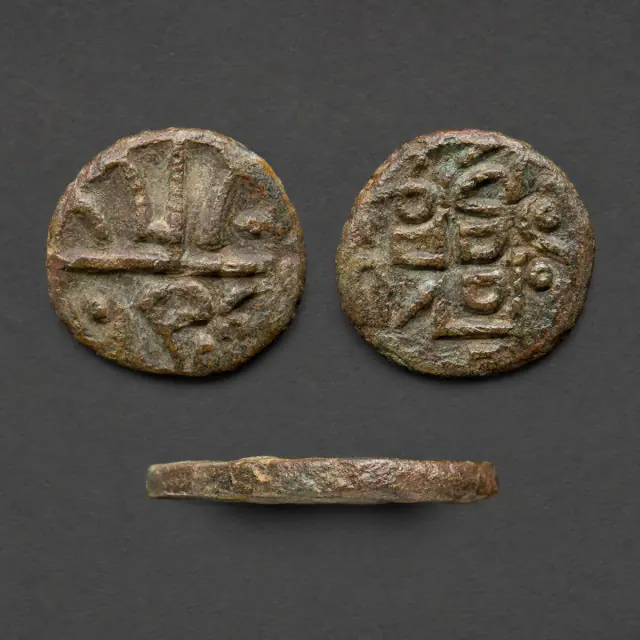
This copper coin, probably minted in Kilwa, bears an Arabic inscription with the name of an African coastal authority.
Read the complete record →05 · 18 · SCULPTURE · GREAT ZIMBABWE
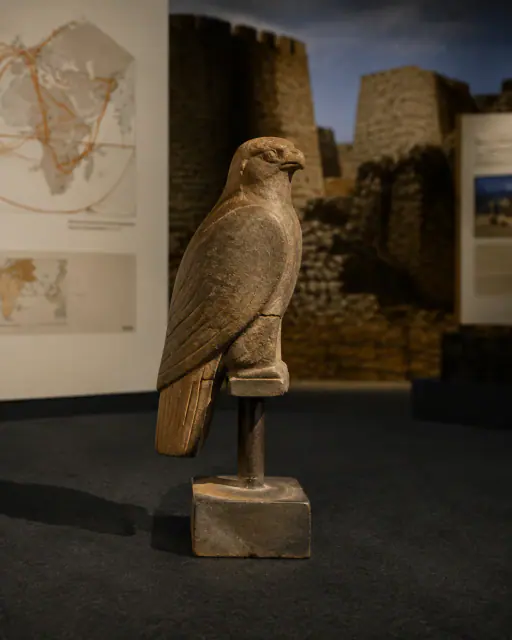
These sculptures became national emblems; their colonial removal and repatriations are also part of their history.
Read the complete record →06 · 19 · OBJECT · LIMPOPO-SHASHE
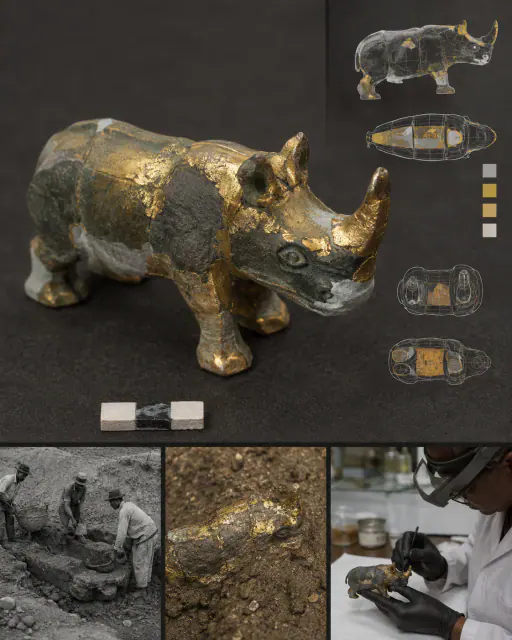
Gold sheets give shape to this small animal associated with the elite of Mapungubwe.
Read the complete record →07 · 20 · BURIAL ASSEMBLAGE · ZAMBEZI
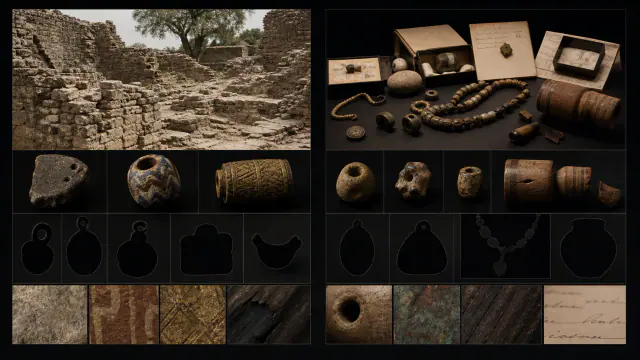
Gold, copper, glass and other materials reveal the wealth of these burials and their trading connections.
Read the complete record →08 · 21 · SITE · KONGO CAPITAL
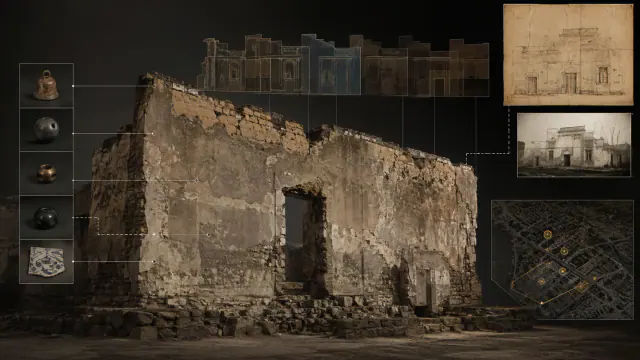
Christian stone buildings were erected within an earlier African capital.
Read the complete record →09 · 22 · OBJECT · KONGO CHRISTIANITY
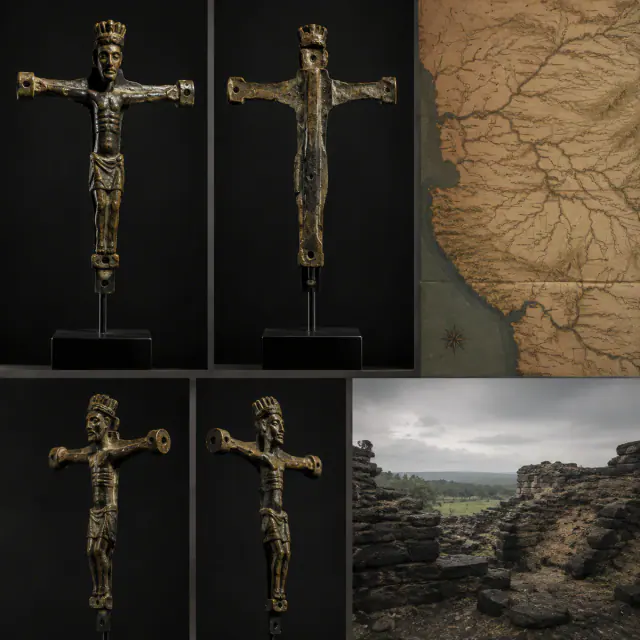
Kongo artists cast brass crucifixes and gave them uses within their own religious and political practices.
Read the complete record →10 · 23 · OBJECT · LUBA MEMORY
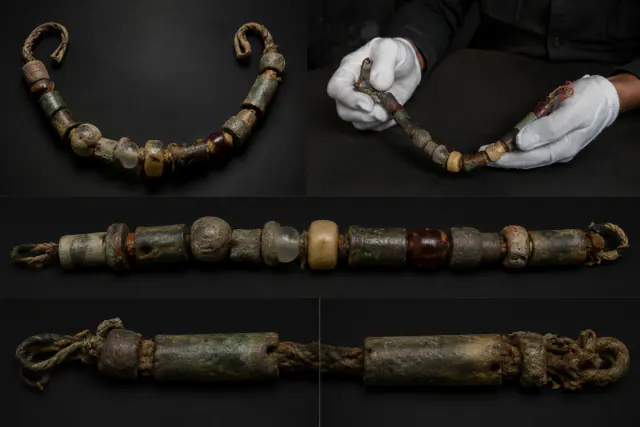
Its raised features guide specialists who tell stories; they are not read like a written text.
Read the complete record →11 · 24 · ROYAL FIGURE · KUBA
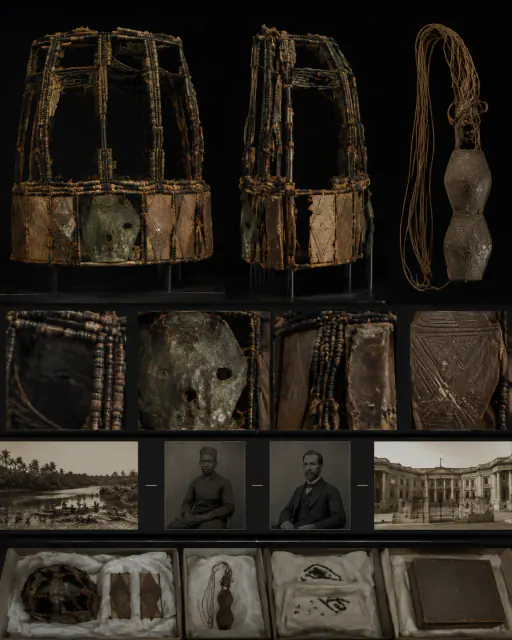
The sculpture identifies the king through the symbols and conventions of his dynasty, rather than reproducing his face as a photograph would.
Read the complete record →12 · 25 · DOCUMENT · FOUMBAN
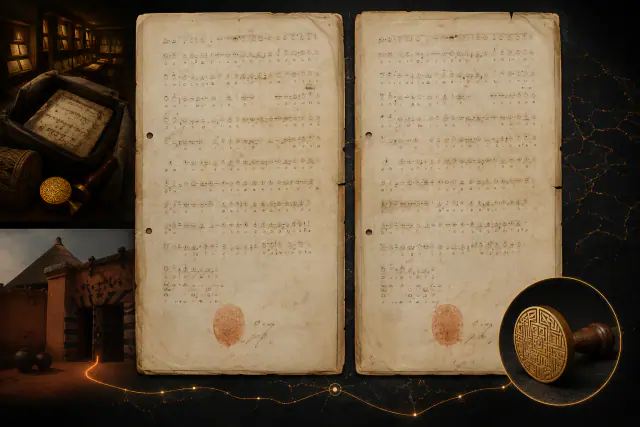
This 1922 document shows an administrative use of Bamum script; the original is preserved in Foumban.
Read the complete record →07 · COLLECTION
These cards separate what is documented from what is interpreted and recover practices, questions and details capable of changing our image of this culture.
01 · 26 · CURIOSITY · MORPHOLOGY
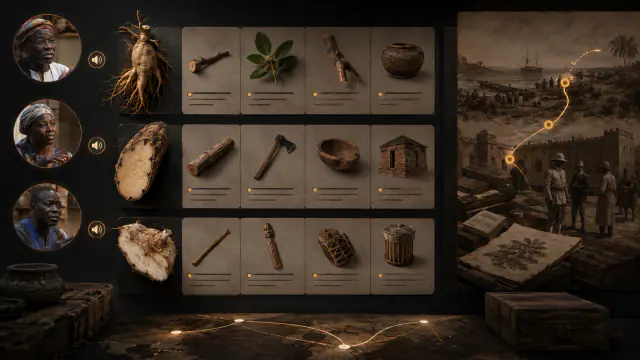
The term relates to grammatical forms in several languages; it does not designate a race.
Read the complete record →02 · 27 · CURIOSITY · CONTACT LINGUISTICS
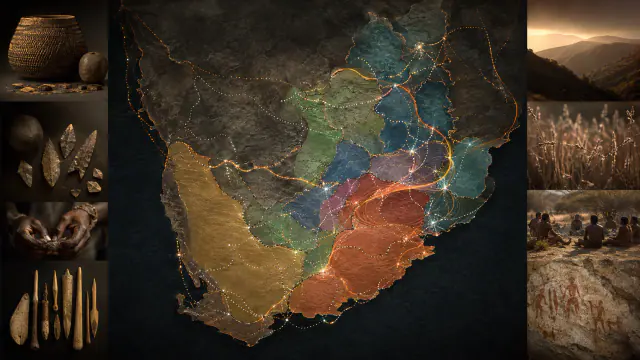
Some languages of southern Africa incorporated these sounds through contact with other communities.
Read the complete record →03 · 28 · CURIOSITY · RELIGION AND POWER
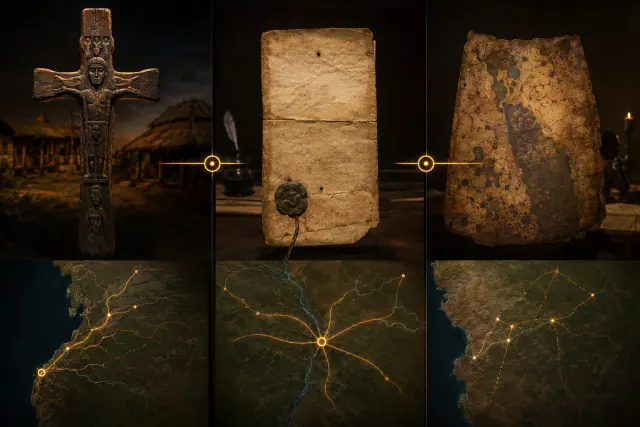
Afonso I, crucifix artists and Kimpa Vita reveal different ways of adopting and interpreting Christianity.
Read the complete record →04 · 29 · CURIOSITY · KNOWLEDGE
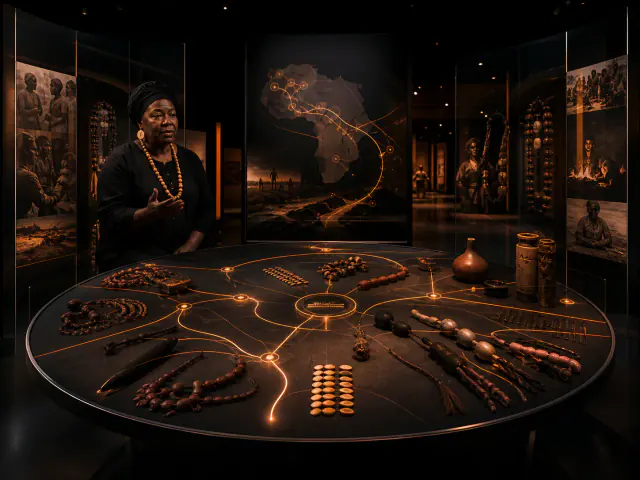
Mbudye specialists use the board to narrate history and territory; its marks have no universal translation.
Read the complete record →05 · 30 · CURIOSITY · LANGUAGE AND OCEAN
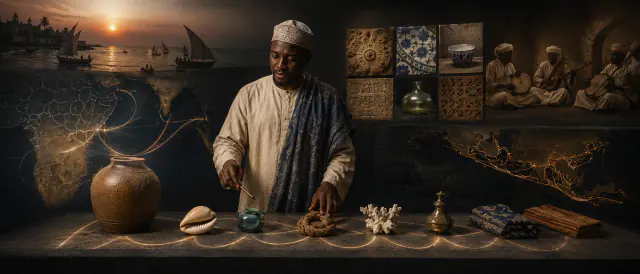
Kiswahili is a Bantu language that has incorporated Arabic, Persian and other words through its contacts.
Read the complete record →08 · COLLECTION
Each door explains why the link exists, when it occurred, and what limits prevent contact from being converted into shared identity.
01 · DOOR 01 · AFRICA · CONTACT
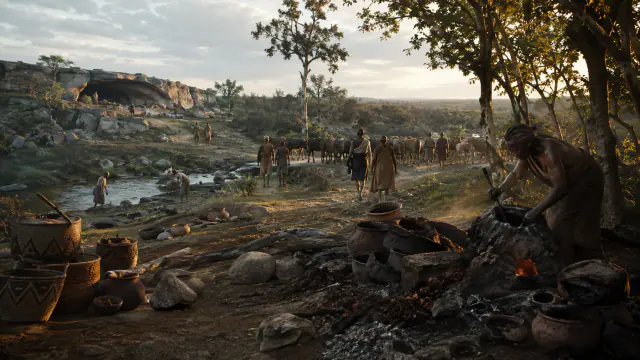
Continue in the San museum
Read the complete record →02 · GATEWAY 02 · AFRICA · CONTACT
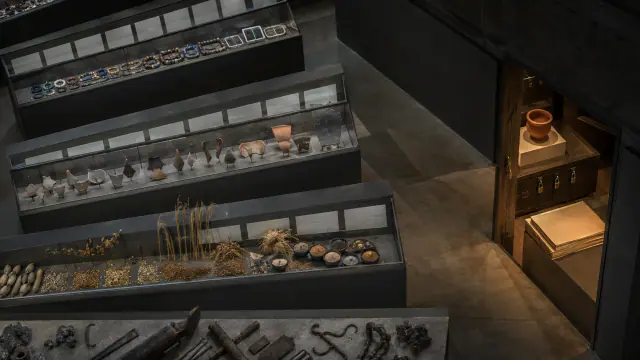
Continue in the Batwa / Twa museum
Read the complete record →03 · DOOR 03 · ASIA · EXCHANGE
Continues in the Vedic India museum
Read the complete record →El mapa que se negó a ser una flecha
Discover the connected fiction project. The available Prehistory reader is in Spanish; other volumes are not presented as finished products for sale.
Explore the books →Try the available Prehistory browser alpha. Campaigns for the other cultures are still in development.
Open the game (Spanish) →Use each record’s institution and heritage links to continue your research. Country-by-country historical travel guides are planned, not yet published.
Historical travel →Discover artistic designs inspired by the collections and check each product’s availability. Museum access remains free.
Explore the collection →